For U.S. readers: This article discusses U.S. rules and financial products. State rules and individual eligibility may differ.
Is Rental Income Subject to Self-Employment Tax?
Ordinary rental income from real estate is generally reported on Schedule E and is usually excluded from net earnings from self-employment.
6 min read
Practice trading with Finelo
Practice in a simulator, learn with bite-sized lessons, and build confidence before risking real money.
Want to learn more?
Practice in a simulator, learn with bite-sized lessons, and build confidence before risking real money.
Explore FineloExplore Finelo's 28-day challenges
Turn learning into a daily habit with guided challenge paths.
Quick answer
Ordinary rental income from real estate is generally reported on Schedule E and is usually excluded from net earnings from self-employment. The result can differ when the owner provides substantial services primarily for the occupant's convenience, operates through certain business structures, or has income that is not actually rent. Classification is fact-specific. Finelo provides general education, not tax, accounting, legal, or financial advice.
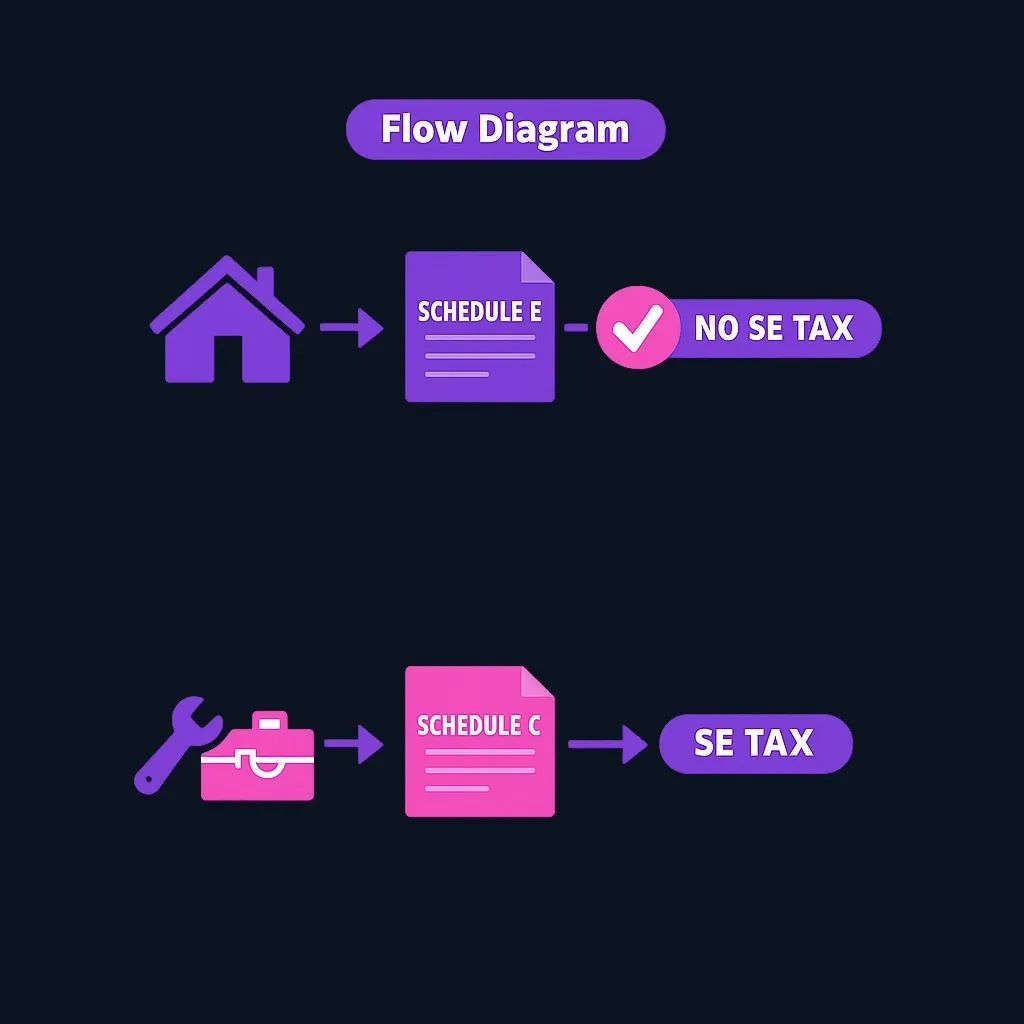
Start with the current instructions in IRS Publication 527, Residential Rental Property, and use the current Schedule E and Schedule C instructions for the return being filed.
Ordinary rental activity
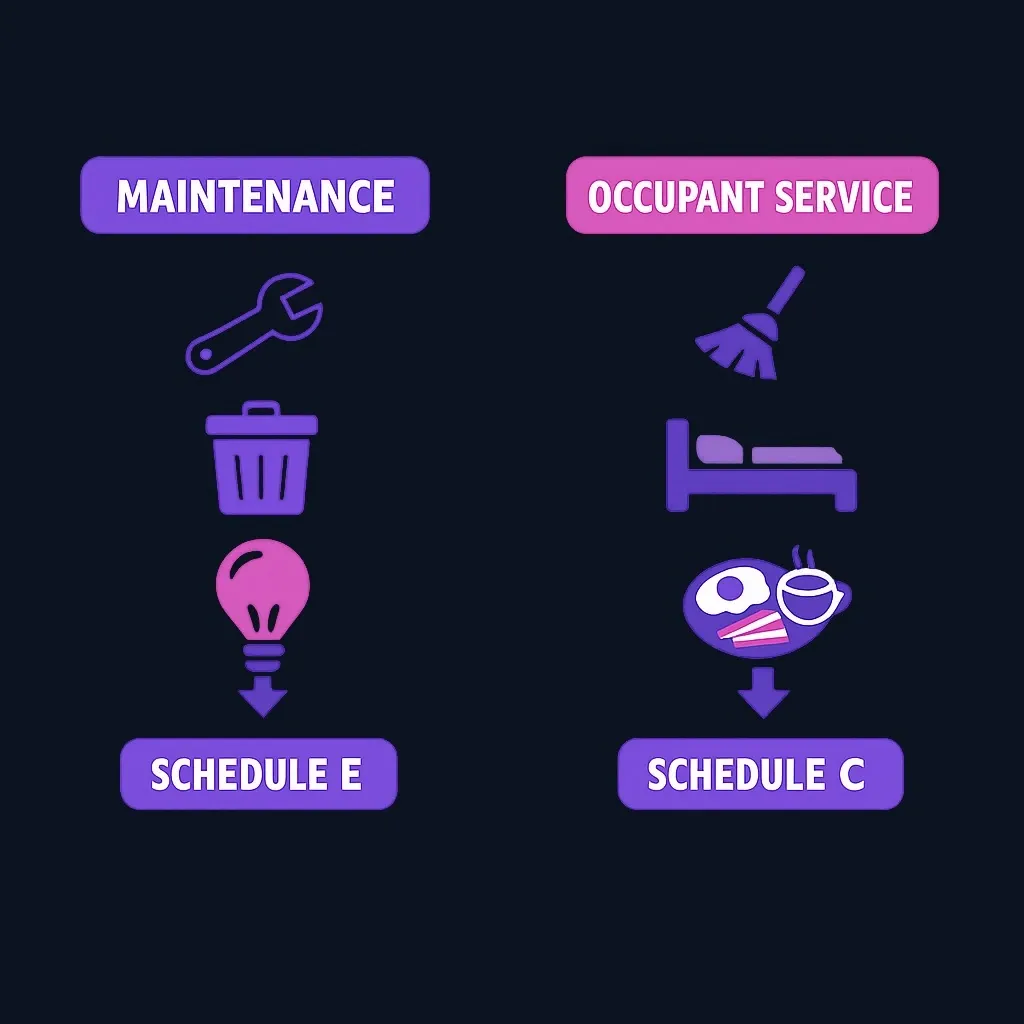
Ordinary rental activity generally involves providing space and the services normally associated with maintaining it, such as repairs, utilities, trash collection, or common-area upkeep. Those facts ordinarily point toward rental reporting rather than a trade or business providing services to occupants.
Rental income can still be taxable income even when it is not subject to self-employment tax. “Not subject to self-employment tax” does not mean tax-free.
When services can change the analysis
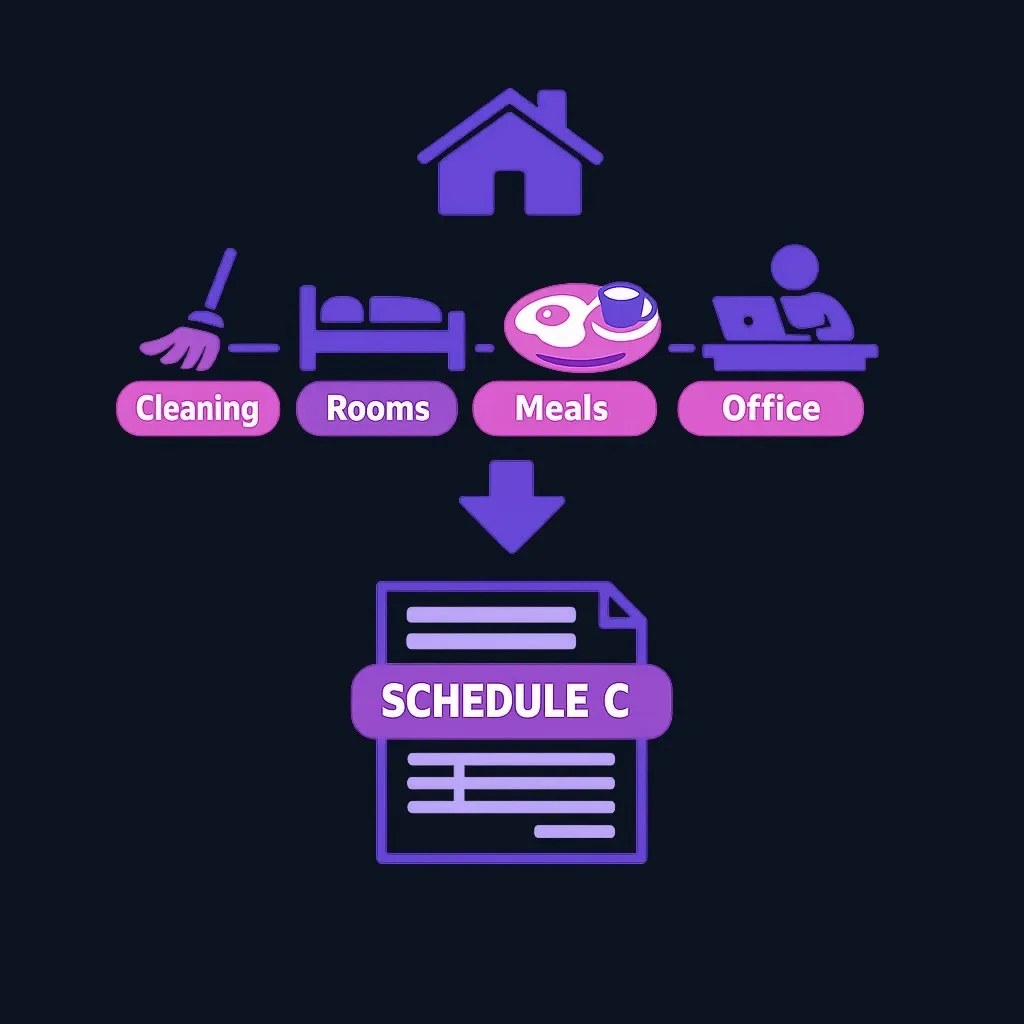
IRS Publication 527 distinguishes services needed to maintain property from substantial services provided primarily for an occupant's convenience. Examples of convenience services can include regular cleaning of an occupied unit, changing linens, or maid-type services. When substantial services are provided, the activity may be reported on Schedule C, and net earnings may enter the self-employment-tax calculation.
No single label—“short-term rental,” “vacation rental,” or “Airbnb”—decides the result. Relevant facts include:
- which services are provided;
- whether they are for the occupant or only for property maintenance;
- how often they are performed during occupancy;
- who performs them;
- how charges are structured; and
- the entity or ownership arrangement.
Cleaning between guests is not automatically the same as daily cleaning during a guest's stay. A tax professional should evaluate the full facts rather than applying a platform label.
A fact-gathering worksheet
| Question | Evidence to keep |
|---|---|
| What space is rented and for how long? | Listings, leases, booking records |
| Which services are included? | Guest terms, invoices, staff schedules |
| Are services performed during occupancy? | Cleaning and service logs |
| Are separate service fees charged? | Price breakdowns and receipts |
| Who performs the work? | Contractor agreements or payroll records |
| Is there personal use of the property? | Calendar and owner-use records |
| How is the property owned? | Entity documents and operating agreements |
This worksheet organizes facts; it does not classify the activity by itself.
Mixed income and other complications
An owner may receive amounts with different tax treatment. For example, rent, cleaning fees, damage reimbursements, cancellation charges, and separately sold services may not all be characterized identically. Preserve the underlying records rather than combining every receipt into one unexplained total.
Other rules can also matter:
- limits for passive activities;
- personal use of a dwelling;
- depreciation and basis;
- occupancy taxes and state or local requirements;
- payments to contractors or employees;
- partnership or entity rules; and
- treatment of real-estate dealers or property held for sale.
These issues are distinct from the narrow question of self-employment tax.
Practice trading with Finelo
Practice in a simulator, learn with bite-sized lessons, and build confidence before risking real money.
Hypothetical examples
Long-term lease with ordinary maintenance
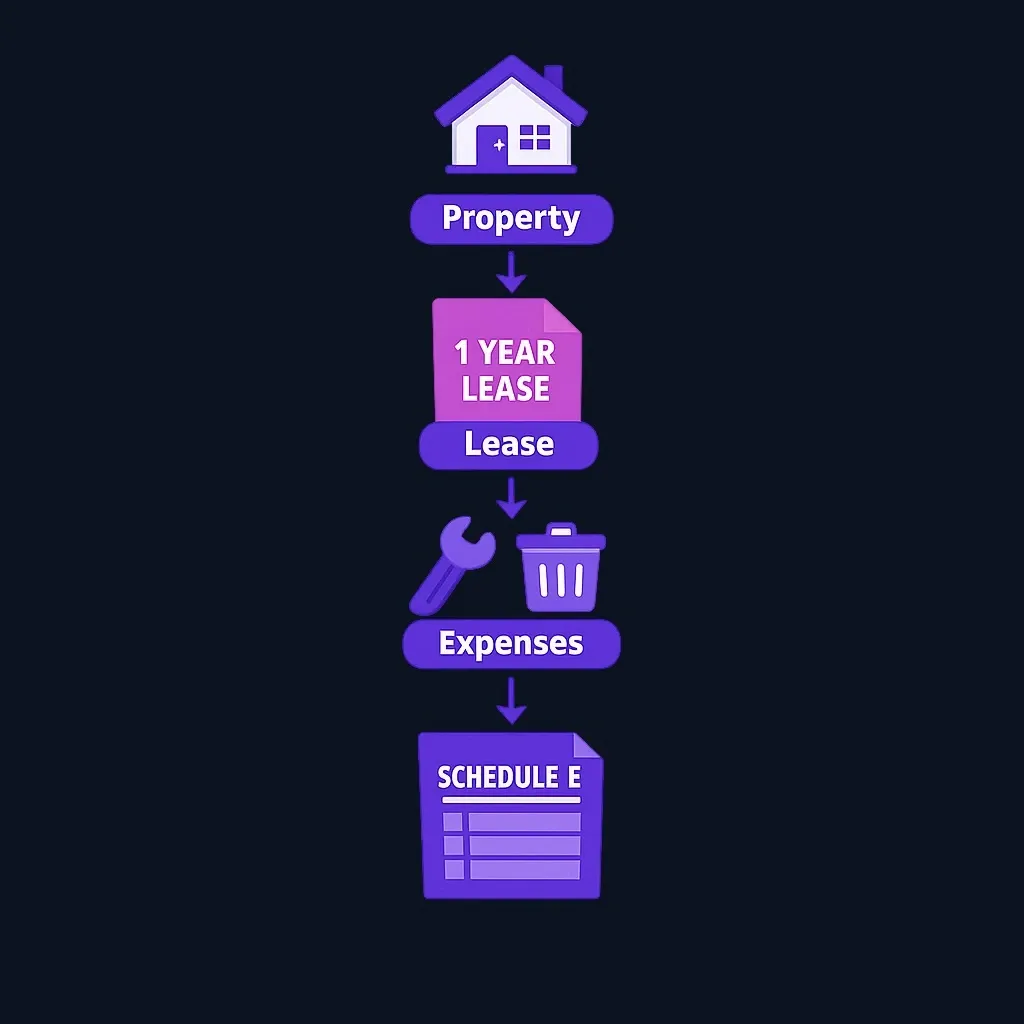
An owner rents an unfurnished house under a one-year lease, collects rent, handles repairs, and arranges trash service. Those are commonly associated with ordinary rental activity. The owner would still verify the current Schedule E rules and any special facts.
Short stays with occupant services
An owner offers short stays and provides daily cleaning, linen changes, breakfast, and staffed guest assistance during each stay. Those services are more than ordinary property maintenance and can support Schedule C treatment. The classification must be confirmed from the complete facts.
These are hypothetical illustrations, not rulings on any taxpayer's situation.
Common mistakes
- Assuming all rental income is exempt from self-employment tax.
- Assuming every short-term rental belongs on Schedule C.
- Treating cleaning between stays as automatically equivalent to hotel-type service.
- Ignoring separately charged or bundled occupant services.
- Using gross receipts instead of net earnings when discussing self-employment tax.
- Failing to keep a calendar of rental and personal-use days.
- Relying on a platform's tax summary instead of the taxpayer's own books and IRS forms.
- Applying one owner's result to a partnership, corporation, or materially different operation.
A review process
- List every payment received and what it was for.
- List every service and when it was performed.
- Separate ordinary property maintenance from services primarily for occupants.
- Identify personal-use days and the ownership structure.
- Read the current Publication 527 and form instructions.
- Have a qualified preparer review ambiguous or material classifications before filing.
- Keep the reasoning and source documents with the tax records.
FAQ
Is long-term residential rent subject to self-employment tax?
It is generally excluded from net earnings from self-employment when it is ordinary rental income, but special facts and business structures can change the analysis.
Is short-term rental income always subject to self-employment tax?
No. The length of stay is relevant context, but the services provided and other facts are important. There is no universal rule that every short-term rental is automatically Schedule C income.
Do cleaning fees make the activity subject to self-employment tax?
Not automatically. The analysis considers what cleaning is performed, when, for whom, and as part of what overall service arrangement.
Which IRS source should a reader use?
Use the current Publication 527 and the current Schedule E, Schedule C, and Schedule SE instructions for the filing year. A professional can help reconcile them with the taxpayer's facts.
Conclusion
Ordinary rent is usually outside self-employment tax, but substantial occupant services and other business facts can change the reporting. Document the operation, use current IRS instructions, and obtain a fact-specific review when the classification is uncertain or financially material.
For more educational tax and household-finance material, visit the Finelo Blog.
Financial LiteracyFinancial Education
Practice trading with Finelo
Practice in a simulator, learn with bite-sized lessons, and build confidence before risking real money.
About the author
Finelo Team
The Finelo Team creates practical investing and trading education designed to help beginners learn faster with structured challenges, simulator practice, and bite-sized lessons.
Keep reading — Related articles

Financial Literacy
Mercury Books Review 2026: Is It Worth It for Startups?
Mercury Books brings double-entry accounting into Mercury. Review its $35 pricing, reports, AI features, integrations, and migration limits.
Finelo Team

Financial Literacy
Why is My FICO Score Lower Than My Credit Score?
Example takeaway: seeing a higher score in a bank app doesn’t guarantee lenders will see the same FICO number at application time; lenders often pull a specific FICO version from a specific bureau.
Finelo Team
Financial Literacy
Why Is My FICO Score Higher Than My Credit Score?
Brief educational note: this article is educational, not financial or investment advice; investing and credit decisions involve risk and possible loss.
Finelo Team