For U.S. readers: This article discusses U.S. rules and financial products. State rules and individual eligibility may differ.
Medigap vs Medicare Advantage for Cancer Care: A Verification Guide
Finelo provides general U.S. Medicare education, not medical, insurance, financial, or legal advice.
7 min read
Practice trading with Finelo
Practice in a simulator, learn with bite-sized lessons, and build confidence before risking real money.
Want to learn more?
Practice in a simulator, learn with bite-sized lessons, and build confidence before risking real money.
Explore FineloExplore Finelo's 28-day challenges
Turn learning into a daily habit with guided challenge paths.
Important note
Finelo provides general U.S. Medicare education, not medical, insurance, financial, or legal advice. Cancer treatment and plan availability are individual and location-specific. Before changing coverage, confirm enrollment rights, provider participation, drug coverage, prior-authorization rules, and total costs with Medicare, the plan, and the care team. Do not delay medically necessary care while comparing plans.
Quick answer
Original Medicare with a Medigap policy and a separate Part D plan can provide broad access to clinicians who accept Medicare and may reduce some Part A and Part B cost sharing. A Medicare Advantage plan provides Medicare benefits through a private plan, may use networks and prior authorization, and sets an annual out-of-pocket limit for covered Medicare services. Neither structure is automatically best for every person with cancer. The decision turns on actual providers, treatments, prescriptions, enrollment rights, premiums, and plan rules.
Medicare's official side-by-side comparison is the appropriate starting point.
What the two options actually are
Original Medicare plus Medigap
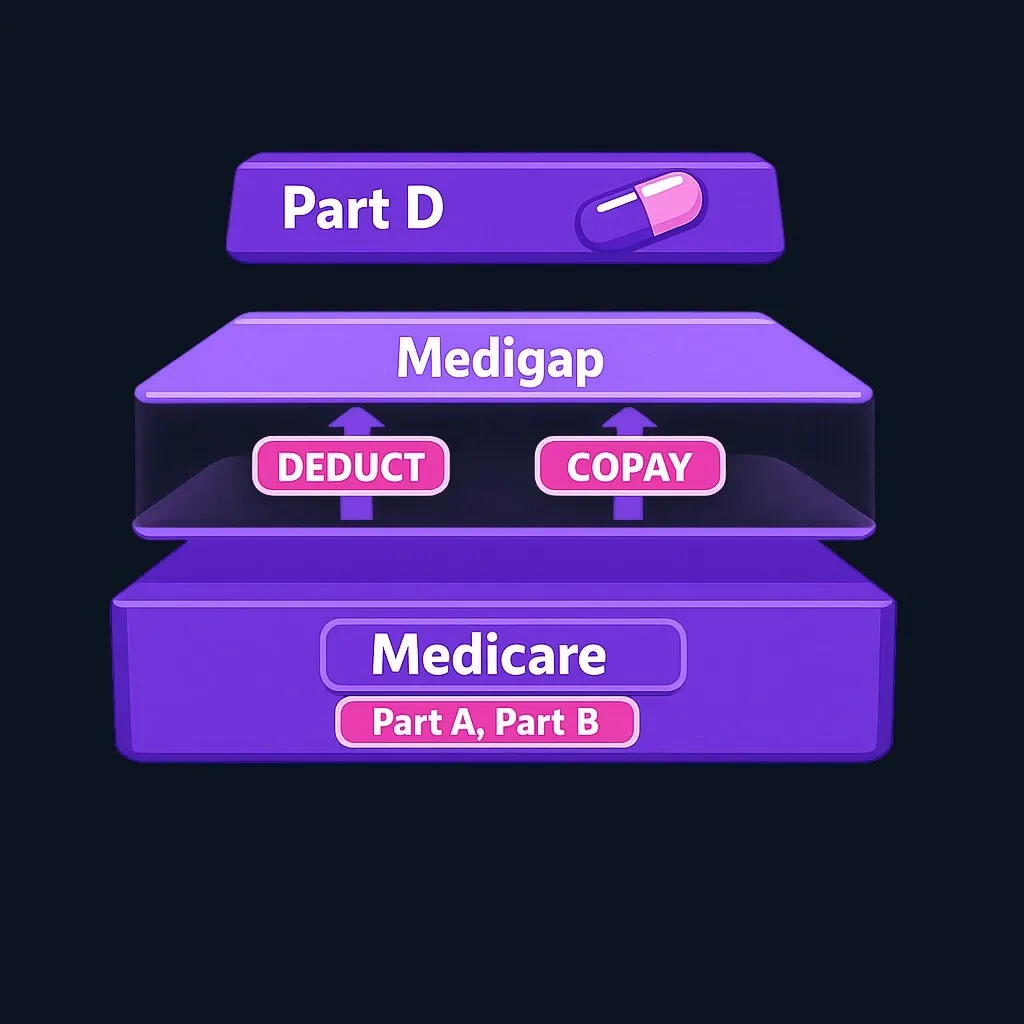
Original Medicare includes Part A and Part B. A separately purchased Medigap policy can help cover certain deductibles, copayments, or coinsurance that remain after Original Medicare pays. Medigap is not a replacement for Medicare and does not generally include prescription drug coverage, so a separate Part D plan may be needed. Medicare explains what Medigap covers and excludes.
Medicare Advantage
Medicare Advantage, also called Part C, is another way to receive Medicare coverage through a Medicare-approved private plan. Plans must cover medically necessary services that Original Medicare covers, but they may use provider networks, referrals, and prior authorization. Most include Part D, although benefits, formularies, costs, and service areas vary by plan and year.
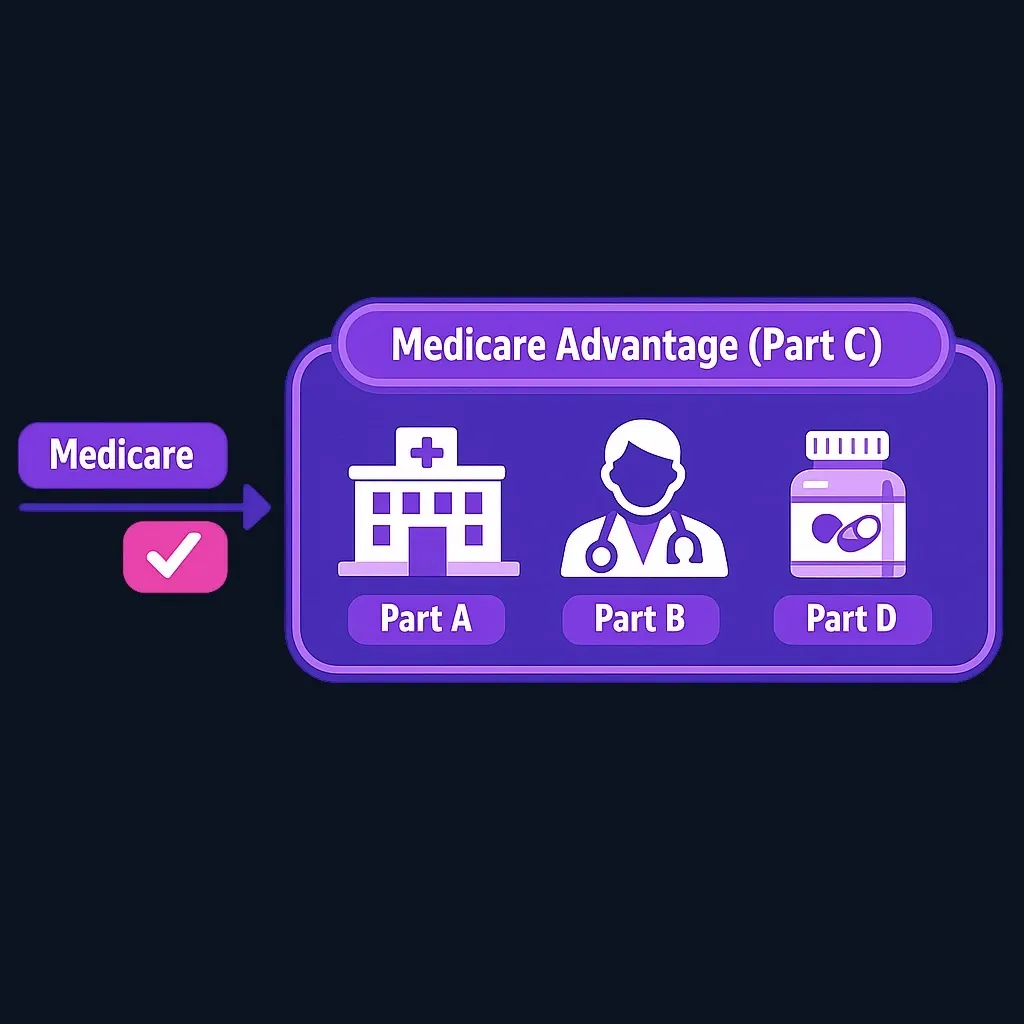
You cannot use Medigap to pay Medicare Advantage cost sharing. Medicare describes the relationship in its guide to how Medigap works.
Comparison points that matter during cancer care
| Issue to verify | Original Medicare + Medigap + Part D | Medicare Advantage |
|---|---|---|
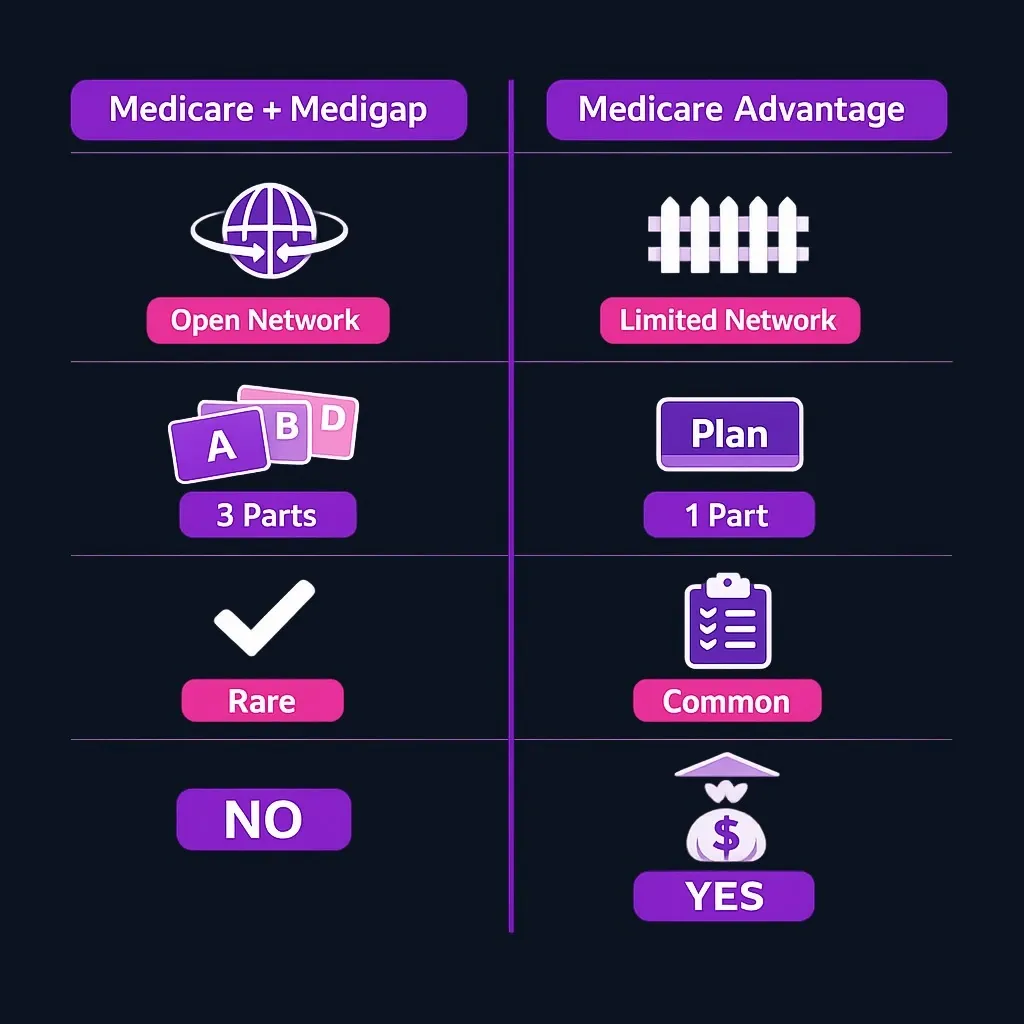
| Oncologists and hospitals | Confirm that each provider accepts Medicare; Medigap does not create coverage for a service Original Medicare excludes | Confirm each clinician, hospital, infusion center, imaging site, and laboratory is in network |
| Prior authorization | Original Medicare generally does not require prior authorization for most services, though coverage rules still apply | The plan may require prior authorization for specified services or supplies |
| Part A and B cost sharing | A Medigap policy may cover some amounts, depending on the standardized plan | Copayments and coinsurance follow the plan's Evidence of Coverage |
| Annual Part A/B spending cap | Original Medicare alone has no annual cap; Medigap can reduce covered cost sharing according to policy terms | Plans have an annual limit for covered Medicare services, with possible separate network limits |
| Prescription drugs | Usually requires a separate Part D plan; check its formulary and pharmacy network | Most plans include Part D; check that plan's formulary and rules |
| Travel or care outside a local area | Providers anywhere in the U.S. may be used if they accept Medicare | Non-emergency care may be limited to the plan's network and service area |
| Enrollment risk | Buying or switching Medigap can depend on federal guaranteed-issue rights, the one-time open-enrollment period, underwriting, and state law | Plan changes are limited to applicable enrollment periods and special enrollment rights |
These are structural differences, not estimates of what a particular patient will pay.
A claim-by-claim verification checklist
For every plan under consideration, collect the current plan year documents and verify:
- Care team: oncologist, surgeon, radiation facility, infusion center, hospital, pathology lab, and imaging center.
- Treatment: whether the expected chemotherapy, radiation, surgery, scans, durable medical equipment, and supportive services are covered and whether authorization is required.
- Drugs: exact drug name, dosage form, formulary tier, specialty-pharmacy requirement, step therapy, and prior authorization.
- Costs: premiums, deductibles, copayments, coinsurance, out-of-pocket limit, and any out-of-network exposure.
- Travel and second opinions: coverage at a tertiary center or outside the plan's local area.
- Appeals: expedited-review procedures for urgent care and contact details for denials.
- Effective dates: when a change can start and whether it creates any gap in medical or drug coverage.
Do not rely solely on an online directory. Call the plan and provider, record the date, representative, and reference number, and request written confirmation where possible.
Practice trading with Finelo
Practice in a simulator, learn with bite-sized lessons, and build confidence before risking real money.
Medigap timing and switching risk
Medigap enrollment rights are a major constraint. Medicare states that the one-time Medigap Open Enrollment Period generally lasts six months beginning when a person has Part B and is 65 or older. Outside that period, a company may be allowed to deny coverage or charge more unless a guaranteed-issue right or state protection applies. See Medicare's current guidance on getting ready to buy Medigap.
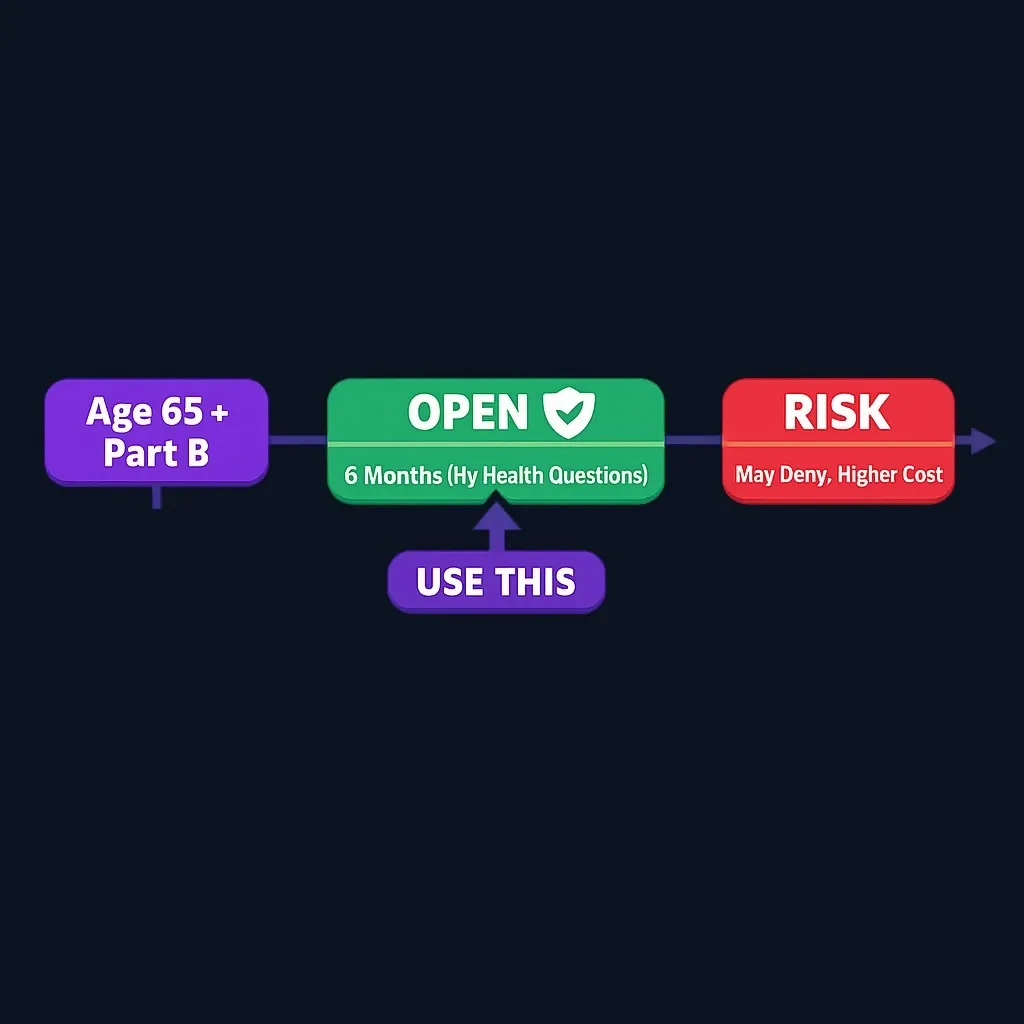
Do not drop existing coverage based on an assumption that a Medigap policy will be available later. Confirm the right to buy, the policy's effective date, and any underwriting decision first. State law may provide additional protections, so contact the State Insurance Department or a State Health Insurance Assistance Program.
Hypothetical comparisons
Multi-center treatment
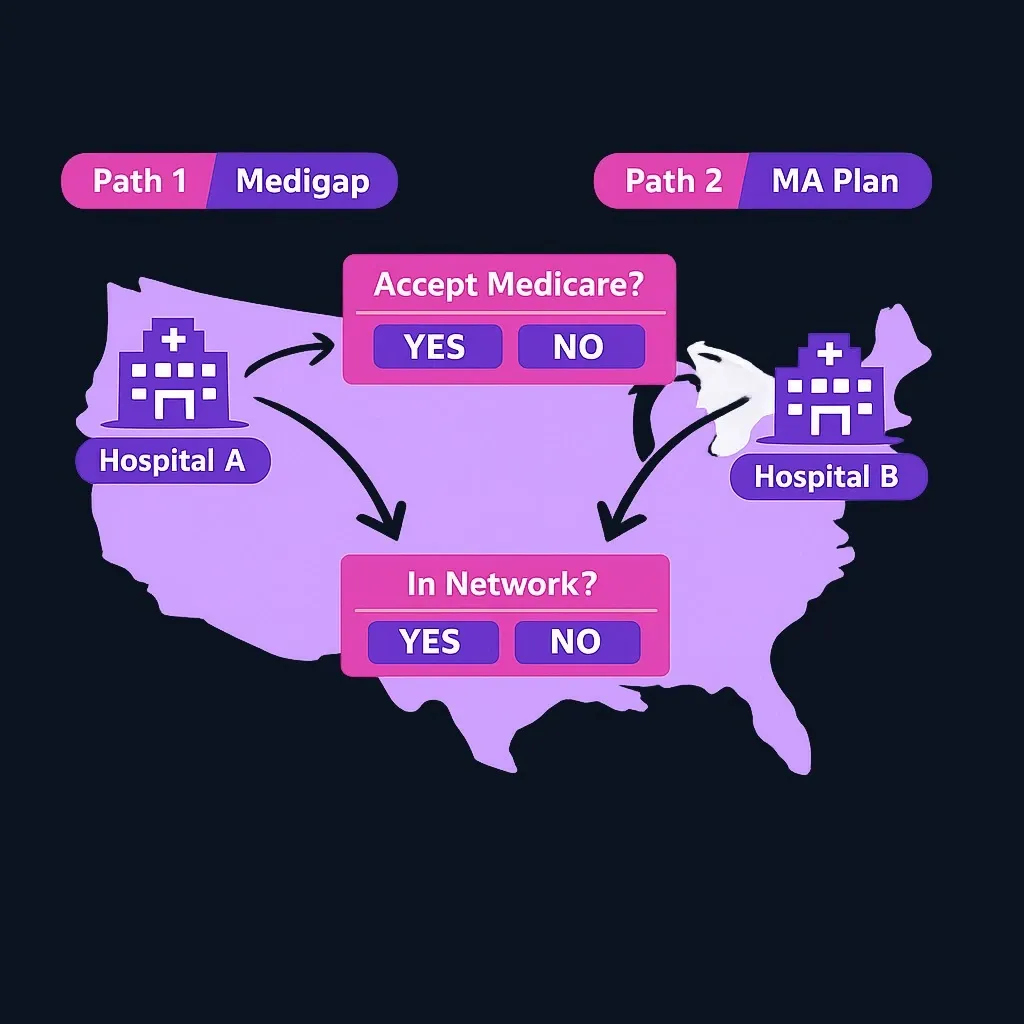
A person expects treatment from clinicians at two hospitals in different states. The comparison should begin by checking whether each provider accepts Original Medicare and whether each Medicare Advantage option covers the facilities in network. The result depends on the actual providers and plans—not on the cancer diagnosis alone.
Local treatment with expensive oral medication
A person expects most care from one local cancer center but needs an oral drug. A Medicare Advantage plan may have an adequate provider network, yet the drug formulary or specialty-pharmacy rules could materially affect access and cost. Under Original Medicare with Medigap, the separate Part D formulary would require the same careful review.
These scenarios are illustrative, not patient outcomes or recommendations.
Common errors to avoid
- Assuming a hospital's network status means every clinician working there is in network.
- Comparing monthly premiums without modeling expected treatment cost sharing.
- Assuming Medigap covers outpatient prescriptions; newly sold Medigap policies do not include Part D coverage.
- Dropping a Medigap policy before confirming a protected right and effective date for replacement coverage.
- Assuming a drug remains on the same tier from one plan year to the next.
- Treating an out-of-pocket maximum as a cap on every expense; premiums and non-covered services may not count.
- Using generalized “best plan for cancer” rankings instead of current plan documents.
Where to get neutral help
- Call 1-800-MEDICARE or use Medicare.gov.
- Contact the State Health Insurance Assistance Program for individualized, noncommercial Medicare counseling.
- Ask the oncology practice's financial navigator which billing codes, facilities, and drugs should be verified, while recognizing that only the plan can make a formal coverage determination.
- Contact the State Insurance Department for state-specific Medigap rights.
FAQ
Does Medigap cover cancer treatment?
Medigap helps pay specified cost sharing for Part A and Part B services covered by Original Medicare. It does not independently decide whether a treatment is covered and generally does not cover prescription drugs.
Does Medicare Advantage have to cover cancer care?
Medicare Advantage plans must cover medically necessary services that Original Medicare covers, but a plan may apply network, referral, and prior-authorization rules consistent with Medicare requirements. Verify the specific treatment and provider.
Can a person switch from Medicare Advantage to Medigap after a cancer diagnosis?
Switching to Original Medicare and buying Medigap are separate questions. A person may have a valid Medicare enrollment opportunity but lack a federal guaranteed-issue right to buy a desired Medigap policy. State protections can differ. Confirm both steps before changing coverage.
Which option has more predictable costs?
The answer depends on premiums, the Medigap policy, Part D coverage, Medicare Advantage cost sharing, expected services, and the plan year. Compare documented scenarios rather than relying on a general label.
Conclusion
For cancer care, the strongest comparison is a documented verification of providers, facilities, treatments, drugs, authorization rules, and total costs. Enrollment and Medigap rights can be as important as benefits. Use current Medicare and plan documents, obtain neutral counseling, and coordinate with the care team before changing coverage.
For additional educational material, visit the Finelo Blog.
Financial LiteracyFinancial Education
Practice trading with Finelo
Practice in a simulator, learn with bite-sized lessons, and build confidence before risking real money.
About the author
Finelo Team
The Finelo Team creates practical investing and trading education designed to help beginners learn faster with structured challenges, simulator practice, and bite-sized lessons.
Keep reading — Related articles

Financial Literacy
Mercury Books Review 2026: Is It Worth It for Startups?
Mercury Books brings double-entry accounting into Mercury. Review its $35 pricing, reports, AI features, integrations, and migration limits.
Finelo Team

Financial Literacy
Why is My FICO Score Lower Than My Credit Score?
Example takeaway: seeing a higher score in a bank app doesn’t guarantee lenders will see the same FICO number at application time; lenders often pull a specific FICO version from a specific bureau.
Finelo Team

Financial Literacy
Why Is My FICO Score Higher Than My Credit Score?
Brief educational note: this article is educational, not financial or investment advice; investing and credit decisions involve risk and possible loss.
Finelo Team


