For 2026, you can contribute up to $7,500 across your traditional and Roth IRAs, or $8,600 if you are 50 or older. Your income may reduce that amount. The IRS uses modified adjusted gross income (MAGI), not salary alone, to test eligibility. In general, your limit is the lowest of three amounts: the annual IRA cap, your taxable compensation, and your MAGI-based Roth allowance.
Roth IRA Contribution Limits for 2026: Key Insights and Guidelines

For 2026, you can contribute up to $7,500 across your traditional and Roth IRAs, or $8,600 if you are 50 or older. Your income may reduce that amount. The IRS uses modified adjusted gross income (MAGI), not salary…
8 min read
Practice trading with Finelo
Practice in a simulator, learn with bite-sized lessons, and build confidence before risking real money.
Want to learn more?
Practice in a simulator, learn with bite-sized lessons, and build confidence before risking real money.
Explore FineloExplore Finelo's 28-day challenges
Turn learning into a daily habit with guided challenge paths.
This Finelo guide explains each test in plain language. It also shows how to calculate a reduced contribution and fix an excess.
2026 Roth IRA Limits at a Glance
The IRS raised the basic IRA limit from $7,000 in 2025 to $7,500 in 2026. If you qualify for the age-50 catch-up, the 2026 total is $8,600. Check current figures on the IRS website before contributing.
| Your situation | Maximum before income and compensation tests |
|---|---|
| Under 50 at the end of 2026 | $7,500 |
| 50 or older at the end of 2026 | $8,600 |
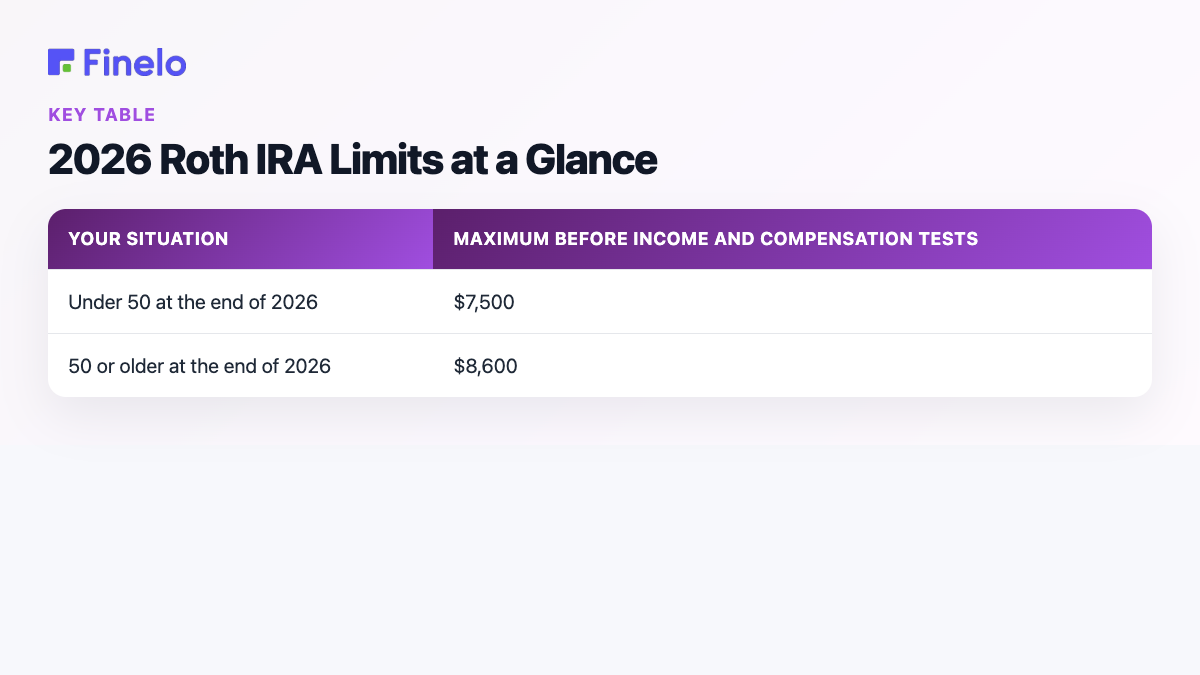
The same limit covers all your traditional and Roth IRAs. It does not give you a separate allowance for each account. For example, an eligible saver under 50 could put $2,500 into a traditional IRA. That would leave at most $5,000 of the basic IRA limit for a Roth IRA.

A simple savings schedule can help. Using the 2026 limits, an eligible saver under 50 could average $625 per month to reach $7,500. A catch-up-eligible saver could average about $716.67 per month to reach $8,600. These are budgeting examples, not required deposit schedules.
Roth IRA Income Limits for 2026
MAGI means modified adjusted gross income. It starts with adjusted gross income (AGI) from your tax return, then makes Roth-specific adjustments. A “phase-out” is the income range in which your maximum contribution gradually falls.
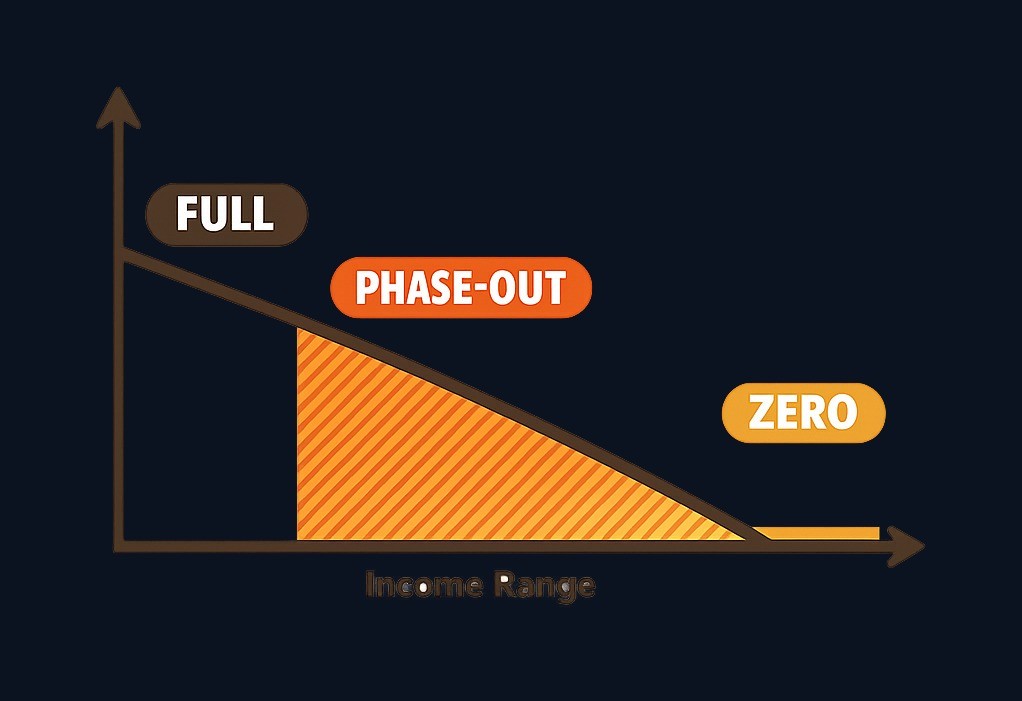
The 2026 Roth IRA phase-out ranges are:
| Tax filing status | Full contribution | Reduced contribution | No direct contribution |
|---|---|---|---|
| Single or head of household | Less than $153,000 | $153,000 to less than $168,000 | $168,000 or more |
| Married filing jointly or qualifying surviving spouse | Less than $242,000 | $242,000 to less than $252,000 | $252,000 or more |
| Married filing separately and lived with your spouse during the year | $0 MAGI | More than $0 to less than $10,000 | $10,000 or more |
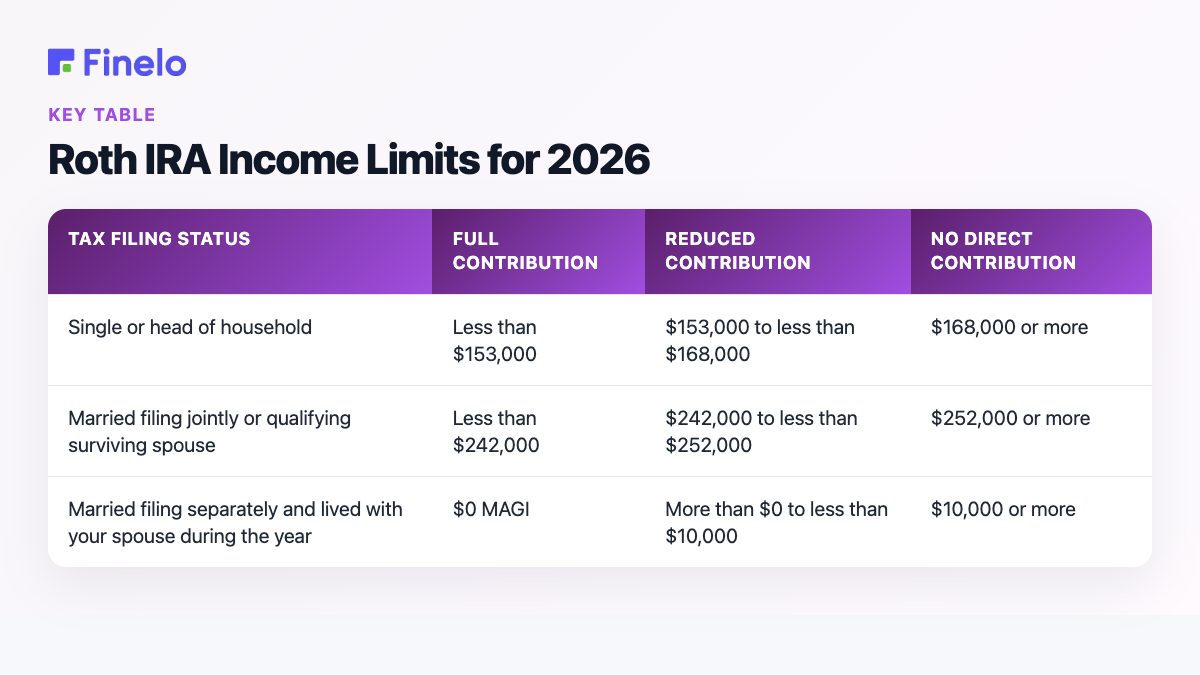
If you fall inside the middle column, do not estimate your limit from the table. Use the IRS reduction method. If your income changes often, wait until your estimate is clearer before making the final deposit.
How to Find Your Maximum Roth IRA Contribution
Use this four-step check:
- Add your IRA contributions. Total every regular contribution to your traditional and Roth IRAs for 2026. The annual cap applies across both types.
- Check taxable compensation. This generally means pay from work, such as wages or self-employment income. Your regular IRA contribution generally cannot exceed eligible compensation for the year. Special rules can apply to spouses who file jointly.
- Calculate Roth MAGI. Start with AGI. Subtract included income from a traditional-IRA-to-Roth conversion or an eligible workplace-plan rollover to a Roth IRA. Then add back the adjustments listed in the IRS Roth MAGI worksheet. These can include a traditional IRA deduction, student loan interest deduction, certain foreign income items, qualified savings-bond interest, and excluded adoption benefits.
- Apply the income test. Use the full limit below the phase-out. Use zero at or above its upper edge. Inside the range, calculate the reduced amount.
Worked MAGI and phase-out example
Assume Casey is single, under 50, and has enough taxable compensation. Casey has no traditional IRA contribution. AGI is $168,000. It includes a $10,000 Roth conversion, and Casey claimed a $2,000 student loan interest deduction. Assume no other worksheet adjustments.
Casey’s Roth MAGI is:
$168,000 − $10,000 + $2,000 = $160,000
That result sits $7,000 above the $153,000 start of the single-filer phase-out. The full phase-out spans $15,000. Under the IRS reduced-contribution method:
$7,000 ÷ $15,000 = 46.67%
$7,500 × 46.67% ≈ $3,500 reduction
$7,500 − $3,500 = $4,000 maximum Roth contribution
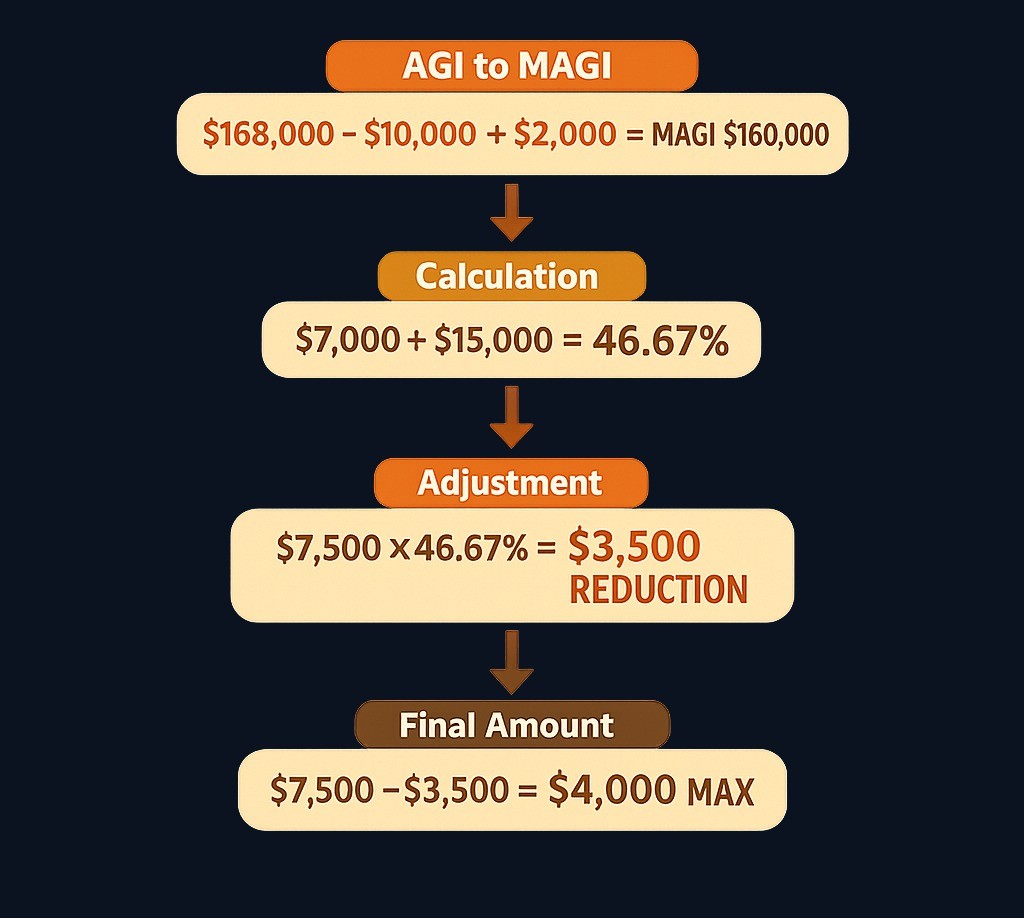
The IRS worksheet also includes rounding rules and an adjustment for other IRA contributions. Use the current worksheet for your return rather than copying the example mechanically. Social Security income, passive losses, and other AGI-based calculations may require extra steps.
Practice trading with Finelo
Practice in a simulator, learn with bite-sized lessons, and build confidence before risking real money.
How Catch-Up Contributions Work After Age 50
You qualify for the IRA catch-up if you are 50 or older at the end of the calendar year. This means a person who turns 50 late in 2026 can still use the 2026 catch-up.
The IRA catch-up is $1,100 for 2026. It raises the combined traditional-and-Roth IRA cap to $8,600. It does not remove the taxable-compensation or MAGI tests.
Do not confuse this rule with catch-ups for workplace plans such as a 401(k). Those accounts have different 2026 limits.
Roth IRA vs. Traditional IRA Contribution Rules
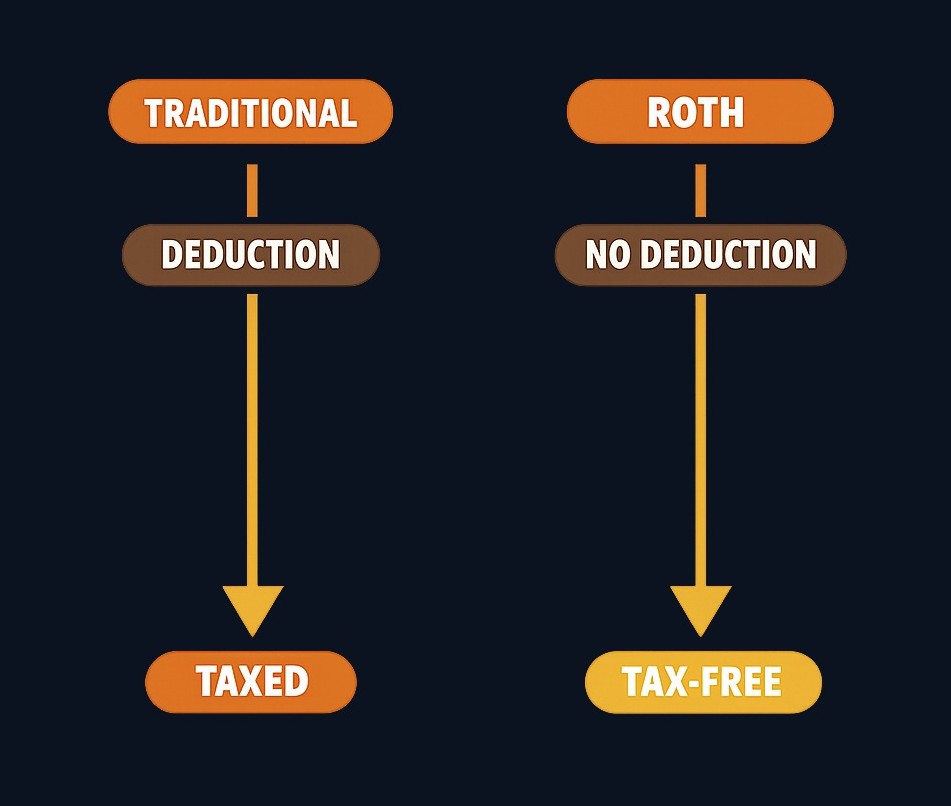
Both accounts are individual retirement arrangements, but their tax treatment differs. “Deductible” means a contribution may lower taxable income for that year.
| Question | Roth IRA | Traditional IRA |
|---|---|---|
| Is there a separate 2026 contribution cap? | No. Both accounts share the $7,500 basic cap or $8,600 age-50 cap. | No. The same combined cap applies. |
| Can income block or reduce a contribution? | Yes. The 2026 MAGI phase-out limits direct Roth contributions. | A Roth-style MAGI test does not bar the contribution if compensation rules are met. However, income and workplace-plan coverage may reduce the deduction. |
| Is the contribution deductible? | No. Roth IRA contributions are not deductible. | It may be deductible if you meet the IRS conditions. |
| How are qualified withdrawals treated? | Qualified Roth distributions are not included in income. | Traditional IRA distributions may be taxable; see the IRS distribution rules. |
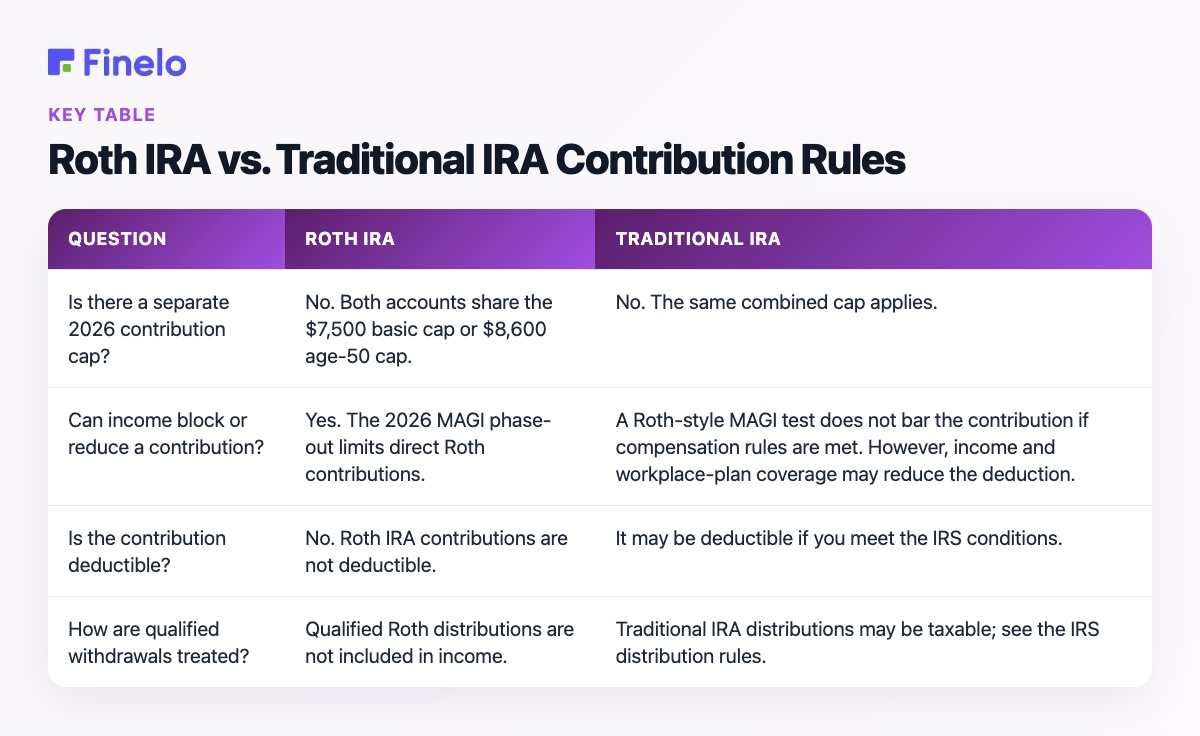
The table does not identify a universal winner. The better fit depends on your current taxes, expected future taxes, withdrawal plans, and eligibility.
What Happens If You Contribute Too Much?
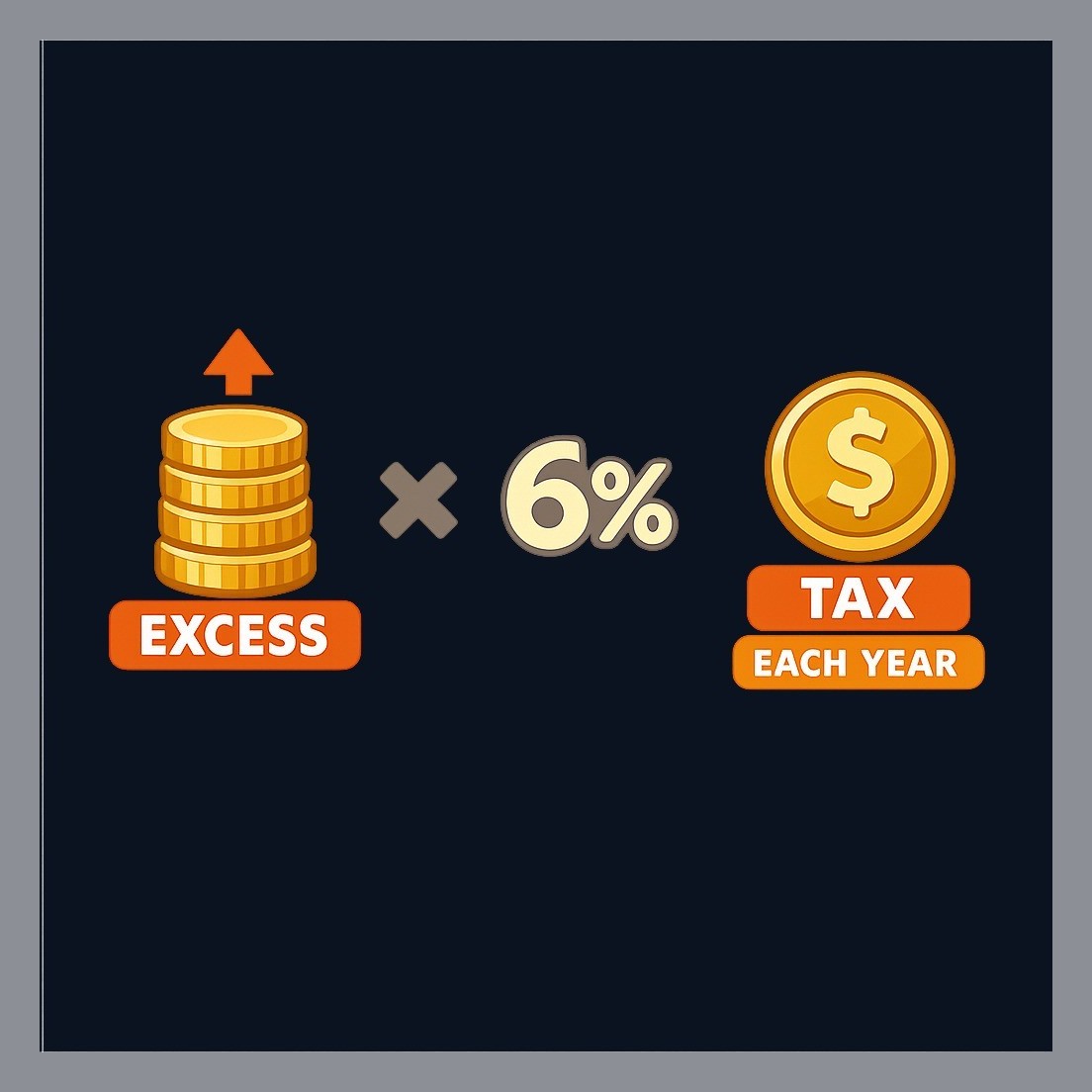
You may create an excess by exceeding the annual cap, contributing more than eligible compensation, or misjudging MAGI. An “excess contribution” is the amount above your allowed limit. The IRS applies a 6% excise tax to an uncorrected Roth IRA excess. An excise tax is a separate tax on the excess amount.
Take these steps:
- Stop new deposits. Total all regular contributions across your traditional and Roth IRAs.
- Recalculate MAGI. Use final income information and the IRS worksheet.
- Call your custodian. This is the financial company that holds the IRA. Ask about a return of the excess plus related earnings. You can also ask about a recharacterization, which treats an eligible contribution as if you made it to the other type of IRA. The IRS describes both returns of excess and recharacterizations.
- Meet the correction deadline. The IRS generally treats a contribution as not made if you withdraw it and its related earnings by the tax-return due date, including extensions. The IRS correction rules explain the tax treatment and reporting.
- Check Form 5329. The IRS generally uses Form 5329 to report additional tax on an excess IRA contribution.
You may also apply an excess to a later year if that year has unused contribution room. That choice does not erase an excise tax already due for a year in which the excess remained. Ask your custodian or a tax professional which correction fits your timing and filings.
Next Steps
Start with the three ceilings: the annual IRA cap, taxable compensation, and the MAGI-based Roth allowance. Then subtract any regular contributions already made to other IRAs.
Keep account confirmations and your MAGI calculation with your tax records. If you land inside a phase-out or find an excess, contact your custodian before moving money. Finelo links the high-impact rules in this guide to current IRS sources, but this article is financial education, not personalized tax or investment advice.
Frequently asked questions
Can I contribute to a Roth IRA and a traditional IRA in 2026?
Yes, if you meet the rules for each account. However, the $7,500 limit—or $8,600 with the age-50 catch-up—is [shared](https://www.irs.gov/newsroom/401k-limit-increases-to-24500-for-2026-ira-limit-increases-to-7500).
Are Roth IRA contributions tax-deductible?
No. The IRS says Roth IRA contributions are not [deductible](https://www.irs.gov/taxtopics/tc309). It also says qualified Roth distributions are excluded from [income](https://www.irs.gov/taxtopics/tc309).
What is the deadline for a 2026 Roth IRA contribution?
The IRS instructs custodians to report contributions made through April 15, 2027, when designated for [2026](https://www.irs.gov/instructions/i1099r). A filing extension does not extend the regular IRA contribution deadline, according to [Publication 590-A](https://www.irs.gov/publications/p590a).
What if my income changes during 2026?
Update your MAGI estimate before the final contribution. If your final MAGI lowers your limit, stop deposits and use the excess-contribution steps above.
Financial LiteracyBeginnerRetirementPersonal Finance
Practice trading with Finelo
Practice in a simulator, learn with bite-sized lessons, and build confidence before risking real money.
About the author
Finelo Team
The Finelo Team creates practical investing and trading education designed to help beginners learn faster with structured challenges, simulator practice, and bite-sized lessons.
Keep reading — Related articles

Financial Literacy
Mercury Books Review 2026: Is It Worth It for Startups?
Mercury Books brings double-entry accounting into Mercury. Review its $35 pricing, reports, AI features, integrations, and migration limits.
Finelo Team

Financial Literacy
Why is My FICO Score Lower Than My Credit Score?
Example takeaway: seeing a higher score in a bank app doesn’t guarantee lenders will see the same FICO number at application time; lenders often pull a specific FICO version from a specific bureau.
Finelo Team

Financial Literacy
Why Is My FICO Score Higher Than My Credit Score?
Brief educational note: this article is educational, not financial or investment advice; investing and credit decisions involve risk and possible loss.
Finelo Team


