For U.S. readers: This article discusses U.S. rules and financial products. State rules and individual eligibility may differ.
Should Power of Attorney and Executor Be the Same Person?

Short rationale: using one person can simplify continuity and reduce friction, but it also concentrates control and can create (or appear to create) conflicts if family dynamics or asset complexity exist.
7 min read
Practice trading with Finelo
Practice in a simulator, learn with bite-sized lessons, and build confidence before risking real money.
Want to learn more?
Practice in a simulator, learn with bite-sized lessons, and build confidence before risking real money.
Explore FineloExplore Finelo's 28-day challenges
Turn learning into a daily habit with guided challenge paths.
Quick answer
Yes — often the same trusted person can serve as your agent under a power of attorney and later as executor of your will, because a power of attorney gives someone authority to act for you while you are alive and an executor administers your estate after you die (Consumer Financial Protection Bureau; IRS guidance for executors). Finelo provides financial education, not financial or investment advice.
Short rationale: using one person can simplify continuity and reduce friction, but it also concentrates control and can create (or appear to create) conflicts if family dynamics or asset complexity exist. Read the sections below to compare duties, spot common pitfalls, and use a short decision checklist to choose the right approach for your situation.
What to know before deciding
This section explains the roles, the practical differences in timing and authority, and the legal points you should confirm locally.
What a power of attorney (POA) does
- A POA names an agent to act for you when you cannot handle decisions yourself; it’s commonly used so someone you trust can manage bills, accounts, or other affairs while you are still alive (Consumer Financial Protection Bureau).
What an executor (personal representative) does
- An executor steps in after your death to locate assets, pay debts and taxes, and distribute assets according to your will. Official IRS guidance explains executor responsibilities related to estate tax and estate filings (IRS guidance for executors).
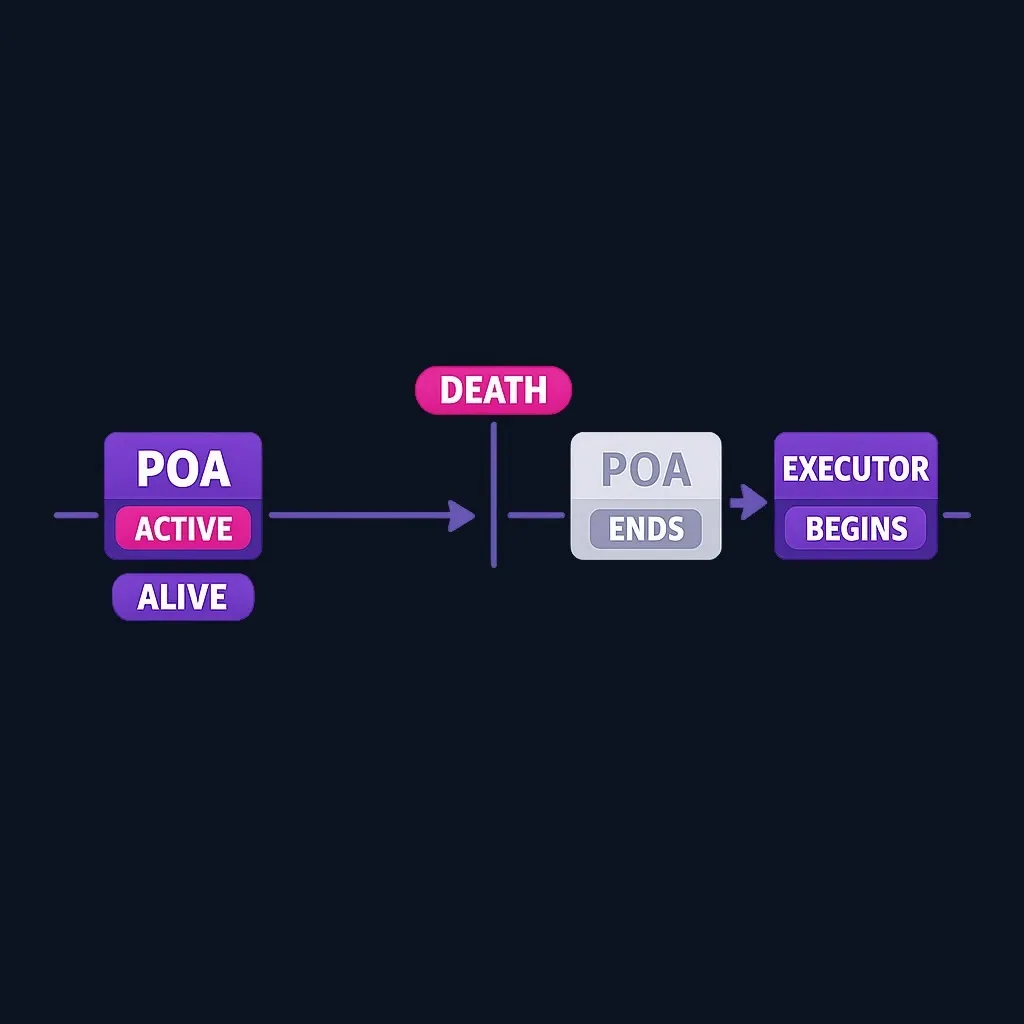
Timing difference (why both roles can be held by one person)
- Because a POA operates while you are alive and an executor administers the estate after death, the legal authorities do not run at the same time. That sequential timing is why many people name the same trusted person to both roles. The timing distinction is central to the decision—confirm specifics with a local attorney if you need a binding ruling.
Legal and state-variation note
- Probate rules, terminology (for example, “personal representative” vs. “executor”), witnessing requirements, and fiduciary duties are set by state law and can differ. For tax- and filing-related duties that executors face, refer to IRS guidance above and to state probate resources when drafting documents. If your situation involves multiple states, get state-specific advice.
Practical trade-offs at a glance
- Pros of naming the same person: continuity of knowledge, fewer people to brief, potential speed in administration.
- Cons: concentration of authority, appearance of self-dealing if the agent later benefits, greater risk if that person becomes unavailable.
Educational note: this content is educational and not legal advice. For legally binding decisions or contested situations, consult a licensed estate or probate attorney.
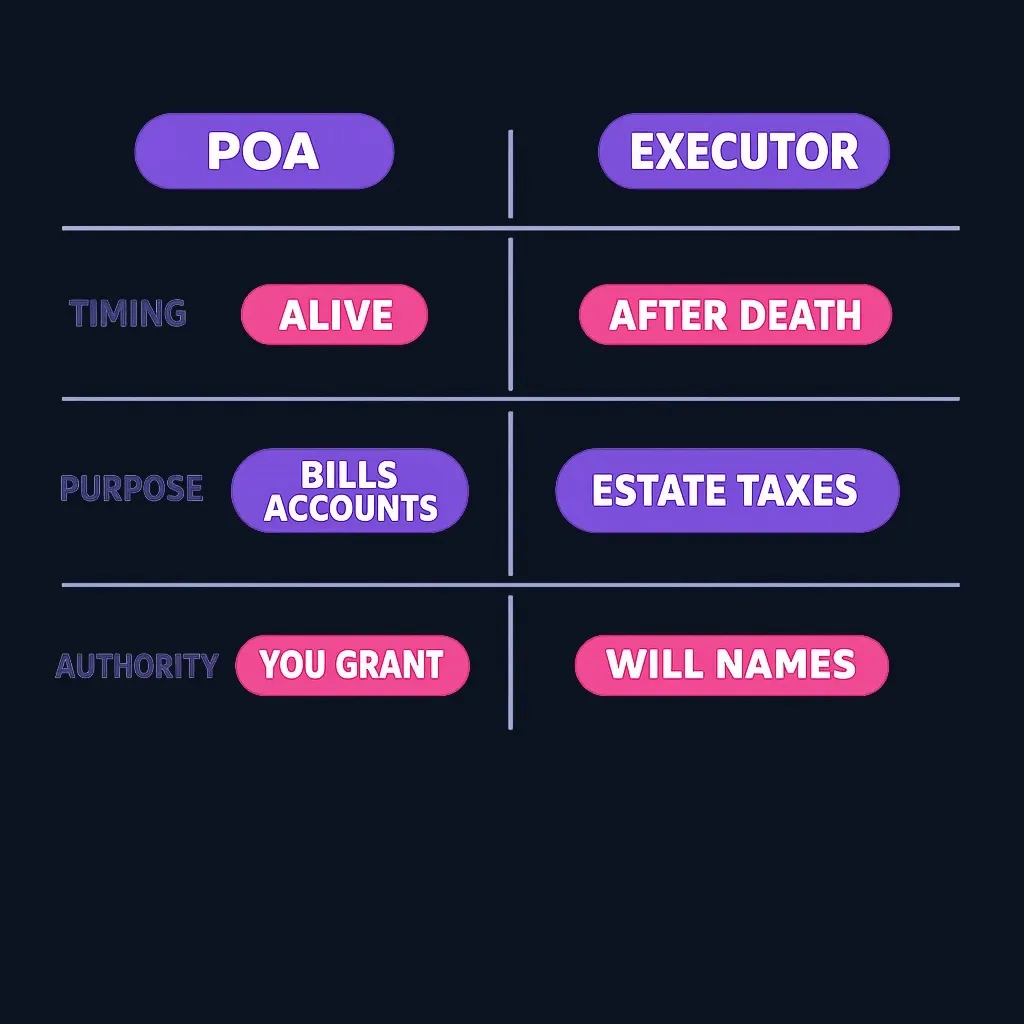
Comparison table — core differences
| Topic | Power of Attorney (agent) | Executor / Personal Representative |
|---|---|---|
| When authority applies | While you are alive; used when you cannot act for yourself (Consumer Financial Protection Bureau) | After your death; administers the estate and handles estate filings (IRS guidance for executors) |
| Typical responsibilities | Managing accounts and legal/financial decisions you authorize in the POA (see POA guidance for examples) (Consumer Financial Protection Bureau) | Locating assets, paying debts and taxes, filing estate information and tax forms, and distributing assets per the will (IRS guidance for executors) |
| How appointed | You name an agent by signing a POA document that meets state formalities (Consumer Financial Protection Bureau) | You name an executor in your will; a court appoints one if there’s no valid will (IRS guidance for executors) |
| Oversight | Fiduciary duty to act in your best interest while you are alive; state rules and court remedies can apply | Court supervision during probate is common; executor must follow probate procedures and may need to provide accountings (IRS guidance for executors) |
(Use this table to compare at a glance; your state may use slightly different terminology or add specific formalities.)
Practice trading with Finelo
Practice in a simulator, learn with bite-sized lessons, and build confidence before risking real money.
Decision framework
Use this quick scoring framework and practical steps to decide whether to combine roles.
Step A — Quick checklist (score each 0–2) 0 = no, 1 = maybe, 2 = yes
- Trustworthiness and transparency track record? (0–2)
- Candidate likely to remain available and able to serve? (0–2)
- Candidate is organized and willing to keep detailed records? (0–2)
- Family conflict is low or the candidate can be perceived as fair? (0–2)
- You have named alternates for both roles? (0–2)
- Estate complexity is low (few accounts or clear beneficiaries)? (0–2)
- Candidate accepts oversight or co-signing for major transactions? (0–2)
- You are comfortable with the appearance of the arrangement? (0–2)
How to interpret totals (educational guidance)
- 12–16: Combining roles is reasonable with alternates named and recordkeeping required.
- 6–11: Consider splitting roles (one person as POA, a different executor), or use a co-agent/co-executor arrangement.
- 0–5: Prefer separate people; consider a neutral professional executor if family conflict or complexity is high.

Practical steps to reduce risk (apply regardless of score)
- Name successor agents and successor executors in each document.
- Require the agent to keep itemized, dated records and copies of key communications.
- Consider a co-agent, a requirement for periodic accounting, or an independent trustee/executor for high-value or contested estates.
- Review and update documents after major life events or moving states.
Short worked example
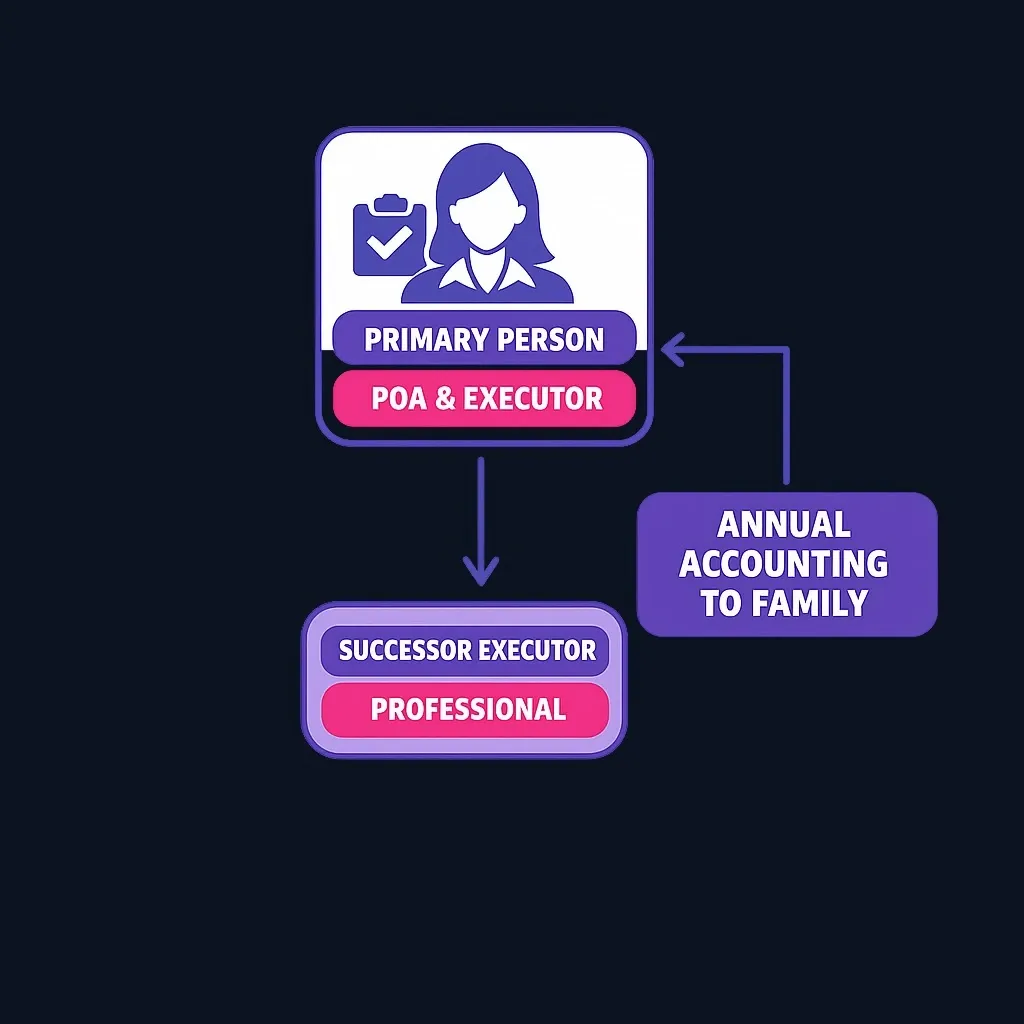
- Situation: You prefer one person for continuity but worry about family appearance of fairness. Solution: name your top choice as both POA and executor, name an independent professional as successor executor, and require the agent to include an annual written accounting to a named family contact. This lowers dispute risk while keeping continuity.
FAQ
Can a person have both a Power of Attorney and be an Executor?
Yes. Because POA authority typically applies while you are alive and an executor’s authority begins after death, the same person may hold both positions. Many estate plans do this for continuity; confirm any state-specific formality with an attorney (; IRS guidance for executors).
What is the main difference between a Power of Attorney and an Executor?
A POA empowers an agent to act for you during your lifetime if you cannot act; an executor administers your estate after you die, handling probate tasks and estate filings. For executor-related tax and filing responsibilities, see IRS guidance for executors (IRS guidance for executors).
What happens if there is no Power of Attorney?
Without a POA, if you become incapacitated, family members may need a court-appointed guardian or conservator to manage your affairs. That process is typically slower and more public than using a POA. For planning, consider a POA to avoid court intervention (Consumer Financial Protection Bureau).
How do I appoint a Power of Attorney or an Executor?
You appoint a POA by signing a POA document that meets your state’s witnessing and notarization requirements; you name an executor in your will. Because formalities differ by state, use state-compliant forms and consult a licensed attorney for contested or complex situations (; IRS guidance for executors).
Next steps
- Locate existing estate documents and confirm successor names and alternates.
- Run top candidates through the decision checklist above and note any family concerns.
- For state-specific legal formality or probate questions, consult a licensed estate attorney.
Use the role-comparison questions in this article to prepare for a discussion with a qualified estate-planning professional in the relevant state. Finelo provides education, not state-specific legal forms or advice.
Financial LiteracyFinancial Education
Practice trading with Finelo
Practice in a simulator, learn with bite-sized lessons, and build confidence before risking real money.
About the author
Finelo Team
The Finelo Team creates practical investing and trading education designed to help beginners learn faster with structured challenges, simulator practice, and bite-sized lessons.
Keep reading — Related articles

Financial Literacy
Mercury Books Review 2026: Is It Worth It for Startups?
Mercury Books brings double-entry accounting into Mercury. Review its $35 pricing, reports, AI features, integrations, and migration limits.
Finelo Team

Financial Literacy
Why is My FICO Score Lower Than My Credit Score?
Example takeaway: seeing a higher score in a bank app doesn’t guarantee lenders will see the same FICO number at application time; lenders often pull a specific FICO version from a specific bureau.
Finelo Team

Financial Literacy
Why Is My FICO Score Higher Than My Credit Score?
Brief educational note: this article is educational, not financial or investment advice; investing and credit decisions involve risk and possible loss.
Finelo Team


