For U.S. readers: This article discusses U.S. rules and financial products. State rules and individual eligibility may differ.
Social Security Survivor Benefits After Turning 18: What You Need to Know
Concrete example: Maria is receiving survivor benefits because her parent worked enough Social Security credits.
10 min read
Practice trading with Finelo
Practice in a simulator, learn with bite-sized lessons, and build confidence before risking real money.
Want to learn more?
Practice in a simulator, learn with bite-sized lessons, and build confidence before risking real money.
Explore FineloExplore Finelo's 28-day challenges
Turn learning into a daily habit with guided challenge paths.
Quick answer
If you’re turning 18 and currently receiving survivor benefits, those payments generally stop at age 18 unless you meet a special continuation rule (for example, being a full‑time K–12 student) or qualify as a disabled adult child. The Social Security Administration will send a letter explaining next steps and — if you are still in school — provides a way to request continuation using a specific form SSA-1372. Finelo provides financial education, not financial or investment advice. Investing can involve loss.
What to know before deciding
Survivor benefits for children are paid from a deceased worker’s Social Security record and are intended to replace some lost family income. The key decision points at age 18 are whether you remain eligible (student status or disability are common exceptions) and whether you or a guardian need to contact the SSA to preserve payments. The SSA will notify you when you turn 18 and outline any required actions; follow the letter’s instructions and contact the SSA if you don’t receive one SSA: Becoming an adult — At a glance.
Eligibility Criteria for Survivor Benefits
Children may qualify as survivors under several common rules:
- Age rule: Benefits generally stop at age 18 for a child beneficiary unless another exception applies.
- Full‑time high‑school students: Children in K–12 who are full‑time students may continue to receive benefits through age 19 while enrolled full‑time in high school.
- Disabled adult child rule: If a qualifying disability began before age 22, benefits may continue under separate eligibility rules; that exception is distinct from the full-time-school rule. Verify the current requirements directly with Social Security.
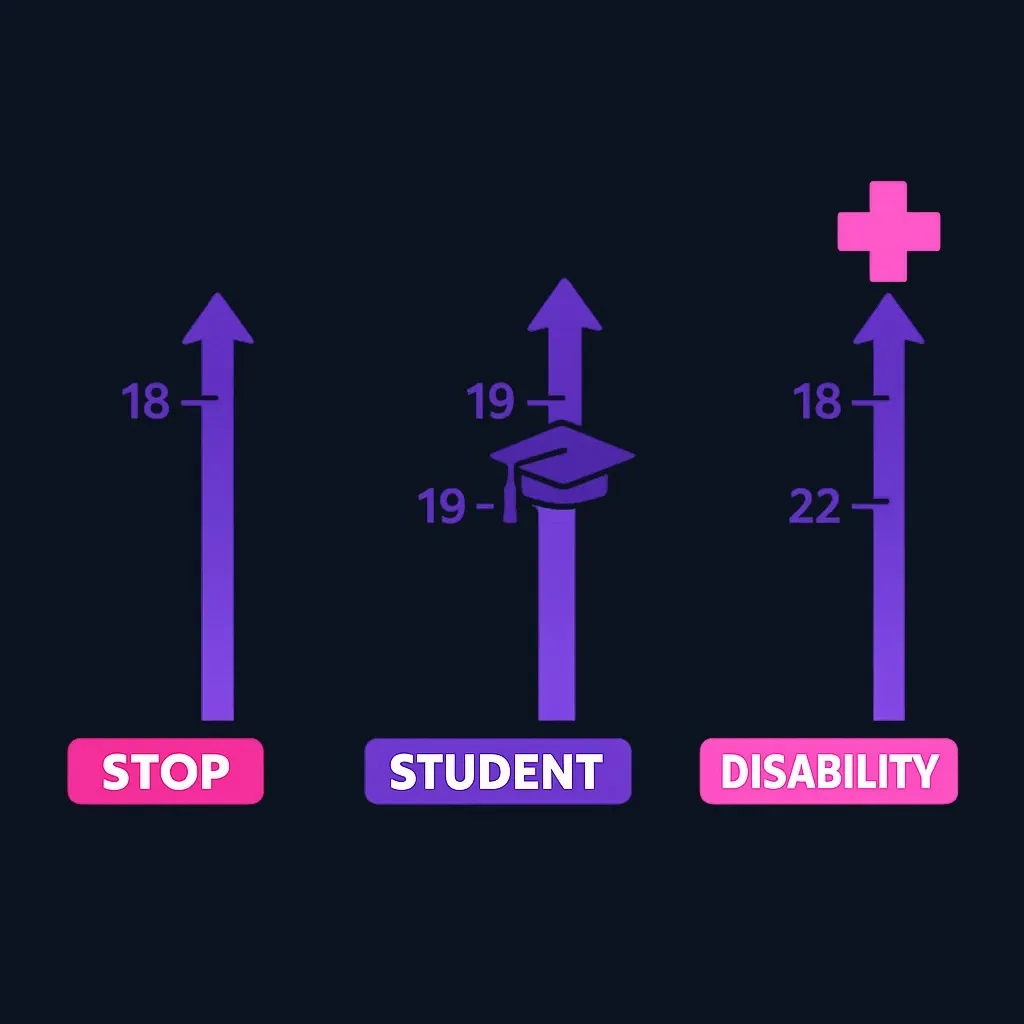
Concrete example: Maria is receiving survivor benefits because her parent worked enough Social Security credits. At 18 she is in 12th grade full‑time; the SSA’s guidance says she may be eligible to continue payments up to 19 while still enrolled full‑time in K–12, provided she (or someone on her behalf) completes the procedure the SSA describes.
What you should be able to evaluate after reading this section:
- Whether the basic age cutoff applies to your situation (18 vs. 19 if a full‑time K–12 student).
- Whether the Social Security disabled-adult-child rules may apply when a qualifying disability began before age 22.
What Happens When You Turn 18?
When a child beneficiary reaches their 18th birthday, the SSA typically stops child survivor payments automatically unless an exception applies. The SSA states it will send a letter at age 18 that explains whether benefits will stop and what you must do next.
Concrete example and immediate actions:
- Example: The SSA letter arrives saying payments will stop on your 18th birthday because you are no longer a minor. If you are still in high school full‑time, the letter should explain how to request continued benefits. The SSA documents this continuation option and identifies the form used to request it.
- Action: Keep the SSA letter; if you expect to continue receiving benefits because you remain in K–12, follow the form instructions and meet any deadlines specified in the letter to prevent an interruption.
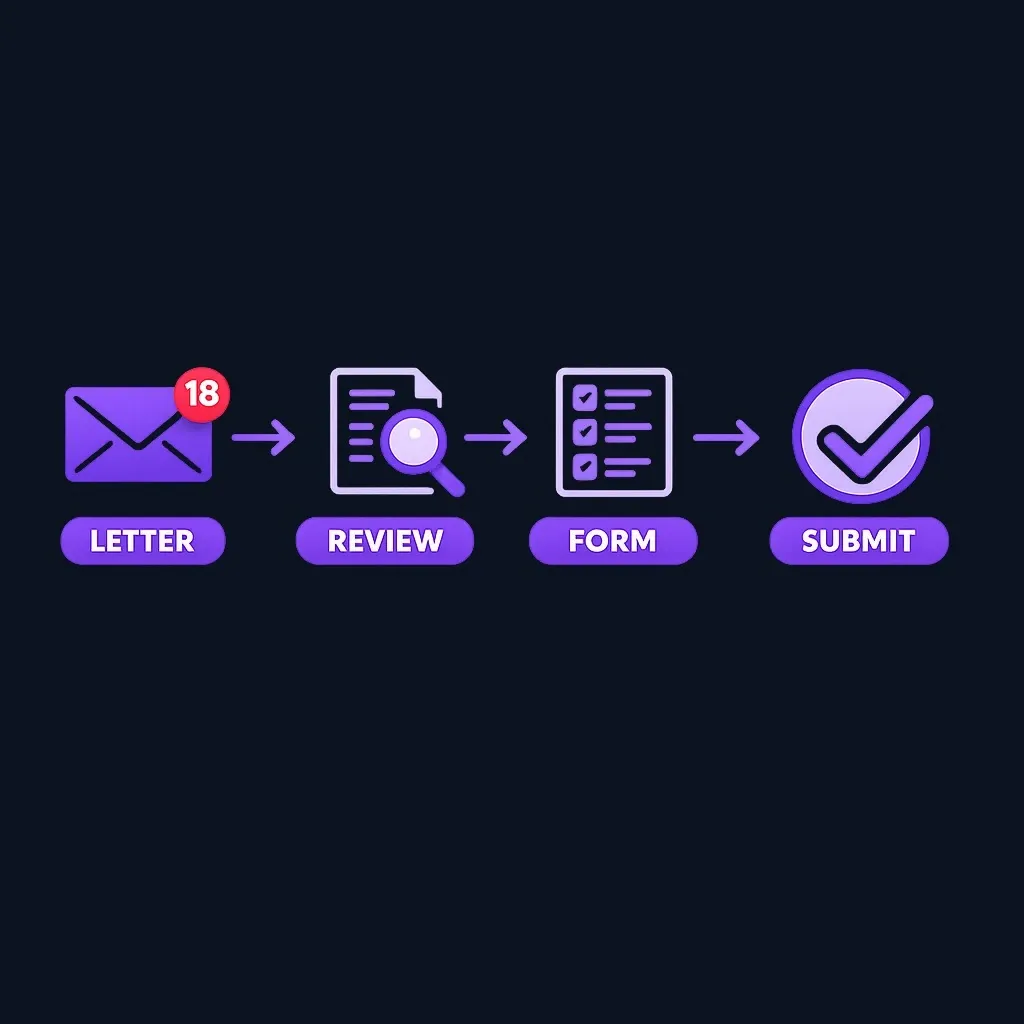
What to do if you don’t receive the letter: Contact the SSA office promptly and request the guidance they send at age 18; the SSA’s lifecycle guidance confirms they will notify beneficiaries when the adult‑status transition occurs.
Steps to Apply for Survivor Benefits
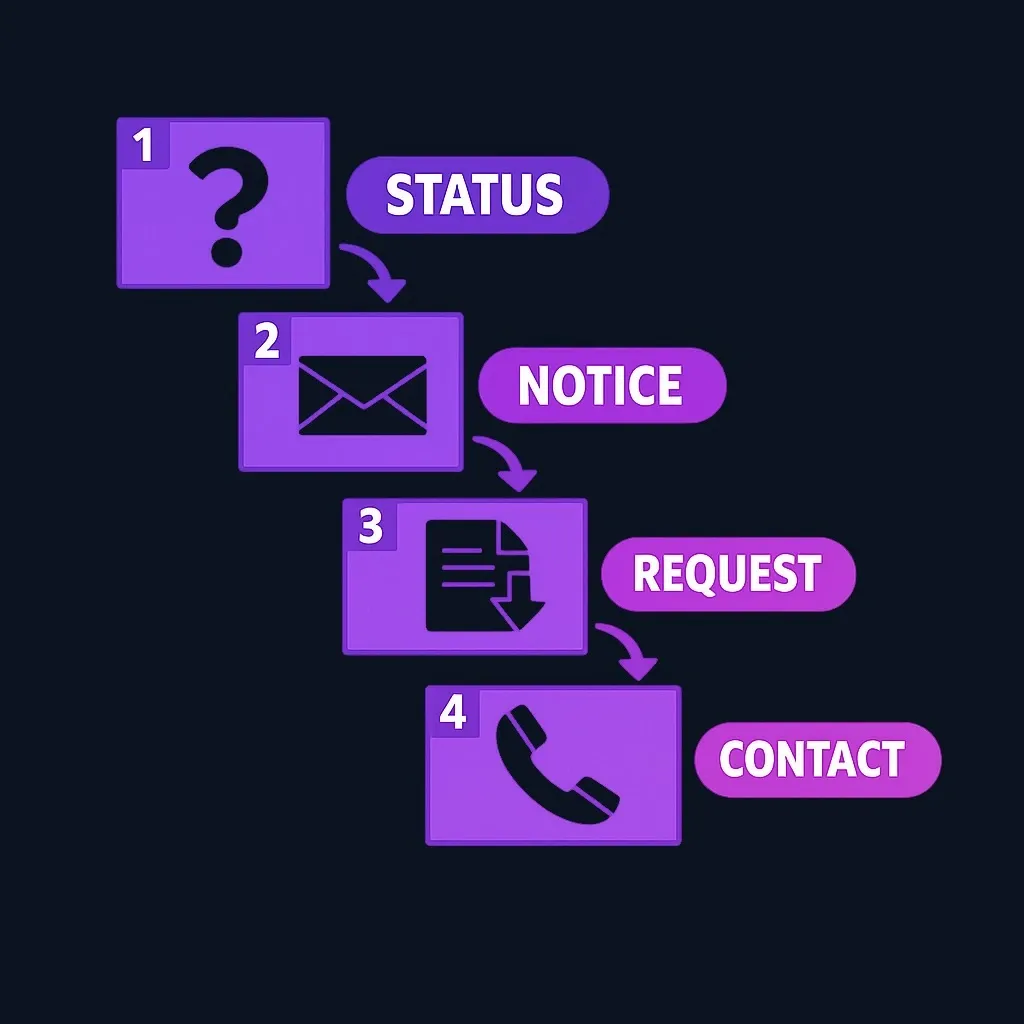
The SSA expects applicants or their guardians to contact the agency to apply or to request continuation when a child reaches adulthood. Below is a compact checklist and table showing a practical sequence to follow.
Checklist (short)
- Keep the SSA letter you receive at age 18.
- If still in K–12 and you want to continue benefits, complete the SSA form referenced in that letter (Form SSA‑1372) and submit it as instructed.
- Contact the SSA if you do not receive a letter or you have questions.
Steps table
| Step | What to do | Where SSA points you |
|---|---|---|
| 1 — Watch for the SSA notice | Keep the letter the SSA sends at age 18 and read it carefully. | SSA: Becoming an adult — At a glance |
| 2 — If still in K–12, request continuation | Use the Advance Notice / Request form the SSA names (the SSA’s reporting guidance references the request to keep benefits for children turning 18). | SSA: What you must report while on Survivor benefits |
| 3 — Contact SSA for missing letters or questions | Call or visit your local SSA office if you don’t get the letter or need help with forms. | SSA: Becoming an adult — Family or Survivor benefits |
Concrete example of process: If Jamal turns 18 in June and is finishing 12th grade in December, he should retain any SSA correspondence and submit the SSA‑identified request to continue benefits before the effective termination date stated in the SSA letter to avoid a gap in payments. Note on documentation: The SSA’s application process will require identity and relationship verification; confirm the exact list and submission method with the SSA referenced in the notification you receive.
Practice trading with Finelo
Practice in a simulator, learn with bite-sized lessons, and build confidence before risking real money.
Impact of Full‑Time Education on Benefits
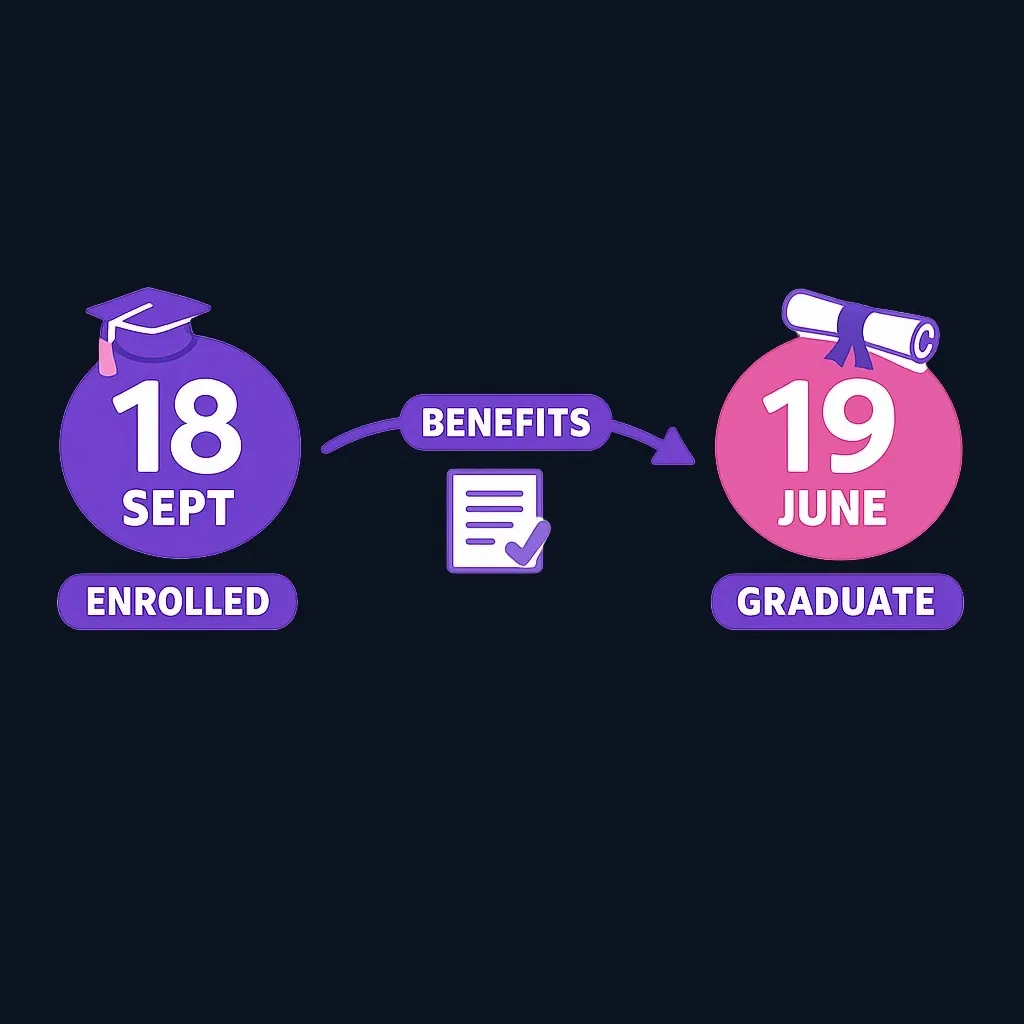
Full-time secondary education is the primary education-related exception that may extend survivor benefits past age 18. SSA states that qualifying full-time elementary or secondary students may continue receiving benefits under its age and enrollment rules. Verify the current termination date and required school certification directly with SSA's family and survivor guidance.
Concrete example: Leah is 18 and still enrolled full‑time in grade 12. Under SSA guidance, she may be eligible to keep receiving survivor benefits through the school year up to her 19th birthday, provided the SSA receives the required verification and forms before the cutoff. Practical tip: If you will be graduating or leaving school shortly after turning 18, prepare for the timing: confirm with your school’s registrar how to obtain proof of current full‑time enrollment quickly if the SSA requests it, and submit it per the SSA instructions.
Common Challenges and Solutions
-
Payments stop unexpectedly
- Solution: Retrieve your SSA letter, note the termination date, and immediately contact your local SSA office if you believe you qualify to continue (for example, full‑time K–12). The SSA explicitly provides a reporting procedure and a form to request continuation when a child turns 18.
-
You didn’t get notified at all
- Solution: Contact the SSA to request the age‑18 notice and confirm your mailing address. The SSA states it will send a letter at the time of the transition.
-
You’re transitioning to adulthood with a disability
- Solution: If a qualifying disability began before age 22, ask SSA whether the disabled-adult-child rules apply and what evidence is required.
-
Taxes and unexpected tax consequences
- Solution: The IRS notes that in many cases a child’s Social Security survivor benefits will not produce enough extra income to make those benefits taxable, but taxability depends on total household income — check the IRS guidance or consult a tax professional before filing IRS: Survivors' Benefits — Survivors' benefits and taxability.
Concrete operational fix if payments stop: File the form named in the SSA notice right away and ask the SSA whether retroactive payments are possible pending review; the SSA’s reporting guidance is the proper route to request continuation.
Decision framework
Use this short framework to decide what to do between ages 17–19.
-
Confirm status (Are you a full‑time K–12 student? Is there a qualifying disability with onset before age 22?)
- Verify the education and disability exceptions directly with SSA's guidance on becoming an adult while receiving family or survivor benefits.
-
Watch for the SSA notice at 18
- If you receive it, follow the exact instructions and observe deadlines.
-
If still eligible (student or disability), submit the SSA‑referenced request promptly
- The SSA’s reporting page points to the request procedure used when a child turns 18.
-
If you’re in doubt or do not get the notice, contact SSA directly
- Local SSA offices can confirm eligibility and next steps.
Concrete scenario: If you expect to remain enrolled full-time, gather the school certification SSA requests before the scheduled benefit termination date. If a qualifying disability began before age 22, ask SSA to evaluate the disabled-adult-child rules rather than assuming the student extension applies.
FAQ
What happens to my benefits when I turn 18?
Payments generally stop at age 18, but separate continuation rules may apply to qualifying full-time elementary or secondary students and disabled adult children. Confirm the current age, enrollment, disability, and documentation rules directly with SSA.
How can I continue receiving benefits if I'm still in school?
Follow the SSA’s instructions in the letter you receive when you turn 18 and submit the form the SSA identifies to request continuation. The SSA’s reporting guidance describes the request to keep benefits for children who turn 18 while still in school.
What documents do I need to apply for survivor benefits?
The SSA’s application and reporting guidance require documentation to verify age, identity, relationship to the deceased worker, and—when applicable—current full‑time school enrollment. Confirm the precise document list with the SSA through the notice you receive or by contacting your local SSA office.
How does my parent's earnings affect my survivor benefits?
Survivor payments are paid from the deceased worker’s Social Security record, so benefit amounts are derived from that record and the SSA’s rules for survivors. For detailed questions about how amounts are computed for a specific case, consult the SSA (they can explain how a worker’s earnings record affects survivor payments).
Conclusion and Next Steps
Key takeaways: benefits typically stop at 18, may continue to 19 for full‑time K–12 students, and disabled‑adult‑child rules exist if disability onset was before age 22. Watch for the SSA notice at 18, follow the instructions it contains, and contact the SSA promptly if you expect to remain eligible or do not receive the notice |.
One practical next step: keep the SSA letter when it arrives and make a plan to submit the request named in that letter if you are still in school. For general information and related resources, visit the Finelo Blog: Finelo Blog.
Financial LiteracyFinancial Education
Practice trading with Finelo
Practice in a simulator, learn with bite-sized lessons, and build confidence before risking real money.
About the author
Finelo Team
The Finelo Team creates practical investing and trading education designed to help beginners learn faster with structured challenges, simulator practice, and bite-sized lessons.
Keep reading — Related articles

Financial Literacy
Mercury Books Review 2026: Is It Worth It for Startups?
Mercury Books brings double-entry accounting into Mercury. Review its $35 pricing, reports, AI features, integrations, and migration limits.
Finelo Team

Financial Literacy
Why is My FICO Score Lower Than My Credit Score?
Example takeaway: seeing a higher score in a bank app doesn’t guarantee lenders will see the same FICO number at application time; lenders often pull a specific FICO version from a specific bureau.
Finelo Team
Financial Literacy
Why Is My FICO Score Higher Than My Credit Score?
Brief educational note: this article is educational, not financial or investment advice; investing and credit decisions involve risk and possible loss.
Finelo Team


