For U.S. readers: This article discusses U.S. rules and financial products. State rules and individual eligibility may differ.
VA Funding Fee Exemption: Understanding Disability Percentage Requirements
(Direct 40–60 word summary: Veterans who are receiving VA disability compensation for a service‑connected condition normally qualify for a funding‑fee exemption; the fee and any down payment are calculated as a percentage of the loan amount, so confirming exemption before…
12 min read
Practice trading with Finelo
Practice in a simulator, learn with bite-sized lessons, and build confidence before risking real money.
Want to learn more?
Practice in a simulator, learn with bite-sized lessons, and build confidence before risking real money.
Explore FineloExplore Finelo's 28-day challenges
Turn learning into a daily habit with guided challenge paths.
Quick answer
If you already receive VA disability compensation for a service‑connected condition, you are generally exempt from the VA funding fee — the exemption depends on receiving VA compensation, not a specific numeric rating percentage VA Funding Fee And Loan Closing Costs | Veterans Affairs. Finelo provides financial education, not financial or investment advice.
(Direct 40–60 word summary: Veterans who are receiving VA disability compensation for a service‑connected condition normally qualify for a funding‑fee exemption; the fee and any down payment are calculated as a percentage of the loan amount, so confirming exemption before closing avoids financing a fee into your loan.)
Introduction to VA Funding Fee Exemption
This section explains what the exemption is and why it matters. The VA funding fee is a one‑time government fee that supports the VA home loan program; it’s charged on most VA purchase and refinance loans and is calculated as a percentage of the loan amount. Exemption removes that fee at closing, which can reduce your loan balance or cash needed at closing and prevent the fee from being financed into your mortgage.
Who this page is for: veterans and surviving spouses checking whether their disability status removes the funding fee, and borrowers preparing documents to prove exemption at closing. After reading you should be able to:
- Know the basic VA rule tying exemption to receiving VA disability compensation.
- Gather the documents lenders will expect.
- Confirm exemption status before your Closing Disclosure is issued.
What to know before deciding
Before you rely on an exemption, confirm these practical points.
- The funding fee is expressed and charged as a percentage of your total loan amount; how much you save depends on loan size and whether you finance the fee or pay it up front.
- Exemption is typically based on receipt or entitlement to VA disability compensation for a service‑connected condition. That means documentation of your VA disability benefits is the key evidence lenders use to remove the fee — not a particular rounded percentage number in isolation.
- Timing matters: confirm exemption status with your lender before closing so the fee isn’t included on the Closing Disclosure or rolled into the loan.
- Verify official, current rules on the VA site linked above before relying on them for a loan decision, since procedures and forms can change.
Educational note: this article is educational, not financial or investment advice. Rules and forms can change, and loans involve risks and costs.
Decision framework
Use this short framework to decide whether to pursue exemption now or treat the fee as part of your closing costs.
-
Confirm VA compensation status
- If you are currently receiving VA disability compensation for a service‑connected condition, you should gather official proof now (see checklist below) and ask your lender to mark your loan file “exempt” before closing.
-
If your disability claim is still pending
- Treat the funding fee as likely payable at closing unless you already have VA compensation in pay status. Confirm with your lender how they handle pending claims and whether they accept a retroactive exemption (see the “How to Apply” steps).
-
Compare paying vs. financing
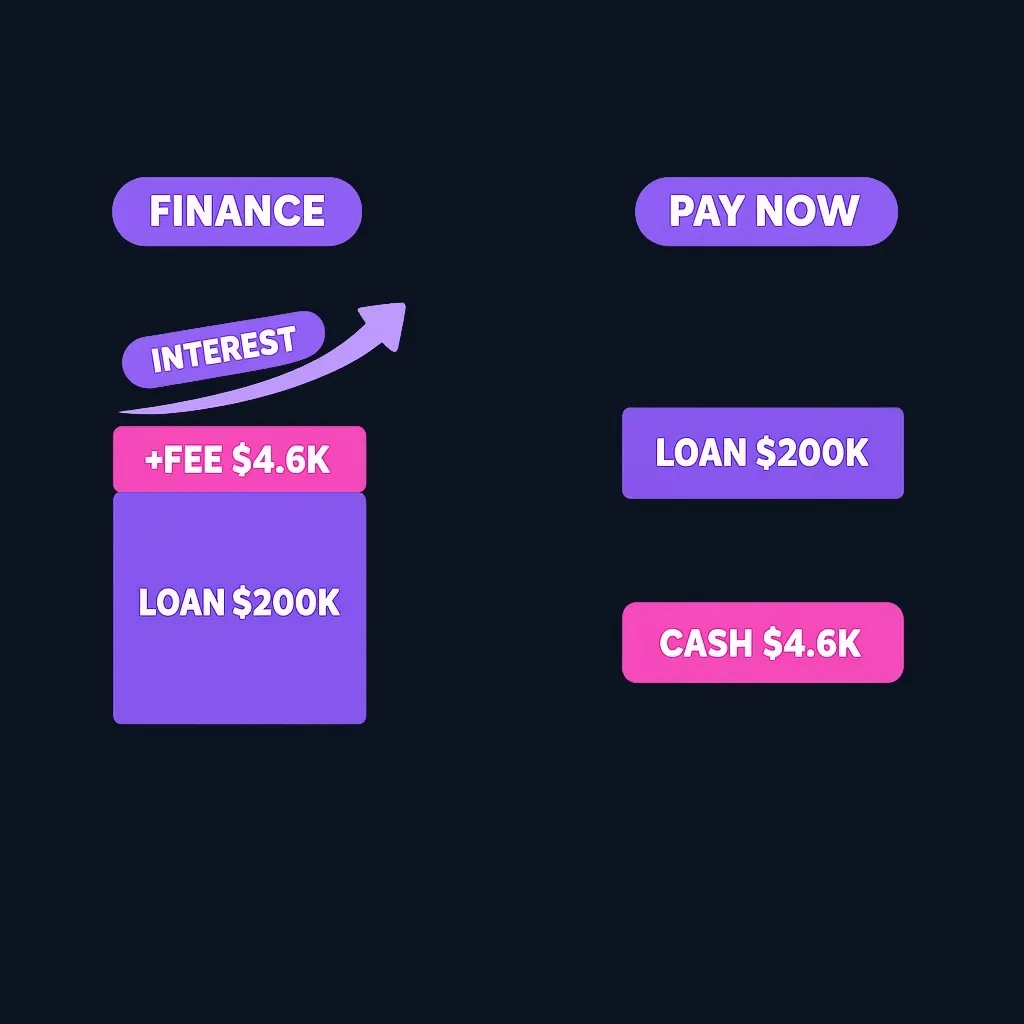
- If you cannot secure exemption documentation before closing, the fee can typically be financed into the loan or paid up front; financing raises the loan balance and total interest, while paying up front increases cash needed at closing.
-
Confirm on Closing Disclosure
- The final safeguard: verify that the Closing Disclosure does not list the VA funding fee before signing; if it does and you believe you qualify for exemption, pause and resolve the documentation with your lender.
Use this framework to prioritize: documentation first, lender confirmation second, and Closing Disclosure check last.
What is the VA Funding Fee?
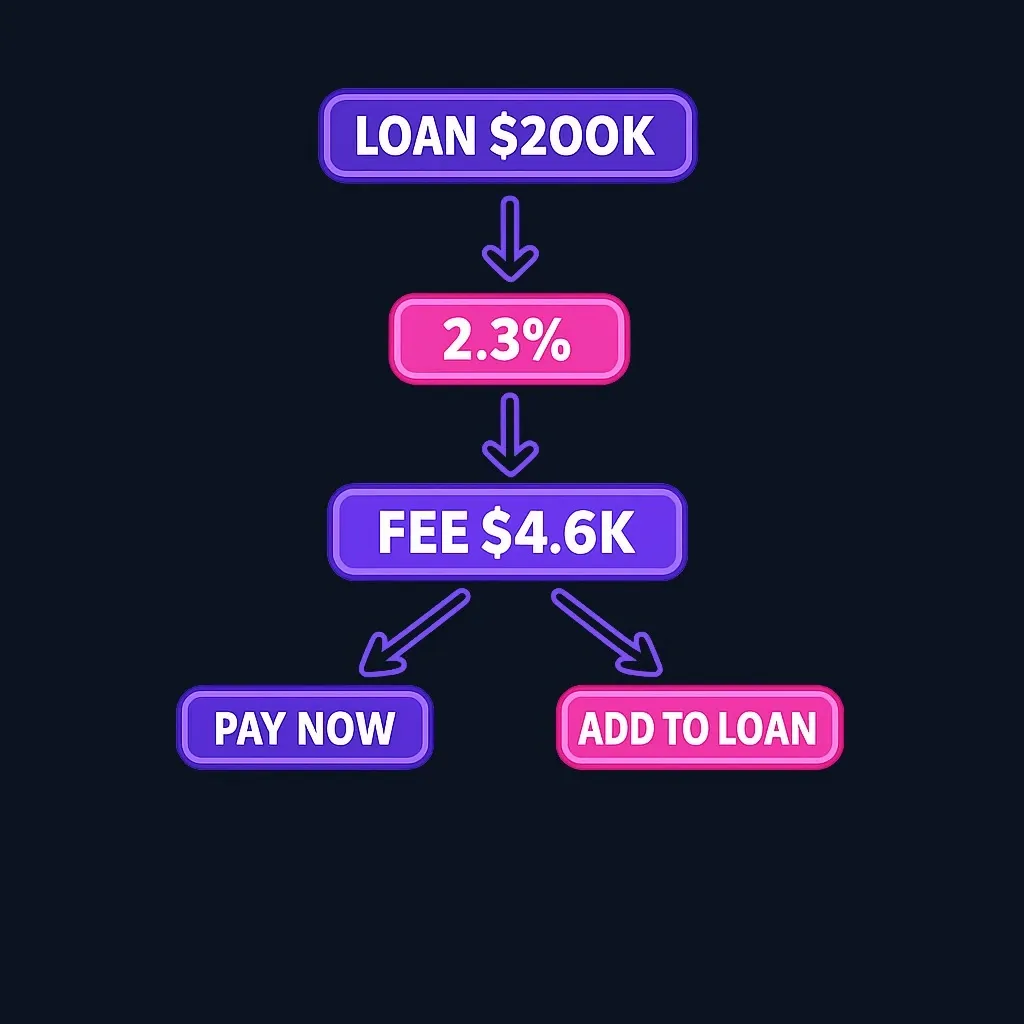
The VA funding fee is a one‑time fee charged on most VA purchase and refinance loans. It functions as a funding source for the VA loan program and is calculated as a percentage of your total loan amount; the percentage varies by loan type, whether you’ve used your VA loan benefit before, and your down‑payment amount.
Why it exists
- The fee reduces the cost to taxpayers by partially offsetting loan program expenses. It is not a VA income tax or recurring charge; it is assessed one time and can be financed into the mortgage or paid at closing.
How the fee affects your loan
- Because the fee is a percentage of loan principal, it changes with loan size. Financing the fee increases the principal balance and therefore increases the interest paid over time; paying it at closing reduces your financed amount.
What to check on loan paperwork
- Ask your lender to show the funding fee line item on the Good Faith Estimate and Closing Disclosure.
- If you believe you are exempt, request that your lender mark the loan exempt and remove that line item before you sign final documents.
Eligibility for VA Funding Fee Exemption
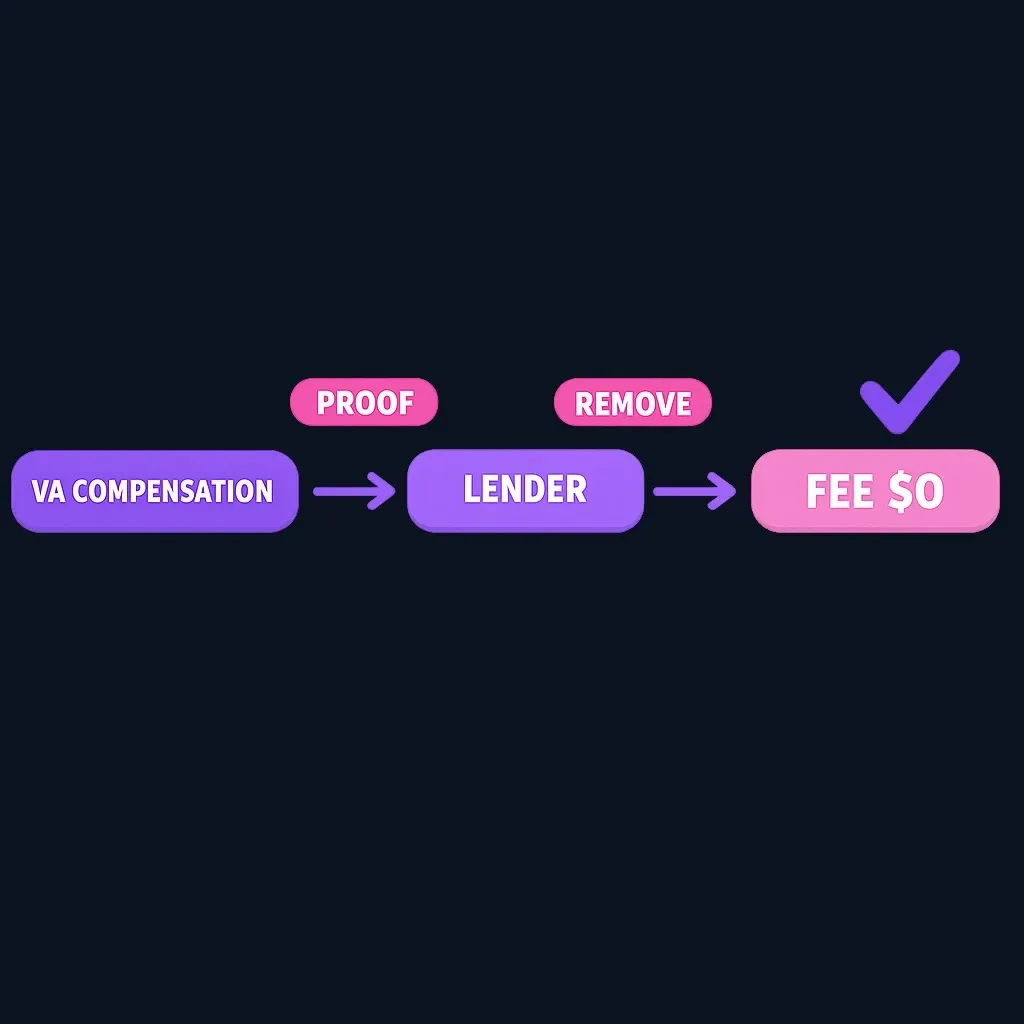
Eligibility centers on VA compensation and specific statuses the VA recognizes. The VA’s guidance connects exemption to receipt or entitlement to VA disability compensation for service‑connected conditions; that documentation is what lenders use to remove the fee at closing.
Typical qualifying categories (what to verify with official VA guidance)
- Borrowers receiving VA disability compensation for a service‑connected disability are generally treated as exempt. The critical factor is the presence of VA compensation documentation, rather than a fixed numeric cutoff in isolation.
- Other VA‑recognized statuses that can affect funding‑fee treatment are listed on the VA site; confirm your category and required paperwork with the VA guidance and your lender.
Caveats and what to confirm
- Each lender must verify exemption with VA documentation. Lenders can sometimes miss marking an eligible borrower exempt, so confirm removal of the fee on closing documents before you finalize the loan.
- If you receive compensation in a form that the VA lists as eligible, or are “entitled” to compensation under specific rules, talk to your lender about what proof they need; the VA guidance lists acceptable evidence.
Practice trading with Finelo
Practice in a simulator, learn with bite-sized lessons, and build confidence before risking real money.
Understanding Disability Percentage Ratings
A VA disability rating expresses the severity of service‑connected injuries or illnesses and determines disability compensation amounts. For funding‑fee exemption purposes, the central point is whether you are receiving VA disability compensation or are otherwise eligible for it, rather than whether your rating is a particular numeric threshold on its own.
How ratings are set (brief)
- The VA evaluates service connection, medical evidence, and functional impact to assign a percentage rating; that rating then determines compensation amounts and official status.
- That rating and the resulting compensation status are the documentation lenders accept to confirm funding‑fee exemption — so the rating’s administrative role is to create a documented compensation status.
Why this matters for exemption
- Because exemption centers on being a recipient (or otherwise entitled) to VA compensation, focus on obtaining the award letter, COE, or other VA paperwork showing that status rather than on the numeric rating itself.
How to Apply for a VA Funding Fee Exemption
This step‑by‑step guide helps you prepare, document, and confirm an exemption with your lender.
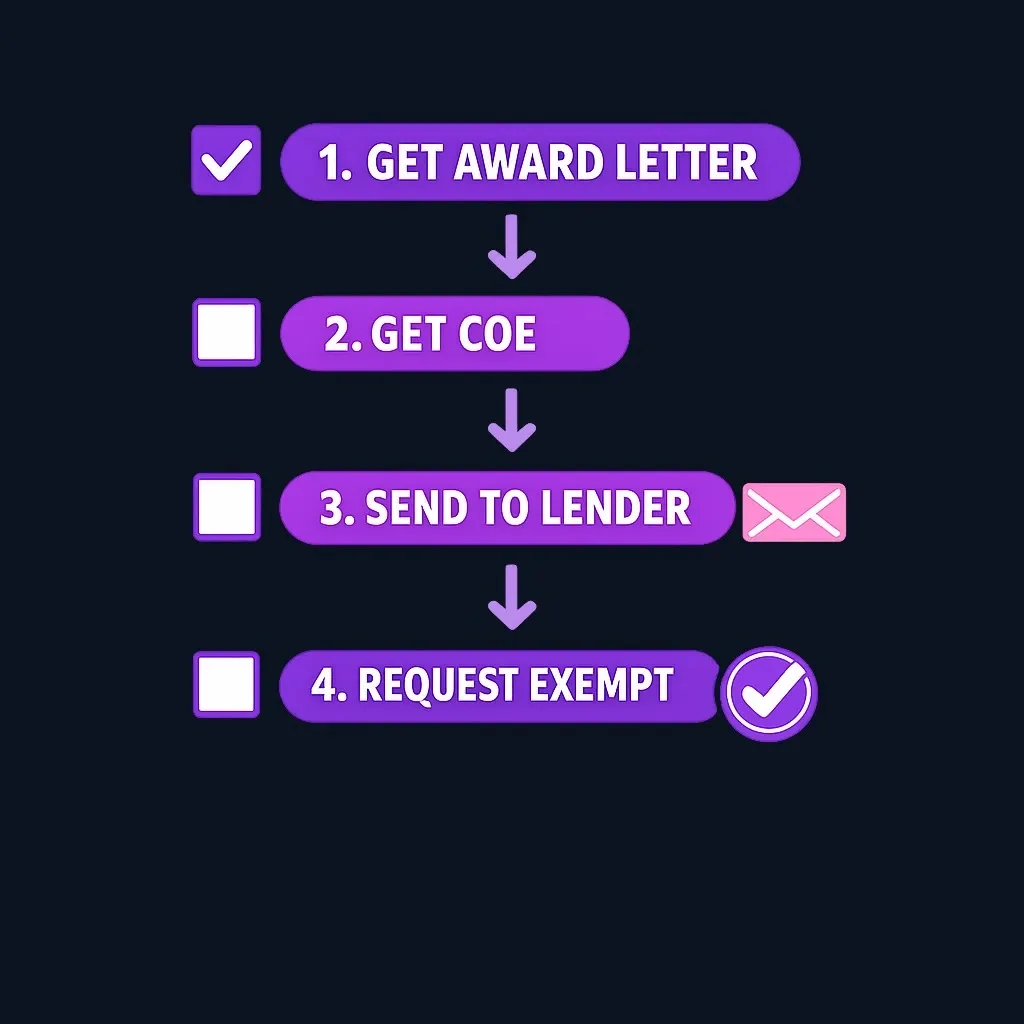
Step 1 — Gather VA documentation
- Obtain official VA proof that you receive VA disability compensation or are otherwise eligible. Typical documents include your VA disability award letter or statements of benefits. Request these from your VA eBenefits or MyVA account if you don’t already have them.
Step 2 — Request your Certificate of Eligibility (COE)
- Provide your COE to your lender. The COE is the standard VA document lenders use to verify entitlement to the VA home loan benefit and should reflect any exemption‑related information.
Step 3 — Submit documents early to your lender
- Send the disability award letter and COE to your lender well before closing. Ask the lender to place a clear “exempt” code in your loan file and to remove the fee from the Good Faith Estimate and Closing Disclosure.
Step 4 — Verify the Closing Disclosure
- On the Closing Disclosure, confirm the VA funding fee is absent. If it appears, stop and resolve the discrepancy with your lender before signing.
Step 5 — If the fee appears in error (next actions)
- If you were charged the fee despite providing documentation, ask the lender for a correction and refund process. The VA guidance explains how lenders should handle funding‑fee billing and adjustments; keep copies of all VA documents and lender communications when requesting a correction.
Checklist: Documents to prepare before applying
| Document | Why it matters |
|---|---|
| VA Disability award letter or official VA statement of compensation | Shows you receive VA disability compensation, the central proof lenders use for exemption |
| Certificate of Eligibility (COE) | Confirms entitlement to VA loan benefits and helps the lender process exemption |
| Any VA determination letters that reference entitlement to compensation | Additional proof for complex cases or alternate pay arrangements |
Example of documenting eligibility (practical)
- Request and download your award letter from your VA online account and email it to your lender with the COE. Ask the lender to confirm in writing that your loan file will be processed as “exempt” and request a corrected Good Faith Estimate showing no funding fee.
Common mistakes and how to avoid them
- Mistake: Waiting until the day of closing to provide documents. Fix: Send documents at underwriting or loan application stage and get lender confirmation.
- Mistake: Assuming a lender automatically recognizes an exemption. Fix: Ask for explicit, written confirmation that the fee will be removed on the Closing Disclosure.
Common Questions About VA Funding Fee Exemptions
(Hold to short, clear answers; each 2–3 sentences.)
What disability rating do I need to be exempt from the VA funding fee?
Exemption is based on receiving VA disability compensation for a service‑connected condition rather than on a single numeric cutoff; provide your VA compensation documentation to your lender to confirm exemption.
How can I get a refund if I’m charged the funding fee but think I’m exempt?
If you were charged the fee in error, provide the lender the VA documentation showing your compensation and ask for a correction and refund; keep copies of all VA letters and lender communications while resolving the issue.
What documents do lenders need to verify exemption?
Lenders typically need a VA disability award letter or other official VA statement showing you receive VA compensation, plus your Certificate of Eligibility (COE) to process the loan as exempt.
Can a pending VA disability claim make me exempt at closing?
A pending claim normally does not create an exemption at closing; exemption typically requires VA compensation in effect at the time of closing, so confirm with your lender how they will treat a pending claim and what evidence they accept.
Conclusion and Next Steps
Key takeaways: exemption from the VA funding fee hinges on being a recipient (or otherwise entitled) to VA disability compensation for a service‑connected condition and on presenting the correct VA documentation to your lender before closing. The funding fee itself is a percentage of your loan amount, so confirming exemption before closing prevents the fee from being financed into your mortgage.
Recommended next steps
- Pull your VA disability award letter and COE and send them to your lender early in the loan process.
- Request written confirmation the lender will mark your loan exempt and remove the fee from the Closing Disclosure.
- Verify the Closing Disclosure before signing and keep records of all VA and lender correspondence.
For official, up‑to‑date procedural details and forms, start at the VA’s funding‑fee and closing costs guidance.
FAQ
(See the short Q&A above for common questions and concise answers.)
Financial LiteracyFinancial Education
Practice trading with Finelo
Practice in a simulator, learn with bite-sized lessons, and build confidence before risking real money.
About the author
Finelo Team
The Finelo Team creates practical investing and trading education designed to help beginners learn faster with structured challenges, simulator practice, and bite-sized lessons.
Keep reading — Related articles

Financial Literacy
Mercury Books Review 2026: Is It Worth It for Startups?
Mercury Books brings double-entry accounting into Mercury. Review its $35 pricing, reports, AI features, integrations, and migration limits.
Finelo Team

Financial Literacy
Why is My FICO Score Lower Than My Credit Score?
Example takeaway: seeing a higher score in a bank app doesn’t guarantee lenders will see the same FICO number at application time; lenders often pull a specific FICO version from a specific bureau.
Finelo Team
Financial Literacy
Why Is My FICO Score Higher Than My Credit Score?
Brief educational note: this article is educational, not financial or investment advice; investing and credit decisions involve risk and possible loss.
Finelo Team