This guide is for investors reading a specific SPAC or de-SPAC warrant agreement. It does not duplicate a general “what is a warrant?” explainer. Warrant economics depend on the filed agreement, amendments, registration status, corporate actions, and broker procedures; the ticker and headline strike price are not enough.
SPAC Warrant Checklist: Redemption, Cashless Exercise, and Dilution

This guide is for investors reading a specific SPAC or de-SPAC warrant agreement. It does not duplicate a general “what is a warrant?” explainer. Warrant economics depend on the filed agreement, amendments, registration…
9 min read
Practice investing with Finelo
Build practical investing skills with guided lessons, simulator practice, and structured challenges.
Want to learn more?
Build practical investing skills with guided lessons, simulator practice, and structured challenges.
Explore FineloExplore Finelo's 28-day challenges
Turn learning into a daily habit with guided challenge paths.
Terms to extract before valuing a SPAC warrant
- exercise price, warrant-to-share ratio, exercisability date, and expiration date;
- whether exercise requires an effective registration statement and what happens during a registration delay;
- cash versus cashless exercise formulas and any cap on shares delivered;
- redemption triggers, measurement windows, notice period, and nominal redemption price;
- alternative redemption provisions at lower stock-price thresholds;
- anti-dilution adjustments for splits, dividends, tender offers, or certain equity issuances;
- treatment in a merger, liquidation, or other fundamental transaction;
- differences between public and private-placement warrants;
- broker cutoffs that can precede the legal deadline.
Model fully diluted shares under exercise and cashless-redemption scenarios. A warrant can lose most of its value if the holder misses a redemption notice, and a high common-share price does not override the agreement's deadlines or caps. Use the issuer's SEC filings and the actual warrant agreement as the primary sources.
Company-issued warrants grant contractual rights to acquire securities on stated terms. Exercise may create new shares and dilution, but cashless exercise, net settlement, caps, redemptions, and corporate actions can change the result. For a SPAC warrant, the filed agreement—not a generic payoff diagram—controls.
What a stock warrant is and how it works
A warrant is a contract with four defining terms:
- Exercise (strike) price - the fixed price at which the holder can buy the stock.
- Expiration date - warrants often run five to fifteen years, far longer than most listed options.
- Conversion ratio - how many warrants are needed per share; one-to-one is common, but ratios like 2:1 appear frequently in SPAC structures.
- Issuer - the company whose stock underlies the warrant, which is also the party that created it.
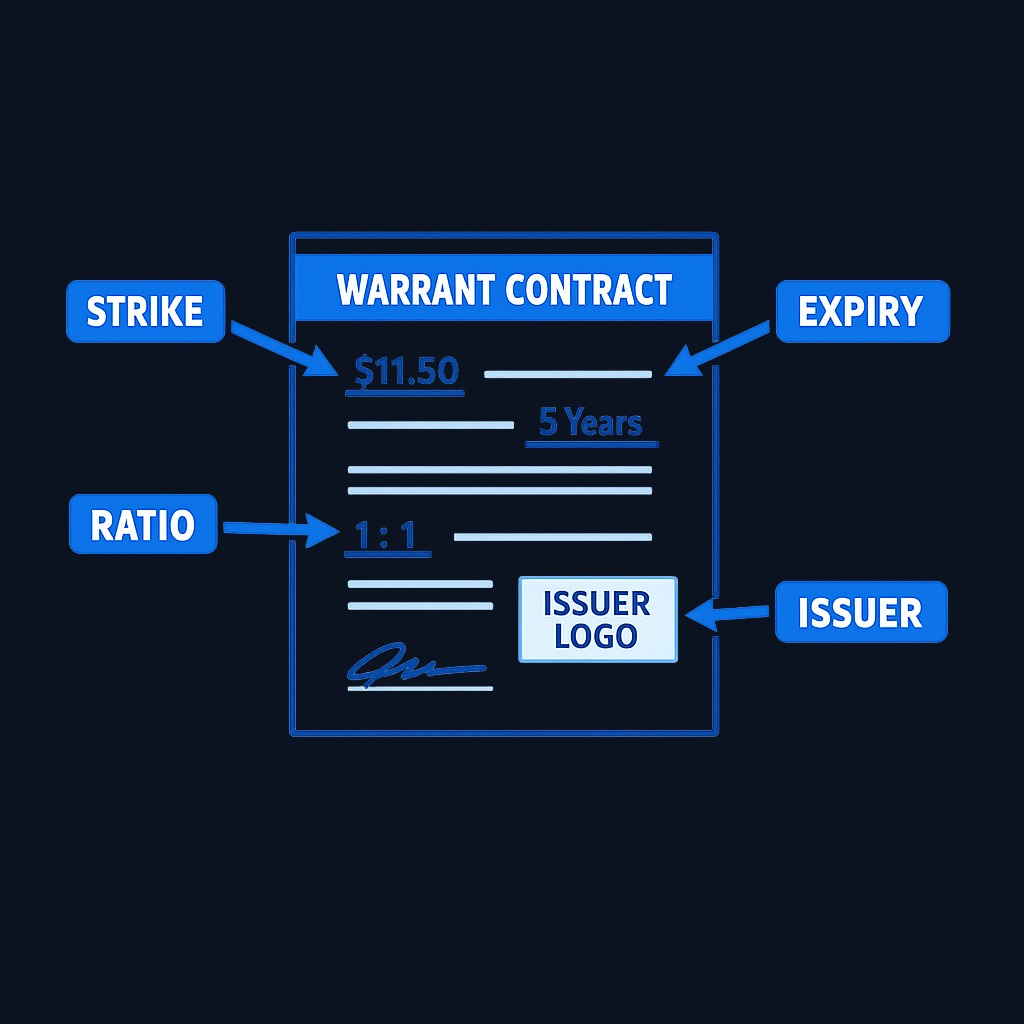
Warrants usually trade under their own ticker, often with a "W" or "WS" suffix. When a holder exercises, the company receives the exercise price in cash and issues new shares from its authorized pool. The full terms of any warrant live in the issuing company's registration statements and prospectuses, which you can read for free on the SEC's EDGAR database. Reading the actual warrant agreement matters because redemption clauses, cashless-exercise provisions, and ratio adjustments vary deal by deal.
Why companies issue warrants
Companies attach warrants to other securities to make deals cheaper or more attractive:
- Sweeteners on debt. A bond plus warrants can carry a lower coupon because buyers value the equity upside.
- SPAC units. Blank-check companies typically sell units that bundle one share with a fraction of a warrant.
- Capital raising with deferred dilution. The company collects option-like premium value today and receives more cash later if the warrants are exercised.
- Investor incentives in private placements. Warrants reward early backers without an immediate share issue.
Types of stock warrants
| Type | What it means |
|---|---|
| Traditional (attached) | Issued alongside bonds or preferred stock as a sweetener, often detachable and tradable on their own |
| Naked | Issued standalone, without an accompanying security |
| Covered | Issued by a financial institution rather than the company; settled without new share issuance |
| Put warrants | Give the right to sell shares back at a set price, the mirror image of the common call-style warrant |
| SPAC warrants | Public and private-placement warrants from blank-check mergers, usually with a 5-year life and redemption triggers |
American-style warrants can be exercised any time before expiry; European-style only at expiration. Most U.S. warrants are American-style, but the agreement controls.
A hypothetical worked example
Suppose Copper Kettle Brands trades at $9.40 and has warrants outstanding with an $11.50 exercise price, one-to-one ratio, and four years to expiration. The warrants trade at $1.10.
- Intrinsic value today: zero, because the stock sits below the $11.50 strike. The entire $1.10 price is time value.
- Breakeven at expiration: $11.50 plus $1.10, or $12.60 - the stock must rise 34% from $9.40 just to break even.
- Upside case: if the stock reaches $16, the warrant is worth at least $4.50 at exercise. That is a 309% gain on the $1.10 warrant versus a 70% gain on the stock itself.
- Downside case: if shares finish at $11.50 or lower in four years, the warrant expires worthless. A stockholder still owns shares after a flat market; the warrant holder loses 100%.
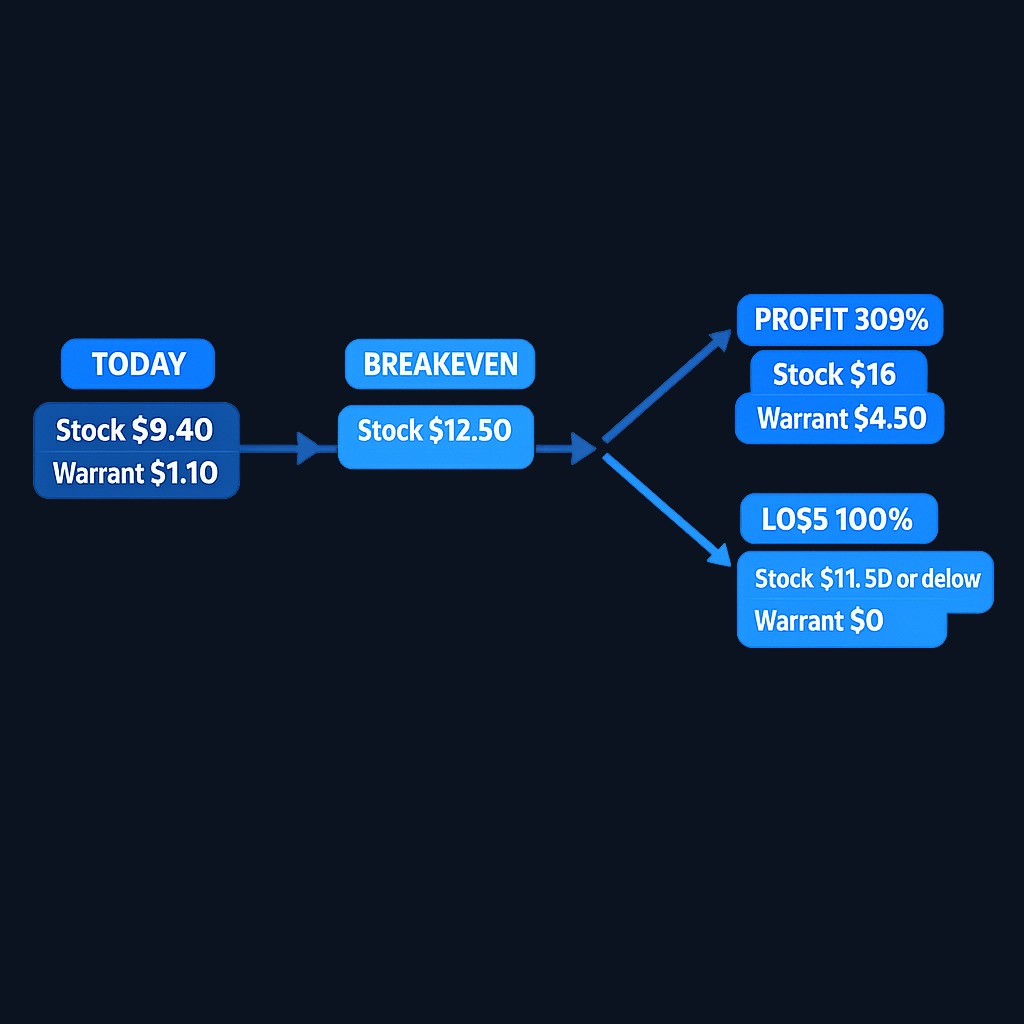
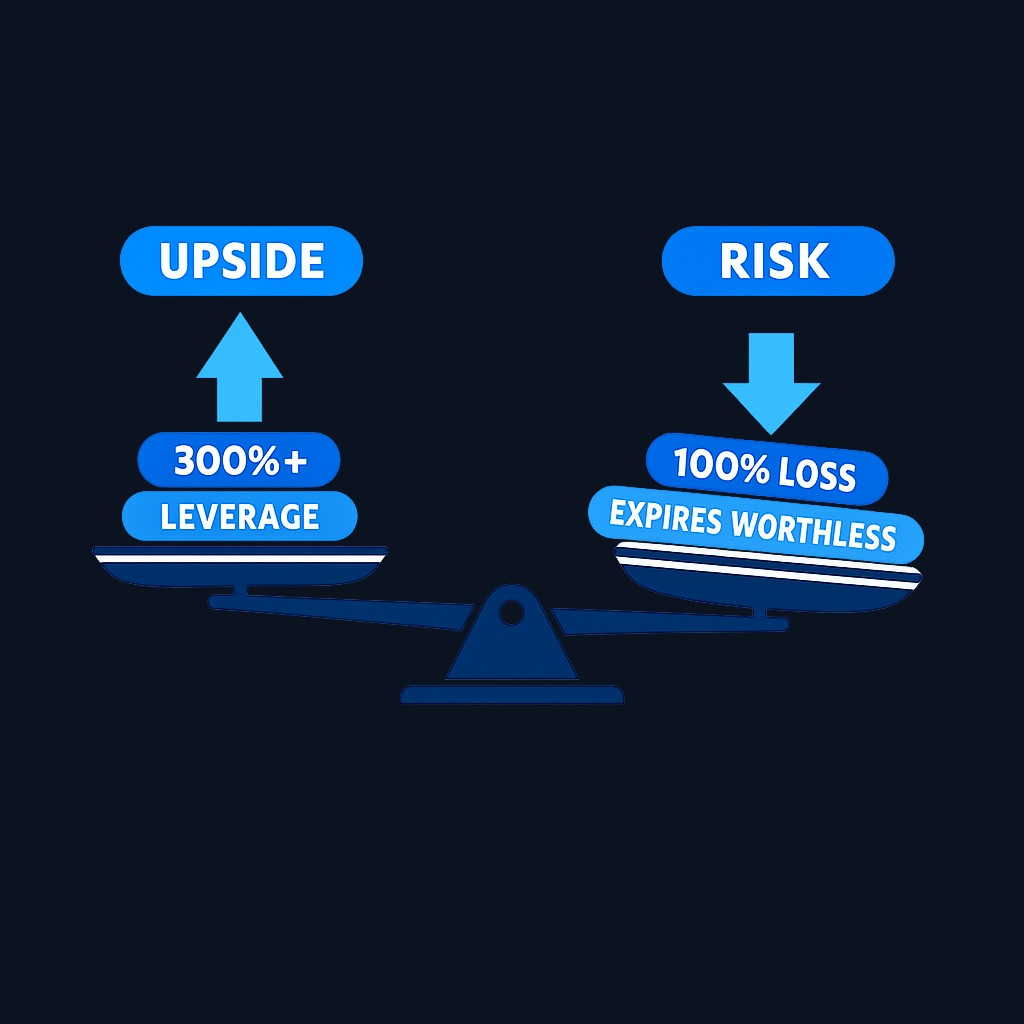
That asymmetry - amplified gains, total-loss risk - is the entire character of the instrument. Position sizing has to respect it.
Warrants vs stock options: the differences that matter
| Feature | Warrants | Listed options |
|---|---|---|
| Issuer | The company itself | Exchanges/other traders, standardized terms |
| New shares created on exercise | Yes - dilutive | No - existing shares change hands |
| Typical lifespan | 5-15 years | Days to about 2 years |
| Where proceeds go | To the company | To the option seller |
| Standardization | Deal-specific terms | Uniform contract specs |
| Liquidity | Often thin | Generally deeper markets |
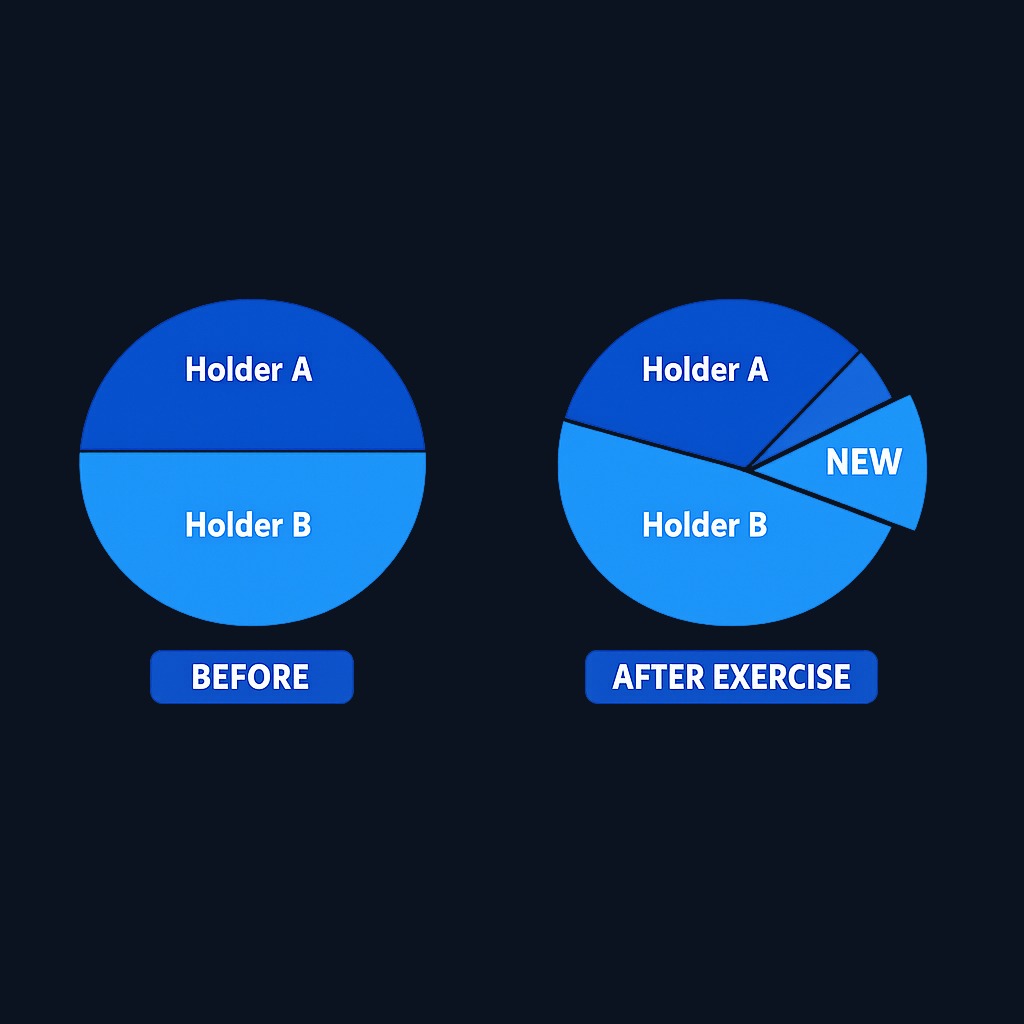
The dilution point deserves emphasis. When warrants are exercised, the share count rises, and each existing share owns a slightly smaller slice of the company. Analysts account for this through fully diluted share counts, and large warrant overhangs can weigh on a stock's valuation until they are resolved.
Practice investing with Finelo
Build practical investing skills with guided lessons, simulator practice, and structured challenges.
Benefits and risks to weigh
Potential benefits:
- Leverage. A small outlay controls the same upside as a share, so percentage gains can far outrun the stock.
- Long runway. Multi-year expirations give a thesis time to play out, unlike short-dated options.
- Income to the issuer, discounts to the buyer. Warrants attached to other securities often let investors buy a package below fair value.
Principal risks:
- Total loss at expiry. Out-of-the-money warrants expire worthless, no matter how sound the company remains.
- Dilution drag. Exercise enlarges the share count, and pending overhang can cap rallies.
- Redemption clauses. Many SPAC-style warrants let the issuer force redemption once the stock exceeds a threshold (commonly $18 for $11.50-strike warrants), truncating the upside timeline.
- No dividends or voting rights. Warrant holders participate in price, not governance or income.
- Thin trading. Wide bid-ask spreads can eat a large share of the theoretical edge.
- Complex, deal-specific terms. Cashless exercise mechanics and anti-dilution adjustments differ across agreements; assumptions imported from options can be wrong.
What to know before deciding
Three habits separate careful warrant investors from lottery-ticket buyers. First, read the warrant agreement in the issuer's filings rather than relying on a screener summary; redemption and adjustment clauses change the payoff profile materially. Second, compute the breakeven price and ask honestly whether the stock reaching it within the warrant's life is a base-case or a hope. Third, size the position as risk capital - an amount whose complete loss would not disturb the rest of the portfolio - because total loss is a routine outcome for out-of-the-money warrants.
Decision framework: are warrants a fit?
| Your situation | Sensible approach |
|---|---|
| Long-term bull case on a specific company | Warrants can add leveraged exposure alongside a core share position |
| Seeking income or stability | Skip warrants; they pay nothing and can expire worthless |
| Evaluating a SPAC unit | Value the share and warrant separately; check the redemption trigger first |
| New to derivatives entirely | Paper-trade the math first and study the risk profile before committing money |
| Comparing a warrant to a listed option | Prefer the deeper, standardized options market unless the warrant offers clearly better terms |
FAQ
What happens when a stock warrant expires?
If the stock trades above the exercise price, holders exercise or sell before expiry to capture the value. If it trades at or below the strike, the warrant expires worthless and the entire purchase price is lost.
Do stock warrants dilute existing shareholders?
Yes. Exercise creates newly issued shares, increasing the total count and reducing each existing holder's ownership percentage. This is a key difference from exchange-traded options, which simply transfer existing shares between traders.
How are stock warrants taxed?
U.S. federal tax treatment can depend on how the warrant was acquired, whether it is exercised, sold, redeemed, modified, or expires, and whether special rules apply. Do not rely on a generic capital-gains page; review the offering's tax disclosure and IRS Publication 550, then obtain advice for the specific transaction.
Where can I buy stock warrants?
Most publicly traded warrants are available through regular brokerage accounts under their own tickers. Liquidity varies widely, so limit orders and patience are standard practice.
Conclusion and next steps
Stock warrants are long-dated, company-issued rights to buy shares at a fixed price - leveraged instruments that can multiply gains when a thesis works and go to zero when it does not. The mechanics that matter are the strike, the expiry, the ratio, redemption clauses, and the dilution they create on exercise. Before buying any warrant, pull the issuer's warrant agreement from EDGAR, compute the breakeven, and size the position as pure risk capital. To build derivatives literacy step by step with interactive lessons, try the Finelo app; plan details sit on the pricing page and questions go to support.
InvestingFundamental AnalysisBeginner
Practice investing with Finelo
Build practical investing skills with guided lessons, simulator practice, and structured challenges.
About the author
Finelo Team
The Finelo Team creates practical investing and trading education designed to help beginners learn faster with structured challenges, simulator practice, and bite-sized lessons.
Keep reading — Related articles

Investing
Tax-gain harvesting vs. tax-loss harvesting
Compare realizing investment gains with realizing losses, including holding periods, wash sales, offsets, and portfolio tradeoffs.
Finelo Team

Investing
Stable value fund vs. money market fund
Compare investment structure, contract protections, transfer restrictions, net yields, and access inside a retirement account.
Finelo Team

Investing
Single-life vs. joint-life annuity
Compare income for one lifetime with continued payments to a survivor, using equal premiums and matching guarantee terms.
Finelo Team