Stock Market Basics for Beginners: Your Essential Guide
A plain-English guide to stock market basics: what stocks are, how prices move, key terms beginners should know, and how to start learning before investing.
•14 min read
Practice investing with Finelo
Build practical investing skills with guided lessons, simulator practice, and structured challenges.
The stock market is where investors buy and sell shares of publicly traded companies. If you buy a stock, you own a small piece of that company; if the company performs well and other investors want the stock, its price may rise, but it can also fall for many reasons. This guide is for beginners who want a plain-English foundation before opening an account, choosing an investing app, or risking real money.
Explore Finelo's 28-day challenges
Turn learning into a daily habit with guided challenge paths.
The recommended next step is not to rush into buying individual stocks. First, learn the core terms, understand how prices move, compare risks and costs, and practice making decisions in a low-pressure learning environment. Finelo is an investing and trading education product designed to help beginners build financial literacy before taking action.
This article is educational only and is not financial advice. Before investing, review your own financial situation, risk tolerance, time horizon, fees, taxes, and suitability.
What the stock market is
The stock market is a collection of exchanges, platforms, brokers, buyers, and sellers that make it possible to trade ownership shares in public companies. When people say “the market was up today,” they usually mean a broad market index rose, not that every individual company increased in value. Common indexes track groups of stocks and are often used as a shortcut for understanding broad market performance.
A company may sell shares to the public to raise money for growth, operations, acquisitions, or other business goals. Investors buy those shares because they believe the company may become more valuable over time, may pay dividends, or may fit a broader portfolio strategy. None of those outcomes is guaranteed, which is why risk management matters from the beginning.
For beginners, the important idea is simple: the stock market connects companies that need capital with investors who are willing to take risk in exchange for the possibility of return. That exchange can create opportunity, but it also creates uncertainty. Prices move constantly because investors are reacting to new information, expectations, interest rates, company results, economic conditions, and emotion.
What are stocks?
A stock, also called an equity, represents partial ownership in a company. A share is one unit of that ownership. If a company has many shares outstanding and you buy one share, your ownership stake is tiny, but it still means you participate in that company’s market value as the share price changes.
When you buy a stock, you own a small piece of the company. Each share represents one unit of ownership. If the company has 1 million
Stocks are different from savings accounts or fixed payments. A stock’s value can rise or fall, and there is no guarantee that you will get back what you invested. Some companies pay dividends, which are distributions of company profits to shareholders, but not all companies do. Dividends can be reduced or stopped, and dividend-paying stocks can still lose value.
There are also different categories of stocks. Beginners often hear terms like growth stocks, value stocks, blue-chip stocks, small-cap stocks, and dividend stocks. These labels describe characteristics, not promises. A “growth” company may be expanding quickly but may trade at a high valuation; a “value” company may look inexpensive relative to certain measures but may also face business challenges.
A useful way to think about stocks is this: buying a stock is not just buying a ticker symbol. You are buying exposure to a real business, its future profits, its competition, its management decisions, and the broader environment around it.
How stock prices move
Stock prices move because buyers and sellers disagree about what a company is worth at a given moment. If more investors want to buy a stock than sell it at the current price, the price tends to rise. If more investors want to sell than buy, the price tends to fall. That supply-and-demand process happens continuously during market hours.
Stock prices rise when more investors want to buy than sell at the current price. When more want to sell than buy, prices fall. This supply-
Company-specific news can move a share price quickly. Earnings reports, product launches, lawsuits, leadership changes, debt concerns, and changes in growth expectations can all affect investor confidence. For example, if a company reports stronger-than-expected revenue but warns that future costs may rise, investors may react in different ways depending on what they believe matters more.
Broader economic conditions also matter. Interest rates, inflation, employment data, consumer spending, currency moves, and geopolitical events can influence how investors value companies. A profitable company can still see its share price fall if the overall market becomes more cautious or if investors believe future growth will slow.
Beginner investors should be careful with the idea that every price movement has one obvious cause. Markets are noisy. Sometimes prices move because of news; other times they move because of expectations, large institutional trades, changing sentiment, or short-term speculation. That is one reason many beginners start with broad learning and diversified approaches before considering individual stock selection.
Key stock market terms for beginners
Financial language can make the market feel more complicated than it is. You do not need to memorize every term before learning, but you should understand the words that appear again and again in brokerage accounts, investing articles, and market commentary.
Here are several foundational terms worth knowing:
Term
Plain-English meaning
Why it matters
Stock
Ownership share in a public company
It is the basic unit investors buy and sell
Share
One unit of stock
Share count determines how much you own
Brokerage account
An account used to buy and sell investments
Beginners usually need one before investing real money
Dividend
A payment some companies make to shareholders
It can be part of return, but it is not guaranteed
Market capitalization
A company’s share price multiplied by shares outstanding
It helps classify company size
Bull market
A period when markets are generally rising
It often reflects optimism, but risk still exists
Bear market
A period when markets are generally falling
It can test patience and risk tolerance
Index
A basket of securities used to track part of the market
It helps investors understand broad performance
Portfolio
A collection of investments
Diversification depends on what is inside it
Volatility
The degree to which prices move up and down
Higher volatility can mean larger gains or losses
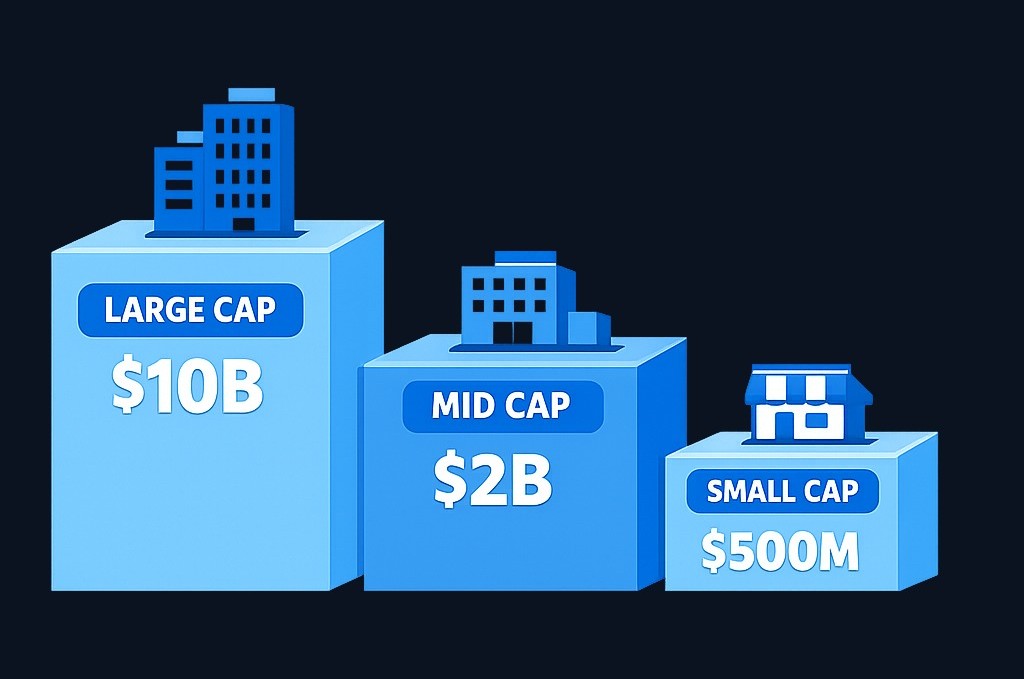
Market capitalization deserves special attention because it helps beginners compare company size. A large-cap company is usually more established, while a small-cap company may have more room to grow but can also be more volatile. These categories are not automatic quality ratings; they are a starting point for understanding scale.
Market capitalization (market cap) measures company size by multiplying share price by total shares outstanding. A company with 10
You may also see the words “investing” and “trading” used together, but they are not the same thing. Investing usually refers to a longer-term approach based on business value, diversification, and time horizon. Trading usually refers to shorter-term buying and selling based on price movements, charts, catalysts, or strategy rules. Both involve risk, but they require different skills and mindsets.
What to know before deciding
Before deciding whether to invest, start with your personal context rather than a stock idea. A person with high-interest debt, no emergency savings, and a short time horizon may need a different plan from someone with stable income, cash reserves, and a long-term goal. The stock market can be useful for long-term wealth building, but it is not a substitute for basic financial stability.
Costs also matter. Brokerage platforms may charge fees, spreads, subscription costs, fund expense ratios, transfer fees, or other account-related costs depending on the provider and investment type. Do not assume that a platform is free just because trades appear commission-free. Review the latest pricing, terms, and account disclosures before using any service.
Risk tolerance is another major factor. It is easy to say you can handle market declines when prices are rising; it is harder when your account value drops. Beginners often underestimate how emotional investing can feel. A realistic plan should account for downturns, not just optimistic scenarios.
You should also understand the difference between learning, practicing, and investing real money. Educational tools, simulators, courses, and guided challenges can help you build vocabulary and decision-making habits without the same consequences as live trading. If you are exploring a learning-first path, you can review Finelo’s app and educational resources here: Finelo App, Investing Challenge, and Finelo AI learning tools.
Practice investing with Finelo
Build practical investing skills with guided lessons, simulator practice, and structured challenges.
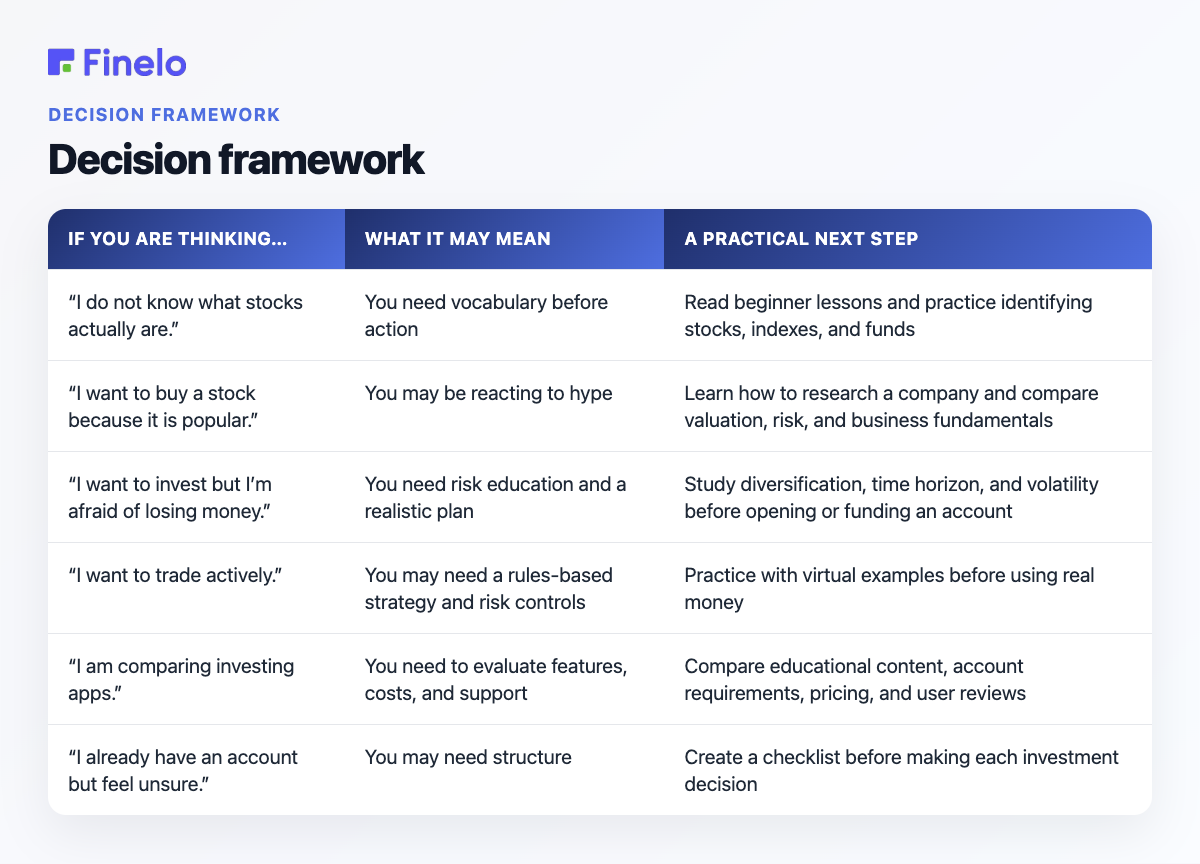
A beginner’s first decision is not “Which stock should I buy?” A better first decision is “What kind of learner or investor am I right now?” The table below maps common beginner situations to a safer next step.
If you are thinking…
What it may mean
A practical next step
“I do not know what stocks actually are.”
You need vocabulary before action
Read beginner lessons and practice identifying stocks, indexes, and funds
“I want to buy a stock because it is popular.”
You may be reacting to hype
Learn how to research a company and compare valuation, risk, and business fundamentals
“I want to invest but I’m afraid of losing money.”
You need risk education and a realistic plan
Study diversification, time horizon, and volatility before opening or funding an account
“I want to trade actively.”
You may need a rules-based strategy and risk controls
Practice with virtual examples before using real money
“I am comparing investing apps.”
You need to evaluate features, costs, and support
Compare educational content, account requirements, pricing, and user reviews
“I already have an account but feel unsure.”
You may need structure
Create a checklist before making each investment decision
Reference table from this guide — Decision framework.
A simple beginner checklist can prevent impulsive decisions. Before buying any investment, ask yourself what it is, why you want it, how it fits your goal, what could go wrong, how much it costs, and when you would reconsider. If you cannot answer those questions in plain language, that is a sign to keep learning.
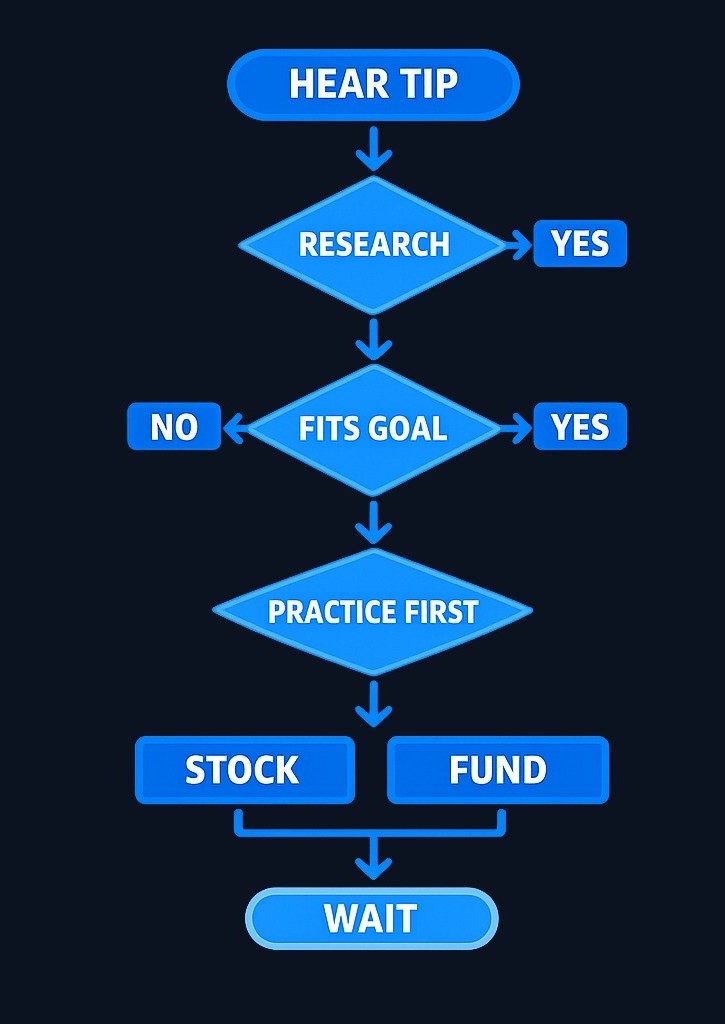
Here is a worked example. Imagine Maya, a beginner, hears that a well-known technology company is “a must-buy.” Instead of buying immediately, she looks up what the company sells, how it makes money, whether it is profitable, how its stock has behaved during market downturns, and whether owning one company would concentrate too much of her small portfolio. She then compares that idea with a broader fund and decides to practice tracking both for a few weeks before committing money.
Maya hears about a popular tech stock. Instead of buying immediately, she asks: What does the company sell? Is it profitable? How did it
That process does not guarantee a better result. It does, however, turn a reaction into a decision.
How to start learning about investing
If you are starting from zero, begin with education rather than execution. Learn how stocks, bonds, funds, indexes, and brokerage accounts work. Then learn how risk changes when you buy one company versus a diversified fund. The goal is to understand the tradeoffs clearly enough that you are not relying on social media, headlines, or guesswork.
When you are ready to explore real investing, you typically need a brokerage account. Account setup often involves identity verification, funding choices, tax forms, and agreement to platform terms. Requirements vary by country, provider, and account type, so use the official brokerage or account provider’s current instructions rather than relying on outdated third-party steps.
Many beginners also compare individual stocks with funds. A fund can hold many investments in one product, which may reduce company-specific risk compared with buying a single stock. That does not remove market risk; a broad fund can still decline when the overall market falls. Still, understanding the difference between single-stock risk and diversified exposure is a major early milestone.
If you want a guided learning path before using real money, consider exploring Finelo’s app or beginner investing challenges such as the 28-Day Investing Challenge. These links should be used as learning next steps, not as a promise of investment outcomes.
Common mistakes to avoid
One common beginner mistake is confusing a familiar company with a good investment. You may love a product and still overpay for the stock. A company can be excellent while its share price already reflects very high expectations. Price matters because future returns depend not only on business quality but also on what investors are willing to pay.
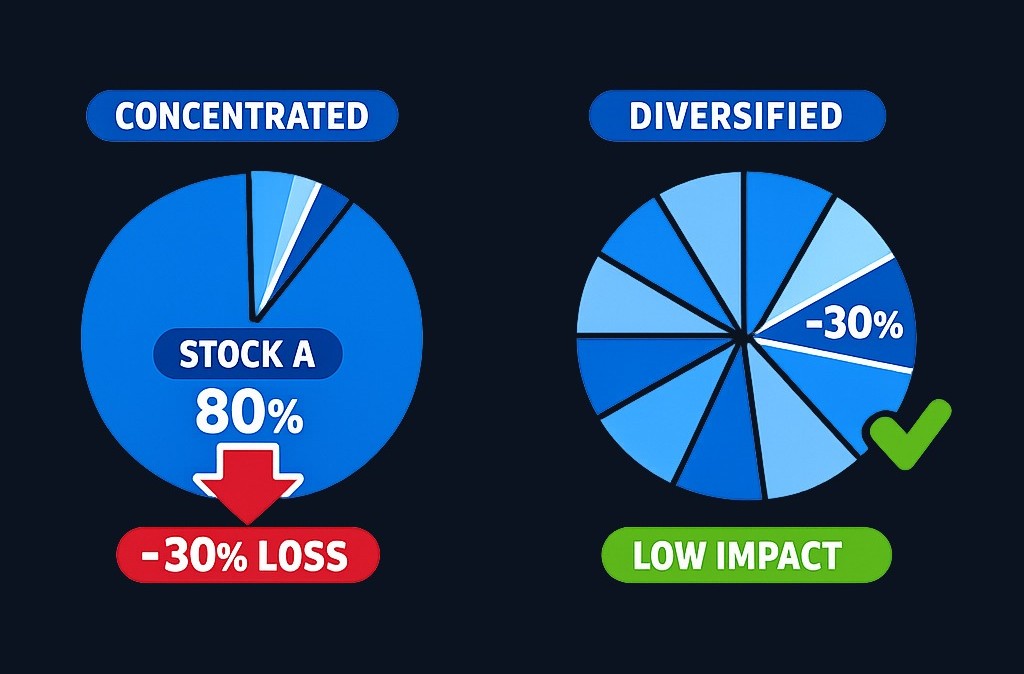
Another mistake is putting too much money into one idea. Concentration can feel exciting when the price rises, but painful when it falls. Diversification does not eliminate losses, but it can reduce the impact of one company’s problems on your overall portfolio. Beginners should learn this concept early because it shapes almost every investing strategy.
Concentration means putting most of your money into one or a few stocks. If that stock falls 30%, your portfolio could lose nearly 30%.
A third mistake is acting without a time horizon. Money needed soon usually does not belong in highly volatile assets. If you may need cash for rent, emergencies, tuition, or a major purchase, a market downturn could force you to sell at a bad time. That is not a stock-picking problem; it is a planning problem.
Finally, avoid assuming that more activity means more progress. Watching prices all day, switching strategies often, or buying every trending stock can create stress without improving decision quality. For many beginners, progress looks quieter: learning terms, building a watchlist, understanding risk, comparing costs, and practicing a repeatable process.
Related concepts beginners often ask about
Beginners often ask whether the stock market is the same as the economy. They are related, but not identical. The economy includes jobs, wages, production, inflation, borrowing, spending, and many other real-world activities. The stock market reflects investor expectations about public companies, future profits, interest rates, and risk. Sometimes market prices rise even when economic news feels mixed, and sometimes they fall before economic weakness is obvious.
Another common question is whether you need a lot of money to start. Some platforms allow small starting amounts or fractional shares, but minimums, fees, and available investments vary. The more important point is that small amounts still deserve serious decision-making. Treating a small investment casually can build habits that become costly later.
Beginners also ask whether they should learn about AI-assisted investing or trading tools. Tools can help organize research, summarize information, or support practice, but they should not replace judgment. If you explore AI-assisted learning, focus on understanding the reasoning behind any output, checking sources, and knowing the limits of automated analysis. You can learn more about Finelo’s AI-focused education pages here: Finelo AI.
Next steps: moving from learning to action
After reading this guide, your next step should match your current level. If the terminology still feels new, continue with basic lessons before opening an account. If you understand the vocabulary but feel uncertain about decisions, practice comparing hypothetical investments and writing down your reasoning. If you are evaluating tools, compare education quality, pricing, support, reviews, and whether the product encourages responsible learning.
A simple path could look like this:
Learn the core concepts: stocks, shares, indexes, funds, dividends, and risk.
Practice with examples before making live decisions.
Compare platforms and read current terms, fees, and support information.
Start small only if an investment fits your situation, goals, and risk tolerance.
Review decisions periodically rather than reacting to every price move.
The stock market is a place where investors buy and sell ownership shares in public companies. It is not one single building or website; it includes exchanges, brokers, trading systems, and market participants. When a stock’s price changes, it reflects what buyers and sellers are willing to accept at that moment.
What is the difference between a stock and a share?
A stock represents ownership in a company, while a share is one unit of that ownership. In everyday conversation, people often use the words interchangeably. For example, if someone says they bought stock in a company, they usually mean they bought one or more shares.
How do beginners start investing in stocks?
Beginners usually start by learning the basics, deciding on goals and risk tolerance, comparing brokerage options, and understanding fees and account rules. Many people practice first through educational tools or simulations. If they decide to invest real money, they should use official account instructions and consider whether the investment is suitable for their situation.
What are the main risks of investing in stocks?
The main risks include losing money, buying at an overvalued price, concentrating too much in one company, reacting emotionally to volatility, and needing cash during a downturn. There are also costs, tax considerations, and platform-specific rules to understand. Risk cannot be removed, but it can be studied and managed.
Do I need to know every financial term before investing?
No, but you should know the basics before risking money. Terms like stock, share, dividend, index, portfolio, brokerage account, volatility, and market capitalization come up frequently. If you cannot explain what you are buying, it is usually better to keep learning before acting.
Is stock trading the same as investing?
No. Investing typically focuses on longer-term ownership, business fundamentals, diversification, and time in the market. Trading is usually more active and may focus on shorter-term price movements, technical signals, or catalysts. Both involve risk, but trading often requires more frequent decisions and stricter risk controls.
Can educational apps help beginners learn the stock market?
Educational apps can help beginners build vocabulary, practice decisions, and understand investing concepts in a structured way. They should be used as learning tools, not as guarantees of results or substitutes for independent judgment. If you are considering Finelo, verify current features, pricing, and support details on official Finelo pages before subscribing or relying on any specific feature.
The Finelo Team creates practical investing and trading education designed to help beginners learn faster with structured challenges, simulator practice, and bite-sized lessons.