The best stock market course for beginners is one that teaches market basics, risk, order types, fundamental analysis, technical analysis, and practice workflows before asking you to make real decisions. It should explain jargon clearly, include exercises or simulations, and avoid implying that a course can make market outcomes predictable.
Your Comprehensive Guide to Stock Market Courses for Beginners
The best stock market course for beginners is one that teaches market basics, risk, order types, fundamental analysis, technical analysis, and practice workflows before asking you to make real decisions. It should…
9 min read
Practice investing with Finelo
Build practical investing skills with guided lessons, simulator practice, and structured challenges.
Want to learn more?
Build practical investing skills with guided lessons, simulator practice, and structured challenges.
Explore FineloExplore Finelo's 28-day challenges
Turn learning into a daily habit with guided challenge paths.
A beginner course should do more than define stocks. It should help you understand what you are buying, why prices move, how risk works, and how to slow down before money is involved. This guide explains what to expect, how to compare course types, which warning signs to avoid, and what to do after you finish your first course.
Stock Market Courses at a Glance
A stock market course is structured education for people who want to understand how public markets work. A good beginner course starts with simple concepts: what a stock is, why companies issue shares, how buyers and sellers create market prices, and why every market decision includes uncertainty.
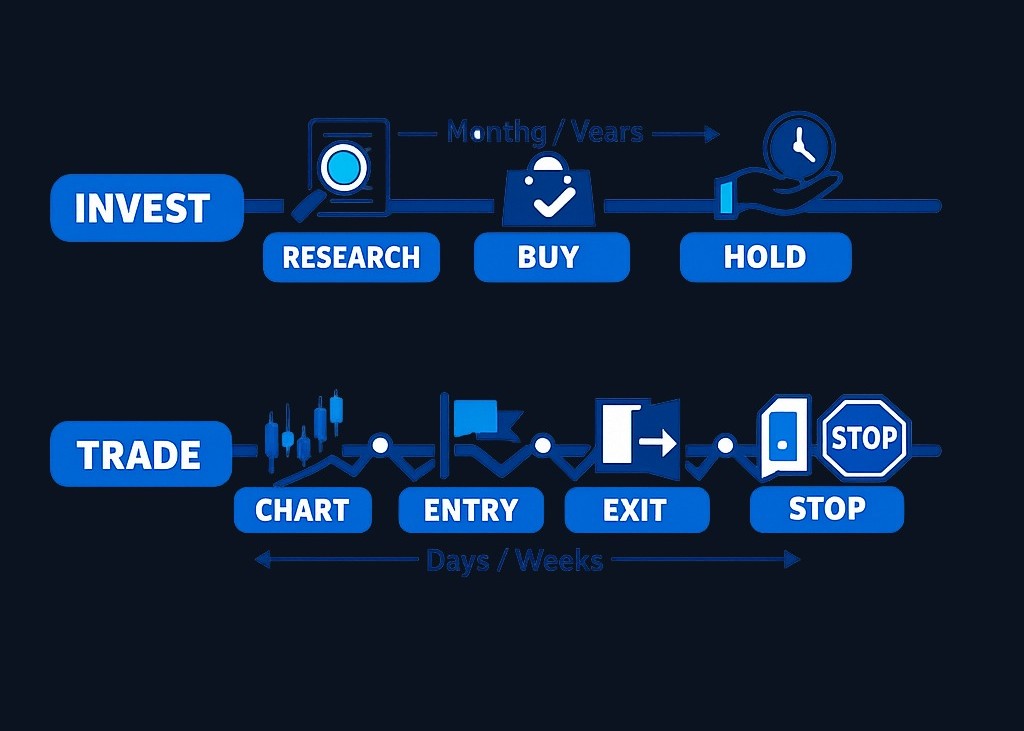
The course should also help you separate investing from trading. Investing usually means buying assets with a longer time horizon. Trading usually means making more active decisions around shorter-term price movement. A beginner does not need to choose a permanent identity on day one. The useful first step is learning the language, mechanics, and risks clearly enough to make better questions.
Courses matter because the stock market can look deceptively simple from the outside. Buying a share may take seconds. Understanding the decision behind that purchase takes longer. A course should build that decision process before it builds confidence.
What to Expect from a Stock Market Course
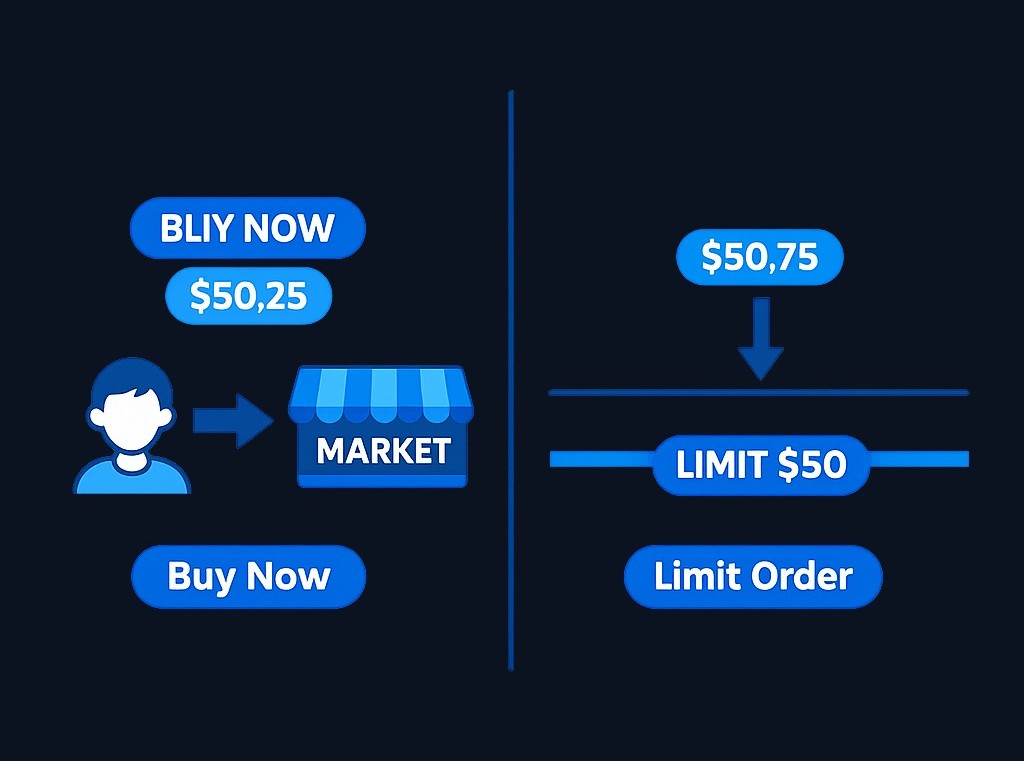
A beginner stock market course usually starts with market structure. You should learn what stocks, ETFs, funds, bonds, dividends, indexes, exchanges, brokers, and orders mean. An order is an instruction to buy or sell. A market order prioritizes speed. A limit order sets a price boundary. Those details matter because a beginner can make mistakes simply by clicking the wrong order type.
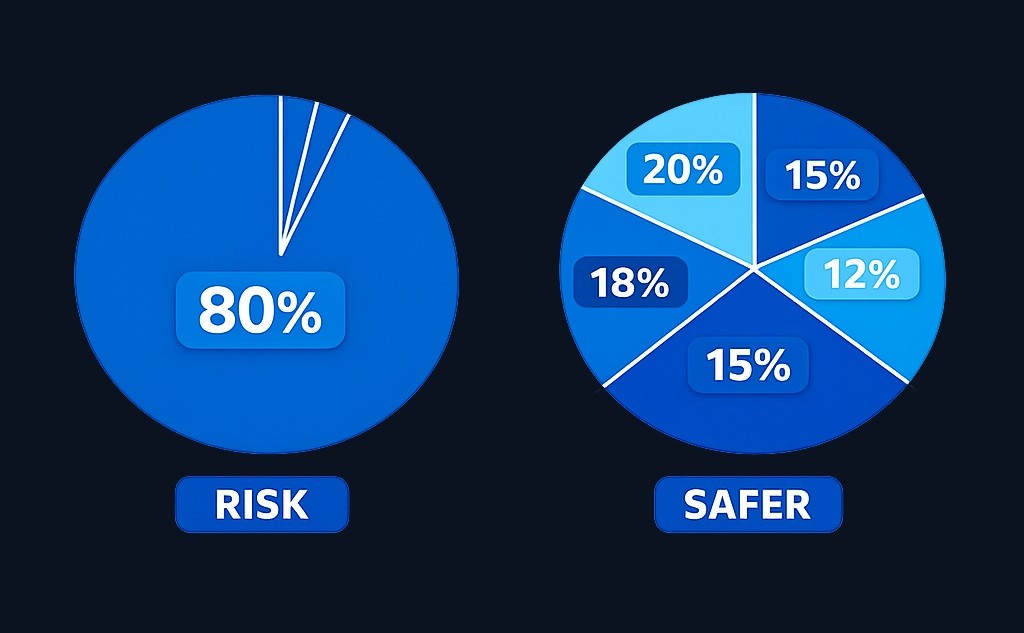
The next layer is risk. A course should explain volatility, concentration, diversification, position size, and time horizon. Volatility means prices move up and down. Diversification means spreading exposure across different holdings so one position does not dominate the whole plan. Position size means how much of your money is assigned to one idea.
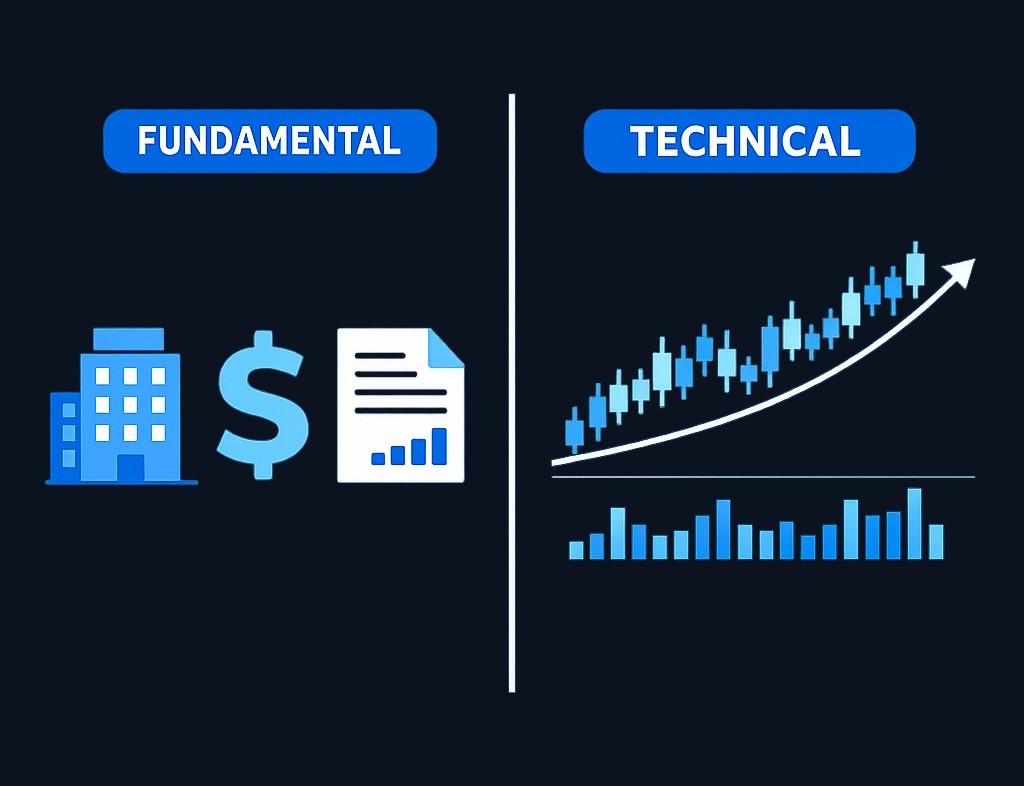
A strong course also covers basic analysis. Fundamental analysis looks at a business or asset: revenue, earnings, balance sheet strength, competition, valuation, and long-term prospects. Technical analysis looks at price behavior: trends, volume, support, resistance, and chart patterns. Beginners do not need to become experts in both immediately, but they should know which question each method tries to answer.
Practice is the part many learners skip. A course with quizzes, scenarios, paper trading, or simulator work can help you test understanding before real money is at risk. Finelo describes its learning platform as combining interactive lessons, quizzes, and simulations for market education on its homepage. That kind of practice loop is useful because beginners often understand an idea in theory, then freeze when the same idea appears in a decision.
By the end of a useful beginner course, you should be able to explain:
- What a stock represents.
- How an ETF or fund differs from a single stock.
- Why price changes do not always mean value changed.
- How to read basic order types.
- How to describe risk before entering a position.
- How investing and trading require different processes.
- What you still do not know yet.
That last point is not a weakness. Knowing the boundary of your knowledge is one of the first signs that the course worked.
Popular Stock Market Course Types and Certifications
Search results often make this choice harder than it needs to be. You will see university-style finance courses, marketplace video courses, trading academies, investing apps, broker education hubs, free tutorials, paid cohorts, certification programs, and simulator-based learning. The right option depends less on the logo and more on the job you need the course to do.
| Course type | Best for | Watch out for |
|---|---|---|
| Free beginner course | Learning basic terms before paying for anything | Thin lessons with little practice or no risk discussion |
| Marketplace video course | Self-paced learners who like lectures and screen recordings | Outdated examples, promotional claims, or too much content with little structure |
| University-style course | Learners who want theory, markets, economics, and broader finance context | Less hands-on practice for real decisions |
| Trading-focused course | Learners studying charts, setups, order execution, and active risk control | Overemphasis on fast results or complex tools too early |
| Investing-focused course | Learners focused on portfolios, research, diversification, and long-term decisions | Too little explanation of real-world order mechanics |
| App-based course | Learners who want short lessons, quizzes, and mobile practice | Feature claims should be checked on the official product page before choosing |
| Certification course | Learners who want a completion credential for their records | A certificate does not prove decision skill by itself |
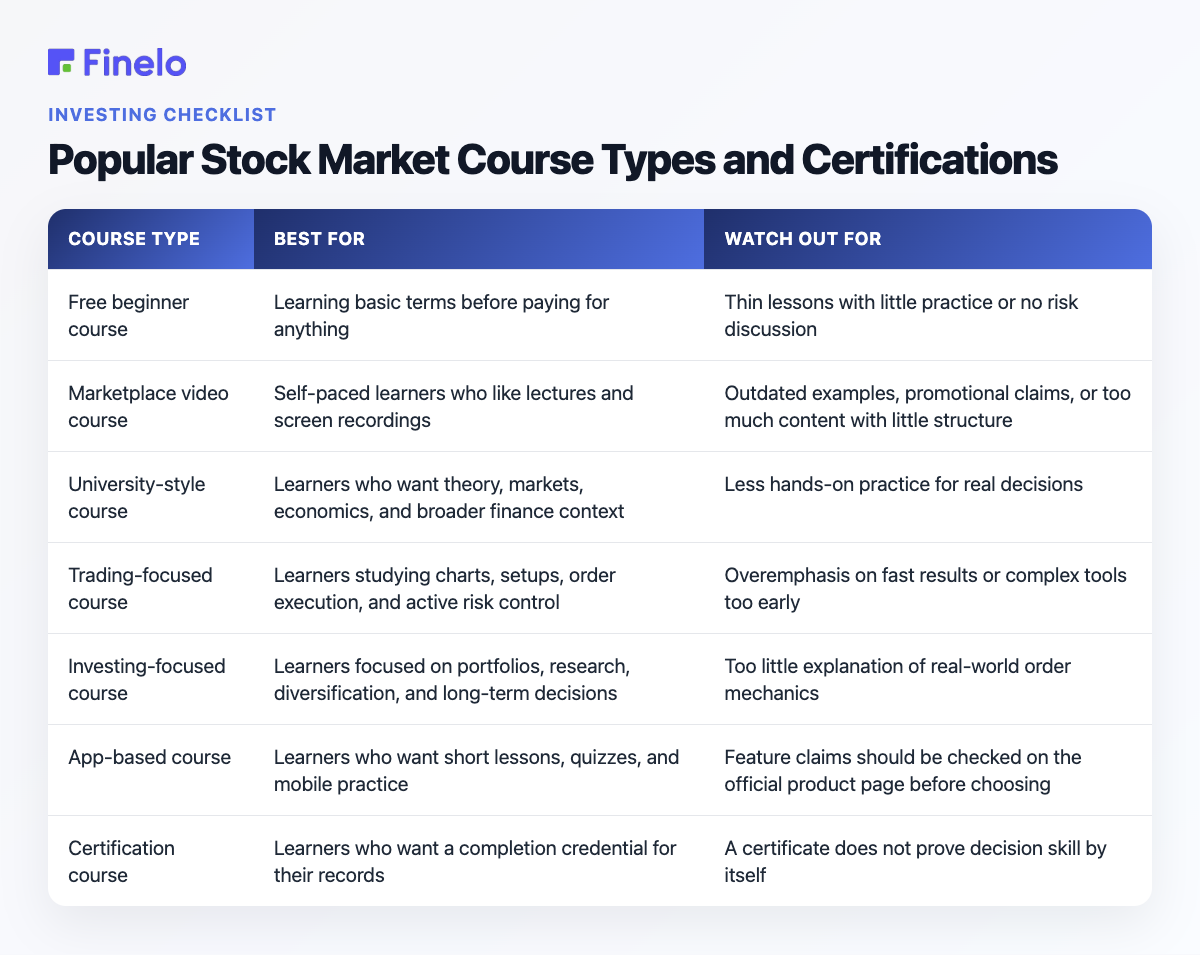
Certifications can be useful when they create accountability or document completed learning. But a beginner should not treat a certificate as proof that they are ready for complex strategies. The better test is whether you can explain your process without copying the course script.
A good stock market course for beginners should include a plain-language path through the fundamentals. It should not rush from "what is a stock?" to options, margin, short selling, or advanced technical setups before the learner can describe basic risk. Advanced topics can be useful later. They are not the first bridge.
If you are comparing course pages, read the curriculum before reading the testimonials. Testimonials can show user experience, but they do not tell you whether the course fits your goal. Look for the order of topics. A sensible sequence might move from market basics to asset types, then risk, then analysis, then practice, then building a personal learning plan.
For learners interested in AI-assisted education, Finelo's AI Investing Challenge is described as a 28-day path focused on long-term investing research, portfolio construction, diversification, and AI-assisted thesis building. Its AI Trader Challenge is described as a 28-day path focused on chart reading, market analysis, risk management, emotional discipline, and simulator practice. That split is a helpful reminder: investing education and trading education overlap, but they train different habits.
Practice investing with Finelo
Build practical investing skills with guided lessons, simulator practice, and structured challenges.
How to Choose the Right Course for You
Start with your goal, not the course catalog. A beginner who wants to build a long-term portfolio needs different training from a beginner who wants to understand day-to-day chart movement. Both need risk education. Both need market basics. But the practice work should look different.
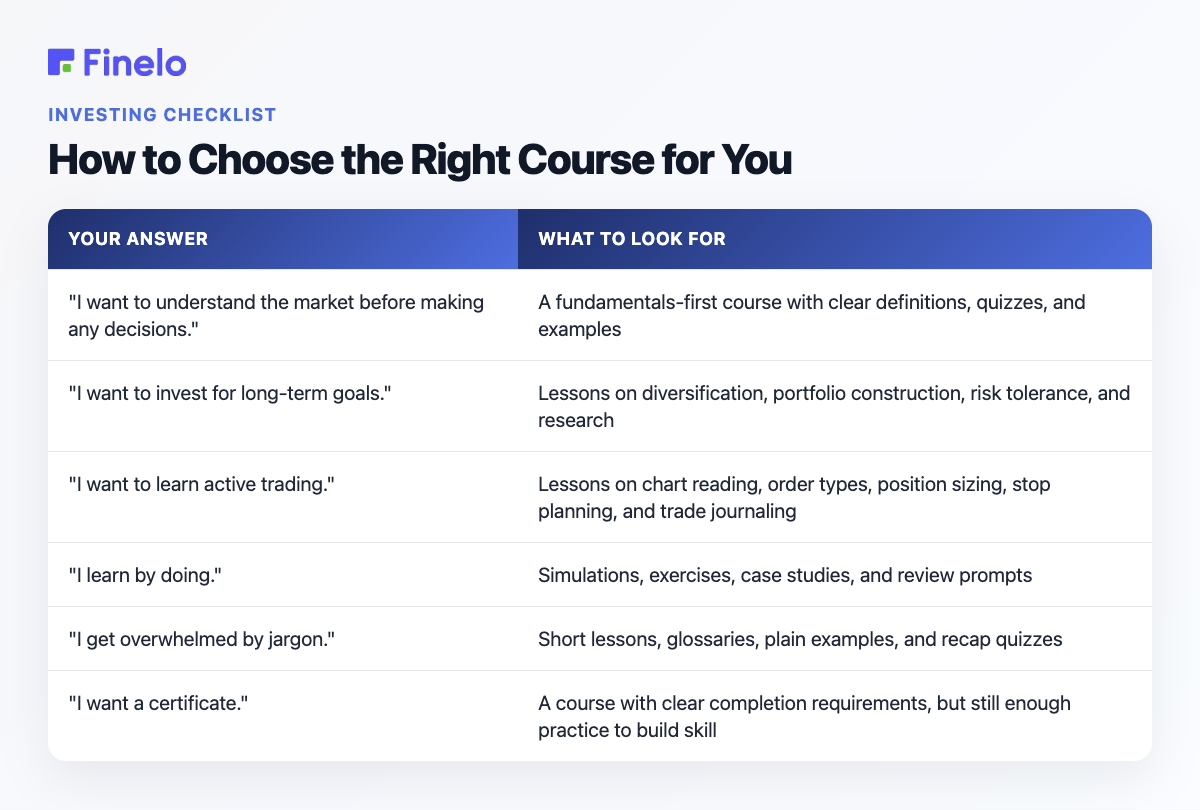
Use this decision framework before enrolling:
| Your answer | What to look for |
|---|---|
| "I want to understand the market before making any decisions." | A fundamentals-first course with clear definitions, quizzes, and examples |
| "I want to invest for long-term goals." | Lessons on diversification, portfolio construction, risk tolerance, and research |
| "I want to learn active trading." | Lessons on chart reading, order types, position sizing, stop planning, and trade journaling |
| "I learn by doing." | Simulations, exercises, case studies, and review prompts |
| "I get overwhelmed by jargon." | Short lessons, glossaries, plain examples, and recap quizzes |
| "I want a certificate." | A course with clear completion requirements, but still enough practice to build skill |
Budget matters, but price alone is not a quality signal. A free course can be useful if it teaches clearly and includes practice. A paid course can still be weak if it leans on hype, vague success stories, or a curriculum that skips risk. If a course has a current price, verify current pricing on the official site before you decide.
Time matters too. A short course can be enough for orientation. A longer course may be better if it includes assignments, review points, and practice. Do not judge the course only by the number of hours. Ten focused lessons with exercises can beat dozens of unfocused videos.
Learning style is another filter. If you like structure, choose a course with a day-by-day path. If you like depth, choose one with reading material and examples. If you learn through repetition, choose one with quizzes and scenarios. If you freeze when concepts become abstract, choose one that shows how a decision would look step by step.
Before choosing, ask five questions:
- Does the course explain risk before tactics?
- Does it define investing and trading separately?
- Does it include practice before real decisions?
- Does it teach what to avoid, not only what to do?
- Does it stay educational instead of implying easy outcomes?
If the answer to any of those is no, keep looking or use the course only as a narrow supplement.
Common Pitfalls to Avoid in Stock Market Courses
The first pitfall is choosing a course because it sounds exciting. Beginners are often drawn to lessons that promise shortcuts, secret patterns, or fast confidence. The market does not reward excitement by itself. A course should make you more careful, not just more eager.
The second pitfall is skipping the boring basics. Terms like bid, ask, spread, volume, dividend, index, ETF, limit order, stop order, and diversification may not feel dramatic. They are the foundation. If you do not understand them, more advanced lessons can create the illusion of progress.
The third pitfall is confusing education with advice. A course can teach how a concept works. It should not make your personal financial decisions for you. Finelo states that it is an educational platform only and does not provide trading or financial advice. That boundary is useful for any course: education can prepare you, but the final decision still requires your own judgment and, when needed, qualified professional help.
The fourth pitfall is practicing only when you feel ready. Practice is not a graduation prize. It is part of the learning process. Use quizzes, paper decisions, watchlists, and simulated portfolios to make mistakes while the cost is emotional rather than financial. Write down why you would buy, sell, hold, or avoid an asset. Then review whether your reasoning was clear.
The fifth pitfall is mixing strategies too early. A beginner may watch one lesson on long-term investing, another on day trading, another on options, and another on dividend stocks, then blend them into one messy plan. That creates confusion. Separate your notes into categories: investing, trading, risk, analysis, psychology, and mechanics. If a lesson does not fit your current goal, save it for later.
The sixth pitfall is ignoring psychology. Stock market education is not only about numbers. It is also about behavior. Beginners often chase what recently went up, sell because a news story feels scary, or increase risk after a win. A course should help you recognize those reactions. If it never discusses fear, impatience, overconfidence, or FOMO, it is leaving out a major part of real decision-making.
The final pitfall is finishing the course and immediately increasing risk. Completion means you finished lessons. It does not mean markets have become simple. A better next step is to create a learning review:
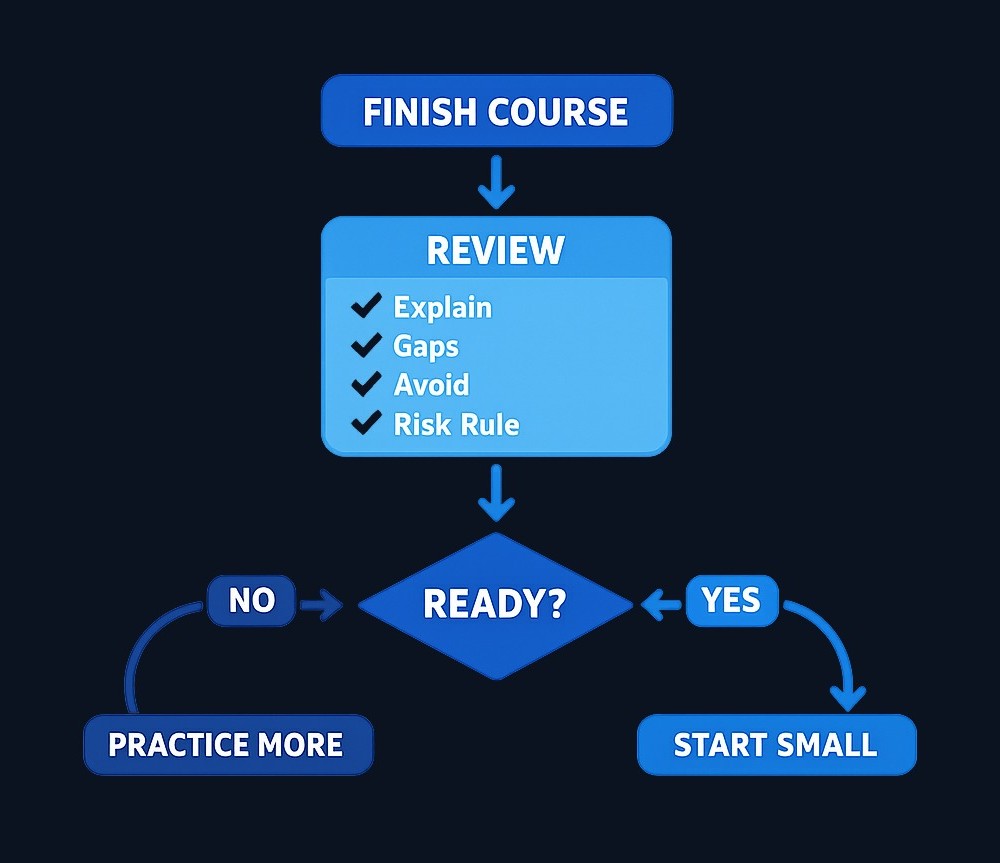
- What concepts can I explain clearly?
- Which terms still confuse me?
- What decisions would I avoid for now?
- What is my written risk rule?
- What would I practice for another month before using real money?
That review turns a course from content consumption into actual education.
Conclusion and Next Steps
A stock market course for beginners should help you slow down, define terms, understand risk, and practice decision-making. The best course is not the one with the loudest promise. It is the one that matches your goal and gives you a repeatable process.
Your next step is simple: write down whether you want investing education, trading education, or broad market literacy. Then compare courses against that goal, check current pricing and features on official pages, and choose one that teaches risk before tactics. If you want structured education with practice, explore Finelo's AI Investing Challenge for long-term investing research or the AI Trader Challenge for active trading concepts and simulator-based learning.
Frequently asked questions
What is the best stock market course for beginners?
The best beginner course teaches market basics, risk, order types, analysis, and practice before advanced tactics. It should match your goal: long-term investing, active trading, or general financial literacy.
How long do stock market courses take?
Some beginner courses are short introductions, while others are structured over several weeks. Time is less important than sequence. A good course gives you enough time to learn terms, practice decisions, and review mistakes.
Are free stock market courses useful?
Yes, free courses can be useful for learning vocabulary and basic market structure. Check whether the course includes risk education, exercises, and clear explanations. If it mainly pushes excitement, treat it cautiously.
What topics should a beginner course cover?
Look for stocks, ETFs, funds, indexes, order types, risk, diversification, fundamental analysis, technical analysis, portfolio basics, and investing versus trading. A strong course also teaches common mistakes and how to practice before real decisions.
InvestingBeginnerMarket BasicsEducationMarkets
Practice investing with Finelo
Build practical investing skills with guided lessons, simulator practice, and structured challenges.
About the author
Finelo Team
The Finelo Team creates practical investing and trading education designed to help beginners learn faster with structured challenges, simulator practice, and bite-sized lessons.
Keep reading — Related articles

Investing
Yield to Call vs Yield to Maturity: Assumptions and Bond Risks
Yield to call (YTC) estimates a bond's yield if the issuer redeems it on an eligible call date; yield to maturity (YTM) estimates yield if it remains outstanding to final maturity.
Finelo Team

Investing
Will My Employer Know If I Take a 401(k) Loan?
Who this page is for: readers new to 401(k) loans who want a practical, privacy‑focused explanation — what your employer can see, how to limit visibility, and the financial tradeoffs to weigh.
Finelo Team
Investing
What Medical Expenses Qualify for a 401(k) Hardship Withdrawal?
Before you decide, confirm three things with your plan administrator:
Finelo Team