The systematic vs unsystematic risk distinction splits every threat to your portfolio into two buckets. Systematic risk is market-wide: recessions, interest rate shifts, inflation, and geopolitical shocks that hit nearly all assets at once. Unsystematic risk is specific to one company or industry, and diversification can largely remove it. Systematic risk cannot be diversified away.
Systematic vs Unsystematic Risk: Understanding the Differences
The systematic vs unsystematic risk distinction splits every threat to your portfolio into two buckets. Systematic risk is market-wide: recessions, interest rate shifts, inflation, and geopolitical shocks that hit…
6 min read
Practice investing with Finelo
Build practical investing skills with guided lessons, simulator practice, and structured challenges.
Want to learn more?
Build practical investing skills with guided lessons, simulator practice, and structured challenges.
Explore FineloExplore Finelo's 28-day challenges
Turn learning into a daily habit with guided challenge paths.
This page is for investors building or reviewing a portfolio who want to know which risks they are actually paid to take. You will find definitions, examples, a side-by-side comparison, management strategies, and a decision framework. Everything here is educational, not financial advice.
What is systematic risk?
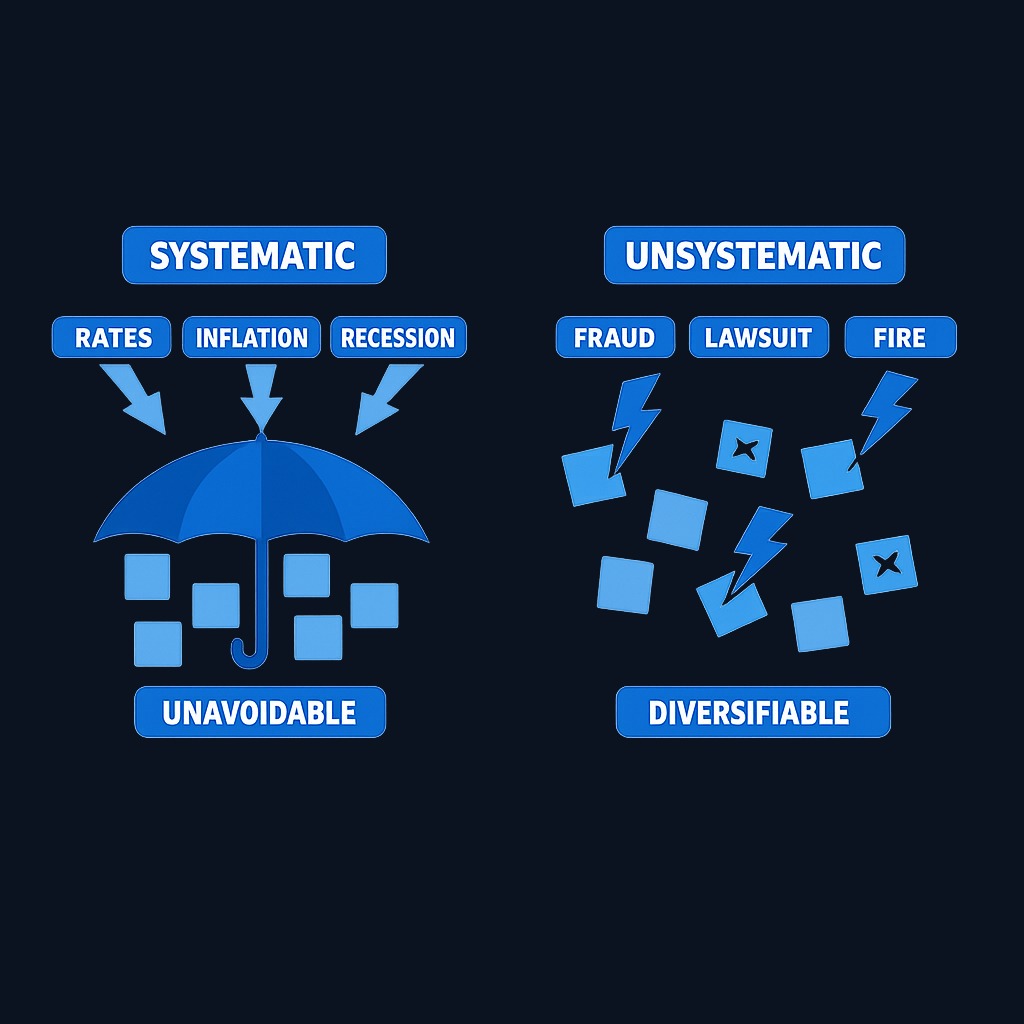
Systematic risk, also called market risk or non-diversifiable risk, comes from forces that move the whole financial system. When central banks raise rates, when inflation surges, or when a recession takes hold, nearly every stock feels the pressure regardless of how well its business is run. Common sources include:
- Interest rate risk - rising rates reduce the present value of future cash flows and raise borrowing costs across the economy; benchmark rates are tracked in the Federal Reserve's H.15 selected interest rates release.
- Inflation risk - broad price increases erode real returns for most asset classes at once.
- Recession and growth risk - economic contractions cut earnings across sectors simultaneously.
- Geopolitical and policy shocks - wars, trade disputes, and sudden regulatory shifts reprice entire markets.
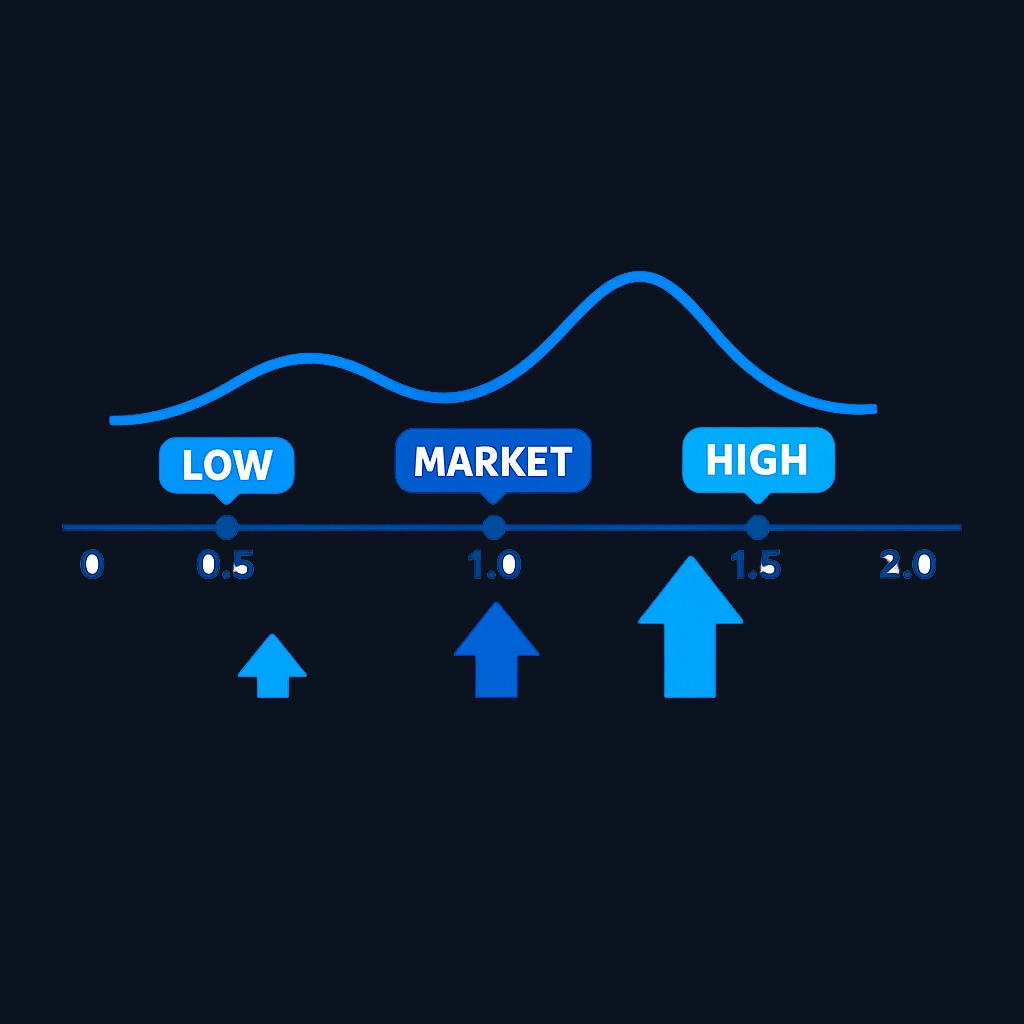
The standard gauge of a stock's exposure to systematic risk is beta, which measures how strongly it moves with the overall market. A beta above 1 amplifies market swings; below 1 dampens them. Because this risk survives diversification, it is the risk investors are generally compensated for bearing over time.
What is unsystematic risk?
Unsystematic risk, also called specific, idiosyncratic, or diversifiable risk, attaches to a single company or industry. A failed product launch, a fraud scandal, a factory fire, a lost lawsuit, or a new competitor can crush one stock while the rest of the market barely notices. Common forms include:
- Business risk - weak execution, product failures, or shrinking demand for one firm's offering.
- Financial risk - a company's own leverage and liquidity problems.
- Operational risk - supply chain breaks, accidents, and management missteps.
- Industry risk - regulation or technology shifts that hit one sector, like a drug pricing rule hitting pharmaceuticals.
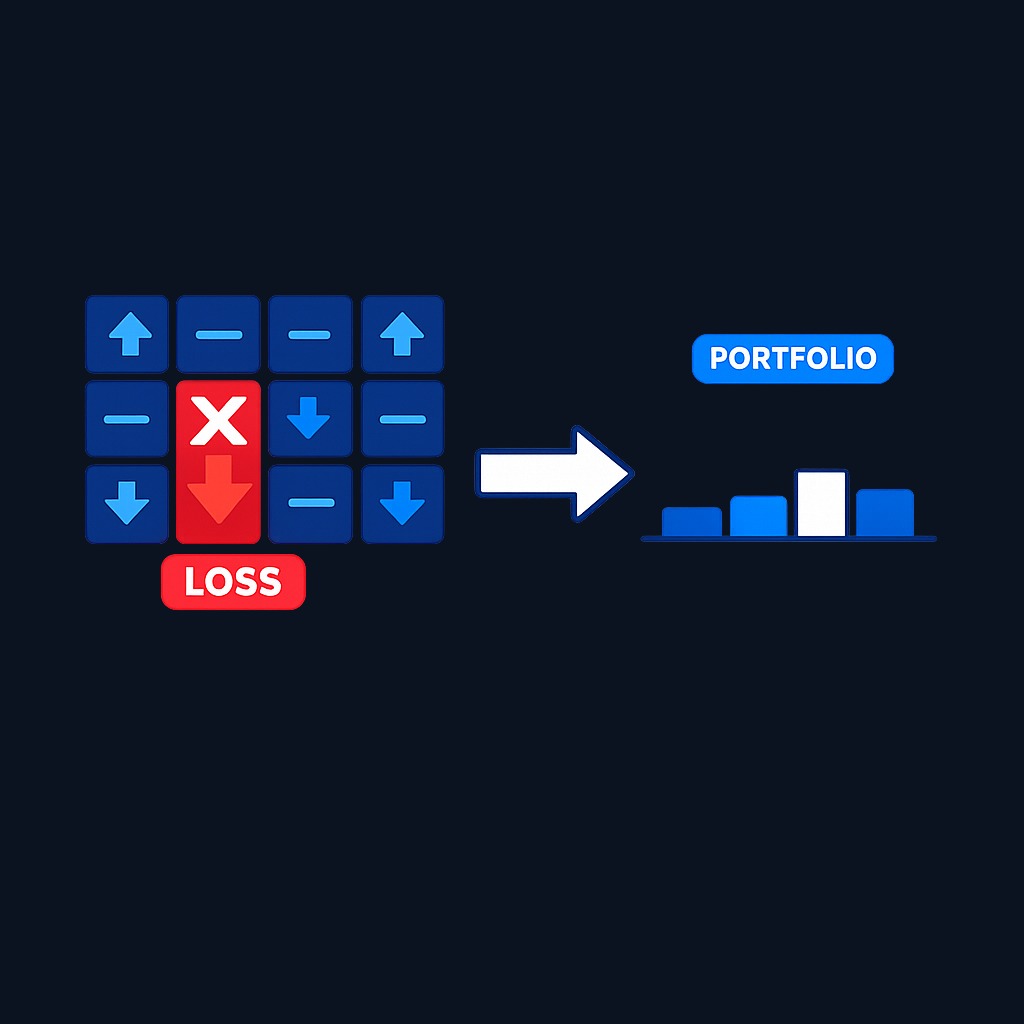
The defining feature is that these events are largely uncorrelated across companies. Holding many different positions means one company's disaster is a small dent, not a portfolio-ending event. That is why unsystematic risk is often called the "uncompensated" risk: the market does not pay you extra for a risk you could have diversified away for free.
Key differences between systematic and unsystematic risk
| Dimension | Systematic risk | Unsystematic risk |
|---|---|---|
| Scope | Entire market or economy | One company or industry |
| Can diversification remove it? | No | Largely yes |
| Typical sources | Rates, inflation, recessions, geopolitics | Earnings misses, scandals, competition, accidents |
| Measurement | Beta relative to a market index | Volatility left over after market moves are stripped out |
| Compensation | Generally rewarded with a risk premium over time | Generally not rewarded |
| Management tools | Asset allocation, hedging, duration and cash decisions | Diversification across holdings and sectors |
The compensation row is the one that changes behavior. Concentrating in a single stock exposes you to risks the market pays nothing for. Spreading across assets keeps the rewarded market exposure while shedding the unrewarded, company-specific kind.
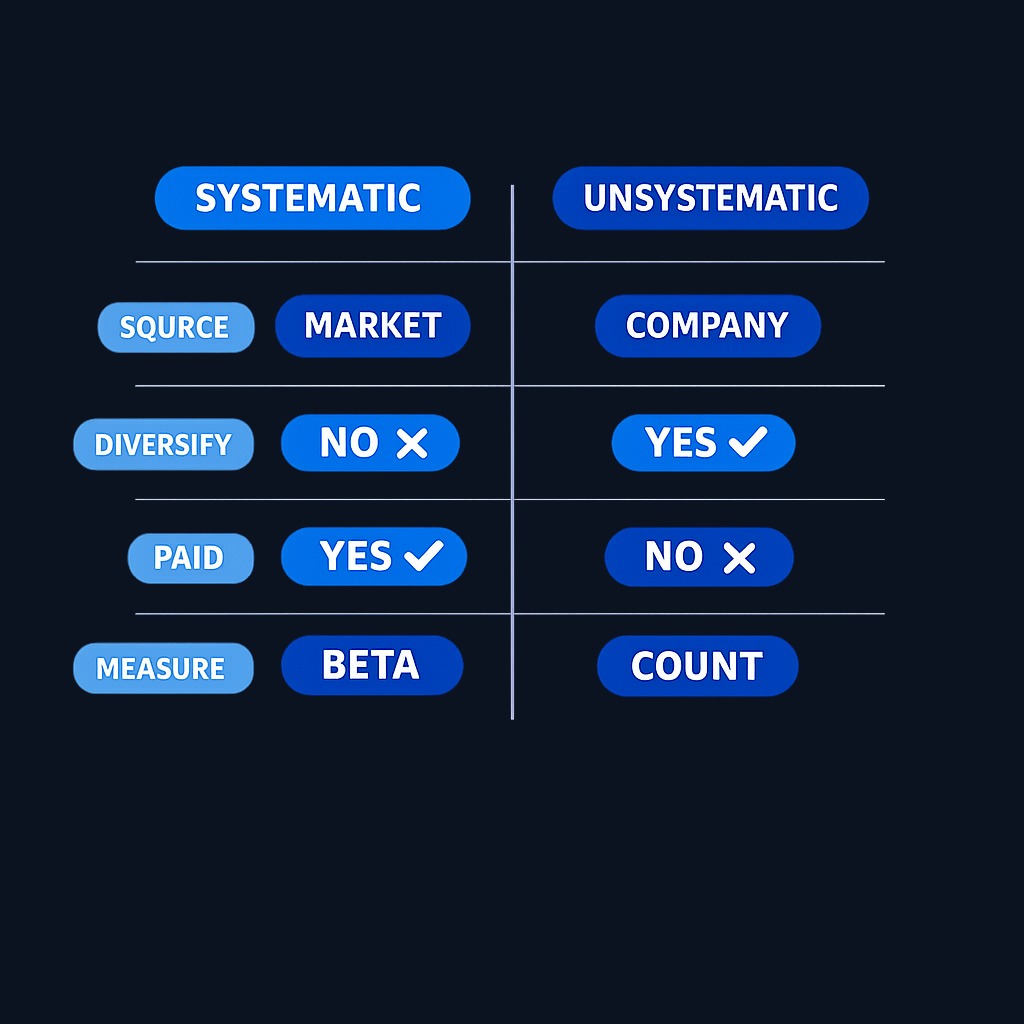
Examples of systematic and unsystematic risk
Systematic in action. In a broad downturn, an index fund holder watches nearly every position fall together. No amount of stock-picking skill inside the same market fully escapes the drawdown; the exposure itself is the driver. Rate-hiking cycles work the same way, repricing stocks and bonds simultaneously.
Unsystematic in action. A biotech firm fails a late-stage trial and loses half its value in a day while the market closes flat. An airline suffers a strike; a retailer discloses an accounting problem. Holders of those single names absorb heavy losses, but a portfolio holding 2% in each barely moves.
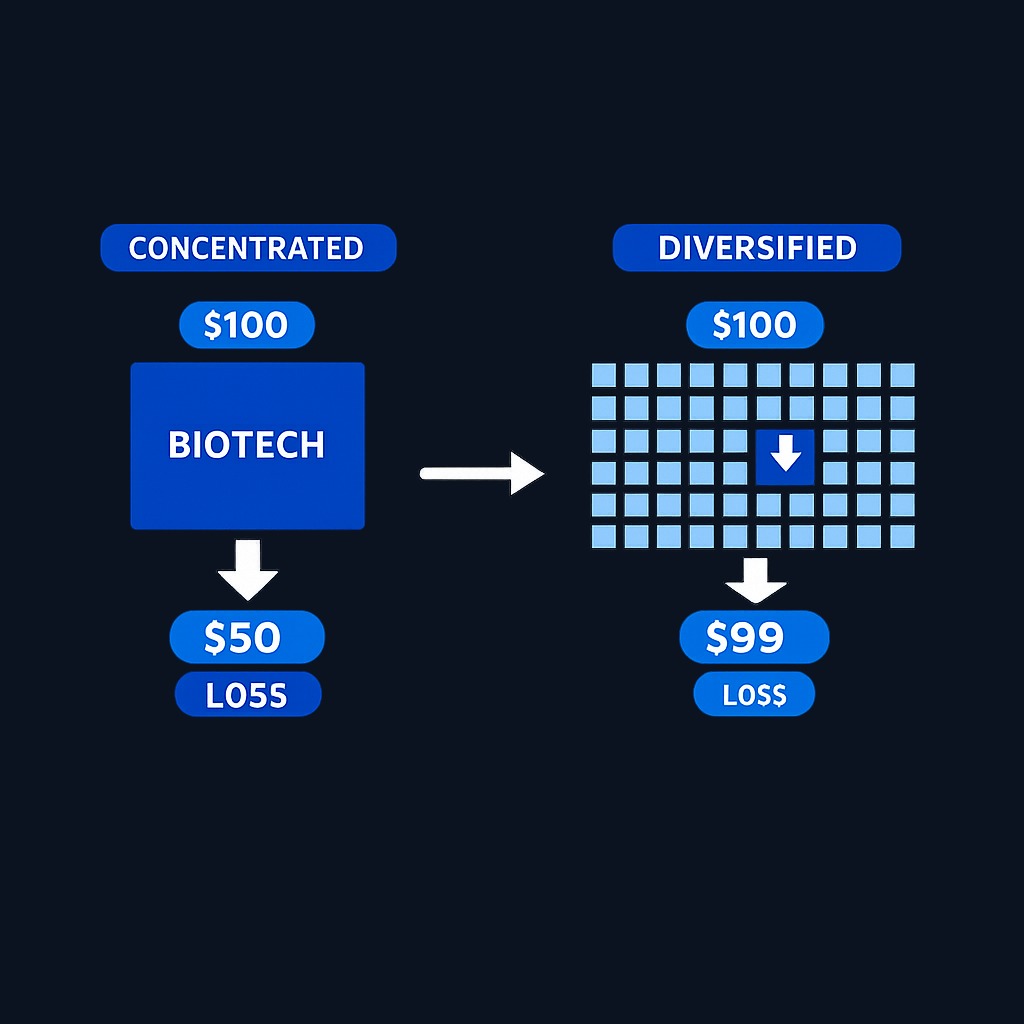
Both at once. A leveraged regional bank during a rate shock faces systematic pressure from rates plus unsystematic pressure from its own balance sheet choices. Real losses often come from the overlap, which is why risk reviews look at both layers rather than choosing one.
Practice investing with Finelo
Build practical investing skills with guided lessons, simulator practice, and structured challenges.
Risk management strategies
- Diversify to strip unsystematic risk. Spreading across companies, sectors, and geographies makes any single failure survivable. Research on portfolio construction generally finds that a few dozen varied holdings remove most company-specific volatility.
- Set asset allocation to size systematic risk. Your split between stocks, bonds, and cash decides how hard market swings hit. This is the main lever, since market risk cannot be diversified away, only sized.
- Match risk to horizon. Long horizons can ride out market cycles; short horizons argue for less systematic exposure.
- Use hedges deliberately, not habitually. Options and inverse positions can trim market exposure for specific periods, at a cost that compounds if left on permanently.
- Rebalance on schedule. Rebalancing keeps both risk layers at intended levels as prices drift, and forces the discipline of trimming winners and topping up laggards.
What to know before deciding
Before restructuring anything, take an honest inventory. List your holdings and ask two questions of each: how much would a pure market decline hurt it, and how much could a company-specific event hurt it? A portfolio of one employer's stock plus an index fund has a very different risk mix than the same dollars spread across funds. Check concentration by position, by sector, and by income source, since a job and a portfolio tied to the same industry double the same bet. This is educational context for your own review, not personalized advice.
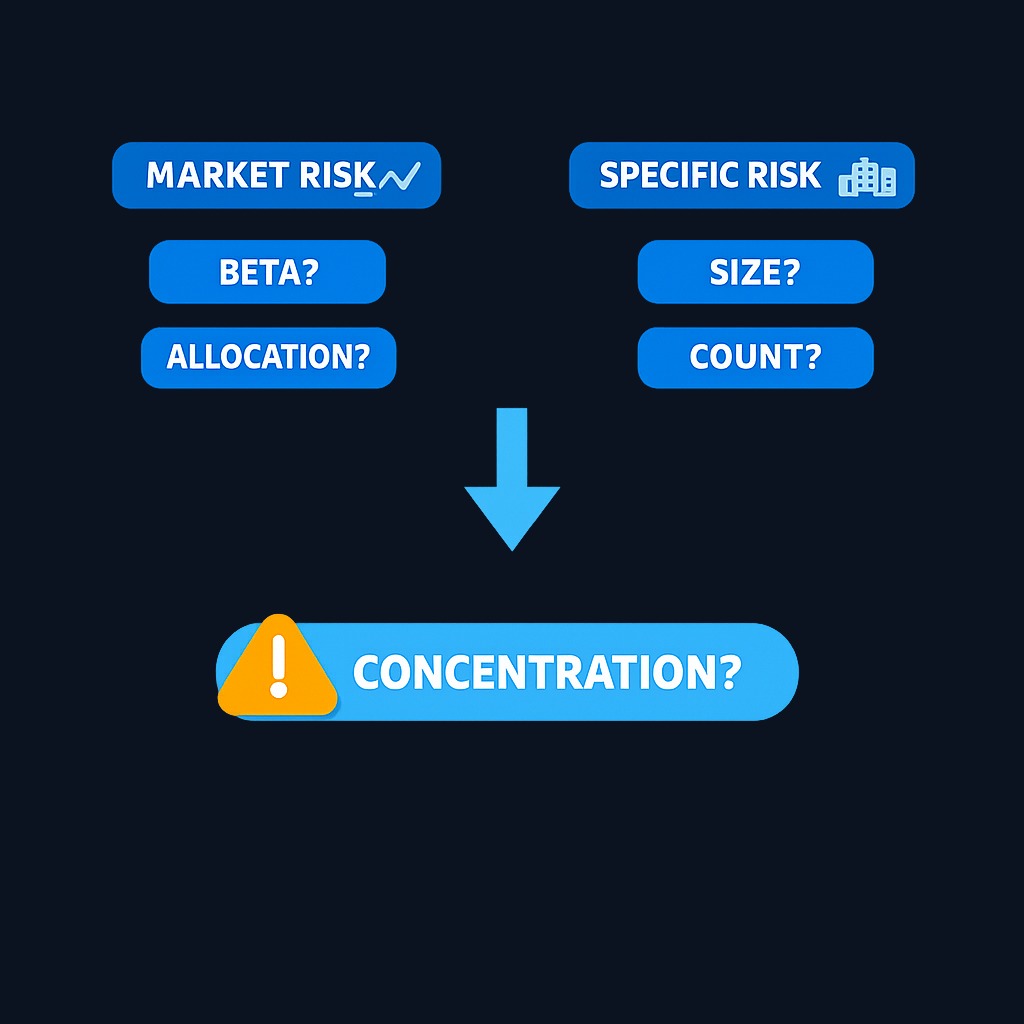
Decision framework for investors
- Identify the dominant risk layer. If one position exceeds roughly a tenth of your portfolio, unsystematic risk likely dominates; address concentration first.
- Set market exposure by need, not mood. Choose an equity allocation you can hold through a full cycle, then treat it as policy.
- Diversify the cheap risk away. Broad funds or a wide set of holdings remove most company-specific volatility at nearly no cost.
- Accept the paid risk consciously. Market risk is the price of long-term returns; size it, do not chase ways to eliminate it.
- Review after big life or market changes. New job, new goals, or a major market move are the trigger points for revisiting the mix.
Running a portfolio through these five steps once a year usually surfaces the real problem, and it is most often concentration rather than market exposure.
Conclusion and next steps
Systematic risk is the market-wide exposure you are paid to carry; unsystematic risk is the company-specific exposure you can remove for free. Diversification handles the second, asset allocation sizes the first, and confusing the two is the most common risk-management mistake in retail portfolios.
Next steps: compute your largest position's share of your portfolio, estimate your portfolio beta from fund fact sheets, and decide whether each risk layer matches your intent. If you want structured practice with risk concepts like these, Finelo teaches them through guided lessons.
Frequently asked questions
Why can't diversification eliminate systematic risk?
Because systematic risk comes from factors that move nearly all assets together, adding more of those assets cannot cancel it. Diversification only works when risks are uncorrelated, which is true of company-specific events but not of market-wide shocks.
How is systematic risk measured?
Beta is the standard measure: it captures how much a stock or portfolio tends to move when the market moves. Portfolio-level beta is the weighted average of holdings, and it summarizes exposure to market swings.
Is one type of risk worse than the other?
They are different problems. Unsystematic risk is worse per dollar because it is unrewarded and avoidable. Systematic risk is unavoidable for market participants but is the exposure long-term returns compensate.
How many stocks does it take to diversify away unsystematic risk?
Portfolio research commonly suggests that several dozen varied holdings remove the bulk of company-specific volatility, with diminishing benefits beyond that. Sector and geographic spread matter as much as the raw count.
systematicunsystematicrisk
Practice investing with Finelo
Build practical investing skills with guided lessons, simulator practice, and structured challenges.
About the author
Finelo Team
The Finelo Team creates practical investing and trading education designed to help beginners learn faster with structured challenges, simulator practice, and bite-sized lessons.
Keep reading — Related articles

Investing
Tax-gain harvesting vs. tax-loss harvesting
Compare realizing investment gains with realizing losses, including holding periods, wash sales, offsets, and portfolio tradeoffs.
Finelo Team

Investing
Stable value fund vs. money market fund
Compare investment structure, contract protections, transfer restrictions, net yields, and access inside a retirement account.
Finelo Team

Investing
Single-life vs. joint-life annuity
Compare income for one lifetime with continued payments to a survivor, using equal premiums and matching guarantee terms.
Finelo Team