The comparison of treasury bills vs notes vs bonds comes down to one variable: time. Treasury bills mature in a year or less and are sold at a discount instead of paying interest; Treasury notes run two to ten years and pay interest every six months; Treasury bonds stretch twenty to thirty years with the same semiannual coupon structure. All three are direct obligations of the US government, which puts them among the lowest-credit-risk investments available. This page is for savers and investors deciding which maturity fits their goals. Read the security-by-security breakdown, the side-by-side table, and the decision framework below, then check current yields before you buy anything.
Treasury Bills vs Notes vs Bonds: Differences, Yields, and How to Choose
The comparison of treasury bills vs notes vs bonds comes down to one variable: time. Treasury bills mature in a year or less and are sold at a discount instead of paying interest; Treasury notes run two to ten years and…
7 min read
Practice investing with Finelo
Build practical investing skills with guided lessons, simulator practice, and structured challenges.
Want to learn more?
Build practical investing skills with guided lessons, simulator practice, and structured challenges.
Explore FineloExplore Finelo's 28-day challenges
Turn learning into a daily habit with guided challenge paths.
How Treasury securities work
When you buy a Treasury security, you are lending money to the US government. In exchange you receive either periodic interest payments plus your principal at maturity, or, for bills, the difference between a discounted purchase price and full face value. The market for these securities is among the deepest in the world, which means you can generally sell before maturity at the going price, though that price can be above or below what you paid.
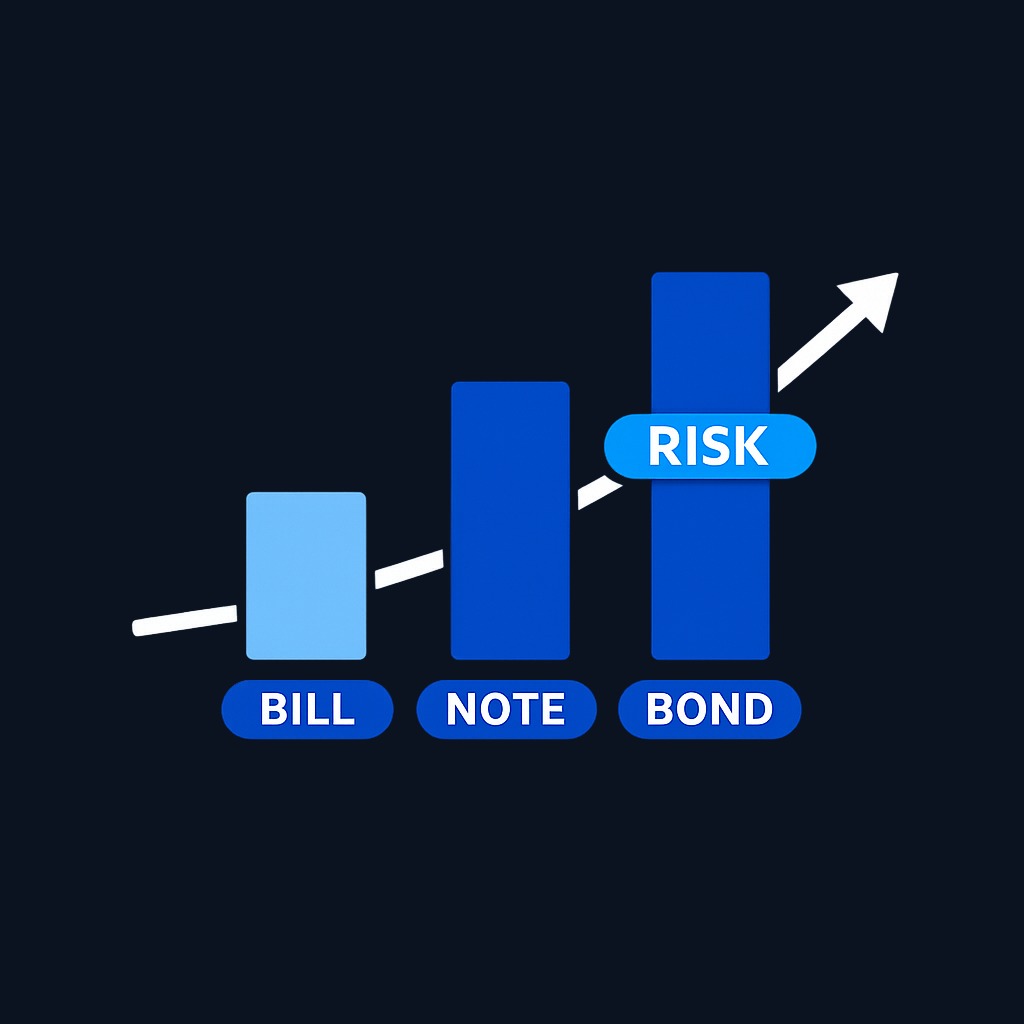
Two features apply across the whole family. Interest is subject to federal income tax but exempt from state and local income taxes, a meaningful advantage in high-tax states. And credit risk is minimal because payments are backed by the government's taxing power; the risk you actually manage when choosing among bills, notes, and bonds is interest rate risk, which grows with maturity.
Treasury bills: short-term parking
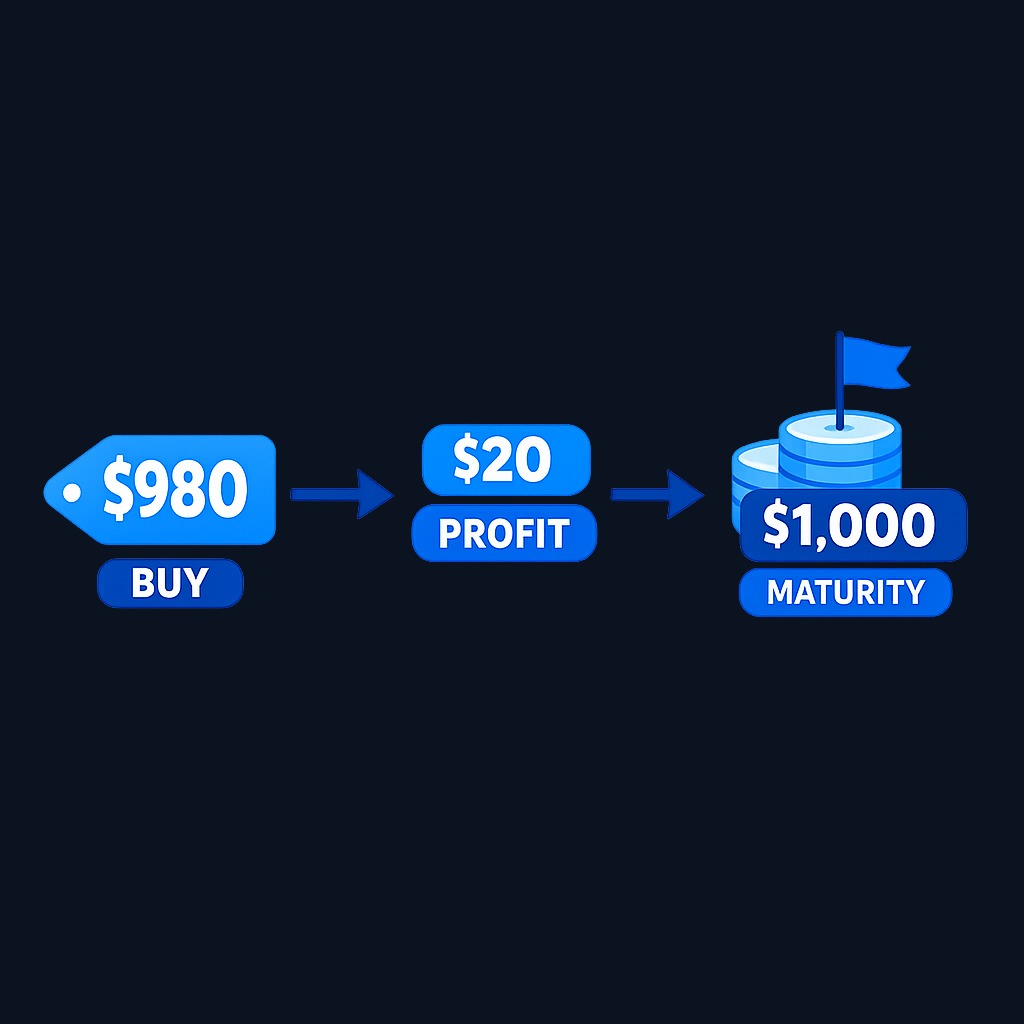
Treasury bills (T-bills) mature in one year or less. TreasuryDirect currently lists original terms of 4, 6, 8, 13, 17, 26, and 52 weeks; the available auction calendar can change. Bills do not pay coupons: investors generally buy at a discount or par and receive face value at maturity. See TreasuryDirect's T-bill guide.
Because the holding period is short, price swings from rate changes are small, which makes bills the closest thing to a cash substitute in the Treasury family. Savers use them for emergency funds they will not touch for months, house down payments in waiting, and the cash sleeve of a portfolio. The tradeoff is reinvestment risk: when a bill matures, you must reinvest at whatever rates exist then, and short rates can drop quickly.
Treasury notes: the middle of the curve
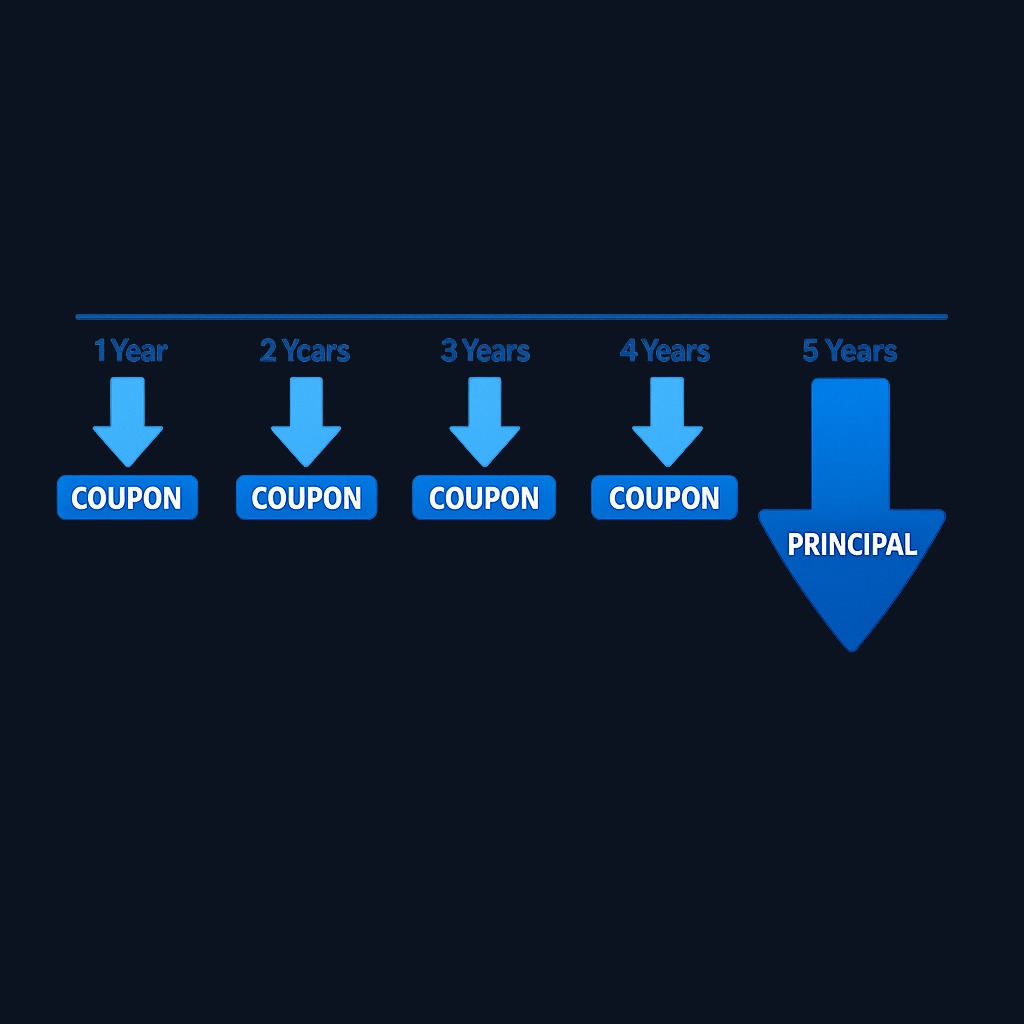
Treasury notes (T-notes) are issued with maturities of two, three, five, seven, and ten years. They pay fixed interest every six months and return principal at maturity. The 10-year note is a widely followed benchmark, but mortgage and other borrowing rates also reflect credit, optionality, liquidity, and other spreads.
Notes suit goals with a known intermediate horizon, such as tuition due in six years, and they form the core of most bond ladders. Their prices move more than bills when rates change, but far less than long bonds. For many individual investors, the note range is the practical sweet spot between yield and volatility.
Treasury bonds: 20- and 30-year commitments
Treasury bonds (T-bonds) are currently issued at twenty- and thirty-year maturities, with semiannual coupons and principal at maturity. Longer maturity does not guarantee a higher yield; the curve can be flat or inverted, and yields change with market conditions.
The defining trait of long bonds is price sensitivity. A thirty-year bond's market value can swing dramatically when rates move a single percentage point, a property known as duration. That volatility cuts both ways: painful when rates rise, powerful when rates fall. Pension funds and insurers buy long bonds to match distant liabilities; individuals mostly use them in smaller doses for income lock-in or as a deliberate bet on falling rates.
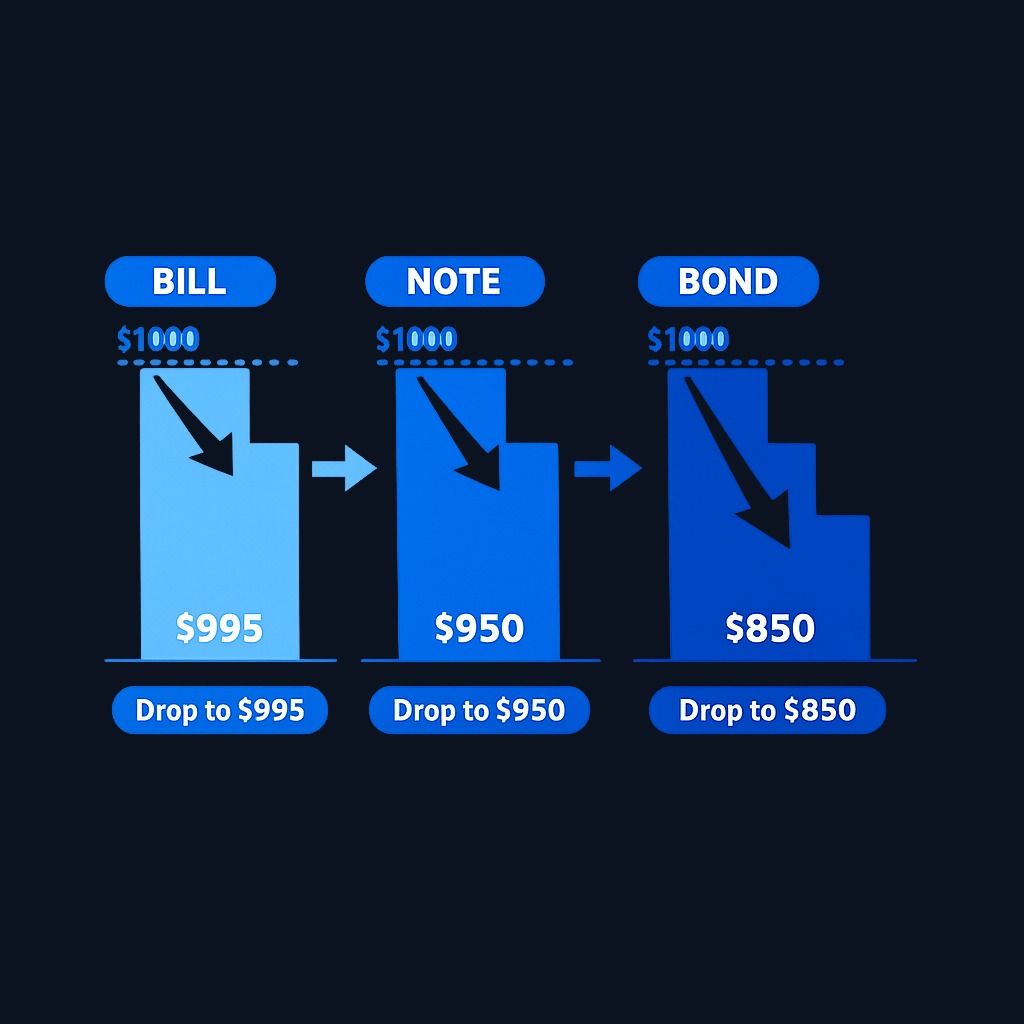
Side-by-side comparison
| Feature | T-bills | T-notes | T-bonds |
|---|---|---|---|
| Maturity | 1 year or less | 2-10 years | 20-30 years |
| Interest payments | None (bought at discount) | Every 6 months | Every 6 months |
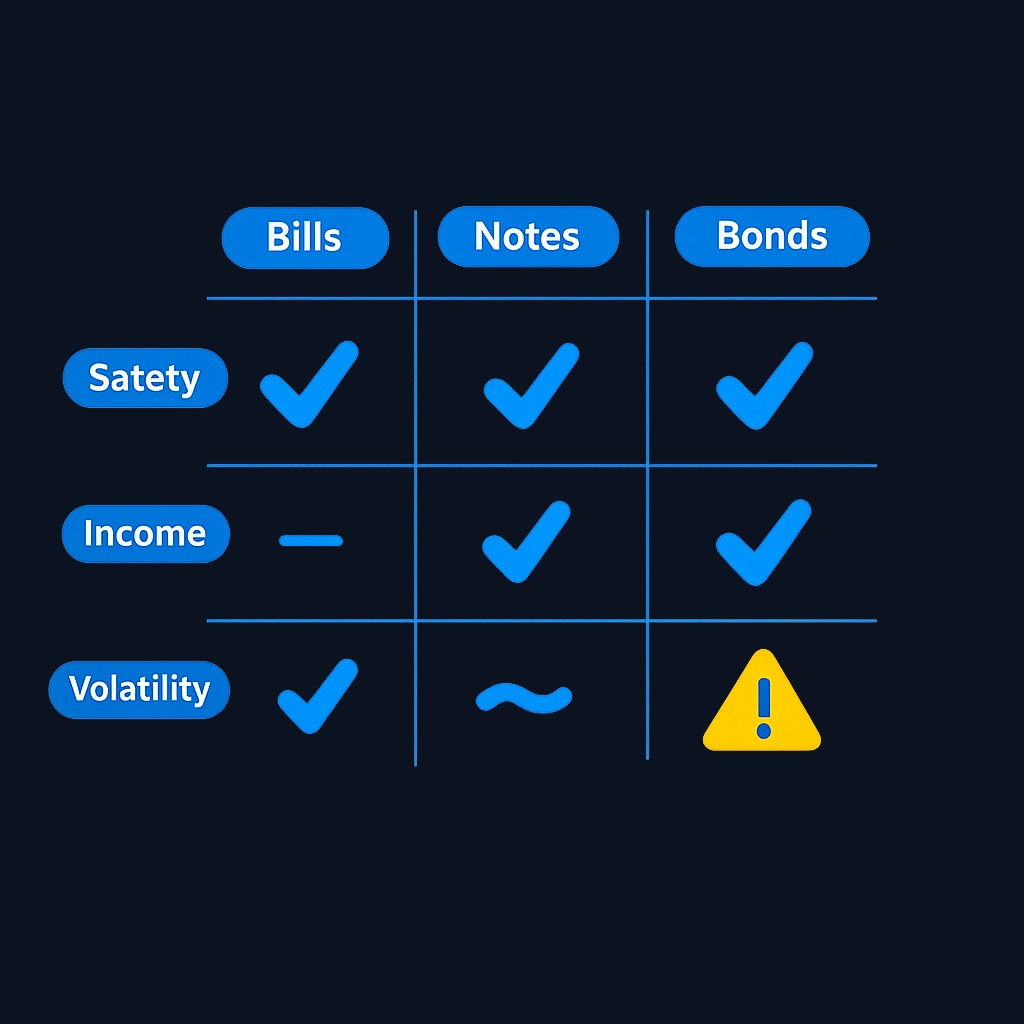
| Interest rate risk | Lower than longer Treasuries, but not zero if sold before maturity | Material and dependent on duration | Usually highest duration and price sensitivity among nominal Treasuries |
| Typical use | Cash management, short goals | Ladders, medium-term goals | Long-term income, liability matching |
| Price volatility | Very low | Moderate | Can be severe |
| State/local tax on interest | Exempt | Exempt | Exempt |
Current yields for each maturity change constantly with Federal Reserve policy and market expectations; the Fed publishes daily Treasury yields across the curve in its H.15 selected interest rates release, which is the cleanest place to compare what each maturity actually pays today.
Practice investing with Finelo
Build practical investing skills with guided lessons, simulator practice, and structured challenges.
Pros and cons of each security
T-bills. Pros: minimal price risk, fast access to your money, simple mechanics. Cons: no income stream, returns reset with every maturity, and long stretches of low short-term rates can leave them yielding very little.
T-notes. Pros: predictable semiannual income, benchmark liquidity, manageable volatility, natural ladder building blocks. Cons: meaningful price declines if rates rise sharply, and yields that may lag inflation in some environments.
T-bonds. Pros: longest income lock-in, highest sensitivity to falling rates, useful diversification against equity drawdowns in disinflationary recessions. Cons: severe drawdowns when rates climb, decades of inflation exposure, and opportunity cost if better yields appear later.
What to know before deciding
Match maturity to the date and uncertainty of the liability rather than whichever yield looks largest. A ladder can spread reinvestment dates, but it does not remove rate or inflation risk. Selling before maturity exposes you to market price. Holding to maturity removes uncertainty about nominal Treasury principal and promised payments, but not inflation risk, opportunity cost, or the reinvestment rate on coupons and maturing proceeds.
Decision framework: matching maturity to your goal
| Your situation | Sensible starting point |
|---|---|
| Emergency fund or cash needed within 12 months | T-bills, possibly laddered monthly |
| Known expense in 2-10 years | T-notes maturing near the expense date |
| Retiree seeking decades of predictable income | Mix of notes and a measured allocation to bonds |
| Expecting falling rates and accepting volatility | Longer notes or bonds sized to your risk tolerance |
| No specific date, just diversification | An intermediate ladder across the note range |
FAQ
What is the main difference between treasury bills, notes, and bonds?
Maturity and payment structure. Bills mature within a year and are sold at a discount with no coupon; notes run two to ten years with semiannual interest; bonds run twenty to thirty years with semiannual interest.
Which is safest: T-bills, T-notes, or T-bonds?
Credit risk is equally minimal across all three. In terms of price stability, bills are safest because their short life leaves little time for rate changes to move their value.
Do I pay taxes on Treasury interest?
Interest and discount income are federally taxable but exempt from state and local income taxes. That exemption effectively raises your after-tax yield in high-tax states.
Can I sell a Treasury security before it matures?
Yes. The Treasury market is deeply liquid, but you receive the current market price, which may be higher or lower than you paid, so early sales can produce gains or losses.
Conclusion and next steps
Treasury bills, notes, and bonds are the same promise wrapped in three time horizons: short discount paper for parking cash, intermediate coupon securities for dated goals, and long bonds for distant liabilities or rate conviction. Choose by matching maturity to the calendar of your own life, check live yields on the Fed's H.15 release before buying, and consider laddering to blunt reinvestment and rate risk at once. As a next step, write down when you will actually need each pool of your savings; that one list usually makes the bills-versus-notes-versus-bonds choice obvious.
InvestingFundamental AnalysisBondsBeginner
Practice investing with Finelo
Build practical investing skills with guided lessons, simulator practice, and structured challenges.
About the author
Finelo Team
The Finelo Team creates practical investing and trading education designed to help beginners learn faster with structured challenges, simulator practice, and bite-sized lessons.
Keep reading — Related articles

Investing
Tax-gain harvesting vs. tax-loss harvesting
Compare realizing investment gains with realizing losses, including holding periods, wash sales, offsets, and portfolio tradeoffs.
Finelo Team

Investing
Stable value fund vs. money market fund
Compare investment structure, contract protections, transfer restrictions, net yields, and access inside a retirement account.
Finelo Team

Investing
Single-life vs. joint-life annuity
Compare income for one lifetime with continued payments to a survivor, using equal premiums and matching guarantee terms.
Finelo Team