The disposition effect is the tendency of investors to sell winning investments too early while holding on to losing investments too long. Instead of letting the numbers decide, people lock in gains to feel good and avoid realizing losses to escape regret. The result is a portfolio shaped by emotion rather than analysis.
Understanding the Disposition Effect and Its Impact on Investment Decisions

The disposition effect is the tendency of investors to sell winning investments too early while holding on to losing investments too long. Instead of letting the numbers decide, people lock in gains to feel good and…
13 min read
Practice investing with Finelo
Build practical investing skills with guided lessons, simulator practice, and structured challenges.
Want to learn more?
Build practical investing skills with guided lessons, simulator practice, and structured challenges.
Explore FineloExplore Finelo's 28-day challenges
Turn learning into a daily habit with guided challenge paths.
If you have ever sold a stock the moment it turned green, or kept a loser for years "until it comes back", you have felt this bias at work. This article explains where the disposition effect comes from, what it costs, how it shows up in real portfolios, and the practical systems that reduce it. Everything here is educational content, not financial advice, so weigh any strategy against your own situation before acting.
What is the disposition effect?
The disposition effect describes a consistent pattern in investor behavior: when people need to sell something, they prefer to sell positions showing a gain and keep positions showing a loss, regardless of which asset has better prospects. The purchase price becomes an emotional anchor. Everything above it feels like winning, and everything below it feels like a mistake that has not been admitted yet.
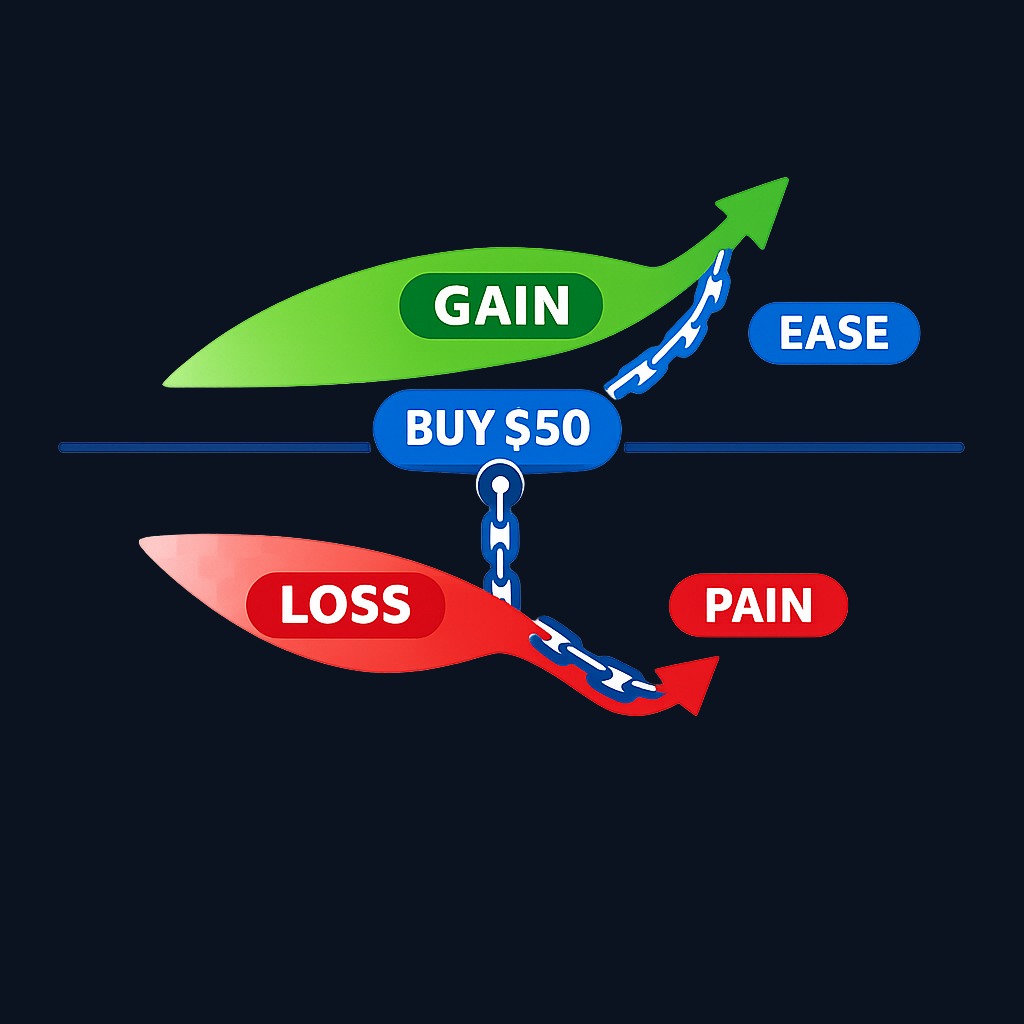
Rationally, the price you paid is irrelevant to what you should do next. The only questions that matter are forward-looking: what is this asset worth from here, what else could the money do, and what are the tax consequences of each choice? The market does not know or care what your entry price was. Yet in practice, that entry price quietly drives millions of sell decisions every trading day.
The bias earns its name from investors' "disposition" to sell winners and ride losers. It is one of the most studied patterns in behavioral finance because it is easy to measure in brokerage data and remarkably stubborn across time, markets, and experience levels.
Psychological roots of the disposition effect
The disposition effect is not stupidity. It grows out of deep, well-documented features of human decision-making.
Loss aversion and prospect theory
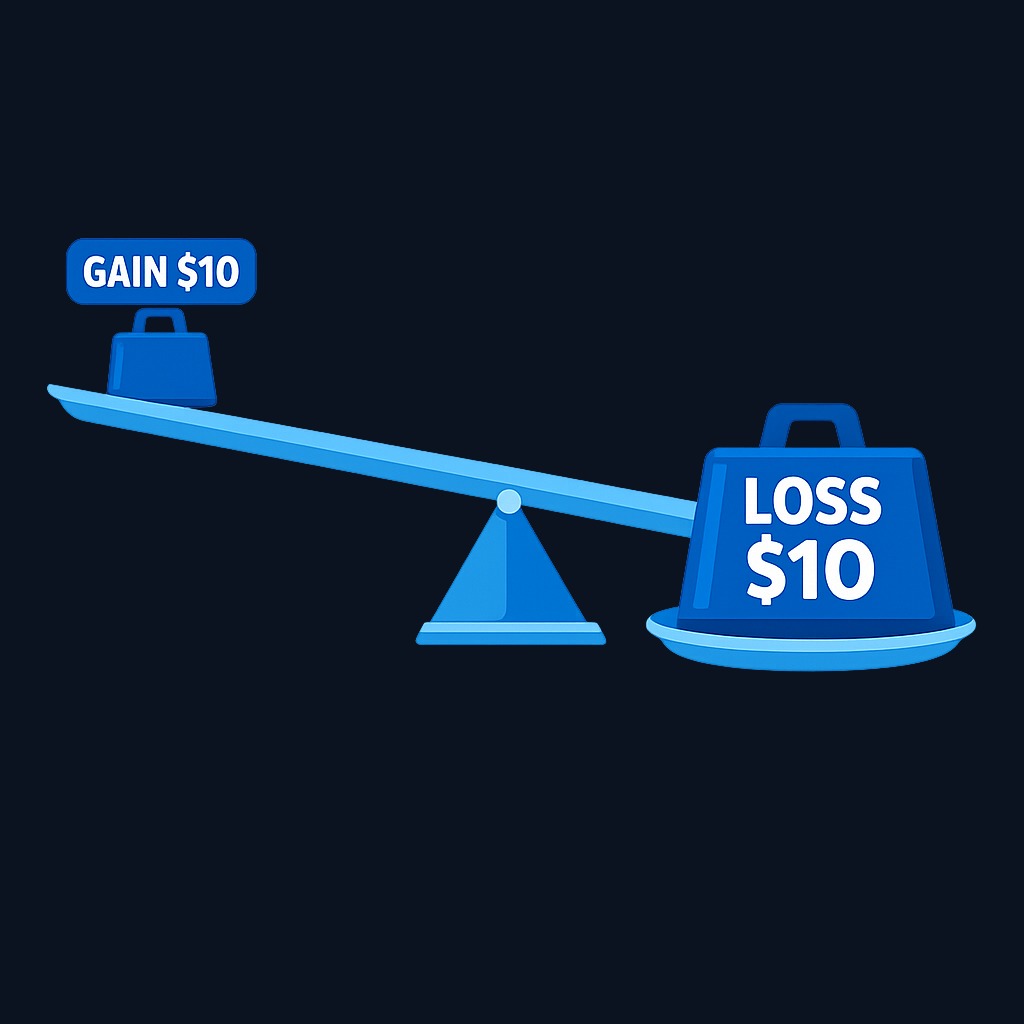
Prospect theory, the framework developed by behavioral researchers to describe how people evaluate gains and losses, observes that losses hurt roughly twice as much as equivalent gains feel good. People also evaluate outcomes relative to a reference point, usually the price they paid, rather than in absolute terms. Combine those two features and the pattern emerges naturally: selling a winner delivers a pleasant, certain gain, while selling a loser forces a painful, certain loss. Holding the loser keeps the possibility of "getting back to even" alive, which feels better than accepting defeat, even when the odds do not support it.
Regret avoidance
Realizing a loss converts a paper mistake into a permanent one. As long as the position stays open, the investor can tell themselves the story is not over. Selling ends the story with a bad ending, and people go to great lengths to avoid writing that ending. Research on regret shows that people feel stronger regret about actions taken than about inaction, which makes the active step of selling a loser especially uncomfortable.
Mental accounting
Investors tend to track each position in its own mental account, opened at the purchase price and closed at the sale. Each account demands to be closed in the black. This framing ignores the portfolio as a whole. A rational investor cares about total wealth and future returns; a mental accountant cares about winning every individual trade, which is neither possible nor necessary.
Belief in mean reversion
Many investors hold a vague faith that what fell must rise again. Sometimes prices do recover. But applying this belief selectively, only to positions you own and only below your entry price, is not analysis. It is hope wearing the costume of a strategy.
How the disposition effect hurts individual investors
For individual investors, the damage compounds through several channels.
Momentum works against the pattern. Equity returns often show medium-term momentum: recent winners tend to keep performing, and recent losers tend to keep lagging. An investor who systematically sells winners and keeps losers is trading directly against that tendency, trimming the positions with better short-term prospects and doubling down on the weaker ones.
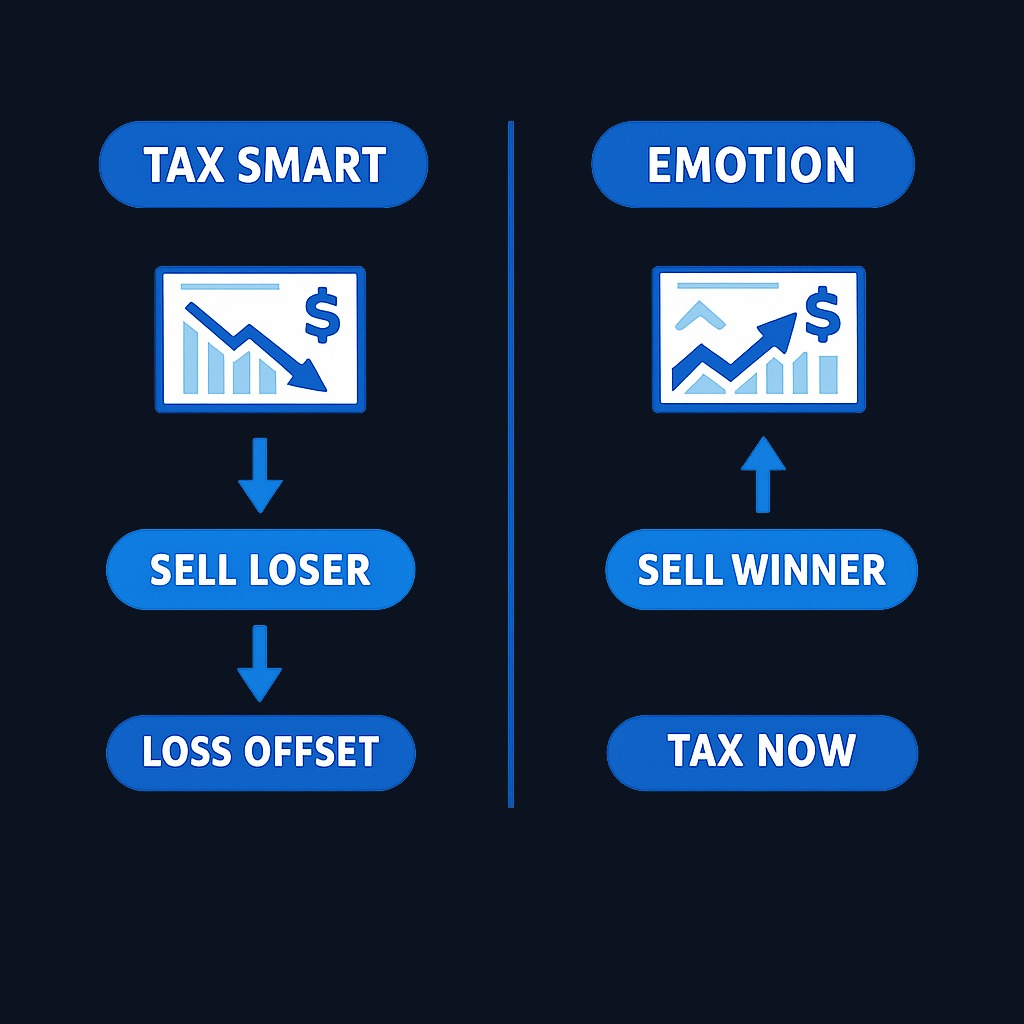
Taxes get worse, not better. In the US, the IRS explains in Topic 409, Capital Gains and Losses that realized capital losses can offset capital gains, and a limited amount of ordinary income, when figuring taxes. The disposition effect pushes investors to do exactly the opposite of what tax efficiency suggests: they realize taxable gains early and defer deductible losses indefinitely. The bias costs money twice, once in returns and again in taxes.
Portfolio quality drifts downward. Sell your strongest performers repeatedly and keep the disappointments, and over the years the portfolio gradually fills with positions you would never buy today. Each individual decision feels small; the cumulative effect is a collection of underperformers held mainly out of stubbornness.
Learning slows down. Refusing to realize losses also means refusing to admit and study mistakes. Investors who never close losing positions rarely review why the thesis failed, so the same errors repeat.
How the disposition effect shows up for institutional investors
Professional investors are not immune, though the effect is usually weaker among experienced managers. Studies of fund managers and professional traders find the same asymmetry between realizing gains and losses, moderated by experience, sophistication, and accountability structures.
Institutions face their own version of the reference-point problem. A fund manager who sells a large losing position must often explain the loss to a committee or to clients, which recreates the same regret pressure an individual feels, at higher stakes. Window-dressing pressures can push in the same direction: managers may prefer not to show embarrassing losers in end-of-period holdings, yet still delay realizing losses during the period.
The institutional advantage comes from process. Teams with written sell disciplines, independent risk oversight, and mandatory position reviews show weaker disposition behavior, which is strong evidence that structure, not willpower, is the real cure.
Evidence and research on the disposition effect
The disposition effect was named and documented by behavioral finance researchers in the 1980s, and large-scale confirmation followed in the 1990s when researchers analyzed the trading records of tens of thousands of retail brokerage accounts. The core finding, replicated many times since: investors realize gains at a meaningfully higher rate than losses through most of the year. The main exception arrives near year-end in tax-motivated selling seasons, when loss realization briefly spikes, showing that investors can overcome the bias when a concrete incentive forces the issue.
Later research extended the result across countries, asset classes, and investor types. The pattern appears in stock markets around the world, in housing, where owners resist selling below their purchase price even in falling markets, in employee stock options, and in experimental settings where participants trade artificial assets with known statistical behavior. In those laboratory markets, participants still sell winners and cling to losers even when the assets' price dynamics make that strategy clearly costly.
Two more findings deserve attention. First, experience helps but does not fully protect: more sophisticated and more active investors show a smaller disposition effect, yet rarely zero. Second, automation helps: positions governed by pre-set rules, such as stop orders, show far less disposition behavior than positions managed by discretion in the moment.
A worked example: two stocks, one bias
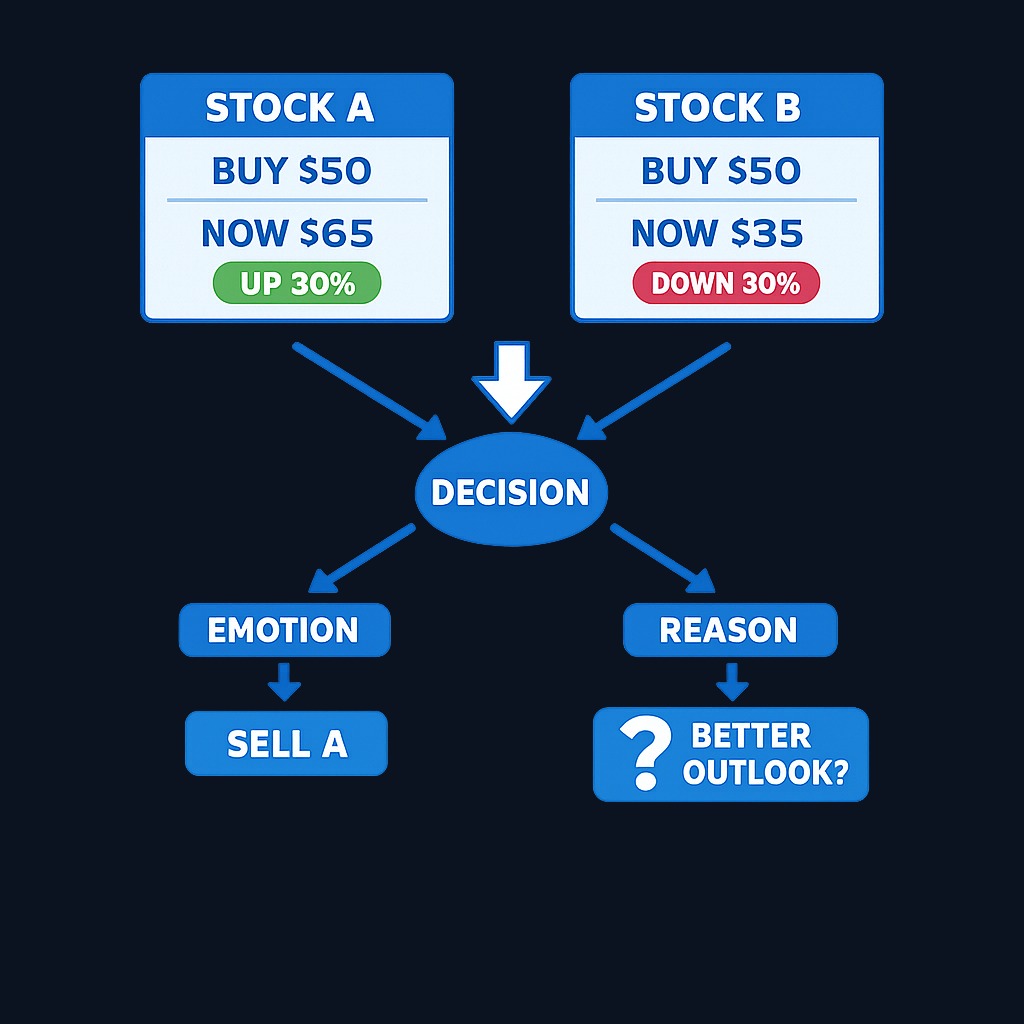
Imagine you hold two positions of equal size. Stock A was bought at $50 and now trades at $65, a 30% gain. Stock B was bought at $50 and now trades at $35, a 30% loss. You need to raise cash, so one position must go.
The disposition effect says: sell A, keep B. Selling A feels like collecting a trophy. Selling B feels like signing a confession.
| Question | Disposition-driven answer | Analysis-driven answer |
|---|---|---|
| Which position gets sold? | The winner (Stock A) | Whichever has the weaker forward outlook |
| What anchors the decision? | The $50 purchase price | Today's price and prospects |
| How are taxes treated? | Ignored | Counted: the realized loss may have offset value |
| What happens to the loser? | Held "until it comes back" | Reviewed against its original thesis |
| What is the scoreboard? | Each trade must end green | Total portfolio return |
Now strip out the entry prices and ask the forward-looking questions. Which company has the stronger outlook from today's price? If B's business has deteriorated, the market is telling you something, and momentum research suggests the slide often continues. Meanwhile, selling B instead of A could produce a realized loss with real tax value, while letting the stronger position keep running.
None of this guarantees that A will outperform B from here; nothing guarantees anything in markets. The point is that the purchase price contributed nothing to the analysis. Any decision process that starts from "which sale feels better" rather than "which asset is better from here" will be systematically wrong more often than it is right.
Practice investing with Finelo
Build practical investing skills with guided lessons, simulator practice, and structured challenges.
Strategies to reduce the disposition effect
You cannot delete a bias, but you can build systems that leave it less room to operate.
- Write a sell discipline before you buy. For every new position, record the thesis, the conditions that would prove it wrong, and the price or event that triggers an exit. Decisions made calmly in advance beat decisions made emotionally in the moment.
- Use rules and automation. Stop-loss orders, position-size limits, and scheduled rebalancing all convert discretionary choices into mechanical ones. Research consistently shows automated exits sharply reduce disposition behavior.
- Review the portfolio blind. Periodically evaluate each holding while hiding your cost basis. Ask: would I buy this today at this price? If the answer is no and nothing else justifies holding, the entry price should not rescue it.
- Reframe losses as information plus tax value. A realized loss closes a bad chapter, may offset taxable gains, and frees capital for better ideas. Naming those three benefits explicitly makes the sale easier to execute.
- Judge decisions at the portfolio level. Track total portfolio performance rather than the win rate of individual trades. You are not collecting closed green trades; you are compounding total wealth.
- Keep a decision journal. Write down why you sold or held, then review quarterly. Patterns of regret-driven behavior become visible fast, and visibility is the first step to fixing them.
- Slow the decision down. When you notice the urge to grab a quick gain or defend a loser, wait a day and re-read your original thesis. Distance weakens emotion's grip.
The disposition effect in volatile markets
Market turbulence amplifies every ingredient of the bias. Sharp drawdowns create large paper losses across the portfolio, so the pressure to avoid realizing them rises exactly when clear-eyed pruning matters most. Meanwhile, brief rallies tempt investors to cash out surviving winners early, "before the market takes them back". The combined result in volatile periods is a portfolio that gradually concentrates in damaged positions while shedding resilient ones.
Volatility also shortens attention and raises emotional temperature, which favors fast, feeling-based choices over slow, rule-based ones. This is why the strategies below lean so heavily on automation and pre-commitment: rules written in calm weather keep working in a storm. If a downturn catches you without a sell discipline, resist making wholesale changes mid-panic. Stabilize first, then build the process, then act on it deliberately.
Common mistakes when fighting the disposition effect
Knowing about the bias does not automatically fix it, and some fixes create new problems:
- Swinging to the opposite extreme. Dumping every loser instantly is not discipline; it is a different emotion. Losses should trigger a thesis review, not an automatic sale.
- Setting stop-losses too tight. Exits placed inside an asset's normal volatility range convert ordinary noise into constant small losses. Set rules around the thesis, not around round numbers.
- Keeping the rules private and flexible. A sell discipline you can quietly rewrite mid-trade is not a discipline. Write it down, and if possible share it with someone who will ask questions.
- Measuring success by closed trades. If your scoreboard still counts individual green exits, the bias will find its way back. Track total portfolio return instead.
- Ignoring taxes entirely. Realized losses have concrete value in many tax systems. Leaving them unharvested for emotional reasons is a quiet, recurring cost.
What to know before deciding
Before acting on any sell decision, gather the forward-looking facts: the current investment case for the asset, how it fits your allocation, the tax consequences of selling, and what you would do with the proceeds. Deliberately exclude the purchase price from the discussion, except for tax planning. If you find yourself defending a holding with "it will come back" or rushing a sale with "I do not want to lose this gain", pause. Those sentences describe feelings, not analysis, and recognizing them in real time is the most practical skill this topic offers.
Decision framework: sell, hold, or reassess
Use this sequence whenever you consider closing a position:
- Restate the thesis. Why do you own this asset, in one sentence?
- Test the thesis against today's facts. Is it intact, strengthened, or broken?
- Value it from here. Would you buy this asset at today's price with fresh money? Ignore your entry.
- Check the alternatives. What would the capital earn in the next-best idea, including simply holding a diversified fund?
- Count the taxes. Which action, selling the winner or the loser, produces the better after-tax outcome this year?
- Then decide. If the thesis is broken, sell regardless of gain or loss. If it is intact, hold regardless of gain or loss.
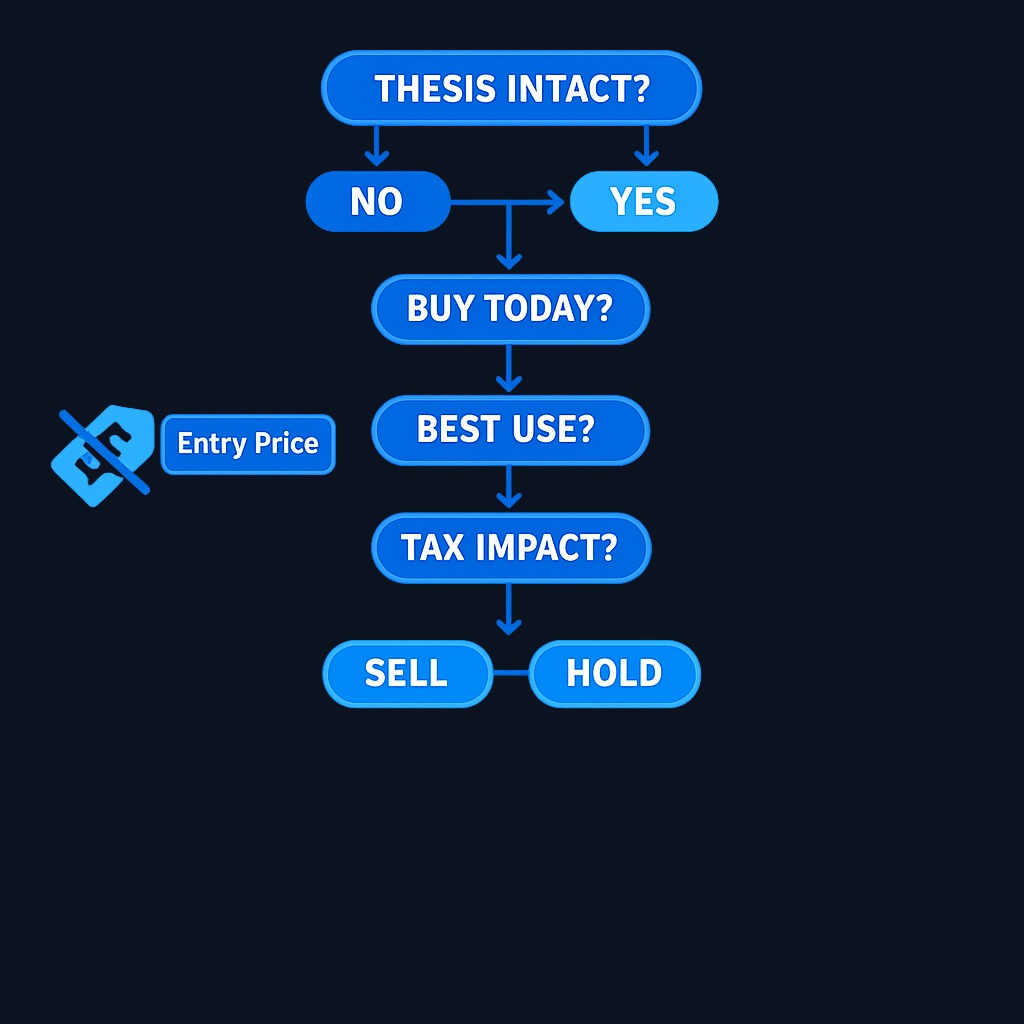
Notice that the framework never asks how the position has performed since purchase. That omission is deliberate, and it is the entire discipline.
Conclusion and next steps
The disposition effect pushes investors to harvest gains for comfort and shelter losses from daylight, at a real cost in returns and taxes. It grows from loss aversion, regret, and mental accounting, appears in retail and professional portfolios alike, and resists willpower while yielding to process. The fix is structural: written sell rules, automated exits, blind reviews, portfolio-level scorekeeping, and a decision framework that never asks what you paid.
Next steps: audit your ten most recent sales for the winner-selling pattern, write a one-line thesis and exit condition for every current holding, and schedule a quarterly review with the cost basis hidden. If you want to build these behavioral skills systematically, Finelo offers structured lessons on investing psychology and decision-making for beginners.
Frequently asked questions
What causes the disposition effect?
Loss aversion, regret avoidance, and mental accounting working together. Losses hurt about twice as much as gains feel good, selling a loser makes the loss feel official, and people treat each position as a private scoreboard that must end positive.
Is the disposition effect always irrational?
Mostly, but not always. Selling a winner can be rational for rebalancing or genuine overvaluation, and holding a loser can be rational when the thesis remains intact. The bias lies in making these choices based on entry price and emotion rather than forward-looking analysis.
Do professional investors show the disposition effect?
Yes, though generally less than retail investors. Experience, accountability, and rule-based processes weaken the pattern. Studies of professional traders and fund managers still detect the asymmetry, especially under stress or weak oversight.
How do I know if the disposition effect affects my portfolio?
Audit your last ten sells. If most were winners while your current holdings contain aging losers you would not buy today, the bias is probably active. A decision journal and cost-basis-blind reviews make the pattern visible quickly.
dispositioneffectitsimpactinvestmentdecisions
Practice investing with Finelo
Build practical investing skills with guided lessons, simulator practice, and structured challenges.
About the author
Finelo Team
The Finelo Team creates practical investing and trading education designed to help beginners learn faster with structured challenges, simulator practice, and bite-sized lessons.
Keep reading — Related articles

Investing
Tax-gain harvesting vs. tax-loss harvesting
Compare realizing investment gains with realizing losses, including holding periods, wash sales, offsets, and portfolio tradeoffs.
Finelo Team

Investing
Stable value fund vs. money market fund
Compare investment structure, contract protections, transfer restrictions, net yields, and access inside a retirement account.
Finelo Team

Investing
Single-life vs. joint-life annuity
Compare income for one lifetime with continued payments to a survivor, using equal premiums and matching guarantee terms.
Finelo Team