Stock warrants are contracts issued by a company that give you the right, but not the obligation, to buy its stock at a fixed price before an expiration date. When you exercise a warrant, the company issues new shares and receives the money you pay. Warrants offer leveraged upside, and they can expire worthless.
What Are Stock Warrants and How Do They Work?

Stock warrants are contracts issued by a company that give you the right, but not the obligation, to buy its stock at a fixed price before an expiration date. When you exercise a warrant, the company issues new shares…
8 min read
Practice investing with Finelo
Build practical investing skills with guided lessons, simulator practice, and structured challenges.
Want to learn more?
Build practical investing skills with guided lessons, simulator practice, and structured challenges.
Explore FineloExplore Finelo's 28-day challenges
Turn learning into a daily habit with guided challenge paths.
This page is for investors who have seen warrants attached to a deal, a SPAC, or a bond offering and want to understand the mechanics before touching them. You will find how a stock warrant works, the main types, the benefits and risks, a comparison with options, and the tax basics. Everything here is educational, not financial advice.
How stock warrants work
A stock warrant is issued directly by the company whose shares it covers. That single fact drives most of the mechanics. Key terms to know:
- Exercise price (strike price). The fixed price at which the warrant lets you buy the share in the future.
- Expiration date. The deadline to use the right. Warrants often run long, sometimes five years or more, which is far beyond typical listed options.
- Conversion ratio. How many warrants you need to buy one share, or how many shares one warrant covers.
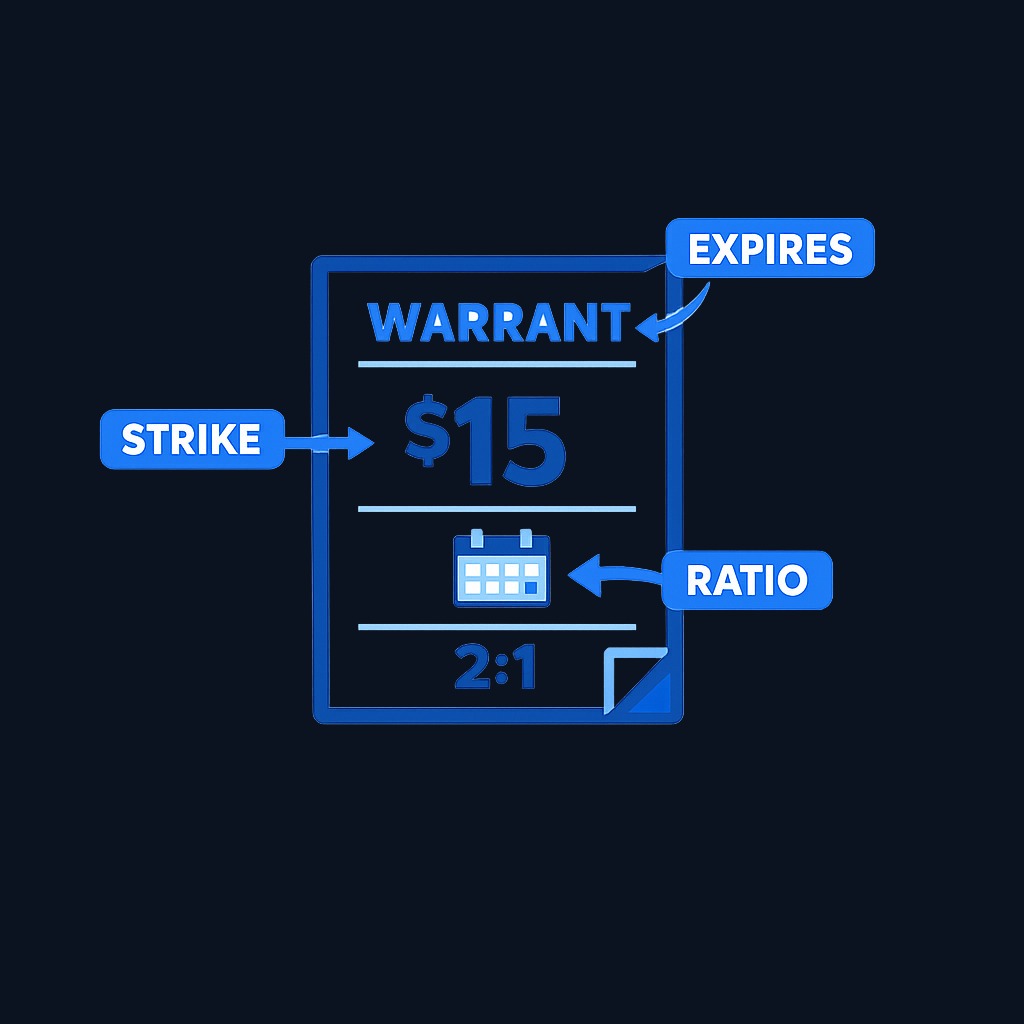
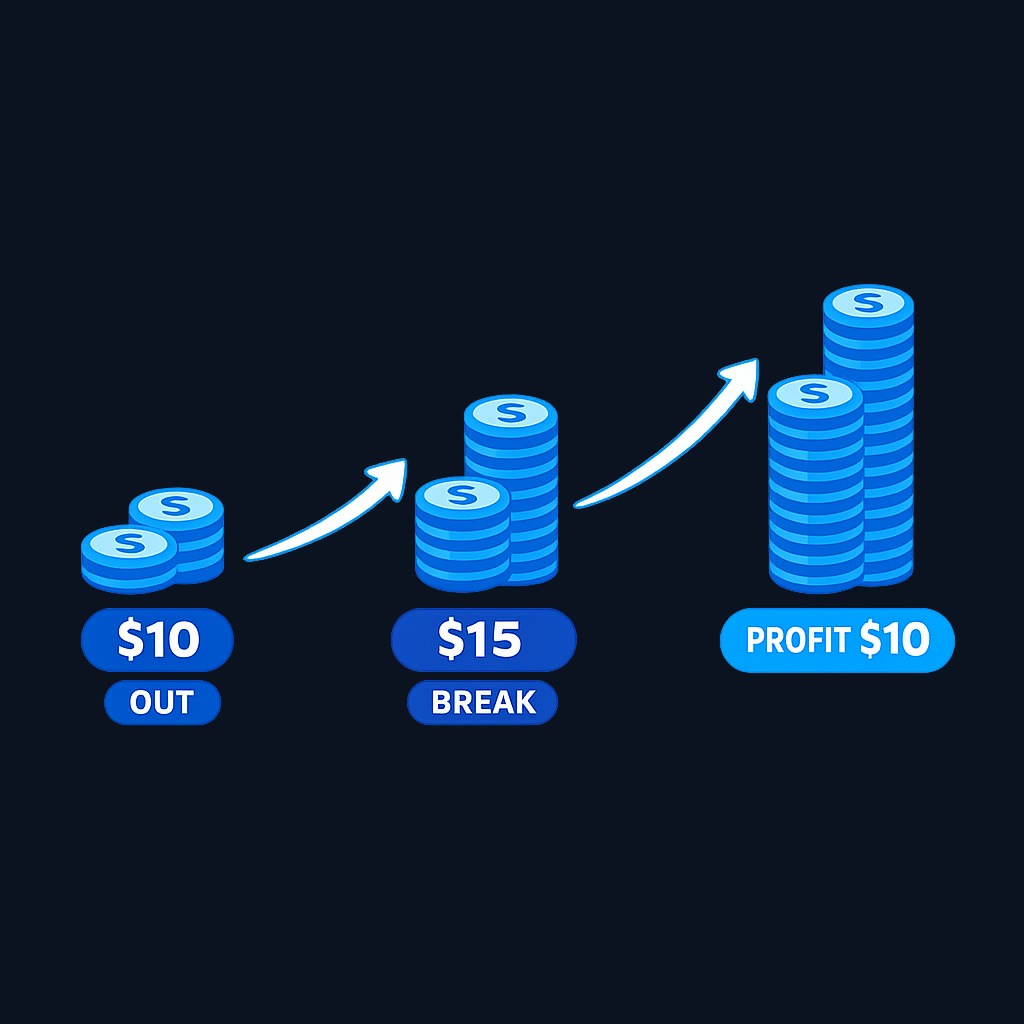
Suppose a company issues a warrant with a $15 exercise price while the stock trades at $10. The warrant is "out of the money" and holds only time value. If the market price later climbs to $25, exercising lets you buy at $15, an immediate $10 gross advantage per share. If the stock never crosses $15 before expiration, the warrant expires worthless and your entire outlay is lost.
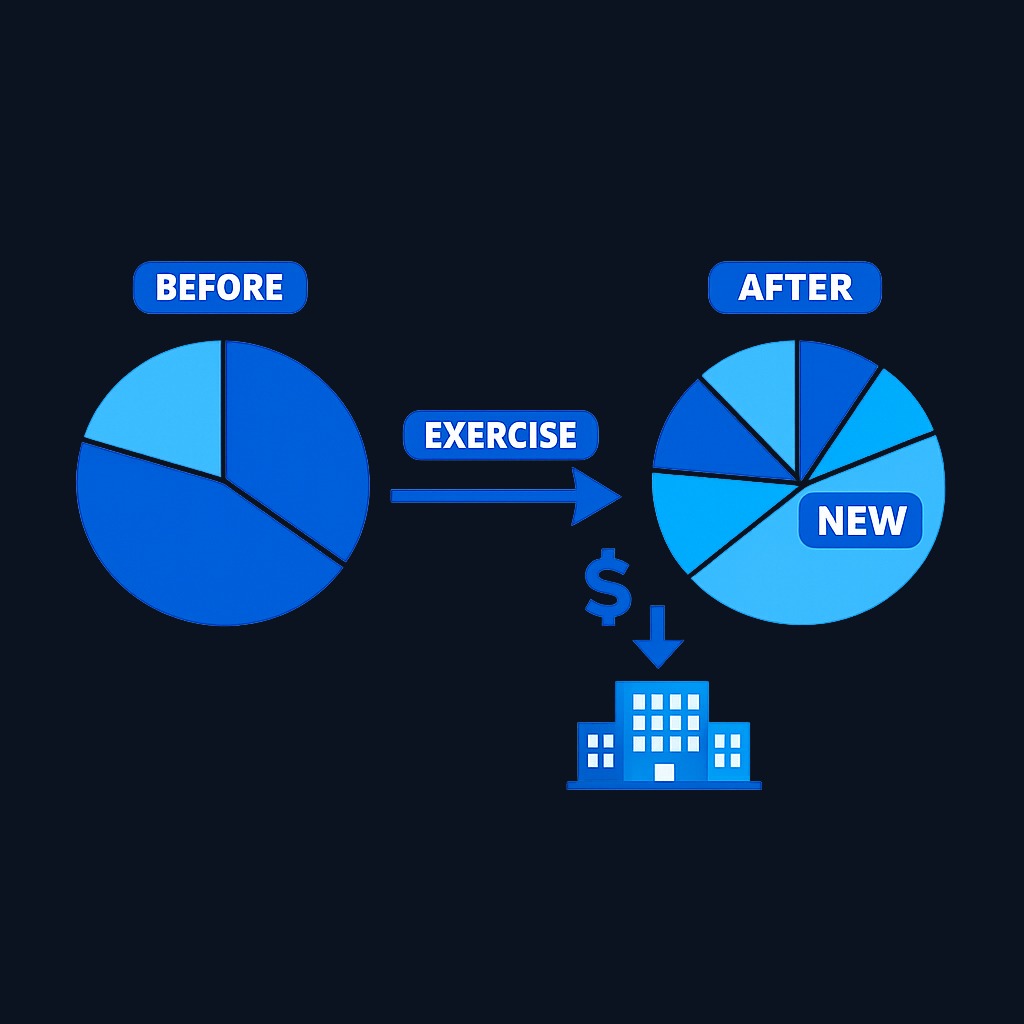
Exercise has a side effect that many newcomers miss: dilution. Because the company creates new shares to honor the warrant, the total share count grows, and every existing shareholder's slice of the company shrinks slightly. The company, in exchange, receives fresh capital at the exercise price. That is why warrants are frequently used as deal sweeteners: they let a company raise money now and possibly again later, while giving the investor a leveraged claim on future upside.
Warrants can also trade on the secondary market, so you can often sell a warrant instead of exercising it. Pricing follows the same logic as other derivatives: intrinsic value (market price minus exercise price, when positive) plus time value that decays as expiration approaches.
Types of stock warrants
- Traditional warrants. Issued alongside bonds or preferred stock as a sweetener. The buyer gets income from the bond plus a call on the company's equity upside.
- Covered warrants. Issued by financial institutions rather than the company itself, backed by shares the issuer already holds or can source. These behave more like listed options in practice.
- SPAC warrants. Attached to units sold in special-purpose acquisition companies. They became widely known during the SPAC boom and typically carry multi-year terms and specific redemption clauses buried in the prospectus.
- Put warrants. The mirror image: the right to sell shares back at a set price. Far less common than call-style warrants in the U.S. market.
- Detachable vs. non-detachable. Detachable warrants can be separated from the bond or preferred stock they came with and traded on their own. Non-detachable warrants stay glued to the host security.
The label matters less than the paperwork. Two warrants from different issuers can carry very different redemption rights, anti-dilution adjustments, and settlement rules, so the issuing documents are always the source of truth.
Benefits of investing in stock warrants
- Leverage. A warrant costs a fraction of the share price, so the same dollar amount controls more upside. A $2 warrant on a $10 stock that doubles can multiply in value several times over, while the stock itself "only" doubles.
- Long time horizons. Multi-year expirations give a thesis room to play out, unlike short-dated options that demand precise timing.
- Income pairing. In bond-plus-warrant packages, investors keep coupon income while holding equity upside on the side.
- Defined maximum loss. The most you can lose is the price paid for the warrant, which is known upfront.
- Tradability. Listed warrants can be sold before expiration, letting you monetize time value instead of exercising.
A realistic scenario shows the appeal. An investor who believes a company's turnaround will take three years may find that listed options expire too soon. A five-year warrant matches the horizon, and the smaller upfront cost frees capital for the rest of the portfolio. The leverage cuts both ways, though, which leads directly to the risks.
Risks associated with stock warrants
- Total loss at expiration. If the stock stays below the exercise price, the warrant expires worthless. There is no partial recovery.
- Leverage in reverse. A modest drop in the share price can produce a much larger percentage drop in the warrant's value.
- Dilution drag. Large warrant overhangs can weigh on the share price itself, since the market anticipates future share issuance.
- No shareholder rights. Warrant holders generally receive no dividends and no votes until they exercise.
- Issuer clauses. Some warrants, notably in SPAC structures, can be redeemed early by the issuer under defined conditions, capping your upside on short notice.
- Liquidity gaps. Many warrants trade thinly, with wide bid-ask spreads that raise the real cost of entering and exiting.
A practical checklist before buying any warrant: read the exercise price, expiration, conversion ratio, and redemption terms in the issuing documents; check the trading volume; size the position so a total loss is survivable; and write down the price the stock must reach for the position to work.
Practice investing with Finelo
Build practical investing skills with guided lessons, simulator practice, and structured challenges.
Stock warrants vs. stock options
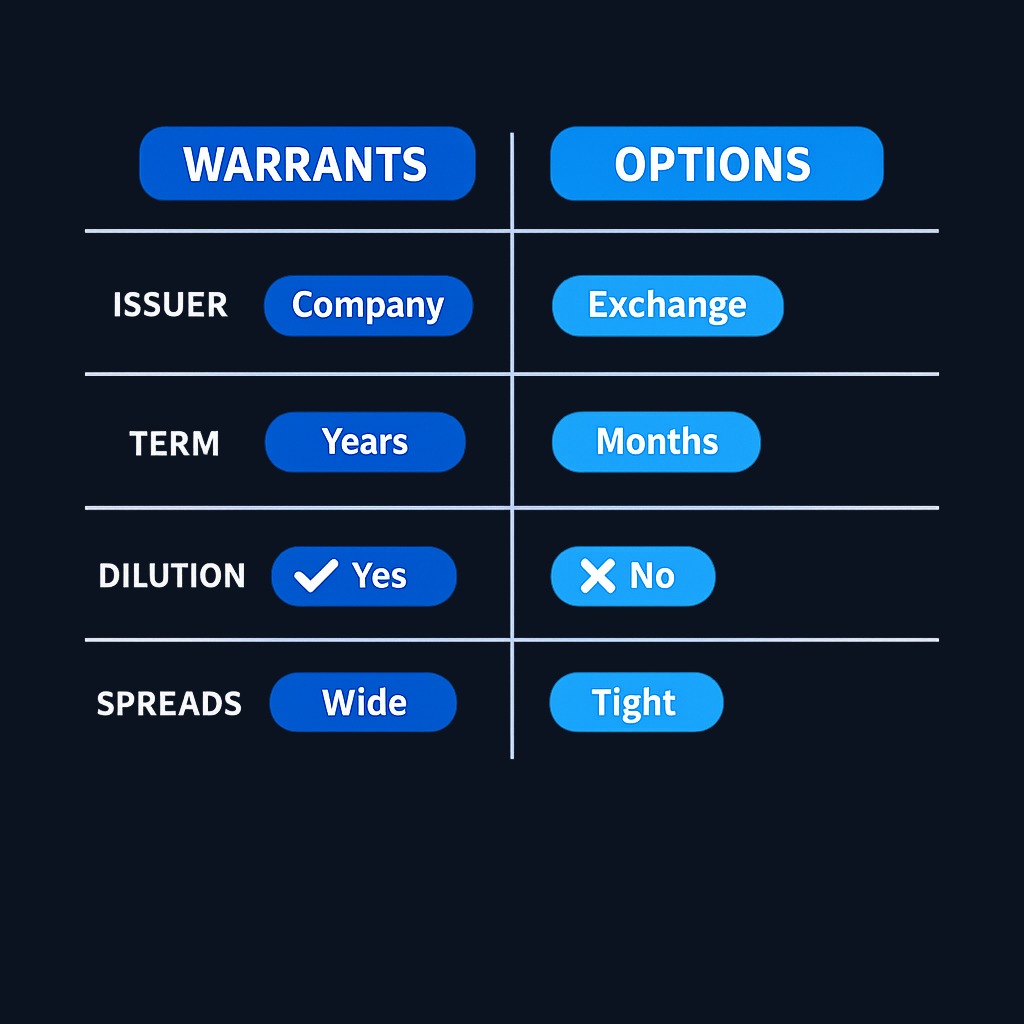
Warrants and exchange-traded options both grant the right to buy stock at a set price, but the differences decide which tool fits a given plan.
| Feature | Stock warrants | Listed stock options |
|---|---|---|
| Issuer | The company itself (or a bank for covered warrants) | Written between market participants on an exchange |
| New shares created on exercise? | Yes, causing dilution | No, existing shares change hands |
| Typical lifespan | Often several years | Commonly days to about two years |
| Proceeds go to | The company (for company-issued warrants) | The option seller |
| Standardization | Terms vary by issuing contract | Standardized contract terms |
| Where traded | Exchanges or over the counter, often thinly | Deep, regulated options markets |
Options usually offer tighter spreads, standardized terms, and no dilution. Warrants offer longer horizons and direct participation in a company's financing story. For most short-term tactical trades, options are the practical instrument; warrants tend to appear in special situations, income packages, and SPAC structures.
Case studies: how warrants play out
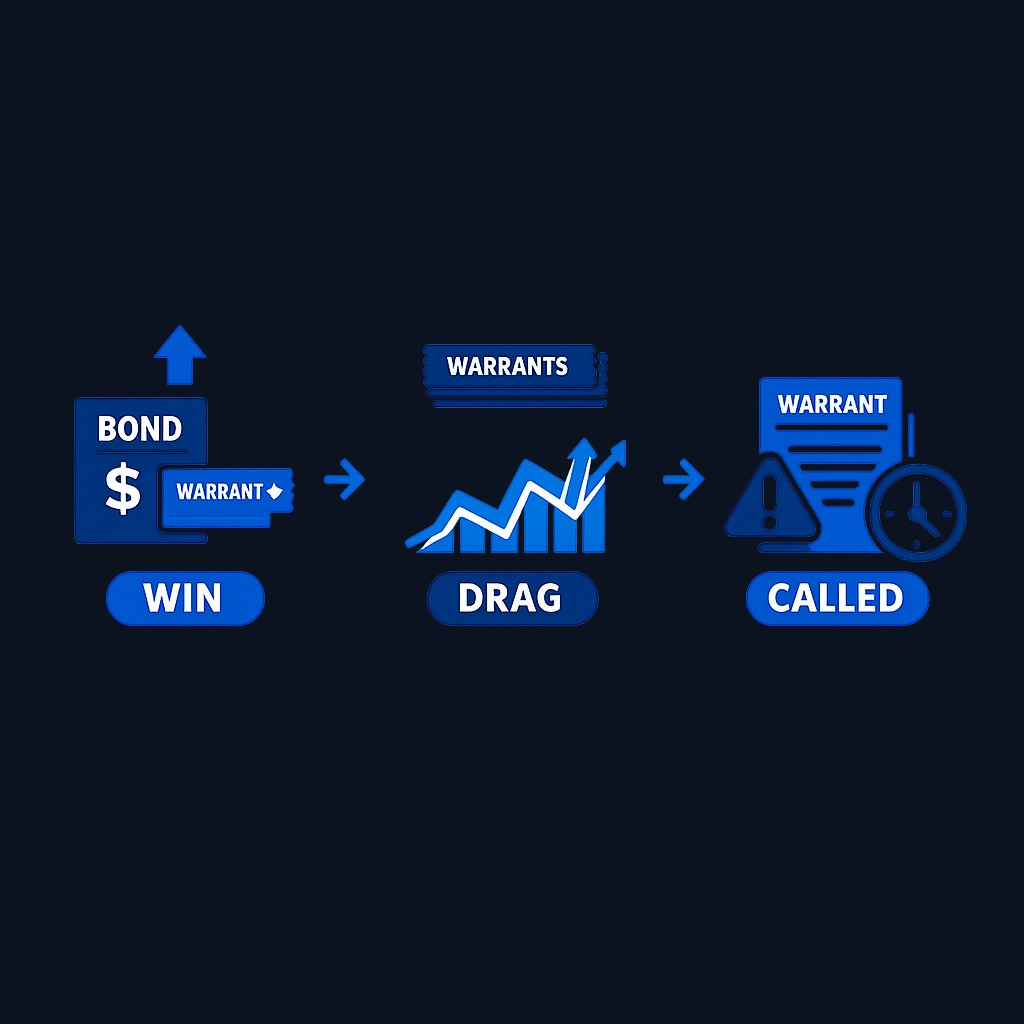
The sweetener that paid. A small-cap issuer sells bonds with detachable warrants exercisable at $12 while its stock trades at $8. The business recovers over four years and the stock reaches $20. Bondholders collected coupons throughout and then exercised at $12, an $8 gross gain per share, while the company received new capital at exercise.
The overhang that hurt. A different company issues a large warrant block during a rescue financing. The stock stabilizes, but every rally stalls as the market prices in the coming dilution. Warrant holders profit modestly; common shareholders see slower gains than the recovery alone would suggest.
The expiry lesson. A SPAC warrant holder ignores a redemption clause. When the issuer calls the warrants early during a rally, the forced timeline cuts the expected upside sharply. The document, not the headline price chart, determined the outcome.
The pattern across all three: the warrant's contract terms and the company's share-count math shape results as much as the stock's direction does.
Tax implications of exercising stock warrants
Tax treatment depends on how the warrant was acquired and what you do with it. In general, selling a warrant produces a capital gain or loss, and the holding period determines whether it is short-term or long-term; the IRS explains the distinction in its capital gains and losses guidance. Exercising typically is not itself the taxable moment for investment warrants; instead, the cost basis of the warrant usually rolls into the basis of the shares you receive, and tax comes due when those shares are sold. Warrants received as compensation follow different, stricter rules and are generally taxed as ordinary income at receipt or exercise.
Because issuer structures vary and compensation-related warrants change the analysis entirely, verify the treatment for your specific situation with a qualified tax professional before exercising a meaningful position.
Conclusion and next steps
Stock warrants give companies a financing tool and give investors a long-dated, leveraged right to buy stock at a fixed price. The upside comes from leverage and time; the danger comes from expiration, dilution, and contract fine print. Judge every warrant by its documents, not its ticker.
Next steps: find one listed warrant, pull its exercise price, expiration, and conversion ratio, and calculate the stock price needed for breakeven. Compare that against a listed option on the same company to feel the differences firsthand. If you want structured practice with instruments like these, Finelo builds investing skills through guided lessons.
Frequently asked questions
What happens when a stock warrant is exercised?
You pay the exercise price, and the company issues new shares to you. The share count rises, existing holders are slightly diluted, and the company receives the cash. Your warrant cost basis typically carries into the new shares for tax purposes.
Can stock warrants be traded instead of exercised?
Usually yes. Many warrants list on exchanges or trade over the counter, so holders can sell to capture remaining time value. Liquidity varies widely, and thin trading can make exits expensive, so check volume and spreads first.
How do stock warrants differ from employee stock options?
Employee options are compensation with vesting schedules and ordinary-income tax treatment. Investment warrants are securities you buy, with capital-gains treatment in the standard case and no employment connection.
Are stock warrants worth it for beginners?
They demand more homework than plain shares: contract terms, dilution math, and expiration risk all matter. A beginner comfortable losing the entire premium on a leveraged instrument can study them, but reading the issuing documents is non-negotiable before any purchase.
arestockwarrantsthey
Practice investing with Finelo
Build practical investing skills with guided lessons, simulator practice, and structured challenges.
About the author
Finelo Team
The Finelo Team creates practical investing and trading education designed to help beginners learn faster with structured challenges, simulator practice, and bite-sized lessons.
Keep reading — Related articles

Investing
Tax-gain harvesting vs. tax-loss harvesting
Compare realizing investment gains with realizing losses, including holding periods, wash sales, offsets, and portfolio tradeoffs.
Finelo Team

Investing
Stable value fund vs. money market fund
Compare investment structure, contract protections, transfer restrictions, net yields, and access inside a retirement account.
Finelo Team

Investing
Single-life vs. joint-life annuity
Compare income for one lifetime with continued payments to a survivor, using equal premiums and matching guarantee terms.
Finelo Team


