For U.S. readers: This article discusses U.S. rules and financial products. State rules and individual eligibility may differ.
What If I Don't Receive a 1099? Your Essential Guide

Quick answer — contact the payer and check its online portal first.
9 min read
Practice trading with Finelo
Practice in a simulator, learn with bite-sized lessons, and build confidence before risking real money.
Want to learn more?
Practice in a simulator, learn with bite-sized lessons, and build confidence before risking real money.
Explore FineloExplore Finelo's 28-day challenges
Turn learning into a daily habit with guided challenge paths.
Quick answer — contact the payer and check its online portal first. If a Form 1099 still does not arrive, you generally must report taxable income using your own records rather than omit it. Do not use Form 4852 as a substitute for a missing 1099-NEC, 1099-MISC, or 1099-INT: the IRS limits Form 4852 to Forms W-2, W-2c, and 1099-R. See the IRS description of Form 4852. Finelo provides financial education, not tax, financial, or investment advice.
Understanding the 1099 Form
A "1099" refers to several IRS information returns used to report income that isn't reported on a W-2. Payers send copies to both the taxpayer and the IRS so the agency can match reported income to tax returns. The IRS lists common forms you might expect, including Form 1099-MISC (miscellaneous income), Form 1099-INT (interest), Form 1099-NEC (nonemployee compensation), and Form 1099-G (certain government payments such as unemployment) IRS guidance.
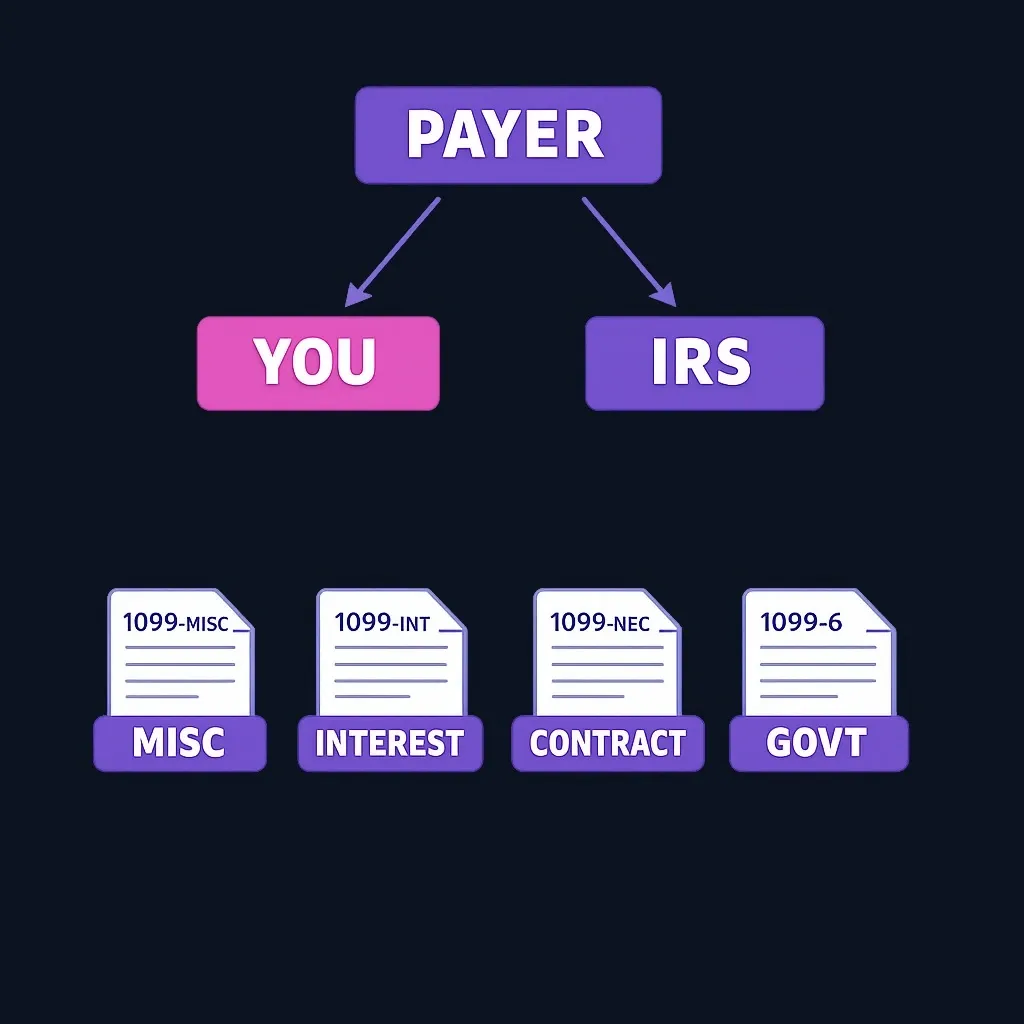
1099 types at a glance (IRS-sourced)
| Form | Typical use |
|---|---|
| 1099-NEC | Nonemployee compensation (freelance or contractor pay) |
| 1099-MISC | Miscellaneous payments (rents, prizes, some contractor payments) |
| 1099-INT | Interest income from banks or brokers |
| 1099-G | Certain government payments (e.g., unemployment compensation) |
Why the form matters: the IRS uses information returns to match income they expect you to report. If a payer files a 1099 with the IRS, that income will show up in the IRS records even if you never received your copy.
Immediate Steps to Take If You Don't Receive a 1099
- Confirm you should receive one. Review your own records and the payment threshold for the specific 1099 type.
- Contact the payer promptly. The IRS directs taxpayers to request a copy from the employer, payer, or issuing agency first. Ask how they delivered forms (mail or electronic) and verify your mailing or email address.
- Check electronic accounts. Many payers deliver 1099s through portals. If you opted into electronic delivery, check your account and associated email.
- Keep written records. Save emails, call logs, and the date/time of your requests. These notes help if you later need to explain or document your attempts.
- If the payer does not respond in time, use your invoices, bank records, platform statements, and bookkeeping records to report the income in the appropriate part of your return. Form 4852 is not the substitute form for most missing 1099s.
Quick email template to request a missing 1099
- Subject: Request for Copy of Form 1099 for Tax Year [YYYY]
- Body: Briefly state your name, taxpayer identification (last 4 of SSN), payment dates, amount received, and request a copy of the 1099. Ask whether they sent it electronically and to which address.
If you still don't get a response after reasonable attempts, proceed to estimate and report the income rather than waiting indefinitely.
Estimating Your Income Without a 1099
When a payer will not supply a 1099 in time, reconstruct the gross amount from reliable records and report it in the correct place on the return. A freelancer would generally reconcile business receipts and report business income and eligible expenses on Schedule C. Interest, dividends, retirement distributions, and other payment types follow different reporting rules, so confirm the correct form and line for the specific income category.
Checklist: reconstructing income from your records
- Gather payment records: bank deposits, invoices, payment platform statements, and receipts.
- Reconcile gross payments: sum amounts you received during the tax year that the missing 1099 would normally report.
- Subtract allowable business expenses if reporting self-employment income on Schedule C. Keep receipts and logs.
- Prepare documentation: copies of invoices, bank statements showing deposits, and correspondence with the payer. These support your estimates.
- Record how you calculated the amount and retain the supporting documents with your tax records. Do not automatically attach bank statements or invoices unless the filing instructions or the IRS specifically require them.
Worked example (freelancer)
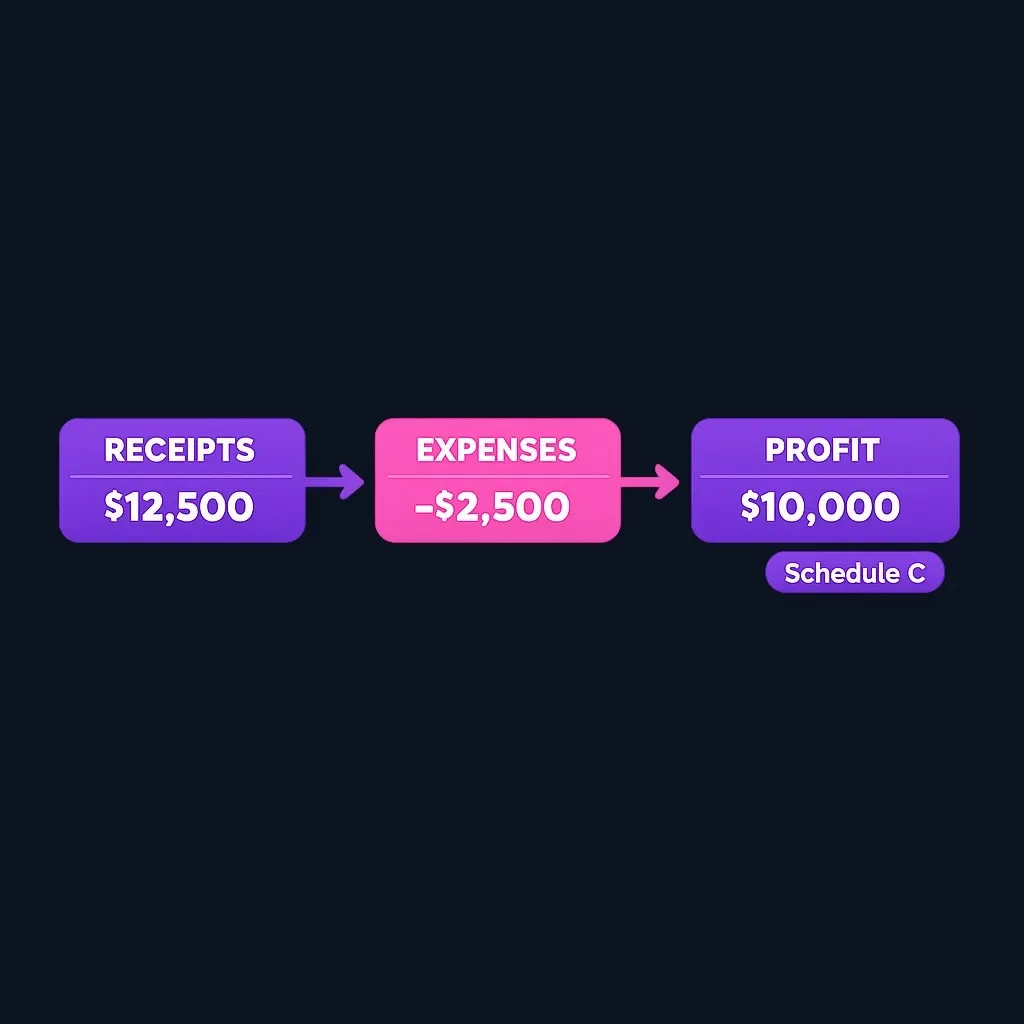
- You received $12,500 in client payments but did not receive a 1099-NEC by the filing deadline. Your bank records and invoices show $12,500 in gross receipts, while your documented eligible business expenses total $2,500. In this simplified example, Schedule C would show $12,500 of gross receipts and $2,500 of expenses, producing $10,000 of net profit before other tax calculations. Form 4852 would not be used for the missing 1099-NEC.
Practical tips
- Don't guess wildly. Use source documents and conservative, supportable math.
- Keep the calculations and supporting files for at least three years in case the IRS asks for substantiation.
- If you later receive the correct 1099, compare it to what you filed; you may need to amend your return if there are material differences.
Potential Consequences of Not Reporting Income
The IRS expects taxpayers to report taxable income even when an information return is missing. Contact the payer, reconcile the amount from your records, and report it in the appropriate part of the return by the filing deadline.
Why reporting matters
- Reporting by the filing deadline reduces the chance of mismatches between IRS records and your return.
- A documented reconciliation helps you explain how you arrived at the amount if a late or corrected information return later differs from your records.
What to do if you receive a 1099 after filing
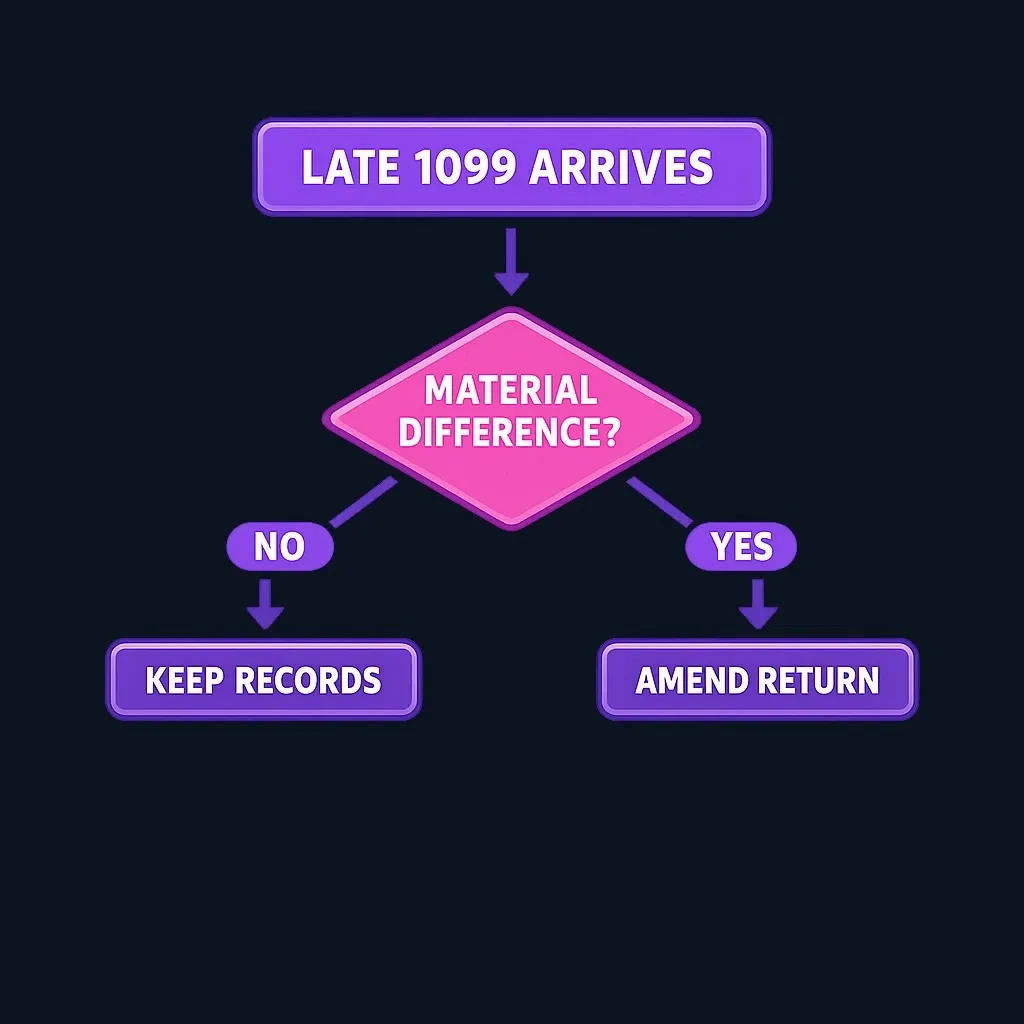
- If you get a late 1099 that changes reported income materially, compare the form to what you filed. If the difference affects tax liability, you may need to file an amended return. Keep records of the late 1099 and your original estimate.
Practice trading with Finelo
Practice in a simulator, learn with bite-sized lessons, and build confidence before risking real money.
What to know before deciding
Assumptions to check before estimating
- Confirm whether the payer actually filed an information return with the IRS; if they did, the IRS will have an income record. Request confirmation from the payer.
- Determine whether the income should be reduced by deductible expenses (self-employed taxpayers). Only report net business income after allowable deductions.
Limitations of estimates
- Estimates are not guarantees. The IRS may later receive a payer’s filed return with different amounts and could send a notice. Keep documentation and be ready to explain your figures.
- Form 4852 applies only to a missing or incorrect W-2, W-2c, or 1099-R—not to every form in the 1099 series. If you receive a late or corrected 1099, reconcile it with the return you filed and determine whether an amendment is needed.
Risks and source checks
- Maintain thorough source records (bank statements, platform histories, invoices). These are your defense if the IRS questions your estimate.
- If a payer refuses to issue a 1099 but you have records showing reportable payments, proceed to report the income and document your attempts to obtain the form.
Educational note: This article is educational and not financial or investment advice. Reporting income affects taxes and may have legal implications; consult a tax professional for personal guidance.
Decision framework
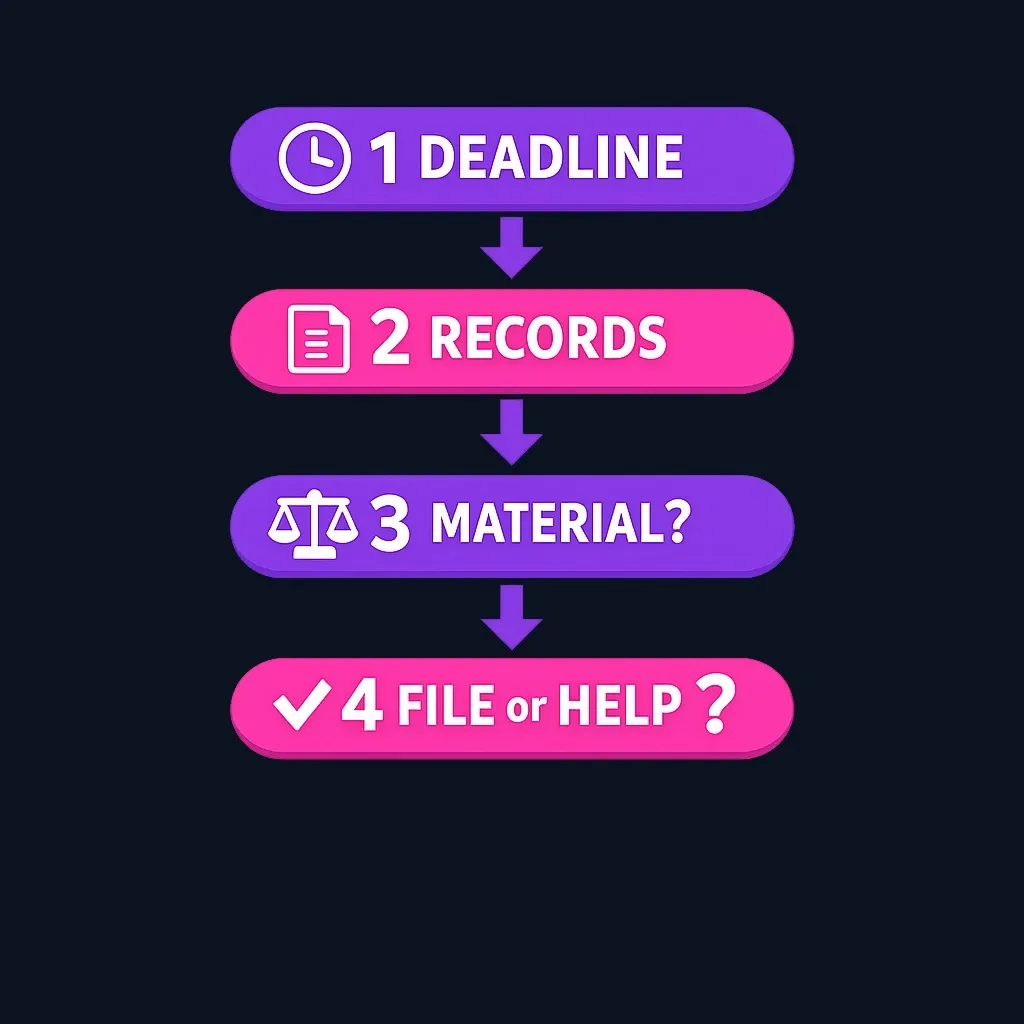
Step 1 — How close is your filing deadline?
- If you can reasonably expect the payer to deliver the form quickly, a short wait is acceptable. If the deadline is near and the payer is unresponsive, proceed to Step 2.
Step 2 — Can you document the exact amounts?
- If you have bank deposits, invoices, and platform reports that clearly show the amounts, use those records to report the appropriate income category. Keep the documentation with your files.
Step 3 — Will the estimate materially change tax liability?
- For small amounts unlikely to change tax due, filing on time with a documented estimate reduces later headaches. For large differences, consider contacting a tax professional before filing.
Step 4 — If the payer won't cooperate, should you contact the IRS?
- Contact the payer first. If the payer filed an incorrect information return or you cannot determine how to report the income accurately, a qualified tax professional can help you decide whether to contact the IRS or attach an explanatory statement.
Quick decision checklist
- Deadline status: Enough time to wait?
- Documentation: Enough records to justify an estimate?
- Materiality: Will differences change tax materially?
- Next step: File using reconciled records or seek professional help when the correct treatment is unclear.
FAQ
What is a 1099 form?
A 1099 is an information return series used to report certain types of income the payer sends to both you and the IRS, such as interest, nonemployee compensation, or government payments.
How do I report income if I don't receive a 1099?
Report taxable income from reliable records in the appropriate section of the return. Form 4852 is not a general substitute for missing 1099s; it applies to W-2, W-2c, and 1099-R information.
Can I file my taxes without a 1099?
Yes. A missing information return generally does not remove the obligation to report taxable income. Use your records, apply the reporting rules for the income type, and keep the supporting documentation.
What should I do if I receive a 1099 with incorrect information?
Compare the form with your records and ask the payer to issue a corrected 1099. If the correction will not arrive before the filing deadline, consult the instructions for that specific 1099 and consider professional help; do not assume Form 4852 applies.
Conclusion and Next Steps
Key takeaways
- Contact the payer first and request a copy of the missing 1099.
- If it does not arrive in time, reconcile the income from reliable records and report it under the rules for that income category.
- Keep thorough documentation and reconcile any late or corrected forms to determine whether you must amend a return.
Next step (one helpful link)
- Learn more about tracking income and recordkeeping in the Finelo Blog: Finelo Blog
If your situation is complex or involves large amounts, consider consulting a tax professional to confirm the best path for your particular tax facts.
Financial LiteracyFinancial Education
Practice trading with Finelo
Practice in a simulator, learn with bite-sized lessons, and build confidence before risking real money.
About the author
Finelo Team
The Finelo Team creates practical investing and trading education designed to help beginners learn faster with structured challenges, simulator practice, and bite-sized lessons.
Keep reading — Related articles

Financial Literacy
Mercury Books Review 2026: Is It Worth It for Startups?
Mercury Books brings double-entry accounting into Mercury. Review its $35 pricing, reports, AI features, integrations, and migration limits.
Finelo Team

Financial Literacy
Why is My FICO Score Lower Than My Credit Score?
Example takeaway: seeing a higher score in a bank app doesn’t guarantee lenders will see the same FICO number at application time; lenders often pull a specific FICO version from a specific bureau.
Finelo Team

Financial Literacy
Why Is My FICO Score Higher Than My Credit Score?
Brief educational note: this article is educational, not financial or investment advice; investing and credit decisions involve risk and possible loss.
Finelo Team


