Tax and plan note: Reinvestment generally does not make a taxable-account dividend tax-free. The reinvested amount and any plan discount can affect income and basis, and pricing, fees, fractional shares, transferability, and sale mechanics are plan-specific. Verify the issuer or broker plan document and use IRS Publication 550 for U.S. federal rules; state and non-U.S. treatment can differ.
What is a Dividend Reinvestment Plan (DRIP)?

A dividend reinvestment plan (DRIP) automatically uses each cash dividend a company or fund pays you to buy more shares - including fractional shares - instead of depositing the cash to your account. Most major brokers…
8 min read
Practice investing with Finelo
Build practical investing skills with guided lessons, simulator practice, and structured challenges.
Want to learn more?
Build practical investing skills with guided lessons, simulator practice, and structured challenges.
Explore FineloExplore Finelo's 28-day challenges
Turn learning into a daily habit with guided challenge paths.
A dividend reinvestment plan (DRIP) automatically uses each cash dividend a company or fund pays you to buy more shares - including fractional shares - instead of depositing the cash to your account. Most major brokers offer dividend reinvestment at no extra commission, and many companies run their own plans directly. This page is for income investors and beginners deciding whether to reinvest dividends or take the cash, and it covers how DRIPs work, what to verify before enrolling, and the tax rules that still apply. Read the mechanics below, then practice dividend-strategy basics with guided lessons in the Finelo app.
How dividend reinvestment plans work
When a dividend is paid, a DRIP intercepts the cash and converts it into additional shares of the same security on the payment date. If the dividend does not cover a whole share, you receive a fraction, and those fractions keep earning dividends of their own.
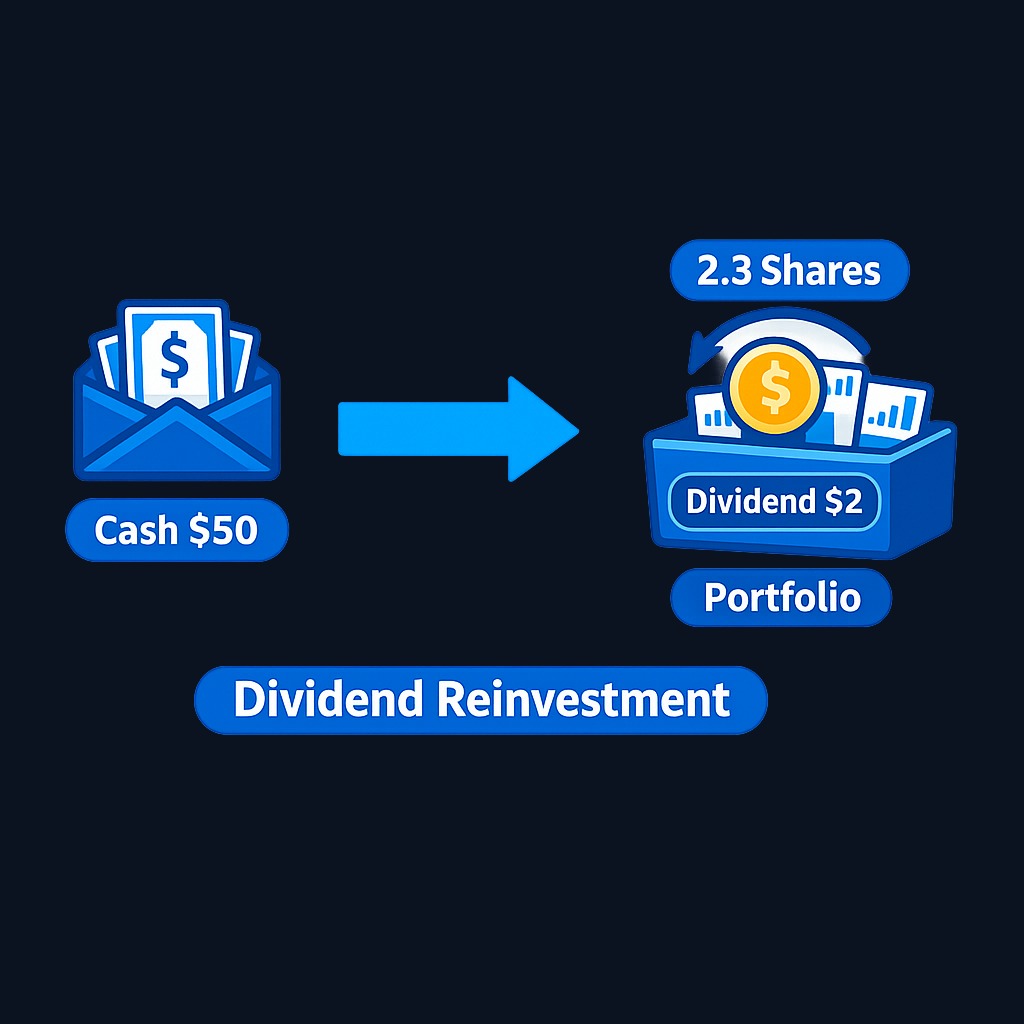
There are two common flavors:
- Broker-run reinvestment. You toggle reinvestment on for a holding, or your whole account, inside your brokerage settings. The broker buys shares on the open market when dividends land.
- Company-run plans. Some corporations administer plans through a transfer agent, letting registered shareholders reinvest directly, sometimes with optional cash purchases on a schedule.
Enrolling is usually a settings change rather than an application: in the standard case you select a holding, choose "reinvest dividends," and confirm. New dividends after that point buy shares automatically; you can switch back to cash payouts at any time.
The engine underneath is compounding. Each reinvested dividend increases your share count, which increases the next dividend, which buys more shares again. Over long horizons, that loop can account for a meaningful part of total stock-market returns, especially when payouts are steady and rising.
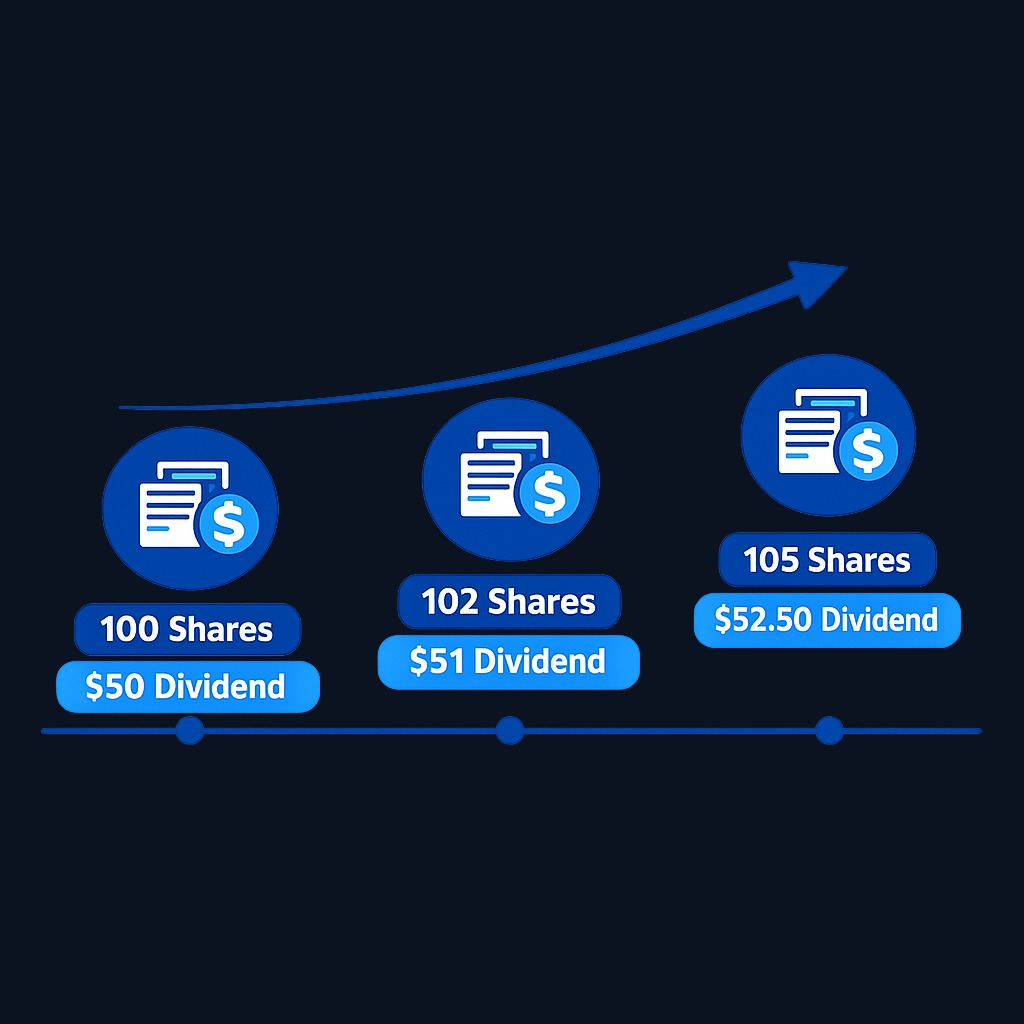
What is included
A typical dividend reinvestment plan includes:
- Automatic purchases on each payment date, with no action needed from you.
- Fractional shares, so every cent of the dividend goes to work immediately.
- No commissions at most major brokers for reinvestment transactions.
- Flexible scope: reinvest all holdings, only selected ones, or none.
- Optional extras in company-run plans, such as scheduled optional cash purchases and, occasionally, small discounts on newly issued shares.
What a DRIP does not include: any control over purchase price or timing. Shares are bought when the dividend pays, at whatever the market or plan price is that day, regardless of valuation.
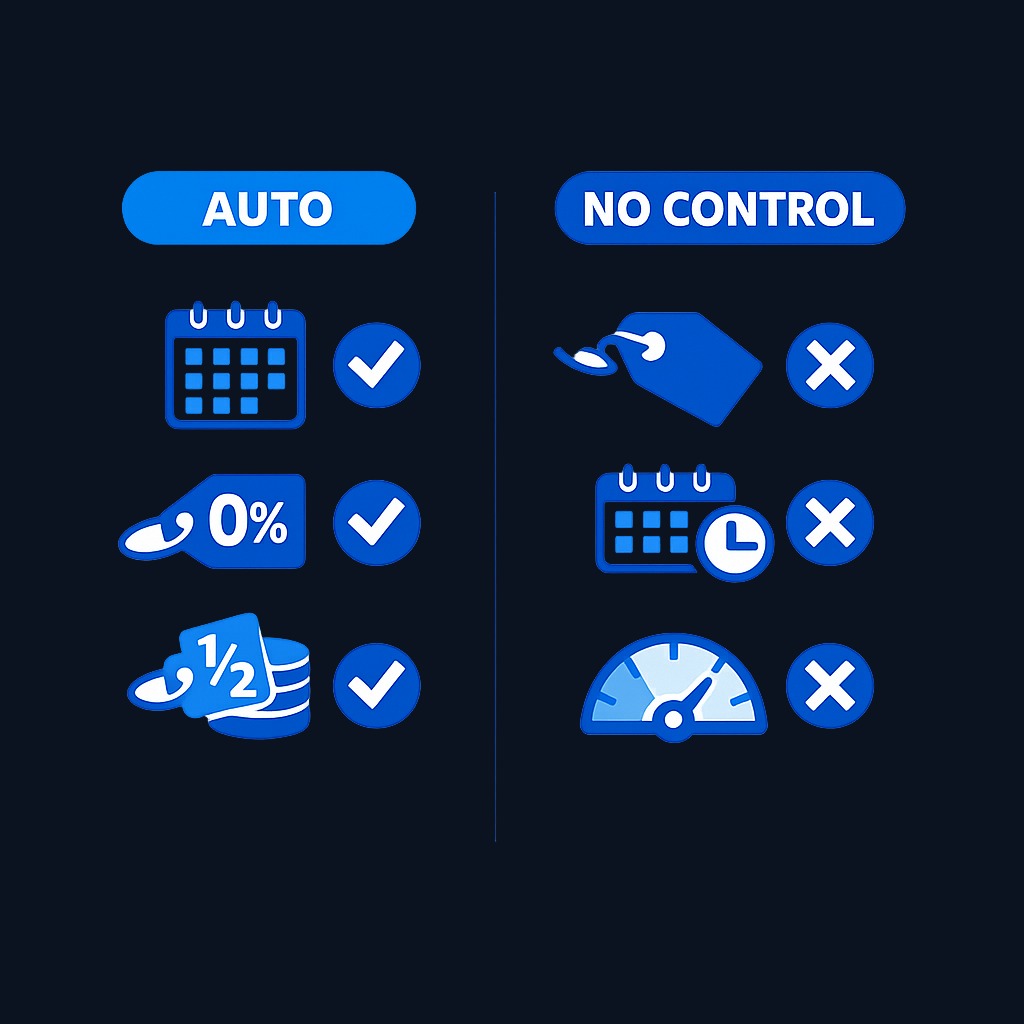
Plan terms, fees, and limits to verify
Before enrolling, verify these details with your broker or the plan administrator, because terms differ:
- Fees. Most broker DRIPs are free, but some company-run plans charge setup, purchase, or sale fees. Read the plan document.
- Which securities qualify. Most listed stocks, ETFs, and mutual funds support reinvestment; some foreign shares and thinly traded securities do not.
- Partial reinvestment options. Some plans let you reinvest a percentage and take the rest as cash; others are all-or-nothing per holding.
- Purchase timing and price. Broker plans buy at market on payment date; company plans may batch purchases and use average prices, and any discount applies only to specific share sources.
- Minimums and caps on optional cash purchases in company-run plans.
- How to exit. Confirm you can stop reinvestment or sell plan shares without penalties or long processing delays.
Value and comparison notes
| Approach | What happens to dividends | Best suited for |
|---|---|---|
| DRIP | Auto-buys more of the same security | Long-horizon investors compounding a position |
| Cash payout | Deposits to your account | Income spenders and selective rebalancers |
| Manual reinvestment | You accumulate cash, then buy what you choose | Investors who want valuation and allocation control |
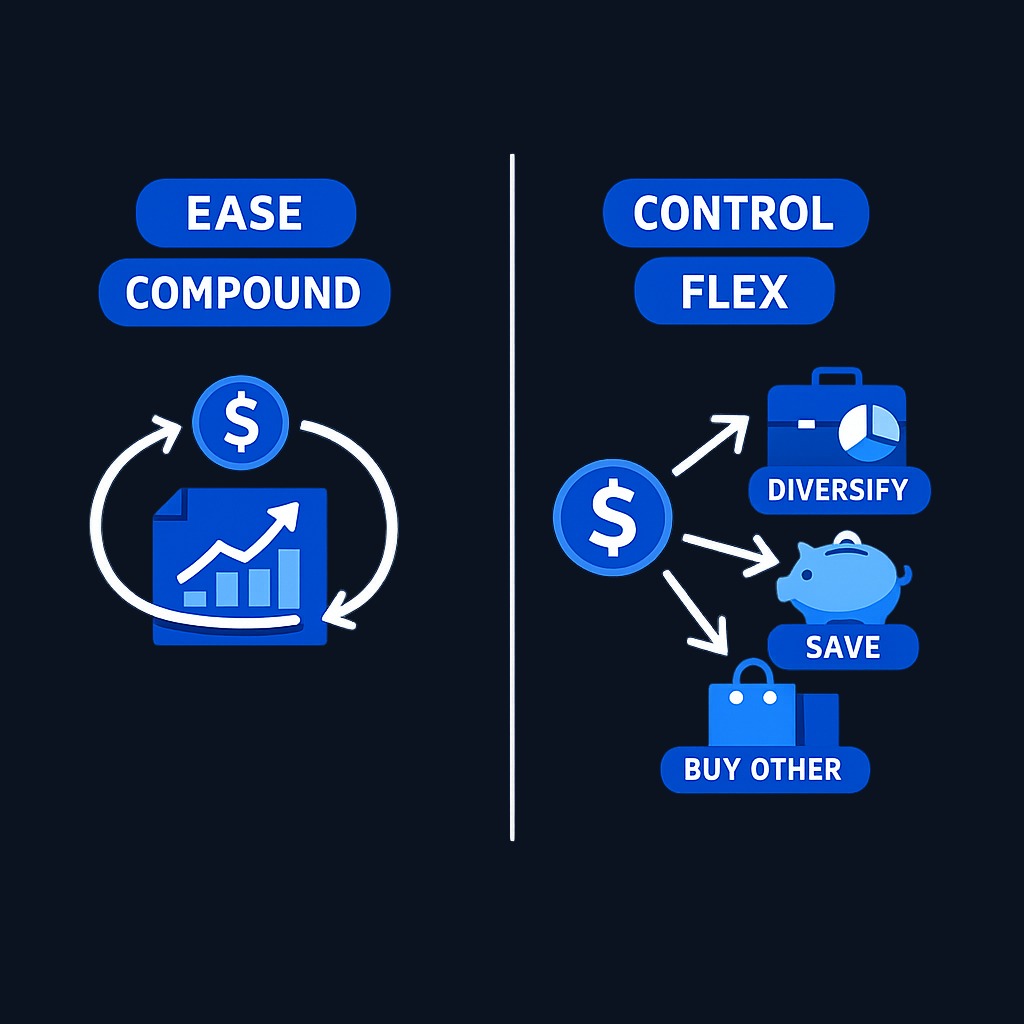
The DRIP's advantages are discipline and immediacy: money compounds from day one, with zero effort and no temptation to spend or time the market. The cash approach wins on control - you decide where every dollar goes, which helps when a position has grown oversized or looks expensive. Manual reinvestment sits between, trading convenience for flexibility.
There is no universally superior choice. The math favors whichever approach you will actually execute consistently, and for many people that is the automatic one.
Practice investing with Finelo
Build practical investing skills with guided lessons, simulator practice, and structured challenges.
Pricing caveats
- Taxes are not deferred. Reinvested dividends are still taxable income in taxable accounts, even though you never touch the cash.
- Buys happen at any price. Automatic purchases continue through overvalued stretches; you give up price discipline.
- Concentration creeps. Decades of reinvestment can quietly swell one position beyond your intended allocation.
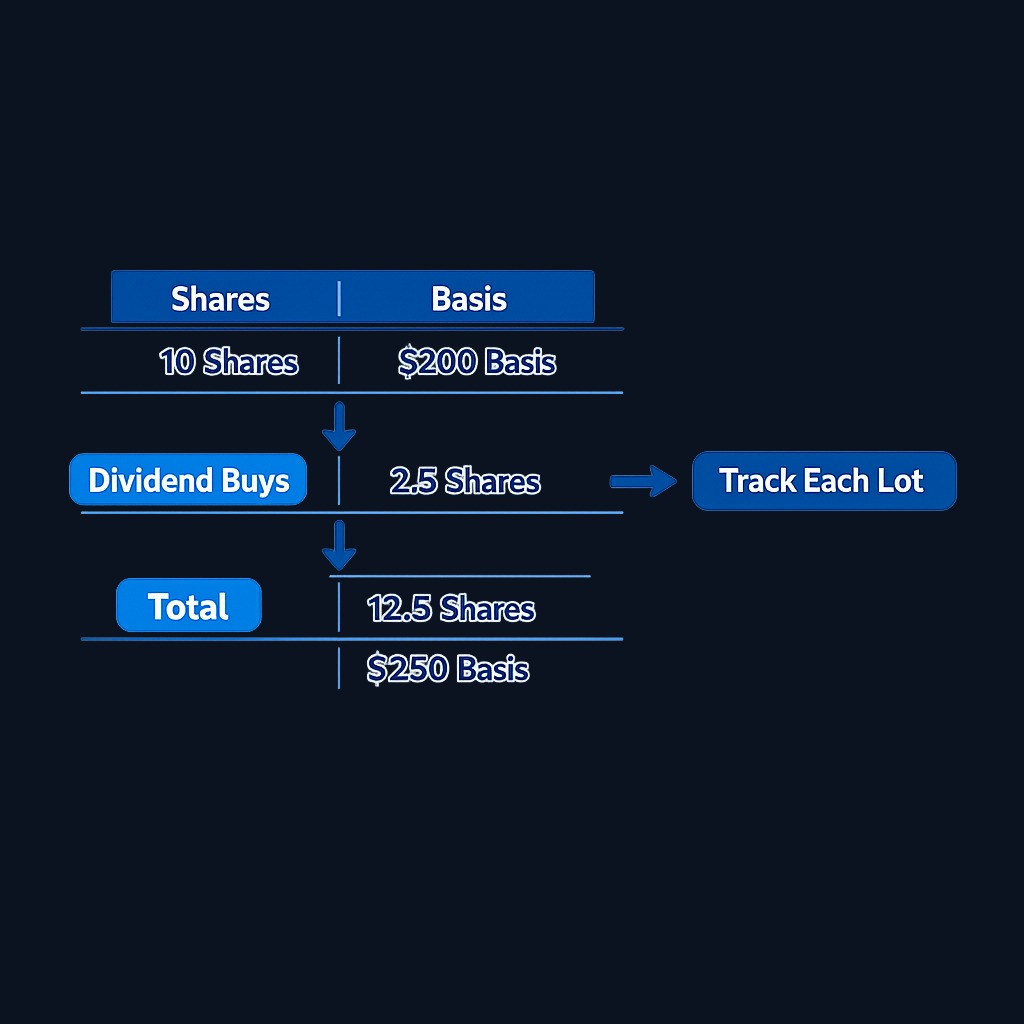
- Record-keeping multiplies. Every reinvestment creates a new tax lot with its own cost basis; good records prevent overpaying tax when you eventually sell.
- Plan fees vary. A company-run plan with per-purchase fees can cost more than a free broker DRIP for the same stock.
The tax rules below are the caveat investors most often miss, so they deserve their own detail.
Tax implications of DRIPs
In a taxable account, reinvestment generally does not defer U.S. federal tax on the distribution. Classification, qualified-dividend eligibility, plan discounts, and basis depend on the facts. Use IRS Publication 550, the plan records, and Form 1099-DIV rather than assuming every reinvested payment has the same treatment.
Each reinvestment also adds to your cost basis. The shares bought with a $50 dividend have a $50 basis, and tracking every lot matters because it reduces your taxable gain at sale. Most brokers track basis automatically today, but company-run plan participants should keep statements.
Inside tax-advantaged retirement accounts, reinvested dividends generally are not taxed in the year received; taxation follows the account's rules instead. When in doubt about your situation, a qualified tax professional is the right resource - this is general education, not tax advice.
How to evaluate whether a DRIP fits
Understanding a dividend reinvestment plan on paper is one thing; building the habit of evaluating payouts, basis records, and allocation drift is another. That is where a structured learning platform earns its place. The Finelo app teaches dividend and compounding concepts through short, interactive lessons and simulations, so you can watch how reinvested payouts snowball across market conditions before applying the idea to a real account. The course-style progression starts with fundamentals - what a dividend is, how yield works - and builds toward portfolio-level decisions like the reinvest-or-cash question this page covers. Lessons run a few minutes each on a phone, which makes consistent practice realistic, and plan options are listed transparently on the pricing page if you want the full track.
Decision framework: reinvest or take the cash?
- Spending need. If you rely on dividend income for living costs, take cash; if not, reinvestment compounds.
- Position size. If the holding is already a large slice of your portfolio, cash payouts let you diversify instead of concentrating further.
- Account type. In retirement accounts, reinvestment is usually an easy yes; in taxable accounts, weigh the record-keeping and confirm your basis tracking.
- Conviction horizon. Reinvest in businesses or funds you would happily buy more of for years; take cash from positions you are winding down.
- Your own behavior. If idle cash tends to sit or get spent, automation is worth more than any tactical flexibility you would theoretically use.
FAQ
Do I pay taxes on reinvested dividends?
Yes, in taxable accounts. Reinvested dividends are taxed in the year they are paid, exactly as if you had received the cash. In most retirement accounts, they are not taxed in the year received.
Can I stop a DRIP once it is set up?
Yes. Broker reinvestment is a settings toggle you can flip any time; future dividends then arrive as cash. Company-run plans have their own opt-out process through the transfer agent.
Do DRIPs buy fractional shares?
Yes, that is one of their main advantages. The full dividend amount is invested immediately, even when it is far less than one share's price, and fractional shares earn dividends too.
Is a dividend reinvestment plan good for beginners?
Often, yes. It automates compounding, removes timing decisions, and works with small amounts. Beginners should still watch position concentration and understand that dividends remain taxable in ordinary accounts.
Conclusion and next steps
A dividend reinvestment plan turns payouts into an autopilot compounding machine: every dividend buys more shares, every new share earns more dividends, and the loop runs for as long as you leave it on. Verify the plan's fees and mechanics, keep clean basis records in taxable accounts, and revisit occasionally so one position does not quietly take over your allocation. If the trade-offs fit your goals, enrollment is usually one click away at your broker. To build the underlying skills - reading payout histories, judging dividend safety, sizing positions - work through Finelo's structured investing lessons at your own pace.
InvestingFundamental AnalysisDividendsBeginner
Practice investing with Finelo
Build practical investing skills with guided lessons, simulator practice, and structured challenges.
About the author
Finelo Team
The Finelo Team creates practical investing and trading education designed to help beginners learn faster with structured challenges, simulator practice, and bite-sized lessons.
Keep reading — Related articles

Investing
Tax-gain harvesting vs. tax-loss harvesting
Compare realizing investment gains with realizing losses, including holding periods, wash sales, offsets, and portfolio tradeoffs.
Finelo Team

Investing
Stable value fund vs. money market fund
Compare investment structure, contract protections, transfer restrictions, net yields, and access inside a retirement account.
Finelo Team

Investing
Single-life vs. joint-life annuity
Compare income for one lifetime with continued payments to a survivor, using equal premiums and matching guarantee terms.
Finelo Team


