A hedge fund is a private investment fund that pools money from eligible investors. Its manager has broad freedom to pursue returns. The fund may sell securities short, borrow money, use financial contracts called derivatives, or invest across many markets. These tools create flexibility, but they can also raise costs and increase the risk of loss.
What is a Hedge Fund? A Complete Overview
A hedge fund is a private investment fund that pools money from eligible investors. Its manager has broad freedom to pursue returns. The fund may sell securities short, borrow money, use financial contracts called…
8 min read
Practice investing with Finelo
Build practical investing skills with guided lessons, simulator practice, and structured challenges.
Want to learn more?
Build practical investing skills with guided lessons, simulator practice, and structured challenges.
Explore FineloExplore Finelo's 28-day challenges
Turn learning into a daily habit with guided challenge paths.
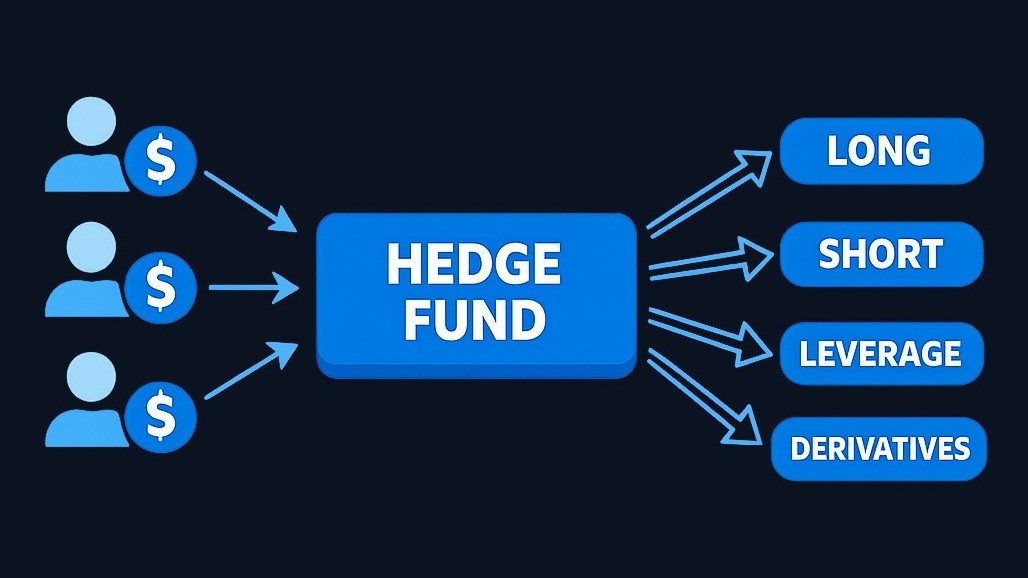
The SEC’s Investor.gov describes hedge funds as private, unregistered funds. They are generally limited to people and institutions that meet financial or expertise tests. A hedge fund is therefore not simply a fund that “hedges” risk. It is a flexible structure for a restricted group of investors. Investor.gov explains the category and its eligibility limits.
How hedge funds work
Investors put money into a shared pool. The manager invests it under the fund’s stated rules and may receive a share of the profits. The offering documents explain the strategy, fees, withdrawal rules, valuation method, and investor requirements.
Managers often seek an “absolute return.” This means they aim for a positive result instead of simply following a market benchmark. It is an objective, not a promise. Results depend on the manager’s choices, market conditions, borrowing costs, and asset prices.
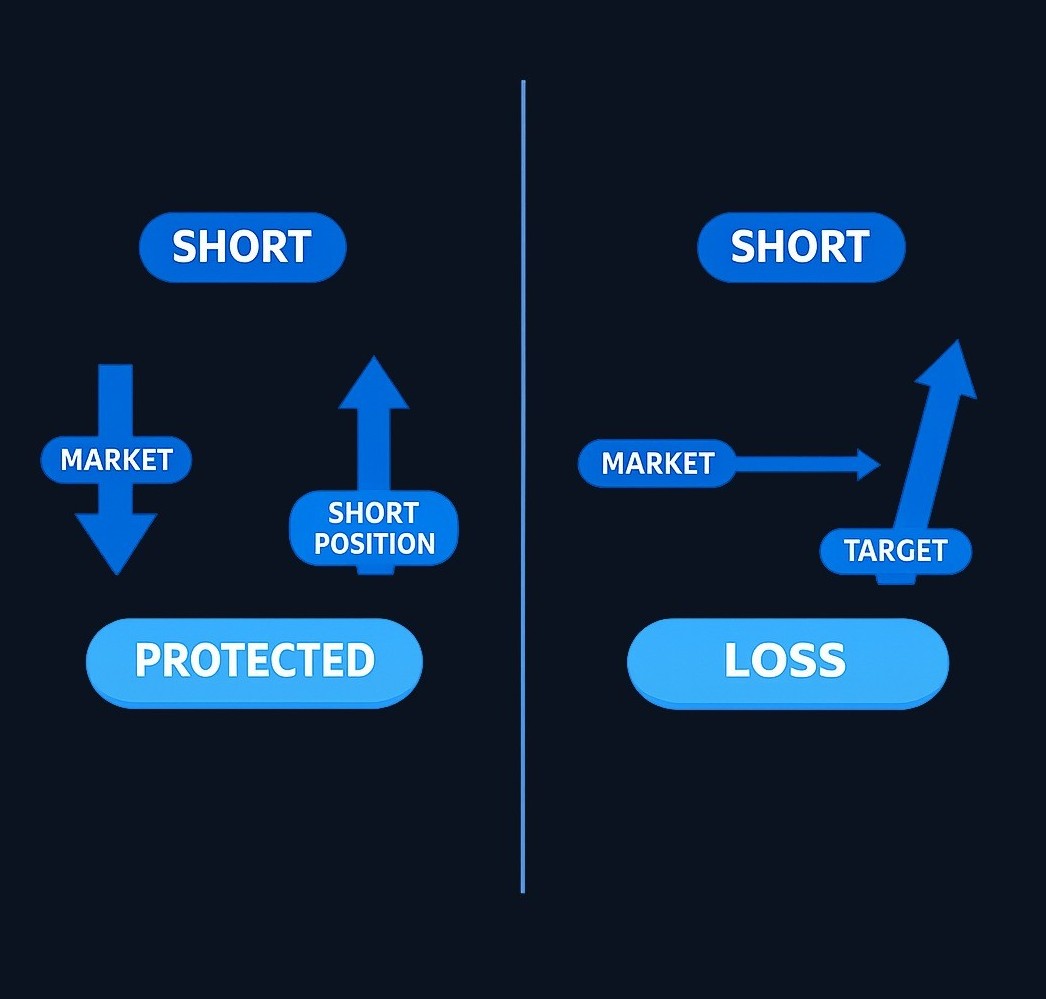
The word hedge can mislead. A manager may reduce one risk while accepting another. For example, a short position may reduce broad market exposure. Yet it loses money if the shorted security rises. The same tool can manage risk or create it.
Common hedge fund strategies
There is no single hedge fund strategy. The SEC’s discussion of the category notes that fund mandates may allow long and short positions, leverage, derivatives, and investment across many markets. The SEC outlines this broad strategic flexibility.
Common approaches include:
- Long/short equity: Buying securities expected to rise while shorting securities expected to fall. The manager may try to profit from stock selection while controlling some overall market exposure.
- Arbitrage or relative value: Taking opposite positions in related assets whose prices appear out of line. Prices may move further apart instead of returning to the expected relationship.
- Global macro: Building positions around broad economic themes involving interest rates, currencies, commodities, equity markets, or government policy.
- Event-driven investing: Trading around events such as mergers, restructurings, or other corporate changes. Outcomes may depend on whether the expected event occurs and on what terms.
- Credit strategies: Investing across company or government debt, sometimes combining long and short positions or focusing on securities under financial stress.
These labels describe an approach, not a consistent risk level. Two funds using the same label may hold different assets, use different amounts of borrowing, and offer very different redemption terms.
Who can invest in a hedge fund?
Hedge funds are generally not designed for everyday retail access. According to Investor.gov, they are usually limited to individuals and institutional investors that meet specified financial or sophistication criteria. Investor.gov provides the official overview.
Eligibility does not prove that a fund is suitable. A prospective investor still needs to understand:
- how the strategy is expected to make and lose money;
- whether the portfolio uses borrowing, short selling, or derivatives;
- how and when an investment can be redeemed;
- how hard-to-price holdings are valued;
- which fees apply and when performance compensation is earned;
- whether the manager’s incentives align with the investor’s goals.
Large institutions may assign teams to this review. An eligible individual may need independent legal, tax, and investment help.
Fees, regulation, and access
Hedge funds differ from broadly available mutual funds in structure as well as strategy. Investor.gov identifies them as private, unregistered investment funds, while the SEC describes managers as active investors who may receive a percentage of profits. See the SEC’s selected hedge fund definitions.
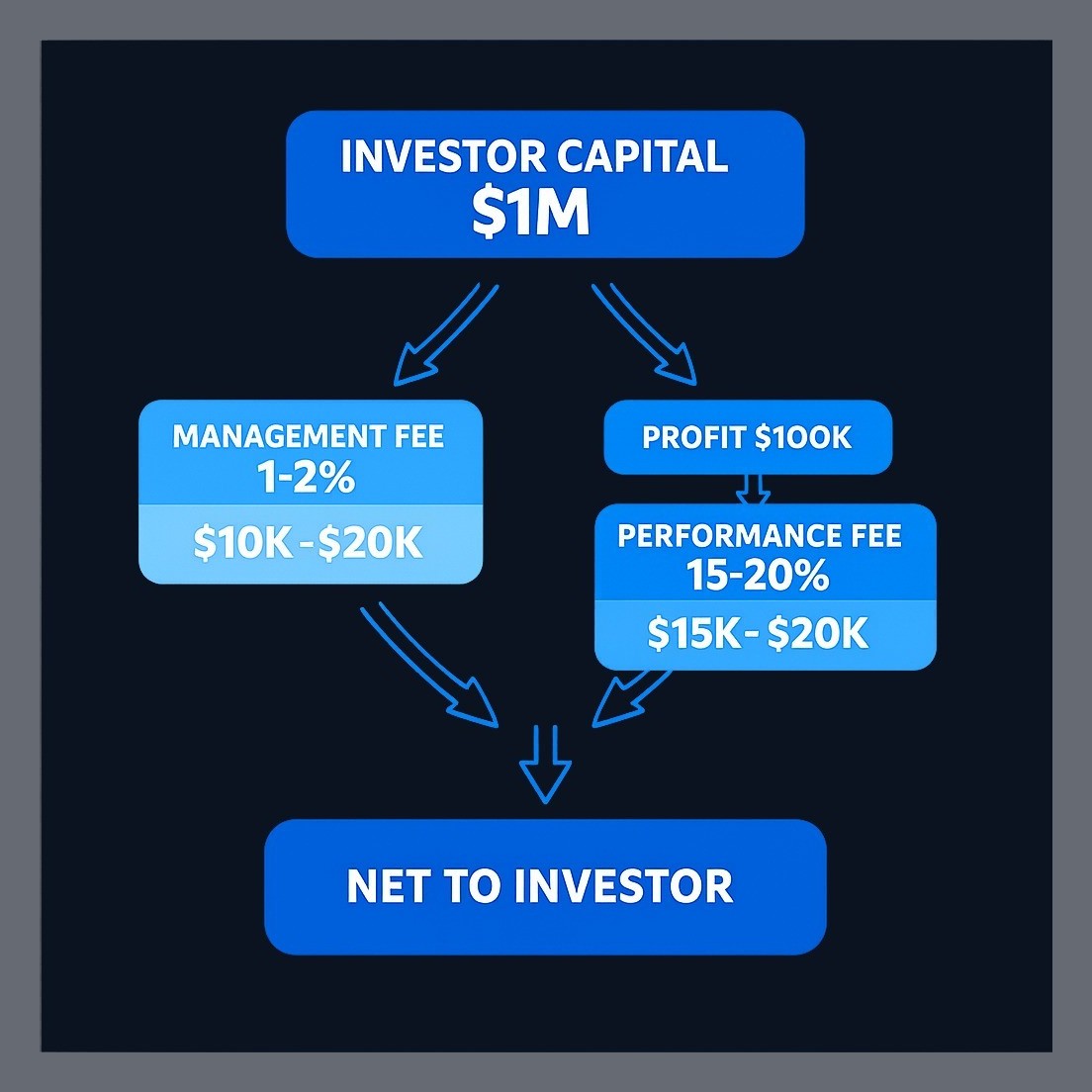
Investor.gov says hedge fund investors typically pay an asset management fee of 1%–2% of net asset value and a performance fee of 15%–20% of profits. Measures such as a high-water mark or hurdle rate may restrict when a manager earns the performance fee. Investor.gov details these typical hedge fund fees. Because fees reduce the return investors keep, compare the full fee formula—not just the stated percentages.
Private does not mean free from every rule. It means the fund does not operate like a registered retail fund. The rules depend on the fund’s structure and circumstances. Read its documents and seek current professional guidance.
Practice investing with Finelo
Build practical investing skills with guided lessons, simulator practice, and structured challenges.
Hedge funds vs. mutual funds and private equity
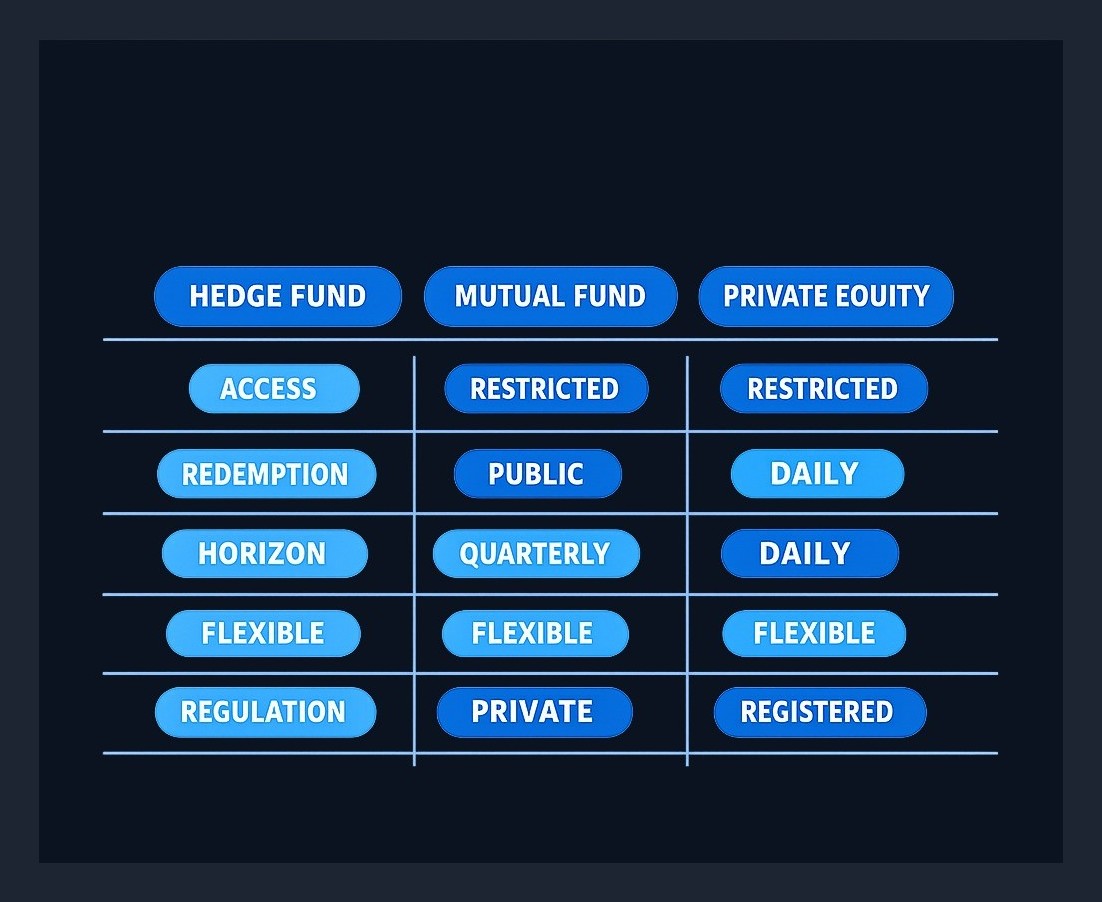
The clearest distinction is not that one vehicle is always safer or better. Each has a different structure, investor base, and portfolio mandate.
| Feature | Hedge fund | Mutual fund | Private equity fund |
|---|---|---|---|
| Typical access | Generally limited by financial or sophistication criteria | Available to a broad range of investors | Typically a restricted private offering |
| Investment focus | Flexible strategies across securities and other assets | Stocks, bonds, money-market instruments, or other assets under a stated mandate | Long-term investments in private businesses |
| Strategy tools | May include short selling, leverage, and derivatives | Operates as an SEC-registered open-end investment company | May take a controlling interest and help direct a portfolio company |
| Liquidity | Often limited by redemption windows and lockups | Shares can generally be sold back on a business day at the next calculated NAV | Often requires a long holding period |
| Key investor question | Can I understand the exposures and exit terms? | Does the mandate, cost, and risk fit my plan? | Can I accept a long commitment and uncertain exit timing? |
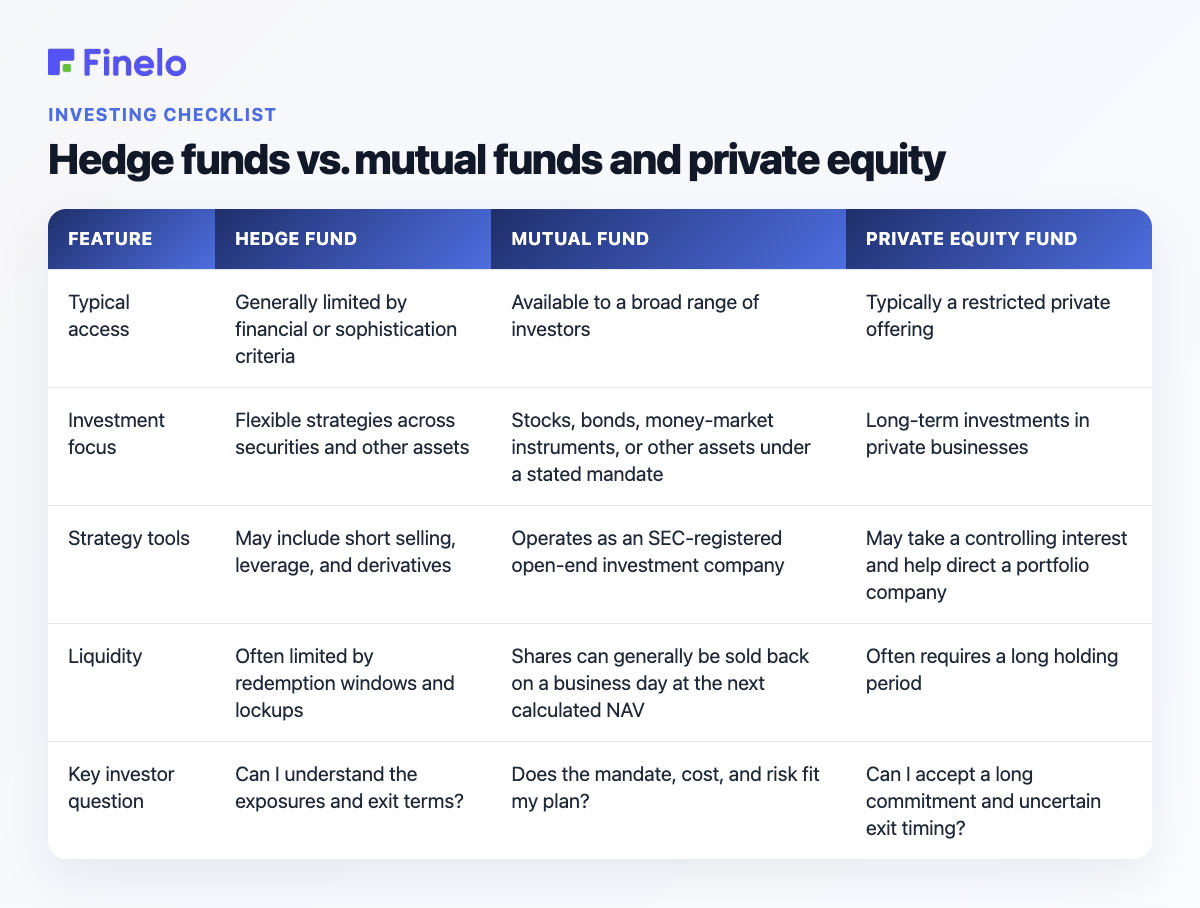
Investor.gov defines a mutual fund as an SEC-registered open-end company that pools investor money. It also says investors can generally redeem shares on a business day at the next calculated NAV. See Investor.gov’s mutual fund overview. By contrast, hedge funds commonly restrict redemptions.
Private equity also pools investor capital, but its model is different. Investor.gov says private equity often targets assets with an investment horizon of 10 years or more and may take a controlling interest in a business to increase its value. See Investor.gov’s private equity explanation. The table is a starting framework; individual funds can still differ materially.
Major risks to evaluate
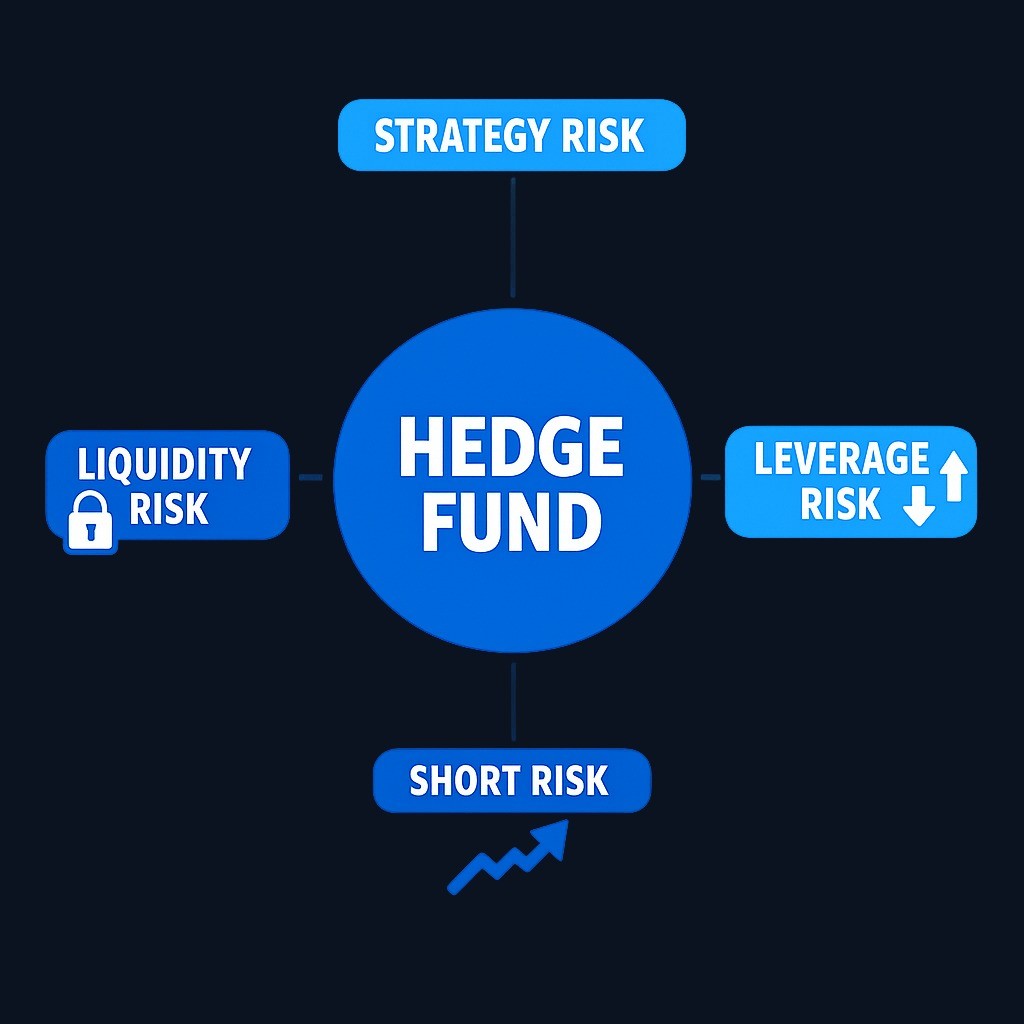
Hedge fund risk comes from more than market prices. Before considering a fund, examine several layers:
- Strategy risk: The manager’s idea may be wrong. Prices may keep moving against the fund.
- Leverage risk: Borrowing or derivative exposure magnifies both potential gains and potential losses. Investor.gov explains how leverage, derivatives, and short selling affect hedge fund exposure.
- Short-selling risk: A short position loses money when the security rises. The loss grows as the price climbs.
- Liquidity risk: The fund or its underlying holdings may be difficult to exit quickly. Investor.gov says hedge funds typically allow redemptions four times a year or fewer, often impose lockups of a year or more, and may charge a redemption fee. Review the official redemption warning.
- Valuation risk: Some assets lack frequent market prices. Ask who values them and which method they use.
- Manager and operational risk: Results depend on the manager, internal controls, service providers, asset custody, and accurate reports.
- Fee risk: Fees and expenses reduce the return the investor keeps.
Diversification across funds does not automatically remove these risks. Several managers may hold similar positions or react to market stress in similar ways.
A practical evaluation framework
For most readers, the next step is not choosing a hedge fund. First learn how to assess one. Do not let prestige, a famous manager, or a strong recent result replace careful review.
Use this checklist:
- Explain the strategy in plain language. If you cannot describe what creates returns and losses, you cannot judge the risk.
- Map the downside. Ask what happens if prices move sharply, borrowing becomes expensive, a deal fails, or many investors seek withdrawals.
- Read the liquidity terms. Note redemption windows, notice requirements, lockups, and any power to delay withdrawals.
- Separate gross results from investor results. Consider management fees, performance compensation, and other expenses.
- Review incentives and controls. Understand who values assets, holds them, audits the fund, and monitors risk.
- Compare with simpler alternatives. A complex strategy should have a clear role that cannot be met more transparently or at lower cost.
Beginners should first learn how risk, diversification, and fees work together. Finelo provides an investment-learning starting point for readers who want that foundation before they study complex funds.
Key terms to know
- Long position: An investment intended to gain when an asset’s value rises.
- Short position: A position intended to gain when an asset’s value falls.
- Leverage: Borrowed money or contracts that increase the effect of price moves.
- Derivative: A contract linked to an asset, interest rate, or market measure.
- Absolute return: An objective of producing a positive result rather than simply matching a benchmark.
- Redemption: The process of withdrawing capital under the fund’s rules.
- Performance fee: Compensation linked to investment profits under specified terms.
The bottom line
A hedge fund is a restricted private investment pool whose manager may use a wider range of strategies and tools than many retail funds. That flexibility is the defining attraction—and the central source of complexity.
Look beyond the hedge fund label. Study the strategy, borrowing, withdrawal rules, valuation, fees, controls, and manager incentives. Eligibility does not make a fund understandable or suitable. This article is educational, not personal financial advice. Review the documents, risks, costs, and fit with qualified professionals before you invest.
Frequently asked questions
Are hedge funds only for wealthy investors?
Not exclusively, but access is restricted. Investor.gov says hedge funds are generally limited to individuals and institutions that meet financial or sophistication criteria. The exact test depends on how a fund is structured. [See the official eligibility overview](https://www.investor.gov/introduction-investing/investing-basics/investment-products/private-investment-funds/hedge-funds).
Why are hedge funds considered risky?
Their managers may use leverage, short selling, derivatives, and other speculative practices. These tools can broaden a strategy, but they can also increase losses. Limited redemption opportunities and hard-to-value assets can add further risk.
How do hedge funds make money in a falling market?
A fund may short securities or use derivatives designed to gain when selected prices fall. That does not guarantee a profit during a market decline. Other positions, financing costs, timing, and risk controls still affect the result.
Can a hedge fund be used for retirement savings?
Eligibility does not establish suitability. A retirement investor would need to weigh the fund’s risk, fees, liquidity limits, transparency, and role within the wider portfolio. Restricted access to capital can be especially important when future withdrawals matter.
InvestingBeginnerPrivate MarketsMarkets
Practice investing with Finelo
Build practical investing skills with guided lessons, simulator practice, and structured challenges.
About the author
Finelo Team
The Finelo Team creates practical investing and trading education designed to help beginners learn faster with structured challenges, simulator practice, and bite-sized lessons.
Keep reading — Related articles

Investing
I Bonds vs EE Bonds in 2026: Rates, Rules, and Which to Buy for the Long Run
Series I and Series EE savings bonds are both U.S. Treasury retail savings bonds sold on TreasuryDirect. They share ownership, tax treatment, and redemption rules; the key difference is the…
Finelo Team
Investing
Coverdell ESA vs 529 Plan: Limits, Flexibility, and Which to Choose
Quick answer (one minute) Both a Coverdell Education Savings Account (Coverdell ESA) and a 529 plan let money grow tax‑free and be withdrawn tax‑free for qualified education expenses. The…
Finelo Team
Investing
CD vs High Yield Savings Account: Where to Park Your Cash in 2026
Hero answer — CD vs high yield savings account in one line A CD (certificate of deposit) and a high yield savings account are both low‑risk, federally insured homes for cash — the difference…
Finelo Team