A Ponzi scheme is an investment fraud in which money from new investors is used to pay earlier investors, creating the appearance of genuine returns. The organizer may claim to be investing the funds, but the operation does not produce enough legitimate earnings to support its promised payouts. According to the U.S. Securities and Exchange Commission’s Investor.gov, organizers often promote high returns with little or no risk and may keep part of the money themselves.
What is a Ponzi Scheme? Understanding the Risks and Signs
A Ponzi scheme is an investment fraud in which money from new investors is used to pay earlier investors, creating the appearance of genuine returns. The organizer may claim to be investing the funds, but the operation…
5 min read
Practice investing with Finelo
Build practical investing skills with guided lessons, simulator practice, and structured challenges.
Want to learn more?
Build practical investing skills with guided lessons, simulator practice, and structured challenges.
Explore FineloExplore Finelo's 28-day challenges
Turn learning into a daily habit with guided challenge paths.
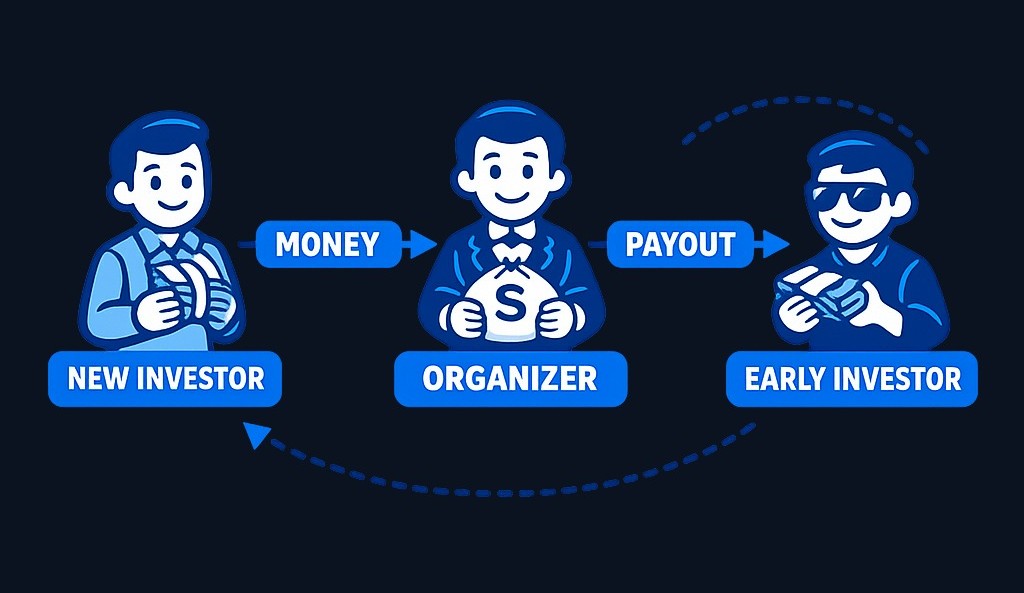
Understanding this structure matters because early payments can make the opportunity look successful. A payout is not proof that an investment is legitimate—it may simply mean more money has recently entered the scheme.
How a Ponzi scheme works
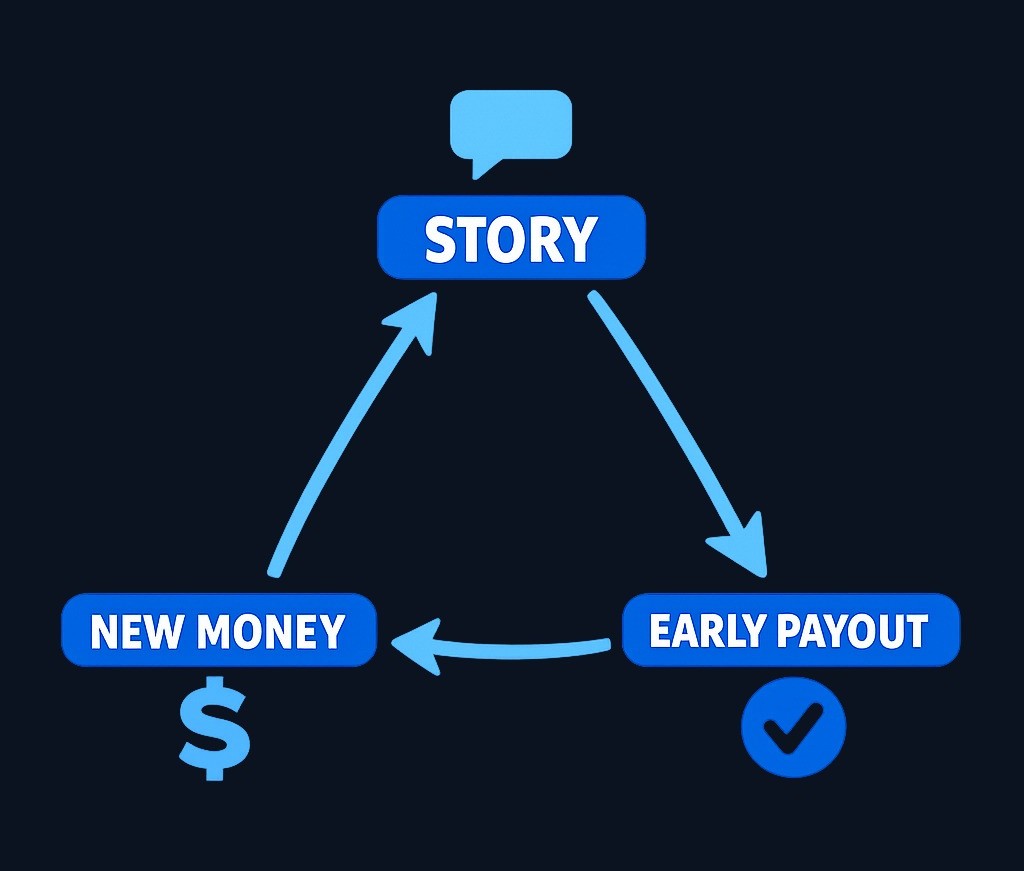
A Ponzi scheme relies on a misleading story about where returns come from. An organizer collects money while claiming it will be invested in a profitable strategy, business, or asset. Instead of generating sufficient investment income, the organizer uses some of the new deposits to satisfy withdrawal requests or make scheduled payments to earlier participants.
That process can create convincing social proof. Early participants may receive money and tell friends that the investment works. Statements may show steady gains, and the organizer may encourage participants to leave their supposed profits in the account.
The basic money flow looks like this:
- The organizer promotes an apparently attractive investment.
- Initial participants contribute funds.
- New contributions are used to pay some earlier participants.
- Those payments create confidence and attract more money.
- The operation becomes increasingly dependent on continued inflows.
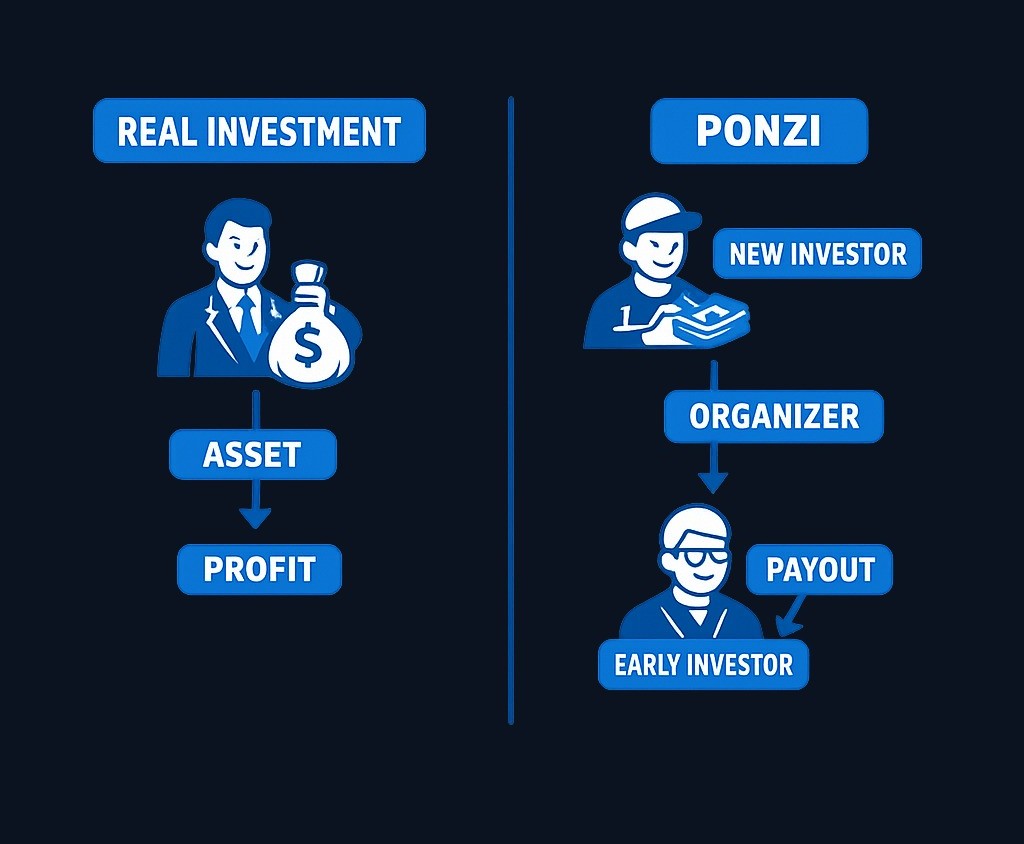
The key distinction is the source of the payout. A legitimate investment may gain or lose value based on the performance of an identifiable asset or business. In a Ponzi scheme, apparent returns are funded largely by other participants’ money.
| Question | Ponzi scheme | Legitimate investment opportunity |
|---|---|---|
| Where do returns come from? | Primarily from money contributed by newer investors | From the performance, income, or value of an identifiable investment |
| How is risk described? | Often minimized or presented as nearly nonexistent | Explained as a real possibility, including the potential for loss |
| How transparent is the strategy? | Vague, secretive, or difficult to verify | Clear enough to research and evaluate |
| What happens when you request money? | Delays, pressure, or incentives to remain invested may appear | Withdrawal rules and restrictions should be disclosed in advance |
| What supports account balances? | Claims or statements that may not reflect real assets | Records tied to actual holdings, transactions, or business activity |
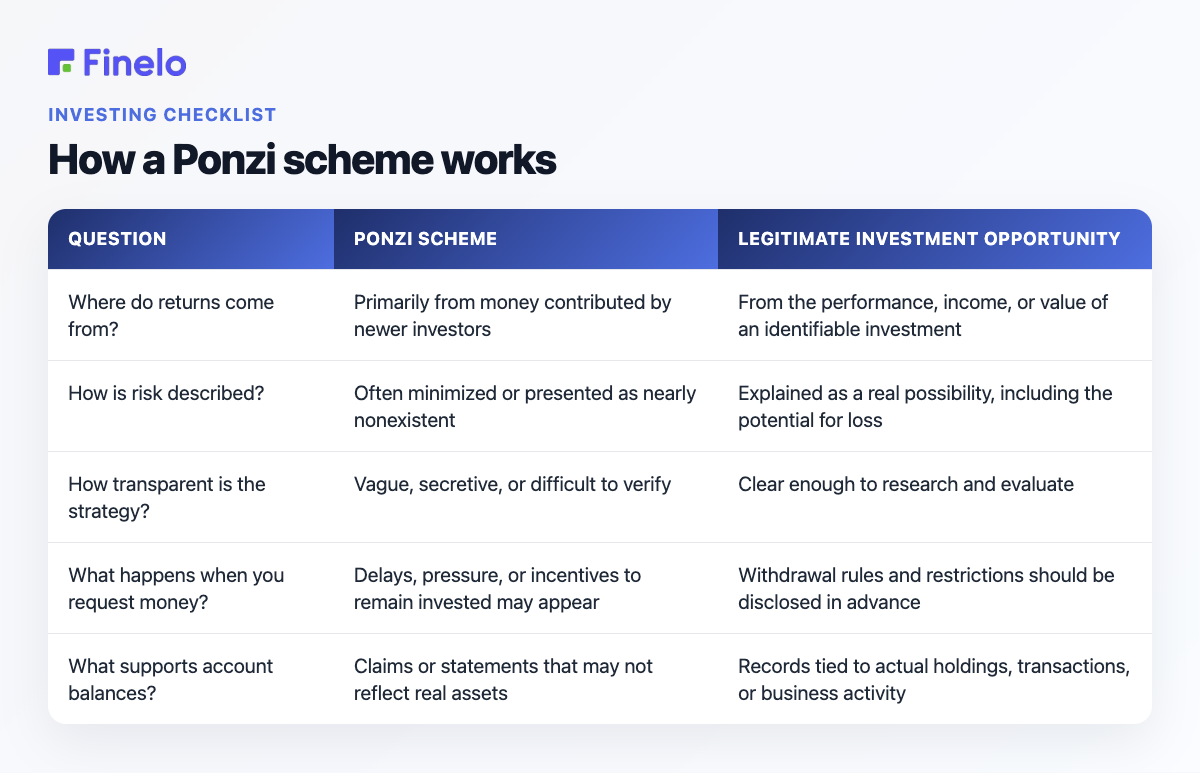
No single feature proves fraud by itself. The concern rises when several warning signs appear together and the promoter cannot provide clear, independently verifiable answers.
Warning signs to check
Use this checklist before committing money or when reviewing an investment you already hold:
- Returns are described as guaranteed or unusually dependable.
- The promoter emphasizes high returns while downplaying the possibility of loss.
- The investment strategy is secret, overly complicated, or never clearly explained.
- You cannot verify what assets are being purchased or how profits are generated.
- Account values rise smoothly regardless of changing market conditions.
- Documents are missing, inconsistent, or difficult to understand.
- The promoter discourages independent research or professional review.
- You face delays, excuses, or pressure when trying to withdraw money.
- You are offered a better return if you leave your funds in place.
- The opportunity depends heavily on trust, exclusivity, or referrals rather than verifiable information.
The strongest clue is often a mismatch between the promised outcome and the evidence provided. If someone says an investment is safe and profitable but cannot clearly show what produces the returns, pause before sending more money.
Practice investing with Finelo
Build practical investing skills with guided lessons, simulator practice, and structured challenges.
Charles Ponzi and the name behind the fraud
Ponzi schemes are not named for a financial technique or asset class. They take their name from Charles Ponzi, who deceived investors in the 1920s through a postage-stamp speculation scheme, according to Investor.gov.
The historical example highlights an important point: the story used to attract investors can change, but the underlying structure remains recognizable. A promoter presents an investment explanation, incoming participants supply the cash, and earlier payouts make the explanation seem credible. The relevant question is therefore not whether the opportunity sounds modern or sophisticated. It is whether its claimed returns can be independently traced to real economic activity.
Legal consequences and what victims may face
Running a Ponzi scheme means operating an investment fraud. The precise legal consequences depend on the conduct, applicable laws, and jurisdiction. An investigation may focus on how money was solicited, what representations were made, where the funds went, and whether records were falsified or concealed.
For victims, the immediate problem is often uncertainty. An account statement may show a balance that is not backed by recoverable assets. Even when authorities intervene, a displayed profit is not necessarily money that exists or can be returned.
If you suspect fraud, preserve rather than edit or discard the evidence you have. Keep copies of promotional messages, contracts, statements, payment confirmations, emails, names, dates, and withdrawal requests. Avoid making accusations directly to the suspected organizer if doing so could put your records or access at risk. Consider seeking guidance from the relevant financial regulator, law-enforcement body, or a qualified legal professional in your jurisdiction.
A practical framework before you invest
You do not need to prove that an opportunity is a Ponzi scheme before deciding not to participate. Your task is to determine whether the investment is understandable, verifiable, and suitable for the risk you can accept.
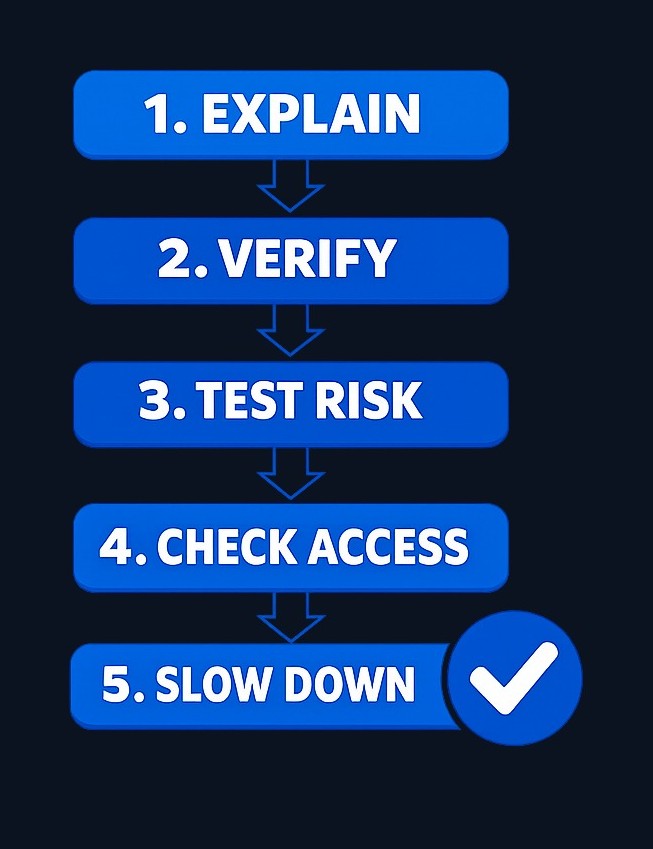
Use a five-part check:
- Explain it. Can you describe, in plain language, what is being purchased and how it could generate a return?
- Verify it. Can you independently confirm the people, firm, documents, assets, and transactions involved?
- Test the risk claim. Does the promoter openly discuss how losses could occur, or only repeat that the opportunity is safe?
- Review access to funds. Are withdrawal terms clear before you invest? Treat unexplained delays or changing conditions as a reason to stop.
- Slow the decision down. Do not let urgency, exclusivity, social pressure, or a recent payout replace due diligence.
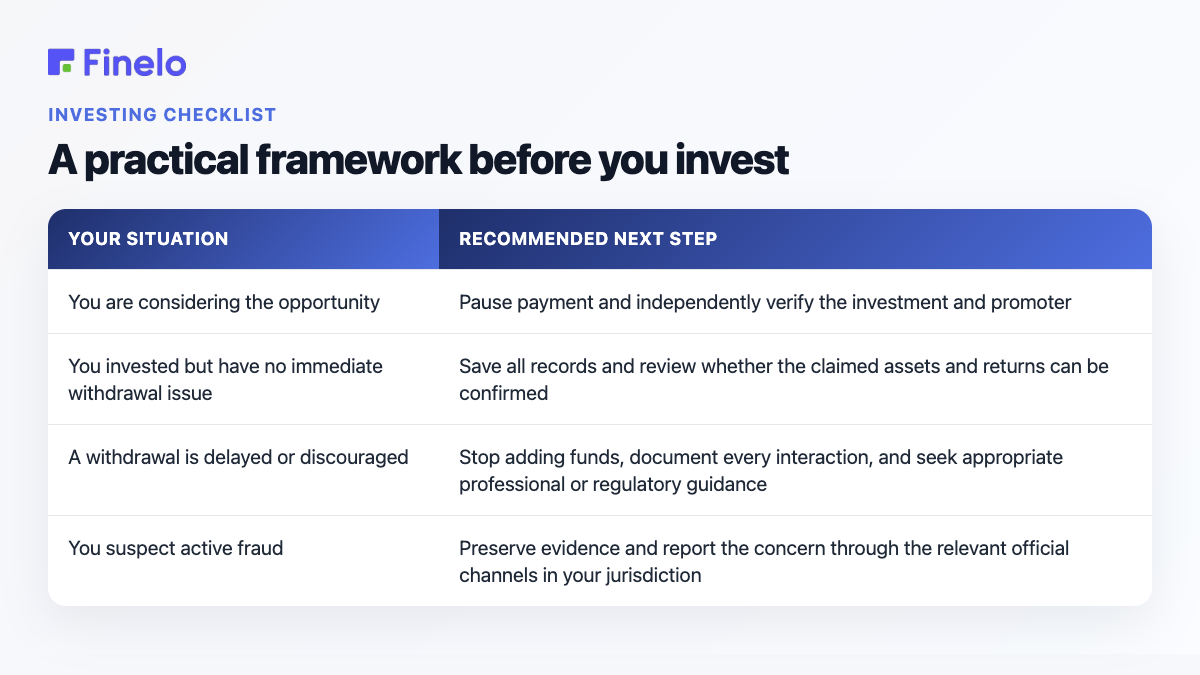
| Your situation | Recommended next step |
|---|---|
| You are considering the opportunity | Pause payment and independently verify the investment and promoter |
| You invested but have no immediate withdrawal issue | Save all records and review whether the claimed assets and returns can be confirmed |
| A withdrawal is delayed or discouraged | Stop adding funds, document every interaction, and seek appropriate professional or regulatory guidance |
| You suspect active fraud | Preserve evidence and report the concern through the relevant official channels in your jurisdiction |
This Finelo guide is designed as financial education and grounds its core definition in an official SEC investor resource. It is not personalized financial or legal advice. The safest next step is not to chase certainty about a promised return, but to verify how the investment works before putting money at risk.
Frequently asked questions
Is every high-return investment a Ponzi scheme?
No. A high potential return does not by itself establish fraud. However, higher-return opportunities should not be presented as risk-free. A combination of unusually attractive returns, weak transparency, unverifiable activity, and withdrawal problems warrants extra caution.
Is a Ponzi scheme the same as a pyramid scheme?
They can both depend on a continuing supply of new participants, but the pitch is commonly different. A Ponzi scheme is presented as an investment whose supposed returns come from a strategy or asset. A pyramid-style arrangement centers more directly on recruiting additional participants. Real-world frauds may combine features, so focus on the actual flow of money rather than the label.
What should I do if I have already received a payout?
Do not assume the payout proves the investment is genuine. Save the transaction record, stop and assess the source of the claimed returns, and avoid adding money solely because an earlier withdrawal succeeded.
What is the clearest definition of a Ponzi scheme?
It is an investment fraud that uses funds from newer investors to pay earlier investors while presenting those payments as investment returns. The apparent performance depends on incoming money rather than sufficient legitimate earnings.
InvestingBeginnerInvestor ProtectionMarkets
Practice investing with Finelo
Build practical investing skills with guided lessons, simulator practice, and structured challenges.
About the author
Finelo Team
The Finelo Team creates practical investing and trading education designed to help beginners learn faster with structured challenges, simulator practice, and bite-sized lessons.
Keep reading — Related articles

Investing
I Bonds vs EE Bonds in 2026: Rates, Rules, and Which to Buy for the Long Run
Series I and Series EE savings bonds are both U.S. Treasury retail savings bonds sold on TreasuryDirect. They share ownership, tax treatment, and redemption rules; the key difference is the…
Finelo Team
Investing
Coverdell ESA vs 529 Plan: Limits, Flexibility, and Which to Choose
Quick answer (one minute) Both a Coverdell Education Savings Account (Coverdell ESA) and a 529 plan let money grow tax‑free and be withdrawn tax‑free for qualified education expenses. The…
Finelo Team
Investing
CD vs High Yield Savings Account: Where to Park Your Cash in 2026
Hero answer — CD vs high yield savings account in one line A CD (certificate of deposit) and a high yield savings account are both low‑risk, federally insured homes for cash — the difference…
Finelo Team