A short squeeze is a rapid rise in a stock’s price that pressures short sellers to buy shares to close their positions. That buying can push the price higher, prompting more short sellers to cover and adding fuel to the move. The result can be a powerful feedback loop: rising price, forced or defensive buying, then further price increases.
What Is a Short Squeeze? Understanding the Dynamics

A short squeeze is a rapid rise in a stock’s price that pressures short sellers to buy shares to close their positions. That buying can push the price higher, prompting more short sellers to cover and adding fuel to…
7 min read
Practice trading with Finelo
Practice in a simulator, learn with bite-sized lessons, and build confidence before risking real money.
Want to learn more?
Practice in a simulator, learn with bite-sized lessons, and build confidence before risking real money.
Explore FineloExplore Finelo's 28-day challenges
Turn learning into a daily habit with guided challenge paths.
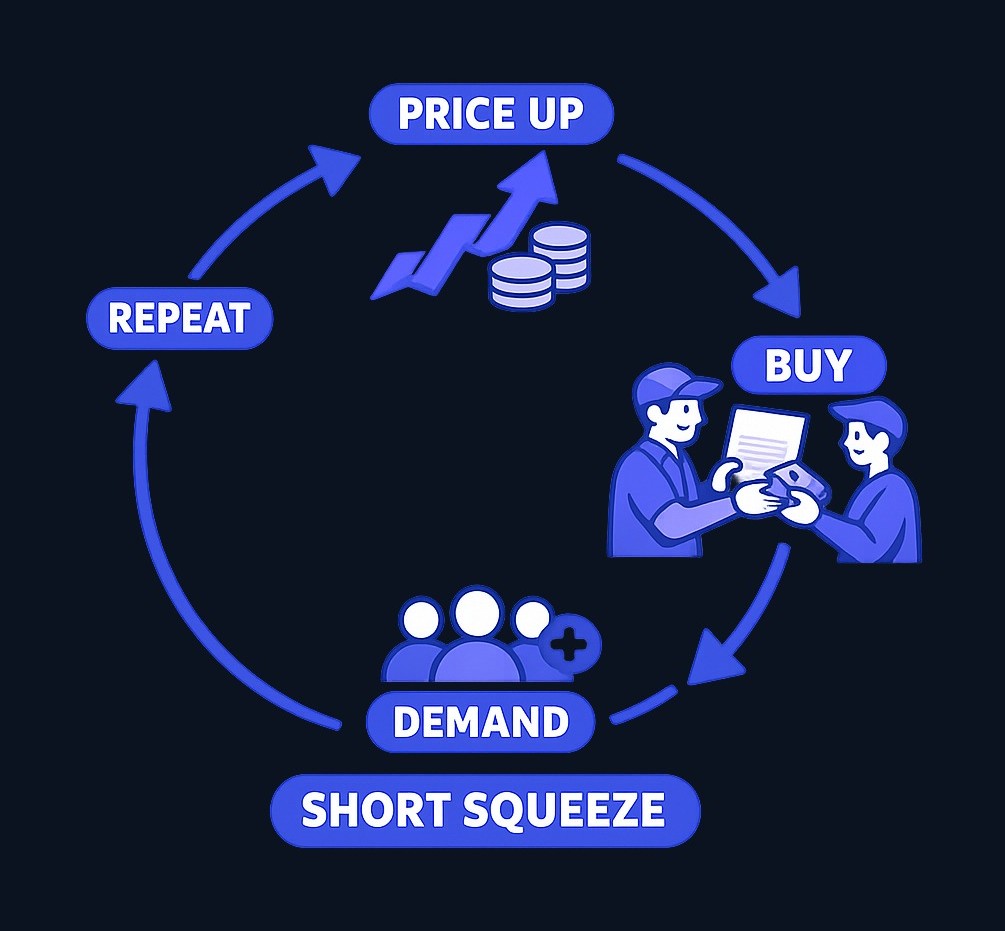
Short squeezes attract attention because their moves can be fast and dramatic. They are also difficult to predict and risky to trade. Understanding the mechanism is more useful than trying to chase every stock that looks “squeezable.”
How a short squeeze works
The process begins with short selling. A trader who expects a stock to decline sells shares they do not own, typically shares that have been borrowed, and later buys shares to close the position. The goal is to repurchase at a lower price. If the price rises instead, buying back produces a loss. Investor.gov explains both the basic short position and the risk of repurchasing at a higher price.
A simplified sequence looks like this:
- A meaningful number of traders hold short positions in a stock.
- New demand, unexpected news, changing expectations, or momentum causes the price to rise.
- Some short sellers decide—or are compelled by their risk limits—to buy shares and close their positions.
- Their purchases add to demand in the market.
- The higher price puts more pressure on remaining short sellers, potentially triggering another round of buying.
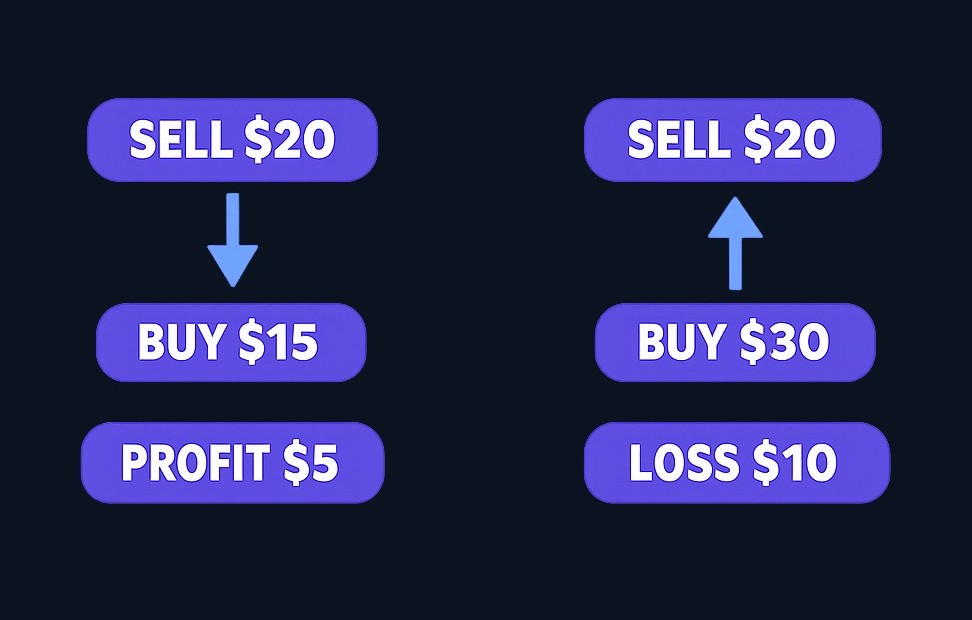
Consider a hypothetical trader who sells a borrowed share at $20. If the price falls to $15, the trader can buy it back for less than the sale price. But if the price rises to $30, closing the short means buying at a higher price and realizing a loss. If many traders face that same decision at once, their collective purchases can accelerate the advance.
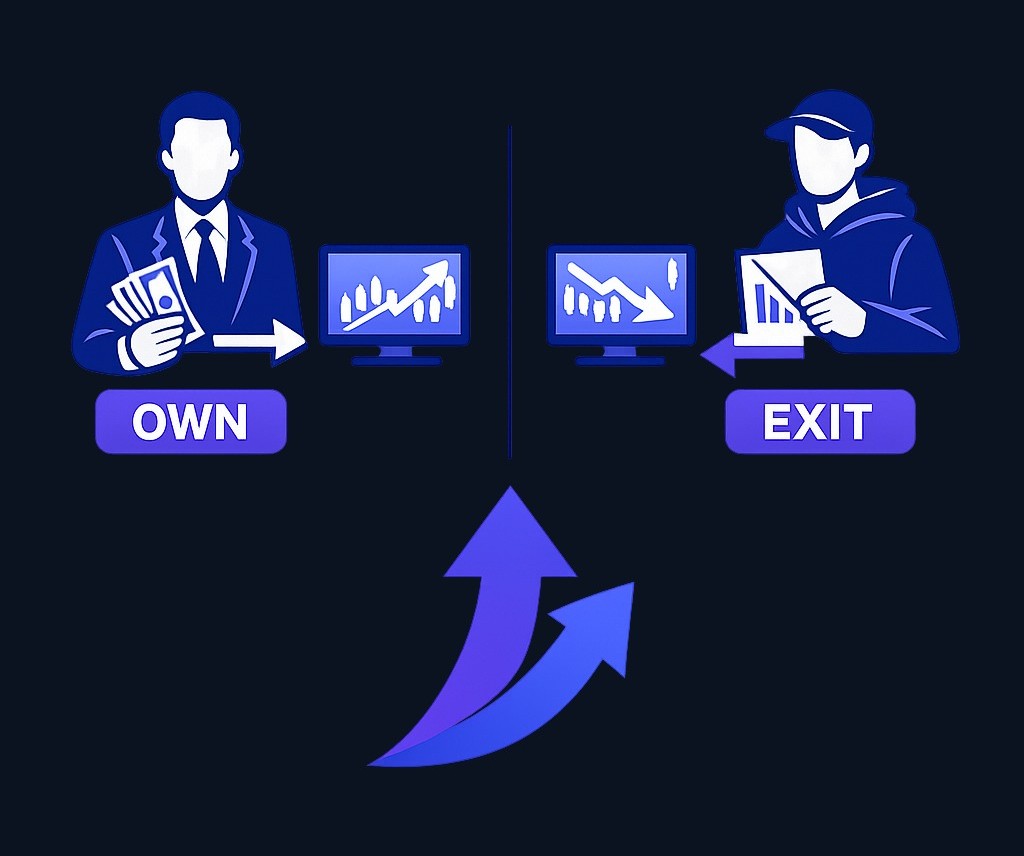
The key distinction is that ordinary bullish buying reflects a desire to own shares, while short-covering demand may reflect a desire to exit a losing position. During a squeeze, both types of buying can occur together.
What causes a short squeeze?
No single factor automatically causes a squeeze. It generally requires a combination of crowded short positions, rising demand, and limited willingness among existing holders to sell at current prices.
Possible catalysts include:
- A positive development that changes how market participants view the company
- Buying momentum that lifts the price above levels where short sellers planned to exit
- A broader shift in sentiment toward a heavily shorted stock
- Public attention that brings a sudden wave of buyers
- Risk controls that cause multiple short sellers to reduce exposure around the same time
Social media can amplify attention and coordinate sentiment, but discussion alone does not establish that a squeeze will occur. Online enthusiasm may disappear quickly, information may be incomplete, and the price may already reflect the expected buying by the time an individual investor acts.
It is also important not to confuse every sharp rally with a short squeeze. A stock can rise because investors expect better business results, because market conditions have changed, or simply because buyers temporarily outnumber sellers. Short covering may contribute to a move without being its main cause.
Indicators of a potential squeeze
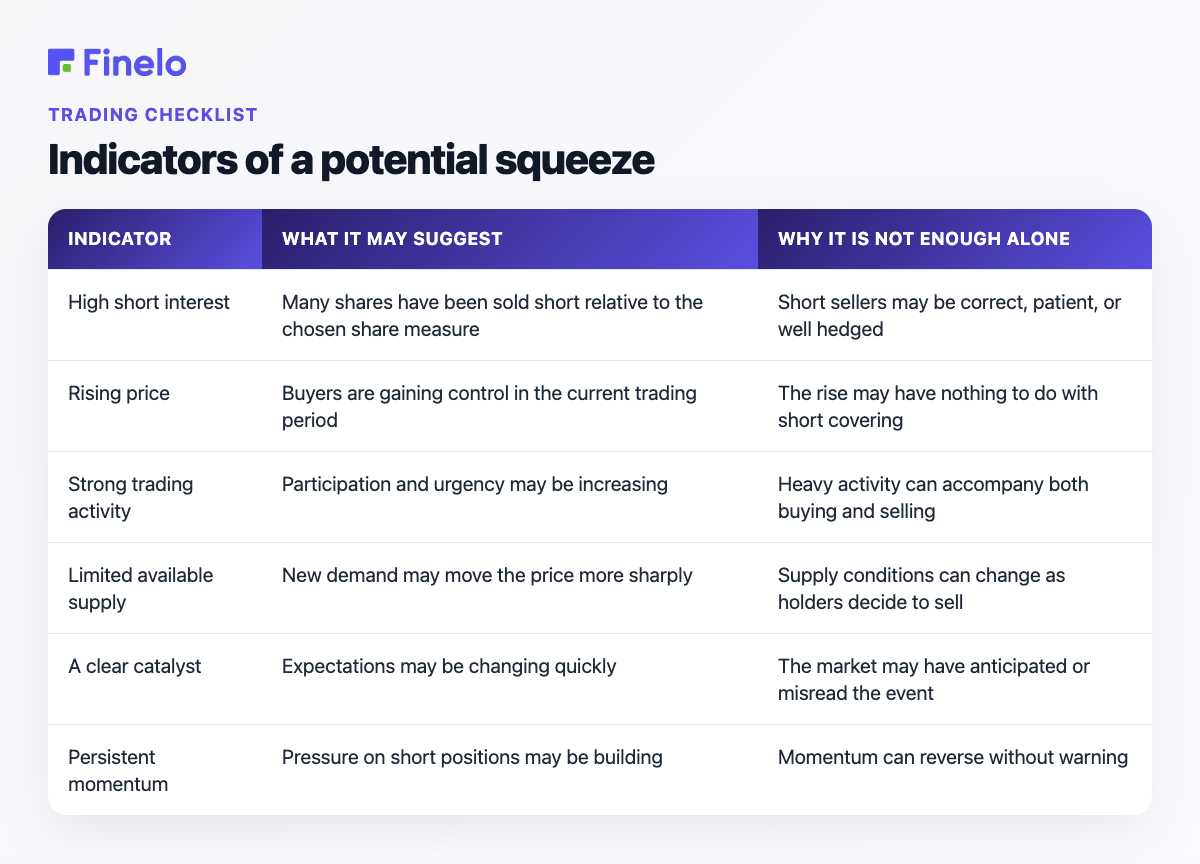
There is no reliable single signal that predicts a short squeeze. Traders instead examine several pieces of context and ask whether they tell a consistent story.
| Indicator | What it may suggest | Why it is not enough alone |
|---|---|---|
| High short interest | Many shares have been sold short relative to the chosen share measure | Short sellers may be correct, patient, or well hedged |
| Rising price | Buyers are gaining control in the current trading period | The rise may have nothing to do with short covering |
| Strong trading activity | Participation and urgency may be increasing | Heavy activity can accompany both buying and selling |
| Limited available supply | New demand may move the price more sharply | Supply conditions can change as holders decide to sell |
| A clear catalyst | Expectations may be changing quickly | The market may have anticipated or misread the event |
| Persistent momentum | Pressure on short positions may be building | Momentum can reverse without warning |
Short interest describes short positioning, not a timetable. A high reading can persist without a squeeze, and a lower reading does not rule out a rapid move. Data may also be delayed or calculated differently across services, so investors should check the definition, reporting period, and denominator before comparing figures.
A more disciplined review asks:
- Is the price actually rising, rather than merely attracting speculation?
- Is there a credible reason for new demand?
- Could available shares absorb that demand?
- Is the underlying business information changing?
- How current and consistently defined are the positioning data?
- What evidence would show that the squeeze thesis is wrong?
That last question matters. A thesis built only around other traders being forced to buy depends on their behavior, timing, and ability to remain in the position—all factors an outside observer cannot know with certainty.
Practice trading with Finelo
Practice in a simulator, learn with bite-sized lessons, and build confidence before risking real money.
Risks of investing during a short squeeze
The largest danger for a buyer is entering after much of the forced buying has already occurred. A rapidly rising chart can create urgency, but the feedback loop can weaken as short sellers finish covering or new sellers enter the market. The price may then reverse as quickly as it rose.
Other risks include:
- Extreme volatility: Large moves can occur before an investor has time to reassess.
- Poor execution: In fast markets, the price received may differ substantially from the price seen moments earlier.
- Narrative risk: Rumors about short interest or an imminent squeeze may be inaccurate.
- Concentration risk: A single speculative position can dominate a portfolio’s results.
- Leverage risk: Borrowed money or options can magnify losses and create additional timing pressure.
- Fundamental disconnect: A price driven by positioning and urgency may not remain aligned with the company’s longer-term prospects.
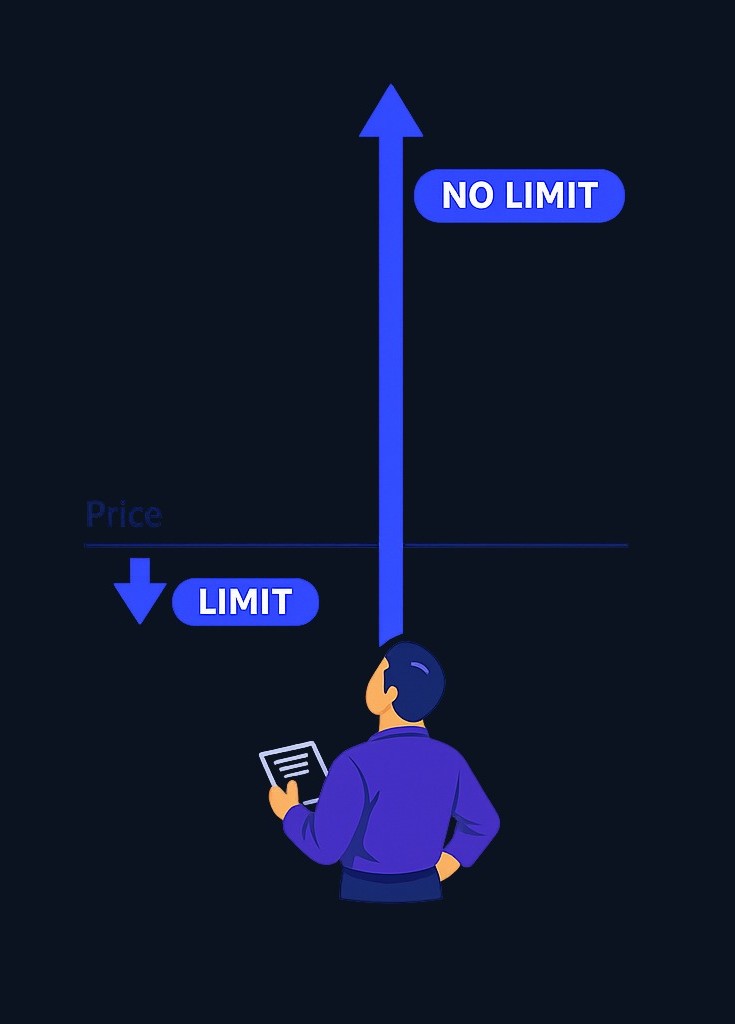
Short sellers face a different risk profile. A stock’s decline is bounded at zero, while its rise does not have the same fixed ceiling. That asymmetry helps explain why a rising price can create intense pressure to close short positions. As the official investor guidance notes, short selling is intended for experienced investors and a rising price creates a loss when shares are repurchased at the higher level.
A practical risk-management framework
Risk management cannot make a squeeze predictable, but it can limit the damage from being wrong. Before taking any position, write down the thesis, the invalidation point, and the maximum loss you are willing and able to accept.
Use this checklist:
- Separate the company thesis from the squeeze thesis. Would you still want exposure if short covering stopped?
- Decide position size before entering, using a loss amount that would not disrupt broader financial goals.
- Avoid treating viral attention as proof.
- Check the age and definition of every short-position metric.
- Plan how to respond to both a sharp rise and a sharp decline.
- Be cautious with leverage, because volatility can turn a manageable idea into an urgent loss.
- Reassess when the facts change instead of moving the exit point to preserve hope.
- Consider doing nothing when the available evidence is weak or the price action is too unstable to evaluate calmly.
For an investor who already owns a stock caught in a squeeze, the same distinction between business value and temporary market pressure is useful. A predefined plan can reduce the temptation to make an all-or-nothing decision during the most emotional part of the move.
What historical squeezes can teach
Named market episodes are often remembered for extraordinary price charts, but the reusable lesson is not that every heavily shorted stock will repeat them. Historical squeeze narratives typically become clear only after the event, when observers can connect positioning, catalysts, buying pressure, and short covering.
In real time, investors face incomplete information. They may not know how much short exposure has already been closed, whether reported positioning remains current, how many holders are willing to sell, or when attention will shift elsewhere. A successful early buyer and an unsuccessful late buyer can act on the same broad story but experience very different outcomes.
That is why past episodes are best used to study market mechanics and risk—not as templates promising the next result. The most durable observations are that crowded positioning can increase sensitivity to new demand, forced buying can accelerate momentum, and the unwind can punish anyone who assumes the price will keep rising indefinitely.
Practical next steps
A short squeeze is ultimately a demand-and-risk feedback loop. A rising price pressures short sellers; their purchases to close positions create more demand; and that demand may push the price higher again. The loop ends when covering slows, selling supply increases, sentiment changes, or buyers are no longer willing to pay higher prices.
Before acting on a possible squeeze, verify the data, identify the catalyst, distinguish temporary positioning from the underlying investment case, and define the downside first. Beginners may benefit more from learning how short selling and position sizing work than from trying to trade an unstable move. Finelo’s investing education starting point can help readers continue building that foundation.
This article is educational and does not provide personalized financial advice. Any investment decision should account for personal objectives, costs, risk tolerance, and the possibility of loss.
Frequently asked questions
Is high short interest enough to cause a short squeeze?
No. It indicates that short positioning may be significant under the selected measurement, but a squeeze also needs buying pressure and conditions that prompt short sellers to close. High short interest can remain high without producing a sharp rally.
Can you predict a short squeeze before it happens?
You can identify conditions that may make a squeeze possible, but you cannot know in advance that one will happen or when. Positioning data, price momentum, trading activity, supply, and a catalyst are more informative when considered together, yet none guarantees the outcome.
How long does a short squeeze last?
There is no standard duration. It depends on how quickly short positions are closed, whether new buyers continue to enter, how much stock becomes available for sale, and whether the catalyst keeps influencing expectations.
What is the difference between a short squeeze and a normal rally?
A normal rally can result from improving expectations or broad buying demand. A short squeeze specifically includes pressure on short sellers whose purchases to close positions help drive the price upward. In practice, a rally may contain both fundamental buying and short covering.
TradingBeginnerMarket MechanicsMarkets
Practice trading with Finelo
Practice in a simulator, learn with bite-sized lessons, and build confidence before risking real money.
About the author
Finelo Team
The Finelo Team creates practical investing and trading education designed to help beginners learn faster with structured challenges, simulator practice, and bite-sized lessons.
Keep reading — Related articles

Trading
What Is SPAN Margin: Learn the Concept & Risk Controls
SPAN margin is an exchange-level, risk-based margin framework that calculates required collateral for futures and options by assessing portfolio risk across prescribed market scenarios rather than using a flat per‑contract rate.
Finelo Team
Trading
What Is Portfolio Margin: Learn the Concept & Risk Controls
Portfolio margin is a risk-based method that applies scenario analysis to eligible positions in an approved margin account.
Finelo Team
Trading
What Is NQ in Trading: Learn the Concept & Risk Controls
In trading, NQ is the ticker symbol for the E-mini Nasdaq-100 futures contract, listed on CME Group's exchange.
Finelo Team