A ticker symbol, also called a stock symbol, is a short abbreviation used to identify a publicly traded stock. Instead of relying on a company’s full name, investors use the symbol to find and distinguish the security they want to research or trade. According to Investor.gov, every publicly traded common stock in the U.S. receives this type of identifying abbreviation, and symbols may contain from one to five letters.
What is a Ticker Symbol?

A ticker symbol, also called a stock symbol, is a short abbreviation used to identify a publicly traded stock. Instead of relying on a company’s full name, investors use the symbol to find and distinguish the security…
4 min read
Practice investing with Finelo
Build practical investing skills with guided lessons, simulator practice, and structured challenges.
Want to learn more?
Build practical investing skills with guided lessons, simulator practice, and structured challenges.
Explore FineloExplore Finelo's 28-day challenges
Turn learning into a daily habit with guided challenge paths.
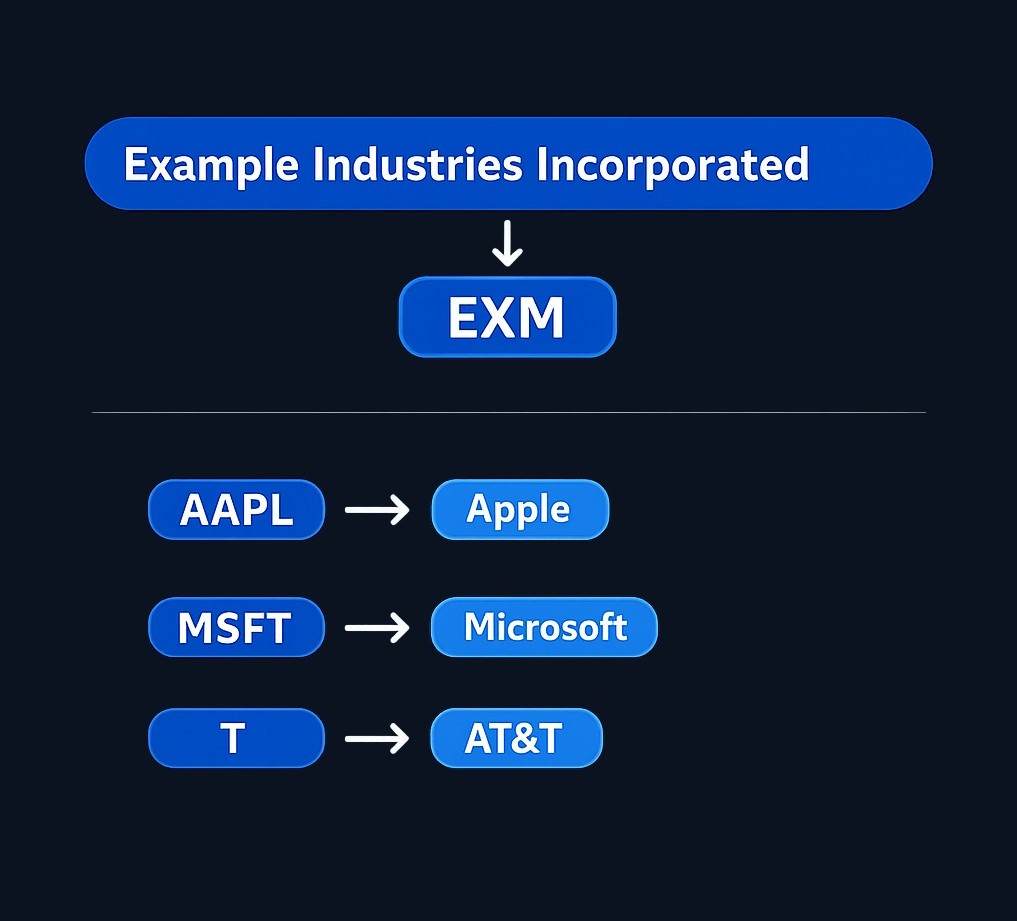
That makes a ticker useful—but not sufficient on its own. Before acting, match the symbol with the company name, exchange, and security details shown by a reliable market source or brokerage.
How ticker symbols work
A ticker is a label for a security, not a description of the entire investment. The letters may resemble a company’s name or brand, but you should not assume that they always do. Treat the symbol as an identifier that helps you reach the correct quote, company profile, chart, news feed, or order screen.
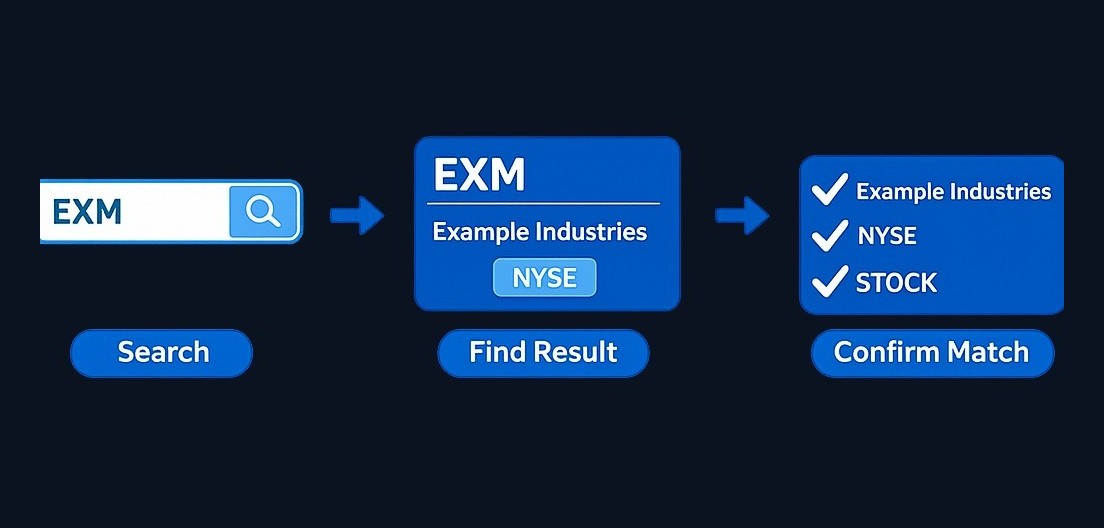
Consider a hypothetical company called Example Industries. If its common stock traded under EXM, an investor could search for EXM rather than typing the full corporate name. The search result should then be checked against Example Industries and its listing information. This extra check matters because a similar name, another security issued by the same company, or a symbol used in a different market could lead to the wrong instrument.
Symbols can also change. A company might adopt a new name, reorganize, merge, or choose branding that makes a different symbol more appropriate. In a hypothetical change from OLD to NEW, the business does not become a better or worse investment merely because its label changed. Investors should instead check the effective date, confirm that their watchlists and records display the new identifier, and review the underlying corporate event.
How to find and verify a ticker symbol
The safest approach is to start with the company and verify the security, rather than guessing a symbol from the brand name.
- Search the company’s official investor-relations information or an exchange, regulator, or brokerage search tool.
- Match the full legal or corporate name.
- Confirm the exchange or market where the security is listed.
- Check the security type. A company may have more than one publicly traded instrument.
- Review the current quote and company details before entering an order.
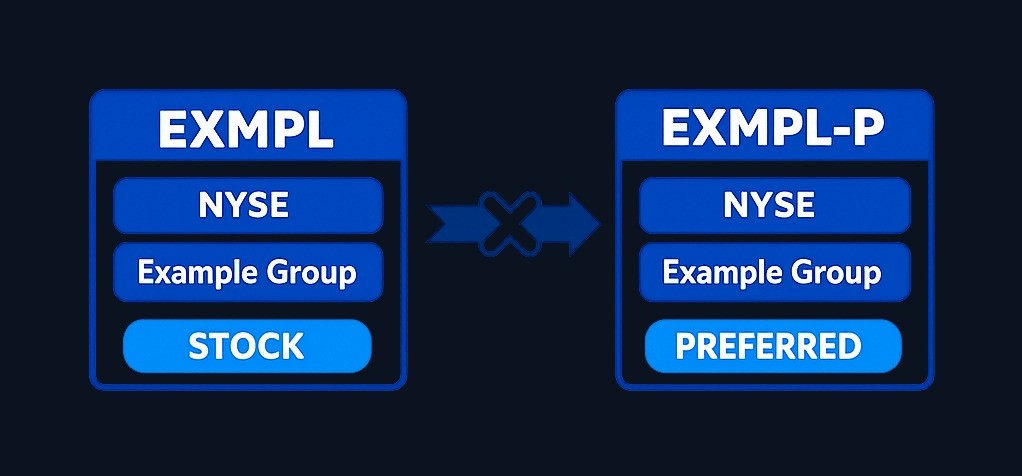
For example, suppose a search returns two similar symbols. One result matches the company name but represents a different type of security; the other is the common stock you intended to research. Checking the security description prevents a simple search shortcut from becoming an avoidable trading error.
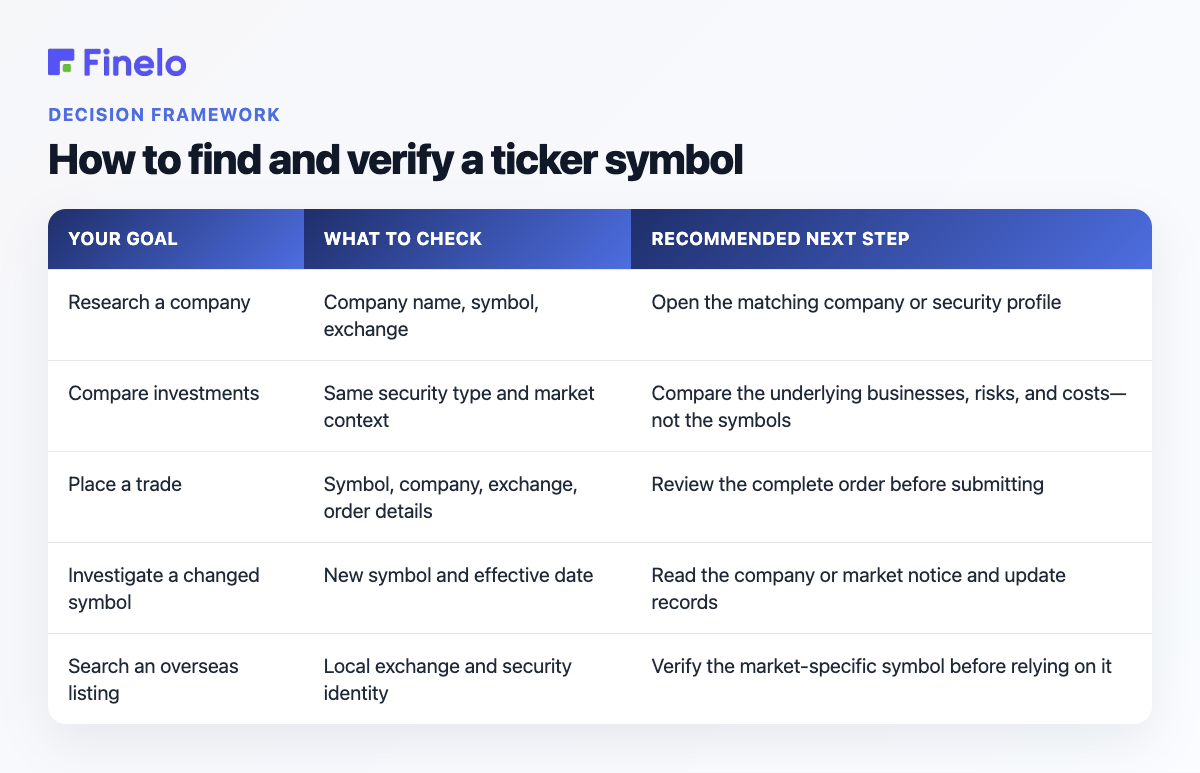
Use this decision table as a quick guide:
| Your goal | What to check | Recommended next step |
|---|---|---|
| Research a company | Company name, symbol, exchange | Open the matching company or security profile |
| Compare investments | Same security type and market context | Compare the underlying businesses, risks, and costs—not the symbols |
| Place a trade | Symbol, company, exchange, order details | Review the complete order before submitting |
| Investigate a changed symbol | New symbol and effective date | Read the company or market notice and update records |
| Search an overseas listing | Local exchange and security identity | Verify the market-specific symbol before relying on it |
Practice investing with Finelo
Build practical investing skills with guided lessons, simulator practice, and structured challenges.
What ticker symbols do—and do not—tell you
A ticker symbol helps answer, “Which security am I looking at?” It does not answer, “Should I buy it?”
The symbol itself does not reveal whether a company is profitable, whether its shares are expensive, how volatile the investment may be, or whether it suits your goals. A memorable ticker can support brand recognition, but it is not evidence of investment quality. Likewise, a longer or unfamiliar symbol is not automatically a warning sign.
Ticker symbols should also not be confused with company names. The company is the business; the ticker is an exchange-facing identifier for a security. Nor should a ticker be treated as universally identical across every venue. When researching a listing outside your usual market, verify the exchange and the exact security rather than assuming that the symbol you know applies everywhere.
For a practical example, imagine two search results that both appear connected to “Example Group.” One could be a domestic common-stock listing and another a different market instrument. The shared company wording does not make the securities interchangeable. The exchange and instrument details provide the necessary context.
Common ticker-symbol mistakes
Most mistakes come from treating a shorthand label as if it carried complete information. Watch for these problems:
- Guessing the ticker from the company’s name.
- Selecting the first search result without checking the exchange.
- Confusing common stock with another security from the same issuer.
- Assuming a familiar symbol is used in every country or market.
- Thinking a ticker change alters the company’s fundamentals by itself.
- Using the attractiveness of a symbol as part of an investment thesis.
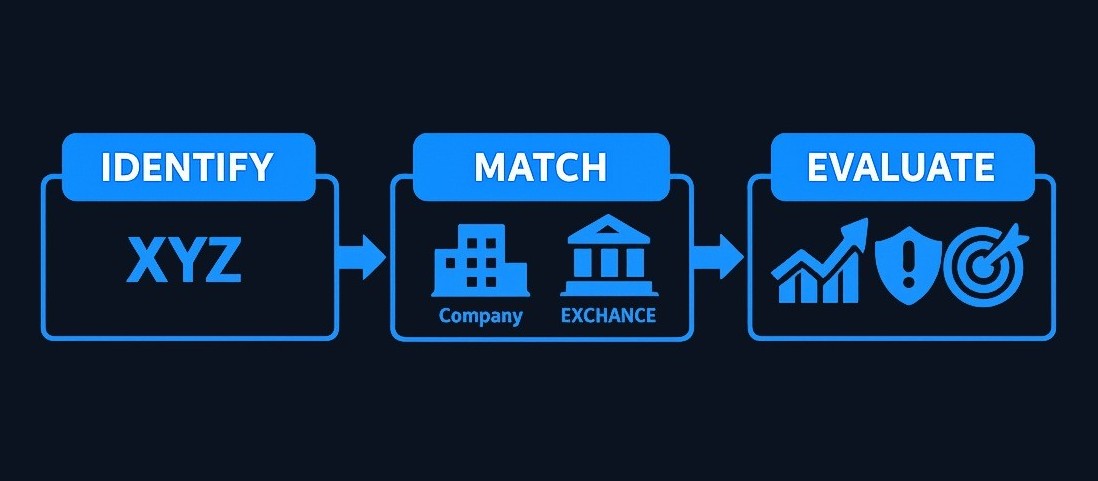
A better habit is simple: identify, match, then evaluate. First confirm the security. Next confirm that its company and market details are correct. Only then assess the investment itself, including its risks, costs, and fit with your objectives.
Frequently asked questions
Can two companies have the same ticker symbol?
Do not rely on the symbol alone to establish identity across all markets. Always pair it with the exchange and company name. This is especially important when looking at securities from different countries or trading venues.
What happens to my shares when a ticker changes?
A ticker change is a change to the security’s identifier. The effect on an investor depends on the corporate event behind it, so check the official notice and your brokerage records. Do not infer the financial impact from the new letters alone.
What do the letters in a ticker symbol mean?
They identify the security and may resemble the company’s name or branding, but the letters are not a standardized summary of the company’s quality or prospects. Confirm the full security details rather than decoding the symbol by guesswork.
What should I do after finding a ticker?
Verify the company, exchange, and security type. If you are considering an investment, move beyond the symbol and research the business, risks, fees, and suitability for your circumstances. Educational resources such as [Finelo](https://finelo.com/) can help you build investing knowledge, but a ticker symbol alone should never drive a financial decision.
InvestingBeginnerMarket BasicsMarkets
Practice investing with Finelo
Build practical investing skills with guided lessons, simulator practice, and structured challenges.
About the author
Finelo Team
The Finelo Team creates practical investing and trading education designed to help beginners learn faster with structured challenges, simulator practice, and bite-sized lessons.
Keep reading — Related articles

Investing
I Bonds vs EE Bonds in 2026: Rates, Rules, and Which to Buy for the Long Run
Series I and Series EE savings bonds are both U.S. Treasury retail savings bonds sold on TreasuryDirect. They share ownership, tax treatment, and redemption rules; the key difference is the…
Finelo Team
Investing
Coverdell ESA vs 529 Plan: Limits, Flexibility, and Which to Choose
Quick answer (one minute) Both a Coverdell Education Savings Account (Coverdell ESA) and a 529 plan let money grow tax‑free and be withdrawn tax‑free for qualified education expenses. The…
Finelo Team
Investing
CD vs High Yield Savings Account: Where to Park Your Cash in 2026
Hero answer — CD vs high yield savings account in one line A CD (certificate of deposit) and a high yield savings account are both low‑risk, federally insured homes for cash — the difference…
Finelo Team