Institutional ownership is the percentage of a company's shares held by large organizations rather than individual investors. These organizations include mutual funds, pension funds, insurance companies, hedge funds, and endowments. If institutions hold 70 million of a company's 100 million shares, institutional ownership is 70%.
What is Institutional Ownership and Why Does it Matter?

Institutional ownership is the percentage of a company's shares held by large organizations rather than individual investors. These organizations include mutual funds, pension funds, insurance companies, hedge funds…
6 min read
Practice investing with Finelo
Build practical investing skills with guided lessons, simulator practice, and structured challenges.
Want to learn more?
Build practical investing skills with guided lessons, simulator practice, and structured challenges.
Explore FineloExplore Finelo's 28-day challenges
Turn learning into a daily habit with guided challenge paths.
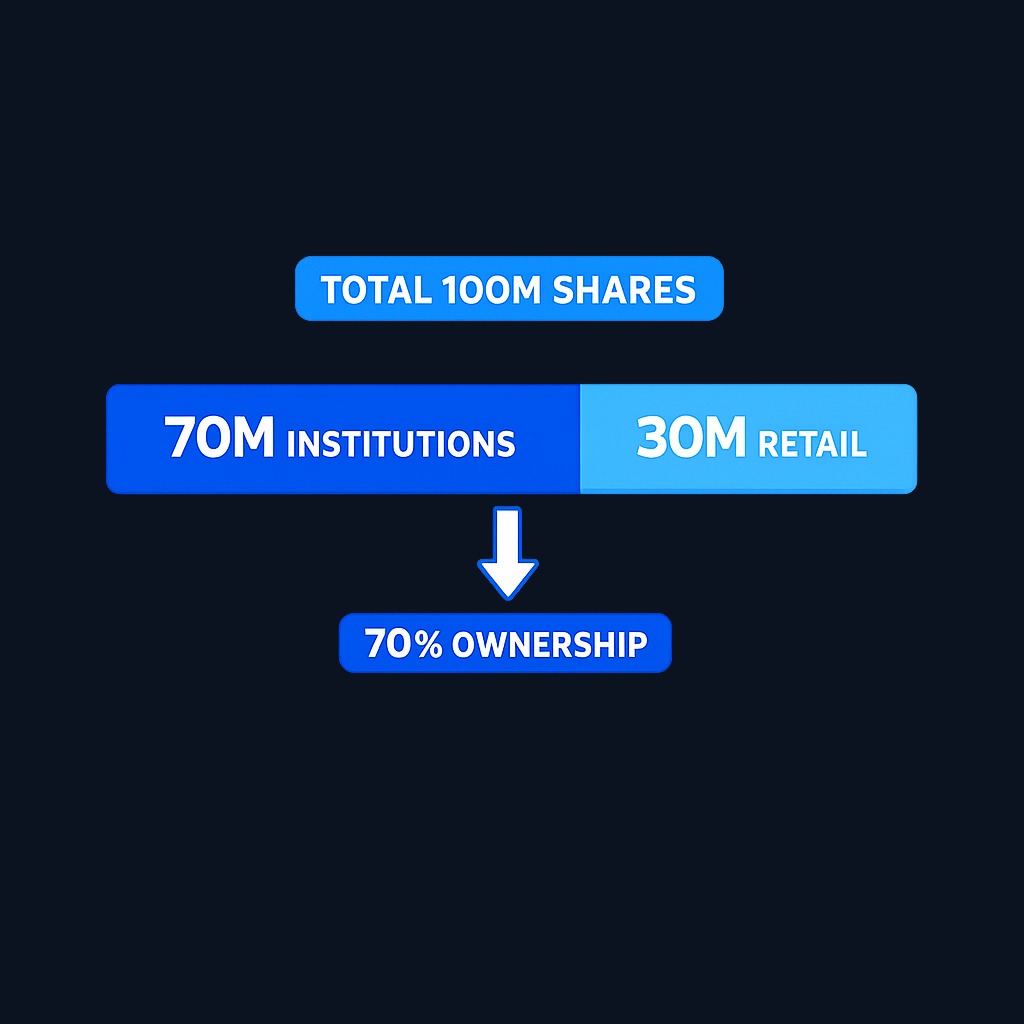
The figure matters because institutions trade in size, research deeply, and can influence both a stock's price behavior and a company's decisions. This guide explains who these investors are, how the percentage is measured, how it affects stocks, and how to read the number sensibly. It is educational content, not financial advice.
Types of institutional investors
The label covers several very different kinds of organizations:
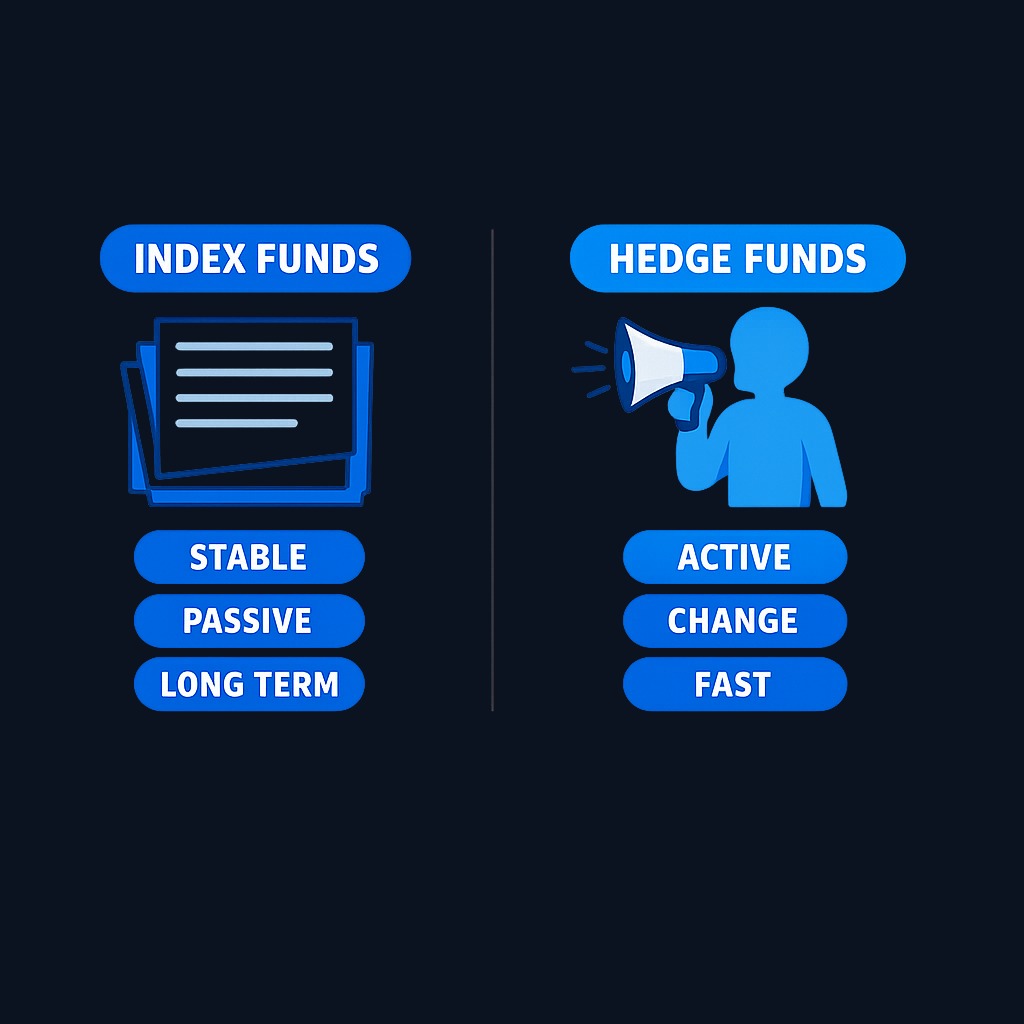
- Mutual funds and ETFs pool money from many investors and often hold broad, long-term positions. Index funds in particular own large stakes in nearly every major public company simply by tracking their benchmarks.
- Pension funds invest retirement money over decades, favoring stability and governance quality.
- Insurance companies invest premium income and tend toward conservative, income-focused holdings.
- Hedge funds run concentrated, faster-moving strategies and are the most likely to push for corporate change.
- Endowments and foundations manage institutional wealth with long horizons and diversified mandates.
- Sovereign wealth funds invest on behalf of governments, usually as patient minority holders.
Knowing which type dominates a company's register matters as much as the total number. A stock held mostly by index funds has a stable but largely passive base. The same percentage held by activist hedge funds signals a very different situation.
How institutional ownership affects stock prices
Liquidity and stability. Heavy institutional presence usually means deeper trading volume and tighter spreads. Long-horizon institutions also lend stability, since they do not flee on routine news.
Price impact in both directions. Size cuts both ways. When several large holders decide to exit at once, their selling can overwhelm demand and push prices down sharply. Institutional buying can equally propel a stock upward as funds build positions over weeks.

Information signaling. Institutions employ analysts who study companies full time. Rising institutional ownership is often read as professional validation of the business, while steady institutional selling attracts caution. This is why quarterly disclosure filings that reveal institutional positions receive so much attention.
Governance influence. Large holders vote in board elections, weigh in on executive pay, and sometimes campaign publicly for strategic change. Companies with substantial institutional ownership tend to face more disciplined oversight than those without it.
A caution: institutional consensus is not truth. Institutions crowd into popular trades and exit together in stress, which can amplify volatility exactly when markets are most fragile.
Calculating institutional ownership
The calculation is a simple ratio:
Institutional ownership % = shares held by institutions ÷ total shares outstanding × 100

The underlying data comes from mandatory disclosures. In the US, large investment managers must report their equity holdings quarterly in public filings. Financial data platforms aggregate those reports into the ownership percentages you see on stock research pages. You can also inspect the source reports directly through the SEC's EDGAR database.
Two reading tips. First, check whether the figure is measured against all shares outstanding or against the public float. Companies with large insider stakes can show confusing numbers under one basis but not the other. Second, remember the data is quarterly and lags by weeks, so today's published percentage describes positions from the recent past, not this morning.
Practice investing with Finelo
Build practical investing skills with guided lessons, simulator practice, and structured challenges.
Institutional ownership in action
Consider two contrasting patterns investors encounter repeatedly. In the first, a mid-sized company executes well for several quarters. Institutional ownership climbs from 40% toward 75% as funds initiate and expand positions. Along the way, the buying supports the price and analyst coverage broadens. The stock graduates into wider indexes, attracting index-fund ownership on top. Early investors benefited not only from the business but from the mechanical demand its success attracted.
In the second pattern, a heavily institutional stock disappoints badly. Most of the register is professional money working from similar models, so downgrades cascade. Several large holders trim at once. Liquidity thins on the way down, and the decline overshoots what the news alone might justify. The same concentration that once supported the stock accelerates its fall.
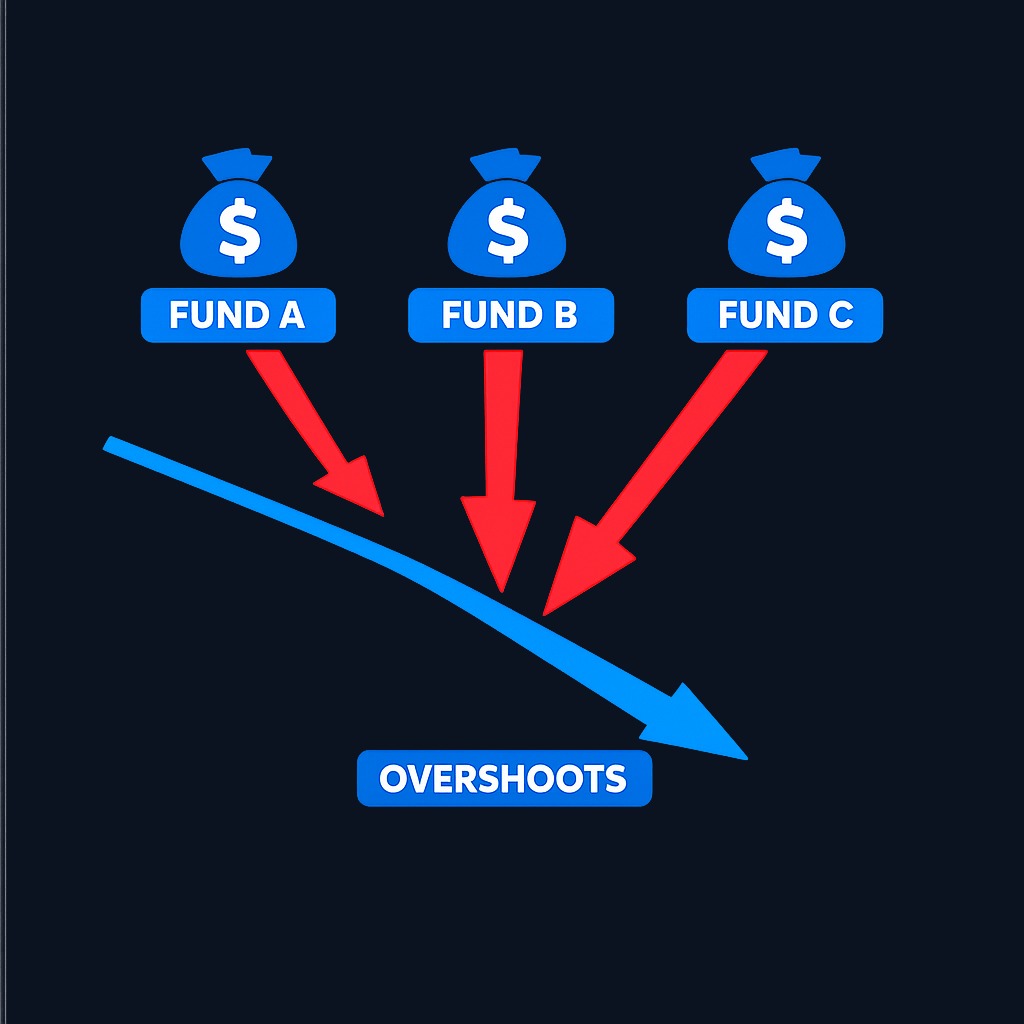
Neither pattern is a rule, but together they teach the practical lesson: institutional ownership shapes how a stock moves, separate from how the business performs.
What to know before deciding
Before treating institutional ownership as a buy or sell signal, place it in context. Compare the percentage with similar-sized companies, since large caps naturally carry high institutional ownership through index inclusion alone. Identify the top holders and their styles: passive index giants, patient pensions, or activist funds imply different futures. Watch the direction of change across several quarters rather than the level in one. And remember the disclosure lag; by the time filings publish, positions may have shifted. Institutional ownership works best as one input alongside business fundamentals, valuation, and your own time horizon, never as a substitute for them.
Decision framework: reading the ownership register
- Check the level against peers. Unusually low institutional presence in an established company deserves a question: what do professionals see, or refuse to see, here?
- Check the trend. Several consecutive quarters of net institutional buying or selling tells you more than any single figure.
- Identify the holder mix. Mostly index funds means stability without opinion. Concentrated active managers mean conviction, and potential crowding.
- Look for concentration risk. If a handful of funds control a large share, one strategy change can move the stock regardless of fundamentals.
- Cross-check with your thesis. If your view depends on the market eventually agreeing with you, rising institutional interest supports the path; if you are betting against the crowd, know that explicitly.
Conclusion and next steps
Institutional ownership measures how much of a company big professional investors hold. It shapes liquidity, price behavior, governance pressure, and the way news gets absorbed. The figure comes from public quarterly filings anyone can inspect. Read it by level, trend, and holder mix, always against peers. Let it inform your analysis of the business, never replace it.
Next steps: pick three stocks you follow and look up their institutional ownership, top holders, and two-year trend. Note which are index-dominated and which have concentrated active money. For structured lessons on reading ownership data and other market signals, Finelo offers beginner-friendly investing education.
Frequently asked questions
What is a good level of institutional ownership?
There is no ideal number. Large established companies commonly show high institutional ownership, driven partly by index funds, while small or newly listed companies show less. Extremes are the useful signals: unusually low ownership for the company's size, or concentration in a few active funds.
Where can I find institutional ownership data?
Most stock research platforms display it on each company's page, built from quarterly regulatory filings. The original reports are public and searchable through the SEC's EDGAR system, which shows exactly which managers held what.
Does high institutional ownership mean a stock is safe?
No. It signals professional interest and usually better liquidity, but institutions make mistakes, crowd into the same trades, and can exit together, deepening declines. Treat the figure as context, not protection.
Why does institutional ownership change stock volatility?
Because institutions trade in large blocks and often react to similar information. Their coordinated buying adds fuel in rallies, and their simultaneous selling removes liquidity in downturns, stretching moves in both directions.
institutionalownership
Practice investing with Finelo
Build practical investing skills with guided lessons, simulator practice, and structured challenges.
About the author
Finelo Team
The Finelo Team creates practical investing and trading education designed to help beginners learn faster with structured challenges, simulator practice, and bite-sized lessons.
Keep reading — Related articles

Investing
Tax-gain harvesting vs. tax-loss harvesting
Compare realizing investment gains with realizing losses, including holding periods, wash sales, offsets, and portfolio tradeoffs.
Finelo Team

Investing
Stable value fund vs. money market fund
Compare investment structure, contract protections, transfer restrictions, net yields, and access inside a retirement account.
Finelo Team

Investing
Single-life vs. joint-life annuity
Compare income for one lifetime with continued payments to a survivor, using equal premiums and matching guarantee terms.
Finelo Team