Schedule 13D is a disclosure form filed with the U.S. Securities and Exchange Commission when an investor acquires beneficial ownership of more than 5% of a company's voting shares with intent to influence control. Per the SEC's investor education page on Schedules 13D and 13G, the filing reports the acquisition within five days of the purchase and goes to the SEC, the issuing company, and each exchange where the security trades.
What is Schedule 13D and Why is it Important?

Schedule 13D is a disclosure form filed with the U.S. Securities and Exchange Commission when an investor acquires beneficial ownership of more than 5% of a company's voting shares with intent to influence control. Per…
6 min read
Practice investing with Finelo
Build practical investing skills with guided lessons, simulator practice, and structured challenges.
Want to learn more?
Build practical investing skills with guided lessons, simulator practice, and structured challenges.
Explore FineloExplore Finelo's 28-day challenges
Turn learning into a daily habit with guided challenge paths.
This page is for investors who track ownership filings for signals, and for anyone approaching the 5% threshold who needs to understand the obligations. It is educational, not legal or financial advice.
Who needs to file Schedule 13D?
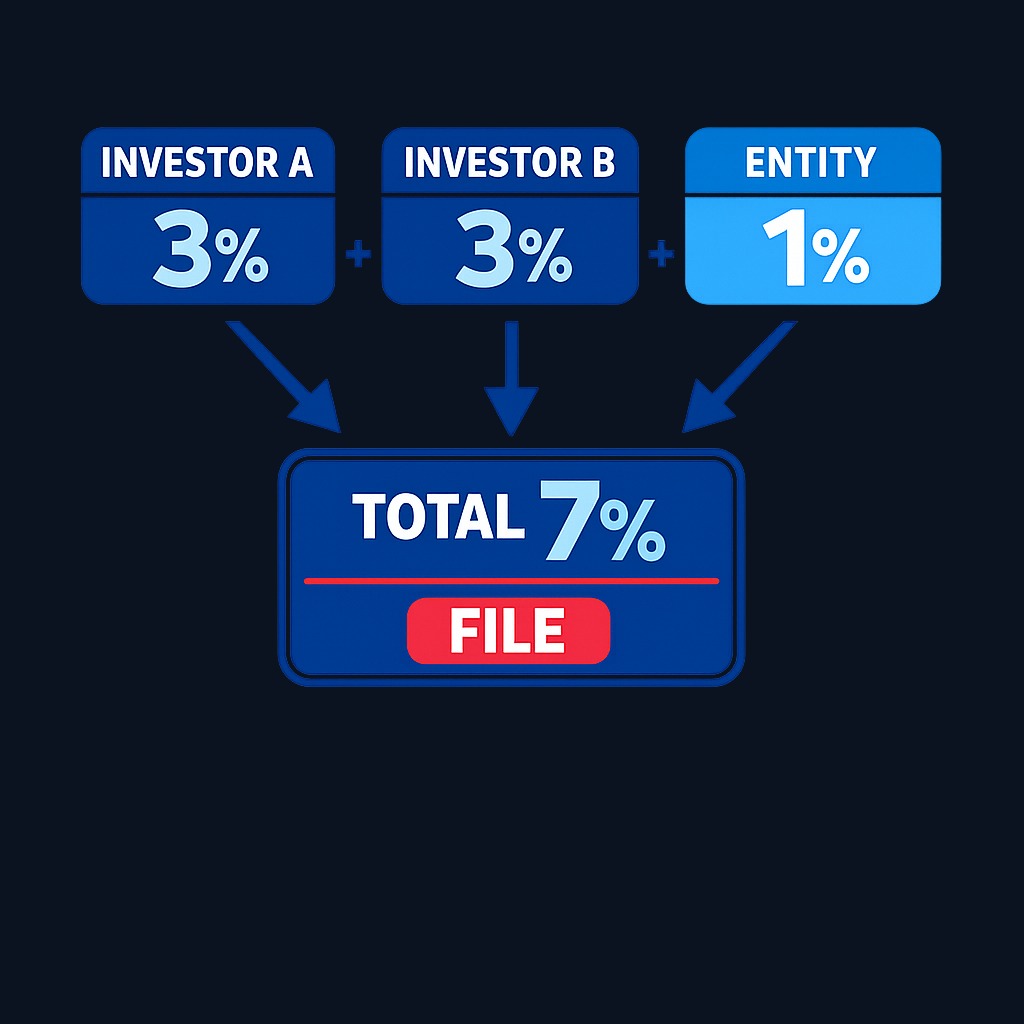
The trigger has two parts: size and intent. Any person or group that acquires beneficial ownership of more than 5% of a voting class of a public company's equity securities generally must disclose the stake. "Beneficial ownership" is broad. It covers shares you can vote or sell, directly or indirectly, including positions held through entities you control and shares held by a group acting together. Two funds coordinating on a campaign can be a "group" whose combined stake crosses the line even if each holds less than 5% alone.
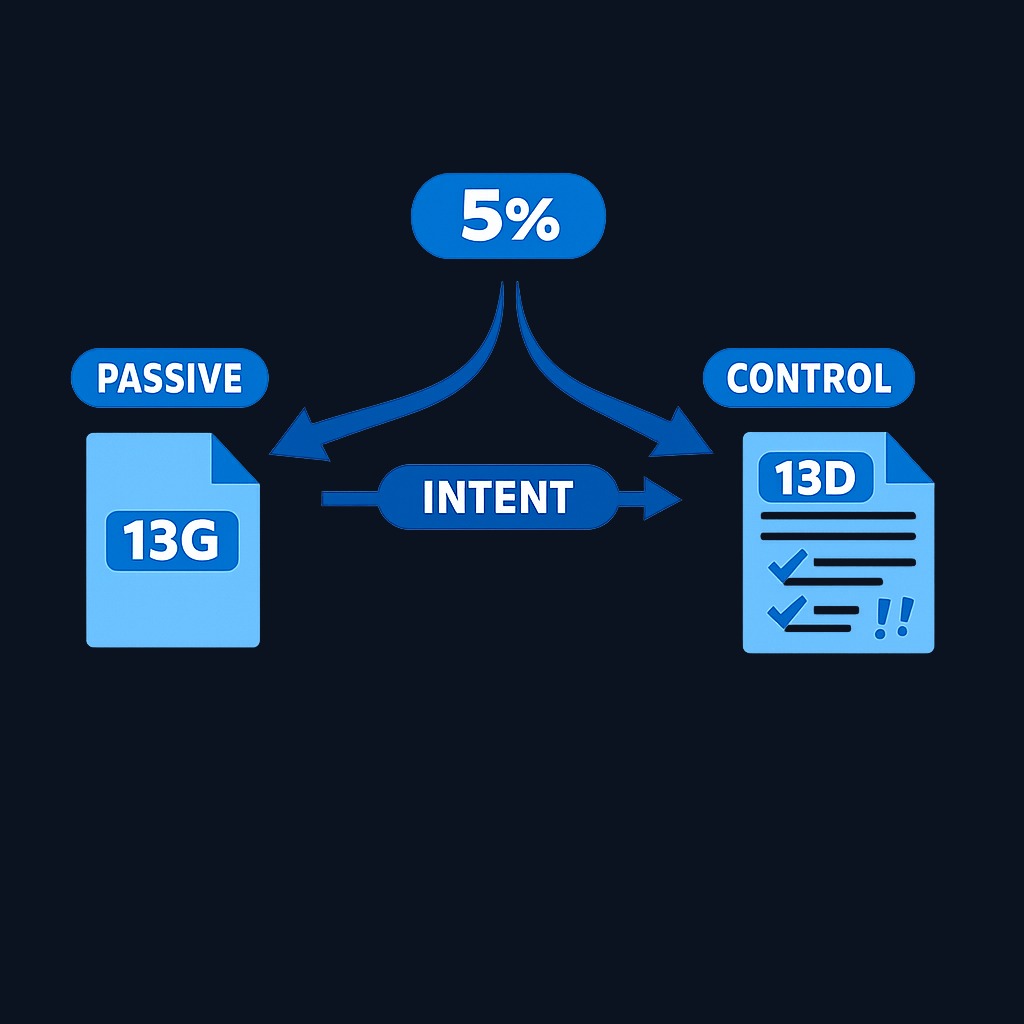
Intent decides which schedule applies. Investors with activist purposes, such as seeking board seats, pushing for a merger, or otherwise influencing management, file the full Schedule 13D. Passive investors and certain qualified institutions may qualify for the shorter Schedule 13G instead. The moment a passive holder develops control intent, the lighter filing no longer fits and a 13D becomes necessary.
Filing requirements and process
The mechanics reward preparation:
- Monitor the threshold. Track beneficial ownership across all accounts, entities, and group members, not just one brokerage position.
- Note the trigger date. Crossing above 5% with control intent starts a short filing clock, described in the SEC's education materials as five days from the purchase; confirm the exact current deadline with counsel, since filing windows are set by rule and have been updated over time.
- Prepare the schedule. The form's items call for specific disclosures, from identity to intentions to funding.
- File through EDGAR. The filing becomes public immediately, and the issuer and listing exchanges receive it as well.
- Amend promptly. Any material change, including meaningful purchases or sales or a shift in plans, requires a prompt amendment. Material changes are exactly what the market watches for.
A practical caveat: derivative positions, options, and side agreements can affect the beneficial-ownership math. Sophisticated filers run the calculation with securities counsel before trading near the threshold rather than after.
Key information required in Schedule 13D
The schedule is organized into items that together tell the market who is buying and why:
- Identity and background of the filer and any group members, including past regulatory or criminal matters.
- Source and amount of funds, revealing whether the stake is financed with cash, borrowings, or other arrangements.
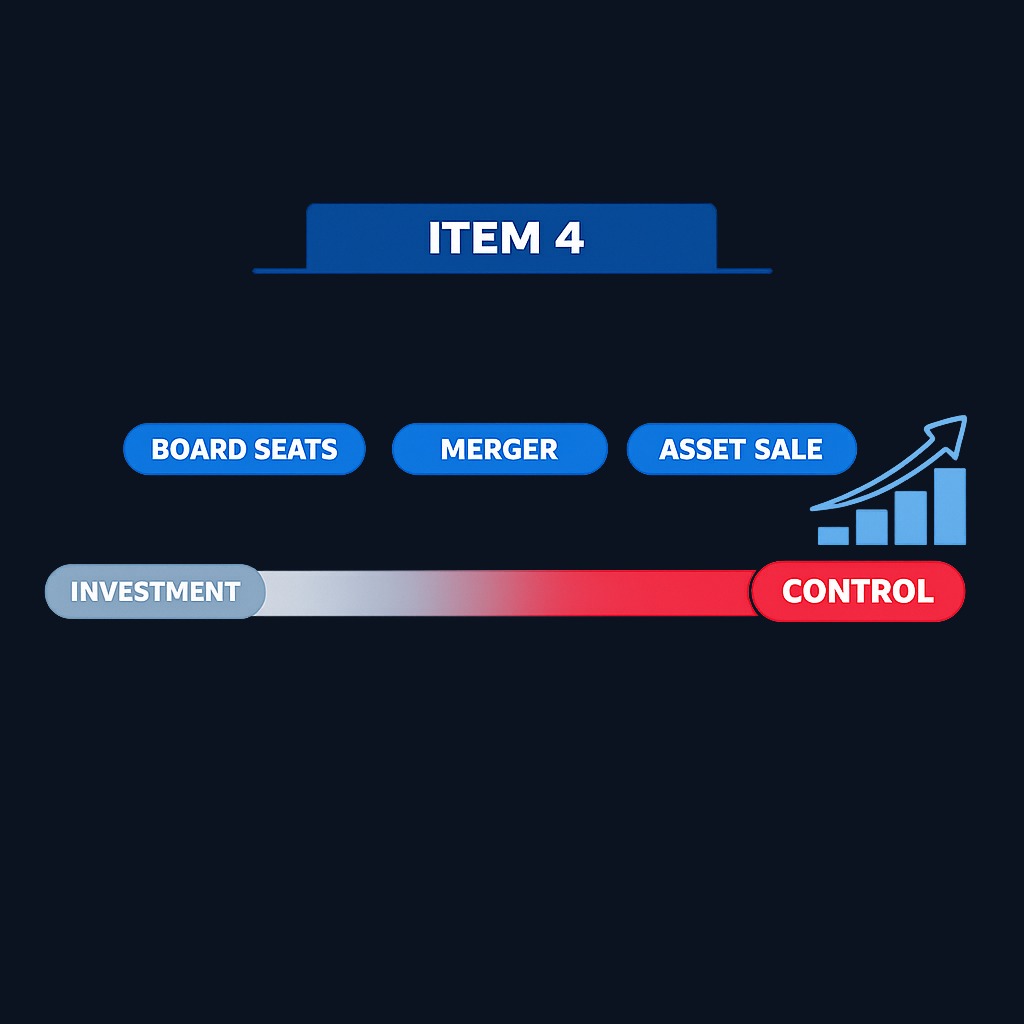
- Purpose of the transaction, the famous Item 4, where plans involving mergers, board changes, asset sales, or other control matters must be described.
- Ownership details, including the number of shares, percentage of the class, and voting or dispositive power.
- Contracts and understandings related to the securities, such as voting agreements or hedges.
- Exhibits, including agreements among group members.
Item 4 is the section professional readers open first. A vague "investment purposes" statement reads very differently from a detailed plan to nominate directors, and amendments to Item 4 often move the stock.
Practice investing with Finelo
Build practical investing skills with guided lessons, simulator practice, and structured challenges.
Differences between Schedule 13D and Schedule 13G
| Feature | Schedule 13D | Schedule 13G |
|---|---|---|
| Who files | Holders above 5% with control intent | Passive investors and certain qualified institutions |
| Length and detail | Full narrative disclosure, including purpose and financing | Abbreviated form |
| Intent disclosed | Yes, plans and proposals under Item 4 | No control intent permitted |
| Market signal | Potential activism or takeover interest | Passive accumulation |
| Switching | N/A | Must switch to 13D if intent turns active |
The market treats the two filings as different signals. A 13G from an index fund is routine. A 13D from a known activist fund suggests engagement ahead, and traders parse every amendment. For the filer, choosing wrongly is not cosmetic: claiming passive status while quietly pursuing control invites enforcement scrutiny and private litigation.
What to know before deciding
Before trading near the 5% line, or trading on someone else's filing, weigh the compliance stakes. Missing or misleading filings carry real costs. The SEC can bring enforcement actions for late filings, inaccurate disclosures, or misuse of the passive designation, with penalties negotiated or litigated case by case. Courts can issue injunctions affecting voting or further purchases while defective disclosure stands. Beyond the legal exposure, credibility damage matters: a fund known for sloppy ownership reporting faces sharper scrutiny on its next campaign, and issuers gain ammunition to challenge its initiatives. Companies, for their part, monitor their own shareholder lists and EDGAR feeds so an unexpected 13D never catches the board flat-footed.
Decision framework: how filers and readers should act
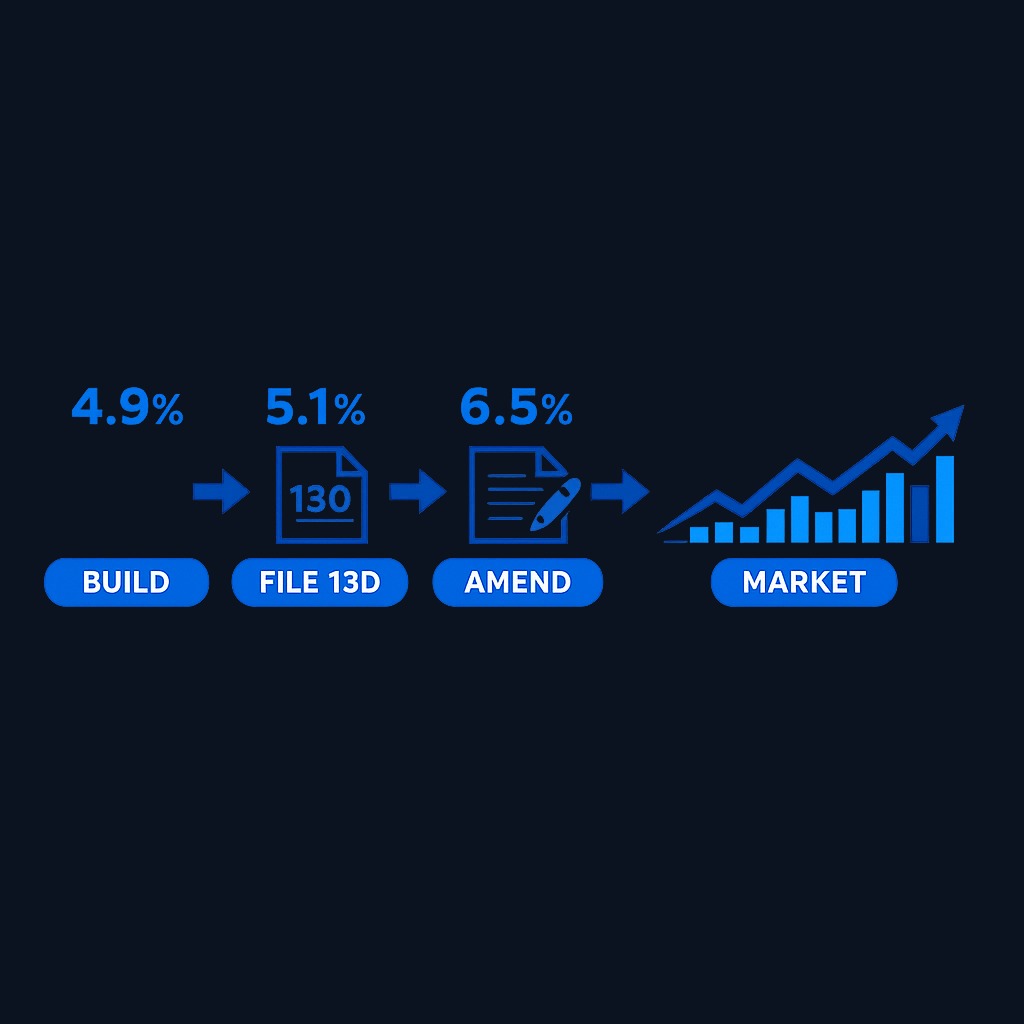
The activist campaign. A fund quietly builds a 4.9% position, then crosses the threshold and files a 13D disclosing plans to seek two board seats. The stock jumps as the market prices in change. Every later amendment, adding shares or revising plans, becomes a fresh data point for traders following the campaign.
The group trap. Two investors compare notes and start voting together without papering the relationship. Their combined 7% makes them a group, and the missed joint filing becomes the company's first line of defense against their proposals.
The passive-to-active switch. An institution holding 6% on a 13G decides to oppose a merger publicly. That shift in intent obliges a prompt move to a 13D, and the timing of the switch itself becomes evidence if challenged.
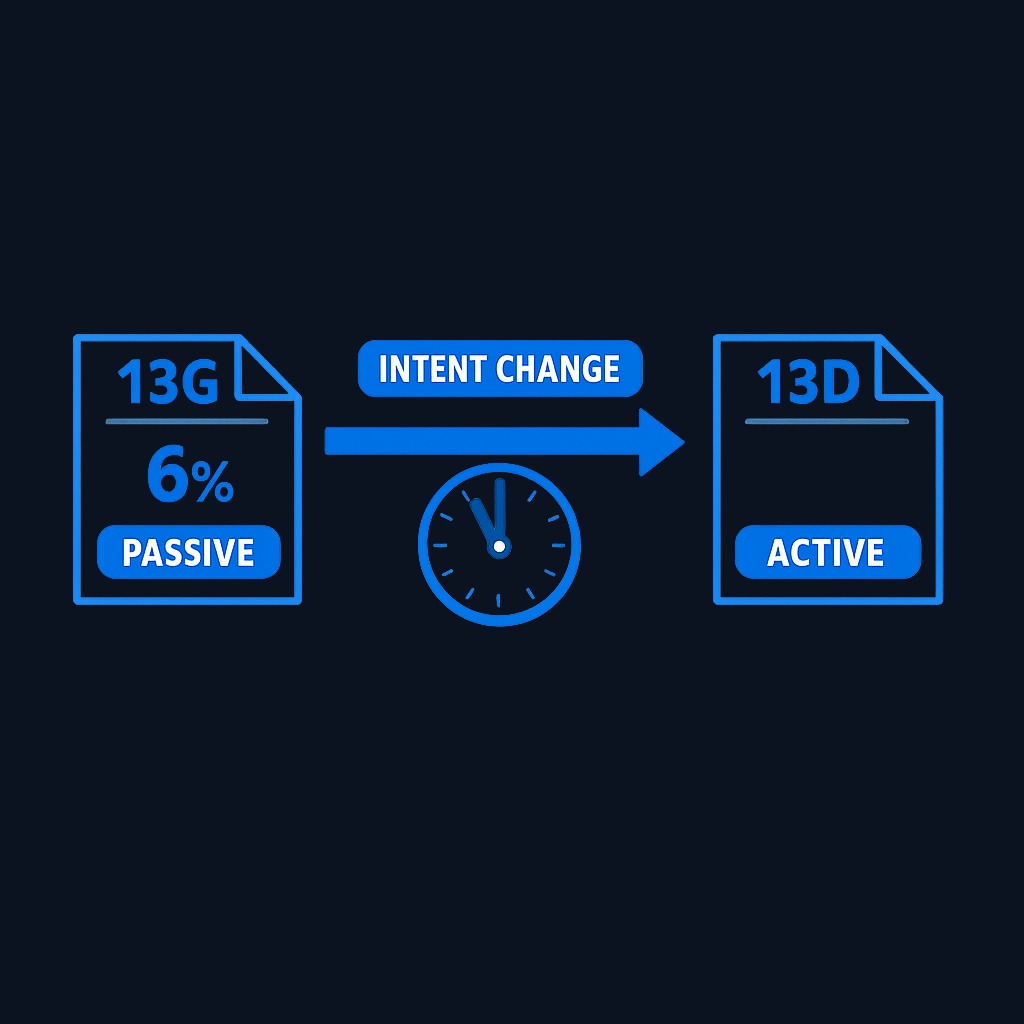
The framework reduces to three questions. Are you near 5% when every entity and ally is counted? Is your intent passive or control-oriented, honestly assessed? And has anything material changed since your last filing? For investors: count beneficial ownership conservatively, document intent honestly, calendar amendment triggers, and involve counsel before crossing 5%. For readers of filings: check Item 4 first, watch amendment velocity, and distinguish routine institutional 13Gs from activist 13Ds before reacting. For companies: maintain a monitoring routine and a response plan so disclosure surprises trigger process, not panic.
Conclusion and next steps
Schedule 13D turns large, control-minded stakes into public information: who is buying, with whose money, and to what end. The 5% threshold, the intent test, and the amendment duty together give markets an early-warning system for control contests, and give filers a compliance obligation that punishes improvisation.
Next steps: open EDGAR, pull a recent 13D on a company you follow, and read Item 4 alongside the ownership details. Compare it with a 13G from an index fund to feel the difference in tone and content. If you want structured practice reading market signals like these, Finelo teaches investing fundamentals in guided steps.
Frequently asked questions
What does a Schedule 13D filing signal to the market?
It signals that a holder of more than 5% may seek to influence control, since the form requires disclosure of plans and proposals. Investors often read new 13Ds and Item 4 amendments as early evidence of activism, takeover interest, or coming governance fights.
How fast must Schedule 13D be filed?
The SEC's investor education materials describe the report as due within five days of the triggering acquisition, and material changes require prompt amendment. Exact deadlines come from SEC rules that are updated periodically, so filers confirm current timing with securities counsel.
What is the difference between beneficial ownership and owning shares?
Beneficial ownership counts economic and voting influence, not just shares titled in your name. Positions held through funds, trusts, controlled entities, and coordinated groups can all count toward the 5% threshold.
Can a Schedule 13D filer keep buying shares?
Yes, subject to securities laws generally, but meaningful additional purchases are material changes that require amending the filing. That visibility is deliberate: the rule exists so control-oriented accumulation happens in public view.
schedule
Practice investing with Finelo
Build practical investing skills with guided lessons, simulator practice, and structured challenges.
About the author
Finelo Team
The Finelo Team creates practical investing and trading education designed to help beginners learn faster with structured challenges, simulator practice, and bite-sized lessons.
Keep reading — Related articles

Investing
Tax-gain harvesting vs. tax-loss harvesting
Compare realizing investment gains with realizing losses, including holding periods, wash sales, offsets, and portfolio tradeoffs.
Finelo Team

Investing
Stable value fund vs. money market fund
Compare investment structure, contract protections, transfer restrictions, net yields, and access inside a retirement account.
Finelo Team

Investing
Single-life vs. joint-life annuity
Compare income for one lifetime with continued payments to a survivor, using equal premiums and matching guarantee terms.
Finelo Team


