Last editorial review: September 8, 2026
1031 Exchange vs. Opportunity Zone: Key Differences
1031 exchange vs opportunity zone is mainly a choice between continuing a qualifying like-kind exchange path and evaluating a separate Opportunity Zone investment structure. The IRS says…
9 min read
Practice investing with Finelo
Build practical investing skills with guided lessons, simulator practice, and structured challenges.
Want to learn more?
Build practical investing skills with guided lessons, simulator practice, and structured challenges.
Explore FineloExplore Finelo's 28-day challenges
Turn learning into a daily habit with guided challenge paths.
U.S. scope: This article discusses U.S. institutions, financial products, tax rules, and dollar examples unless stated otherwise. Rules and product terms may change; verify current official guidance for your situation.
Quick comparison answer
1031 exchange vs opportunity zone compares two different federal tax frameworks, not interchangeable ways to defer any gain. Section 1031 currently applies only to qualifying real property held for investment or productive use in a trade or business—not property held primarily for sale (IRS). Qualified Opportunity Fund rules have a major date boundary: legacy gain deferred through a pre-2027 investment is generally included at the earlier of an inclusion event or December 31, 2026, while legislation enacted in 2025 changes the framework for qualifying investments made after 2026 (IRS Qualified Opportunity Funds, IRS transitional guidance). Verify which regime applies before relying on a projected tax result.
What is a 1031 exchange?
A 1031 exchange is a tax-focused transaction structure tied to like-kind exchange treatment. Since 2018, Section 1031 applies only to exchanges of qualifying real property held for investment or productive use in a trade or business. It does not apply to a primary residence merely because it is real estate, and it excludes real property held primarily for sale (IRS). Cash or other non-like-kind property received can also create currently recognized gain.
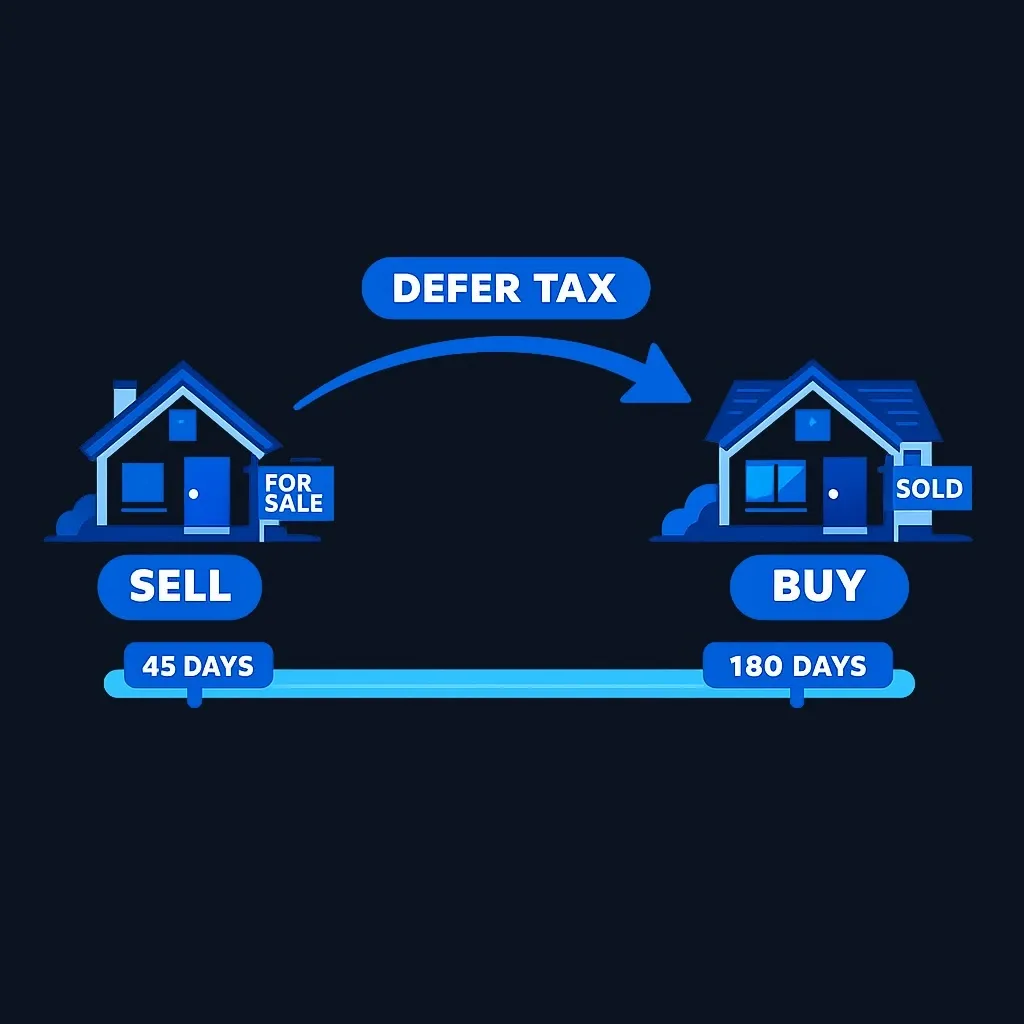
In practical terms, the strategy starts with continuity. The investor is not simply asking, “Where can I invest next?” The more precise question is, “Can this transaction preserve like-kind exchange treatment while keeping capital invested?”
That distinction matters because a deferred exchange is not a casual post-sale decision. IRS instructions generally require written identification of replacement property within 45 days after transfer and receipt of the replacement property within 180 days or by the return due date, including extensions, if earlier (Instructions for Form 8824). It needs planning before documents are signed, and the investment decision still matters. Tax deferral cannot turn a weak replacement asset into a strong one.
What is an Opportunity Zone investment?
An Opportunity Zone investment is a different path from a like-kind exchange. An investor generally invests eligible gain in a Qualified Opportunity Fund, a separate entity with statutory asset and reporting requirements. It is not a direct substitute for exchanging one property for another.
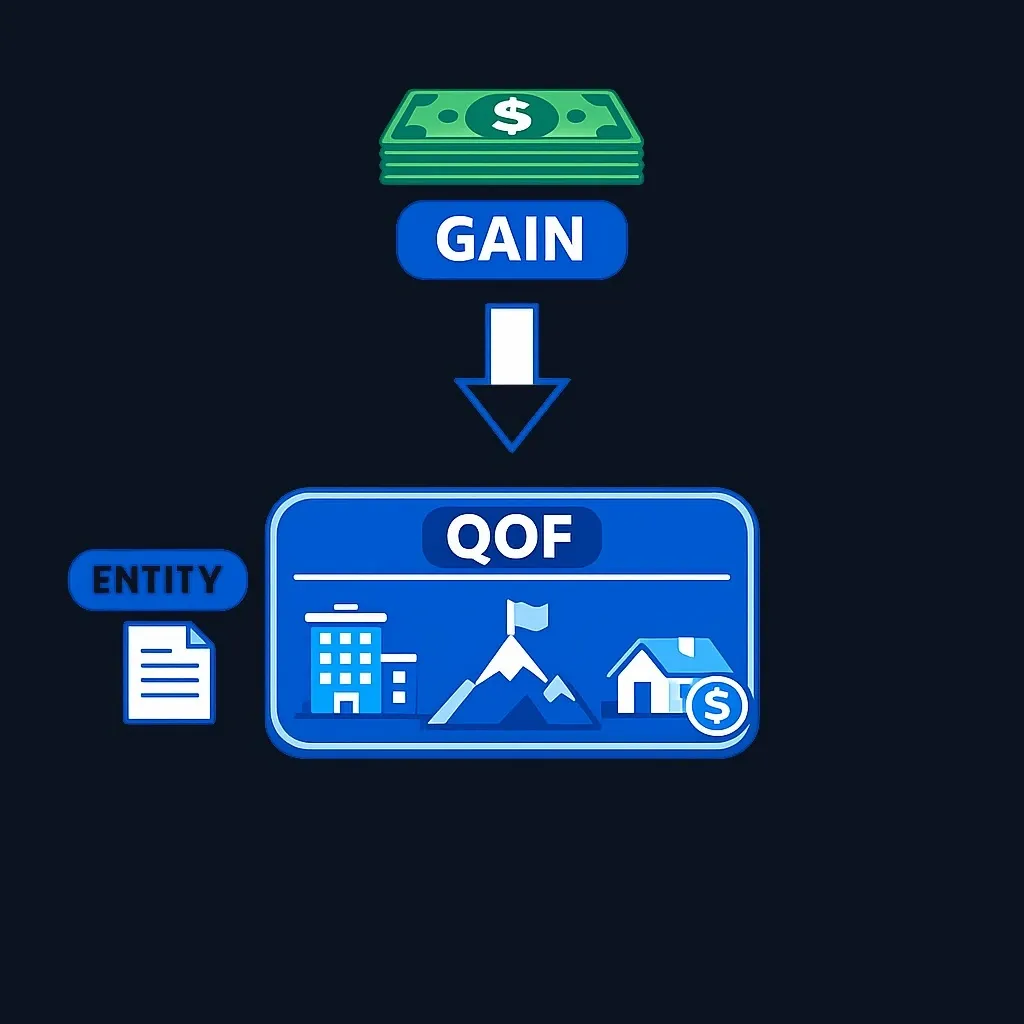
Timing is especially important for an article reviewed in 2026. The IRS says deferred gain from a qualifying legacy investment is recognized at the earlier of an inclusion event or December 31, 2026. Congress also changed the Opportunity Zone rules for qualifying investments made after December 31, 2026, and the IRS published transitional guidance in 2026 (IRS Qualified Opportunity Funds, IRS transitional guidance). A sponsor deck that mixes the two regimes can materially misstate timing or benefits.
The diligence lens is broader. The SEC and NASAA issued a summary explaining how federal and state securities laws apply to Opportunity Zone investments (SEC). For investors, that means the review should include more than the tax headline. It may involve offering documents, sponsor incentives, risk disclosures, fees, liquidity terms, and exit assumptions.
A useful shorthand is this: a 1031 exchange starts with transaction qualification. An Opportunity Zone investment starts with investment-offering analysis. Both may be tax-motivated, but they create different questions and different failure points.
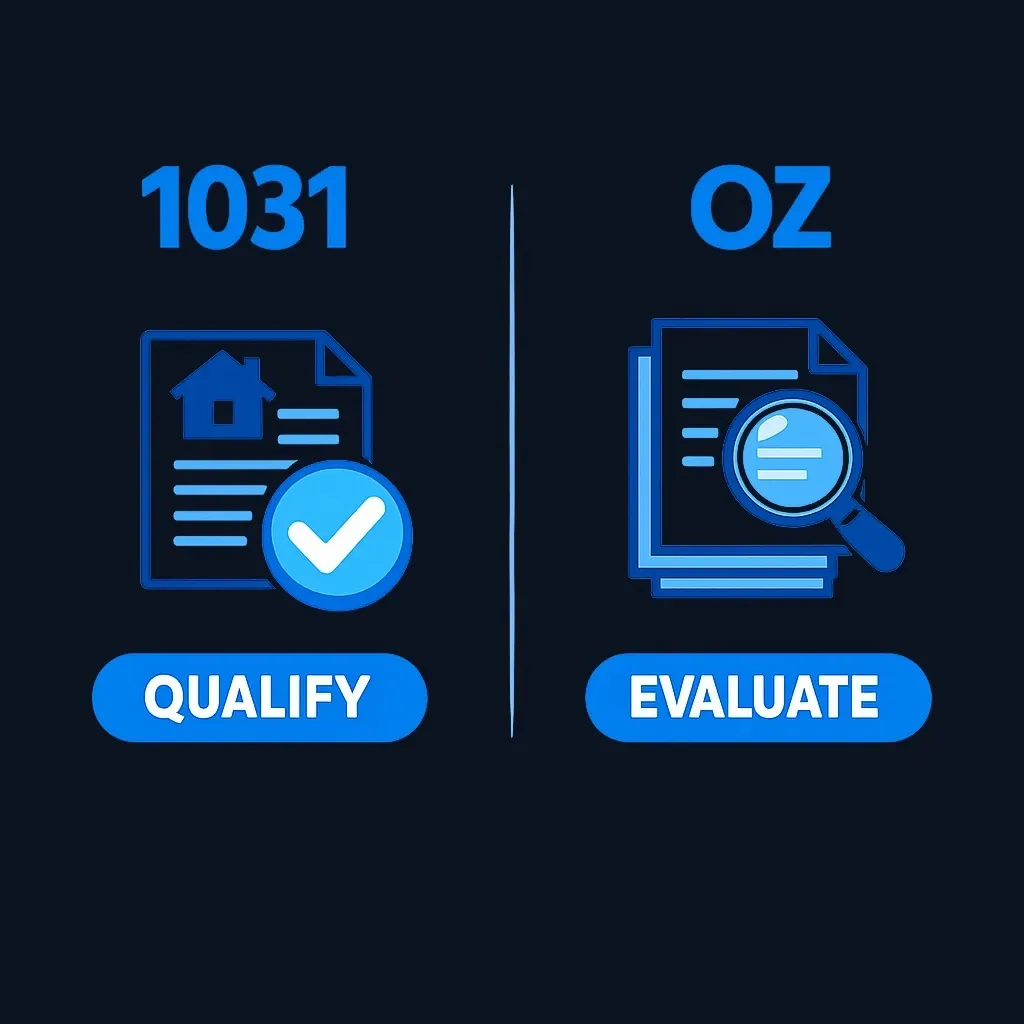
Side-by-side comparison table
| Decision point | 1031 exchange | Opportunity Zone investment | Practical takeaway |
|---|---|---|---|
| Core structure | Built around qualifying real-property exchange treatment under Section 1031 (IRS) | Built around an eligible-gain investment in a Qualified Opportunity Fund; securities-law issues may also apply (IRS, SEC) | One is transaction-qualification focused; the other is fund and regime focused. |
| Main tax question | Can the transaction qualify for like-kind exchange treatment? | What tax treatment is claimed, and what conditions support it? | Do not assume the tax mechanics are interchangeable. |
| Main investment question | Do you want to continue through another qualifying like-kind investment? | Do the sponsor, documents, risks, and exit terms fit your plan? | Start with the asset and structure, not the tax label. |
| Control and complexity | Often centers on selecting and closing on a replacement asset | Often centers on evaluating a structured investment and its disclosures | The work shifts from property-level execution to sponsor and document review. |
| Common risk | Missing the 45-day identification or 180-day completion deadline, or exchanging ineligible property | Applying legacy pre-2027 rules to a later investment or focusing on the tax narrative while underweighting investment risk | Both require early tax, legal, and investment review. |
| Better fit when | You want continuity in a qualifying like-kind investment | You are open to a different investment structure and can evaluate its terms | The better choice depends on objectives, risk tolerance, and documentation. |
Decision criteria
The first decision criterion is what you want to own after the sale. If the goal is continued exposure through a qualifying like-kind transaction, a 1031 exchange may be the more direct framework. That conclusion comes from the structure itself, since Section 1031 focuses on like-kind exchange treatment and nonrecognition of gain or loss when the exchange qualifies (IRS).
The second criterion is how much document and sponsor risk you are willing to evaluate. With an Opportunity Zone investment, the SEC and NASAA’s securities-law guidance is a reminder that the offering matters (SEC). A compelling tax story is not enough if the investment terms, liquidity, or sponsor incentives are unclear.
The third criterion is timing discipline. Do not wait until the closing table to compare these choices. Both paths can become harder to evaluate when documents, counterparties, and deadlines are already moving.
A simple decision framework helps:
- Define the desired end state. Are you trying to stay in a similar investment lane, reduce management burden, diversify, or change risk exposure?
- Separate tax value from investment value. Model the investment first, then layer tax treatment on top.
- Identify the main failure point. For a 1031 exchange, that may be transaction qualification. For an Opportunity Zone investment, it may be sponsor, liquidity, or disclosure risk.
- Get professional review before committing. Tax and legal details can change the outcome.
Worked example: same seller, different priorities
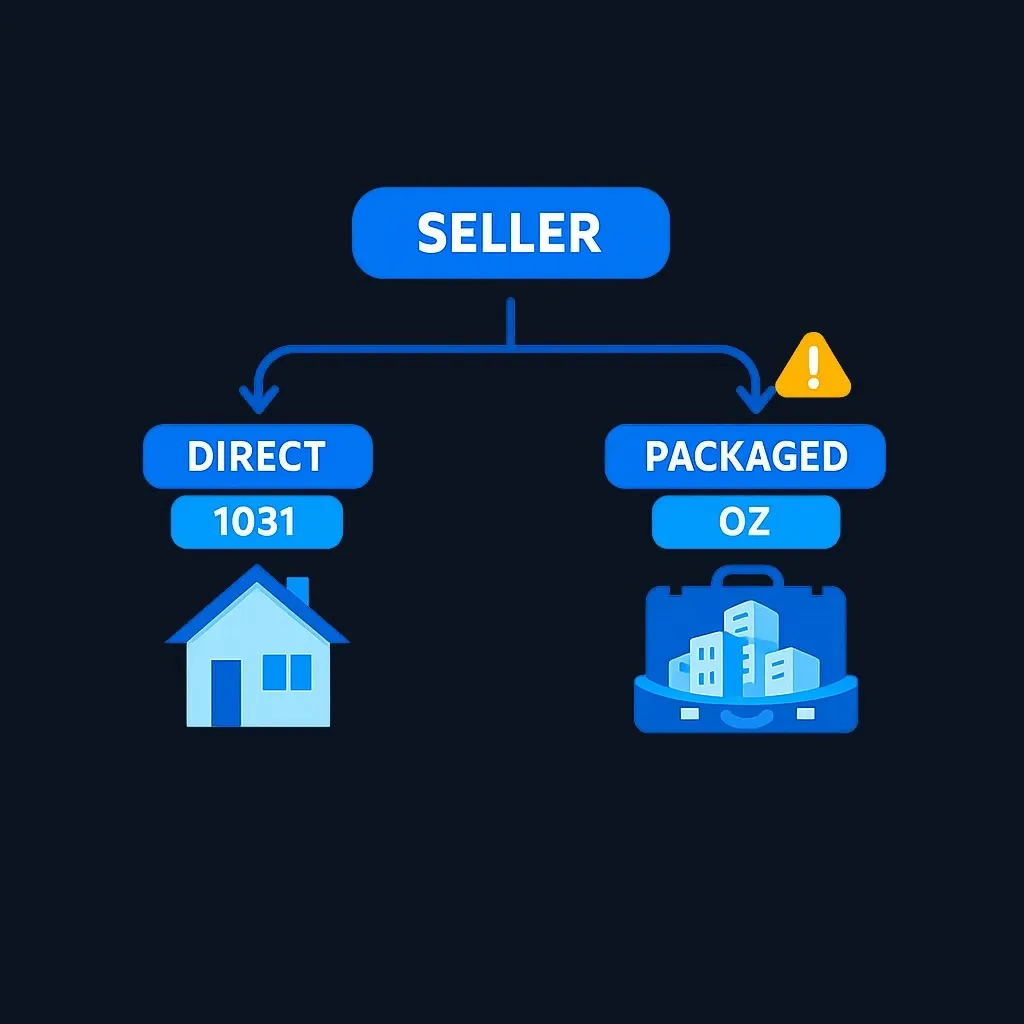
Assume an investor sells an appreciated property and wants to keep capital working. If the investor wants direct replacement exposure and is comfortable evaluating a new asset, the 1031 route may be the first path to examine.
Now change the facts. The same investor wants less direct responsibility and is considering a packaged investment. In that version, an Opportunity Zone investment may enter the comparison, but the investor’s work changes. The key questions shift toward disclosures, sponsor track record, fees, liquidity, and whether the claimed tax treatment is supportable.
The lesson is simple. The “better” option changes when the investor’s objective changes.
When to choose each option
A 1031 exchange may be worth exploring when your main goal is continuity. That means you want to keep an investment chain going through a qualifying like-kind exchange rather than move into a separate investment structure. The IRS’s general rule on nonrecognition is the key tax reason investors examine this route (IRS).
This route may also fit investors who want more direct control over the next asset. Control can be valuable, but it also brings responsibility. You still need to evaluate the replacement investment on its own merits.
An Opportunity Zone investment may be worth exploring when you are open to an investment structure that is not simply a like-kind exchange. In that case, the main diligence burden is broader. The SEC and NASAA’s statement on securities laws shows why investors should review the legal and offering framework, not just the Opportunity Zone label (SEC).
Use this rule of thumb:
- Choose the 1031 path to investigate first if your priority is qualifying like-kind continuity.
- Investigate the Opportunity Zone path if you are comfortable evaluating an investment offering and its disclosures.
- Pause if you cannot explain the downside case in plain language.
Practice investing with Finelo
Build practical investing skills with guided lessons, simulator practice, and structured challenges.
Tradeoffs and caveats
The main advantage of a 1031 exchange is potential deferral for a qualifying real-property exchange. The caveat is that the result depends on eligible property, transaction structure, value and debt changes, deadlines, and documentation. “Nonrecognition” is not the same as permanent exclusion; basis generally carries into the replacement property, subject to the transaction's details.
The main appeal of an Opportunity Zone investment is that it may offer a different investment path. The caveat is that the investor must review the full offering and the correct date-specific tax regime. Securities-law issues can matter, and regulators have specifically addressed their application to Opportunity Zone investments (SEC).
Common mistakes include starting with the tax benefit, ignoring the underlying asset, and reviewing documents too late. Another mistake is treating these choices as substitutes in every situation. They are not simply two versions of the same tool.
A better process is to build a one-page comparison before adviser meetings. Include the asset being sold, intended next investment, expected holding period, cash needs, liquidity limits, costs, tax assumptions, and downside case. If any line is vague, slow down before signing.
Process visual: compare the timelines before choosing
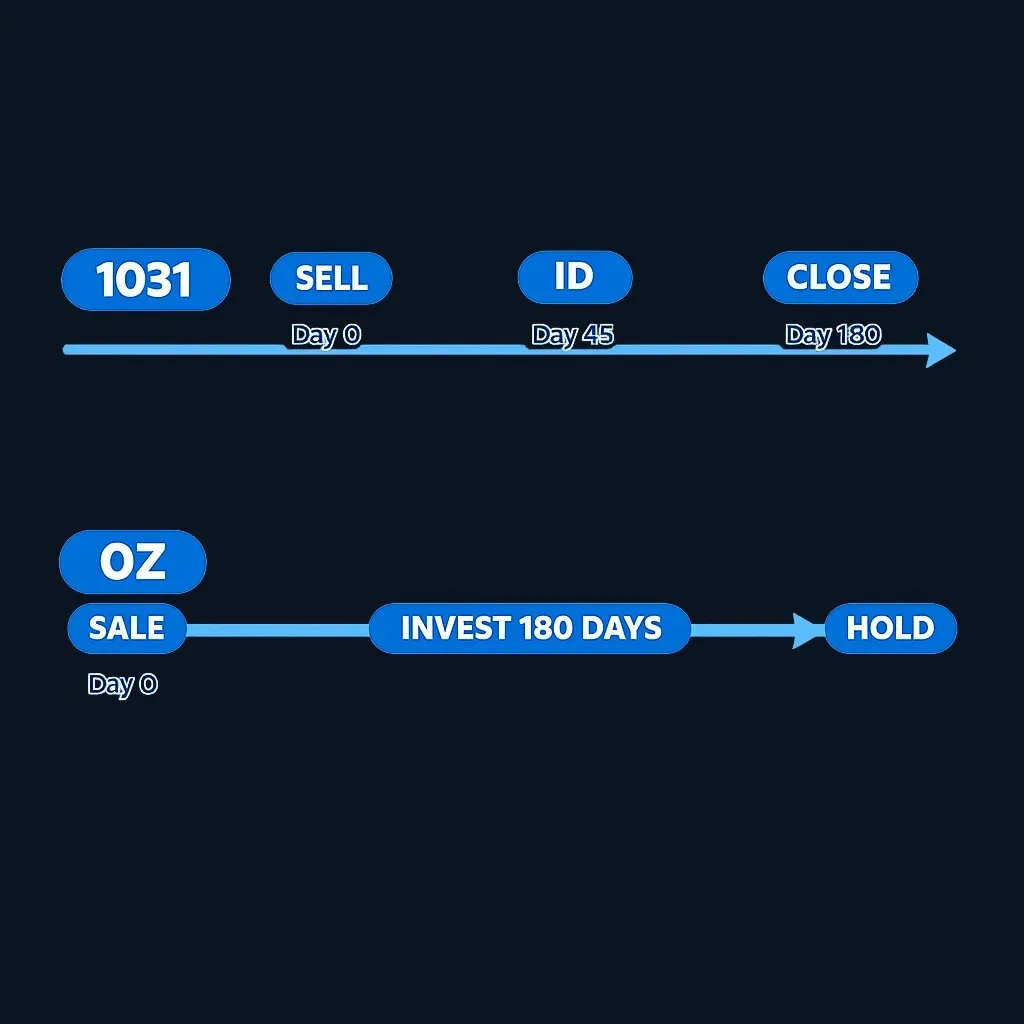
| Stage | 1031 exchange focus | Opportunity Zone investment focus |
|---|---|---|
| Before sale | Confirm whether the exchange structure can be planned | Identify the investment structure and documents to review |
| During transaction | Keep qualification and documentation aligned | Review offering terms, risks, disclosures, and tax assumptions |
| After investment | Monitor the replacement asset and future exit options | Monitor sponsor reporting, liquidity limits, and exit assumptions |
| Before exit | Recheck tax and transaction consequences | Recheck tax, legal, and investment consequences |
FAQ
What are the main differences between 1031 exchanges and Opportunity Zone investments?
A 1031 exchange is centered on like-kind exchange treatment. The IRS says qualifying like-kind exchanges generally do not require recognition of gain or loss under Section 1031 (IRS). Opportunity Zone investments require a different review, including securities-law considerations addressed by the SEC and NASAA (SEC).
How do I choose between them?
Start with your intended next investment. If you want continuity through a qualifying like-kind exchange, examine the 1031 route first. If you are evaluating an Opportunity Zone offering, focus on sponsor quality, disclosures, fees, liquidity, risks, and tax assumptions.
Are the tax implications the same?
No. A 1031 exchange and an Opportunity Zone investment use different frameworks. The IRS gives the general nonrecognition rule for qualifying like-kind exchanges, while Opportunity Zone investments need separate tax and legal review before relying on any expected treatment (IRS, SEC).
Can tax benefits make either option low risk?
No. Tax treatment is only one part of the decision. Property performance, sponsor quality, legal terms, liquidity, financing, fees, and compliance can still affect the outcome.
Conclusion and next steps
The strongest answer to 1031 exchange vs opportunity zone is not that one always wins. A 1031 exchange may fit when the investor wants qualifying like-kind continuity and can structure the transaction correctly. An Opportunity Zone investment may fit when the investor can evaluate a separate investment offering and its legal, tax, and liquidity risks.
Before choosing, write down three things: what you are selling, what you want to own next, and what risk you are trying to reduce or accept. Then review the plan with qualified tax, legal, and investment professionals before signing documents.
For broader investing education before those conversations, you can browse Finelo.
Sources and Further Verification
- IRS
- IRS Instructions for Form 8824
- IRS: Invest in a Qualified Opportunity Fund
- IRS: 2026 Opportunity Zone transitional guidance
- SEC
More from Finelo
- 83(b) Election: Deadlines, Tax Risks, and When Early Filing May Fit
- After-Tax 401(k) vs. Roth 401(k): Key Differences
- Art Investing for Beginners: Costs, Liquidity, Valuation, and Risks
Disclaimer
This article is provided by Finelo for educational and informational purposes only. Finelo does not provide financial, investment, tax, legal, or insurance advice. Consider your circumstances and consult an appropriately qualified professional before making financial decisions.
InvestingBeginner GuideFinancial Education
Practice investing with Finelo
Build practical investing skills with guided lessons, simulator practice, and structured challenges.
About the author
Finelo Team
The Finelo Team creates practical investing and trading education designed to help beginners learn faster with structured challenges, simulator practice, and bite-sized lessons.
Keep reading — Related articles

Investing
Yield to Call vs Yield to Maturity: Assumptions and Bond Risks
Yield to call (YTC) estimates a bond's yield if the issuer redeems it on an eligible call date; yield to maturity (YTM) estimates yield if it remains outstanding to final maturity.
Finelo Team

Investing
Will My Employer Know If I Take a 401(k) Loan?
Who this page is for: readers new to 401(k) loans who want a practical, privacy‑focused explanation — what your employer can see, how to limit visibility, and the financial tradeoffs to weigh.
Finelo Team
Investing
What Medical Expenses Qualify for a 401(k) Hardship Withdrawal?
Before you decide, confirm three things with your plan administrator:
Finelo Team