Last editorial review: September 8, 2026
Art Investing for Beginners: Costs, Liquidity, Valuation, and Risks
Art investing means buying artworks with the expectation they hold or increase in value while you enjoy them; it is typically illiquid and long-term, and requires due diligence,…
12 min read
Practice investing with Finelo
Build practical investing skills with guided lessons, simulator practice, and structured challenges.
Want to learn more?
Build practical investing skills with guided lessons, simulator practice, and structured challenges.
Explore FineloExplore Finelo's 28-day challenges
Turn learning into a daily habit with guided challenge paths.
U.S. scope: This article discusses U.S. institutions, financial products, tax rules, and dollar examples unless stated otherwise. Rules and product terms may change; verify current official guidance for your situation.
Quick answer
Art investing means buying artworks with the expectation they hold or increase in value while you enjoy them; it is typically illiquid and long-term, and requires due diligence, authentication, and budgeting for carrying and transaction costs. Educational note: this article is educational, not personalized financial advice — investing can involve loss.
You’re joining a community of collectors and advisors interested in art as an asset and cultural good; some platforms describe tens of thousands of participants in the broader art-investing ecosystem “more than 12,000 individuals and investment advisors”. Read on for a decision framework, a costs checklist, realistic scenarios, and practical next steps.
What to know before deciding
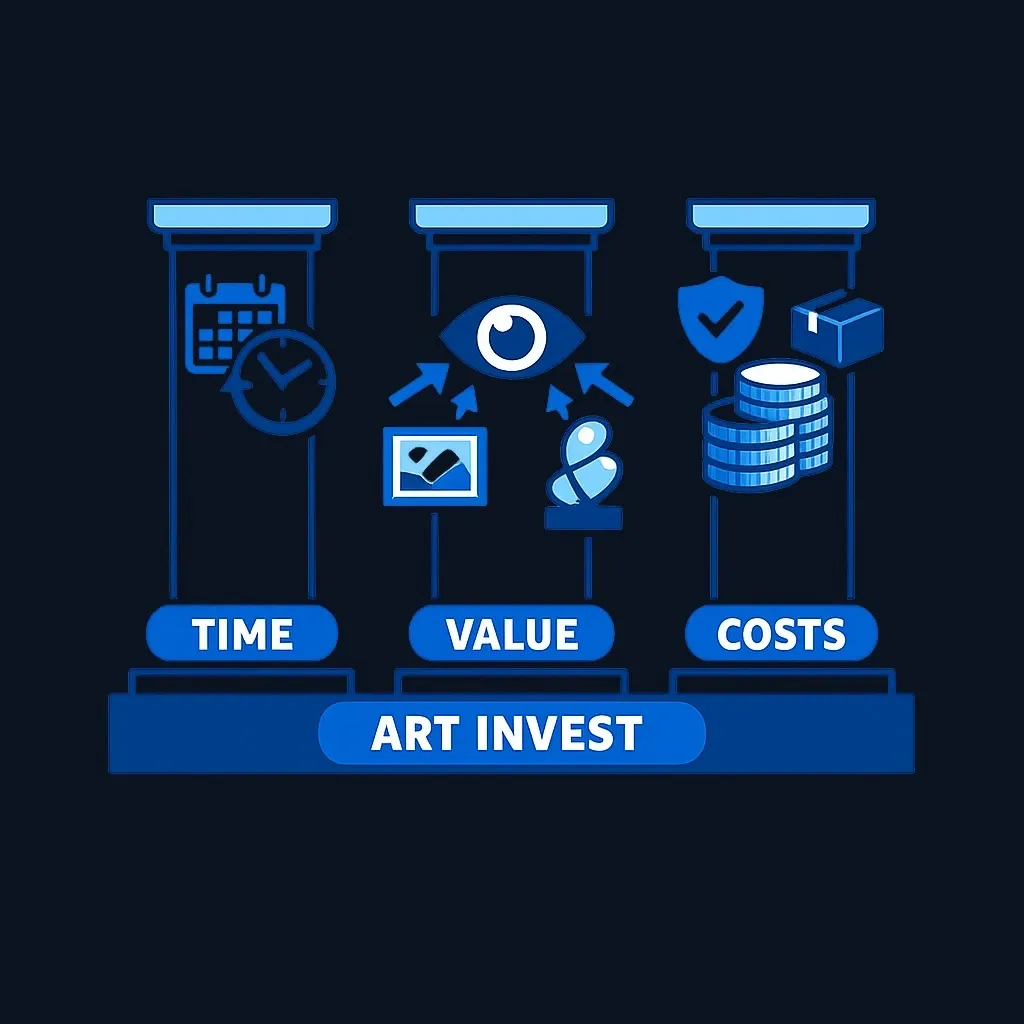
Before you buy art as an investment, understand three core realities that shape outcomes and choices.
- Time horizon and liquidity. Art is usually a multi-year hold. Selling can take months or years and often requires using auctions or dealer networks. Plan around that timing.
- Value is subjective and contextual. Prices reflect taste, provenance, condition, exhibition history, and market sentiment as much as any objective “intrinsic” metric.
- Carrying and transaction costs matter. Beyond the purchase price you should budget for insurance, storage, conservation, framing, and commissions or buyer’s/seller’s premiums when you sell.
Practical consequence: treat art as a partial portfolio allocation that favors investors who can tolerate low liquidity and long holding periods. Keep an explicit exit plan and a realistic “total cost” target before you buy.
What you should be able to do after reading
- Explain why collectors buy art and how that overlaps with investment goals.
- List the main cost categories and pre-purchase checks (provenance, condition, authentication).
- Use a compact decision framework to evaluate an artwork against your goals.
- Take concrete first steps: research artist comparables, verify documentation, and set budget and exit assumptions.
Decision framework
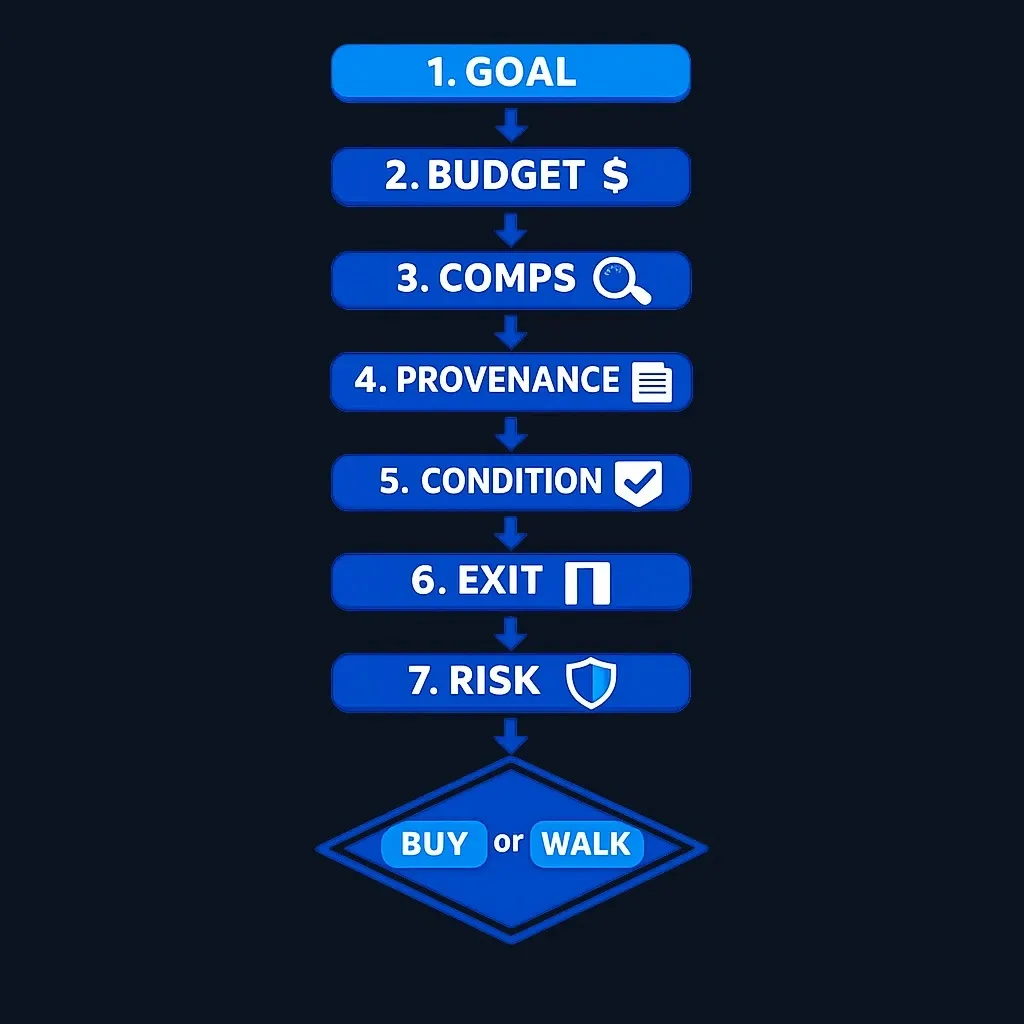
Use this seven-step framework as a short buy memo template. Complete it before committing funds.
-
Objective (why buy?)
- Clarify primary goal: enjoyment, diversification, speculative upside, tax or legacy considerations. Rank those goals.
-
Budget and total-cost ceiling
- Set a hard purchase ceiling. Add expected annual carrying costs (insurance, storage, conservation) and estimated selling costs (auction buyer’s/seller’s premiums or dealer commissions).
-
Market fit and comparables
- Find recent sales of closely comparable works (same artist, period, medium, and size). Ask whether gallery representation or auction records show steady demand.
-
Provenance and documentation
- Require chain‑of‑title documents, gallery invoices, exhibition history, and publication references. If records are incomplete, plan for authentication costs.
-
Condition and conservation
- Obtain a condition report from a conservator. Note restorations and likely future conservation needs that can affect value.
-
Liquidity and exit plan
- Decide how you will sell: auction house, private dealer, or direct sale. Estimate typical time to sale for similar works.
-
Risk mitigations and portfolio alignment
- List top 3 risks for this purchase (forgery, damage, market decline). Tie the purchase size to your allocation plan and liquidity needs.
How to use it: turn these seven points into a one-page buy memo and sign it as a pre-purchase checklist. If any single point raises a fatal flaw (no provenance, prohibitive costs), walk away.
Why Invest in Art?
This section explains motivations and the kinds of art people typically consider for investment.
Motivations people cite
- Diversification: art can behave differently from stocks and bonds, so some investors use it to spread risk.
- Enjoyment and utility: unlike most investments, art provides day-to-day aesthetic value while you own it.
- Upside from discovery: identifying an emerging artist early can produce outsized gains for a specific work, though this is rare and uncertain.
Qualitative comparison of common categories
| Type | Accessibility | Liquidity | Typical risk profile |
|---|---|---|---|
| Emerging contemporary artists | Relatively accessible via galleries | Often low; private sales common | High variance; high upside for a few works |
| Established / blue‑chip artists | Harder to access; higher entry cost | Higher at major auction houses | Lower volatility among top-market works |
| Limited editions & prints | More accessible, lower price entry | More liquid than uniques | Lower single-item upside, but broader supply |
| Sculptures & installations | Special handling and storage | Often slower to sell | Higher logistics and holding costs |
| Art funds / fractional platforms | Entry at lower capital thresholds | Liquidity varies by product | Manager fees and operational risk |
(These are qualitative comparisons to guide decisions, not precise guarantees.)
Which type suits different goals?
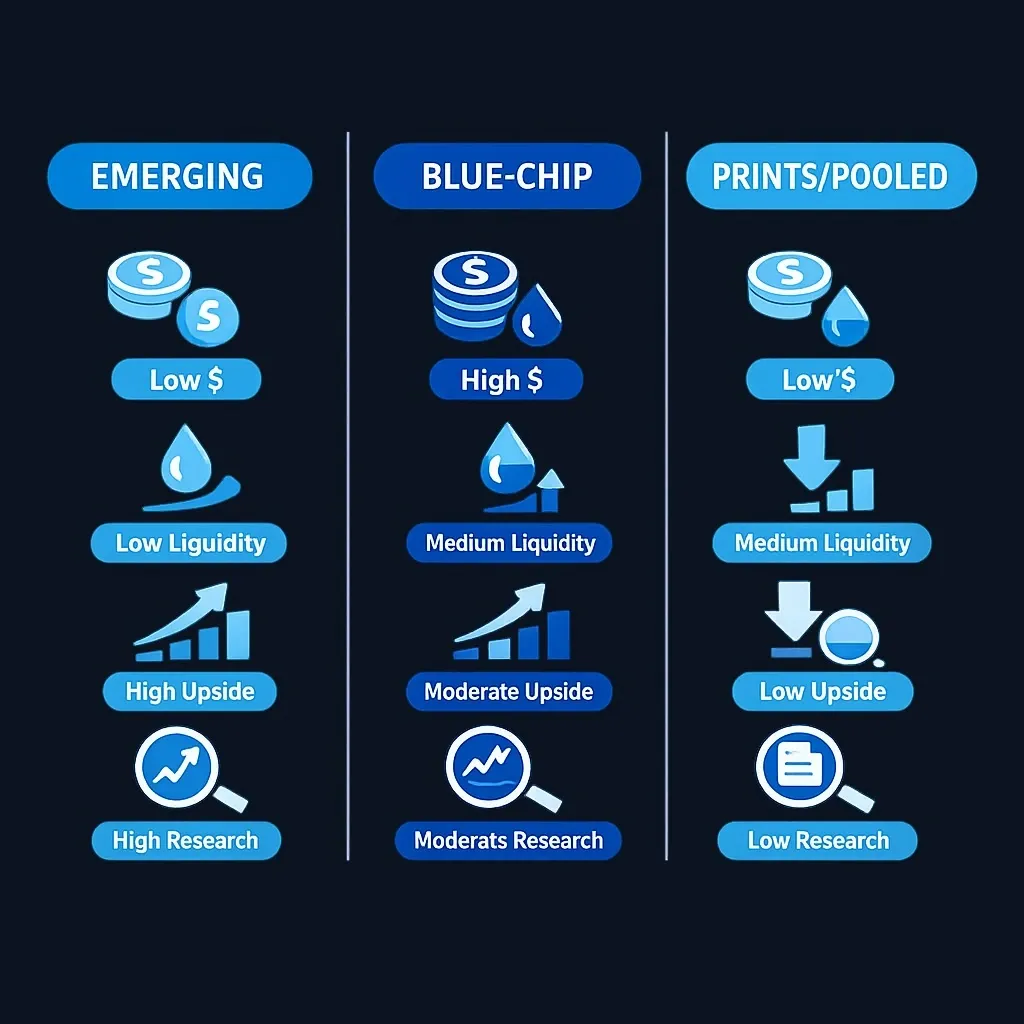
- Low-entry, hands-off exposure: consider prints or pooled products, but read fees and governance.
- Active collector-investor: emerging contemporary art offers potentially high upside if you can research and steward works.
- Capital preservation and auction liquidity: blue‑chip works are more costly to enter but often have more transparent resale markets.
Practical tip: avoid treating art as a short-term trade. If you need quick liquidity, art is usually a poor fit.
Understanding the Art Market
This section outlines how artworks change hands, who the main players are, and which dynamics shape price discovery.
Main channels and players
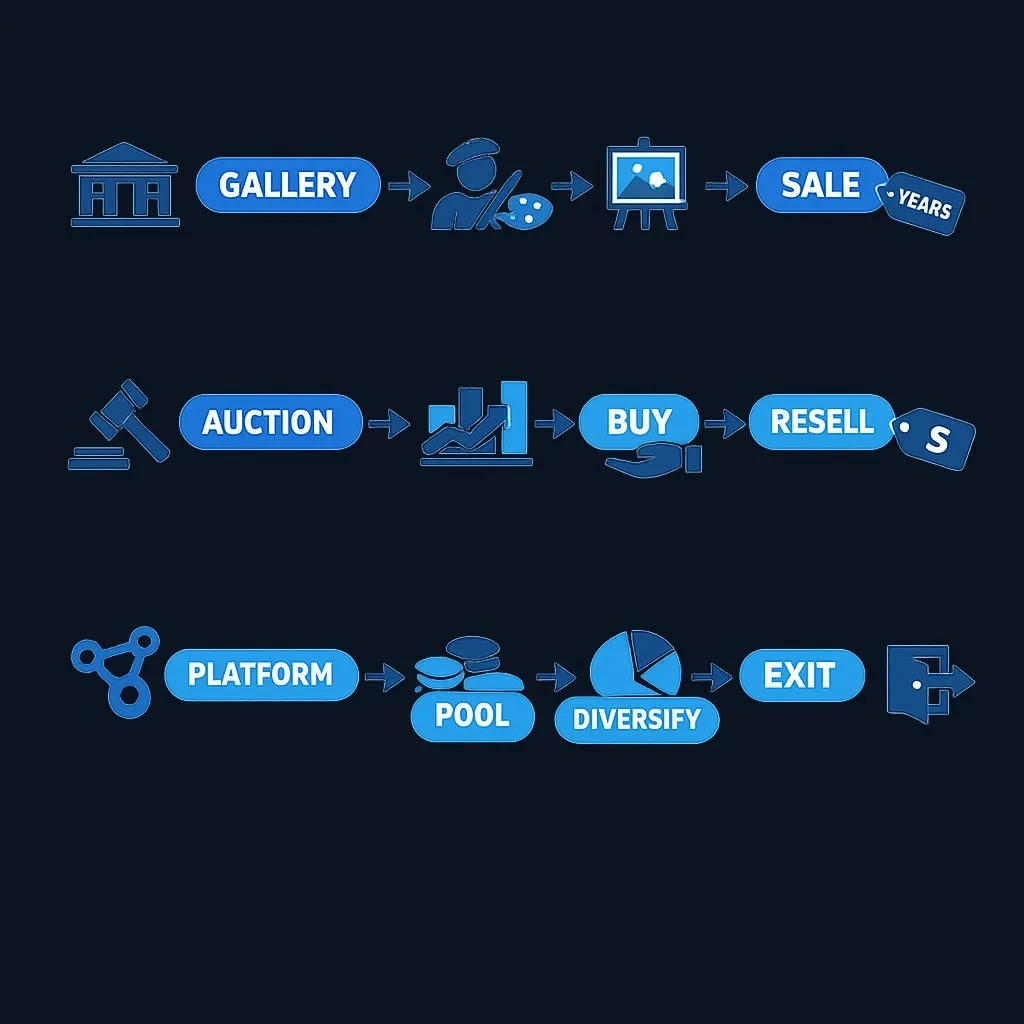
- Primary market: galleries (and directly from artists) typically launch an artist’s market and set primary prices. Galleries often curate careers and influence secondary-market expectations.
- Secondary market: auctions and private dealers resell works. Auctions create public price records and often set market benchmarks.
- Service ecosystem: appraisers, authenticators, conservators, shippers, storage firms, and insurers all add cost and influence outcomes.
How price discovery works
- Public comparables: auction results and sale records help establish market value for comparable works.
- Visibility and exhibitions: museum shows, major gallery exhibitions, and publications can materially increase demand for an artist.
- Taste cycles: trends in tastes and collecting priorities shift with time and region. A movement’s popularity can rise or decline.
Practical watching points
- Compare truly similar works: medium, size, date, signature, and condition.
- Use multiple sources: auction databases, gallery records, and dealer conversations.
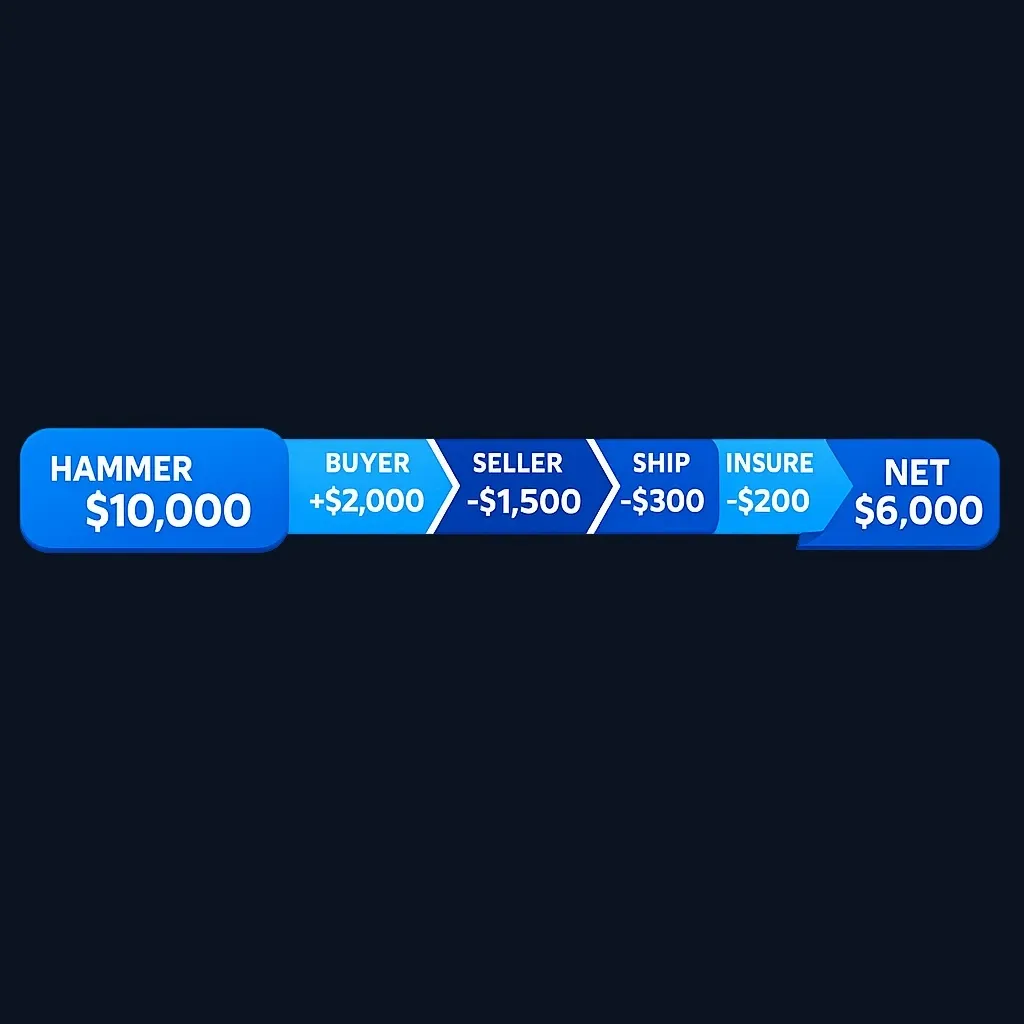
- Beware headline prices: hammer prices do not include buyer/seller premiums and fees. Always calculate net or gross expected proceeds.
Types of Art Investments
Detailing the main forms of exposure an investor can choose.
Direct ownership (single works)
- Pros: control, direct enjoyment, potential for outsized returns from a single discovery.
- Cons: concentrated risk, high carrying costs, low liquidity for most works.
Fractional ownership and platforms
- Pros: lower entry cost and diversification across pieces.
- Cons: governance, platform risk, and varying liquidity depending on the product structure. Read offering documents and fee schedules carefully.
Art funds
- Pros: professional management and pooled risk.
- Cons: fees, manager selection risk, and sometimes limited transparency. Funds can differ widely in strategy and liquidity.
Prints and multiples
- Pros: lower price entry and, for some editions, more predictable secondary markets.
- Cons: limited upside versus unique works and the necessity to confirm edition size and authenticity.
Specialized categories (photography, design, NFTs)
- Each category has unique markets and logistical concerns. Learn the market structure and comparables specific to that medium before buying.
Decision anchor: if your goal is diversified exposure with limited capital, pooled products or prints may be a better first step than buying a single blue‑chip painting.
Risks and Challenges of Art Investing
This section highlights major pitfalls and practical mitigations.
-
Authentication and forgery
- Risk: misattribution or counterfeit works can destroy value.
- Mitigation: insist on provenance, independent expert opinions, and scientific testing where appropriate (pigment analysis, X‑rays).
-
Illiquidity and market timing
- Risk: long sales windows and variable buyer demand can force suboptimal timing.
- Mitigation: plan a multi-year horizon and avoid using borrowed money for art purchases unless you have a clear exit.
-
High transaction and holding costs
- Risk: commissions, buyer/seller premiums, shipping, customs, storage, and insurance can materially reduce net returns.
- Mitigation: estimate full carrying and selling costs before purchase and factor them into your price ceiling.
-
Condition, damage, and conservation expense
- Risk: deterioration or poor restoration can impair value.
- Mitigation: obtain professional condition reports and factor conservation into ownership costs.
-
Subjectivity and sentiment risk
- Risk: tastes change and demand for an artist or movement can decline.
- Mitigation: diversify across artists or choose works with strong exhibition/publication history.
-
Legal and tax complications
- Risk: cultural patrimony rules, import/export restrictions, and differing tax treatment on sale.
- Mitigation: consult specialized counsel for cross-border transactions and tax planning.
Common mistakes and fixes
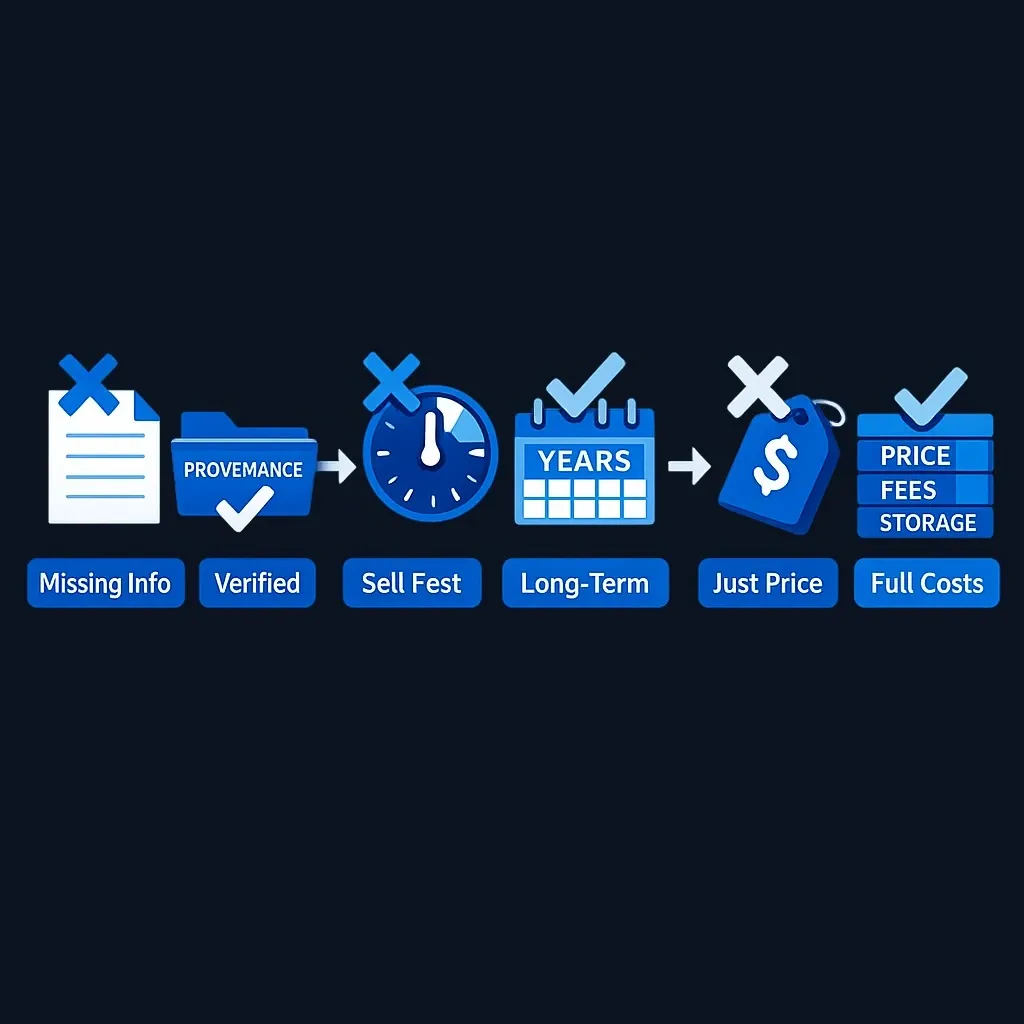
- Mistake: skipping provenance checks to speed a purchase. Fix: require documentation before payment.
- Mistake: treating art like a liquid short-term asset. Fix: align purchases with long-term allocation.
- Mistake: ignoring full cost structure. Fix: always build a “total cost” model.
Practice investing with Finelo
Build practical investing skills with guided lessons, simulator practice, and structured challenges.
How to Start Investing in Art
A practical, step-by-step guide for beginners ready to act.
Step 1 — Define goals and constraints (15–30 minutes)
- Decide whether your primary motive is enjoyment, diversification, capital gain, or a mix. Set a maximum allocation and a single-purchase budget.
Step 2 — Build baseline knowledge (weeks ongoing)
- Read auction reports and gallery catalogs. Visit fairs, local galleries, and museums to develop taste and market context.
Step 3 — Pick a channel that matches your budget and goals
- Galleries: best for new work and building relationships with artists.
- Auctions: best for transparent price discovery for secondary-market works.
- Funds/platforms: offer pooled exposure with different liquidity and fee profiles.
Step 4 — Do structured due diligence before any purchase
- Ask for provenance documents, invoices, exhibition and publication history, and a conservator’s condition report.
- If critical, commission independent authentication or expert attribution.
Step 5 — Negotiate and document the sale
- Get written agreements stating title transfer, any warranties, and payment terms. Keep all records.
Step 6 — Protect and steward the work
- Insure the piece on a replacement-value basis. If you store the work, use climate‑controlled facilities and reputable shippers.
Step 7 — Track provenance-building activities
- Record exhibitions, loans, and publications that can increase provenance. Maintain organized files for each artwork.
Checklist: pre-purchase questions
- Who is the seller and what is their reputation?
- Is provenance complete and verifiable?
- What is the full total cost of ownership for the expected hold period?
- How will I exit and who is the likely buyer?
- What evidence supports attribution and condition?
Practical tip: cultivate at least two trusted advisors (a conservator and an independent appraiser or dealer) before making sizable purchases.
Illustrative Art-Investing Scenarios
These anonymized, illustrative scenarios show how diligence and strategy matter. They are illustrative, not historical performance claims.
Scenario A — Emerging-artist discovery (collector approach)
- Approach: A collector buys directly from a regional gallery after seeing a strong, curated exhibition and confirming the gallery’s representation of the artist.
- Due diligence: The collector secured gallery invoices, exhibition labels, and a conservator’s note. They tracked subsequent museum group shows.
- Outcome drivers: Ongoing gallery support and rising exhibition profile created private-sale demand years later. Lesson: early discovery requires active stewardship and patience.
Scenario B — Blue-chip auction purchase (record-aware investor)
- Approach: An investor buys a work by an established artist after studying several auction comparables and confirming clean provenance.
- Due diligence: The buyer accounted for buyer’s premium, storage, and insurance when setting a net resale target. They used auction visibility to re-sell when market conditions were favorable.
- Outcome drivers: Transparent auction records and well-documented provenance helped achieve a predictable resale path. Lesson: blue‑chip markets can offer clearer comparables but require higher capital and fee discipline.
Scenario C — Fractional ownership for diversification
- Approach: An investor uses a fractional platform or fund to gain exposure to a portfolio of works rather than a single painting.
- Due diligence: The investor read the offering documents, fee schedule, and liquidity terms. They compared similar products before committing.
- Outcome drivers: Lower entry cost and built-in diversification reduced idiosyncratic risk, though the investor accepted platform governance and fee drag. Lesson: pooled exposure suits investors who want art exposure without single-work concentration.
Key takeaway across scenarios: documentation, realistic cost accounting, and a predetermined exit plan materially influence outcomes.
FAQs about Art Investing
Is fine art a good investment?
Art can offer diversification and aesthetic value, but it is typically illiquid and involves high transaction and holding costs. Whether it suits you depends on your time horizon, risk tolerance, and how much of your portfolio you can illiquidly allocate.
How do I authenticate a piece of art?
Authentication combines provenance (paper trail), expert opinion, and, when needed, technical analysis (forensic testing and condition reports). Insist on invoices, exhibition history, and an independent expert review before purchase.
What costs are associated with art investing?
Expect acquisition costs (purchase price, taxes), transaction fees (dealer commissions, auction buyer’s/seller’s premiums), and carrying costs (insurance, storage, conservation, shipping). Estimate total cost of ownership for your expected hold period before buying.
How do art investment funds or fractional platforms work?
These pooled products aggregate capital to buy works, offering diversification and lower per-investor entry. They differ widely in fees, governance, and liquidity, so read offering documents carefully and consider manager track record.
Conclusion and next steps
Art investing blends aesthetic enjoyment with financial considerations. It rewards careful research, documented provenance, conservative cost accounting, and a long time horizon. Before you buy, complete the decision-framework buy memo, get written documentation and a condition report, and set an explicit exit plan.
If you want to learn more, start by visiting galleries and auctions to build taste, track a small set of comparable sales for artists you like, and keep meticulous records for any works you acquire. This process builds both knowledge and a defensible investment approach.
(If you plan to allocate meaningful capital, consider consulting independent appraisers, conservators, and legal or tax specialists to understand cross-border and tax implications.)
Sources and Further Verification
More from Finelo
- Sports Card Investing for Beginners: Grading, Costs, Liquidity, and Risks
- Wine Investing for Beginners: Storage, Fees, Valuation, and Risks
- Best Investing Newsletters for Beginners in 2026
Disclaimer
This article is provided by Finelo for educational and informational purposes only. Finelo does not provide financial, investment, tax, legal, or insurance advice. Consider your circumstances and consult an appropriately qualified professional before making financial decisions.
InvestingBeginner GuideFinancial Education
Practice investing with Finelo
Build practical investing skills with guided lessons, simulator practice, and structured challenges.
About the author
Finelo Team
The Finelo Team creates practical investing and trading education designed to help beginners learn faster with structured challenges, simulator practice, and bite-sized lessons.
Keep reading — Related articles
Investing
Yield to Call vs Yield to Maturity: Assumptions and Bond Risks
Yield to call (YTC) estimates a bond's yield if the issuer redeems it on an eligible call date; yield to maturity (YTM) estimates yield if it remains outstanding to final maturity.
Finelo Team
Investing
Will My Employer Know If I Take a 401(k) Loan?
Who this page is for: readers new to 401(k) loans who want a practical, privacy‑focused explanation — what your employer can see, how to limit visibility, and the financial tradeoffs to weigh.
Finelo Team

Investing
What Medical Expenses Qualify for a 401(k) Hardship Withdrawal?
Before you decide, confirm three things with your plan administrator:
Finelo Team


