Last editorial review: September 8, 2026
Sports Card Investing for Beginners: Grading, Costs, Liquidity, and Risks
Sports card investing sits at the intersection of collectibles and speculation. Investors range from hobbyists who buy a few rookies to specialist collectors who focus on graded high-end…
12 min read
Practice investing with Finelo
Build practical investing skills with guided lessons, simulator practice, and structured challenges.
Want to learn more?
Build practical investing skills with guided lessons, simulator practice, and structured challenges.
Explore FineloExplore Finelo's 28-day challenges
Turn learning into a daily habit with guided challenge paths.
U.S. scope: This article discusses U.S. institutions, financial products, tax rules, and dollar examples unless stated otherwise. Rules and product terms may change; verify current official guidance for your situation.
Quick answer
Sports card investing is buying collectible trading cards (rookies, vintage issues, autographs, or sealed product) with the intent to resell for a profit; success depends on buying liquid, scarce items, understanding grading/authentication, and accounting for fees and holding time. Treat this as education, not financial advice: cards can lose value and require grading, storage, and sales costs—learn the mechanics and make a written plan before committing capital. For price benchmarking and sale-history research, many collectors use PSA’s Price Guide as a reference PSA Price Guide.
Introduction to Sports Card Investing
Sports card investing sits at the intersection of collectibles and speculation. Investors range from hobbyists who buy a few rookies to specialist collectors who focus on graded high-end vintage pieces or sealed cases. Value is created by scarcity (how many of a card exist), player fundamentals (career performance and legacy), and market interest (how quickly buyers appear).
This article is written for beginners who want a structured way to decide whether — and how — to allocate a small amount of discretionary capital to cards. You’ll learn what moves prices, how grading and authenticity affect saleability, practical buying and selling rules, and concrete next steps you can use the same week you read this.
What to know before deciding
Before you invest, align expectations, costs, and timeline so you don’t mistake hobby excitement for a predictable asset class.
Educational note
This content is educational, not financial or investment advice. Collectible investing can lead to losses; consider your objectives, time horizon, and liquidity needs before allocating discretionary capital. For additional learning resources, see Finelo’s learning hub.
Time and liquidity
Cards are generally less liquid than public securities. Some popular modern rookies and high-demand graded cards sell quickly, but most meaningful gains require holding for months or years. Plan around a timeframe you can tolerate and match that to the types of cards you buy.
Costs you’ll face
Buying price is only one part of cost. Expect selling fees (marketplace or auction), shipping and insurance, packaging supplies, and potential grading fees and turnaround time. Those costs can make small-price cards unprofitable once deducted.
Market cycles and sentiment
Card markets are sentiment-driven. Social media, playoff runs, retirements, and cultural moments can spike demand. Successful investors separate short-term hype from durable value drivers such as scarcity and proven career accomplishments.
Authentication and price references
Professionally graded and authenticated cards generally draw more buyers and cleaner price discovery. For sport-wide sale-history and pricing references, collectors commonly consult PSA’s Price Guide for major sports PSA Price Guide.
Decision framework
Use a repeatable, papered process before every buy. The framework below compresses decision criteria into a checklist and a simple comparison table.
Objective → Selection Criteria → Costing → Exit Plan
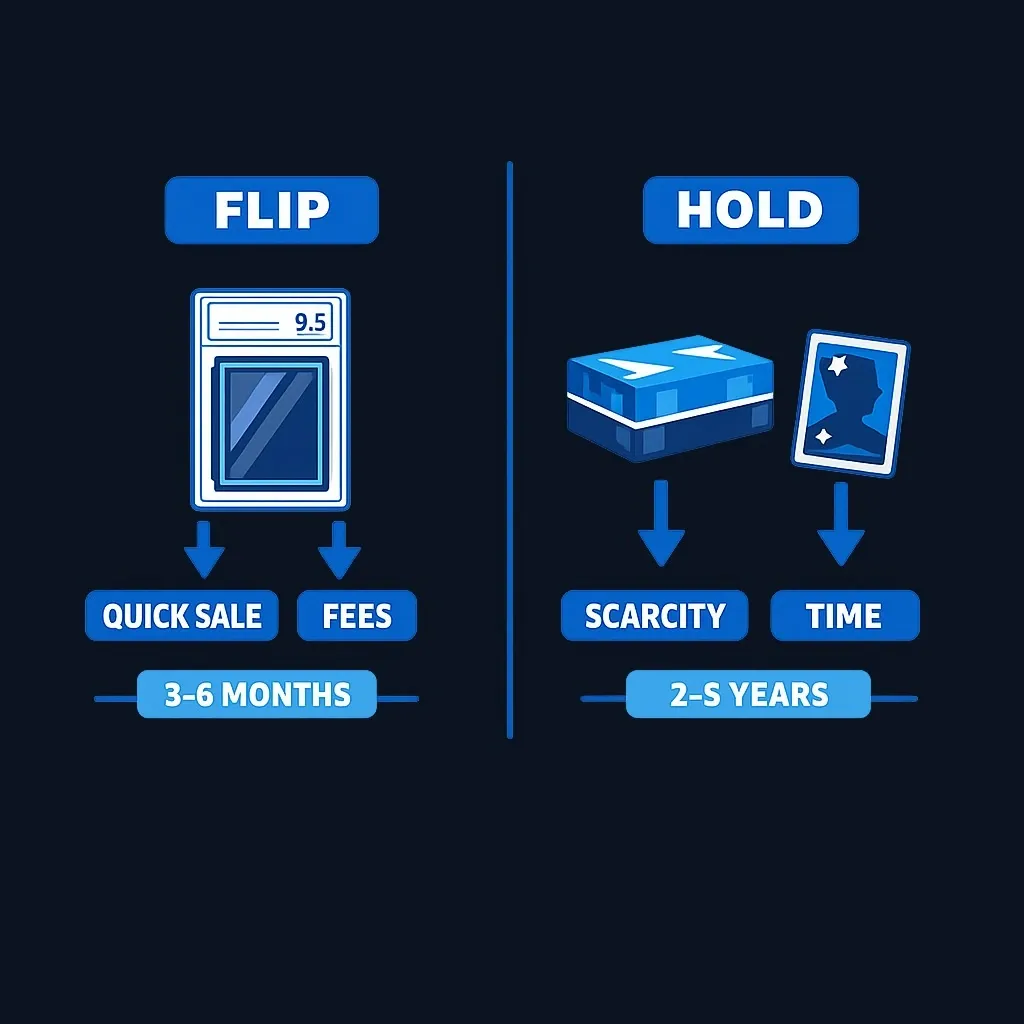
- Objective: Define whether you intend to flip (short-term) or hold (long-term). Your objective drives card type, grade tolerance, and liquidity needs.
- Selection Criteria: Evaluate player profile, scarcity, card condition/grade, and platform liquidity.
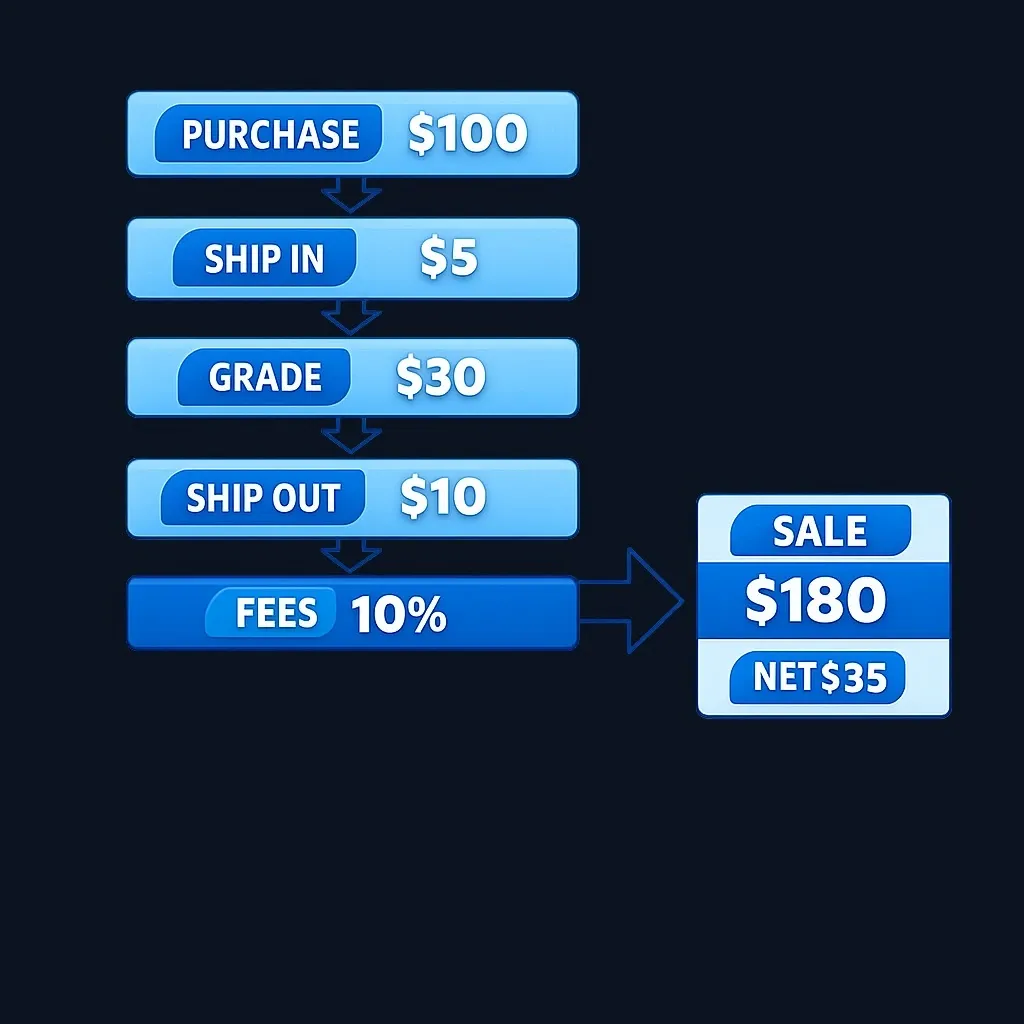
- Costing: Compute landed cost = purchase price + shipping + expected grading (if any) + marketplace fees + insurance.
- Exit Plan: Record minimum acceptable resale price, time window, and sale venue before you buy.
Quick decision checklist
- Objective: Flip or Hold?
- Liquidity need: How soon must you sell if needed?
- Player assessment: Is the player likely to keep collector interest?
- Scarcity: Serial-numbered, short-print, or vintage survivorship?
- Condition: Raw or graded; estimate the grade uplift needed to profit.
- Landed cost: Purchase + grading + shipping + fees.
- Exit criteria: Minimum price, maximum hold time, and primary sale platform.
Short vs. long strategy (compact)
| Feature | Short-term flipping | Long-term holding |
|---|---|---|
| Timeframe | Weeks–months | Years–decades |
| Preferred assets | Modern, liquid rookies, hot parallels | High-end vintage, iconic rookies, sealed high-end product |
| Main risk | Momentum reversals, fee drag | Player legacy changes, long-term market cycles |
| Fee sensitivity | Very high | Important but amortized over time |
Use this table to pick an approach and then force yourself to follow the checklist for each trade. If the margin between your landed cost and conservative sale target is thin, skip the purchase.
Understanding the Sports Card Market
To invest wisely, know the levers that change card values and how you’ll measure them.
How value is created
- Scarcity: Limited print runs, serial-numbered parallels, and surviving vintage examples tighten supply.
- Player fundamentals: Career performance, awards, and historical significance sustain collector demand.
- Provenance and iconic moments: Cards tied to milestone games or Hall of Fame status often attract premium interest.
Price discovery and selling venues
Most price discovery happens via completed sales on marketplaces and auction platforms. Buyers use sale-history tools and price guides to benchmark. For sport-wide price coverage and sale histories, collectors often consult PSA’s Price Guide PSA Price Guide.
Grading’s role in the market
Grading standardizes condition assessment, which reduces buyer uncertainty and typically improves marketability. A high grade can expand the buyer pool; however, grading introduces costs and time that must be weighed against potential price uplift.
Typical investor horizons and asset fit
- Flippers: Prefer modern, graded or easily graded cards with established buyer interest.
- Holders: Target low-supply, high-significance cards or sealed premium product expected to appreciate over years or decades.
Investment Strategies for Beginners
Here are practical, low-friction strategies and how to implement them.
1) Learn before you buy
Observe sold listings for several weeks. Compare asking prices to completed sales to understand spreads and seasonality. This training reduces impulse mistakes.
2) Start small and repeat
Set a modest monthly allocation you can afford to lose. Multiple small buys teach you fees, grading economics, and selling mechanics faster than one large bet.
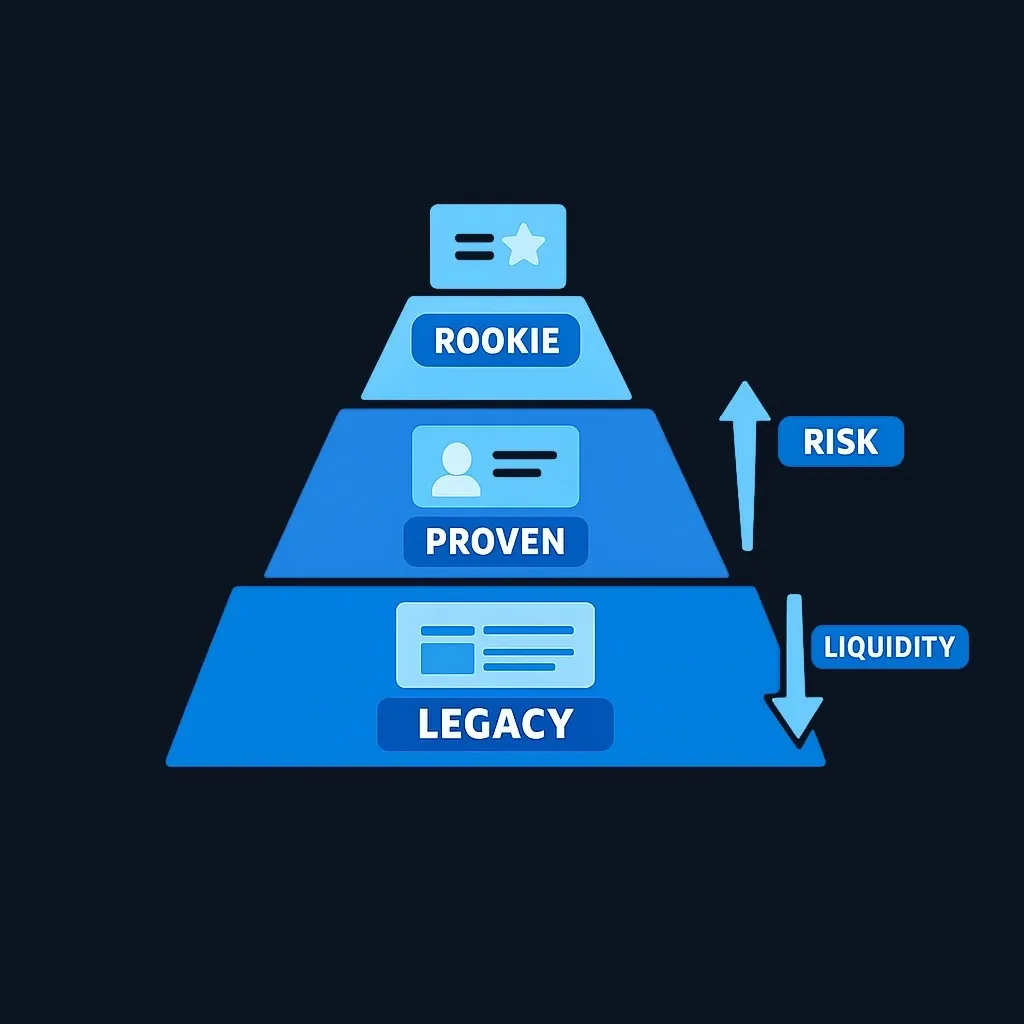
3) Use qualitative tiering
Organize prospects into tiers rather than rigid percentages:
- Blue-chip / Legacy: Typically lower volatility and steady demand.
- Proven stars: Good liquidity while active.
- Speculative rookies: Higher upside and higher risk.
Tiering helps manage risk and keeps speculative exposure contained.
4) Prioritize liquidity for early learning
Focus early buys on items with an established buyer base: popular players, common graded rookie issues, or sealed hobby boxes that attract repeat interest. Liquidity helps you learn selling, shipping, and fee math with smaller losses.
5) Learn grading economics before submitting
Estimate whether the expected price uplift covers grading fees, shipping, and lost selling time. For low-dollar cards, grading often reduces net return; for high-dollar items, a grade can unlock auction channels and higher bids.
6) Use sealed product strategically
Sealed hobby product simplifies some selection questions because rarity is embedded in unopened packs. But sealed product carries its own risk: release saturation, manufacturer changes, and consumer demand shifts.
7) Avoid hype-driven buys
Social-media buzz can create short-lived demand spikes. Ask: does this card have scarcity and a reasonable story for lasting value, or is it tied to a temporary trend?
Implementation example (step-by-step)
- Observe sold listings for 2–6 weeks.
- Compute landed cost (purchase + shipping + probable grading + platform fees).
- Set a conservative target sale price and maximum hold time.
- Buy only if margin and liquidity meet your target.
- If buying raw, plan grading only when the uplift justifies the cost.
Evaluating Card Value: Grading and Authenticity
Grading and authenticity verification materially affect saleability and price.
What grading does
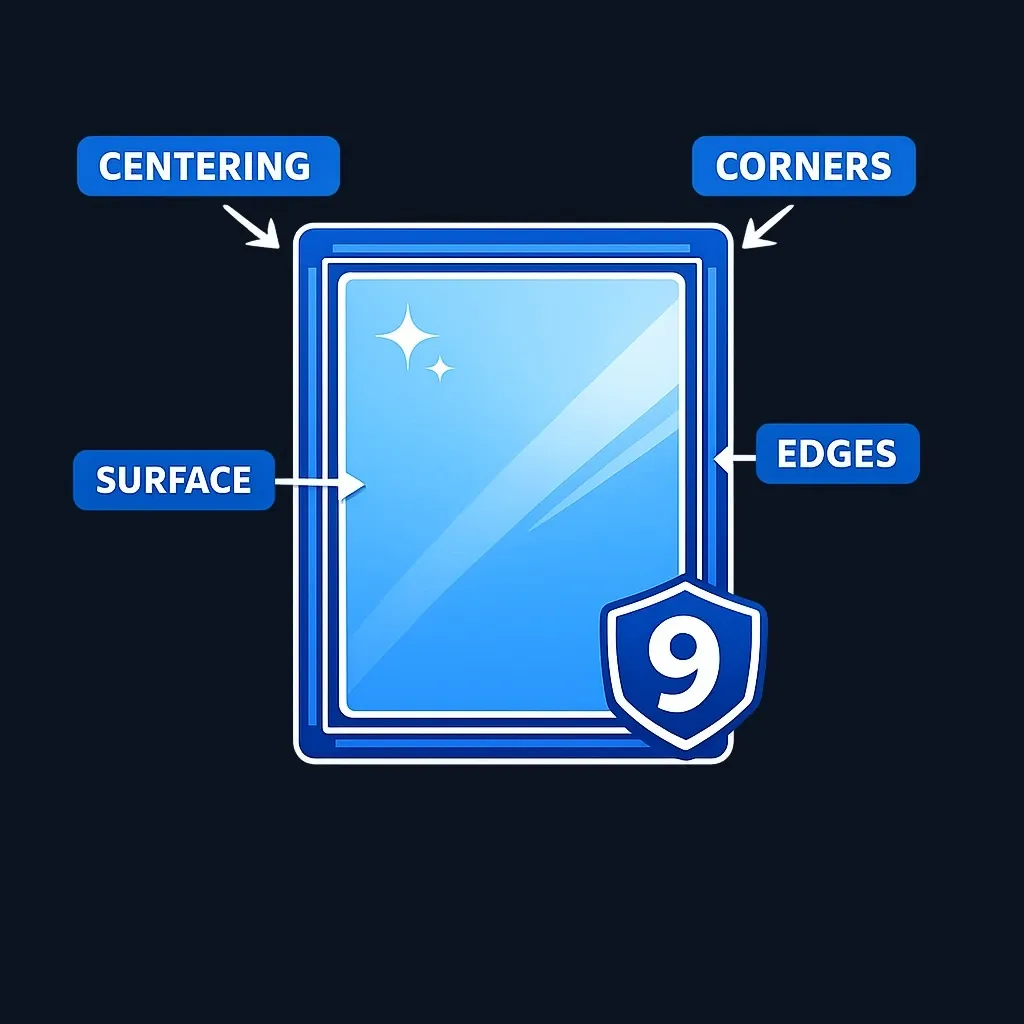
A grading service evaluates centering, corners, edges, and surface, then assigns a standardized grade. Graded cards trade on grade as much as on the player or print. For sport-wide price comparisons and sale history reference, collectors commonly use PSA’s Price Guide PSA Price Guide.
When grading makes sense (practical rules)
- Grade when the card’s market value comfortably exceeds grading and shipping costs.
- Prioritize grading for key pieces: low-serial rookies, vintage icons, and cards that are likely to beat conservative sale targets at higher grades.
- Avoid grading low-value commons; fees and turnaround time can erase profit.
Authenticity checks before buying
- Seller reputation and feedback history on marketplaces.
- Clear front/back photos, especially of serial numbers, manufacturer holograms, or inscriptions.
- Request provenance or original receipts for high-ticket items when possible.
- When in doubt, prefer cards already graded by a reputable service.
Protecting condition
Condition equals value. Use sleeves, top loaders, and avoid adhesives or direct contact. For long-term holdings, consider climate-stable storage; warped corners or moisture damage reduce value even for high-grade cards.
Practice investing with Finelo
Build practical investing skills with guided lessons, simulator practice, and structured challenges.
Risks and Considerations in Sports Card Investing
Understand the main risks and how to mitigate them.
Market and player risk
Player injuries, declines, or off-field issues can quickly shrink demand. Diversify across players, eras, and card types to mitigate single-player shocks.
Liquidity risk
Some cards take months to sell at your price. Keep a cash buffer and avoid tying all capital to illiquid items.
Fraud and counterfeits
High-value items attract fraud. Prefer reputable sellers and graded items, and verify images and provenance. For expensive purchases, payment methods with buyer protection provide added safety.
Cost drag and recordkeeping
Fees (marketplace, payment processing), shipping/insurance, and grading reduce returns. Track expenses and record transactions for tax and performance measurement.
Behavioral risks
Hype, FOMO, and emotional attachment can lead to poor decisions. Use your written checklist and stick to pre-defined exit criteria.
Practical mitigations (short list)
- Paper every trade: land cost plus a conservative sell target.
- Scale into positions instead of all-in.
- Insure and secure high-value pieces during transit and storage.
- Keep learning: follow sale histories, and adjust rules based on outcomes.
Case Studies: Successful Sports Card Investment Scenarios
Below are composite scenarios that illustrate common successful approaches without relying on single anecdotal sales.
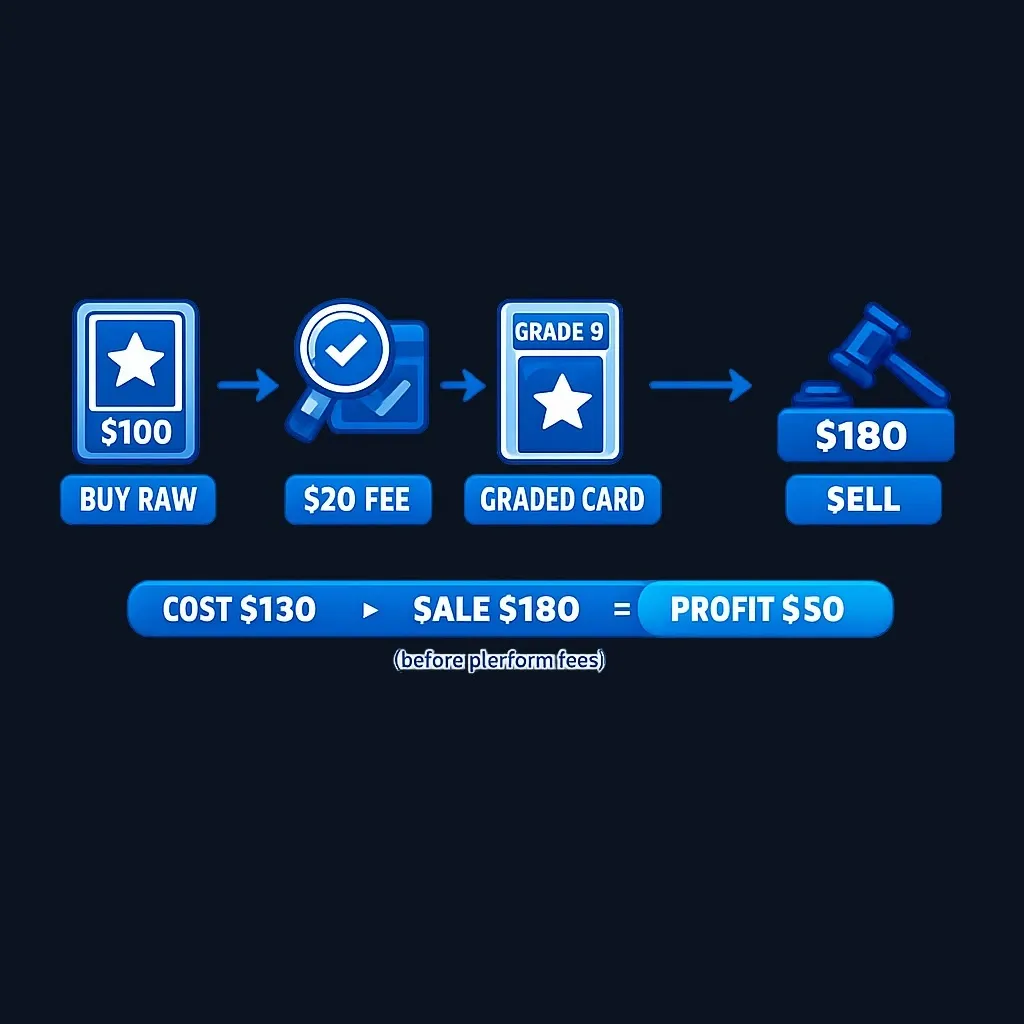
Scenario A — The graded rookie flip (short-term)
A buyer monitors completed-sales data for a widely followed modern rookie and notices consistent bidding at a level higher than current asking prices for raw examples. After calculating landed cost and expected grading uplift, they buy a raw copy, submit it for grading because the projected net sale price at a high grade exceeds grading + fees, and list it in an auction channel where graded high-end rookies trade. The card sells to a collector willing to pay a premium for the grade, and the seller nets a modest but positive return after fees.
Lessons: verify consistent sold prices before paying, calculate grading break-even, and use graded-auction channels when the grade unlocks materially higher bids.
Scenario B — The long-term sealed-product play (long-term)
An investor acquires a few sealed hobby boxes from a limited-release premium product after tracking manufacturer print volumes and collector interest. They keep the boxes in climate-controlled storage and sell selectively during periods of heightened demand (e.g., off-season collector conventions or anniversaries), choosing auction windows that historically draw better prices.
Lessons: sealed product can simplify selection when scarcity is embedded, but buyer patience and proper storage are critical.
Practical Next Steps for Aspiring Investors
If you want to start this week, follow these actionable steps.
- Observe: Spend 7–14 days watching completed sales for a card type you find interesting. Note asking vs. sold spreads.
- Paper trades: Use the Decision Framework checklist to run 3 hypothetical buys — compute landed costs and exit plans.
- Start small: Make one low-dollar, high-liquidity purchase and practice listing and shipping.
- Learn grading: Research grading service requirements and submission best practices before sending anything valuable.
- Document rules: Write and follow a short list of buy/sell rules (max price, minimum margin, and maximum hold time).
For learning resources and deeper educational guides, see Finelo’s learning hub. (This is educational guidance, not investment advice.)
FAQ
What is sports card investing?
Sports card investing is buying collectible trading cards with the intent to resell later for profit. Investors seek cards where scarcity, player performance, and market demand create a gap between purchase price and potential sale value.
How do I evaluate the value of a sports card?
Evaluate player fundamentals, scarcity (print runs/serial numbers), condition or grade, and recent completed sales. Use a written landed-cost calculation (purchase + shipping + grading + fees) and compare it to conservative sale-history prices before buying.
What risks should I be aware of when investing in sports cards?
Major risks include market volatility tied to player performance, liquidity constraints, grading/shipping costs, and fraud. Mitigate these by diversifying, preferring reputable sellers or graded items, and always calculating total transaction costs.
How can I start investing with a limited budget?
Start small, prioritize liquidity (popular rookies or lower-cost graded cards), and make many small trades to learn fees and selling mechanics. Use a monthly learning budget and paper trades to refine your rules before increasing exposure.
If you want a printable checklist version of the Decision Framework or a starter template for paper trades, visit Finelo’s learning hub.
Sources and Further Verification
More from Finelo
- Art Investing for Beginners: Costs, Liquidity, Valuation, and Risks
- Wine Investing for Beginners: Storage, Fees, Valuation, and Risks
- Best Investing Newsletters for Beginners in 2026
Disclaimer
This article is provided by Finelo for educational and informational purposes only. Finelo does not provide financial, investment, tax, legal, or insurance advice. Consider your circumstances and consult an appropriately qualified professional before making financial decisions.
InvestingBeginner GuideFinancial Education
Practice investing with Finelo
Build practical investing skills with guided lessons, simulator practice, and structured challenges.
About the author
Finelo Team
The Finelo Team creates practical investing and trading education designed to help beginners learn faster with structured challenges, simulator practice, and bite-sized lessons.
Keep reading — Related articles

Investing
Yield to Call vs Yield to Maturity: Assumptions and Bond Risks
Yield to call (YTC) estimates a bond's yield if the issuer redeems it on an eligible call date; yield to maturity (YTM) estimates yield if it remains outstanding to final maturity.
Finelo Team

Investing
Will My Employer Know If I Take a 401(k) Loan?
Who this page is for: readers new to 401(k) loans who want a practical, privacy‑focused explanation — what your employer can see, how to limit visibility, and the financial tradeoffs to weigh.
Finelo Team

Investing
What Medical Expenses Qualify for a 401(k) Hardship Withdrawal?
Before you decide, confirm three things with your plan administrator:
Finelo Team