Last editorial review: September 8, 2026
Solo 401(k) vs. SEP IRA: Limits, Costs, and Which Plan Fits Your Business

A solo 401k vs SEP IRA comparison turns on eligibility, contribution mechanics, administration, loan access, and plan flexibility.
13 min read
Practice investing with Finelo
Build practical investing skills with guided lessons, simulator practice, and structured challenges.
Want to learn more?
Build practical investing skills with guided lessons, simulator practice, and structured challenges.
Explore FineloExplore Finelo's 28-day challenges
Turn learning into a daily habit with guided challenge paths.
U.S. scope: This article discusses U.S. institutions, financial products, tax rules, and dollar examples unless stated otherwise. Rules and product terms may change; verify current official guidance for your situation.
A solo 401k vs SEP IRA comparison turns on eligibility, contribution mechanics, administration, loan access, and plan flexibility.
A Solo 401(k) generally fits self-employed owners who want more contribution flexibility and higher potential contribution capacity; Fidelity notes that a Uni-K, another name often used for a one-participant 401(k), can have contribution limits that are “potentially greater” than a SEP IRA, though not every owner benefits from that difference (Fidelity plan comparison). A SEP IRA generally fits owners who want the simplest setup, since the IRS describes establishing one with Form 5305-SEP or an IRS-approved prototype and opening SEP-IRAs through a financial institution (IRS self-employed retirement plans).
This comparison is educational, not financial or investment advice. Retirement investing can involve loss, and tax rules can depend on your business structure, income, employees, and plan documents.
Quick comparison answer
The best answer to “Solo 401(k) vs. SEP IRA” depends on your main constraint:
- Choose a Solo 401(k) path to investigate first if your priority is contribution flexibility, especially in higher-income years. Fidelity’s comparison notes that Uni-K contribution limits are potentially greater than SEP IRA limits, but also cautions that not every small business owner benefits from that potential advantage (Fidelity plan comparison).
- Choose a SEP IRA path to investigate first if your priority is fast setup and lower administrative friction. The IRS says a SEP can be established with a simple one-page Form 5305-SEP or an IRS-approved prototype, then opened through a bank or other financial institution (IRS self-employed retirement plans).
Use the rest of this page to decide what matters more: maximizing contribution pathways, keeping paperwork light, planning around future employees, or preserving flexibility as income changes.
What is a Solo 401(k)?
A Solo 401(k), often called an individual 401(k) or Uni-K, is a retirement plan structure used by self-employed people and small business owners who are comparing owner-focused retirement options. Its main appeal is contribution design. Unlike a SEP IRA, a Solo 401(k) can give the owner more ways to contribute through the plan structure, which is why Fidelity notes that Uni-K limits are potentially greater than SEP IRA limits in some cases (Fidelity plan comparison).
That “potentially” matters. A Solo 401(k) is not automatically better just because it may allow a higher contribution. The benefit depends on your income, savings capacity, tax goals, provider rules, and whether you want to handle more plan administration.
A practical way to think about it: a Solo 401(k) is often the plan to examine when your business has enough profit that you are trying to optimize retirement contributions, not merely open the simplest account possible. It may also be attractive when you want a plan structure with more moving parts and are comfortable reviewing provider documents before opening the account.
What is a SEP IRA?
A SEP IRA, or Simplified Employee Pension IRA, is an employer-funded retirement arrangement that routes contributions into IRAs. Its biggest advantage is operational simplicity. The IRS says a SEP can be established by completing Form 5305-SEP or using an IRS-approved prototype SEP plan offered by many mutual funds, banks, financial institutions, and plan administration companies (IRS self-employed retirement plans).
That setup process makes the SEP IRA appealing for consultants, freelancers, contractors, and small business owners who want a straightforward retirement vehicle without building a more complex plan infrastructure. You still need to follow the plan’s rules, contribution limits, and eligibility requirements, but the adoption path is relatively simple compared with many employer retirement plans.
A SEP IRA is usually worth investigating first when your main goal is “open something cleanly and contribute as the business allows.” It may be less attractive if your goal is to squeeze the highest possible contribution from a given level of self-employment income.
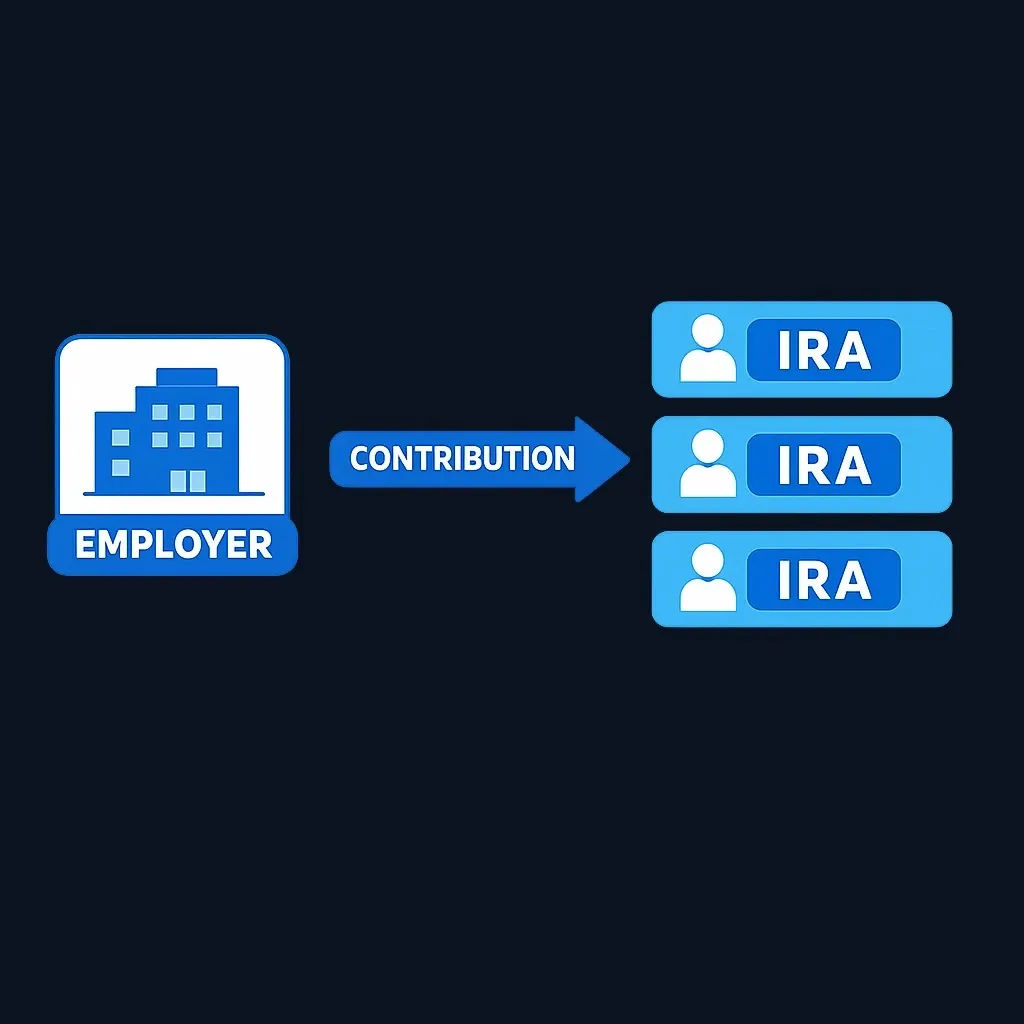
Side-by-side comparison table
| Decision point | Solo 401(k) | SEP IRA |
|---|---|---|
| Best fit | Owners who want more contribution flexibility and are willing to review plan rules. | Owners who want a simpler setup and employer-funded contributions. |
| Contribution potential | Fidelity says Uni-K contribution limits are potentially greater than SEP IRA limits, though not every owner benefits (Fidelity plan comparison). | Useful for retirement saving, but Fidelity notes Uni-K limits can be potentially greater in some cases (Fidelity plan comparison). |
| Current contribution limits | Check the current IRS and provider materials before contributing; limits can depend on tax year, income, and plan rules. | Check the current IRS and provider materials before contributing; limits can depend on tax year, income, and plan rules. |
| Setup burden | Usually more plan-document driven, so provider review matters. | The IRS describes a simple one-page Form 5305-SEP or IRS-approved prototype process (IRS self-employed retirement plans). |
| Administrative feel | More flexible, but usually more to understand. | Simpler to establish and easier to explain. |
| Cost to evaluate | Compare provider account fees, investment expenses, and any plan administration charges before opening. | Compare custodian fees, investment expenses, and any account maintenance charges before opening. |
| Best first question | “Am I trying to maximize contribution flexibility?” | “Do I want the simplest retirement plan setup?” |
The contribution-limit row is where many comparisons become stale. Rather than relying on an old dollar figure, verify current limits directly with the IRS or your provider before funding either plan.
Decision criteria
Start with your business shape
The first question is not “Which plan is better?” It is “What kind of business am I planning around?” A freelancer with no hiring plans has a different decision than a small firm owner who may add staff.
If your business is likely to remain owner-only, contribution flexibility may matter more. That points you toward researching a Solo 401(k), because the Uni-K structure can provide higher potential limits than a SEP IRA in some cases (Fidelity plan comparison).
If your business may add employees, slow down before choosing either plan. Ask a provider or tax professional how eligibility, contributions, and plan costs could change once employees enter the picture.
Decide whether simplicity or optimization matters more
A SEP IRA wins on setup simplicity. The IRS describes the SEP adoption process in plain terms: complete Form 5305-SEP or use an approved prototype, then open SEP-IRAs through a financial institution (IRS self-employed retirement plans).
A Solo 401(k) can provide additional contribution and plan-design features, with additional setup and administration. That does not make it universally preferable. Fidelity describes its contribution advantage as potential rather than universal (Fidelity plan comparison).
Use this quick flowchart
Do you want the simplest setup?
|
Yes
|
Start with SEP IRA research
|
No
|
Are you trying to maximize contribution flexibility?
|
Yes
|
Start with Solo 401(k) research
|
No
|
Do you expect to hire employees soon?
|
Yes
|
Ask a provider or tax professional to model both
|
No
|
Compare provider fees, investments, and paperwork
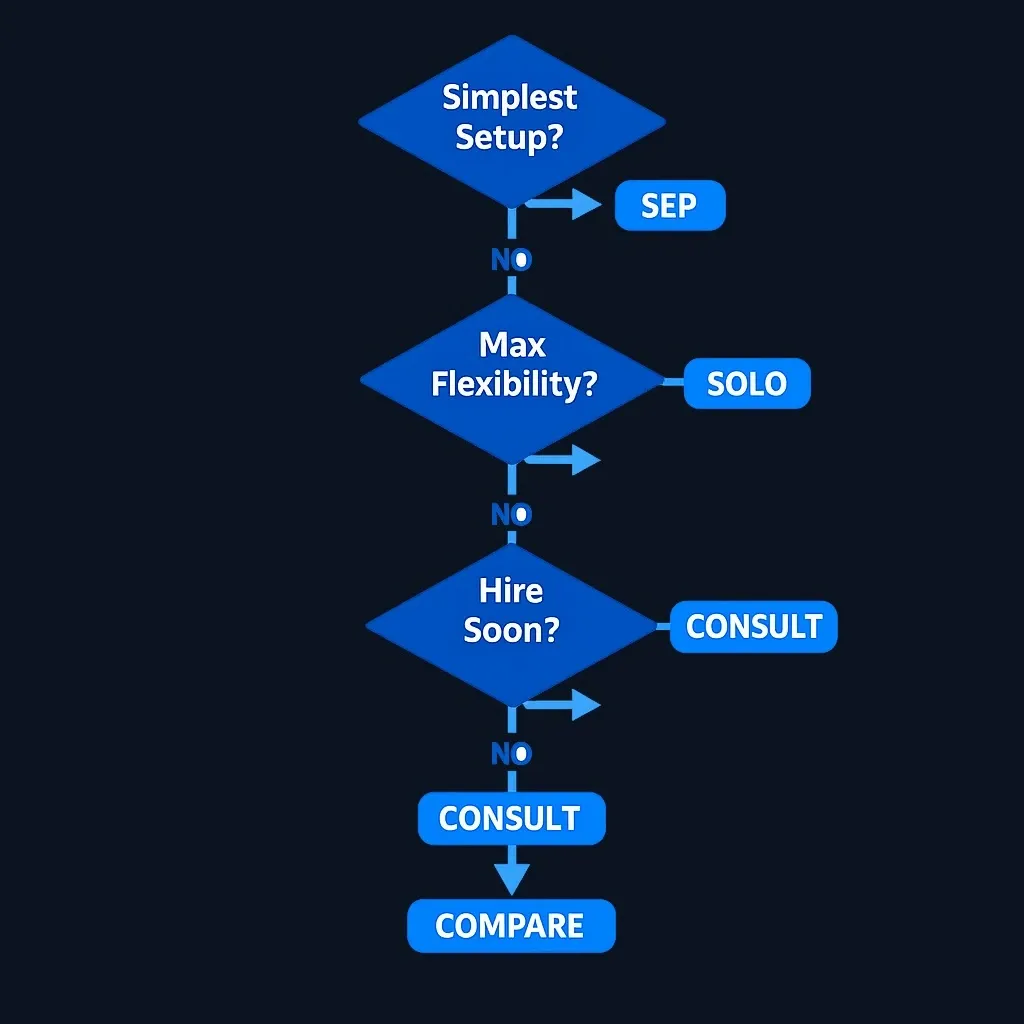
The best plan is the one that fits your income pattern, administration tolerance, and future business plans. A high-income year may point one way, while a lean year or hiring plan may point another.
When to choose each option
When a Solo 401(k) may fit better
A Solo 401(k) may be worth prioritizing when your business profit is high enough that contribution design matters. If you are comparing plans because you want to shelter more self-employment income for retirement, the Solo 401(k) deserves a close look.
It can also fit owners who are comfortable reading provider documents and asking detailed questions. That extra work can be worthwhile if the plan gives you contribution flexibility that a simpler SEP IRA does not. Fidelity’s comparison supports that distinction by noting that Uni-K contribution limits are potentially greater, while also warning that the advantage is not universal (Fidelity plan comparison).
A common mistake is choosing a Solo 401(k) only because it sounds more powerful. Instead, model your realistic contribution amount. If you cannot fund beyond what a SEP IRA would allow for your situation, the extra complexity may not help.
When a SEP IRA may fit better
A SEP IRA may fit better when you want a clean, fast retirement plan setup. The IRS describes a simple adoption route using Form 5305-SEP or an IRS-approved prototype, followed by opening SEP-IRAs through a financial institution (IRS self-employed retirement plans).
That simplicity can matter more than maximum contribution potential. For example, a contractor with variable income may prefer a plan that is easy to open and easy to maintain. A new business owner may also value simplicity while cash flow is still unpredictable.
The common mistake with SEP IRAs is assuming simplicity means no planning. You still need to understand current contribution limits, eligible compensation, provider fees, and how future employees could affect costs.
Tradeoffs and caveats
Contribution limits are only one part of the decision
Many people start with the maximum contribution limit. That is logical, but incomplete. The more useful question is: “How much can I realistically contribute this year, and how much work am I willing to do?”
A Solo 401(k) can have a contribution-limit advantage, but Fidelity says not every small business owner benefits from that advantage (Fidelity plan comparison). If your income or cash flow limits your contribution, a theoretical higher ceiling may not change your outcome.
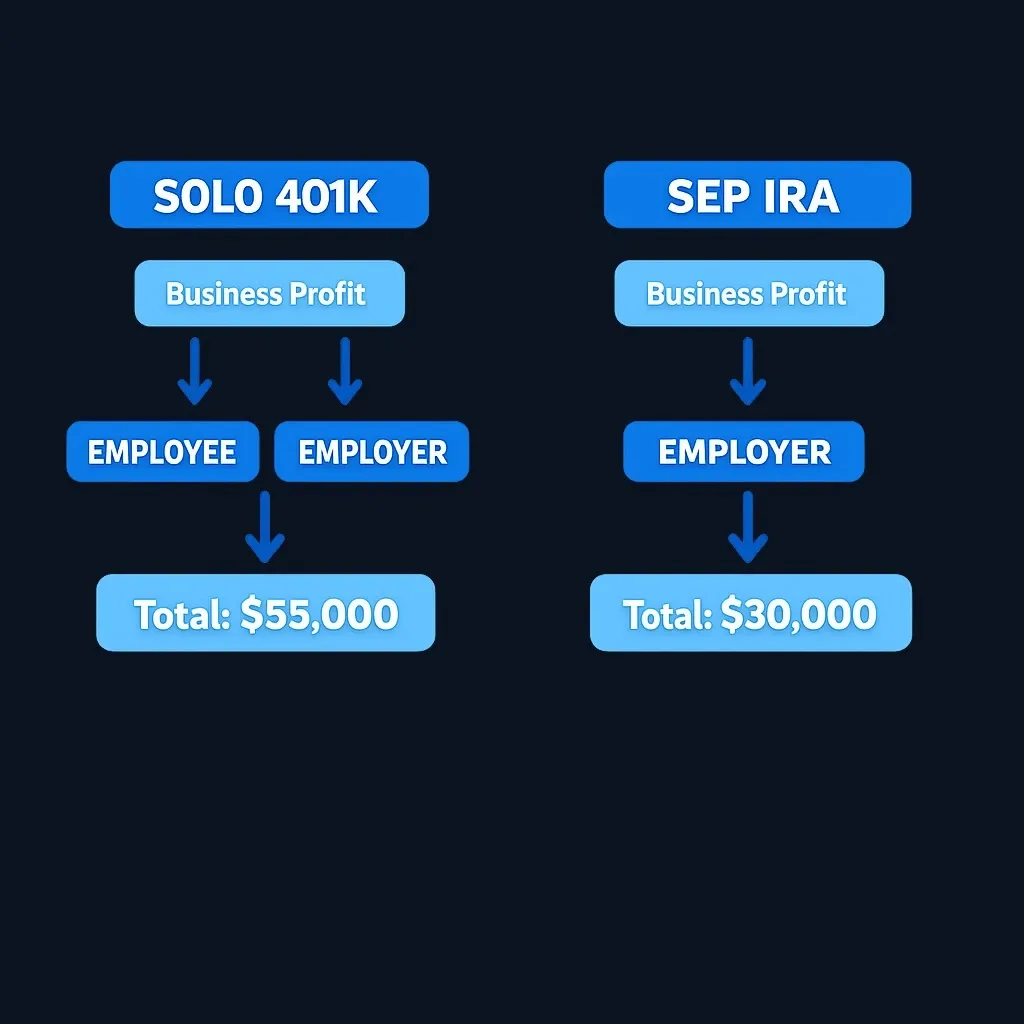
Administrative costs are not just fees
The “cost” of a retirement plan includes more than account charges. It also includes setup time, recordkeeping, provider support, tax coordination, and the risk of misunderstanding plan rules.
A SEP IRA’s setup process is easier to explain because the IRS points to a simple one-page form or approved prototype process (IRS self-employed retirement plans). A Solo 401(k) may justify more effort if its design helps you meet a specific retirement-saving goal.
High earners need tax modeling, not rules of thumb
High earners often focus on which plan allows more tax-advantaged saving. That is reasonable, but the answer depends on income, entity type, compensation, current limits, and how much cash the owner can actually set aside.
A useful framework is to run three scenarios before choosing:
- Low-profit year: Which plan remains easy to maintain if you contribute little or nothing?
- Strong-profit year: Which plan lets you contribute the amount you actually intend to save?
- Hiring year: Which plan becomes more expensive or complex if employees become eligible?
This approach beats choosing from a headline limit. It forces the decision to match how your business might actually behave.
Practice investing with Finelo
Build practical investing skills with guided lessons, simulator practice, and structured challenges.
Real-world examples
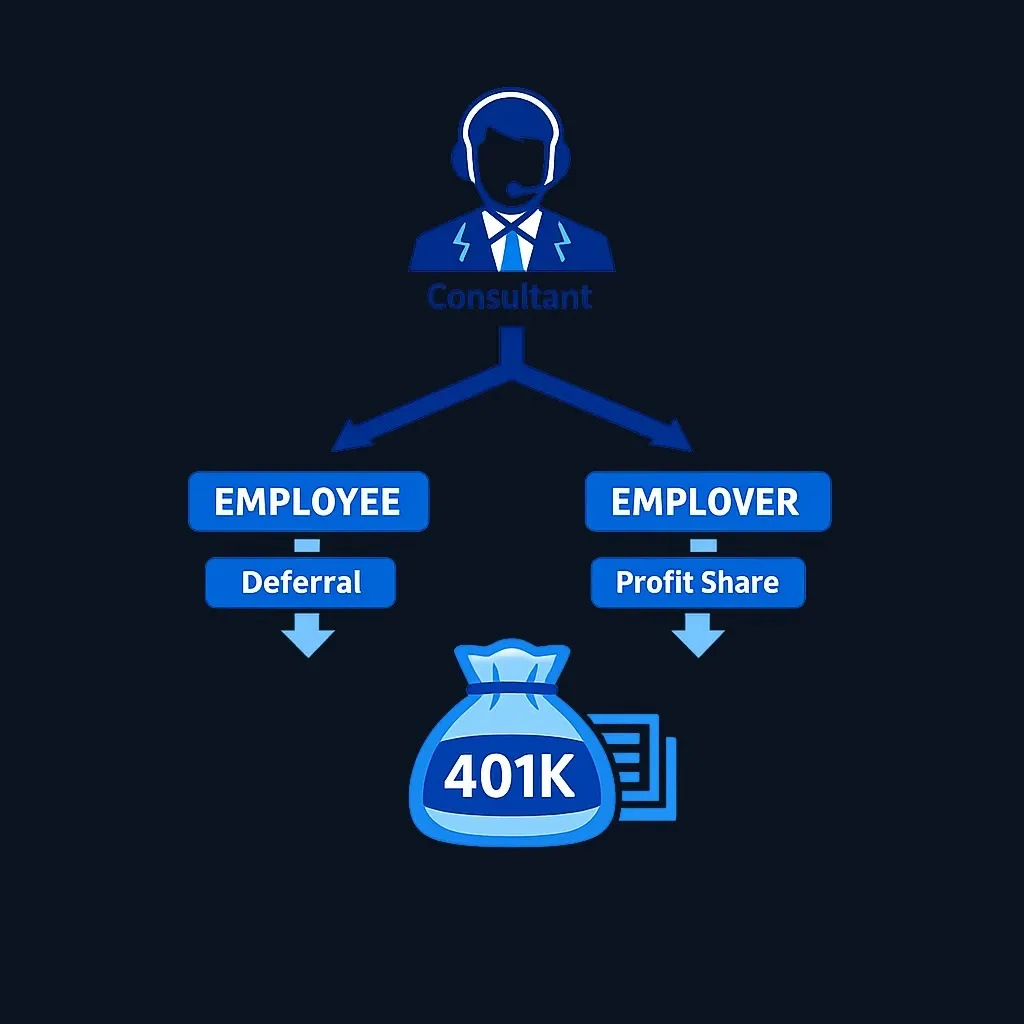
Example 1: The high-earning independent consultant
A consultant has steady profit, no immediate hiring plan, and wants to increase retirement contributions during strong years. This person is not just looking for an account. They are looking for contribution flexibility.
In that case, a Solo 401(k) is a strong candidate to research first. Fidelity’s plan comparison says Uni-K contribution limits are potentially greater than SEP IRA limits, although not every owner benefits (Fidelity plan comparison). The consultant should still compare current limits, provider fees, investment choices, and required administration before opening the plan.
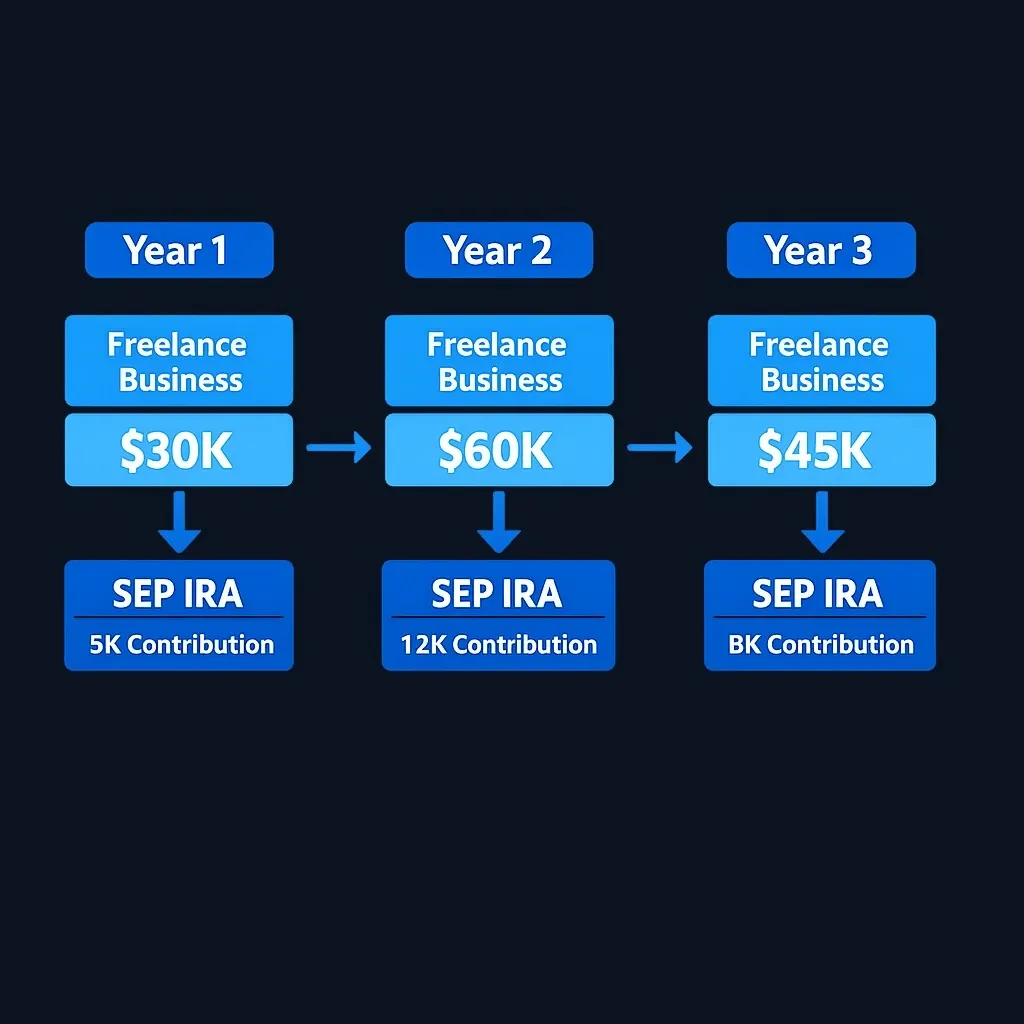
Example 2: The new freelancer with variable income
A freelancer has irregular income and wants to start retirement saving without taking on extra complexity. Their main priority is not maximizing every possible contribution pathway. It is opening a practical plan and building the habit.
A SEP IRA may be the better first plan to investigate. The IRS describes a straightforward setup using Form 5305-SEP or an approved prototype, plus opening SEP-IRAs through a financial institution (IRS self-employed retirement plans). The freelancer can revisit the Solo 401(k) question later if income becomes steadier or contribution goals rise.
Example 3: The owner who may hire soon
An owner expects to bring on employees within the next year. This person should not choose only by the owner’s current contribution goal. Hiring can change plan obligations, provider costs, and administrative work.
For this owner, the smartest next step is to model both plans with a provider or tax professional. The right question is not “Which plan is best today?” It is “Which plan still works when the business is no longer just me?”
How to switch between plans
Switching from a SEP IRA to a Solo 401(k), or from a Solo 401(k) to a SEP IRA, is mainly a coordination problem. You need to avoid overlapping assumptions, missed deadlines, and contribution mistakes.
Start by answering these questions:
- What plan do you already have open?
- Have you made contributions for the current tax year?
- Are there employees or expected employees?
- Does the new provider accept the account structure you want?
- What tax reporting or plan-document steps apply?
If moving toward a SEP IRA, the IRS setup path is clear: use Form 5305-SEP or an IRS-approved prototype and open SEP-IRAs through a financial institution (IRS self-employed retirement plans). If moving toward a Solo 401(k), review the provider’s plan documents carefully before assuming the new plan offers the features you want.
Do not close, transfer, or contribute based only on a comparison chart. Ask the current custodian, the new provider, and a qualified tax professional how to coordinate timing and reporting for your situation.
FAQ
What are the main differences between a Solo 401(k) and a SEP IRA?
The main differences are contribution design and setup complexity. Fidelity notes that Uni-K contribution limits are potentially greater than SEP IRA limits, while the IRS describes a relatively simple SEP setup using Form 5305-SEP or an approved prototype (Fidelity plan comparison, IRS self-employed retirement plans).
Who is eligible for each plan?
Both plans are commonly evaluated by self-employed people and small business owners. Before opening either plan, confirm eligibility with the provider’s documents and current IRS guidance, especially if your business has employees or may hire soon.
Which plan allows higher contributions?
A Solo 401(k), or Uni-K, can have potentially greater contribution limits than a SEP IRA, according to Fidelity (Fidelity plan comparison). That does not mean every owner will contribute more with a Solo 401(k), because the advantage depends on income, plan rules, and savings capacity.
Can I have both a Solo 401(k) and a SEP IRA?
Some business owners encounter both plan types across different years, providers, or business arrangements. Before maintaining or contributing to both, ask a provider or tax professional how current contribution limits, plan documents, and reporting rules apply to your situation.
Next steps
If you are deciding today, use this sequence:
- Estimate what you can realistically contribute this year.
- Decide whether simplicity or contribution flexibility matters more.
- Check current IRS limits and provider documents.
- Ask how hiring employees would change the plan.
- Compare all account fees, investment expenses, and administration requirements before opening anything.
For a simple rule of thumb: research a Solo 401(k) first if contribution flexibility is your main goal. Research a SEP IRA first if fast setup and lower administrative friction matter more.
Sources and Further Verification
More from Finelo
- SIMPLE IRA vs. 401(k): Limits, Costs, and Which Plan Fits a Small Business
- After-Tax 401(k) vs. Roth 401(k): Key Differences
- Cash Balance Plan vs. 401(k): Limits, Costs, and Which Plan Fits
Disclaimer
This article is provided by Finelo for educational and informational purposes only. Finelo does not provide financial, investment, tax, legal, or insurance advice. Consider your circumstances and consult an appropriately qualified professional before making financial decisions.
InvestingBeginner GuideFinancial Education
Practice investing with Finelo
Build practical investing skills with guided lessons, simulator practice, and structured challenges.
About the author
Finelo Team
The Finelo Team creates practical investing and trading education designed to help beginners learn faster with structured challenges, simulator practice, and bite-sized lessons.
Keep reading — Related articles

Investing
Yield to Call vs Yield to Maturity: Assumptions and Bond Risks
Yield to call (YTC) estimates a bond's yield if the issuer redeems it on an eligible call date; yield to maturity (YTM) estimates yield if it remains outstanding to final maturity.
Finelo Team

Investing
Will My Employer Know If I Take a 401(k) Loan?
Who this page is for: readers new to 401(k) loans who want a practical, privacy‑focused explanation — what your employer can see, how to limit visibility, and the financial tradeoffs to weigh.
Finelo Team

Investing
What Medical Expenses Qualify for a 401(k) Hardship Withdrawal?
Before you decide, confirm three things with your plan administrator:
Finelo Team


