Last editorial review: September 8, 2026
Cash Balance Plan vs. 401(k): Limits, Costs, and Which Plan Fits
A cash balance plan vs 401k comparison starts with plan type: the first is generally a defined-benefit arrangement, while a 401(k) is a defined-contribution plan.
14 min read
Practice investing with Finelo
Build practical investing skills with guided lessons, simulator practice, and structured challenges.
Want to learn more?
Build practical investing skills with guided lessons, simulator practice, and structured challenges.
Explore FineloExplore Finelo's 28-day challenges
Turn learning into a daily habit with guided challenge paths.
U.S. scope: This article discusses U.S. institutions, financial products, tax rules, and dollar examples unless stated otherwise. Rules and product terms may change; verify current official guidance for your situation.
Quick comparison answer
A cash balance plan vs 401k comparison starts with plan type: the first is generally a defined-benefit arrangement, while a 401(k) is a defined-contribution plan.
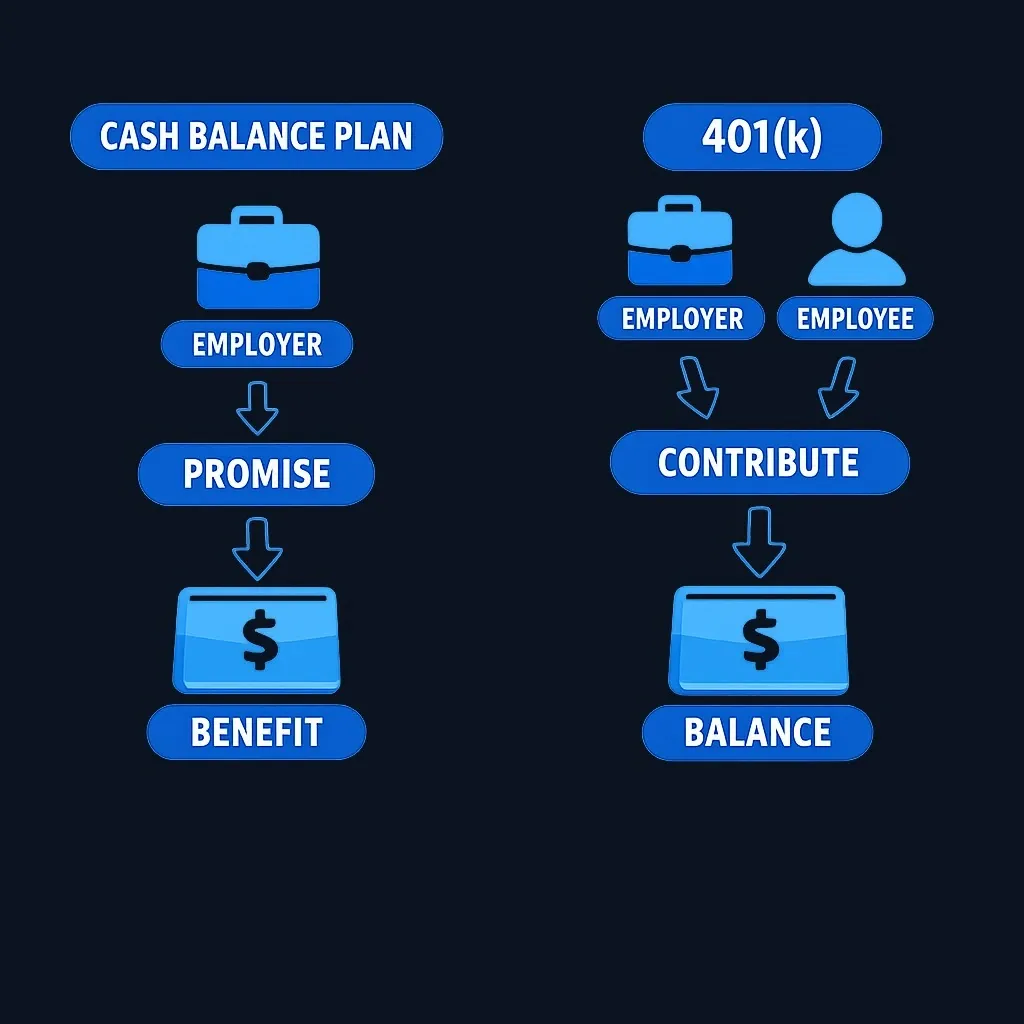
A cash balance plan may fit business owners who want larger employer-funded retirement contributions and can manage pension-style complexity. A 401(k) usually fits employers and workers who want simpler administration, participant choice, and easier portability. Many high-income owners compare both because the best answer depends on cash flow, age, employee mix, tax goals, and tolerance for ongoing plan administration.
Cost and administration overview
There is no single sticker price for “cash balance plan vs. 401(k)” because the cost depends on plan design, provider, employee count, payroll setup, investment services, and compliance work. The practical pricing answer is this: a cash balance plan often requires more specialized setup and ongoing administration, while a 401(k) is usually the simpler base option to quote and operate.
For a cash balance plan, ask vendors to separate setup, actuarial, plan document, annual administration, investment management, and compliance costs. Cash balance plans are pension-style arrangements, and the IRS notes that they are more likely than traditional defined benefit plans to make lump-sum distributions, which also means the plan document matters when evaluating payout options (IRS retirement plan definitions).
For a 401(k), ask providers to show employer fees, participant fees, investment expenses, payroll integration costs, and any added charges for testing or advisory support. Fidelity frames small-business retirement plan selection around whether it is “just you or you and your employees,” which is a useful first pricing filter when gathering quotes (Fidelity small-business retirement plan comparison).
Plan rules, limits, and costs to verify
Before choosing either plan, verify three categories: plan eligibility, contribution capacity, and ongoing operating cost. Do not compare only headline contribution limits. A cash balance plan’s value depends heavily on age, compensation, employee census, plan formula, and actuarial assumptions.
What to verify for a cash balance plan
Ask for a written illustration that shows expected employer contributions under several assumptions. A useful request is: “Show the owner contribution, staff contribution, total deductible contribution, and required annual funding range under conservative and less conservative assumptions.” That helps avoid the common mistake of seeing only the attractive owner number.
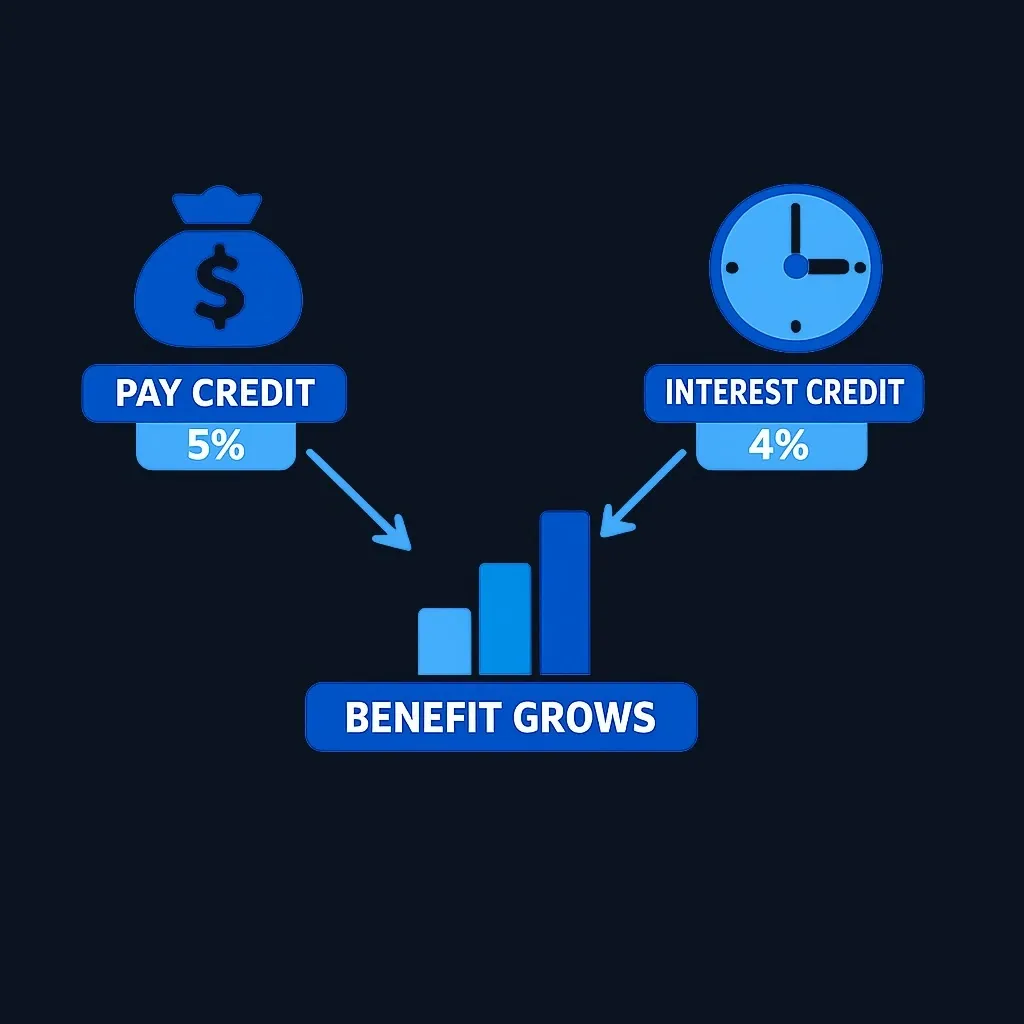
Also ask how the plan credits benefits. Cash balance designs typically use a pay-credit formula and an interest-credit formula, so the employer must understand how the promised benefit grows. The IRS specifically identifies cash balance plans as a retirement plan type and notes their tendency to support lump-sum distributions more often than traditional defined benefit plans (IRS retirement plan definitions).
What to verify for a 401(k)
For a 401(k), verify employee deferral options, employer contribution formulas, vesting, investment menu, payroll integration, recordkeeping fees, and participant support. If the plan is for a business with employees, also ask how the provider handles compliance testing and employee notices.
Fidelity’s small-business retirement plan comparison is built around matching plan type to the business owner’s situation, including whether the plan covers only the owner or also employees (Fidelity small-business retirement plan comparison). That distinction matters because a one-owner business and a company with many workers face different cost and testing issues.
What each plan includes
A strong quote should make clear what the provider includes, what costs extra, and which professionals remain outside the package. This matters because retirement plans are not only investment accounts. They also involve documents, administration, compliance, payroll workflows, and participant communication.
Typical cash balance plan service areas
A cash balance plan quote may include plan design, actuarial work, plan documents, annual administration, contribution calculations, and coordination with investment management. Some services may come from different firms. That is why sponsors often need a retirement plan consultant, actuary, recordkeeper, investment adviser, and tax professional working from the same assumptions.
The most important included item is the actuarial illustration. It should show how the plan behaves if business income changes, if staff changes, or if investment returns differ from assumptions. Without that view, a high contribution estimate can hide a future cash-flow problem.
Typical 401(k) service areas
A 401(k) quote may include recordkeeping, investment platform access, payroll integration, participant website access, compliance support, plan documents, and employer reporting. For many employers, the day-to-day workflow matters as much as the investment menu.
Fidelity describes its retirement plan comparison as a way to find a plan that fits whether the business includes only the owner or also employees (Fidelity small-business retirement plan comparison). Use that same lens when reading proposals. A plan that looks inexpensive for one owner can become less attractive once employee support and payroll work are added.
What is a Cash Balance Plan?
A cash balance plan is a pension-style retirement plan that expresses a participant’s benefit in account-like terms. Instead of showing only a monthly pension amount, it commonly shows a balance that grows under a formula. The IRS notes that cash balance plans are more likely than traditional defined benefit plans to make lump-sum distributions (IRS retirement plan definitions).
The key idea is that the employer funds the promised benefit. That makes the plan attractive when an owner wants larger employer-funded retirement contributions. It also creates more responsibility, because the plan must be funded and administered according to its design.
Cash balance plans can be powerful for profitable businesses with stable income. They can be less comfortable for firms with uneven cash flow. The design should be tested under realistic down years, not only strong profit years.
What is a 401(k) Plan?
A 401(k) is a retirement plan structure commonly used by employers and small businesses. Fidelity includes 401(k)-style options in its small-business retirement plan comparison and frames plan choice around the owner’s situation and employee coverage needs (Fidelity small-business retirement plan comparison).
In practical terms, a 401(k) is often the easier plan to understand and operate. Employees usually see an individual account, choose from available investment options, and can often take the account balance with them through a rollover when they leave. Employers can design contributions around business goals, budget, and employee benefits strategy.
A 401(k) is not automatically “better” because it is simpler. It may offer less room for very large owner contributions than a cash balance plan. The tradeoff is usually simplicity, portability, and broader employee familiarity.
Key Differences Between Cash Balance Plans and 401(k)s
| Decision point | Cash balance plan | 401(k) plan |
|---|---|---|
| Basic structure | Pension-style plan with account-like benefit reporting; the IRS notes cash balance plans are more likely than traditional defined benefit plans to make lump-sum distributions (IRS retirement plan definitions). | Employer retirement plan option commonly compared for small businesses and owner-only firms (Fidelity small-business retirement plan comparison). |
| Main funding source | Employer-funded formula. | Employee deferrals and possible employer contributions, depending on plan design. |
| Best-fit question | “Can the business support larger required contributions and specialist administration?” | “Does the business want a simpler, familiar retirement benefit?” |
| Contribution comparison | Can support larger employer-funded contributions in the right owner profile, but the amount depends on actuarial design. | Often easier to budget, but contribution capacity may be lower for high-income older owners. |
| Cost pattern | More likely to involve actuarial and pension administration work. | More likely to focus on recordkeeping, payroll, investments, and compliance support. |
| Risk focus | Employer must understand funding obligations and formula design. | Participant investment choices and plan fees deserve close review. |
| Portability | Lump-sum distribution options may be available under plan terms; verify the document. | Often viewed as more portable and familiar for employees. |
The biggest difference is not simply “higher limit versus lower limit.” It is the obligation behind the limit. A cash balance plan may create more contribution room, but it also asks the employer to support a pension-style promise.
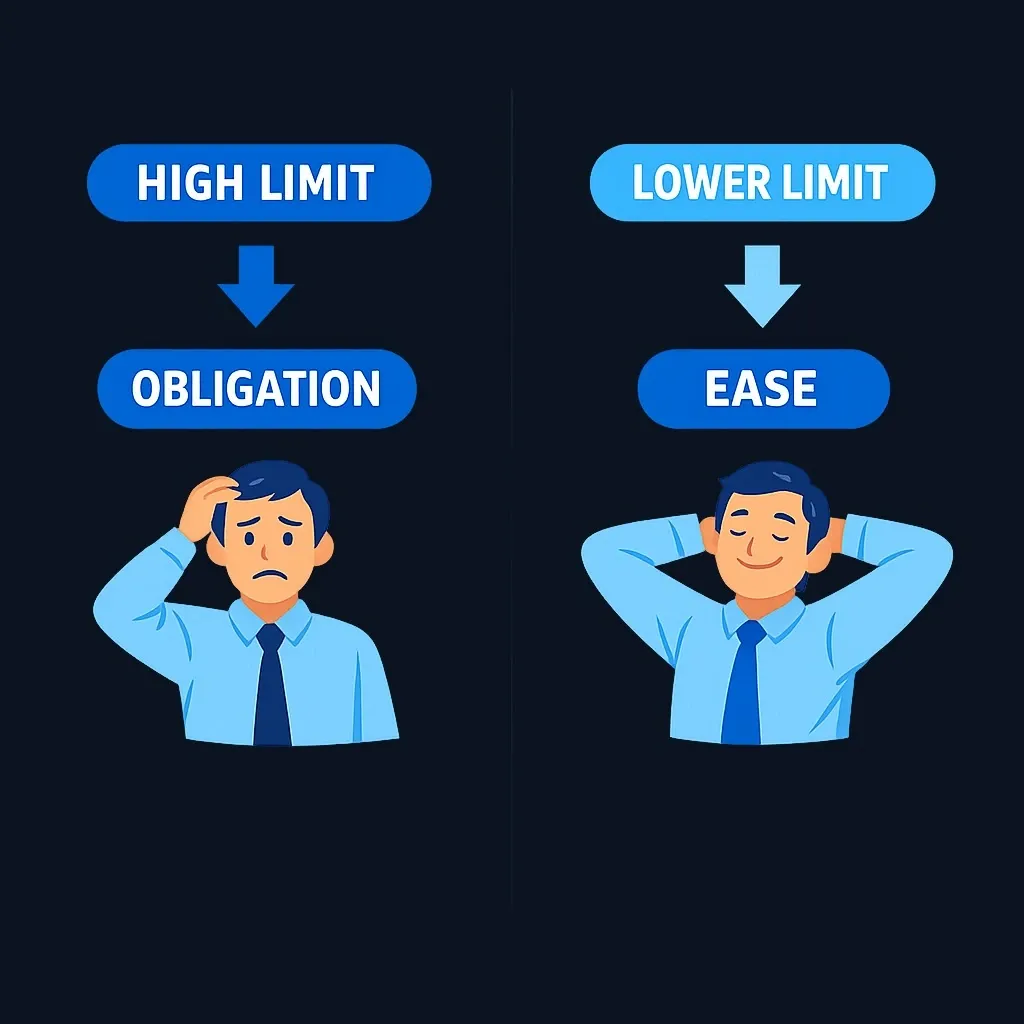
A 401(k) may be less dramatic, but it is often easier to explain to employees. It can also be a better first plan for a business that is still building steady profit. If the business later has consistent surplus cash, a cash balance plan can be evaluated as an added layer.
Practice investing with Finelo
Build practical investing skills with guided lessons, simulator practice, and structured challenges.
Value and suitability considerations
The best answer for “cash balance plan vs. 401(k)” is usually conditional. For many high-income business owners, the comparison starts with contribution capacity. For employees and smaller employers, it often starts with simplicity, access, and administrative burden.
Advantages of cash balance plans
A cash balance plan can create meaningful value when the owner wants larger retirement contributions than a 401(k) alone can support. It can also create a more structured retirement benefit because the plan formula defines how benefits grow. This can appeal to owners who want disciplined, employer-funded savings.
The account-like presentation can make the benefit easier to understand than a traditional pension. The IRS notes that cash balance plans are more likely than traditional defined benefit plans to make lump-sum distributions, which can make the benefit feel more portable to participants (IRS retirement plan definitions).
The main value test is simple: does the additional contribution room justify added cost and complexity? If the answer is unclear, request a side-by-side projection. Compare total employer cost, owner benefit, employee benefit, and administrative burden.
Disadvantages of cash balance plans
The biggest drawback is complexity. A cash balance plan is not just a bigger 401(k). It requires careful design, professional administration, and ongoing review.
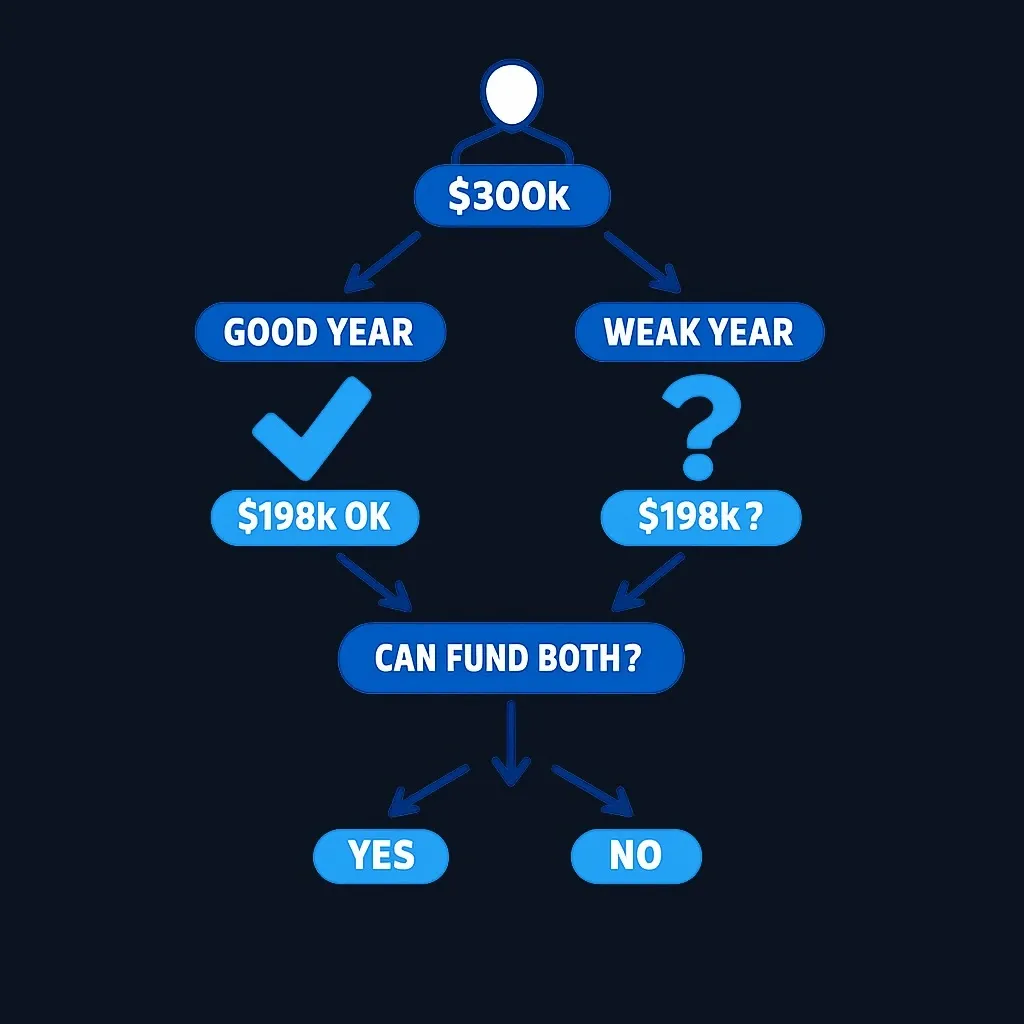
Cash-flow risk is another common mistake. A business owner may like the first-year contribution estimate but fail to ask what happens after a weaker revenue year. Before adopting the plan, model several years of funding under different income assumptions.
Employee demographics can also change the economics. Hiring more employees, changing compensation levels, or adding older workers may affect the plan’s cost. A plan that fits this year’s staff may need adjustment later.
Advantages of 401(k)s
A 401(k) is often easier for employees to recognize and use. It can fit owner-only businesses, businesses with employees, and firms that want a more familiar retirement benefit. Fidelity’s comparison tool explicitly starts with whether the business is just the owner or includes employees, which is the right first question for plan selection (Fidelity small-business retirement plan comparison).
A 401(k) also supports a more modular design. Employers can review matching, profit-sharing, payroll integration, and investment menu decisions separately. That makes it easier to manage the plan as the business grows.
The drawback is that a 401(k) may not solve a high-income owner’s desire for much larger deductible retirement contributions. In that case, the 401(k) can become the base layer, while a cash balance plan becomes the advanced layer to evaluate.
Who Should Consider Each Plan?
Consider a cash balance plan if the business has stable profits, the owner wants larger employer-funded retirement savings, and the company can manage specialist administration. This is especially relevant when the owner’s goal is to accelerate retirement savings over a shorter time horizon. It is less appealing if cash flow is uncertain or the business dislikes recurring professional complexity.
Consider a 401(k) if the goal is a broad, familiar employee retirement benefit. It may also fit a business that wants a simpler base plan before adding more advanced strategies. For many employers, a 401(k) is the first plan to price because it is easier to communicate and administer.
Consider using both if the 401(k) handles broad participation while the cash balance plan addresses higher owner contribution goals. This combination needs careful coordination. Ask the provider to show how the two plans interact before assuming the combination works.
A quick decision framework
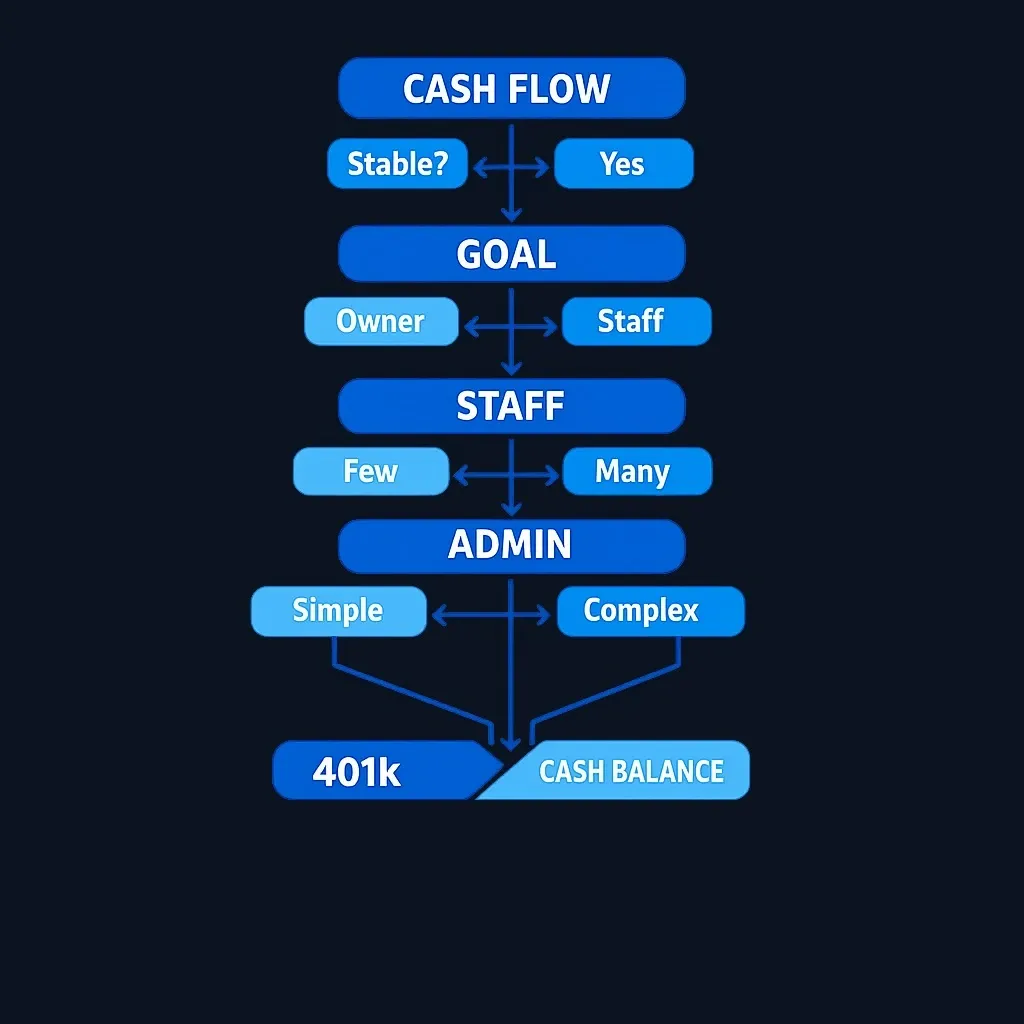
Use this four-part test before requesting proposals:
- Cash flow: Can the business support recurring employer contributions without straining operations?
- Owner goal: Is the main goal broad employee benefits or larger owner retirement savings?
- Employee census: Would staff demographics make the cash balance design expensive or difficult?
- Administration tolerance: Is the owner willing to manage actuarial, tax, legal, and recordkeeping coordination?
If most answers point to simplicity, start with a 401(k) quote. If most answers point to high contribution capacity and stable profits, request a cash balance illustration. If both goals matter, compare a combined design.
Real-World Examples and Case Studies
Scenario 1: High-income owner with stable profit
A professional services owner has strong, recurring income and already understands basic retirement saving. A 401(k) provides a familiar base, but it may not meet the owner’s larger savings goal. In this case, the owner asks an actuary to illustrate a cash balance plan layered with the existing retirement setup.
The key decision is not whether the cash balance plan produces a bigger contribution estimate. The key decision is whether the business can support that contribution in normal and weaker years. The owner should compare owner benefit, employee cost, administrative cost, and funding flexibility before adopting the plan.
Scenario 2: Growing company with younger employees
A growing company wants a benefit that employees understand and can use without much explanation. A 401(k) may fit better because it is familiar and easier to integrate with payroll. The owner still asks about cash balance options, but the employee census and growth plans make simplicity more valuable.
This company can revisit a cash balance plan later. That avoids locking into complexity before the business has stable profits and a clear long-term owner savings goal. The practical move is to build the base plan first, then evaluate advanced options.
Scenario 3: Owner-only business comparing both
An owner-only business has fewer employee design issues, but it still needs careful analysis. The owner compares a 401(k)-only setup with a combined approach that includes a cash balance plan. The provider must show how each option affects contributions, administrative work, investment management, and exit flexibility.
This is where many comparisons go wrong. The owner focuses on the largest possible contribution but ignores the plan’s ongoing maintenance. A better comparison includes year-two and year-three funding expectations, not only the first proposal.
Cost and funding caveats
Retirement plan pricing is proposal-driven, so verify current pricing on the official provider site and in a written quote. Do not rely on a generic online estimate when the plan depends on employee count, payroll, investments, and compliance work.
Also separate plan cost from tax value. A large deductible contribution may look attractive, but it still uses business cash. Tax timing, owner liquidity, employee obligations, and investment risk all affect the real value.
Finally, confirm who is responsible for each role. A retirement plan provider may not replace an actuary, tax adviser, investment adviser, payroll provider, or attorney. The cleanest proposal names each responsible party and shows which fees are included.
If you are comparing plan education resources while evaluating your options, you can review Finelo’s learning hub as one education-focused next step.
FAQ
Is a cash balance plan better than a 401(k)?
It depends on the goal. A cash balance plan may fit a high-income business owner seeking larger employer-funded retirement contributions, while a 401(k) may fit employers that want a simpler and more familiar retirement benefit.
Can a business have both a cash balance plan and a 401(k)?
A business may evaluate both plan types as part of its retirement benefits strategy. The combined design should be reviewed by qualified professionals because contribution capacity, employee coverage, and compliance testing can interact.
How do contribution limits compare?
A cash balance plan can allow larger employer-funded contributions in the right circumstances, but the actual amount depends on age, compensation, employee census, and actuarial assumptions. A 401(k) is usually easier to quote, but it may offer less contribution room for some high-income owners.
What are the main tax implications?
Both plan types can involve tax-advantaged retirement saving, but the exact treatment depends on plan design, contribution type, distribution timing, and current tax rules. Treat tax savings as one input, not the whole decision, and verify the numbers with a qualified tax professional.
Sources and Further Verification
More from Finelo
- After-Tax 401(k) vs. Roth 401(k): Key Differences
- How to Find an Old 401(k): Records, Databases, Fees, and Rollover Options
- SIMPLE IRA vs. 401(k): Limits, Costs, and Which Plan Fits a Small Business
Disclaimer
This article is provided by Finelo for educational and informational purposes only. Finelo does not provide financial, investment, tax, legal, or insurance advice. Consider your circumstances and consult an appropriately qualified professional before making financial decisions.
InvestingBeginner GuideFinancial Education
Practice investing with Finelo
Build practical investing skills with guided lessons, simulator practice, and structured challenges.
About the author
Finelo Team
The Finelo Team creates practical investing and trading education designed to help beginners learn faster with structured challenges, simulator practice, and bite-sized lessons.
Keep reading — Related articles

Investing
Yield to Call vs Yield to Maturity: Assumptions and Bond Risks
Yield to call (YTC) estimates a bond's yield if the issuer redeems it on an eligible call date; yield to maturity (YTM) estimates yield if it remains outstanding to final maturity.
Finelo Team
Investing
Will My Employer Know If I Take a 401(k) Loan?
Who this page is for: readers new to 401(k) loans who want a practical, privacy‑focused explanation — what your employer can see, how to limit visibility, and the financial tradeoffs to weigh.
Finelo Team
Investing
What Medical Expenses Qualify for a 401(k) Hardship Withdrawal?
Before you decide, confirm three things with your plan administrator:
Finelo Team