Last editorial review: September 8, 2026
How to Find an Old 401(k): Records, Databases, Fees, and Rollover Options
Start by contacting your former employer or the plan’s recordkeeper, then search the U.S. Department of Labor’s Retirement Savings Lost and Found to see plans linked to your Social Security…
11 min read
Practice investing with Finelo
Build practical investing skills with guided lessons, simulator practice, and structured challenges.
Want to learn more?
Build practical investing skills with guided lessons, simulator practice, and structured challenges.
Explore FineloExplore Finelo's 28-day challenges
Turn learning into a daily habit with guided challenge paths.
U.S. scope: This article discusses U.S. institutions, financial products, tax rules, and dollar examples unless stated otherwise. Rules and product terms may change; verify current official guidance for your situation.
Quick answer
Start by contacting your former employer or the plan’s recordkeeper, then search the U.S. Department of Labor’s Retirement Savings Lost and Found for plans linked to your Social Security number. Fidelity’s consumer guide to finding an old 401(k) outlines additional records and contacts that can help.
Introduction: Why Finding Your Old 401(k) Matters
An old 401(k) can contain retirement savings you forgot about. Locating it restores control over investments and lets you decide whether to consolidate, roll over, or—carefully—take a distribution. This article gives a focused, practical plan: the documents to prepare, the exact places to search, how to use the DOL Lost and Found tool, and how to evaluate your options once you locate an account.
Educational scope and verification
Finelo presents this content as financial education, not personalized advice; verify options and tax consequences with qualified advisors before taking action. For general consumer guidance on finding old 401(k)s, see Fidelity’s how-to guide How to find your old 401(k) | Fidelity.
Educational note: This article is educational and not financial or tax advice. Moving or withdrawing retirement funds can have tax and penalty consequences; consult a qualified professional for decisions that affect your situation.
What to know before deciding
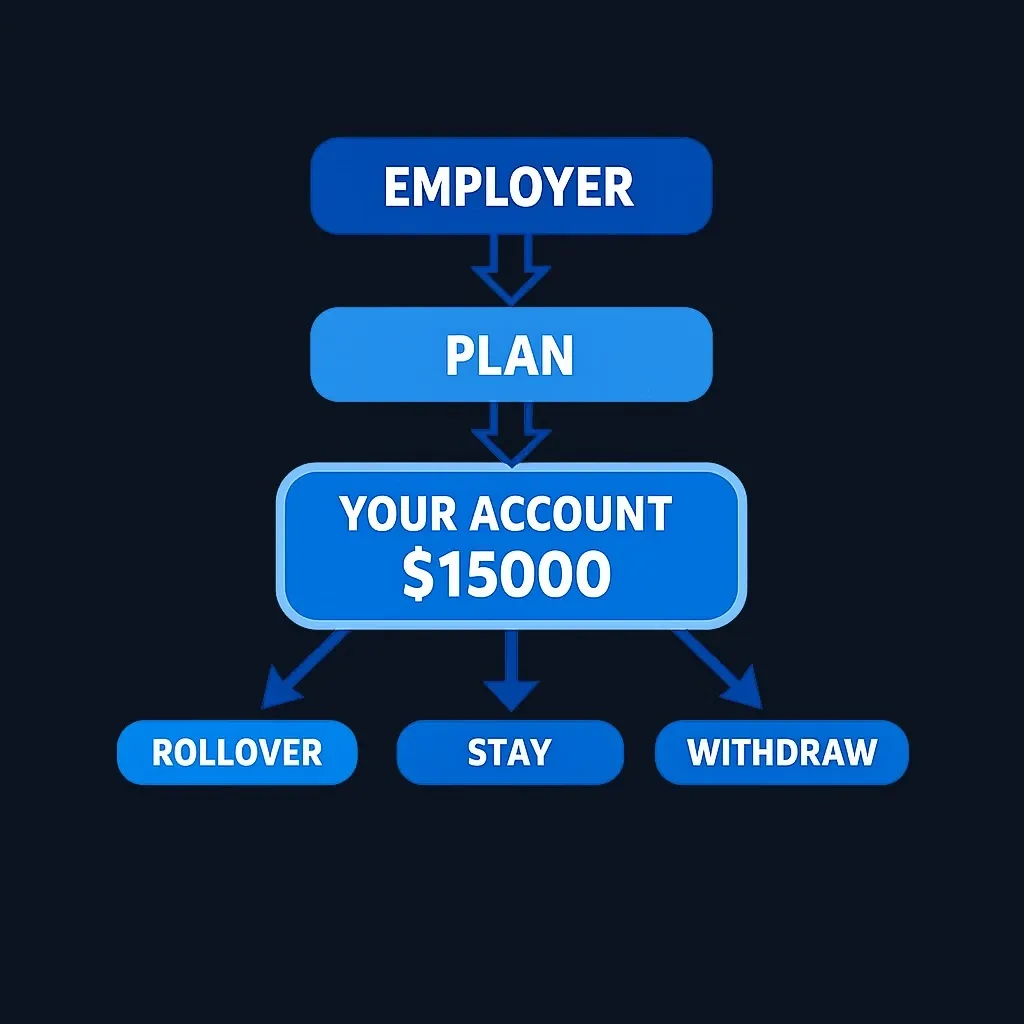
A 401(k) is an employer-sponsored retirement plan that may hold pre-tax contributions, employer matches, or after-tax amounts depending on plan design. When you leave a job, the plan typically retains your balance unless you request a distribution or rollover. Where the account sits—and the plan’s specific rules—determine the practical options (for example, whether the plan accepts rollovers or charges fees).
Key concepts to understand before you act
- Recordkeeper / plan administrator: the firm that maintains account records and processes rollovers or distributions. You’ll need their contact info to get statements or move money.
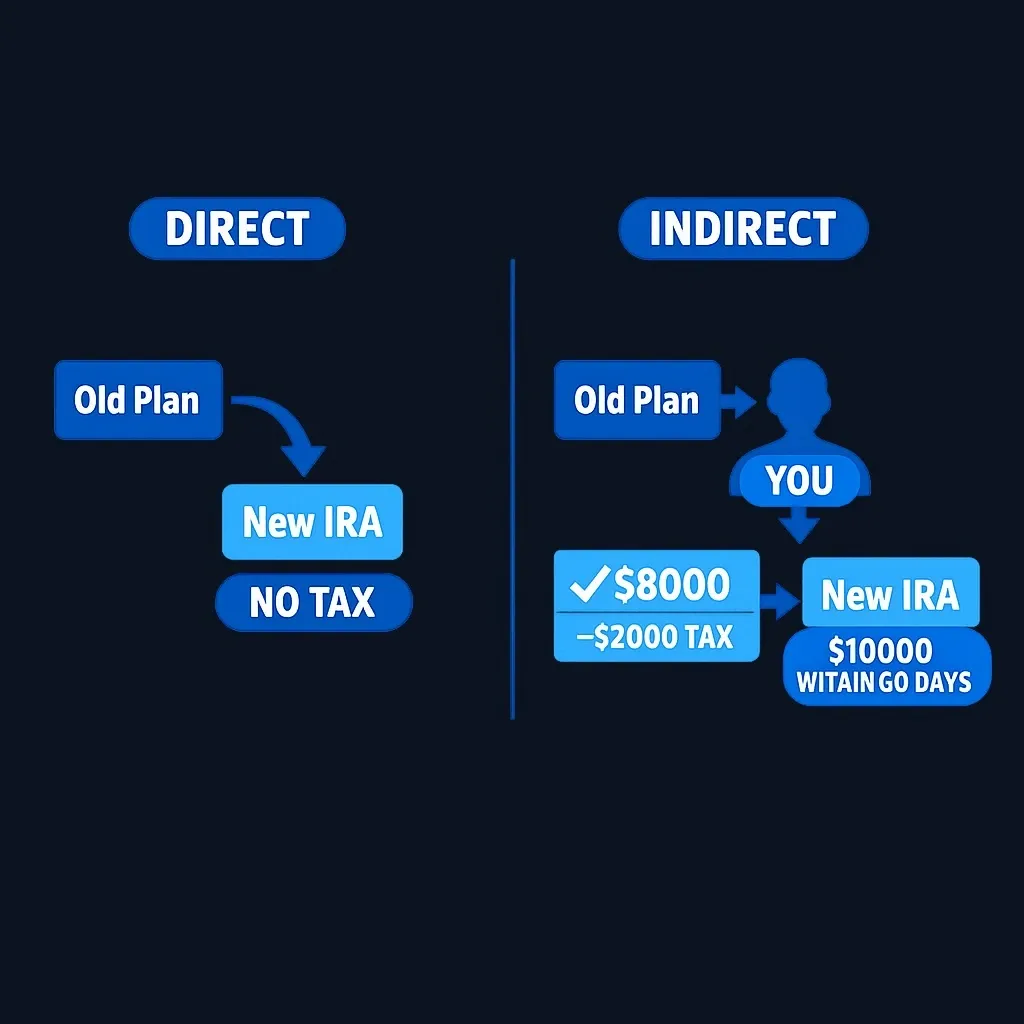
- Direct rollover vs. indirect rollover: a direct rollover sends funds straight to another retirement account; an indirect rollover pays you and requires you to redeposit funds to avoid taxes and potential penalties. For consumer-facing summaries of options after locating a 401(k), see Fidelity’s guide How to find your old 401(k) | Fidelity.
- Identity verification: Providers will require personal data such as your Social Security number, former names, and employment dates to match accounts to you. The DOL Lost and Found tool also uses Login.gov identity verification.
What you should gather mentally before searching
- The employer name and approximate dates you worked there.
- Any former names you used while employed.
- Your Social Security number and a government ID for verification. These facts speed search and help the recordkeeper confirm ownership.
Step-by-step guide to finding your old 401(k)
This combined, prioritized workflow covers employer contacts, the DOL Lost and Found, and practical follow-ups you’ll use once a plan is identified.
Step 0 — Prioritize and prepare (5–10 minutes)
- Decide which job(s) you want to check first (most recent usually yields results).
- Gather ID info and the checklist below so you can act during calls or web registrations.
Documents checklist
| What to have | Why it helps |
|---|---|
| Social Security number | Matches accounts to you |
| Full legal name and any former names | Employers may have records under a prior name |
| Dates of employment | Identifies the correct plan year |
| Last known address and email | Helps narrow records or unclaimed reports |
| Old W-2s, pay stubs, or account statements (if available) | Shows employer plan name or recordkeeper |
Step 1 — Contact your former employer or HR (fastest when available)
- Ask HR or benefits whether a 401(k) plan exists for your employment period, the plan administrator name, and how to request an account statement.
- Request the plan’s recordkeeper contact (phone or email) and any rollover or distribution forms the plan requires. If HR provides a recordkeeper, contact that firm directly to request account access.
Step 2 — Use the Department of Labor’s Retirement Savings Lost and Found
- Visit the DOL’s Retirement Savings Lost and Found.
- Sign in with or create a Login.gov account and complete identity verification. The tool can return plan names and contact information to guide your next step; follow its current on-screen instructions.
- Best practices: have your SSN and former names ready, save screenshots of returned results, and note the plan administrator details to contact the recordkeeper.
Step 3 — Contact the recordkeeper or plan administrator
- Request a current account statement, inquire how to re-establish online access, and ask about rollovers or distributions and any fees. Provide the documents from the checklist to verify identity.
- If the recordkeeper confirms funds exist, ask for written confirmation and the exact steps to request a direct rollover (preferred for avoiding automatic withholding and tax consequences).
Step 4 — If your former employer no longer exists
- Use the DOL Lost and Found as a primary next step; it may return plans tied to your Social Security number even when the employer has dissolved.
- If plan contacts are unclear, the recordkeeper results from the DOL or a statement found among old paperwork typically point you to the right organization to request account details.
Step 5 — Check additional official resources before paying for help
- Try plan administrator sites directly (if you know the custodian) and the DOL tool first. Many cases are resolved without paid search services. For general consumer steps and options after locating accounts, see Fidelity’s overview How to find your old 401(k) | Fidelity.
A short worked example
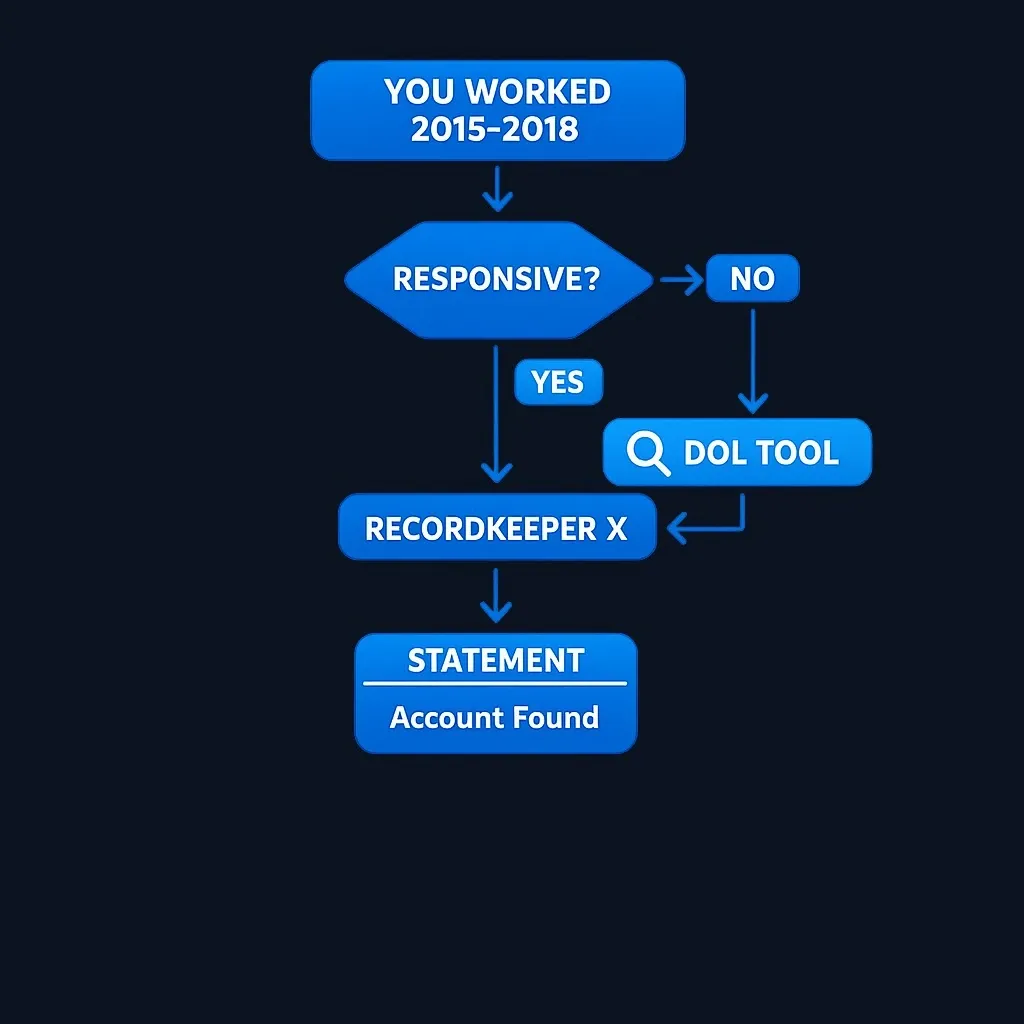
- You worked at Company A from 2015–2018 and changed your last name in 2019. Start by calling Company A’s HR with your 2015 legal name and dates. If HR is unresponsive, sign in to the DOL Lost and Found with your SSN; the tool returns a plan administered by “Recordkeeper X.” Contact Recordkeeper X with your SSN and the employment dates to request a statement and rollover instructions.
Common mistakes and how to avoid them
- Mistake: Using only your current name when records use a prior name. Fix: Provide any former legal names and the employers’ locations.
- Mistake: Accepting a check (indirect rollover) without understanding withholding. Fix: Request a direct rollover to avoid mandatory withholding and extra steps.
What to do after locating your old 401(k)
When you confirm an account exists, collect these facts from the recordkeeper before choosing an action: current balance, fees, whether the plan accepts rollovers, distribution rules, and whether any required minimums apply.
Qualitative pros and cons of common post-discovery choices
| Option | Pros | Cons |
|---|---|---|
| Leave funds in the old employer plan | No immediate paperwork; you keep plan investments | May limit investment choices; fees or minimums could apply |
| Direct rollover to a new employer plan | Consolidates workplace accounts (if accepted) | New plan must accept the rollover; options may differ |
| Direct rollover to an IRA | More investment choices and consolidated control | You must choose and set up an IRA custodian; watch fees |
| Cash out / take distribution | Immediate access to money | May trigger taxes and penalties; reduces retirement savings |
How to proceed (practical next steps)
- Get a written or emailed account statement showing balance and recent activity.
- Ask the recordkeeper for rollover paperwork and whether the plan permits direct rollovers.
- If consolidating, confirm the receiving account (employer plan or IRA) accepts the rollover; request direct rollover instructions in writing.
- Keep copies of all communications and forms. For plain-language options and tradeoffs after locating a 401(k), see Fidelity’s consumer guidance How to find your old 401(k) | Fidelity.
Reminder on taxes and penalties Moving or withdrawing retirement funds has tax consequences. This guide is educational and not tax advice; consult a tax professional before requesting distributions.
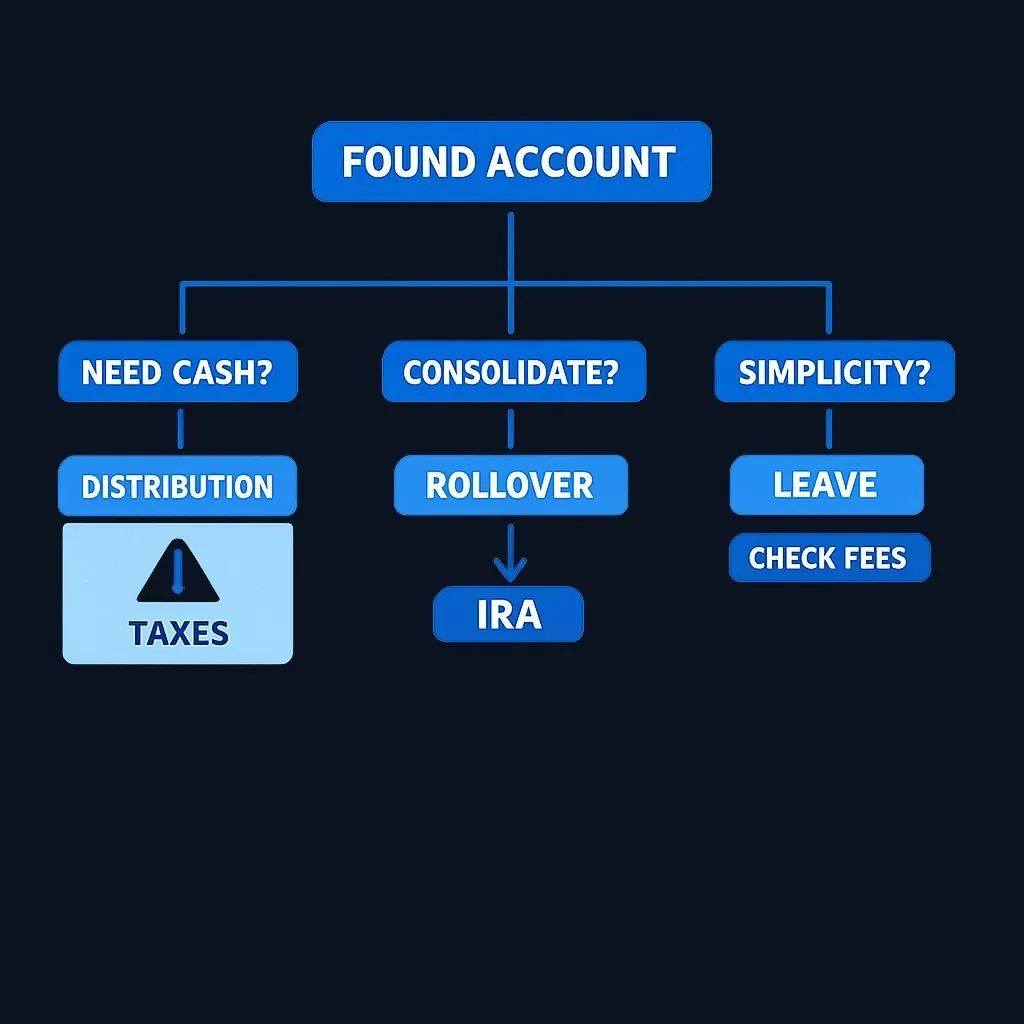
Flowchart (text version) — immediate decision path
- Do you need the cash now? → If yes, confirm tax and penalty implications before requesting a distribution.
- Are you consolidating accounts? → If yes, prefer a direct rollover to an IRA or new employer plan.
- Prefer simplicity and no immediate action? → If allowed, leaving the funds may be simplest—confirm fees and access rules.
Practice investing with Finelo
Build practical investing skills with guided lessons, simulator practice, and structured challenges.
Decision framework
Use this compact framework to choose what to do with any found account. Rank your priorities, then match them with facts gathered.
- Rank priorities (example order): tax efficiency, fees, investment choice, simplicity, liquidity, estate transfer ease.
- Gather facts (ask the recordkeeper in writing): current balance, detailed fee schedule, whether direct rollovers are permitted, any required minimums, and distribution/penalty rules.
- Map priorities to options:
- If tax efficiency and preservation are top priorities, prefer a direct rollover (IRA or new plan).
- If you need liquidity despite tax costs, confirm withholding and penalties before taking a distribution.
- If low fees and investment choice matter most, an IRA might be better than leaving funds in an older plan.
- Execute with documentation: request written confirmations and use direct rollovers where possible to avoid withholding or accidental taxes.
Checklist to follow before you sign anything
- Confirm the receiving account accepts rollovers.
- Ask whether the old plan does a direct rollover or issues a check.
- Get expected processing time and any forms needed.
- Save all confirmation emails and final statements.
Tip: When in doubt, a direct rollover to a traditional IRA preserves tax deferral and avoids immediate withholding; confirm details with both old and receiving institutions.
FAQ
How do I find out if I have any old 401(k) accounts?
First contact your former employer’s HR or benefits department for plan and recordkeeper details. If that is not possible or you need another route, use the U.S. Department of Labor’s Retirement Savings Lost and Found and consult consumer guides such as Fidelity’s old 401(k) guide.
How do I use the DOL Retirement Savings Lost and Found?
Go to the Retirement Savings Lost and Found, sign in or create a Login.gov account, and follow the current identity-verification and search instructions. The tool can provide plan contact details to help you follow up.
What should I do if my former employer is no longer in business?
If the employer dissolved, the DOL Lost and Found may identify a plan or administrator to contact. If you find a recordkeeper, request an account statement and written instructions for any available rollover or distribution options.
What are my options once I find my old 401(k)?
Common options include leaving the account in the old plan, rolling it over to your current employer’s plan (if accepted), rolling over to an IRA, or taking a distribution. Each choice involves tradeoffs in taxes, fees, and investment options—see Fidelity’s guidance for an accessible overview of these choices How to find your old 401(k) | Fidelity. Consult a tax professional for tax-specific consequences.
Conclusion: Taking action on your retirement savings
Finding an old 401(k) usually comes down to three practical moves: contact the former employer or HR, search the DOL Retirement Savings Lost and Found with your SSN, and contact the plan recordkeeper for statements and rollover instructions. Gather the documents in the checklist, prioritize a direct rollover when consolidation or tax deferral is the goal, and keep written records of every step. For consumer-oriented next steps and detailed explanations of rollover options, see Fidelity’s guide How to find your old 401(k) | Fidelity.
(If you want a printable version of the documents checklist above or a step-by-step printable script for calling HR and recordkeepers, visit Finelo’s learning hub for related educational resources.)
Sources and Further Verification
More from Finelo
- After-Tax 401(k) vs. Roth 401(k): Key Differences
- Cash Balance Plan vs. 401(k): Limits, Costs, and Which Plan Fits
- SIMPLE IRA vs. 401(k): Limits, Costs, and Which Plan Fits a Small Business
Disclaimer
This article is provided by Finelo for educational and informational purposes only. Finelo does not provide financial, investment, tax, legal, or insurance advice. Consider your circumstances and consult an appropriately qualified professional before making financial decisions.
InvestingBeginner GuideFinancial Education
Practice investing with Finelo
Build practical investing skills with guided lessons, simulator practice, and structured challenges.
About the author
Finelo Team
The Finelo Team creates practical investing and trading education designed to help beginners learn faster with structured challenges, simulator practice, and bite-sized lessons.
Keep reading — Related articles

Investing
Yield to Call vs Yield to Maturity: Assumptions and Bond Risks
Yield to call (YTC) estimates a bond's yield if the issuer redeems it on an eligible call date; yield to maturity (YTM) estimates yield if it remains outstanding to final maturity.
Finelo Team
Investing
Will My Employer Know If I Take a 401(k) Loan?
Who this page is for: readers new to 401(k) loans who want a practical, privacy‑focused explanation — what your employer can see, how to limit visibility, and the financial tradeoffs to weigh.
Finelo Team
Investing
What Medical Expenses Qualify for a 401(k) Hardship Withdrawal?
Before you decide, confirm three things with your plan administrator:
Finelo Team


