Last editorial review: September 8, 2026
Social Security Spousal Benefits: Eligibility, Calculations, and Claiming Rules

Social Security spousal benefits are retirement benefits tied to a spouse’s work record. They matter most when one spouse’s own retirement benefit may be lower than the amount available…
12 min read
Practice investing with Finelo
Build practical investing skills with guided lessons, simulator practice, and structured challenges.
Want to learn more?
Build practical investing skills with guided lessons, simulator practice, and structured challenges.
Explore FineloExplore Finelo's 28-day challenges
Turn learning into a daily habit with guided challenge paths.
U.S. scope: This article discusses U.S. institutions, financial products, tax rules, and dollar examples unless stated otherwise. Rules and product terms may change; verify current official guidance for your situation.
Quick answer
Social Security spousal benefits are retirement benefits tied to a spouse's work record. For a current spouse, the worker generally must already be receiving retirement or disability benefits, and the spouse generally must be at least 62 unless caring for a qualifying child (SSA retirement-benefits guide). At the spouse's full retirement age, the maximum spouse benefit can be up to 50% of the worker's full-retirement-age amount; claiming earlier can reduce it, and waiting beyond the spouse's full retirement age does not raise that 50% maximum. Compare your own official estimate, the spouse-based estimate, filing age, survivor-income needs, and any divorce or remarriage history before filing.
Educational note: this article is for general financial education, not financial, investment, tax, or legal advice. Retirement-income decisions can have lasting tradeoffs, so verify your personal numbers before filing.
What to know before deciding
This page is for spouses, divorced spouses, and remarried people trying to understand whether spousal benefits could change their retirement-income plan. It is also useful if one partner had lower lifetime earnings, spent time out of the workforce, or expects their own benefit estimate to be smaller than a spouse-based estimate.
The key decision is not simply “Can I claim?” It is “Which claiming pattern gives the household the best balance of current income, later income, and survivor resilience?” That balance can differ for couples with the same benefit estimates because health, savings, pensions, work plans, and cash needs can all change the answer.
Use this simple pre-filing checklist before you make a decision:
- Gather both spouses’ Social Security benefit estimates.
- List marriage, divorce, and remarriage dates.
- Compare your own benefit estimate with any spouse-based estimate.
- Test more than one claiming age instead of looking at one monthly number.
- Consider how the plan works if either spouse lives much longer than expected.
- Confirm the final estimate with official resources before filing.
The biggest mistake is treating a spousal benefit as a standalone payment. In practice, it belongs inside a household retirement-income plan. A smaller monthly check today may be acceptable if other income covers essentials. A larger later check may matter more if one spouse could depend heavily on Social Security later in life.
What are Social Security spousal benefits?
Social Security spousal benefits are benefits connected to a spouse's earnings record. They may matter when a spouse's own retirement benefit is lower than the spouse-based amount.
Think of them as a coordination rule, not a second full payment. Under SSA's deemed-filing rules, someone eligible for both their own retirement benefit and a spouse benefit is generally treated as applying for both. SSA pays the person's own benefit first and adds only enough spouse benefit to reach the higher combined amount, if applicable (SSA deemed-filing rules). Survivor benefits follow separate rules and should not be treated as interchangeable with spouse benefits.
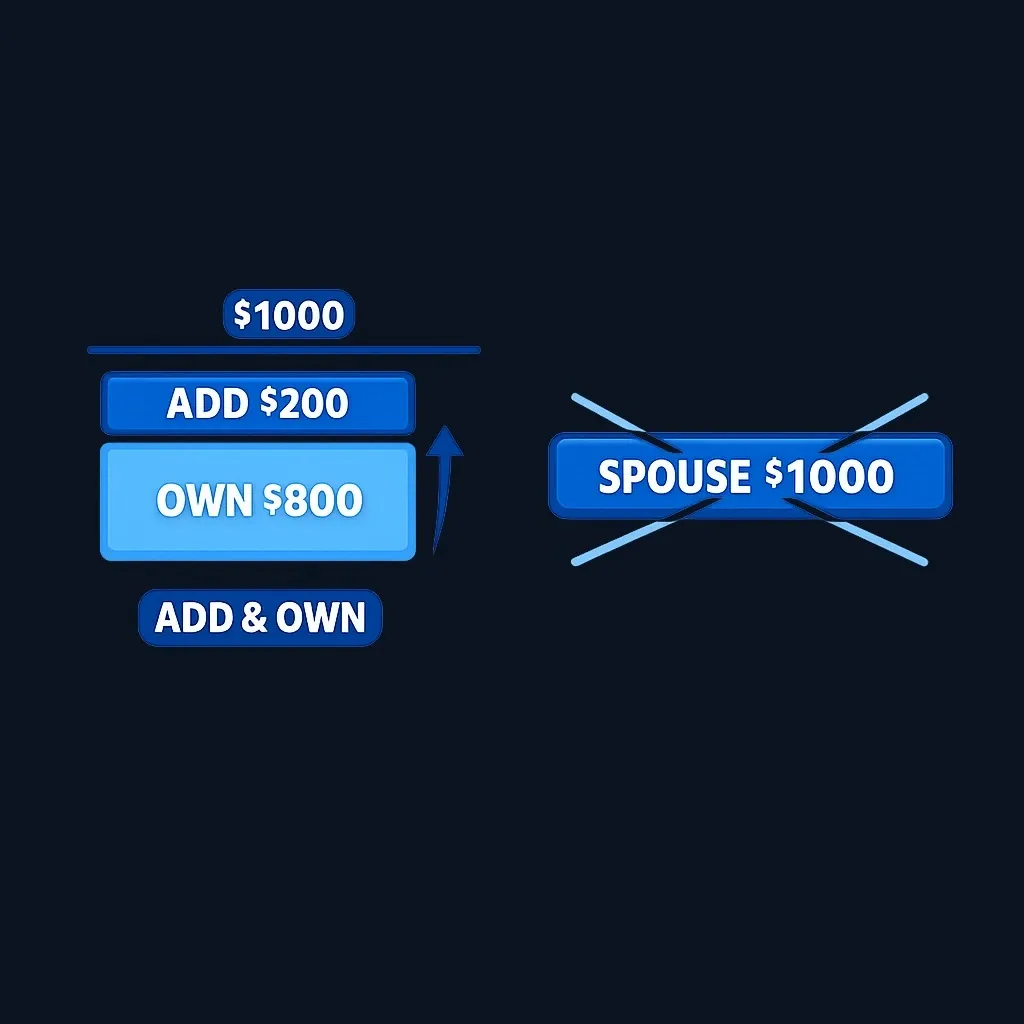
A practical example: suppose one spouse spent many years in paid work while the other spent long periods caregiving or working part time. The lower-earning spouse may want to compare their own retirement estimate with a spouse-based estimate. The right filing age then depends on household cash flow, longevity assumptions, and survivor-income goals.
Spousal benefits also require extra care when marital history is complex. Divorce and remarriage can affect which record is relevant. If you divorced and later remarried, Fidelity explains that Social Security generally treats you as a current spouse and bases spousal retirement benefits on the current spouse’s work history, if eligible Fidelity.
Eligibility requirements for spousal benefits
Eligibility turns on three practical questions: marital status, the worker's filing status, and the spouse's age or caregiving status. For a current-spouse claim, the worker generally must have filed for retirement or disability benefits, and the spouse generally must be 62 or older unless caring for the worker's child who is under 16 or has a qualifying disability (SSA retirement-benefits guide).
If you are divorced, do not assume the answer is the same as for a current spouse. An unmarried divorced spouse may qualify based on an ex-spouse's record when the marriage lasted at least 10 years and the other conditions are met; in some cases, an ex-spouse who has not filed can still support a claim after the divorce has lasted at least two continuous years (SSA retirement-benefits guide). Remarriage generally ends eligibility for an ordinary divorced-spouse retirement benefit on the former spouse's record while the later marriage continues, but survivor-benefit rules can differ. Confirm the exact result with SSA.
Eligibility scenarios to evaluate
| Scenario | What to evaluate before filing |
|---|---|
| Currently married | Confirm that the worker has filed, then compare your own and spouse-based official estimates. |
| Divorced and unmarried | Confirm the 10-year marriage rule and the other divorced-spouse conditions with SSA (SSA). |
| Divorced and remarried | Evaluate benefits using your current spouse’s record if eligible, rather than assuming an ex-spouse’s record applies Fidelity. |
| Complex marital history | Gather documents first, then request official estimates before making a filing decision. |
Documentation matters because small date differences can change how a claim is reviewed. Keep marriage certificates, divorce decrees, legal name-change records, and benefit estimates together before you contact Social Security or a retirement professional.
How spousal benefits are calculated
The core calculation compares your own retirement benefit with the spouse-based amount. SSA generally pays your own benefit first, then adds a spouse benefit only if that produces a higher combined payment (SSA deemed-filing rules). At the spouse's full retirement age, the maximum spouse benefit is up to one-half of the worker's full-retirement-age amount. It is not one-half of a larger amount the worker may receive for delaying past full retirement age (SSA retirement-benefits guide).
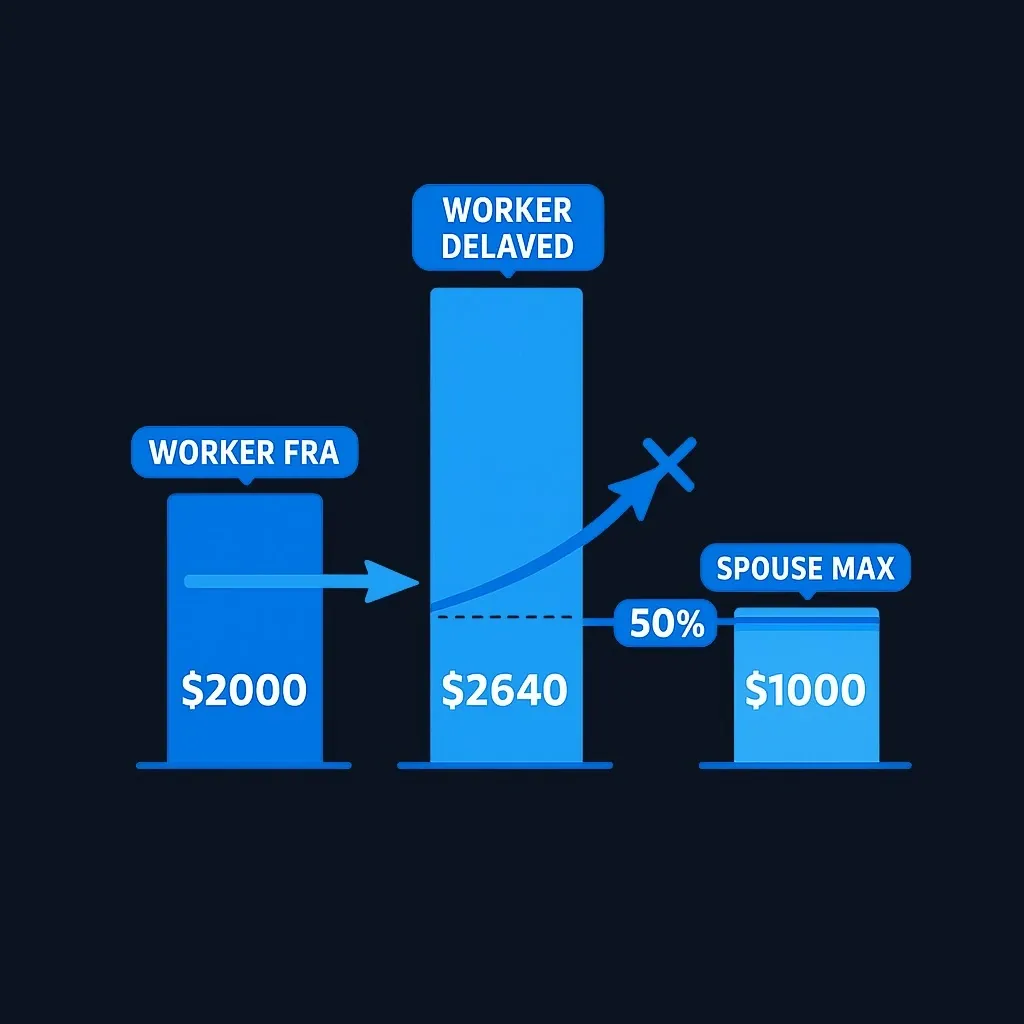
Age is a major part of the decision. Filing before the spouse's full retirement age can reduce the spouse amount. Waiting until the spouse's full retirement age can avoid that early-claiming reduction, but waiting longer does not create delayed-retirement credits on the spouse benefit itself. The household should still consider the worker's separate claiming decision and possible survivor benefits.
Worked example: comparing three filing ages
Imagine a household where Jordan’s own estimate is lower than the spouse-based estimate available through Casey’s record. Jordan is deciding whether to claim sooner, wait until a planned retirement date, or delay longer.
| Option | What improves | What becomes harder |
|---|---|---|
| Claim sooner | More immediate household income | Lower flexibility if later income needs rise |
| Claim at planned retirement | Coordinates with work exit and budget planning | Requires enough savings or earnings until then |
| Claim later | May support stronger later-life income planning | Requires another source of income in the meantime |
This example avoids exact dollar claims because your estimate must come from your own record and filing date. The useful lesson is process-based: compare several ages, not just one. A single monthly estimate can hide important tradeoffs over a long retirement.
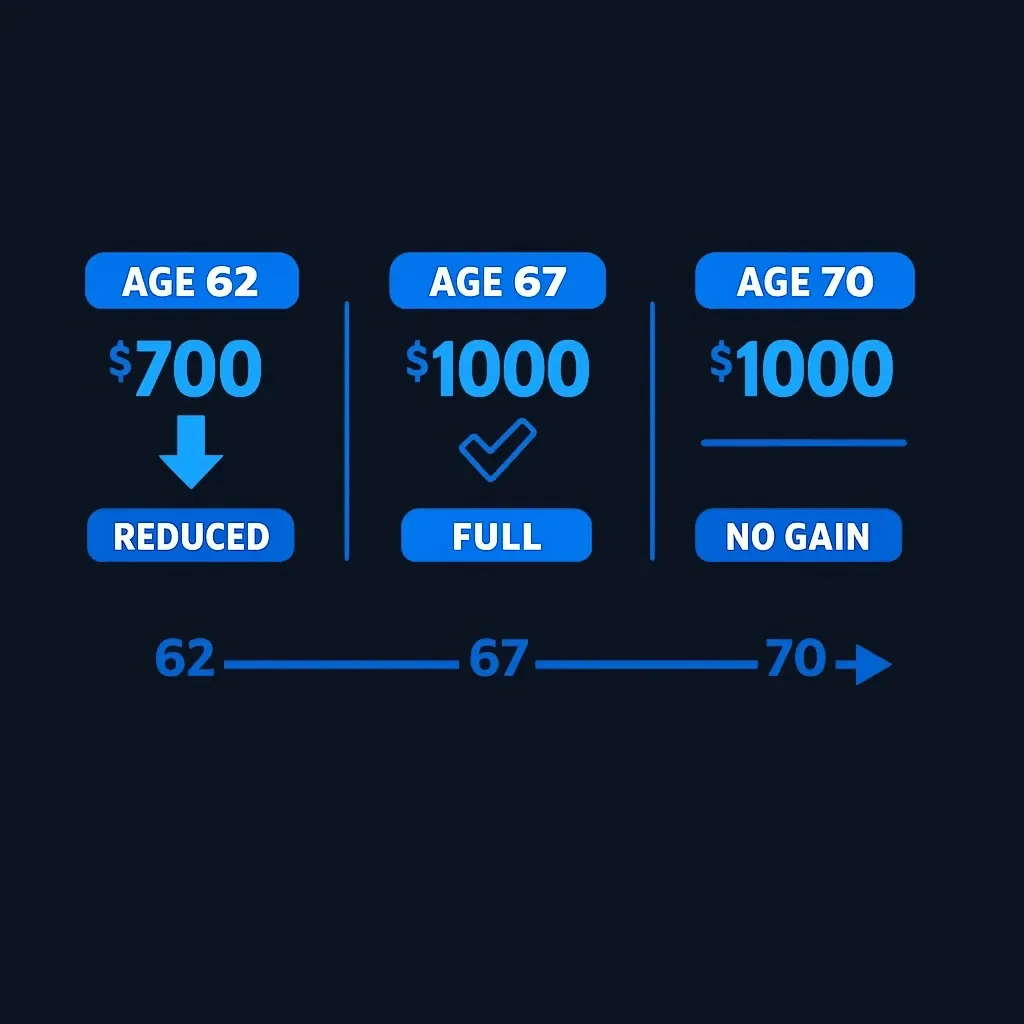
Also consider how spousal benefits interact with other income. Pension income, part-time work, portfolio withdrawals, annuity income, and required expenses can all change the practical value of claiming earlier or later. A couple with stable pension income may be able to wait longer than a couple relying on Social Security for basic expenses.
Claiming strategies for spousal benefits
A good claiming strategy starts with household priorities. Some households need income as soon as possible. Others can wait because they have savings, wages, or pension income. Neither approach is automatically right.
Strategy 1: prioritize current income
This approach may fit households with limited cash reserves or a clear need to cover monthly expenses. The tradeoff is that early claiming can reduce future flexibility. Before choosing this route, test whether the budget still works if health costs rise or one spouse lives much longer than expected.
Strategy 2: coordinate around the higher earner
Many couples focus only on the lower-earning spouse’s benefit. That can miss the bigger household question: how the higher earner’s filing decision affects long-term income resilience. If one spouse’s record supports a much larger benefit, the timing of that claim may matter for the surviving spouse’s future income plan.
Strategy 3: verify whether staggering is legally available
One spouse may claim on their own record while the other waits, but a current spouse generally cannot receive spouse benefits until the worker has filed. Deemed filing also prevents most claimants from choosing only one of their own retirement or spouse benefits when eligible for both (SSA deemed-filing rules). Model any staggered approach using SSA estimates rather than assuming an older “file and suspend” strategy remains available.
A simple decision framework
| Question | If your answer is yes | Planning implication |
|---|---|---|
| Do you need income soon? | Yes | Earlier claiming may deserve a closer look. |
| Can savings or work cover expenses? | Yes | Waiting may be realistic. |
| Is one spouse much more dependent on future Social Security income? | Yes | Model survivor-income outcomes carefully. |
| Has marital status changed? | Yes | Recheck which record applies before filing. |
The strongest strategy is usually the one that still works under less favorable assumptions. Test your plan against lower investment returns, higher expenses, and longer life. A strategy that only works under perfect conditions may be too fragile.
Impact of remarriage and divorce on spousal benefits
Divorce and remarriage can change which work record matters. If you divorced and later remarried, Fidelity explains that Social Security treats you as a spouse, not an ex-spouse, for spousal retirement benefits. In that situation, your spousal retirement benefits are based on your current spouse’s work history if eligible, not your former spouse’s record Fidelity.
That rule can surprise people who remember a former spouse had higher earnings. The practical fix is simple: do not plan around an ex-spouse’s record after remarriage without confirming eligibility. Re-run your estimates after any marriage, divorce, or remarriage.
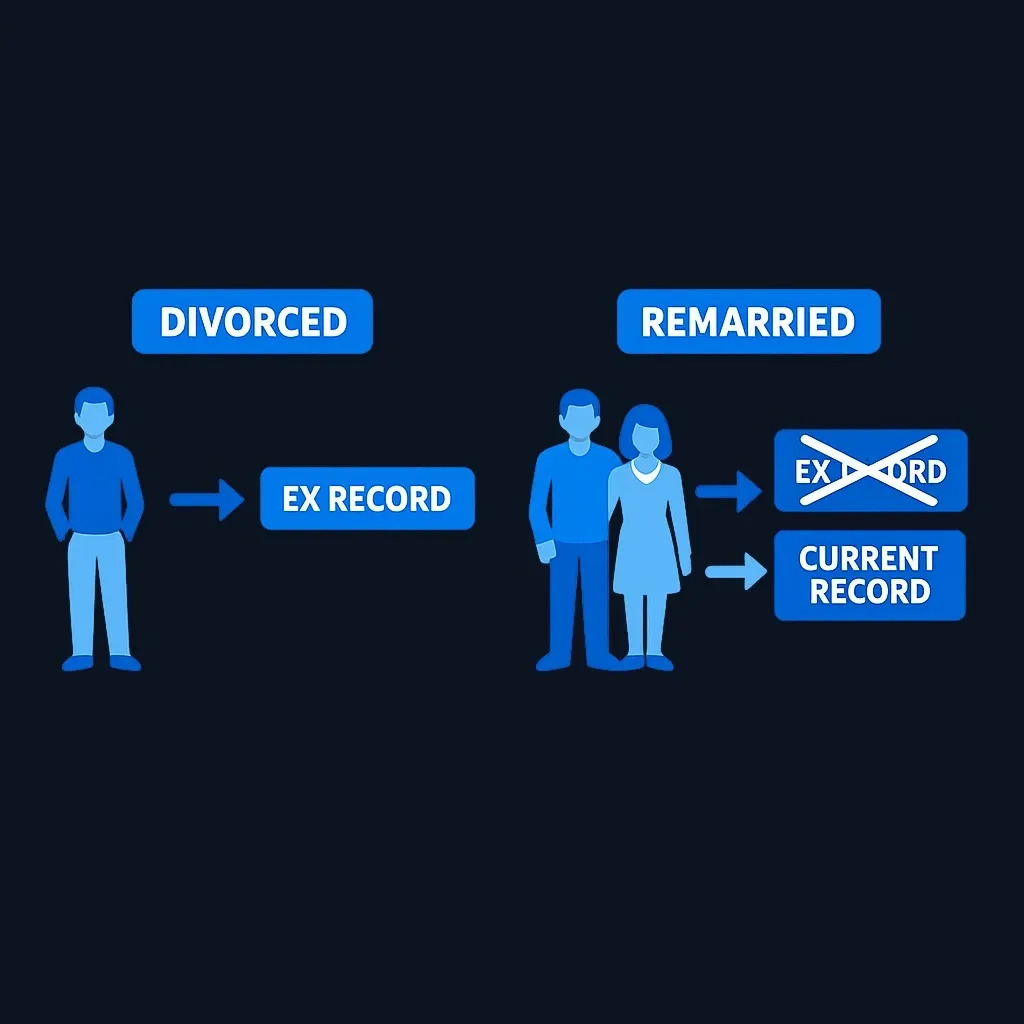
For divorced people who have not remarried, the key is documentation. Keep exact marriage and divorce dates available. When you request estimates, ask which record is being used and whether any marital-status update changes the result.
Common remarriage mistake
A common mistake is assuming the largest past household income determines the best claim. Social Security treatment follows relationship status and eligibility rules, not just which spouse or former spouse earned more. If your marital status changed, update the record first, then compare benefit estimates.
Practice investing with Finelo
Build practical investing skills with guided lessons, simulator practice, and structured challenges.
Common misconceptions about spousal benefits
The first misconception is that spousal benefits are automatically available to every married person. A current-spouse claim generally depends on the worker having filed and on the spouse meeting age or qualifying-child rules. If your own benefit is higher, SSA generally pays that amount without a spouse top-up.
The second misconception is that claiming decisions affect only one person. For couples, filing choices can shape household cash flow and survivor resilience. A decision that feels optimal for one spouse may be weaker for the household.
The third misconception is that divorce freezes a permanent right to claim on a former spouse’s record. Remarriage can change the analysis. Fidelity states that after remarriage, spousal retirement benefits are based on the current spouse’s work history if eligible, not the former spouse’s record Fidelity.
Finally, people often compare only monthly checks. That misses the bigger picture. A useful comparison includes monthly income, cumulative income across possible lifespans, tax considerations, healthcare spending needs, and what happens when one spouse dies first.
Decision framework
Use this framework to move from “What am I eligible for?” to “Which filing path fits our household?”
Step 1: Define the income problem
Start with the budget. Do you need Social Security income to pay essential expenses now, or can other income cover the gap? A household with strong cash reserves has more room to test later filing ages.
Step 2: Compare records and ages
Compare your own benefit estimate with any spouse-based estimate. Then test more than one filing age. Do not rely on the first number you see, because timing can change the planning result.
Step 3: Stress-test the plan
Ask what happens if one spouse lives much longer than expected, investment returns disappoint, or care costs rise. A plan that remains workable under several scenarios is more useful than one that only maximizes one projected number.
Step 4: Recheck after life events
Marriage, divorce, remarriage, retirement, disability, and a spouse’s death can all require a fresh review. For remarriage specifically, Fidelity notes that spousal retirement benefits generally shift to the current spouse’s work history if eligible Fidelity.
Quick scoring table
| Factor | Low concern | High concern |
|---|---|---|
| Need for current income | You have other reliable income | Benefits may be needed soon |
| Longevity uncertainty | Shorter planning horizon | Longer retirement is plausible |
| Survivor-income risk | Each spouse has enough income alone | One spouse may rely heavily on the other’s record |
| Marital-history complexity | One current marriage | Divorce, remarriage, or multiple marriages |
| Estimate confidence | Recent official estimates | Old estimates or missing documents |
If two strategies look close, choose the one that is easier to explain and update. Retirement plans often change. A clear plan is easier to revise than a fragile one built around one assumption.
FAQ
How do Social Security spousal benefits work?
They are retirement benefits connected to a spouse’s work record. They may matter when your own retirement estimate is lower than a spouse-based estimate.
Who is eligible for spousal benefits?
For a current spouse, the worker generally must have filed and the spouse generally must be at least 62 unless caring for a qualifying child. Divorced-spouse rules add marriage-duration, remarriage, and filing conditions. Confirm the current rule and personal estimate directly with SSA (SSA retirement-benefits guide).
Can divorce affect spousal benefits?
Yes. Divorce can change which record you may ask to be evaluated against. Remarriage can also change the analysis because Social Security generally treats you as a current spouse after remarriage Fidelity.
How should couples compare claiming strategies?
Compare your own estimate, the spouse-based estimate, and several filing ages. Then test how each option affects current income, later income, and survivor resilience.
Next steps and resources
Start by collecting the documents that make your estimate more reliable: Social Security statements, marriage records, divorce records, remarriage records, and proof of identity. Then compare several filing ages instead of focusing on one monthly amount.
Next, write down your household priorities in order. For example: “cover essentials now,” “preserve later income,” or “protect the surviving spouse.” Your claiming choice should reflect those priorities, not just the largest first-year payment.
Before filing, confirm the current rules and your personal estimate with official Social Security resources. If your situation includes divorce, remarriage, pensions, taxes, or care-planning concerns, consider speaking with a qualified professional who can review your full circumstances.
Sources and Further Verification
- Fidelity
- Social Security Administration: retirement-benefits guide
- Social Security Administration: deemed filing
- Social Security Administration: family-benefit amounts
More from Finelo
- Social Security at 62 vs. 67: Benefit Trade-Offs and Break-Even Factors
- Spousal IRA Rules: Eligibility, Contribution Limits, and Tax Choices
- 1031 Exchange vs. Opportunity Zone: Key Differences
Disclaimer
This article is provided by Finelo for educational and informational purposes only. Finelo does not provide financial, investment, tax, legal, or insurance advice. Consider your circumstances and consult an appropriately qualified professional before making financial decisions.
InvestingBeginner GuideFinancial Education
Practice investing with Finelo
Build practical investing skills with guided lessons, simulator practice, and structured challenges.
About the author
Finelo Team
The Finelo Team creates practical investing and trading education designed to help beginners learn faster with structured challenges, simulator practice, and bite-sized lessons.
Keep reading — Related articles

Investing
Yield to Call vs Yield to Maturity: Assumptions and Bond Risks
Yield to call (YTC) estimates a bond's yield if the issuer redeems it on an eligible call date; yield to maturity (YTM) estimates yield if it remains outstanding to final maturity.
Finelo Team

Investing
Will My Employer Know If I Take a 401(k) Loan?
Who this page is for: readers new to 401(k) loans who want a practical, privacy‑focused explanation — what your employer can see, how to limit visibility, and the financial tradeoffs to weigh.
Finelo Team

Investing
What Medical Expenses Qualify for a 401(k) Hardship Withdrawal?
Before you decide, confirm three things with your plan administrator:
Finelo Team