Last editorial review: September 8, 2026
Spousal IRA Rules: Eligibility, Contribution Limits, and Tax Choices

A spousal IRA is simply an IRA owned by the spouse who does not have sufficient earned income but benefits from the working spouse’s taxable compensation. Each spouse must have an account in…
8 min read
Practice investing with Finelo
Build practical investing skills with guided lessons, simulator practice, and structured challenges.
Want to learn more?
Build practical investing skills with guided lessons, simulator practice, and structured challenges.
Explore FineloExplore Finelo's 28-day challenges
Turn learning into a daily habit with guided challenge paths.
U.S. scope: This article discusses U.S. institutions, financial products, tax rules, and dollar examples unless stated otherwise. Rules and product terms may change; verify current official guidance for your situation.
Quick answer
A spousal IRA lets a working spouse contribute to an IRA in a nonworking or low-income spouse’s name so both can save for retirement even if only one has taxable compensation Fidelity. Contributions are limited by IRS rules and by the couple’s combined taxable compensation; excess contributions can carry a 6% annual penalty until corrected. This page is educational, not financial advice; investing can involve loss — verify limits and rules on official sites before acting.
What to know before deciding
Introduction to spousal IRAs (who benefits and why)
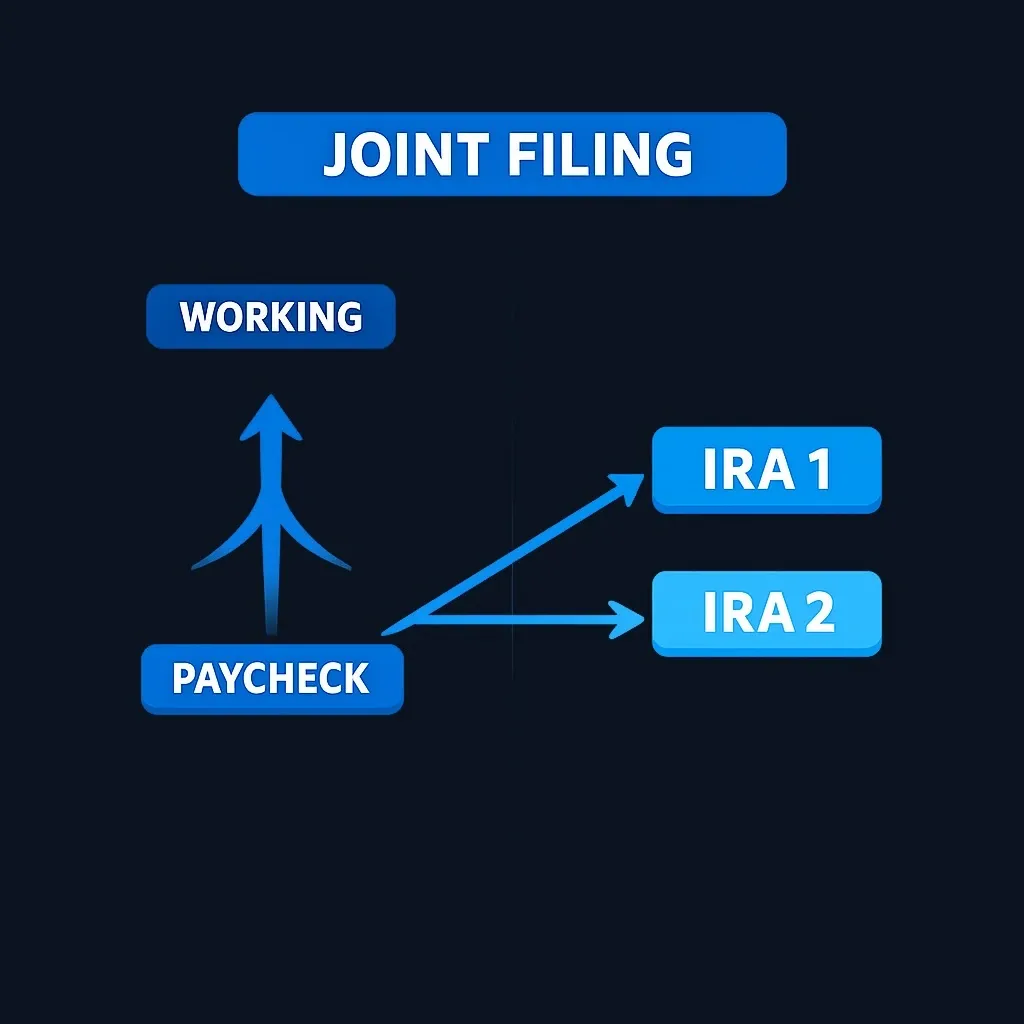
A spousal IRA is simply an IRA owned by the spouse who does not have sufficient earned income but benefits from the working spouse’s taxable compensation. Each spouse must have an account in their own name; the working spouse can make contributions on behalf of the nonworking spouse under the spousal‑IRA rules Fidelity. This structure lets both spouses keep separate accounts and investment strategies while using one spouse’s earned income to fund the other’s retirement savings.
Eligibility requirements
Key eligibility points
- Filing status: To use spousal‑IRA rules, the couple must file a joint tax return for the year the contribution is made.
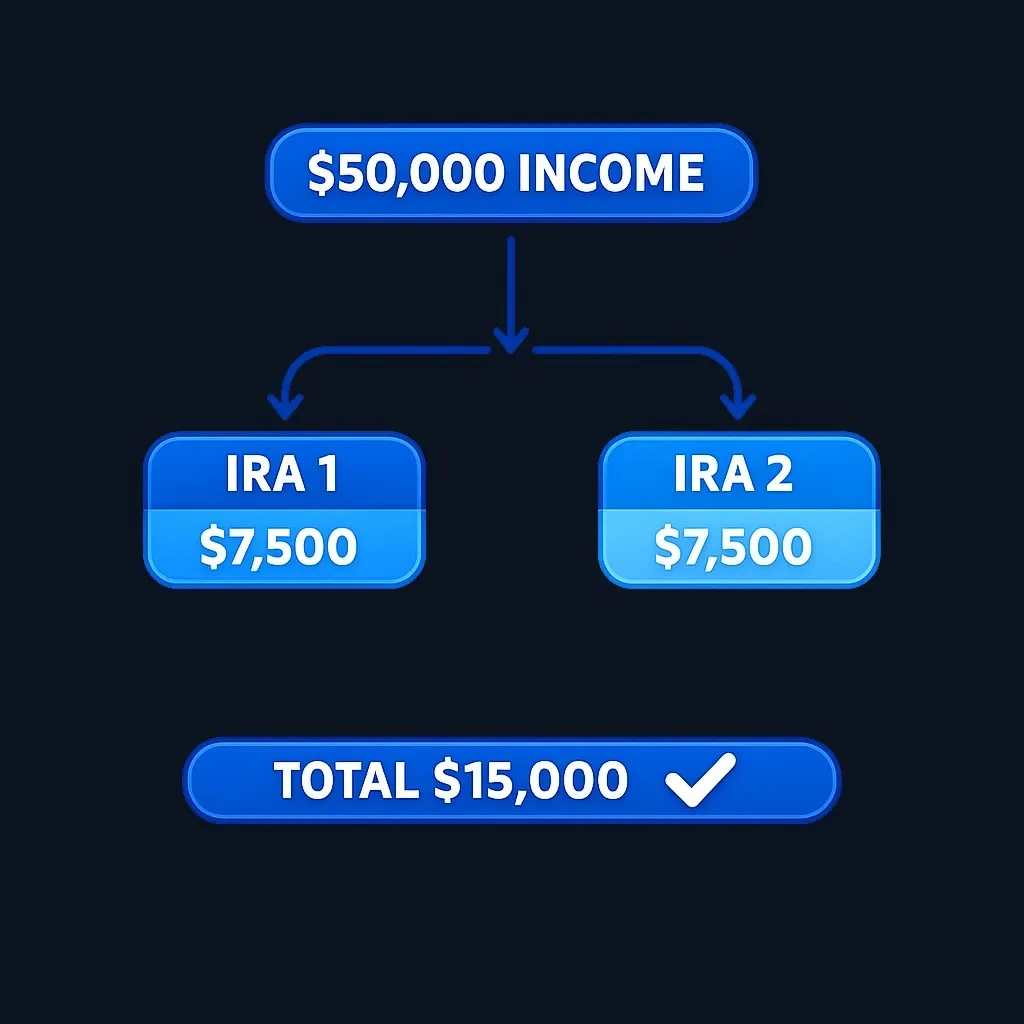
- Taxable compensation: Combined IRA contributions cannot exceed the couple’s combined taxable compensation for the year, and each spouse remains subject to the per-person annual IRA limit.
- Account ownership: The IRA must be opened in the nonworking spouse’s name; it is their personal retirement account even though the working spouse makes the contribution Fidelity.
Practical tip: confirm joint filing is in place before contributing and retain paystubs and W‑2s as proof of compensation if you later need to justify the contribution amount.
Contribution limits and tax implications
- Annual dollar limits change over time. The IRS 2026 limits list a $7,500 IRA contribution limit and a $1,100 catch-up contribution for people age 50 or older, for a total of $8,600; verify the applicable year before contributing.
- You may not contribute more than 100% of the taxable compensation available for the couple in a given year; use that rule when you plan contributions.
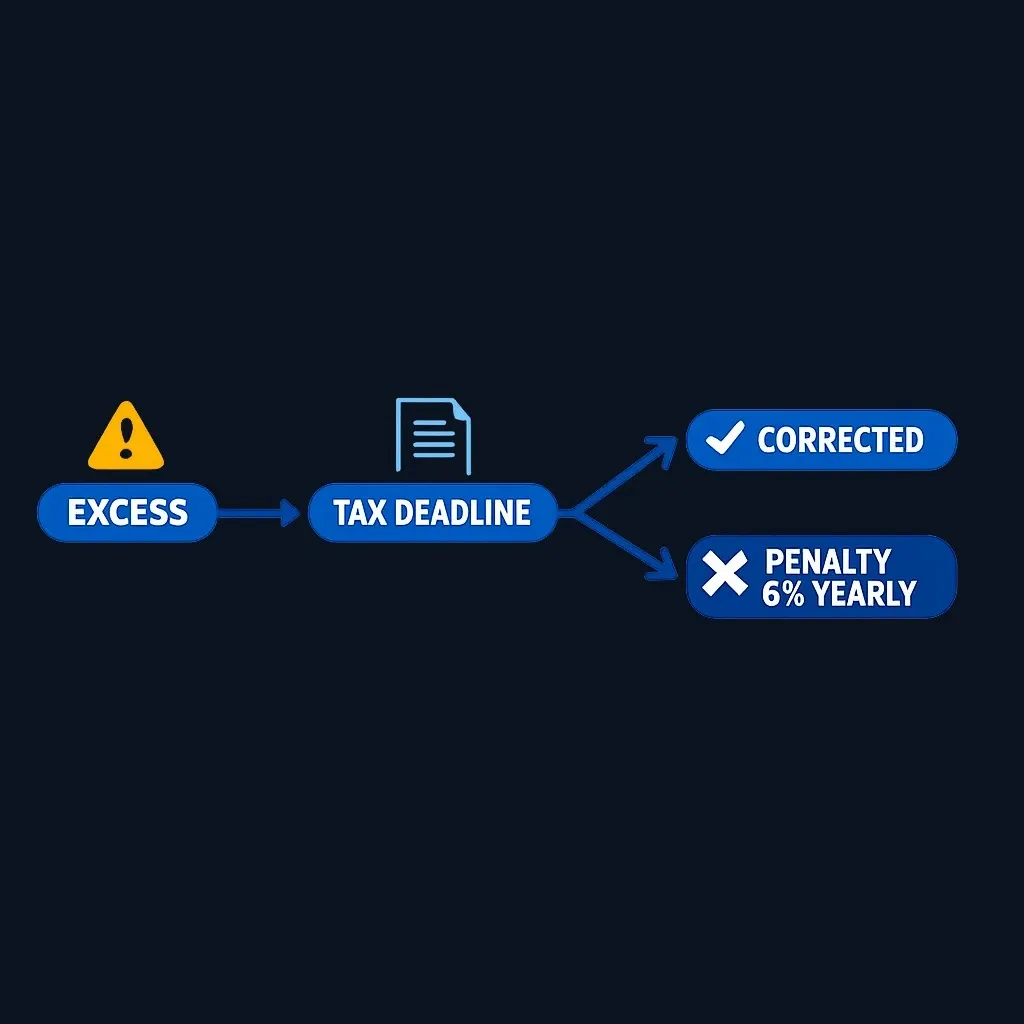
- Excess contributions can be corrected by withdrawing the excess (and related earnings) by the tax filing deadline; otherwise the IRS may assess a 6% excise tax each year the excess remains.
- Deduction and income limits that apply to traditional IRAs and eligibility rules for Roth IRAs still apply to spousal IRAs — the spousal rule only permits the contribution when one spouse lacks sufficient earned income.
The dollar amounts above are the IRS limits for 2026. Check the IRS annual limits table for the year in which you contribute.

Decision framework
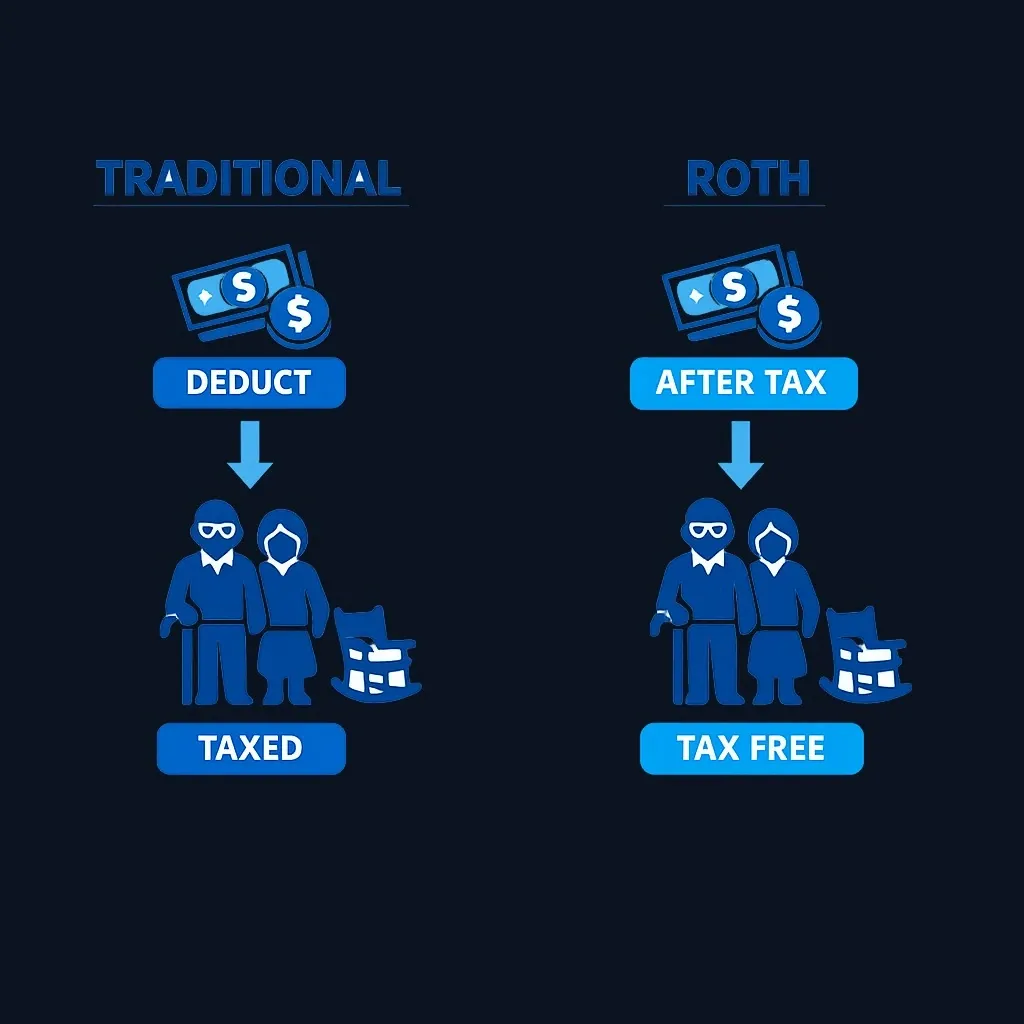
Use this short framework to choose type, timing, and amount: 1) confirm joint filing and enough combined compensation to cover planned contributions; 2) choose Traditional vs. Roth based on whether you want an up‑front deduction or after‑tax growth; 3) pick a provider that offers the investment choices and fees you prefer; 4) track contributions each year to avoid excesses.
Traditional vs. Roth spousal IRA (comparison table)
The table below summarizes key differences to evaluate. Where rules or limits are referenced, links point to published explanations.
| Feature | Traditional spousal IRA | Roth spousal IRA |
|---|---|---|
| Who can open | Nonworking spouse can have a Traditional IRA funded by working spouse under spousal rules Fidelity. | Nonworking spouse can have a Roth IRA funded similarly, subject to Roth income limits Fidelity. |
| Tax timing | Contributions may be deductible depending on income and coverage by a workplace retirement plan; deduction rules still apply. | Contributions are made with after‑tax dollars; eligibility and contribution limits depend on modified adjusted gross income (income limits still apply). |
| Contribution mechanics | Fund the spouse’s Traditional IRA up to limits and subject to deduction rules and earned‑income constraints Fidelity. | Fund the spouse’s Roth IRA up to limits and subject to Roth income phase‑outs and earned‑income constraints Fidelity. |
| Use case | Consider if the couple expects to benefit from an up‑front tax deduction this year. | Consider if you expect higher tax rates later and prefer tax‑free qualified withdrawals. |
Use the comparison above with your expected future tax outlook, retirement timeline, and current eligibility. Because deduction and Roth‑eligibility rules are income‑sensitive, verify your Modified Adjusted Gross Income (MAGI) against current limits before choosing.
How to open a spousal IRA — checklist
Typical, practical steps (adapted from provider guidance):
- Compare providers by investment choices, account fees, service, and online tools. Fidelity describes the general mechanics and account considerations in its spousal IRA overview.
- Gather personal details for the nonworking spouse (Social Security number, date of birth, driver’s license), and the working spouse’s income information for contribution planning.
- Decide Traditional vs. Roth after checking income‑based eligibility and potential tax effects Fidelity.
- Fund the account before the tax filing deadline if you intend the contribution to apply to the prior tax year (providers list deadline and procedures) Fidelity.
- Select investments within the IRA consistent with the nonworking spouse’s time horizon and risk tolerance; accounts are owned by the nonworking spouse even though funds originate from the working spouse Fidelity.
Quick checklist table
| Step | Action |
|---|---|
| 1 | Pick an IRA custodian (compare fees & choices) Fidelity. |
| 2 | Open the account in the nonworking spouse's name Fidelity. |
| 3 | Verify joint filing and sufficient combined compensation. |
| 4 | Fund the IRA (observe contribution limits & deadlines) Fidelity. |
Example calculation (illustrative): The 2026 per-person IRA limit is $7,500 for someone under age 50. A $7,500 contribution to the nonworking spouse’s IRA requires at least that much combined taxable compensation; if both spouses contribute, combined taxable compensation must cover the total contributed. Verify the current limit and your compensation calculation before contributing.
Case studies (practical scenarios)
- Conservative starter couple: One spouse works full time, the other is a caregiver. Using the spousal‑IRA rule, the working spouse funds the nonworking spouse’s IRA each year so both have retirement accounts and time in the market. This preserves separate beneficiary and withdrawal control while increasing total household retirement savings Fidelity.
- Mid‑career pivot: A couple where one spouse reduces hours temporarily can still contribute to both IRAs up to combined taxable compensation, preserving retirement contributions during the earnings dip. Track contributions closely to avoid exceeding the household’s compensation limit and to stay within Roth income eligibility if choosing Roth.
Common mistakes and how to avoid them
- Overcontributing: Failing to match contributions to the couple’s taxable compensation can create excess contributions subject to a 6% penalty annually until corrected. Avoid this by reconciling contributions to W‑2/paystubs and correcting excesses by the tax filing deadline if possible.
- Missing income limits: Contributing to a Roth when your MAGI exceeds Roth limits can disqualify the contribution; check income phase‑outs before funding a Roth spousal IRA.
- Treating a spousal IRA as a joint account: Remember each IRA must be owned by the nonworking spouse; do not title the account jointly Fidelity.
- Ignoring future tax implications: Choosing Traditional vs. Roth affects taxable income now versus in retirement. Use the decision framework above and consider running simple side‑by‑side projections (or consult a tax professional) before deciding.
Practical avoidance tips: document why each contribution was eligible, keep clear records of who funded which account, and set calendar reminders for annual contribution limits and tax deadlines.
Practice investing with Finelo
Build practical investing skills with guided lessons, simulator practice, and structured challenges.
FAQ
What is a spousal IRA?
A spousal IRA is an IRA opened and owned by a spouse who has little or no earned income; a working spouse may contribute to it on their behalf when the couple files a joint tax return Fidelity.
Who is eligible to open a spousal IRA?
Eligibility requires a joint tax return and enough combined taxable compensation to cover the planned contributions; the total contributed across both spouses cannot exceed the couple’s combined taxable compensation for the year.
What are the contribution limits for spousal IRAs?
Spousal IRAs use the standard per-person IRA limits. For 2026, the IRS lists $7,500, or $8,600 for someone age 50 or older; the couple also needs enough combined taxable compensation. Limits can change, so verify the applicable year.
What happens if I exceed the contribution limit?
Excess IRA contributions can be withdrawn before the tax filing deadline to avoid penalties; otherwise the IRS may impose a 6% excise tax each year the excess remains in the account.
Conclusion and next steps
Spousal IRA rules can allow each spouse to maintain a separate retirement account even when one spouse’s earnings are limited. Next steps: confirm your filing status, check current contribution limits, compare Traditional and Roth tax timing, and open an account in the nonworking spouse’s name at a provider you trust Fidelity. Verify current limits and rules on official guidance before you contribute.
Sources and Further Verification
More from Finelo
- Social Security Spousal Benefits: Eligibility, Calculations, and Claiming Rules
- Art Investing for Beginners: Costs, Liquidity, Valuation, and Risks
- Business Development Companies: Yields, Fees, Risks, and How to Evaluate BDCs
Disclaimer
This article is provided by Finelo for educational and informational purposes only. Finelo does not provide financial, investment, tax, legal, or insurance advice. Consider your circumstances and consult an appropriately qualified professional before making financial decisions.
InvestingBeginner GuideFinancial Education
Practice investing with Finelo
Build practical investing skills with guided lessons, simulator practice, and structured challenges.
About the author
Finelo Team
The Finelo Team creates practical investing and trading education designed to help beginners learn faster with structured challenges, simulator practice, and bite-sized lessons.
Keep reading — Related articles

Investing
Yield to Call vs Yield to Maturity: Assumptions and Bond Risks
Yield to call (YTC) estimates a bond's yield if the issuer redeems it on an eligible call date; yield to maturity (YTM) estimates yield if it remains outstanding to final maturity.
Finelo Team

Investing
Will My Employer Know If I Take a 401(k) Loan?
Who this page is for: readers new to 401(k) loans who want a practical, privacy‑focused explanation — what your employer can see, how to limit visibility, and the financial tradeoffs to weigh.
Finelo Team

Investing
What Medical Expenses Qualify for a 401(k) Hardship Withdrawal?
Before you decide, confirm three things with your plan administrator:
Finelo Team


