Last editorial review: September 8, 2026
83(b) Election: Deadlines, Tax Risks, and When Early Filing May Fit

An 83b election is a time-sensitive U.S. tax choice involving certain transferred property; the filing rules and 30-day deadline require careful verification against current IRS guidance.
12 min read
Practice investing with Finelo
Build practical investing skills with guided lessons, simulator practice, and structured challenges.
Want to learn more?
Build practical investing skills with guided lessons, simulator practice, and structured challenges.
Explore FineloExplore Finelo's 28-day challenges
Turn learning into a daily habit with guided challenge paths.
U.S. scope: This article discusses U.S. institutions, financial products, tax rules, and dollar examples unless stated otherwise. Rules and product terms may change; verify current official guidance for your situation.
An 83b election is a time-sensitive U.S. tax choice involving certain transferred property; the filing rules and 30-day deadline require careful verification against current IRS guidance.
Quick answer
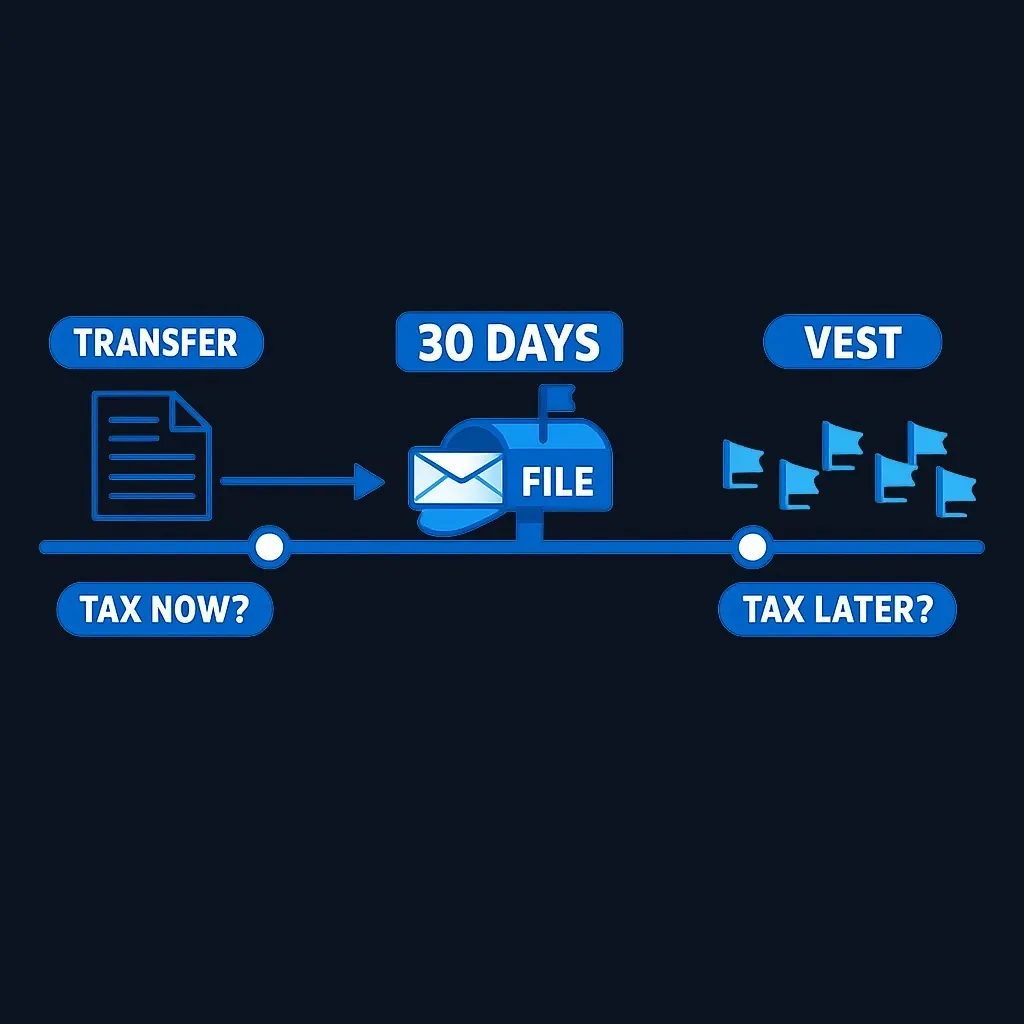
An 83(b) election is a tax election for certain property transferred in connection with services, often restricted startup equity, that lets a taxpayer elect current income recognition rather than waiting for the property to become substantially vested. The election must be filed no later than 30 days after the property is transferred. IRS Form 15620 is a voluntary form taxpayers may use; a compliant written statement is also permitted (IRS Form 15620). The decision can help when today's value is low and forfeiture risk is low, but it can hurt if the property is later forfeited or loses value.
Educational note: this article is for general learning only. It is not tax, financial, or investment advice. Equity compensation can create tax liability, cash-flow pressure, and investment loss.
What to know before deciding
An 83(b) election matters because it changes the timing of taxable income for property that is subject to restrictions. In plain English, that usually means you are deciding whether to deal with tax when you receive restricted property or later as restrictions lapse. IRS Form 15620 is the official form for making the election, and it includes a field for “the property subject to this election” with a description and quantity IRS Form 15620.
The purpose is not to “avoid tax.” It is to choose a different tax timing result. That timing can be valuable when the property has a low fair market value at transfer and might grow later. It can also be expensive if the property never becomes valuable, or if you never keep it.
Why people consider an 83(b) election
The common use case is early-stage equity. A founder, early employee, or service provider may receive restricted shares that vest over time. If the shares are worth very little at transfer, early income recognition may create a smaller income amount than waiting until the shares vest.
The possible advantage comes from separating two questions:
| Decision point | Why it matters |
|---|---|
| Value at transfer | A lower starting value can mean less ordinary income recognized early. |
| Vesting risk | If you might lose the property, early tax may become a sunk cost. |
| Expected appreciation | Future growth is the reason people consider filing. |
| Cash available for tax | A tax bill can be painful even when the shares are illiquid. |
| Record quality | The form requires a clear property description and quantity IRS Form 15620. |
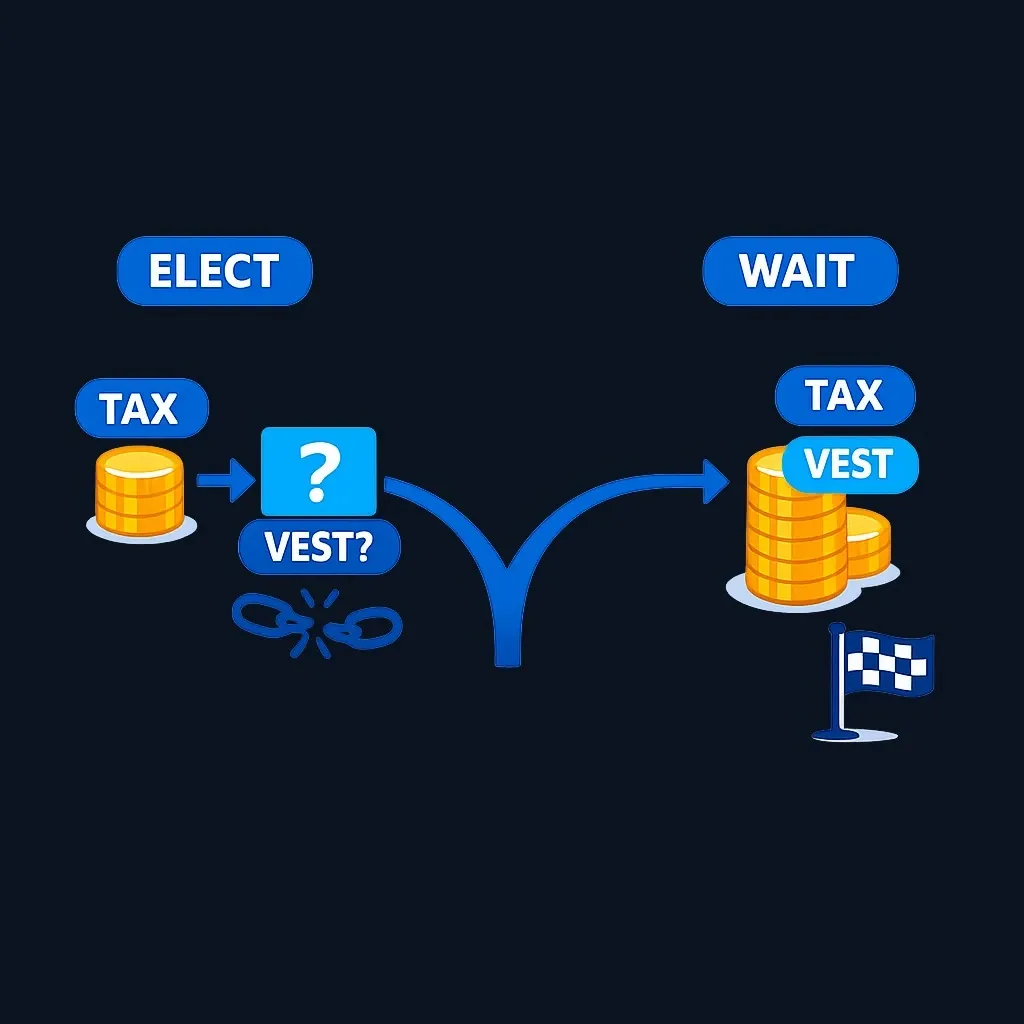
A useful way to think about the election is this: it moves uncertainty forward. You may reduce future ordinary income exposure, but you accept the risk of paying tax before the outcome is known.
A realistic “may fit” example
Imagine a founder receives restricted common shares when the company is newly formed. The company has little operating history, the shares have a low stated value, and the founder expects to stay through vesting. In that situation, filing may fit because the income amount today may be small compared with possible later appreciation.
This is still not automatic. The founder needs a defensible valuation, enough cash to pay any tax due, and a clear understanding of forfeiture terms. The election works best when the practical facts line up, not just when the company story sounds promising.
A realistic “may not fit” example
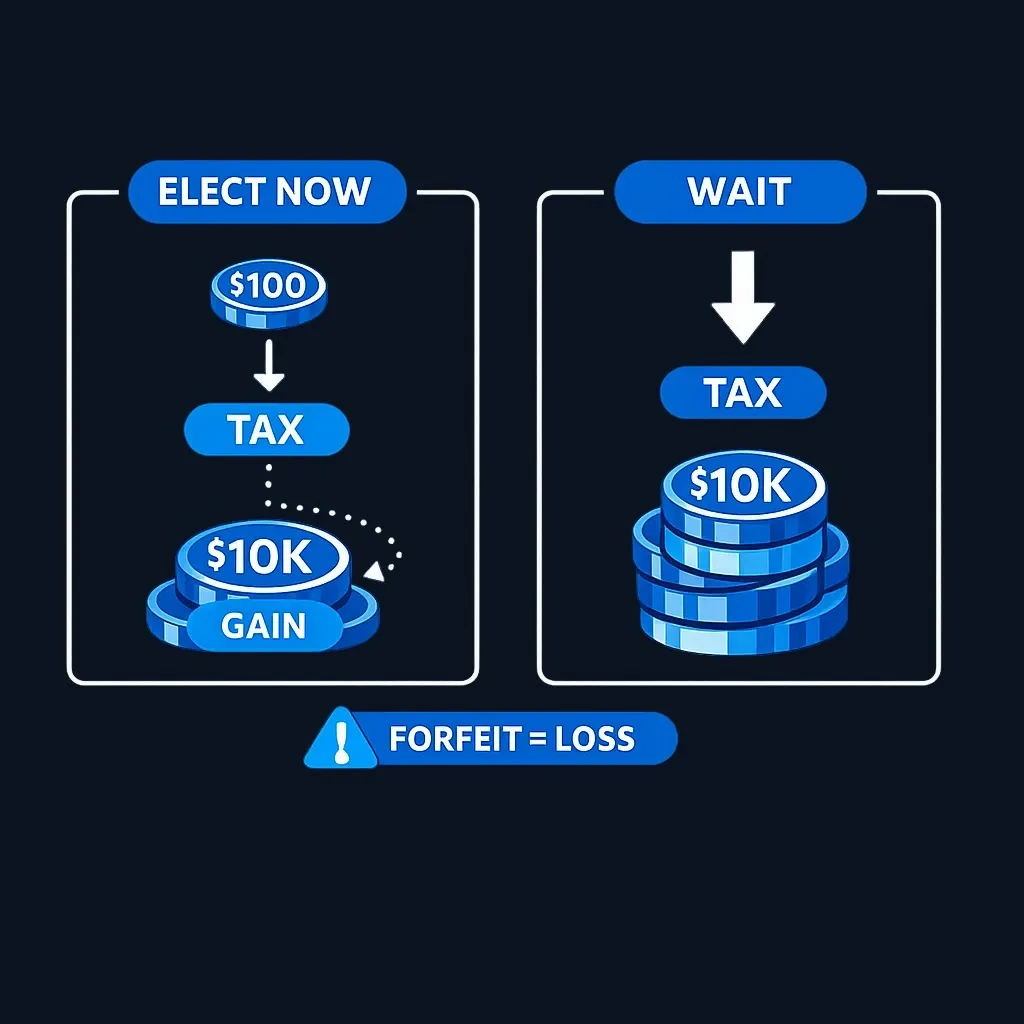
Now imagine an employee joins a startup with restricted shares but expects to reassess the job after a few months. The company is also raising money on uncertain terms, and the employee does not have spare cash for an unexpected tax bill. Filing could be a poor fit, even if the company has upside.
The problem is asymmetry. The employee could pay tax early, leave before vesting, and never benefit from the shares. The election is most dangerous when the upside feels exciting but the vesting and liquidity risks are being ignored.
How to file an 83(b) election with Form 15620
IRS Form 15620, titled “Section 83(b) Election,” is an IRS-provided voluntary form for making the election; taxpayers may instead use a written statement that satisfies the regulatory requirements. The form asks for the property subject to the election, including a description and quantity (IRS Form 15620). Treat the filing process as a deadline-driven tax task, not as routine paperwork.
Because the election can affect income tax timing, prepare it as soon as the property transfer occurs. Waiting until the grant feels “settled” can create avoidable risk. If you are unsure, ask a qualified tax professional before the filing window becomes the main problem.
Step-by-step filing checklist
| Step | What to do | Practical reason |
|---|---|---|
| 1 | Use Form 15620 or have a tax professional prepare a compliant written statement (IRS Form 15620). | Avoid outdated templates or incomplete election language. |
| 2 | Identify the taxpayer making the election. | The IRS needs to match the election to the taxpayer. |
| 3 | Describe the property and quantity. | Form 15620 specifically asks for the property subject to the election IRS Form 15620. |
| 4 | Record the transfer details. | The tax treatment depends on when the property was transferred. |
| 5 | Enter valuation-related information carefully. | The election depends on the property value used at transfer. |
| 6 | Sign and keep copies. | You need a complete record if questions arise later. |
| 7 | File no later than 30 days after the transfer with the IRS office where you file your return; retain delivery evidence. | The statutory filing window is short and generally cannot be extended. |
| 8 | Give a copy to the person or organization for whom the services were performed. | Form 15620's instructions require that copy. |
This checklist does not replace professional review. It is a practical way to avoid the most common operational mistake: treating the election as a vague intention rather than a signed, documented filing.
What information is required on the form?
At minimum, expect to gather the information needed to identify the taxpayer and the restricted property. The IRS form directly asks for a description and quantity of the property subject to the election IRS Form 15620. In practice, that means you should be ready to describe what you received with enough precision that someone else can identify it later.
For restricted stock, that often means the share class, number of shares, and transfer date. You should also keep support for the value used at transfer. Do not rely only on memory, a chat message, or a verbal explanation from the company.
Filing tips that reduce avoidable problems
First, start the form the day you receive the restricted property. The election is time-sensitive, and delays usually create more risk than clarity. If the paperwork from the company is incomplete, ask for the missing details immediately.
Second, keep a filing packet. Include the signed election, proof of mailing, a copy delivered to the company, the equity grant documents, and valuation support. If you later sell shares, leave the company, or answer a tax notice, that packet can save time.
Third, avoid guessing on fair market value. If the value is uncertain, ask the company what valuation support exists. For startup equity, the valuation story is often as important as the form itself.
Risks and considerations
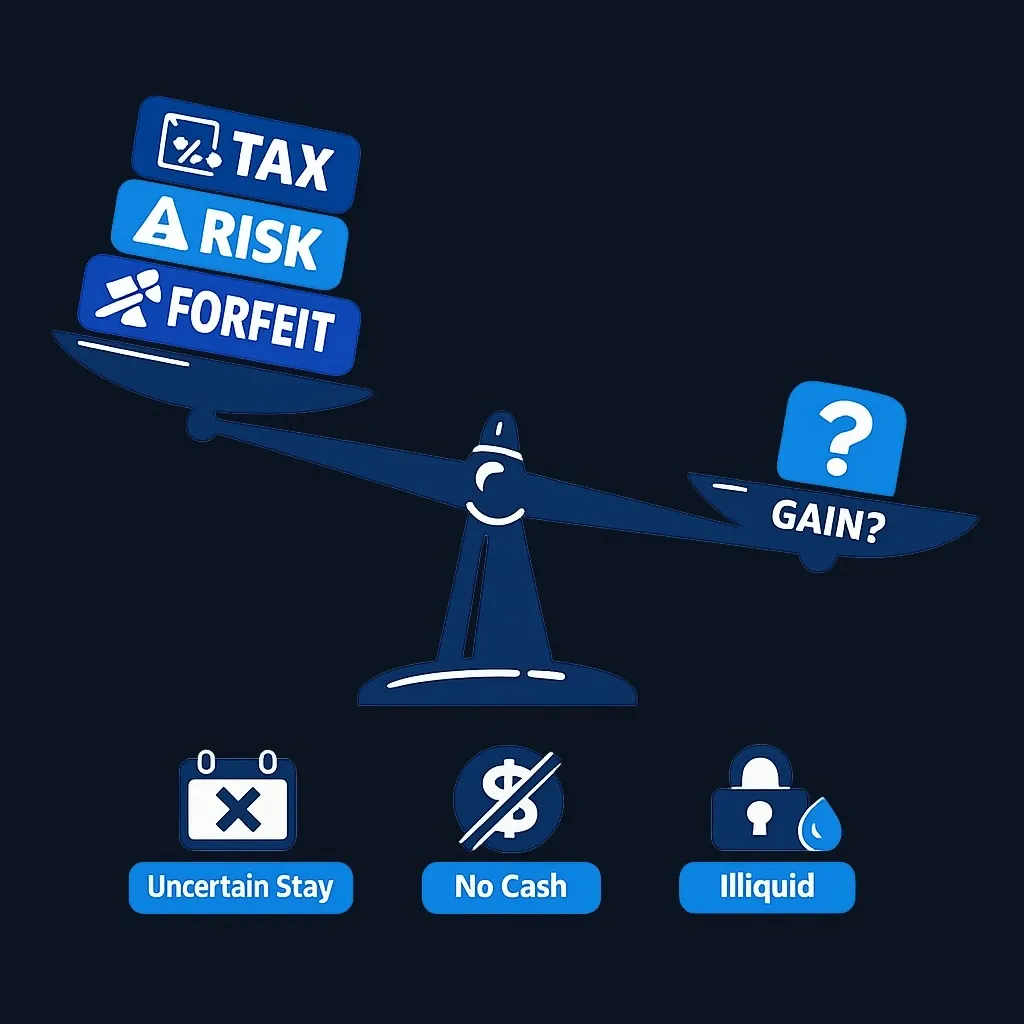
The main risk of an 83(b) election is paying tax before the economic result is secure. That can be reasonable when the current value is low and the vesting risk is low. It can be painful when the shares are forfeited, become worthless, or stay illiquid longer than expected.
This is also an income tax timing choice, not a guarantee of better tax results. The election can improve the outcome in one scenario and worsen it in another. The right question is not “Is an 83(b) election good?” but “What happens if my assumptions are wrong?”
Common mistakes and how to avoid them
Mistake 1: focusing only on upside. Startup equity can feel valuable before it is liquid. Run a downside scenario before filing. Ask what happens if you leave, the company stalls, or the shares cannot be sold.
Mistake 2: ignoring cash flow. A tax bill can arrive before any cash from the shares. If paying tax now would create financial stress, that belongs in the decision.
Mistake 3: using a vague property description. The IRS form asks for the property and quantity subject to the election IRS Form 15620. Match the description to the grant documents as closely as possible.
Mistake 4: assuming all equity needs an 83(b). The election is tied to restricted property. If you hold a different instrument, get advice before filing a form that may not match what you own.
Mistake 5: treating international issues as an afterthought. If you live, work, or pay tax in more than one country, local rules may change the result. Cross-border equity compensation can involve reporting, withholding, and treaty questions.
What happens if you miss the filing deadline?
If the 30-day deadline passes, a late election generally is not available without narrow relief that may require specialized tax advice. You then need to understand the default tax treatment for the restricted property, which can mean income recognition later as the property becomes substantially vested, depending on the grant structure.
The best response is not to backdate or improvise. Gather the grant documents, note the transfer date, and speak with a qualified tax professional. Then build a better process for future equity grants.
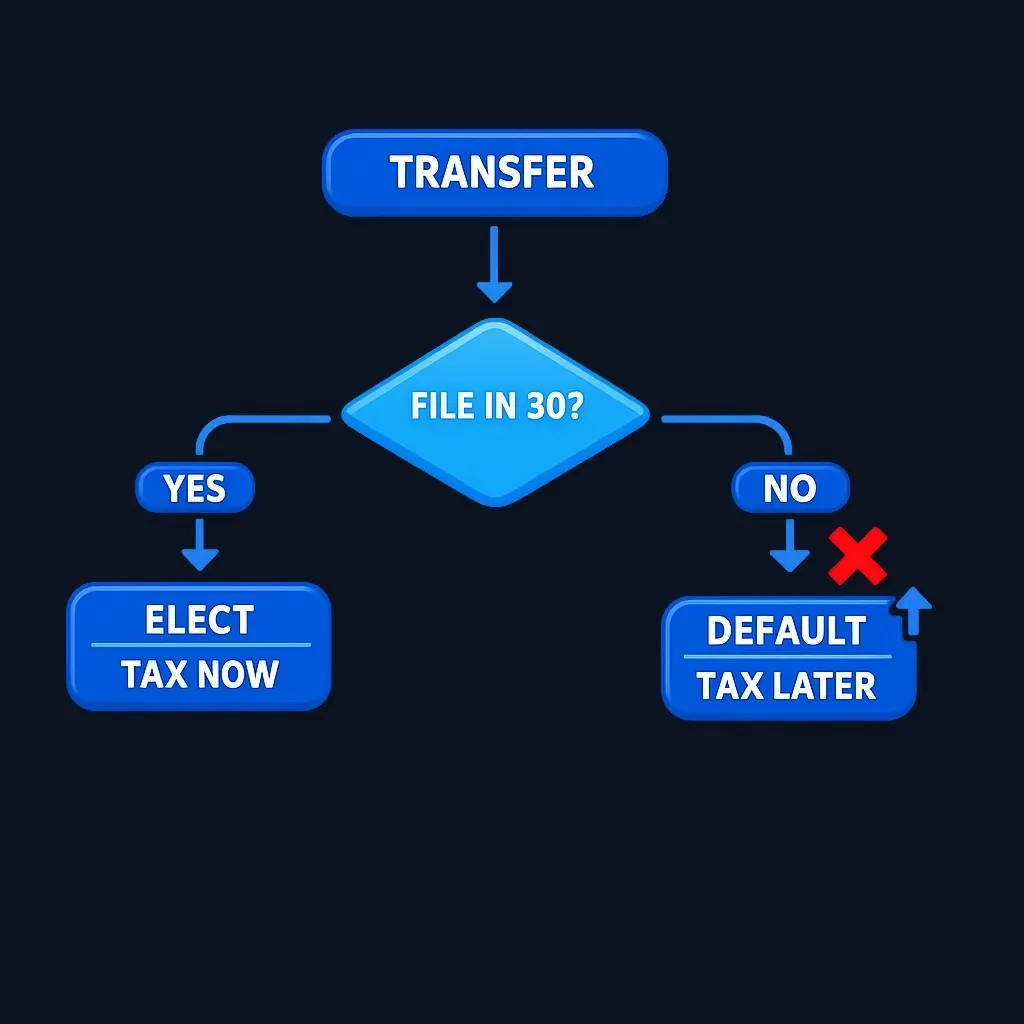
Decision framework
Use this framework before deciding whether filing may fit. It will not give you a personalized answer, but it will help you ask the right questions.
The five-question test
| Question | If the answer is “yes” | If the answer is “no” |
|---|---|---|
| Is the current value low? | Filing may be more attractive. | The upfront tax cost may be harder to justify. |
| Is forfeiture risk low? | The downside is reduced. | Filing can create tax cost without retained shares. |
| Do you expect long-term appreciation? | The timing benefit may matter. | The election may add complexity without much reward. |
| Can you pay any tax now? | Cash flow may support filing. | Deferral may be more practical. |
| Are the documents clear? | You can complete the form with confidence. | Resolve grant, value, and restriction details first. |
A balanced decision needs at least three things: low current value, low forfeiture risk, and enough cash to handle tax now. If one of those is missing, slow down. If two are missing, filing may be more speculation than planning.
A practical scoring method
Give each factor a score from 1 to 5:
- Current value is low: 1 means high current value, 5 means very low current value.
- Forfeiture risk is low: 1 means likely to lose shares, 5 means likely to vest.
- Cash-flow comfort: 1 means tax would strain you, 5 means tax is manageable.
- Documentation quality: 1 means unclear grant details, 5 means complete records.
- Time to act: 1 means deadline pressure, 5 means enough time for review.
A high score does not mean “file.” It means the fact pattern may justify deeper review. A low score means the risks may outweigh the timing benefit.
83(b) election versus doing nothing
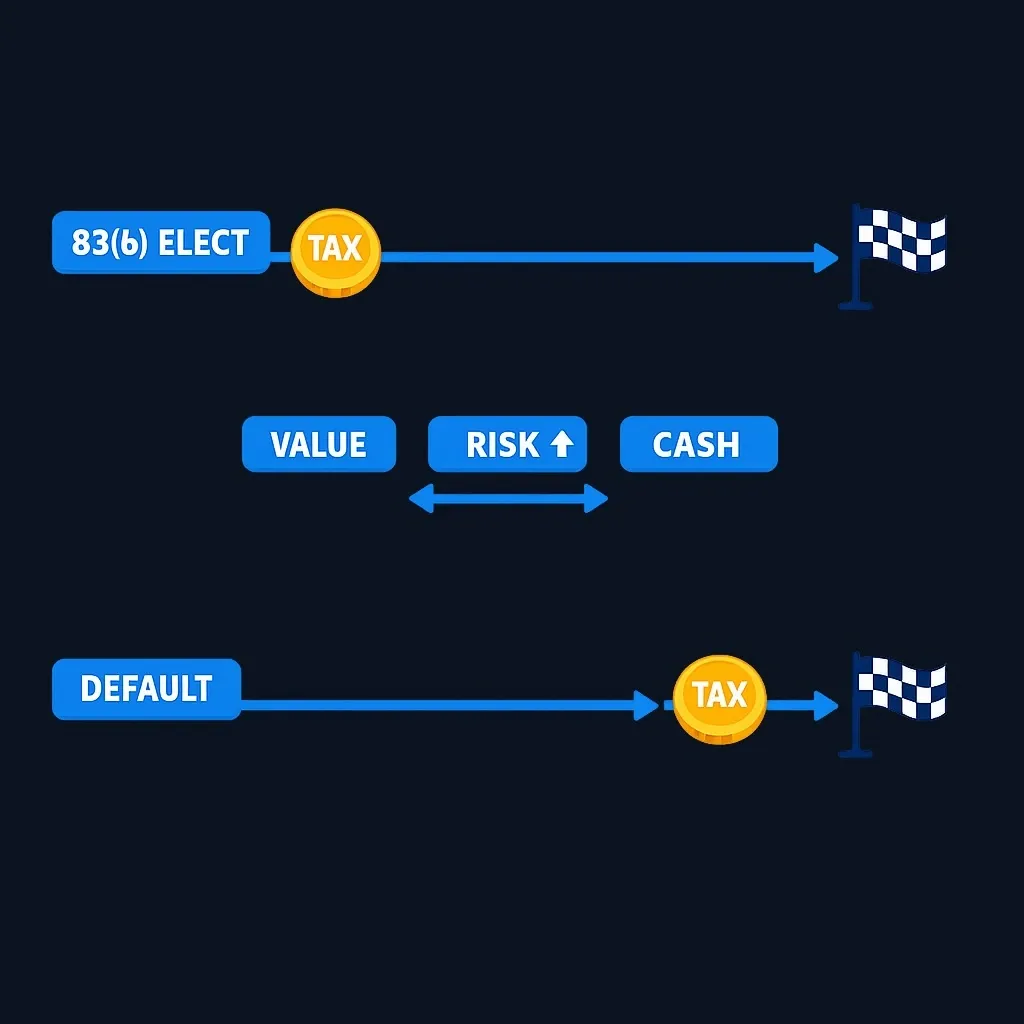
Doing nothing is also a tax choice. It usually means you accept the default timing rules rather than electing early recognition. That can be better if the current value is high, your vesting risk is meaningful, or you do not have cash for tax.
The tradeoff is that waiting can create income later if the property value rises before vesting. This is why the election is most compelling early, when value is low and the future is uncertain. It is least compelling when the current tax cost is already significant.
Practice investing with Finelo
Build practical investing skills with guided lessons, simulator practice, and structured challenges.
FAQ
What is the purpose of an 83(b) election?
The purpose is to elect early income recognition for restricted property instead of waiting until restrictions lapse. IRS Form 15620 is the official form for a Section 83(b) election IRS Form 15620. The potential benefit is tax timing, not guaranteed tax savings.
How do I file an 83(b) election?
Use voluntary IRS Form 15620 or a compliant written statement, complete the taxpayer and property details, sign it, and file it no later than 30 days after transfer. Keep a complete copy and delivery evidence, and give a copy to the person or organization for whom the services were performed (IRS Form 15620).
What are the risks of filing an 83(b) election?
The biggest risks are paying tax before you know whether the property will vest or become valuable. Filing can also create cash-flow pressure if the shares are illiquid. The election is most dangerous when the value, vesting path, or property description is unclear.
Can international taxpayers file an 83(b) election?
A taxpayer with U.S. tax obligations may need to consider the election when receiving restricted property covered by Section 83(b). Cross-border situations need extra care because another country may also tax or report the compensation. Speak with a tax professional who understands both U.S. equity compensation and your local tax rules.
Next steps
Before filing, collect the grant agreement, vesting schedule, property description, transfer date, and valuation support. Then decide whether the election fits your risk, cash flow, and time horizon. If the deadline is close or the facts are unclear, prioritize professional tax advice over internet research.
For broader financial education before making investing or equity decisions, Finelo offers a learning hub for readers building foundational investing knowledge. Keep that learning separate from tax filing decisions, which require your own documents and professional judgment.
Sources and Further Verification
More from Finelo
- 1031 Exchange vs. Opportunity Zone: Key Differences
- After-Tax 401(k) vs. Roth 401(k): Key Differences
- Art Investing for Beginners: Costs, Liquidity, Valuation, and Risks
Disclaimer
This article is provided by Finelo for educational and informational purposes only. Finelo does not provide financial, investment, tax, legal, or insurance advice. Consider your circumstances and consult an appropriately qualified professional before making financial decisions.
InvestingBeginner GuideFinancial Education
Practice investing with Finelo
Build practical investing skills with guided lessons, simulator practice, and structured challenges.
About the author
Finelo Team
The Finelo Team creates practical investing and trading education designed to help beginners learn faster with structured challenges, simulator practice, and bite-sized lessons.
Keep reading — Related articles

Investing
Yield to Call vs Yield to Maturity: Assumptions and Bond Risks
Yield to call (YTC) estimates a bond's yield if the issuer redeems it on an eligible call date; yield to maturity (YTM) estimates yield if it remains outstanding to final maturity.
Finelo Team

Investing
Will My Employer Know If I Take a 401(k) Loan?
Who this page is for: readers new to 401(k) loans who want a practical, privacy‑focused explanation — what your employer can see, how to limit visibility, and the financial tradeoffs to weigh.
Finelo Team

Investing
What Medical Expenses Qualify for a 401(k) Hardship Withdrawal?
Before you decide, confirm three things with your plan administrator:
Finelo Team