This is not another list of “best” paper-trading products. It is a practice curriculum for readers who already have access to a simulator and want to know what to rehearse, what to measure, and when simulated performance is stable enough to justify a very small live test. Platform features and prices change, so the plan is deliberately vendor-neutral.
A 30-Day Trading Simulator Practice Plan: Skills, Metrics, and Graduation Rules
This is not another list of “best” paper-trading products. It is a practice curriculum for readers who already have access to a simulator and want to know what to rehearse, what to measure, and when simulated performance…
8 min read
Practice trading with Finelo
Practice in a simulator, learn with bite-sized lessons, and build confidence before risking real money.
Want to learn more?
Practice in a simulator, learn with bite-sized lessons, and build confidence before risking real money.
Explore FineloExplore Finelo's 28-day challenges
Turn learning into a daily habit with guided challenge paths.
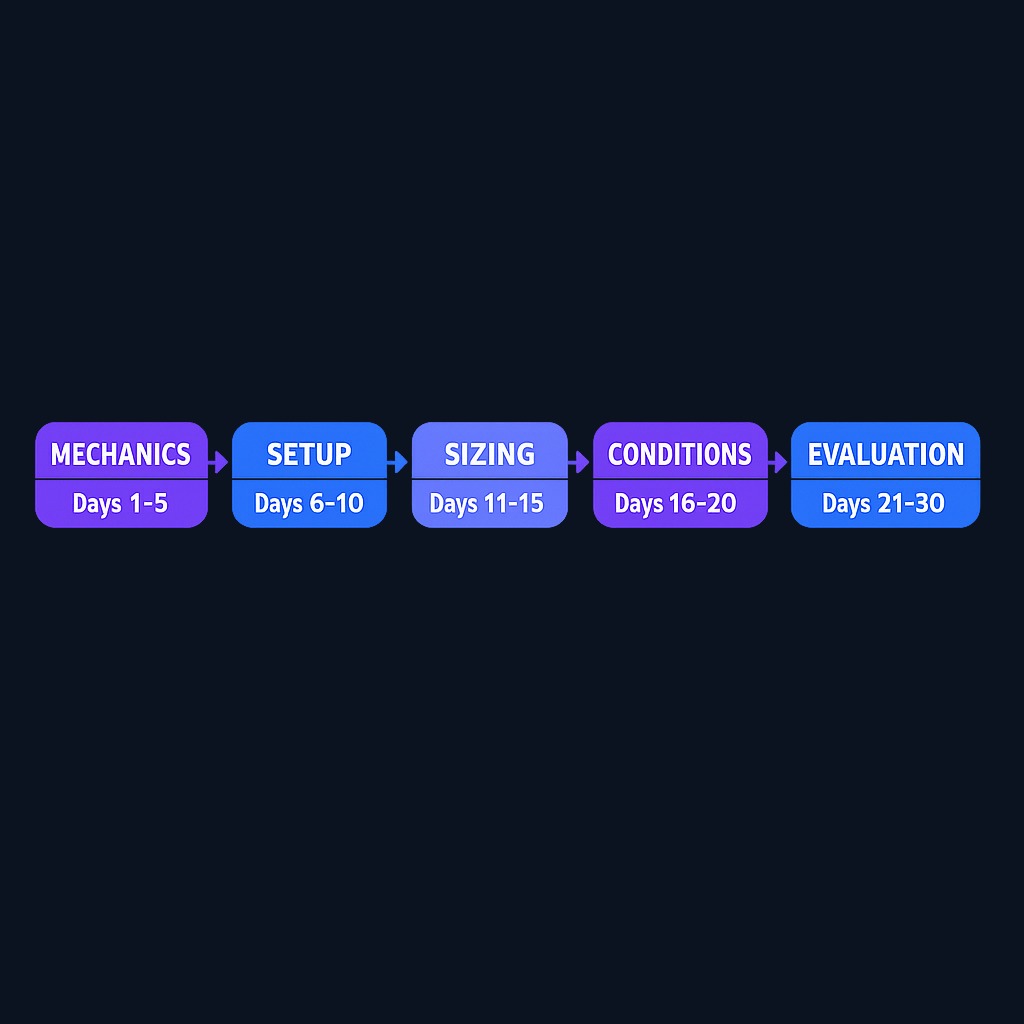
The 30-day practice curriculum
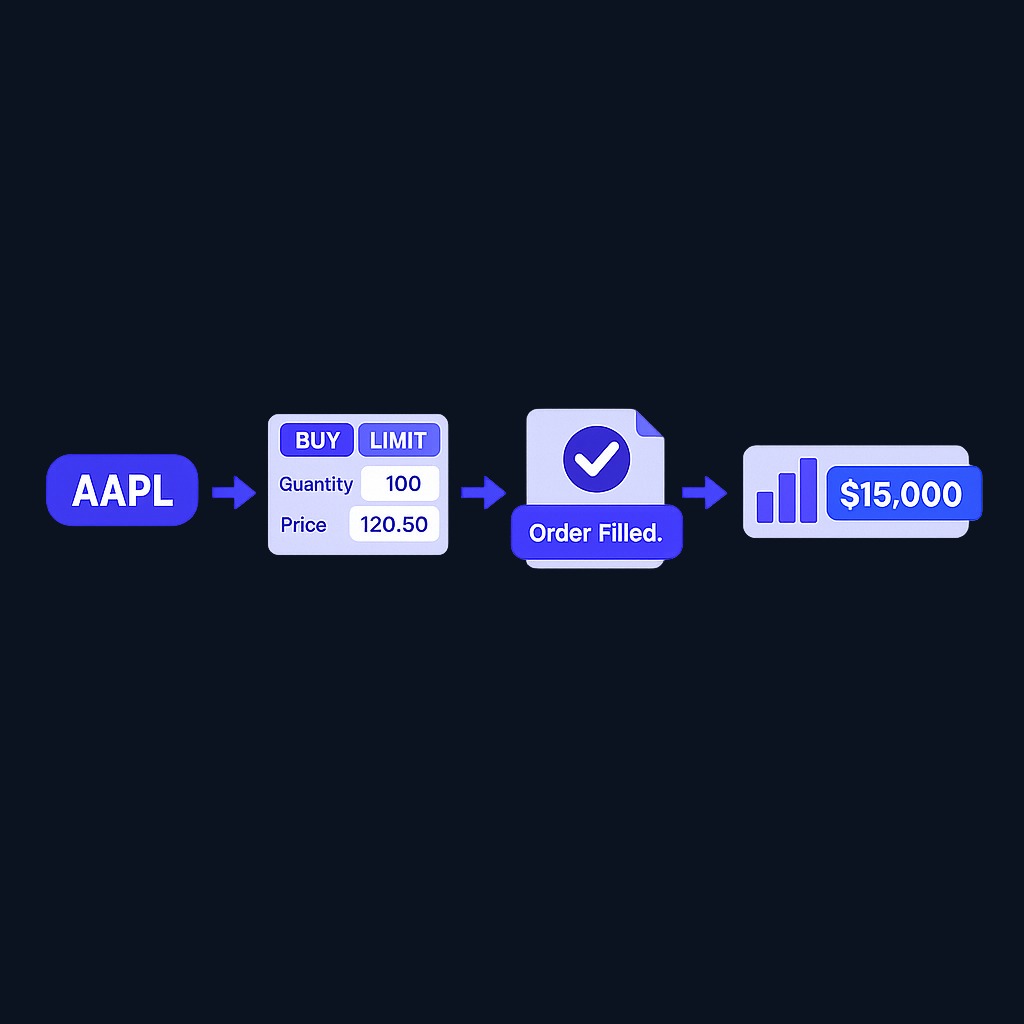
- Days 1–5: order mechanics. Place market, limit, stop, and stop-limit orders in liquid instruments. Record the displayed quote, simulated fill, spread, and reason for cancellation.
- Days 6–10: one setup only. Write objective entry, invalidation, and exit rules before each trade. No rule changes after entry.
- Days 11–15: position sizing. Cap planned loss per trade and reject any setup that cannot fit the cap after realistic spread and slippage assumptions.
- Days 16–20: adverse conditions. Rehearse gaps, missed fills, halts, and days when no valid trade appears.
- Days 21–30: blind evaluation. Freeze the rules and track expectancy, average win, average loss, maximum drawdown, rule violations, and the share of results produced by the best one or two trades.
Simulation does not reproduce emotion, queue position, partial fills, borrow availability, or market impact. A graduation rule should therefore require process consistency over a meaningful sample—not only positive simulated profit—and any live transition should begin at a size where a full planned loss is inconsequential.
The best stock trading simulators let you practice buying and selling stocks with virtual money against real market data, so mistakes cost nothing while lessons stick. Great options exist for every level: broker-integrated paper trading for realism, game-style platforms for motivation, and guided education apps that pair simulation with structured lessons. This page is for beginners who want to learn trading without risking savings, and for experienced investors testing new strategies safely. Below you'll find what simulators do, which types stand out, and how to choose - plus a path from practice to real markets. To combine simulation with step-by-step lessons, try Finelo, an investing-education app built around learning by doing.
What is a stock trading simulator?
A stock trading simulator is software that mirrors real market conditions - live or delayed quotes, order tickets, portfolio tracking - while all the money involved is virtual. You place trades exactly as you would in a brokerage account: choose a stock, pick an order type, set a quantity, and watch the position move with the market.
The practice is often called paper trading, a name left over from the days when learners tracked pretend trades on paper. Modern simulators automate everything, typically starting you with a virtual balance and letting you rebuild it trade by trade.
Benefits of practicing with a simulator
- Zero financial risk. Blowing up a virtual account teaches the same lesson as blowing up a real one, minus the loss.
- Real mechanics. Order types, fills, and portfolio math work like the real thing, so the knowledge transfers directly.
- Strategy testing. You can trial a new approach across weeks of live market movement before committing capital.
- Emotional rehearsal. Watching a position drop 10 percent in practice builds tolerance you will need with real money, even if simulated losses never sting quite as hard.
- Skill measurement. A track record of simulated trades shows whether your results come from process or luck before real stakes enter.
Types of simulators worth considering
Broker paper-trading platforms. Most major US brokerages include a practice mode that clones their real trading interface with virtual cash. These offer the highest realism and the smoothest transition, since going live later means flipping a switch rather than learning new software.
Standalone simulator sites and games. Web platforms built around virtual portfolios - some with public leaderboards and competitions - make practice social and motivating. Many are free with six-figure virtual balances; some advanced platforms that replay historical market data for day-trading drills charge monthly subscription fees, so verify current pricing on any paid tool's official site before subscribing.
Education-first apps with built-in practice. Platforms like Finelo wrap simulation inside a structured curriculum, with bite-size lessons, trading challenges, and AI-guided practice. This suits learners who want to understand why a trade works, not just click buttons.
Comparing your options
| Type | Realism | Learning structure | Typical cost | Best for |
|---|---|---|---|---|
| Broker paper trading | Very high | Low - no curriculum | Free with account | Those close to trading real money |
| Simulator games and sites | Medium | Low to medium | Often free; paid tiers exist | Motivation through competition |
| Historical-replay trainers | High for day trading | Medium | Paid subscription | Active-trading practice |
| Education apps with simulation | Medium-high | High - guided lessons | Free trials; paid plans | Beginners building foundations |
Practice trading with Finelo
Practice in a simulator, learn with bite-sized lessons, and build confidence before risking real money.
How to choose the right simulator
Run down this checklist:
- Match your goal. Long-term investing practice needs portfolio tools; day-trading practice needs fast charts and replay features.
- Check the data. Real-time or lightly delayed quotes keep practice honest; stale data teaches bad habits.
- Look for order-type coverage. You want market and limit orders, stops, and ideally options support if you plan to learn them.
- Decide whether you want structure. Raw simulators assume you know what to practice; guided apps tell you what to learn next.
- Consider the transition path. If you already know which brokerage you will use, its own paper mode removes one future switching cost.
Transitioning from simulator to real trading
Move gradually. A sensible sequence: complete at least one to three months of consistent simulated trading with a written strategy, review the results honestly, then start real trading at a fraction of your intended size - many traders begin with 10 to 25 percent - and scale up only as real-money results match simulated ones.
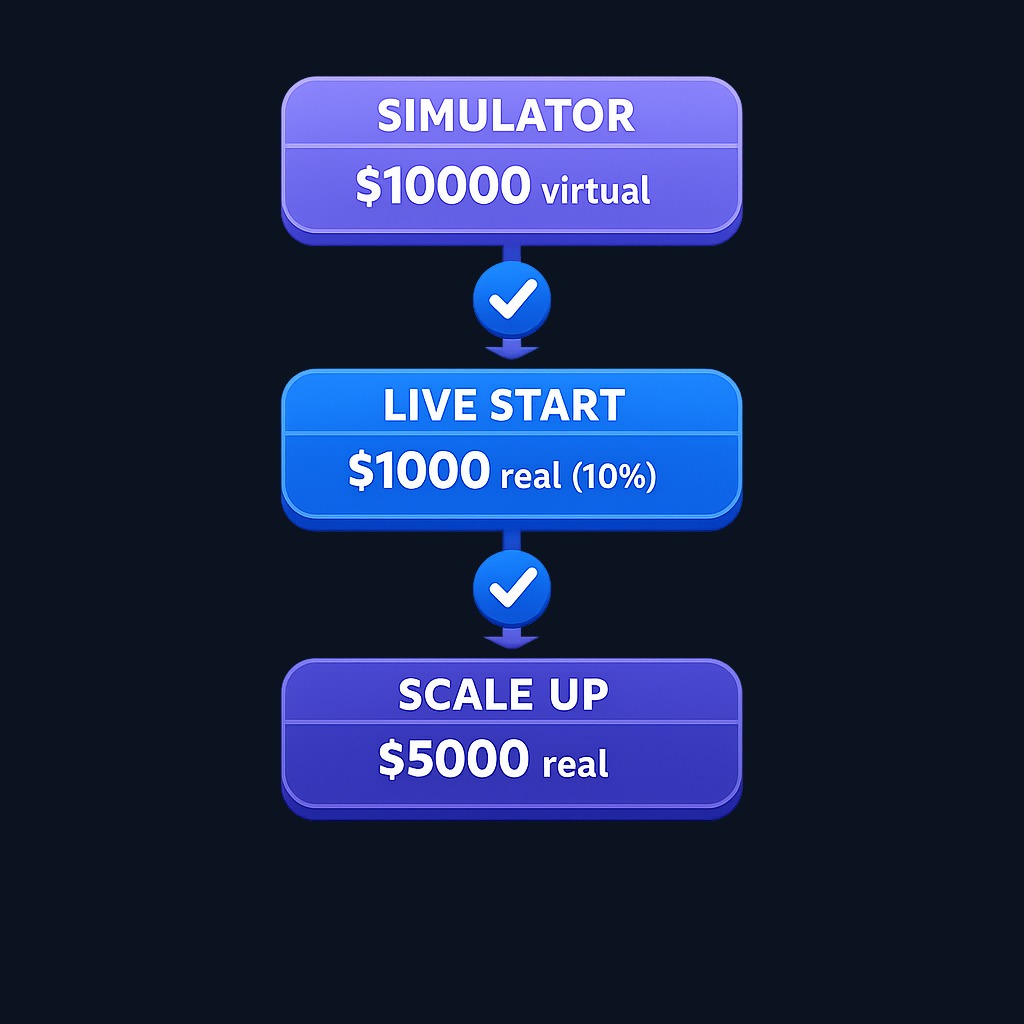
Expect a psychological gap. Real losses hurt in a way virtual ones cannot, and hesitation or panic often appears exactly where the simulator showed none. Position sizing, stop discipline, and a trade journal carry over from practice and become more important, not less. When you begin researching real companies, primary sources beat rumors: annual and quarterly filings are free on SEC EDGAR.
What to know before deciding
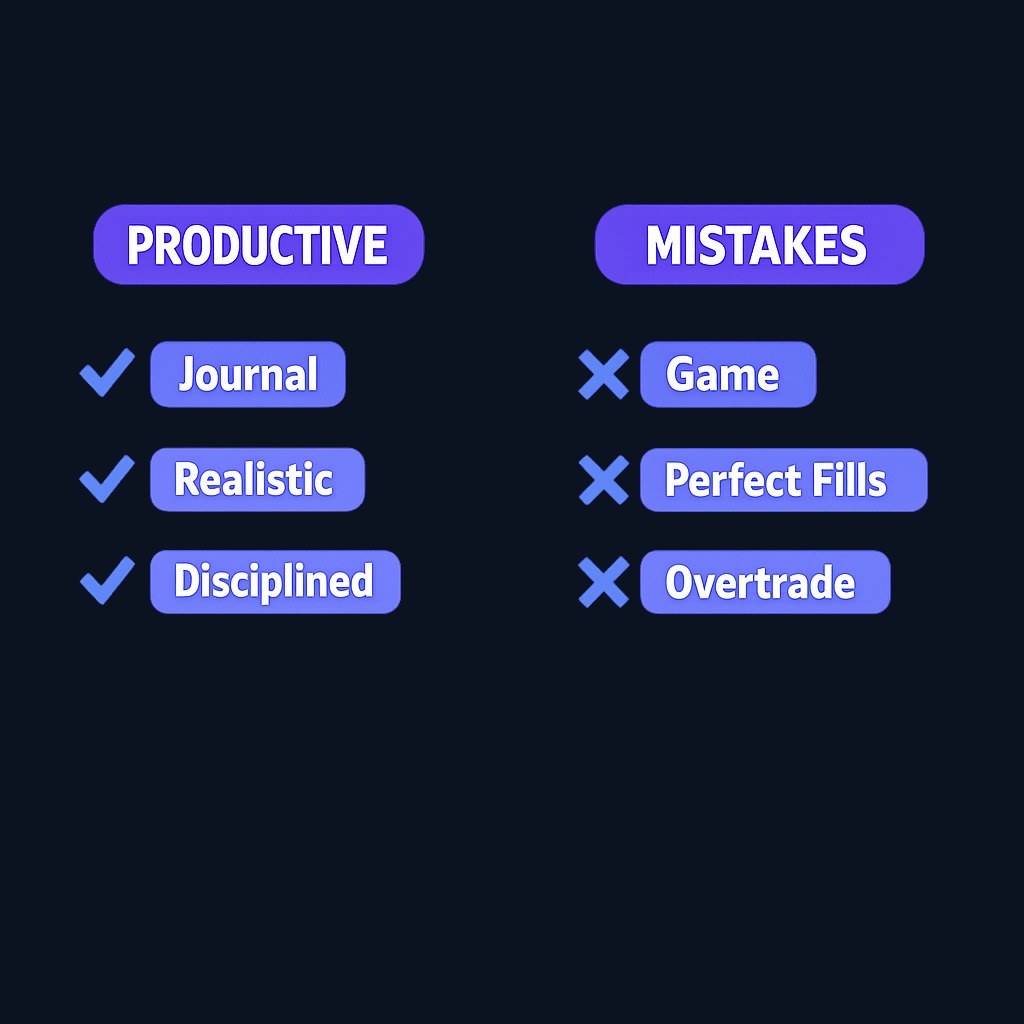
Common simulator mistakes to avoid:
- Treating it as a game. Reckless all-in trades on virtual money build habits that are expensive to unlearn.
- Ignoring costs and slippage. Some simulators fill orders perfectly; real markets charge spreads and partial fills.
- Overtrading for excitement. Volume of trades is not progress; quality of decisions is.
- Skipping the journal. Without notes on why you entered and exited, practice repeats mistakes instead of correcting them.
- Staying too long. Simulation is a bridge. Once results are consistent, small real positions teach what practice cannot.
Decision framework: matching a simulator to your stage
Pick by stage, not by feature lists. Complete beginner who cannot yet read a chart or an order ticket? Start with an education-first app so lessons and practice reinforce each other. Know the basics but lack a strategy? Use a free simulator with realistic data and drill one approach until the results are boring. Preparing to go live within months? Practice inside your chosen broker's paper platform so the interface holds no surprises. Experienced but testing a new tactic? A replay-based trainer compresses months of scenarios into days. One tool rarely serves every stage - switching as you grow is normal and cheap.
FAQ
Are stock trading simulators free?
Many are. Broker paper-trading modes are free with an account, and several web simulators cost nothing. Specialized trainers with historical replay and advanced analytics usually charge monthly fees - check current pricing on each provider's official site.
How long should I practice before trading real money?
Until your simulated results are consistent, not just lucky - commonly one to three months of disciplined trading with a written strategy and journal. The calendar matters less than whether your process survives losing streaks.
Do simulators use real market data?
Good ones do, either live or slightly delayed. Some advanced trainers deliberately use historical data instead, replaying past sessions so you can practice the same scenario repeatedly.
Can simulators fully prepare me for real trading?
They prepare you mechanically and strategically, but not emotionally. Real losses trigger reactions practice cannot replicate, which is why starting small with real money is the true final step of training.
Next steps
The best stock trading simulators share one trait: they make practice feel consequential enough that lessons transfer to real markets. Choose one that matches your stage, trade it with the seriousness of real money, journal every decision, and graduate to small live positions once consistency shows up. If you want the practice paired with a curriculum that explains each concept as you meet it, a guided path shortens the road.
TradingMarketsBeginner
Practice trading with Finelo
Practice in a simulator, learn with bite-sized lessons, and build confidence before risking real money.
About the author
Finelo Team
The Finelo Team creates practical investing and trading education designed to help beginners learn faster with structured challenges, simulator practice, and bite-sized lessons.
Keep reading — Related articles

Trading
Understanding Walk Forward Analysis in Trading
Brief educational note: this article is educational — not investment advice — and trading involves the risk of loss.
Finelo Team
Trading
VWAP vs Moving Average: Formulas, Uses, and Limits
VWAP weights price by recorded volume over a defined period, while a moving average summarizes a sequence of prices over a rolling lookback.
Finelo Team

Trading
Volume Profile vs Market Profile: What Each Chart Measures
Volume Profile groups traded volume by price level.
Finelo Team