The IPO lockup period is a stretch of time after a company goes public, commonly around 90 to 180 days, during which insiders such as founders, employees, and early investors agree not to sell their shares. It exists to keep a flood of insider selling from hitting the market right after the stock starts trading.
What is the IPO Lockup Period and Why Does It Matter?
The IPO lockup period is a stretch of time after a company goes public, commonly around 90 to 180 days, during which insiders such as founders, employees, and early investors agree not to sell their shares. It exists…
6 min read
Practice trading with Finelo
Practice in a simulator, learn with bite-sized lessons, and build confidence before risking real money.
Want to learn more?
Practice in a simulator, learn with bite-sized lessons, and build confidence before risking real money.
Explore FineloExplore Finelo's 28-day challenges
Turn learning into a daily habit with guided challenge paths.
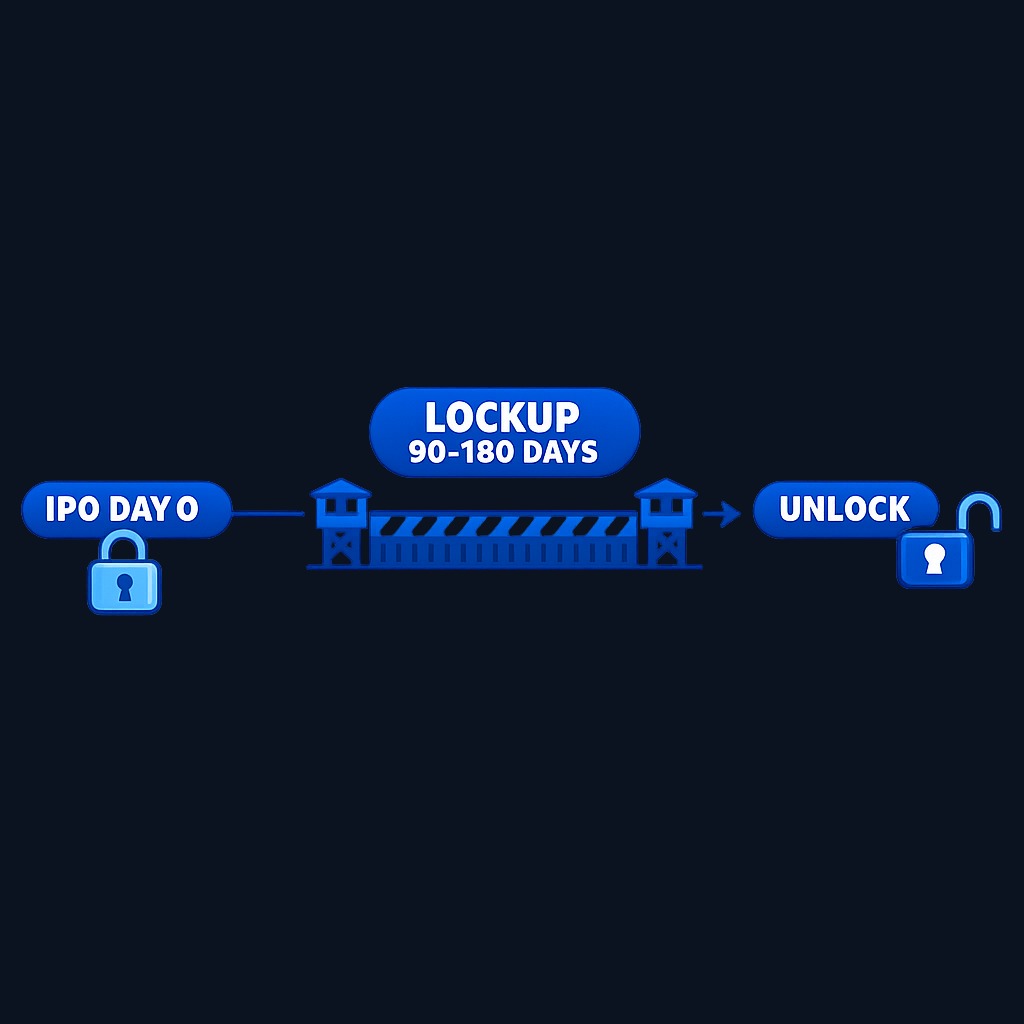
If you follow newly public companies, the lockup calendar matters as much as the IPO date itself. This page explains the purpose of the ipo lockup period, who it binds, how the agreements are structured, and what tends to happen when the restriction ends. It is educational content, not financial advice.
Purpose of the IPO lockup period
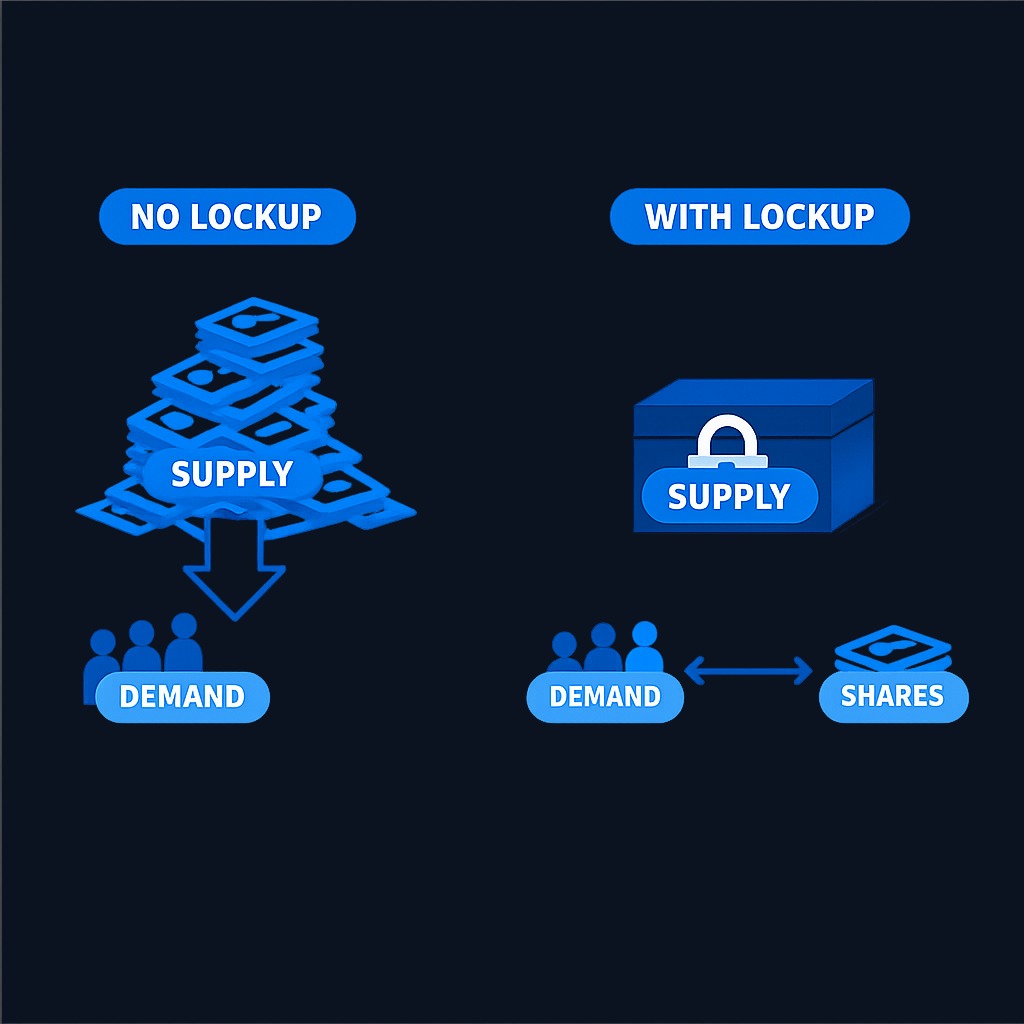
When a company goes public, only a slice of its shares is usually sold in the offering. Insiders often hold far more stock than the amount floated. If all of them could sell on day one, the extra supply could overwhelm demand and destabilize the young stock.
Lockup agreements solve three problems at once. They support an orderly market while trading history builds. They signal commitment: insiders staying invested tells new shareholders that the people who know the company best are not rushing for the exit. And they protect the underwriters' pricing work, since a stable early market makes the offering price more credible. Lockups are typically contractual promises between insiders and the underwriters rather than a legal requirement, which is why their terms can differ from one deal to the next.
How long lockup periods typically last
There is no single mandated length. In practice, most traditional IPO lockups fall in a familiar range:
| Arrangement | Typical pattern |
|---|---|
| Standard lockup | Often around 180 days after the IPO |
| Shorter lockups | Sometimes around 90 days, or staggered in stages |
| Staggered releases | Portions of shares unlock at several dates instead of one |
| Early-release triggers | Some agreements unlock early if price or earnings milestones are met |
The exact terms live in the company's offering documents. The prospectus describes who is restricted, for how long, and under what conditions shares can be released early. You can read any US company's prospectus for free in the SEC's EDGAR database, which is the definitive source when headlines disagree.
Who is affected by the lockup period
Lockups usually cover the people and funds that held equity before the IPO:
- Founders and executives, whose stakes are often the largest.
- Employees holding shares or exercised options from equity compensation plans.
- Early investors, such as venture capital and private equity funds.
- Other pre-IPO shareholders, including friends-and-family holders.
Public investors who buy shares in the IPO or on the open market are not restricted; the lockup binds only the pre-IPO holders who signed the agreement. One nuance: employees may still face company trading windows and blackout policies after the lockup ends, so insider selling often arrives in waves rather than all at once.
How lockup agreements are structured
A lockup is a contract, so its details vary by deal, but the common architecture looks like this. The agreement names the restricted holders and covers their shares and share-linked instruments, including options and convertible securities. It sets the restriction window and defines exceptions, such as transfers to family trusts that remain bound by the same terms. It may include staggered unlock dates or early-release provisions tied to stock performance. Finally, underwriters typically keep the right to waive the lockup early for some or all holders, which occasionally happens and is disclosed when it does.
Newer listing routes change the picture. Direct listings often skip traditional lockups entirely, and some IPOs now use shorter or milestone-based structures. This is why checking the actual filing beats assuming the classic 180-day template.
Practice trading with Finelo
Practice in a simulator, learn with bite-sized lessons, and build confidence before risking real money.
What happens when the lockup expires
Lockup expiration is a supply event. On the unlock date, a large block of shares becomes eligible for sale, and markets often anticipate it. Common patterns include price softness in the days around expiration, higher trading volume as some insiders diversify, and sharper moves in stocks where the locked-up share count dwarfs the public float.
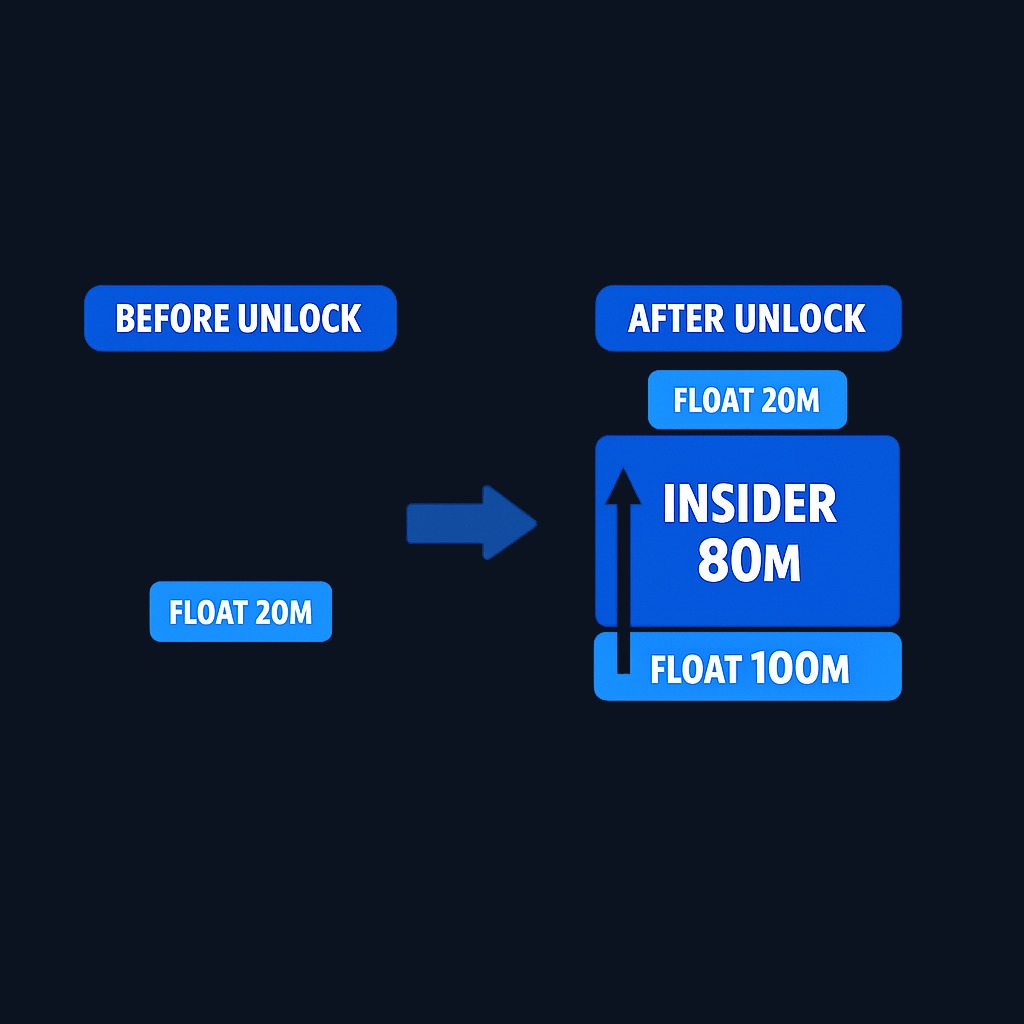
None of this is guaranteed. If insiders broadly choose to hold, or if buyers absorb the new supply, the date can pass quietly. Some stocks even rally once the overhang of the feared unlock is gone. The size of the unlock relative to existing float, the stock's run since the IPO, and overall market conditions all shape the outcome, which is why expiration dates reward research rather than reflexive trades.
What to know before deciding
Before making any decision around a lockup, check four facts in the filings: the exact unlock date or dates, the number of shares unlocking relative to the current float, whether early-release triggers already fired, and whether underwriters have granted waivers. Then add context: insiders sell for many reasons, including taxes and diversification, so selling volume alone is not proof of lost confidence. Finally, remember that expiration dates are public knowledge; markets price in expected effects to some degree, and obvious trades are rarely free money.
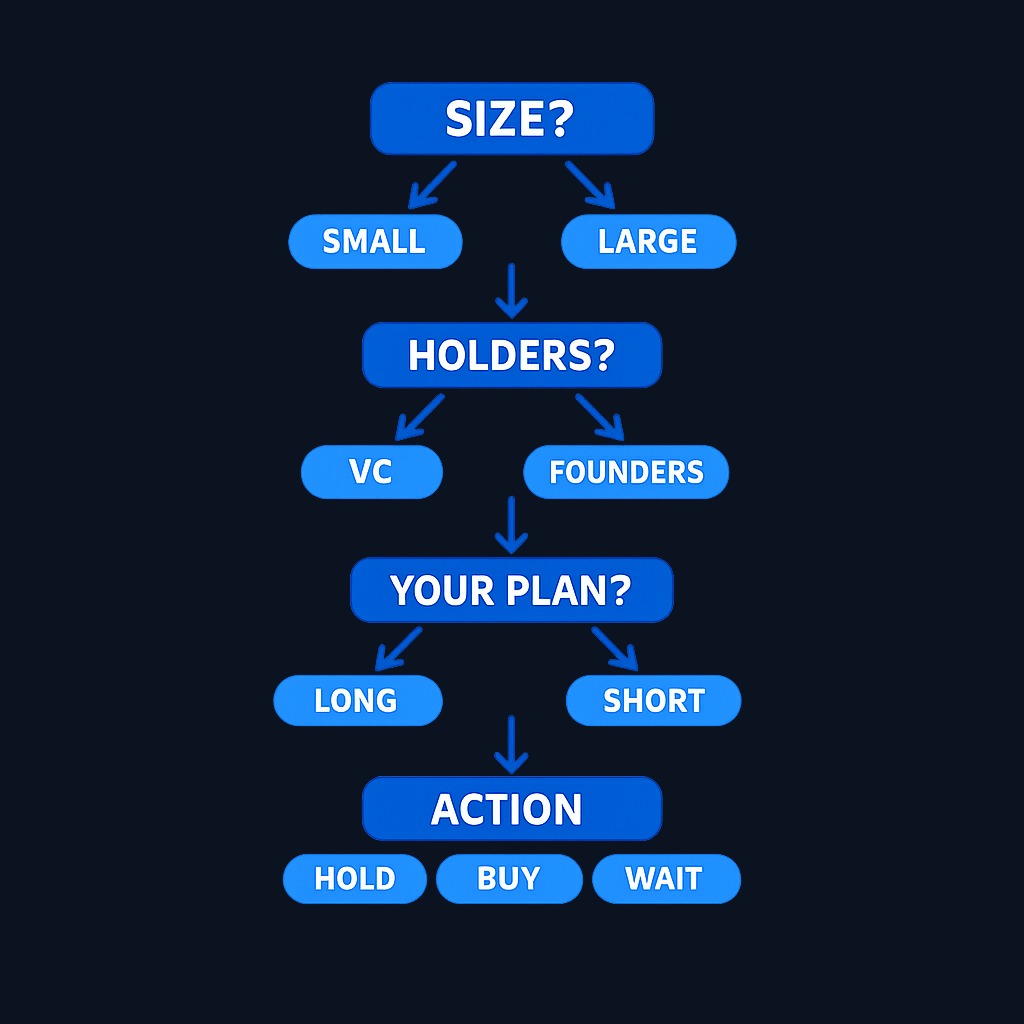
Decision framework: navigating a lockup expiration
For a stock you own or want to own, work through this sequence. First, quantify the event: how many shares unlock, and how does that compare to average daily volume? A small unlock in a heavily traded stock is usually noise. Second, assess the holders: concentrated venture funds with big paper gains are likelier sellers than founders with control motives. Third, decide your stance in advance: if you want the stock long term, a supply-driven dip may be an entry opportunity; if you are already sitting on gains, you might simply accept short-term volatility. Fourth, avoid binary bets: timing a single expiration day is speculation, not analysis. Write down your plan before the date arrives so the price action does not write it for you.
Conclusion and next steps
The IPO lockup period is a temporary contract that keeps insider shares off the market while a newly public stock finds its footing, and its expiration is a well-telegraphed supply event. The practical edge comes from reading the actual agreement: dates, share counts, triggers, and waivers. Next step: pick a recent IPO you follow, pull its prospectus from EDGAR, and find the lockup terms yourself; it takes ten minutes and turns headlines into checkable facts.
Frequently asked questions
Can insiders sell before the lockup period ends?
Generally no, unless the underwriters formally waive the restriction or the agreement's early-release conditions are met. Waivers do happen and are disclosed. Separately, insiders remain subject to securities laws and company trading policies whenever they sell.
Where can I find a company's lockup terms?
In its IPO prospectus and related filings, available for free in the SEC's EDGAR system. Search the prospectus for the lockup section, which lists the duration, the restricted holders, and any early-release or staggered-unlock provisions.
Does the stock always drop when the lockup expires?
No. Price pressure around expiration is a common pattern, driven by expected new supply, but outcomes vary widely. Some stocks decline ahead of the date, some bounce afterward, and some barely react. The size of the unlock and insider intentions matter more than the calendar alone.
Do all IPOs have lockup periods?
Most traditional IPOs include them by contract, but they are not universal. Direct listings frequently have no lockup, and some deals use shortened or milestone-based versions. Always verify in the offering documents rather than assuming a standard structure.
ipolockupperiod
Practice trading with Finelo
Practice in a simulator, learn with bite-sized lessons, and build confidence before risking real money.
About the author
Finelo Team
The Finelo Team creates practical investing and trading education designed to help beginners learn faster with structured challenges, simulator practice, and bite-sized lessons.
Keep reading — Related articles

Trading
Understanding Walk Forward Analysis in Trading
Brief educational note: this article is educational — not investment advice — and trading involves the risk of loss.
Finelo Team

Trading
VWAP vs Moving Average: Formulas, Uses, and Limits
VWAP weights price by recorded volume over a defined period, while a moving average summarizes a sequence of prices over a rolling lookback.
Finelo Team
Trading
Volume Profile vs Market Profile: What Each Chart Measures
Volume Profile groups traded volume by price level.
Finelo Team