Last editorial review: September 28, 2026
Biweekly vs. monthly mortgage payments: where the savings come from
See when biweekly payments add extra principal, how monthly overpayments can compare, and what to check before paying a service fee.
10 min read
Practice trading with Finelo
Practice in a simulator, learn with bite-sized lessons, and build confidence before risking real money.
Want to learn more?
Practice in a simulator, learn with bite-sized lessons, and build confidence before risking real money.
Explore FineloExplore Finelo's 28-day challenges
Turn learning into a daily habit with guided challenge paths.
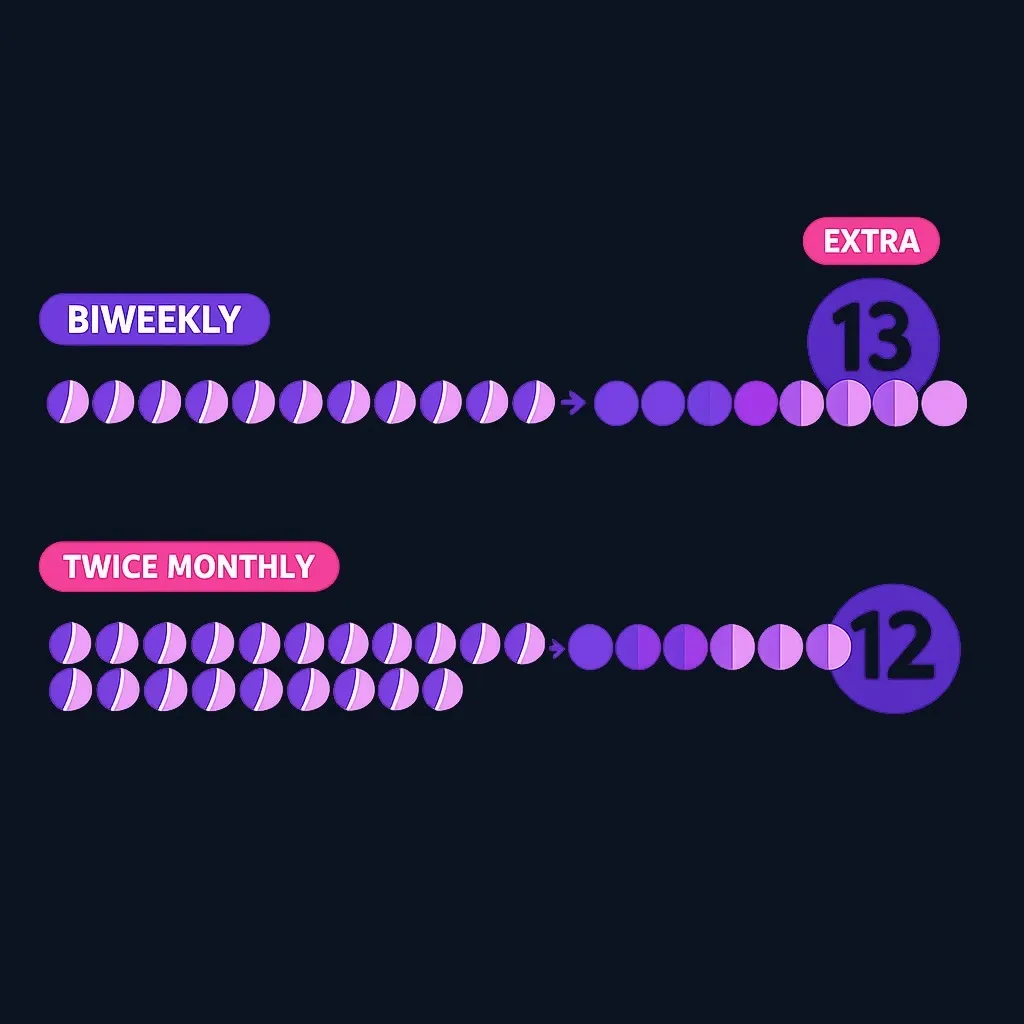
Paying half your monthly mortgage payment every two weeks creates 26 half-payments in a typical year, equal to 13 monthly payments. That extra annual payment can help you pay off the loan sooner when the extra money reduces principal.
Paying twice a month is different: 24 half-payments equal the usual 12 monthly payments. Frequency alone does not create an extra payment.
Compare the schedules
| Schedule | Typical annual payments | What to check |
|---|---|---|
| Monthly | 12 full payments | Whether you can add principal yourself |
| Twice monthly | 24 half-payments | Whether partial payments are accepted |
| Every two weeks | 26 half-payments | Fees, processing dates, and principal application |
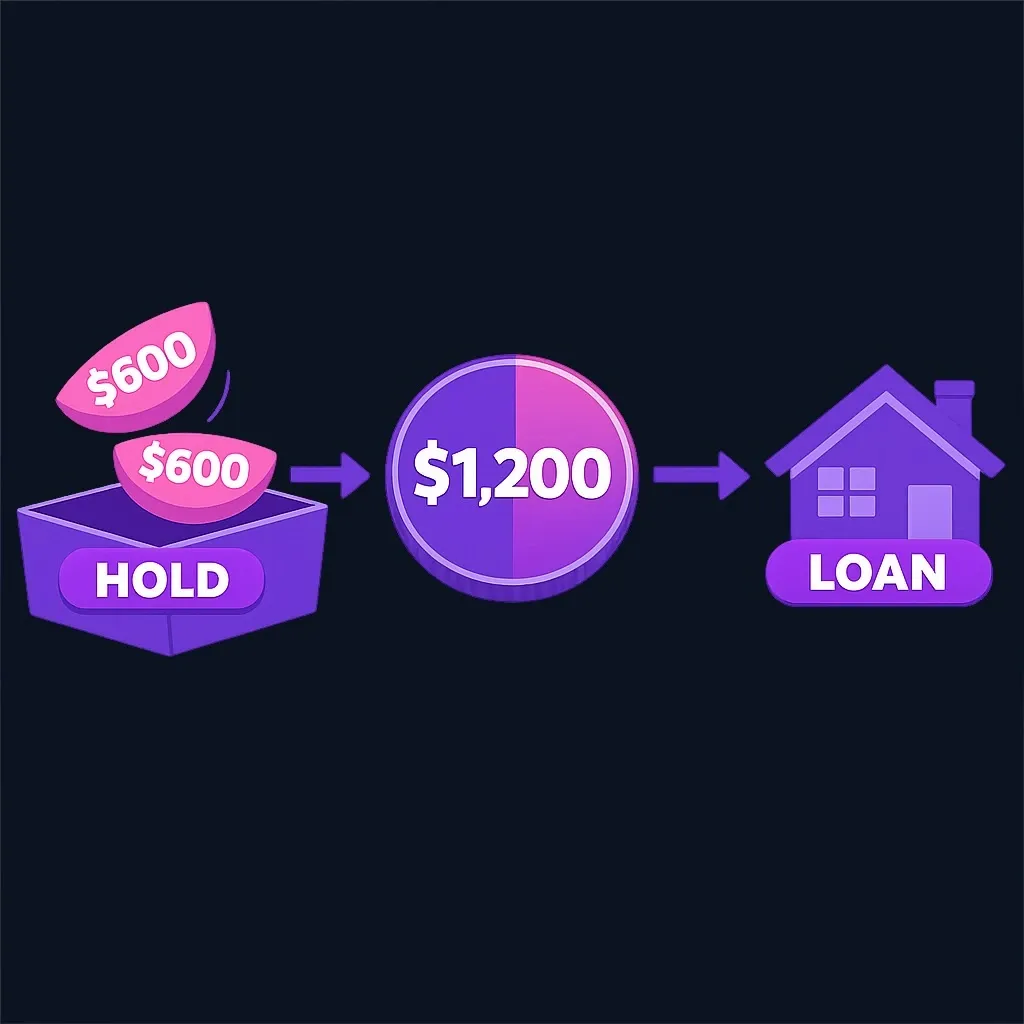
A servicer may hold a partial payment until enough arrives to cover a full payment. The CFPB explains partial mortgage payments. Do not start sending half-payments without confirming how the servicer will treat them.
A simple example
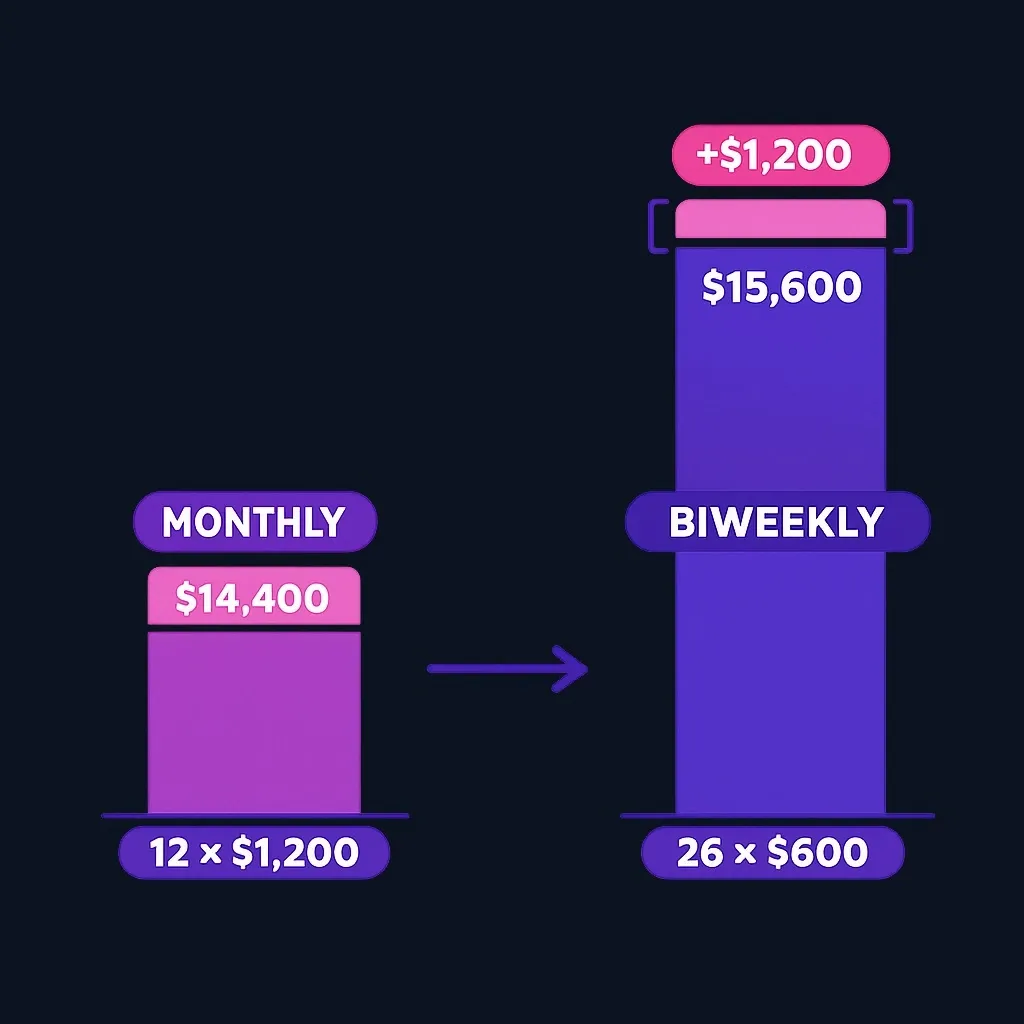
Suppose the scheduled principal-and-interest payment is $1,200. Paying $600 every two weeks totals $15,600 in a typical year, compared with $14,400 for 12 monthly payments. The additional $1,200 is what drives much of the potential benefit.
A similar annual overpayment can come from adding $100 of principal to each monthly payment. The exact interest saving differs with timing and servicing rules. Escrow for taxes and insurance needs separate handling; confirm how much of any extra payment reaches principal.
Before you enroll
Ask the servicer whether it offers the arrangement directly, whether there is a fee, and when payments are credited. Check your loan for any applicable prepayment charge. Review CFPB guidance on managing mortgage payments.
Then check your cash flow. A schedule with an extra annual payment requires more money over the year. It should not leave you short for essential bills or force you to borrow at a higher rate.
The useful comparison is between the same total annual outlay under different schedules. Ask for an amortization estimate and verify the result on your statements after the arrangement begins.
Practice trading with Finelo
Practice in a simulator, learn with bite-sized lessons, and build confidence before risking real money.
Translate the schedule into a household budget
The extra payment is real money, not a discount supplied by the lender. With a hypothetical $1,200 principal-and-interest payment, twelve monthly payments total $14,400. Twenty-six half-payments of $600 total $15,600. The difference is $1,200 over the year, or $100 per month on average. A household unable to afford that additional amount should not expect a schedule change alone to solve the problem.
Twice-monthly and every-two-weeks schedules are different. Paying on the first and fifteenth produces 24 half-payments, equivalent to twelve full payments. Paying every other week generally produces 26. Look at the actual annual calendar rather than relying on the label a payment service uses.
Escrow adds another reason to ask for written instructions. A mortgage payment may include property taxes and homeowners insurance as well as principal and interest. You want to know how extra money is allocated, not simply that it was received. Confirm how to designate a principal-only payment and whether doing so affects the next scheduled amount due.
After the first few transactions, compare your bank withdrawals with the mortgage statement. Check payment dates, principal credited, any unapplied funds, and whether the regular payment is considered satisfied. Keep paying under the established schedule until the servicer confirms the new arrangement is active. An intended overpayment should not accidentally become a late payment.
How biweekly payments work
A biweekly mortgage schedule means you pay half of your regular monthly payment every two weeks. In a typical year, that produces 26 half-payments, equal to 13 monthly payments. The exact count depends on the calendar and first payment date; check the schedule rather than assuming every calendar year has the same count. Example (structure only): if your required monthly payment is $1,200, a biweekly plan of $600 every two weeks results in 26 payments = $15,600/year (13 × $1,200). That extra payment accelerates principal reduction relative to 12 monthly payments. Use the servicing checklist below to confirm when the extra amount reduces principal.
How monthly payments work
Monthly payments are the standard: one full payment on the due date each month. Lenders post payments and interest accrues on the schedule in your loan documents; your monthly mortgage statement has the details you need to track balances and due dates.
Benefits (summary)
- Can accelerate payoff by effectively adding one extra monthly payment per year.
- May reduce total interest paid over the life of the loan when the extra amount is credited to principal, subject to timing and fees.
Drawbacks (summary)
- Not every servicer treats biweekly payments the same; some require a specific program or may not accept them as intended.
- Cashflow management is different: you must have funds available more frequently.
How to compare your options
- Cashflow alignment: If you are paid every two weeks (biweekly payroll), biweekly payments can match your cashflow and make the extra annual payment easier to manage. If your income is monthly, monthly payments may be simpler. Use the table above to map your paycheck cadence to payment frequency.
- Servicer rules and posting: Confirm with your mortgage servicer how they post biweekly or partial payments. Some servicers will hold partial payments until a full monthly payment is collected; others apply payments on receipt. Follow the servicer’s instructions for submitting payments to avoid rejected or misapplied payments.
- Desired payoff speed versus liquidity: Biweekly accelerates payoff by adding the equivalent of one payment per year when structured correctly, reducing interest over time. However, that requires committing more cashflow into the mortgage; ensure you keep an emergency fund.
- Automation and fees: Ask your servicer whether they offer a no-cost biweekly option or whether a third-party processor is required. If a third party is involved, confirm any fees and exactly how payments are applied. If the servicer declines a payment method, follow their payment submission process to avoid issues.
When biweekly usually makes sense
- Your paycheck arrives every two weeks and you prefer automatic alignment of mortgage outflows with income.
- You want to shorten the mortgage term without intentionally paying a large one-time principal payment, and your servicer applies the extra payment amount to principal after satisfying the regular payment.
When monthly usually makes sense
- You or your household budget on a monthly cycle and prefer a single predictable due date each month.
- Your servicer does not support biweekly posting the way you expect, or a biweekly program would involve third-party fees or complexity — confirm any payment acceptance rules with your servicer.
Hybrid approaches to consider
- Keep monthly payments but make one extra principal payment per year or add a small extra amount to each monthly payment. This produces a similar payoff acceleration without changing frequency; check whether your servicer applies extra amounts to principal immediately.
Tradeoffs and caveats
- Servicer acceptance and posting rules: Before switching, ask your servicer how they will post biweekly or partial payments. If a servicer holds partial payments or posts them toward future payments instead of principal, the theoretical savings may not materialize.
- Potential program fees: Some third-party biweekly programs exist; if a third party is required, check whether they charge fees and exactly how funds are transmitted and posted. (Contact your servicer for specifics.)
- Cashflow flexibility: Biweekly requires more frequent outflows; if irregular expenses or unexpected events are likely, ensure you maintain liquidity before committing extra payment cadence.
- Missed payments: Missing a biweekly payment can create a shortfall relative to your expected annual extra payment; always confirm grace periods and late fee policies with your servicer.
- Paperwork and autopay alignment: Automating a biweekly schedule may require permission or a specific enrollment path. If automation fails, you risk a late payment or fees; confirm setup steps with your servicer.
Practical tip: Before changing, call your servicer and ask three direct questions — (1) Will you accept biweekly payments and, if so, how are they applied? (2) Are there fees or mandatory programs? (3) Will partial payments be held or applied immediately? Keep any answers in writing.
Hypothetical payment examples
The following are illustrative scenarios to show how biweekly vs monthly choices play out. They are hypothetical and meant to clarify mechanics rather than predict outcomes.
Scenario A — Biweekly fits payroll and goals
Maria is paid every two weeks and wants to pay off her 30-year mortgage faster without a large lump sum. She enrolls in a biweekly plan where partial payments are handled under the servicer’s rules and the additional annual amount is applied to principal. Because she makes 26 half-payments, her mortgage principal declines faster than under a 12-month schedule, shortening her payoff timeline. Before enrolling, Maria confirmed posting rules with her servicer and documented the responses. Key takeaway: If your paycheck cadence matches and the servicer applies the extra amount to principal, biweekly can speed repayment while increasing the total amount paid over the year.
Scenario B — Monthly simplicity preferred
Daniel budgets monthly and prefers one predictable payment. He instead increases his monthly payment slightly to mimic the annual extra payment or makes a dedicated extra principal payment once per year. He confirms the extra amount is applied to principal immediately. Key takeaway: You can achieve similar payoff acceleration by adding a small amount monthly or making an annual extra payment, while keeping simple monthly budgeting. How to test on your mortgage: ask your servicer whether they will (a) accept a half-payment every two weeks, (b) handle the partial payment and apply any extra principal as instructed, and (c) whether any fees apply. If accepted and applied immediately, the biweekly route gives the mechanical advantage of an extra payment per year.
What are the benefits of biweekly mortgage payments?
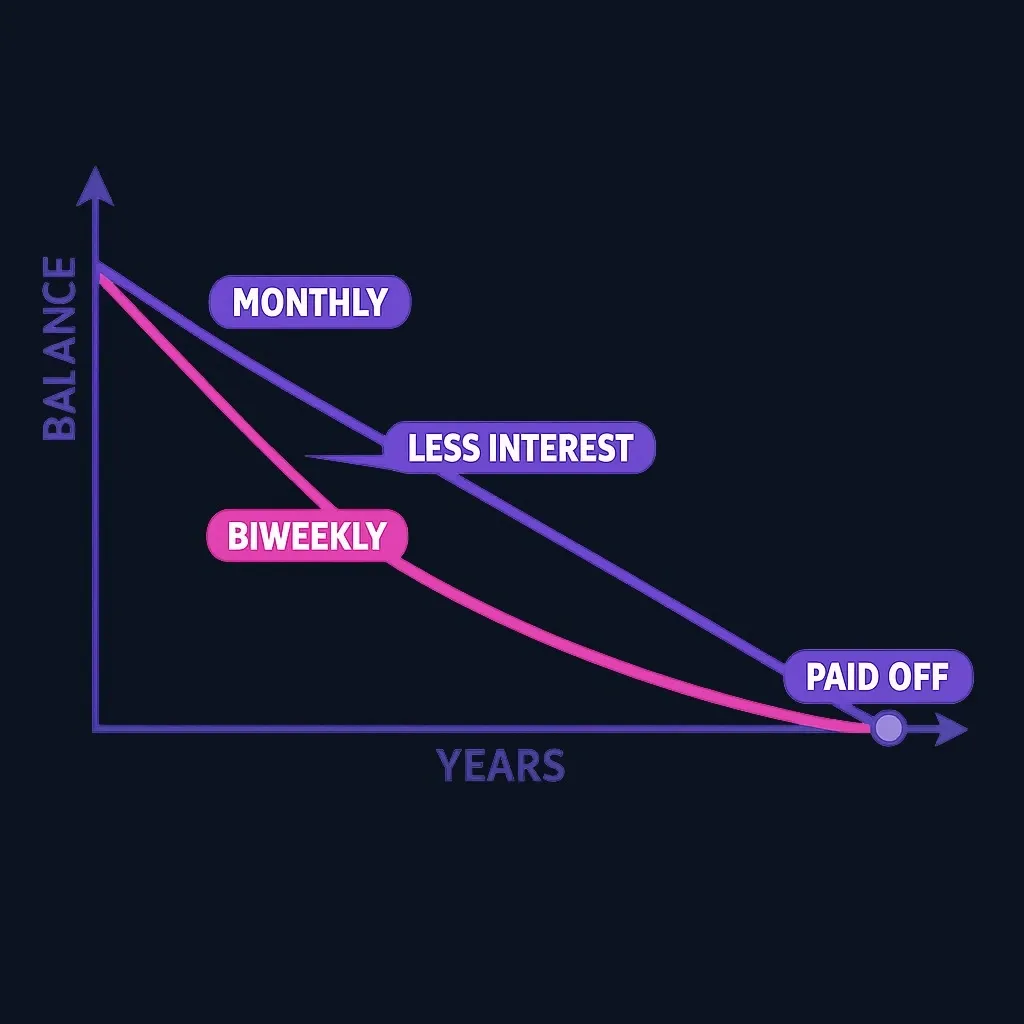
Biweekly payments create 26 half-payments per year, which is equivalent to 13 full monthly payments and can reduce the loan term and interest paid when the extra amount reduces principal and savings exceed any program fees.
How do biweekly payments actually reduce interest?
Because you make the equivalent of an extra monthly payment each year, more of your money goes toward principal sooner. That lowers the outstanding balance faster, which reduces the interest that accrues over the life of the loan when extra principal is credited under the loan’s servicing rules. Holding partial payments until a full scheduled payment is available does not necessarily eliminate the benefit of the additional annual principal payment.
Can I switch to biweekly payments at any time?
Possibly, but you must confirm with your mortgage servicer how to submit biweekly or partial payments and whether they accept them. If a servicer refuses a payment method, follow their instructions to submit payments correctly.
How do I calculate a biweekly payment?
Divide your required monthly payment by two and pay that amount every two weeks. That produces 26 half-payments per year (13 monthly equivalents). Confirm with your servicer how those half-payments will be posted so you know whether the extra annual payment will reduce principal immediately.
For a separate decision when taking out a mortgage, compare Mortgage points vs. a larger down payment.
This guide covers U.S. rules. Finelo provides financial education, not personalized financial, investment, tax, or legal advice.
Financial LiteracyU.S. GuideFinancial Education
Practice trading with Finelo
Practice in a simulator, learn with bite-sized lessons, and build confidence before risking real money.
About the author
Finelo Team
The Finelo Team creates practical investing and trading education designed to help beginners learn faster with structured challenges, simulator practice, and bite-sized lessons.
Keep reading — Related articles

Financial Literacy
USDA vs. FHA loan
Compare location and income eligibility, down payments, credit conditions, and upfront and annual program charges for a home purchase.
Finelo Team

Financial Literacy
Term life vs. accidental death insurance
Compare broad term-life protection with accident-only coverage, including exclusions, underwriting, and the family income gap.
Finelo Team
Financial Literacy
Term life insurance laddering vs. one policy
Compare several term policies ending at different times with one policy, using coverage needs, costs, and future insurability.
Finelo Team