Last editorial review: September 28, 2026
Auto loan refinance vs. trade-in: keep the car or replace it?
Refinancing changes your car loan; trading in changes the vehicle too. Compare remaining debt, negative equity, fees, and total cost.
11 min read
Practice trading with Finelo
Practice in a simulator, learn with bite-sized lessons, and build confidence before risking real money.
Want to learn more?
Practice in a simulator, learn with bite-sized lessons, and build confidence before risking real money.
Explore FineloExplore Finelo's 28-day challenges
Turn learning into a daily habit with guided challenge paths.
Refinancing replaces the loan while you keep the car. Trading in replaces the car and may also create a new loan. Separate those two decisions: a lower monthly payment does not tell you whether the new deal costs less overall.
What changes with each option?
| Question | Refinance | Trade-in |
|---|---|---|
| Do you keep the car? | Yes | No |
| What are you negotiating? | Rate, fees, and repayment term | Vehicle price, trade value, old loan payoff, and financing |
| Can the payment fall? | Possibly, through a lower rate or longer term | Possibly, depending on the replacement and financing |
| Main trap | Extending the term and paying more overall | Rolling old debt into the replacement loan |
The CFPB's auto-loan comparison guide explains why the amount borrowed, term, and total cost belong beside the payment.
Check for negative equity first
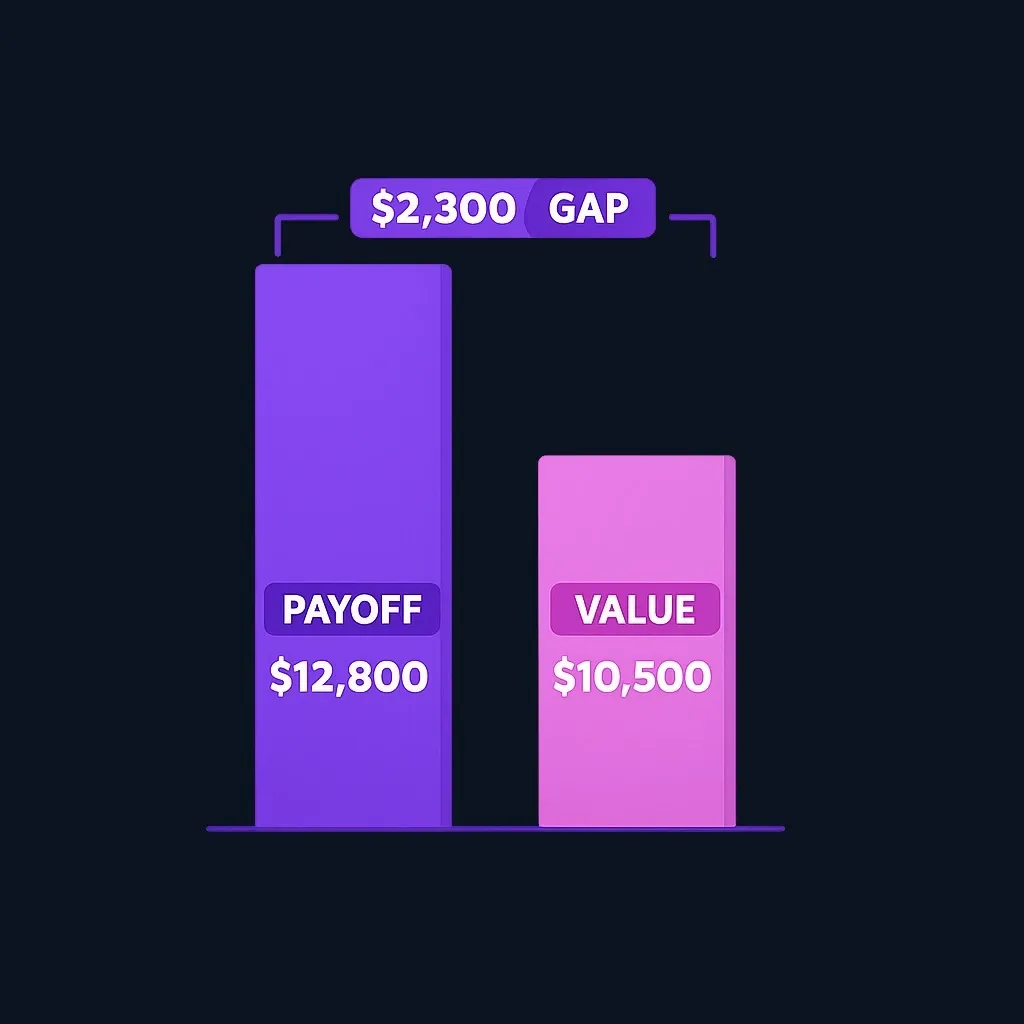
Negative equity means your payoff amount exceeds the car's value. Hypothetically, if the payoff is $12,800 and the trade offer is $10,500, the gap is $2,300. That amount does not disappear when a dealer says it will “pay off” your loan. It may be added to the new financing.
The FTC's negative-equity guidance explains what to check in the transaction. Obtain a current payoff quote directly from the lender and keep the trade-in price separate from the replacement car's price.
When each option deserves a closer look
Refinancing may be worth pricing if the car still meets your needs and a lender offers a meaningfully better deal after fees. Check vehicle-age, mileage, balance, and credit requirements.
A trade-in may make sense when the car no longer suits your needs or expected ownership costs are becoming difficult to manage. Include sales taxes, registration, insurance, maintenance, and depreciation in the replacement budget.
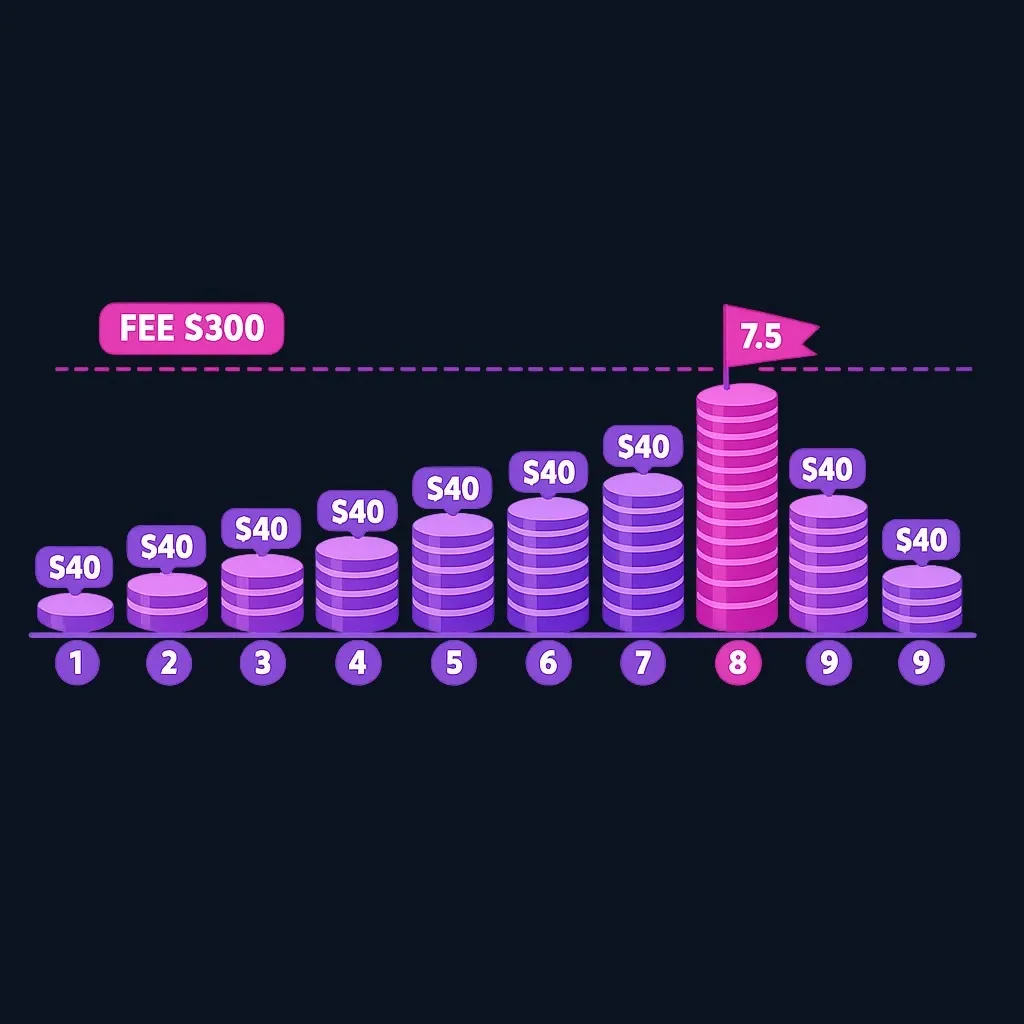
If a refinance costs $300 and lowers the payment by $40, the simple payment-based break-even is 7.5 months. That is a cash-flow calculation, not proof of lower total interest: compare the remaining balances and payoff dates too.
Request written offers and compare the cost of keeping the current loan, refinancing it, and replacing the car over the same period.
Separate the car decision from the financing decision
Start with whether the current car still meets your needs. A reliable vehicle with an expensive loan presents a financing problem. A vehicle that no longer fits your family or work presents a different problem, even if its interest rate is low. Keeping those questions separate helps prevent an attractive monthly payment from becoming the reason for an unnecessary purchase.
For a trade-in, request three figures separately: the replacement car's out-the-door price, the trade-in allowance, and the old loan's payoff amount. A higher trade-in allowance is not automatically a better deal if the replacement vehicle costs more. Include taxes, registration, optional products, and any negative equity in the amount financed.
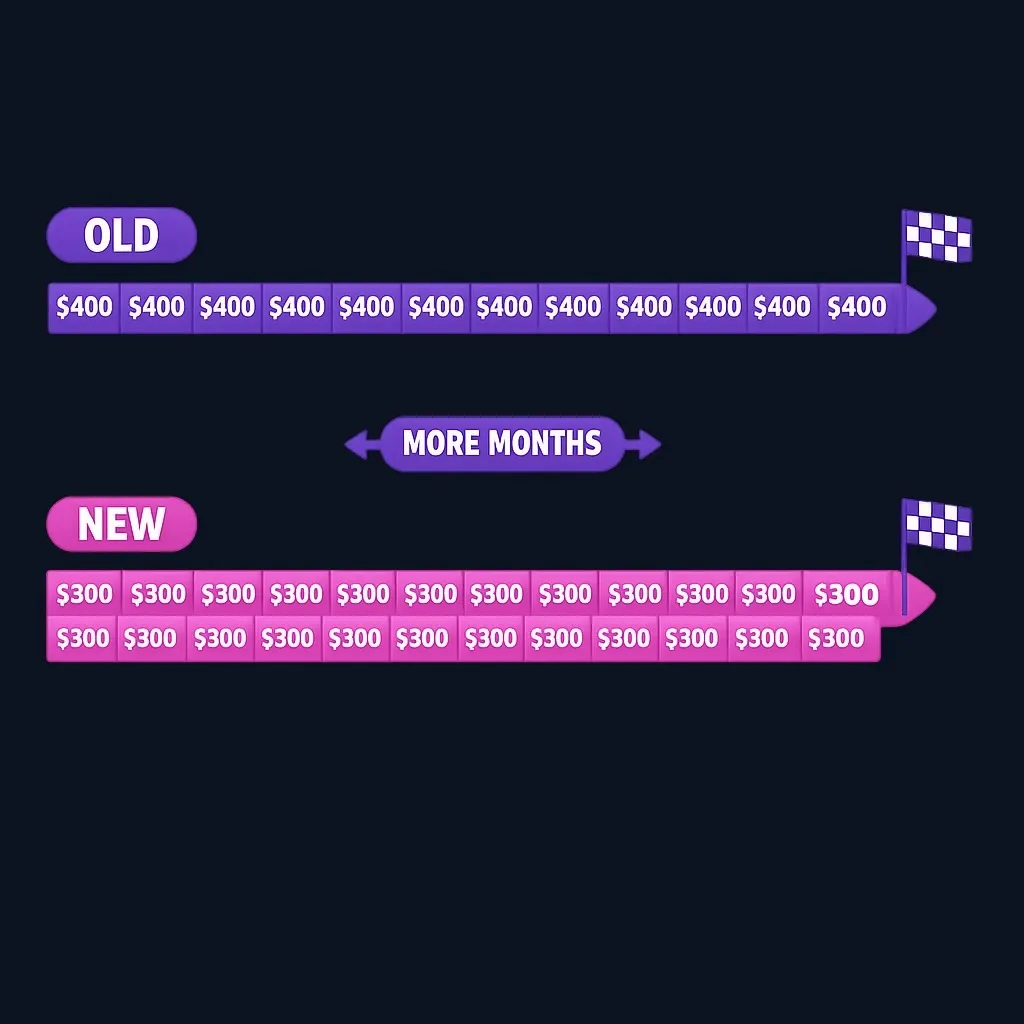
For refinancing, compare the new schedule with the payments remaining on the old loan. Money already paid is a past cost. The relevant choice is what you will pay from today onward, including the payoff, new fees, and the future term. If a lower payment requires more months in debt, state that tradeoff explicitly in your comparison.
A car can also be cheaper to keep even with a coming repair. Put a written repair estimate alongside the costs of replacing it, including insurance and registration. Conversely, repeated breakdowns may have a cost beyond the repair bill, such as missed work. A realistic ownership comparison includes those needs without assuming a newer vehicle has no future maintenance expenses.
Practice trading with Finelo
Practice in a simulator, learn with bite-sized lessons, and build confidence before risking real money.
Understanding Auto Loan Refinancing
Auto loan refinancing means replacing your existing car loan with a new loan — typically from a different lender — to get a lower interest rate, a different term, or a smaller monthly payment. The usual steps are: check your credit, compare lenders and rates, calculate whether the savings exceed fees, and apply for the new loan. Refinancing tends to be best when your credit score has improved, market rates have fallen, or you want to lengthen/shorten the loan term for monthly-payment or total-interest reasons. Verify current rates and lender offers on official lender sites before applying.
What Does Trading In Your Car Mean?
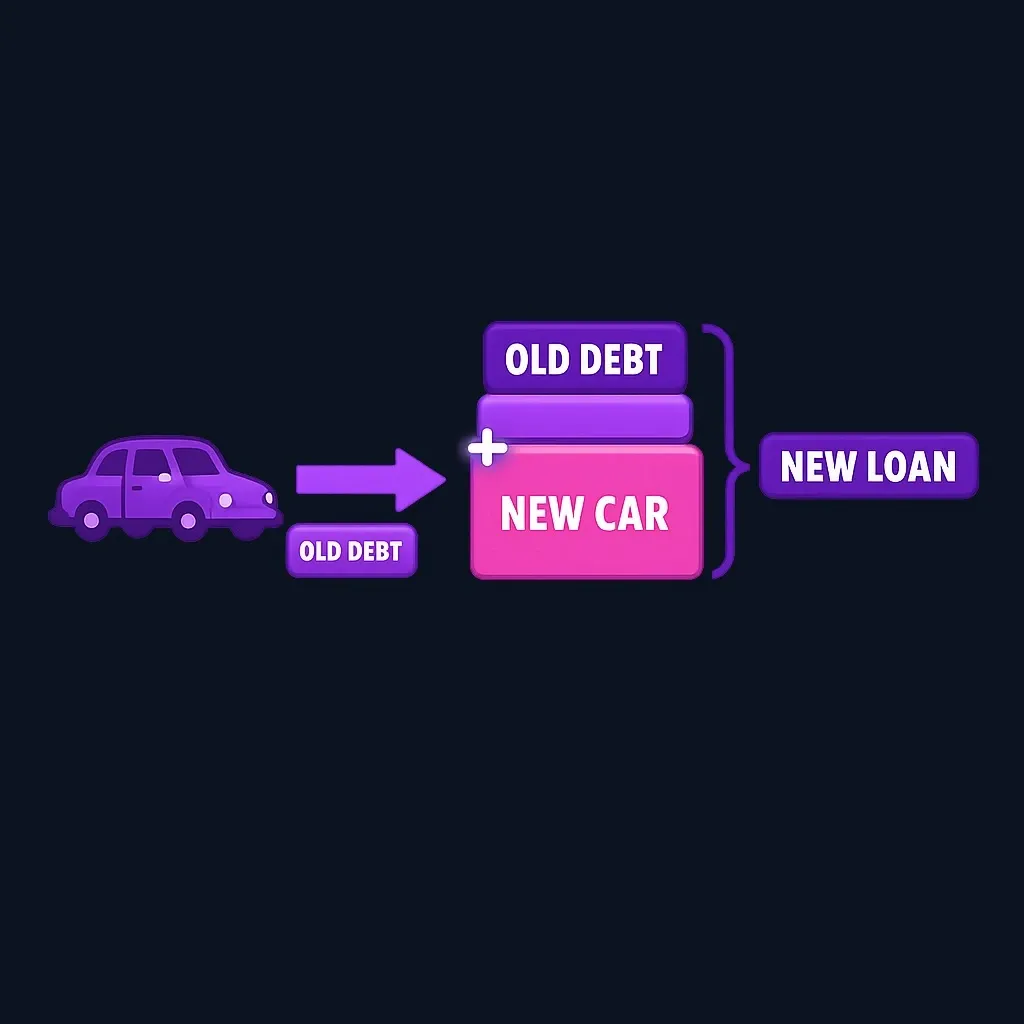
Trading in a car means handing your current vehicle to a dealer (or using a trade-in service) as part of the purchase of a different vehicle. The dealer typically credits your trade-in value toward the down payment on the new car; if you still owe on the old loan, dealers sometimes offer to pay off that balance and roll any remaining negative equity into your new loan, which increases the amount you borrow and the interest you’ll pay over time. The FTC guidance linked above explains why a dealer’s payoff promise does not mean the old debt disappears. Key practical point: trading in replaces your vehicle (and usually your loan); refinancing keeps your vehicle and just replaces the loan.
How to compare your options
Use these practical criteria as a checklist to decide which option fits your situation:
- Current interest rate vs. available offers: Improved credit or different market conditions may make a new rate available. Use a written quote for your borrower profile and vehicle, rather than a national average.
- Monthly cash-flow need vs. lifetime cost: Refinancing to a longer term can reduce monthly payments but usually raises total interest paid; trading in for a cheaper car can also lower monthly costs but may require a down payment.
- Vehicle condition and maintenance risk: If your car is costly to maintain or you need a different vehicle type (family size, cargo, fuel economy), trading in changes the maintenance risk. If the car is reliable, refinancing lets you retain that vehicle; it does not prevent depreciation or future repair costs.
- Equity position (positive vs. negative equity): If you owe more than the car’s trade-in value (negative equity), trading in may force you to roll that deficit into a new loan, increasing the new loan balance and interest cost; the FTC highlights dealer marketing that advertises paying off balances as part of trade deals.
- Concrete example: a scenario where your car’s trade-in value is $10,500 but your loan balance is $12,797 illustrates negative equity of about $2,297 that a dealer could roll into a new loan unless you negotiate otherwise.
- Fees vs. savings (break-even analysis): Calculate how many months it takes for refinance savings to recover upfront costs. Example: if refinancing saves $40/month but costs $300 in fees, break-even is ~7.5 months. This cash-flow measure is not a total-cost result when loan terms differ.
- Credit and qualification: Refinancing generally requires a credit check and lender approval; an improved credit score increases the chance of better rates.
- Timing and convenience: Ask for the actual approval and payoff timetable. Neither route guarantees faster completion, and a dealer’s conditional financing is not final approval.
Use this quick framework: if your objective is "cheapest monthly payment without changing cars" start with rate/term math for refinancing, if your objective is "different car, lower maintenance risk, or different features" weigh trade-in offers and how negative equity would roll into the new loan.
When to choose auto loan refinancing
Refinancing may fit when:
- Your goal is to lower your interest rate or monthly payment but you want to keep the car.
- Your credit profile or market rates have improved since you financed the vehicle.
- The car is in good mechanical condition and you prefer avoiding the transaction costs and time of buying a new car.
Worked example: if a rate improvement lets you save $40/month and fees total $300, you break even after roughly 7.5 months — this only measures when payment reductions recover the upfront fee, assuming comparable remaining terms. Verify current rates and calculate the exact break-even for your numbers. Caveat: refinancing may extend your term, which can increase total interest paid even while lowering monthly payments. Confirm the loan’s total cost over its life.
When to opt for trading in your vehicle
Consider a trade-in when:
- You need or want a different vehicle (size, features, fuel efficiency) or want to change the vehicle’s expected maintenance needs. A replacement still has upkeep costs.
- Your car has declining reliability or high upcoming repair risk that a replacement vehicle might reduce.
- You have non-negative equity or can cover negative equity without creating an unaffordable new loan.
Hypothetical example: if your car’s trade-in value is $10,500 and its payoff is $12,797, the negative equity is $2,297; a dealer may offer to roll that into your new loan, which raises the new loan principal and the interest you’ll pay. Evaluate whether adding that balance to a new loan still meets your goals. Practical negotiation tip: get a separate payoff figure from your current lender and a separate appraisal or private sale estimate so you can compare trade-in offers honestly with the market.
Tradeoffs and caveats
- Negative equity is a core risk for trade-ins. Dealers may advertise paying off your loan as part of the trade; that convenience can hide higher total borrowing costs if negative equity is rolled into the new loan.
- Refinancing requires lender approval and typically a hard credit pull; compare multiple lenders because rates, fees, and eligibility vary.
- Upfront fees: refinancing may carry origination or title fees; trading in may involve transaction costs and a down payment. Fees divided by monthly savings gives only a cash-flow recovery period. Also compare the full remaining payment schedules and balances, especially if the term changes.
- Total cost vs. monthly payment: lowering monthly payments by lengthening the loan usually increases total interest expense. Decide whether near-term cash relief or total interest minimization is your priority.
- Dealer vs. private sale: selling privately can often yield a higher cash sale price than a dealer trade-in, reducing negative equity, but it takes more time and effort. Obtain both values before you decide.
Comparative Analysis: Pros and Cons
- Refinancing — Pros: keeps the car you know and may lower the rate or payment without a replacement purchase. Cons: you keep maintenance risk, fees may offset savings, longer terms can raise lifetime interest.
- Trading In — Pros: replace an aging car, reduce maintenance uncertainty, can bundle payoff into a new purchase for convenience. Cons: possible negative equity that increases new loan size, higher upfront cost or down payment, dealer markups.
Decision checklist (quick)
- Do you want to keep the car? → Consider refinancing.
- Is your credit better or have rates fallen? → Shop refinance quotes.
- Does your car have high repair risk or is it the wrong type? → Consider trading in.
- Do you owe more than your car is worth? → Calculate negative equity and its effect on a new loan; request payoff figures before accepting a trade.
- Will refinancing fees be recouped within your planned ownership horizon? → Run a break-even calculation.
What is the difference between refinancing and trading in?
Refinancing replaces your existing loan while you keep the same car; trading in means you give the car to a dealer as part of buying another vehicle, often creating a new loan or financing arrangement. If you have loan balance concerns when trading in, regulators caution that dealers may roll existing balances into a new loan, increasing total interest paid.
How do I know if I should refinance my auto loan?
Compare current offers from multiple lenders, calculate monthly savings and total interest over the loan’s life, and run a break-even analysis that divides expected upfront fees by monthly savings. If the full future-cost comparison improves and the payment remains affordable, refinancing may make sense. Fee recovery alone is insufficient when repayment terms differ.
What costs should I expect when refinancing?
Typical costs can include loan origination or administrative fees and title/registration changes; these vary by lender and state. Use a break-even calculation to see whether the monthly savings offset upfront fees — for example, $300 in fees and $40/month savings yields ~7.5 months to break even. Verify fees with prospective lenders.
What should I do if I owe more than my car is worth?
Get an exact payoff amount from your current lender and obtain a trade-in appraisal or private sale estimate. If there’s negative equity, decide whether you’ll pay the deficit out of pocket, roll it into the new loan (which increases the new principal), or keep the car while paying down the balance. A refinance may be an option if you qualify, but negative equity can limit approval and the amount available.
If you want to keep the car, work through Should you refinance your car loan.
This guide covers U.S. rules. Finelo provides financial education, not personalized financial, investment, tax, or legal advice.
Financial LiteracyU.S. GuideFinancial Education
Practice trading with Finelo
Practice in a simulator, learn with bite-sized lessons, and build confidence before risking real money.
About the author
Finelo Team
The Finelo Team creates practical investing and trading education designed to help beginners learn faster with structured challenges, simulator practice, and bite-sized lessons.
Keep reading — Related articles

Financial Literacy
USDA vs. FHA loan
Compare location and income eligibility, down payments, credit conditions, and upfront and annual program charges for a home purchase.
Finelo Team

Financial Literacy
Term life vs. accidental death insurance
Compare broad term-life protection with accident-only coverage, including exclusions, underwriting, and the family income gap.
Finelo Team
Financial Literacy
Term life insurance laddering vs. one policy
Compare several term policies ending at different times with one policy, using coverage needs, costs, and future insurability.
Finelo Team


