Last editorial review: September 28, 2026
Should you refinance your car loan?

Compare refinancing costs, the new rate and term, remaining interest, and whether a lower payment actually saves money.
10 min read
Practice trading with Finelo
Practice in a simulator, learn with bite-sized lessons, and build confidence before risking real money.
Want to learn more?
Practice in a simulator, learn with bite-sized lessons, and build confidence before risking real money.
Explore FineloExplore Finelo's 28-day challenges
Turn learning into a daily habit with guided challenge paths.
Refinancing may help if a new loan improves the rate, repayment period, or payment enough to justify its costs. The strongest comparison starts with what remains on your current loan, not what you borrowed originally.
A smaller payment is useful for cash flow, but it does not always mean a cheaper loan.
Gather the current numbers
| Current loan | Proposed loan |
|---|---|
| Payoff quote and expiry date | Amount financed, including fees |
| Remaining payments and term | New payment and term |
| Interest rate | Interest rate and APR |
| Early-payoff charges, if any | Origination, title, and other charges |
The CFPB auto-loan comparison guide explains why total costs matter beside the monthly payment.
Compare the same timeline
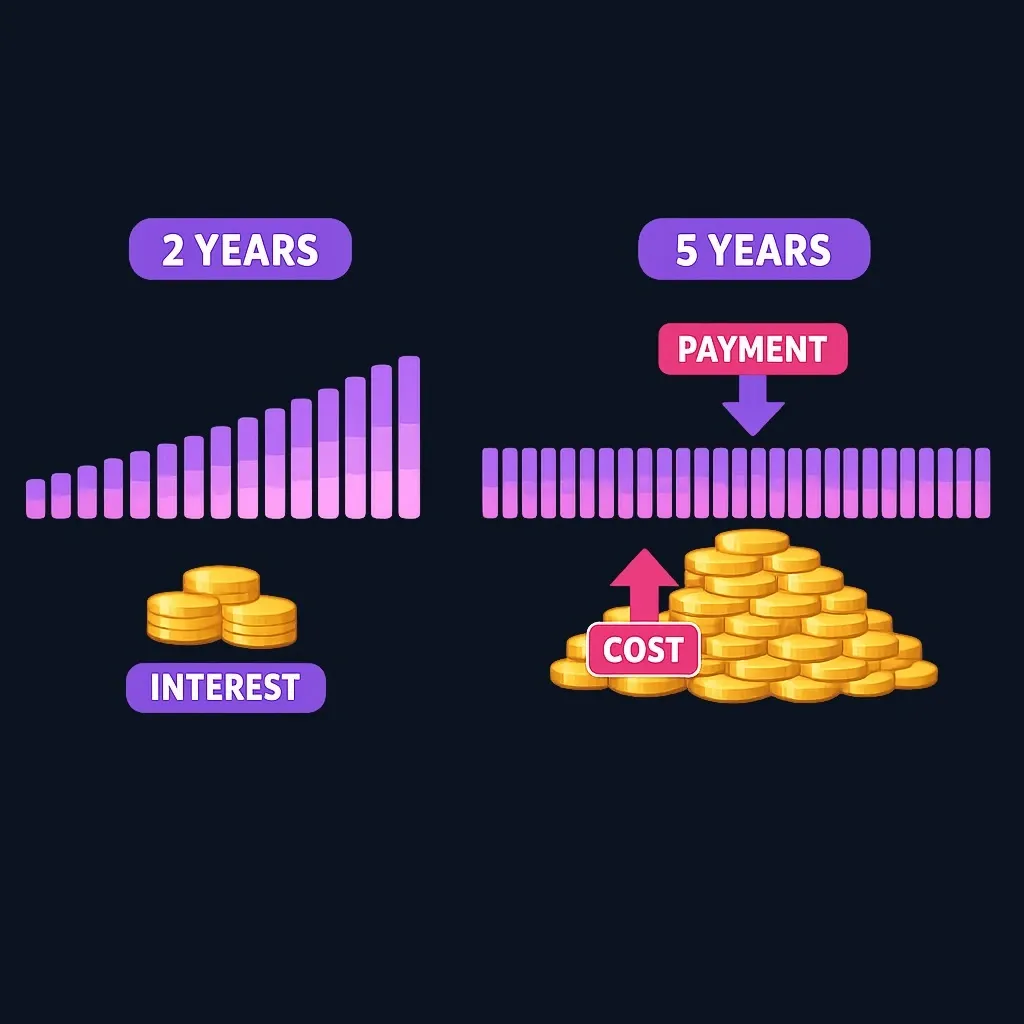
If you have 24 months left and refinance into 60 months, the payment may fall even without a much better rate. Compare the full scheduled cost and the balance you would still owe after 24 months.
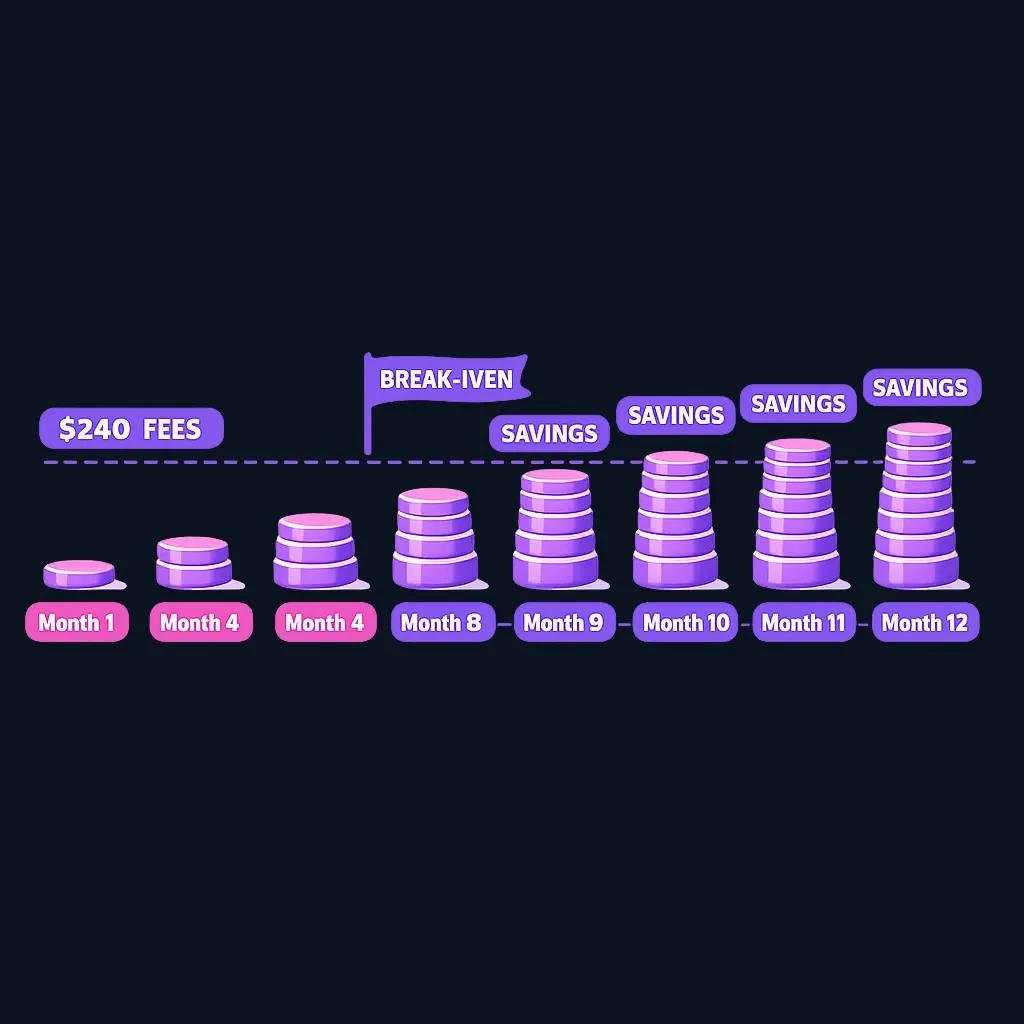
For a hypothetical offer costing $240 in fees and saving $30 a month, the simple payment-based break-even is eight months. That calculation alone does not capture an extended term, different payoff balance, or optional products.
Check eligibility and practical details
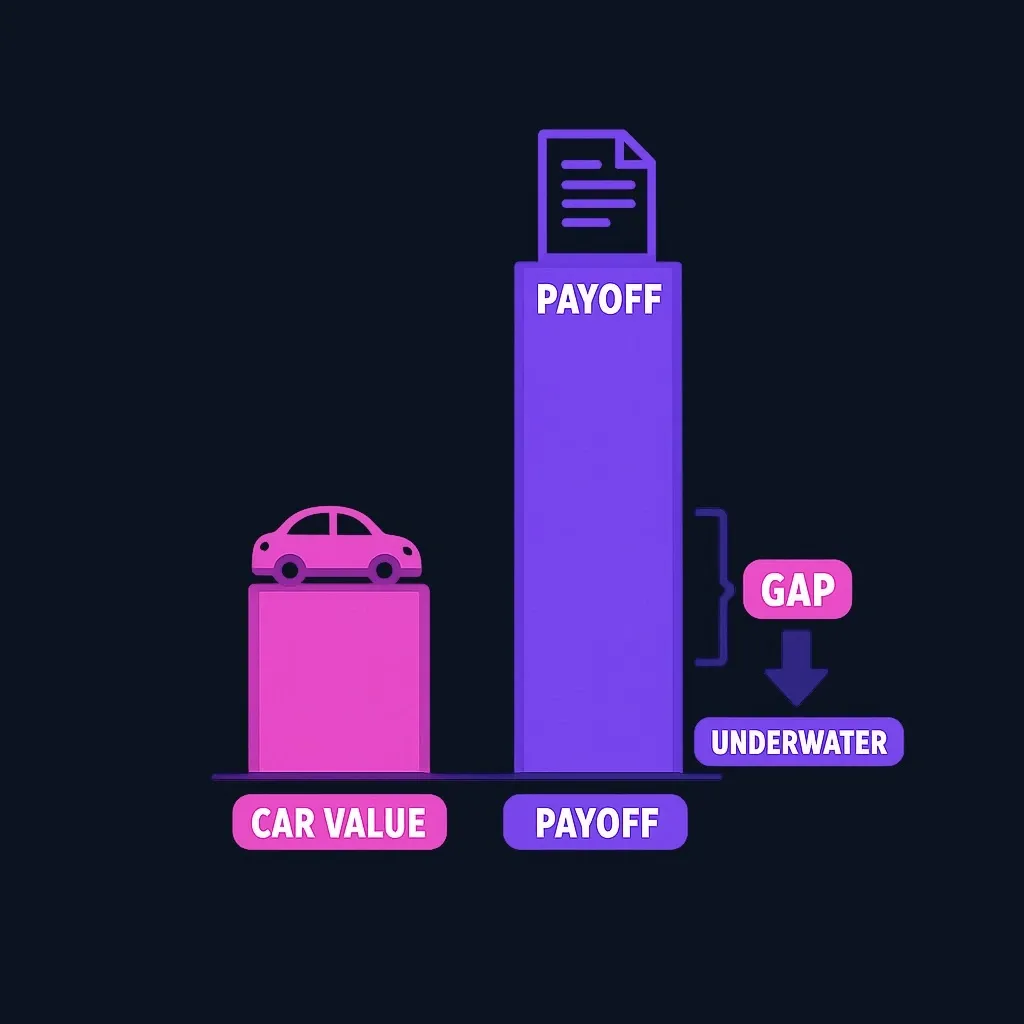
Lenders may restrict vehicle age, mileage, minimum balance, and loan-to-value. A car worth less than the payoff can make refinancing harder. Check whether any existing add-on product is refundable or changes with early payoff.
If the current payment is already unaffordable, contact your lender promptly. The CFPB's guidance on missed car payments outlines options to discuss.
Before accepting, verify the new lender will pay off the old loan and when your new payments begin. Continue monitoring both accounts until the payoff is confirmed. A refinance should solve a clearly identified problem without obscuring the new total cost.
Compare from today's payoff date
Past payments are already made. For the decision now, obtain the current payoff amount, the remaining scheduled payments, and any fee for ending the old loan. A statement balance and a date-specific payoff can differ because interest continues to accrue.
Ask the new lender to show the net amount used to settle the old loan, any financed fees, the new payment, and the term. Compare the total you would pay from today under each option. If the refinance extends the term, also compare the balances that would remain on the old loan's original payoff date.
A lower payment can still be useful when cash flow is tight, but describe the benefit accurately. It may represent more time to repay rather than lower total borrowing cost. Decide whether that tradeoff is worth making before accepting the offer.
Check the vehicle and transaction requirements
Refinance lenders can have limits on vehicle age, mileage, title status, and loan size. Negative equity can affect approval or the amount you need to contribute. Confirm those conditions before treating an advertised rate as available for your car.
After funding, verify that the old lender received the payoff and that the new payment schedule is active. Handle automatic payments carefully so there is neither a missed obligation nor an unintended duplicate. Keep the payoff confirmation and title or lien information with the new contract.
Finally, consider the car's likely remaining use. Paying refinance costs for a vehicle you expect to sell soon may deliver little benefit. A loan should be compared over the time you realistically expect to keep it, with a separate plan for any balance remaining when the car is sold.
Practice trading with Finelo
Practice in a simulator, learn with bite-sized lessons, and build confidence before risking real money.
When to Consider Refinancing Your Car Loan
Refinancing is worth considering when your personal or market circumstances change enough to produce improved loan terms.
- Improved credit or income: If your credit score or income has improved since you took the original loan, lenders may offer better rates.
- Market rates drop: If general auto loan rates fall substantially, refinancing can lower interest charges.
- Cash-flow needs: If you need lower monthly payments for a short-term cash-flow gap, extending the term might help.
- Want to pay less overall: Shortening the remaining term can reduce total interest paid if you can afford a higher monthly payment.
- Equity position: If your vehicle has positive equity (worth more than the loan balance), you may qualify for better terms.
Example (decision checklist): Before you apply, confirm these three things: (1) your current APR vs. likely new APR. (2) refinance fees or prepayment penalties; (3) how the new term changes total interest. If the combined effect lowers your total cost or improves monthly cash flow to meet your goals, refinancing may be appropriate. Case scenario (qualitative): Maria’s credit score improved after two years of on-time payments. She shops lenders and finds offers that could reduce her monthly payment while keeping the loan length similar. Because her projected total interest would fall and fees would be limited, refinancing is worth pursuing.
Potential Benefits of Refinancing
Refinancing can deliver several advantages, depending on the new loan terms and your goals.
- Lower monthly payment: A lower interest rate or longer term can reduce monthly outflow, easing short-term budget pressure.
- Lower interest costs: A lower contract interest rate with the same balance and remaining term reduces scheduled interest. APR also includes certain fees, so compare the disclosures and full future cost.
- Shorter payoff and interest savings: Moving to a shorter term can increase monthly payments but reduce lifetime interest.
- Servicing change: Refinancing replaces the current loan with a new account. Confirm the payoff and new schedule; combining debts secured by different vehicles is a separate product question and should not be assumed available.
- Better borrower terms: You may qualify for lenders with different customer service, online tools, or payment flexibility.
Use amortizing-loan payment schedules to compare future costs. Multiplying the starting balance by a rate difference ignores how the balance changes. Obtain the current payoff from the existing lender and the new payment schedule from the prospective lender.
Common Risks and Drawbacks
Refinancing is not always beneficial. Consider these downsides before you apply.
- Fees and closing costs: Some lenders charge origination fees, title transfer fees, or other closing costs that can erase savings.
- Longer term may increase total interest: Extending the loan to lower monthly payments can increase the total interest paid.
- Timing and vehicle age: Older cars with higher mileage may have fewer refinancing options or higher rates.
- Underwater loans: If you owe more than the car’s value (negative equity), a lender may decline the loan or require you to pay down the balance to meet its loan-to-value limit. Refinancing the existing payoff already includes the debt above the car’s value; that gap is not added a second time.
- Application impacts: Applying to multiple lenders can involve credit checks and administrative tasks; ask lenders how they handle inquiries.
Example (tradeoff illustration): With the same balance and rate, extending a remaining two-year loan to five years reduces monthly payments but spreads interest over more time. If your priority is short-term cash flow, that may help; if your priority is minimizing total interest, it likely does not. Common fees to watch for (check each lender): origination fee, title transfer fee, lien recording fee, and any prepayment penalty on the old loan. Ask prospective lenders for a clear fee list so you can factor those costs into your comparison.
How to Refinance Your Car Loan: A Step-by-Step Guide
Follow this systematic approach to evaluate and execute refinancing.
- Gather loan facts: note your current payoff balance, current APR, monthly payment, remaining term, and any prepayment penalty.
- Check your credit and documentation: review your credit report for errors and assemble proof of income, vehicle registration, ID, and proof of address. (See the checklist below.)
- Shop multiple lenders: request quotes and sample payoff/amortization schedules from banks, credit unions, and online lenders. Compare APR, term, monthly payment, and fees.
- Run the math: calculate total interest under each offer, and include all fees to find true savings or cost. Use the lender’s payment schedule, distinguish interest from APR, and avoid counting financed fees twice.
- Apply to chosen lender: complete the formal application and provide requested documents. Confirm whether the lender will pay off your old loan directly.
- Close and verify: after approval, review the final loan contract, ensure the old lender is paid, and confirm the lienholder is updated on the vehicle title.
Checklist — documents lenders typically request
-
Government ID (driver’s license or passport)
-
Proof of income (pay stubs, W-2s, or bank statements)
-
Current loan statement and payoff amount
-
Vehicle registration and VIN information
-
Proof of address (utility bill or lease)
-
Insurance documentation showing required coverage
Example (comparison table): Use a compact table to compare strategic outcomes rather than precise quotes.
| Option | Typical Goal | Tradeoff to check |
|---|---|---|
| Keep current loan | No fees; maintain current plan | Missed chance to lower rate or payment |
| Refinance to lower APR (similar term) | Lower total interest | Confirm upfront fees vs. interest saved |
| Refinance to longer term | Lower monthly payment | Expect higher total interest over life |
After you narrow to one or two lenders, request a written payoff statement, confirm all fees, and ask how they handle title and lien transfers.
Potential Savings: How to Compare Offers (Worked Example Without Specific Numbers)
Compare the actual payment schedules instead of estimating savings from the original loan balance:
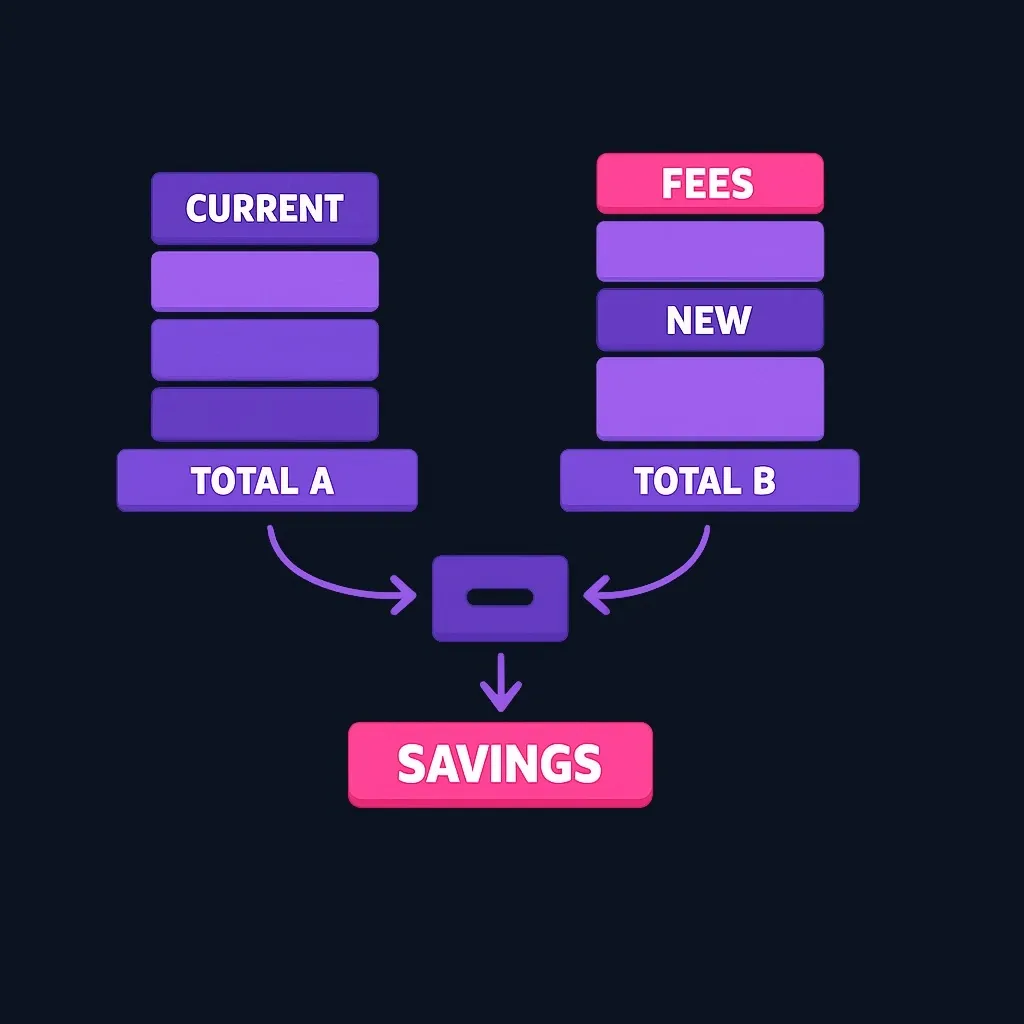
- Step A — Add the payments remaining on the current loan, including any scheduled final payment. This is the cost of keeping it from today if you follow the schedule.
- Step B — Obtain a dated payoff quote and a refinance offer that identifies the new principal, contract interest rate, APR, fees, payment amounts, and term.
- Step C — Add all scheduled payments on the refinance and any costs paid separately at closing. Do not add the old payoff again when the new loan already finances it, or count a financed fee a second time.
- Step D — Subtract the refinance total from the remaining current-loan total. A positive result represents scheduled future cash savings under those assumptions.
- Step E — If you expect to sell earlier, compare payments made, separate fees, and the remaining payoff balance under each route on that same date.
A standard amortization calculation uses the contract interest rate and actual principal. APR is a cost-comparison measure that may include fees, so substituting it for the interest rate can distort the payment calculation. Variable rates, irregular payment timing, and early-payoff charges require additional adjustments. Ask for the lender’s schedule and payoff figures when those details apply.
What information do I need to apply for refinancing?
Prepare identification, proof of income, your current loan payoff statement, vehicle registration and VIN, proof of address, and insurance information. Lenders will list required documents during pre-qualification.
Will refinancing affect my credit score?
Refinancing involves an application and lender credit checks. Ask each lender whether they perform a soft or hard credit inquiry and how that might affect your credit record.
Can I refinance if I owe more than the car is worth?
Refinancing with negative equity is possible in some cases, but options and terms may be limited. A lender may finance the full existing payoff if it meets its limits, or require a cash paydown. Negative equity is already part of that payoff; it is not a separate amount added again.
What happens to my old loan when I refinance?
A successful refinance results in the new lender paying off the old loan. Confirm with both lenders that the payoff has occurred and the old lien is released or replaced by the new lienholder.
If you are also considering replacing the vehicle, compare Auto loan refinance vs. trade-in: keep the car or replace it.
This guide covers U.S. rules. Finelo provides financial education, not personalized financial, investment, tax, or legal advice.
Financial LiteracyU.S. GuideFinancial Education
Practice trading with Finelo
Practice in a simulator, learn with bite-sized lessons, and build confidence before risking real money.
About the author
Finelo Team
The Finelo Team creates practical investing and trading education designed to help beginners learn faster with structured challenges, simulator practice, and bite-sized lessons.
Keep reading — Related articles

Financial Literacy
USDA vs. FHA loan
Compare location and income eligibility, down payments, credit conditions, and upfront and annual program charges for a home purchase.
Finelo Team

Financial Literacy
Term life vs. accidental death insurance
Compare broad term-life protection with accident-only coverage, including exclusions, underwriting, and the family income gap.
Finelo Team

Financial Literacy
Term life insurance laddering vs. one policy
Compare several term policies ending at different times with one policy, using coverage needs, costs, and future insurability.
Finelo Team


