Last editorial review: September 28, 2026
Should you use savings to delay Social Security?

Compare a savings bridge with earlier benefits, considering household income, health, longevity, and the reserve left after withdrawals.
11 min read
Practice trading with Finelo
Practice in a simulator, learn with bite-sized lessons, and build confidence before risking real money.
Want to learn more?
Practice in a simulator, learn with bite-sized lessons, and build confidence before risking real money.
Explore FineloExplore Finelo's 28-day challenges
Turn learning into a daily habit with guided challenge paths.
Using savings for a few years can let you start Social Security later with a larger monthly retirement benefit. The tradeoff is less money available in your accounts while you wait. Whether that helps depends on your health, household benefits, spending needs, and remaining reserves.
Delaying is an option to evaluate, not a requirement for a sound retirement plan.
What the delay buys
Claiming before full retirement age reduces the retirement benefit. Waiting after full retirement age earns delayed retirement credits up to age 70. Waiting beyond 70 does not earn additional delay credits. The SSA delayed-retirement guide explains the rules.
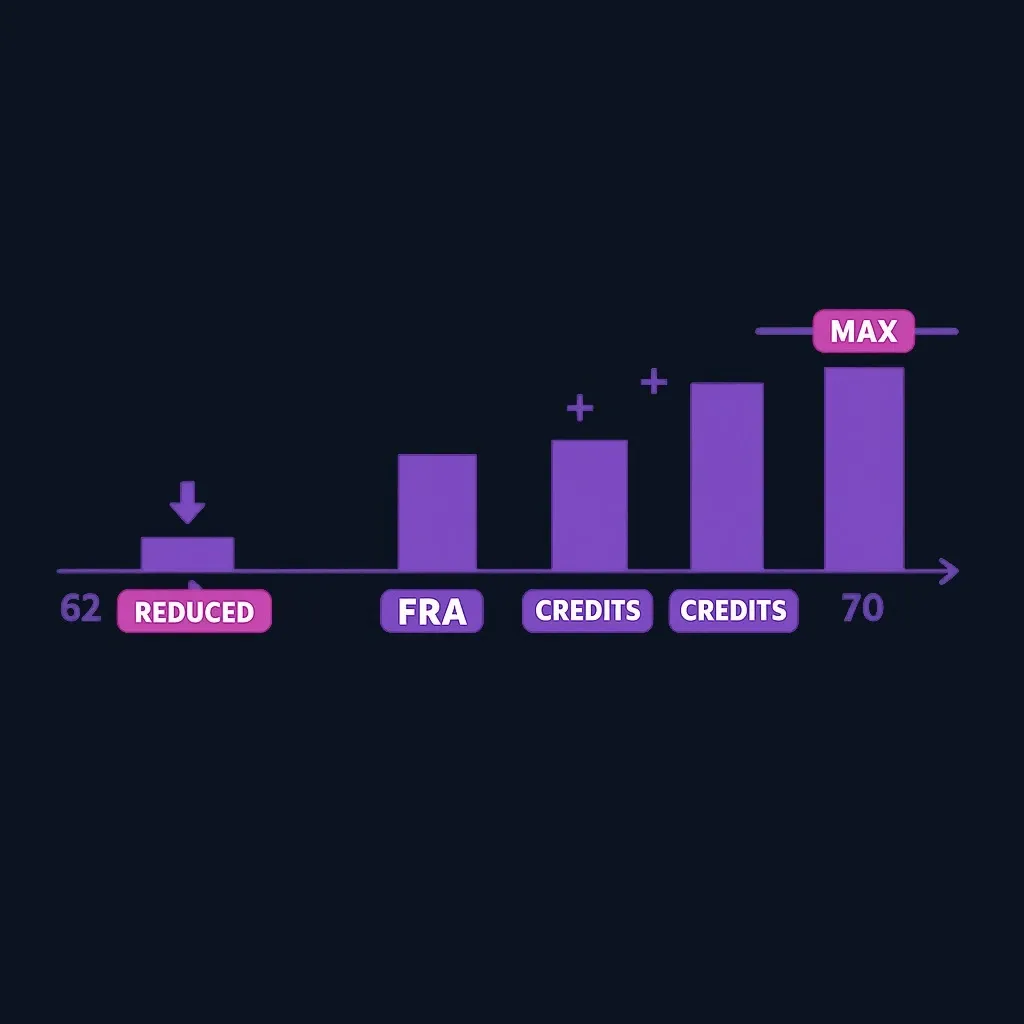
Use your own SSA estimates for several start dates. A generic percentage cannot replace an estimate based on your earnings record and claim date.
Build a bridge budget
| Question | What to calculate |
|---|---|
| How much must savings replace? | Living expenses less other reliable income |
| How long is the bridge? | Months until the chosen claiming date |
| What will withdrawals cost? | Tax, investment sales, and any penalties |
| What remains afterward? | Emergency reserves and long-term assets |
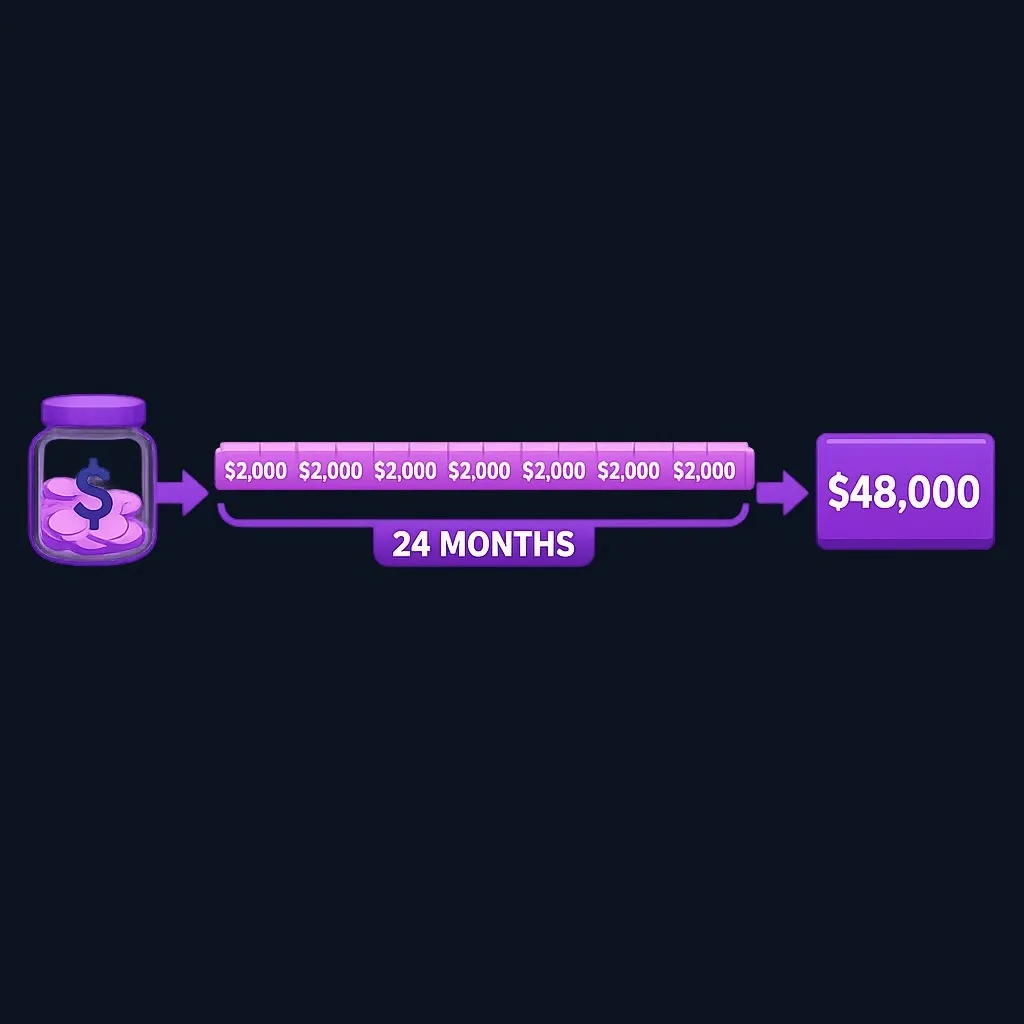
If a hypothetical household needs $2,000 a month for two years, the basic bridge is $48,000 before taxes, inflation, and investment changes. That amount must remain affordable even in a weak market.
Include the surviving spouse
For a couple, a higher benefit on one worker's record can affect survivor income. Compare household outcomes if either spouse dies first rather than examining each benefit in isolation.
A simple break-even age compares benefits forgone with the later monthly increase. It leaves out taxes, investment returns, inflation adjustments, and the value of lifetime income protection. Shorter life expectancy or urgent cash needs can change the decision.
Model an early death, a long retirement, and a poor market during the bridge. If delaying would exhaust liquid reserves or force expensive borrowing, the larger future payment may not justify the near-term strain.
Build the bridge budget account by account
List the spending that must be covered before the later claiming date, then subtract income that will continue during that period. Identify which savings would provide the difference. A bank withdrawal, a sale from a taxable investment account, and a distribution from a pre-tax retirement account can have different tax and market consequences.
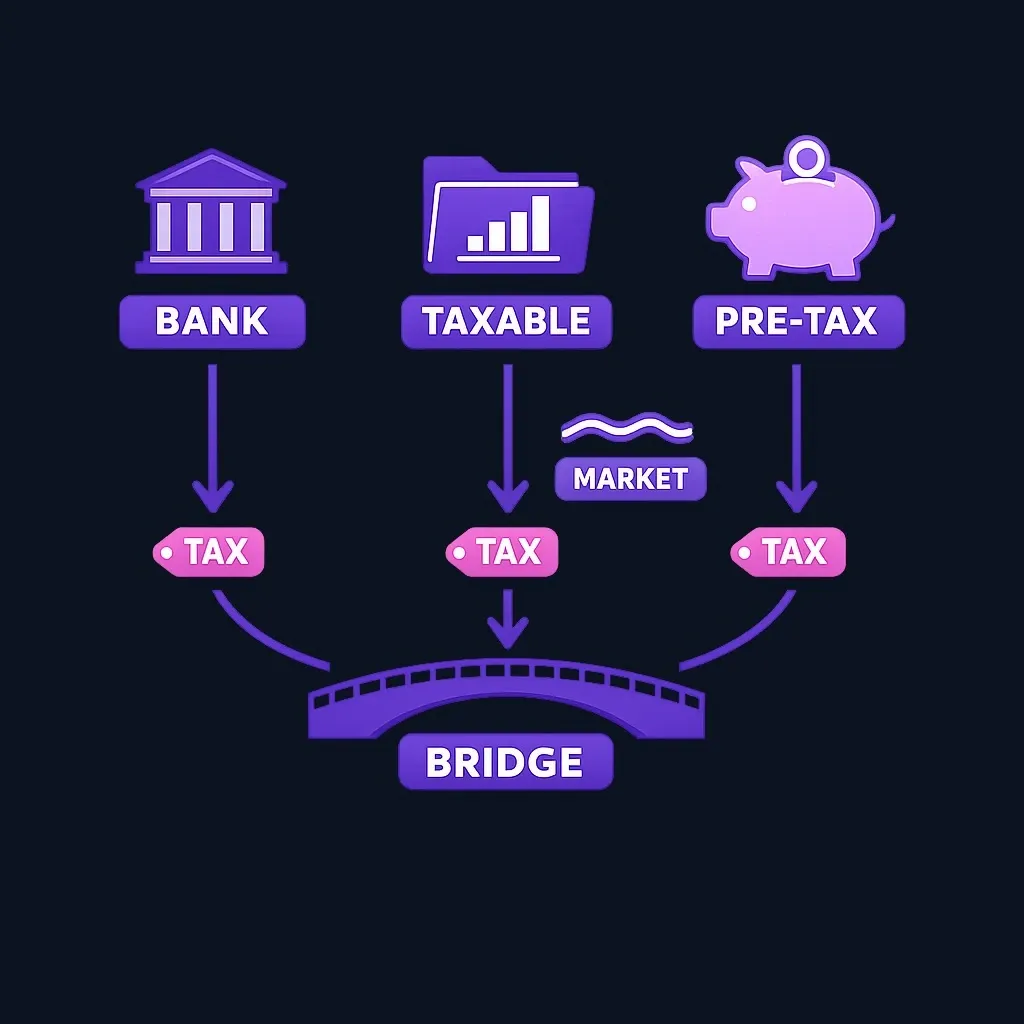
Keep a reserve beyond the planned bridge. Home repairs, healthcare, and help for family can arrive during the same years you are using savings for living costs. If a market decline would force the sale of volatile investments, test that outcome rather than assuming average returns arrive smoothly.
For a couple, coordinate both claiming dates and the survivor's future income. The largest individual benefit is not the only target; the plan should support the household while both people are alive and after either death. Spousal-benefit and survivor-benefit rules are distinct, so obtain estimates for the actual records rather than applying a generic multiplier.
Review the choice if circumstances change before filing. A health change, a new job, or unexpected expenses may alter the bridge plan. Delaying is a tool for adjusting the timing and size of benefits, not a commitment to follow a spreadsheet after its assumptions no longer fit.
Practice trading with Finelo
Practice in a simulator, learn with bite-sized lessons, and build confidence before risking real money.
What Does It Mean to Delay Social Security?
Delaying Social Security means choosing a later retirement-benefit start date. Waiting from age 62 to full retirement age (FRA) avoids some or all of the early-claim reduction; waiting beyond FRA earns delayed retirement credits up to age 70. The Social Security Administration increases—by a fixed percentage—your monthly benefit for each month you delay past your FRA. This is called Delayed Retirement Credits.
Key concepts
- Full Retirement Age (FRA): FRA is the age at which you qualify for your unreduced benefit. FRA varies by birth year. Delaying beyond FRA triggers delayed credits; claiming before FRA triggers an early-claim reduction. The SSA page on delayed credits links this behavior to larger monthly benefits when you wait.
- Delayed Retirement Credits: These are automatic increases to your benefit for each month you postpone starting payments past FRA. The SSA documents that benefits rise as you delay; exact percentage rules are administered by SSA.
- Lifetime vs. short-term trade-off: Delaying trades earlier smaller payments for larger guaranteed payments later. The cumulative advantage depends on how long you live after claiming.
Why the increase matters
- A larger monthly benefit improves inflation-protected guaranteed income for life. Social Security benefits are subject to cost-of-living adjustments, so a higher base benefit compounds with future COLAs.
- Delayed benefits can reduce sequence-of-returns risk for portfolio withdrawals later: with a higher guaranteed baseline you may need fewer withdrawals from volatile accounts in later years.
When someone might claim early instead
- Need for immediate cash flow, poor health or low life expectancy, or a desire to preserve savings for heirs or other goals can make early claiming reasonable.
- People who plan to continue working may face earnings limits that temporarily reduce Social Security payments if they claim early.
Practical note
- The SSA is the authoritative source for the rules on delayed credits and how waiting affects your benefit. Check your personal statement or SSA account and the Delayed Retirement Credits page for exact rules and your FRA.
Takeaway: A later start can increase the monthly retirement benefit through a smaller early-claim reduction or, after FRA, delayed credits through age 70. Whether that’s worth using savings to bridge depends on life expectancy, your savings runway, and how those savings would otherwise be invested or preserved.
Risks and Considerations
Using savings to bridge to a later Social Security claim introduces trade-offs. Recognize the following risks and manage them with a plan.
Primary risks
- Savings depletion risk: Spending savings to cover living expenses reduces the capital that could produce investment returns or serve as an emergency buffer.
- Market risk and sequence-of-returns: If you withdraw from invested accounts during a market downturn, you may lock in losses and impair long-term portfolio growth.
- Health and longevity uncertainty: If you have health conditions or a shorter life expectancy, you may not collect enough delayed benefit increases to offset the earlier withdrawals.
- Behavioral and psychological risk: Running low on accessible cash early in retirement can cause stress and forced spending cuts, possibly leading to earlier-than-planned benefit claiming.
- Tax interactions: Withdrawals from tax-advantaged accounts may affect your taxable income and potentially subject your Social Security benefits to higher taxation in some years.
Checklist before using savings as a bridge
-
Do you have a reliable budget for the bridge period? (Yes/No)
-
Will spending the bridge funds deplete your emergency reserve? (Yes/No)
-
Are the funds you would draw from invested in assets vulnerable to a near-term downturn? (Yes/No)
-
Do you and your partner have health factors that reduce expected longevity? (Yes/No)
-
Have you compared the projected lifetime benefits if you delay vs. claim now using a break-even calculation? (Yes/No)
Mitigations
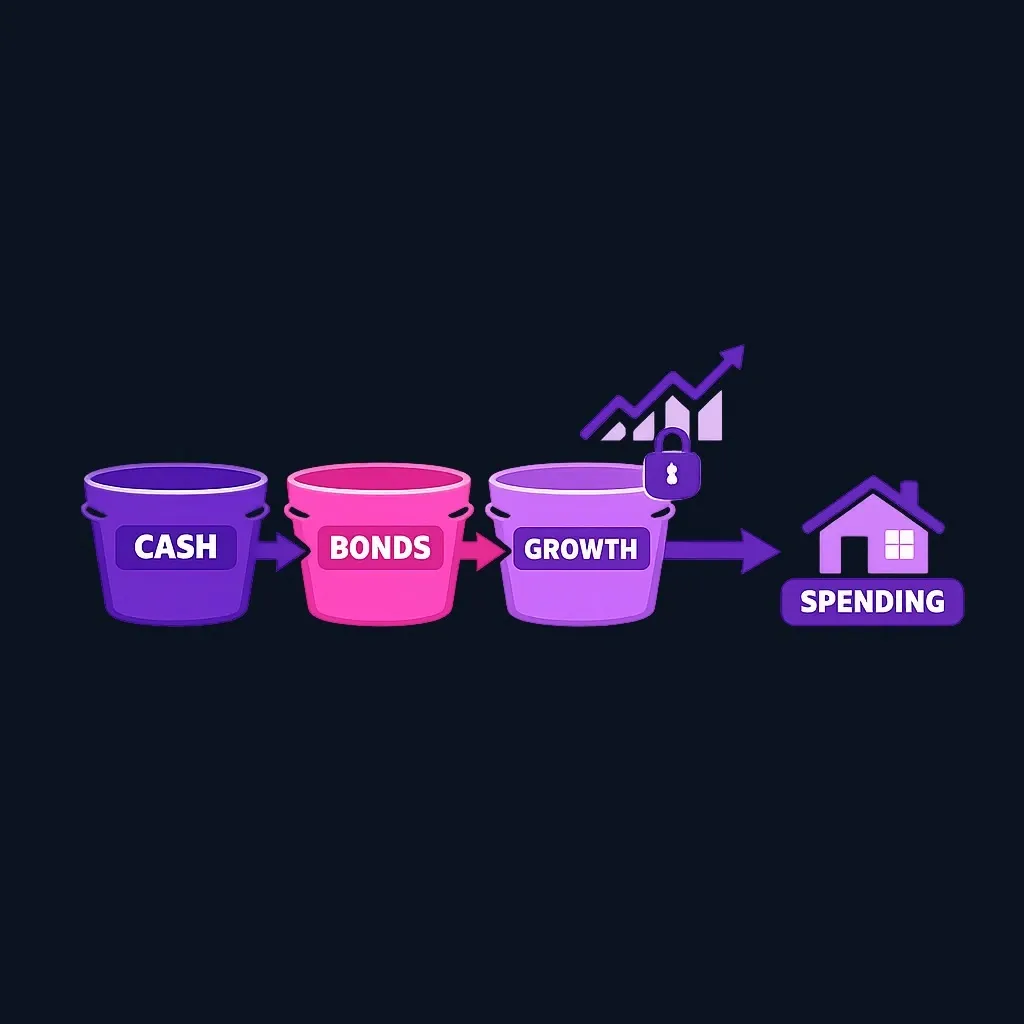
- Sequence ordering: If possible, draw from cash or short-term bonds for the bridge and leave long-term growth assets untouched to reduce sequence risk.
- Partial bridge: Consider part-time earnings or other household income to reduce withdrawals. You cannot simply elect to receive a chosen fraction of your own retirement benefit while the rest earns delayed credits.
- Phased bridge: Use a mix of savings. Part-time income, and temporary reductions in discretionary spending instead of fully draining retirement accounts.
Practical caution
- Because delayed credits are a guaranteed increase administered by the SSA, their value is insensitive to market swings. The trade-off is whether your savings can safely supply your needs until the delayed benefit begins.
Takeaway: Using savings to delay Social Security can buy long-term financial security. But it requires disciplined budgeting and a plan to avoid depleting assets or triggering poor sequence-of-returns outcomes.
Hypothetical claiming scenarios
Below are three illustrative, hypothetical scenarios to show how the decision plays out. These are plausible examples for educational purposes only.
Scenario A — The Healthy, Long-Lived Planner (Illustrative)
- Profile: Age 62 at retirement, good health. Steady savings sufficient for a 5-year bridge if drawn conservatively.
- Decision: Uses a conservative portion of savings for five years to delay Social Security until age 67 (FRA for many).
- Outcome: The person secures a higher guaranteed monthly benefit for life, reducing pressure on investment withdrawals later. This strategy favors someone with long life expectancy and moderate desire for guaranteed income.
Scenario B — The Risk-Averse with Shorter Life Expectancy Concerns (Illustrative)
- Profile: Age 64, chronic health conditions reducing expected longevity. Limited ability to rebuild savings.
- Decision: Elects to claim Social Security earlier to preserve savings and ensure steady cash flow for immediate needs.
- Outcome: Immediate income helps with current expenses. The person accepts a permanently reduced monthly benefit. For shorter expected lifespans, early claiming can be rational.
Scenario C — The Married Couple Focused on Survivor Income (Illustrative)
- Profile: Spouses with asymmetric earnings: one earner much higher. The higher earner can delay.
- Decision: The higher earner postpones benefits while the couple uses a modest portion of savings to bridge a few years.
- Outcome: Delaying increases the worker’s benefit and thereby strengthens survivor income. This is attractive when survivor protection and lifetime guaranteed income are priorities.
Common real-world variations and practical notes
- Partial bridges: Many people use a combination of part-time work, dividends or interest, and some savings to avoid fully depleting accounts while they delay.
- Psychological comfort: Some retirees prefer the certainty of starting benefits immediately. Even with a small financial advantage to delay, comfort matters and can justify an earlier claim.
- Market timing risk: If bridging relies on selling volatile assets near retirement, consider whether switching to cash reserves or short-term bonds first reduces downside risk.
Decision takeaway
- There is no one-size-fits-all outcome. Use your health prognoses, spouse considerations, and the size and composition of savings to choose a path. Use the break-even calculation below to test scenarios numerically with your own figures.
Use break-even as one comparison, not the whole decision
A simple benefit break-even compares the payments forgone while waiting with the later monthly benefit increase. It should not substitute total household spending for forgone benefits: rent and groceries still exist in both claiming scenarios. The bridge budget is a separate question about how to fund the waiting period.
For a hypothetical comparison, assume delaying for twelve months means forgoing $24,000 of benefits and then receiving $160 more per month. The undiscounted benefit break-even is $24,000 divided by $160, or 150 months—12.5 years after the later start. This simplified illustration ignores taxes, cost-of-living adjustments, investment returns, survivor benefits, and timing details. It is not a forecast or an SSA estimate.
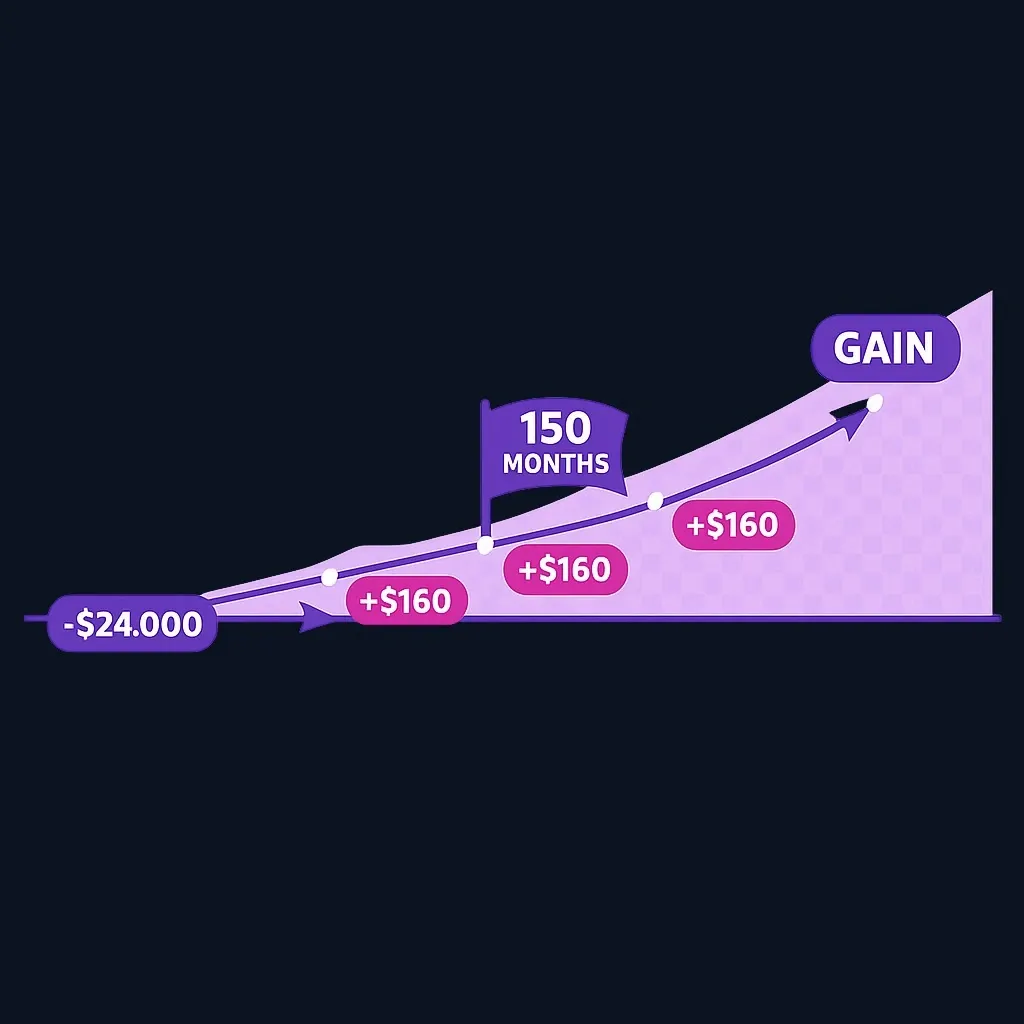
A more complete comparison models account withdrawals, taxes, and benefits together across several longevity scenarios. The household also needs enough liquidity to live through the waiting period without relying on favorable markets. A strategy can have an appealing long-life result while still being too fragile for the near-term budget.
Frequently asked questions
Is age 70 always the best age to take Social Security?
No. Waiting to 70 yields the largest monthly benefit via Delayed Retirement Credits, but whether that’s “best” depends on your life expectancy, financial needs, and whether you can safely bridge to that age. Use a break-even analysis and consider household survivor needs.
What is the Social Security break-even age?
A simple benefit break-even is the later start date plus the benefits forgone while waiting divided by the monthly benefit increase. Use forgone benefits, not total bridge spending. Taxes, COLAs, investment outcomes, and survivor benefits require a fuller household comparison.
When should I take Social Security if I have health issues?
If health conditions lower your life expectancy materially, claiming earlier may provide needed cashflow and reduce the chance you forgo benefits you would not live long enough to collect. Balance health considerations with survivor needs and the availability of alternatives to spending down savings.
How does the spousal benefit affect timing decisions?
Spousal and survivor benefits have different rules. A worker’s delayed credits can increase survivor benefits, but do not increase the ordinary spousal-benefit base in the same way. See SSA’s spouse-benefit explanation. Often, delaying the higher-earning spouse’s benefit strengthens survivor income, but run the break-even math for your couple to see whether bridging costs make sense.
If retroactive benefits are offered when you apply, read Social Security retroactive lump sum: pros and cons.
This guide covers U.S. rules. Finelo provides financial education, not personalized financial, investment, tax, or legal advice.
Financial LiteracyU.S. GuideFinancial Education
Practice trading with Finelo
Practice in a simulator, learn with bite-sized lessons, and build confidence before risking real money.
About the author
Finelo Team
The Finelo Team creates practical investing and trading education designed to help beginners learn faster with structured challenges, simulator practice, and bite-sized lessons.
Keep reading — Related articles

Financial Literacy
USDA vs. FHA loan
Compare location and income eligibility, down payments, credit conditions, and upfront and annual program charges for a home purchase.
Finelo Team

Financial Literacy
Term life vs. accidental death insurance
Compare broad term-life protection with accident-only coverage, including exclusions, underwriting, and the family income gap.
Finelo Team

Financial Literacy
Term life insurance laddering vs. one policy
Compare several term policies ending at different times with one policy, using coverage needs, costs, and future insurability.
Finelo Team