Last editorial review: September 28, 2026
Social Security retroactive lump sum: pros and cons

Compare a retroactive payment with the ongoing benefit you give up, including simple break-even examples, tax treatment, and survivor effects.
8 min read
Practice trading with Finelo
Practice in a simulator, learn with bite-sized lessons, and build confidence before risking real money.
Want to learn more?
Practice in a simulator, learn with bite-sized lessons, and build confidence before risking real money.
Explore FineloExplore Finelo's 28-day challenges
Turn learning into a daily habit with guided challenge paths.
When you claim retirement benefits after full retirement age, you may be able to choose an earlier entitlement month and receive retroactive payments. That creates cash now, but it may reduce the delayed retirement credits included in your future monthly benefit.
Ask SSA to quote both the lump sum and the ongoing benefit for each possible start month.
Know the limits
For retirement benefits, retroactivity generally cannot extend more than six months before the application or back before full retirement age. Other benefit types can have different rules. The SSA handbook on retroactivity and SSA delayed-retirement guidance explain the distinction.
Moving the start date earlier can surrender credits earned between full retirement age and 70. If all retroactive months are after age 70, that particular tradeoff is different because additional delay credits stop at 70. Filing late can still mean missing payments beyond the available retroactive period.

Compare cash with monthly income
| Potential advantage | Possible cost |
|---|---|
| Immediate money for expenses | Lower ongoing benefit when delay credits are surrendered |
| Less need to draw from savings now | Potential survivor-benefit effect |
| Cash to address expensive debt | Tax consequences in the payment year |
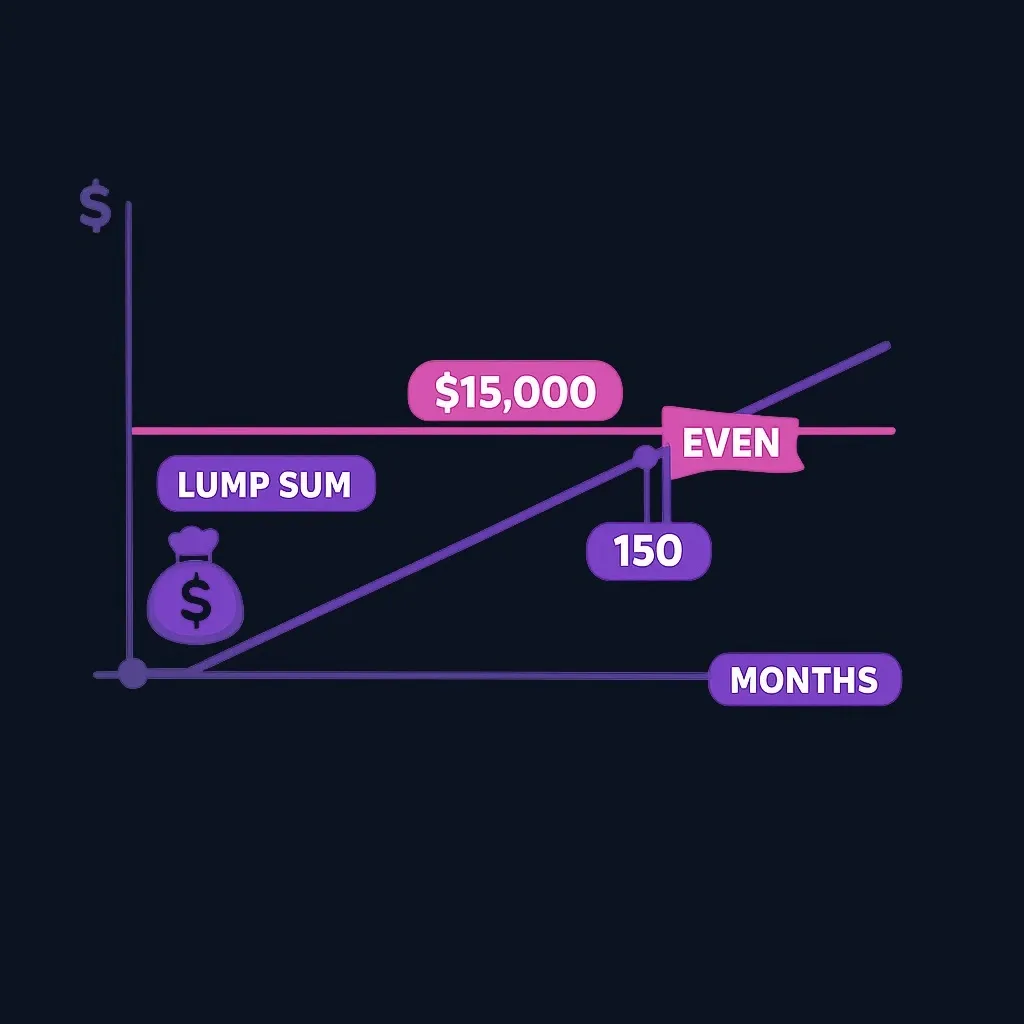
Suppose the hypothetical lump sum is $15,000 and the alternative monthly benefit is $100 higher. A simple comparison reaches $15,000 after 150 months. That leaves out tax, inflation adjustments, investment returns, and survivor effects, so it is not a complete break-even analysis.
Review the tax treatment
Payments attributable to an earlier year can have special calculation options. The IRS Social Security publication explains lump-sum benefit treatment; receiving the cash does not automatically require amending the prior year's return.
Compare the written SSA estimates with your cash needs and expected retirement duration. Confirm the entitlement month before submitting the claim rather than assuming the largest immediate payment is the most valuable option.
Practice trading with Finelo
Practice in a simulator, learn with bite-sized lessons, and build confidence before risking real money.
Compare the elected start months, not just the cash offer
Ask SSA to show the ongoing monthly benefit under each permitted start month and the retroactive amount associated with it. A lump sum is not a separate bonus added to the maximum possible future payment. It reflects benefits for earlier months under the start date selected.
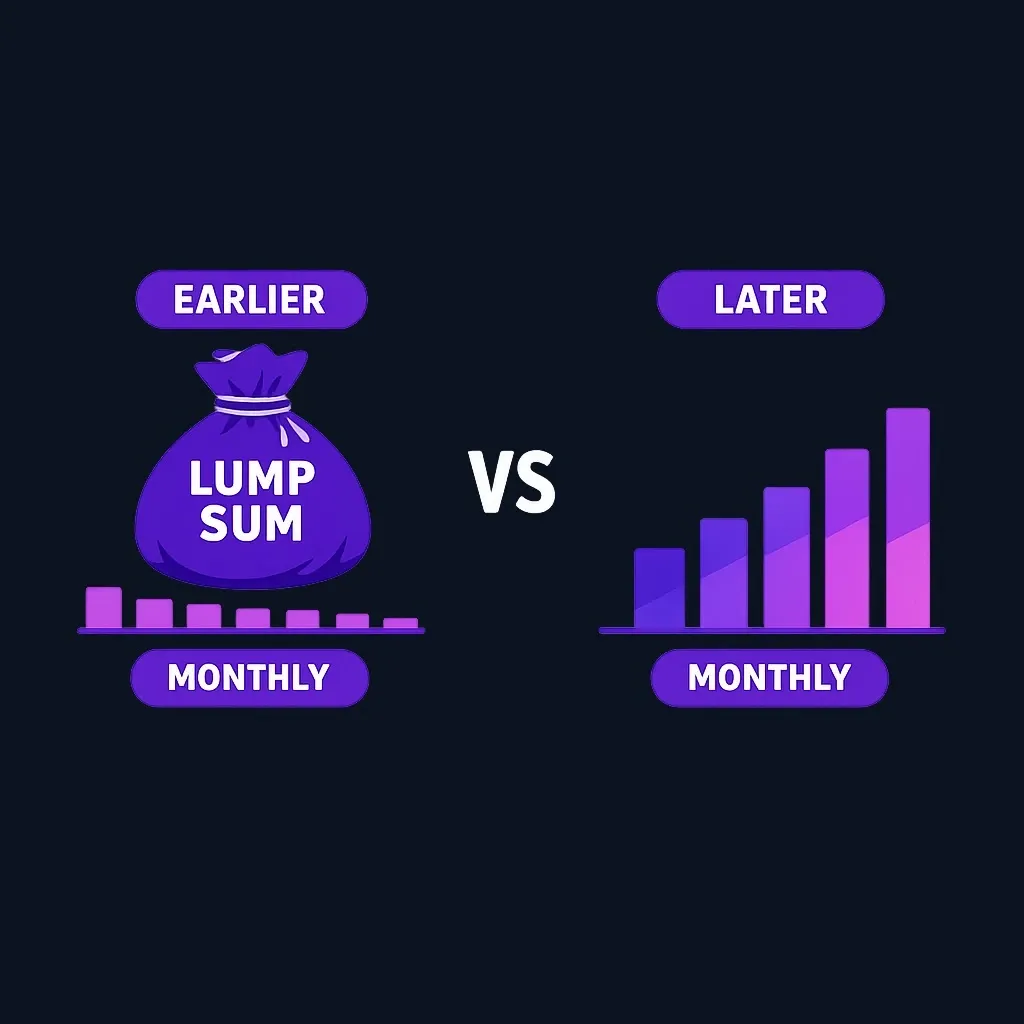
For retirement benefits, the age of those earlier months matters. If they are between full retirement age and 70, selecting them can reduce delayed credits compared with waiting. If they are entirely after 70, that particular tradeoff is different. Confirm the dates rather than assuming every retroactive payment reduces the monthly amount in the same way.
Use the monthly difference to frame a simple comparison
Suppose two hypothetical permitted choices produce a $12,000 retroactive payment and a $100 difference in future monthly benefits. Ignoring taxes, cost-of-living adjustments, investment returns, and survivor effects, $12,000 divided by $100 is 120 months, or ten years. This calculation only compares the stated amounts; it does not determine eligibility or the preferable election.
A household with an urgent expense may value the cash differently from one with sufficient reserves. Paying high-interest debt can create a measurable saving, while investing the lump sum involves uncertain returns. Avoid describing an optimistic investment forecast as equivalent to an SSA benefit increase.
Check tax treatment and family effects before filing
A retroactive payment can affect the taxation of benefits in the receipt year. Special federal tax rules may apply when a lump-sum benefit includes an earlier year's benefits, so have the tax result calculated from the actual payment and records. Do not assume the gross amount is either fully taxable or entirely tax-free.
For a married household, ask how the selected start date affects potential survivor benefits. Keep that separate from ordinary spousal-benefit calculations. A payment choice that looks attractive over the worker's expected lifetime may have a different result for a longer-lived spouse.
Retain the estimates and confirm the elected month on the application. Reversing a claim can involve restrictions and repayment requirements; it should not be assumed to be an easy way to undo a decision after spending the lump sum.
What "retroactive" means in practice
Retroactive benefits come from months during which you met eligibility requirements but had not filed for or begun receiving benefits. The details—how many months can be paid and who is eligible—depend on Social Security rules and your filing situation.
How to confirm your eligibility
- Contact the Social Security Administration or check your my Social Security account to learn if you have unpaid months eligible for retroactive payment.
- Confirm whether you or a spouse are eligible for retirement, spousal, or survivor benefits for the months in question.
- Ask the SSA about any deadlines, required forms, or documentation to support a retroactive claim.
Practical takeaway: rules and allowable retroactive periods vary by circumstance; verify your case directly with the SSA before relying on a lump-sum option.
Immediate cash and liquidity
A lump sum converts missed monthly payments into one payment you can use immediately. That can help with urgent expenses, paying down high-interest debt, or funding short-term medical or home needs.
Simplifies short-term planning
Receiving past-due months together may help fund a large current expense. Future benefits still arrive on their ordinary schedule, so keep the ongoing monthly budget separate from the one-time payment.
Opportunity to invest or reduce costly debt
Compare the after-tax lump sum and its possible uses with the lifetime stream of monthly benefits forgone. A percentage investment return cannot be compared directly with a dollar reduction in benefits. Debt interest savings may be more predictable than investment returns, but either use still needs a consistent timeline and survivor-benefit comparison. Practical takeaway: a lump sum is most useful if you have a high-priority cash need or a clear, higher-value use for the money than the lost future monthly income.
Reduced future monthly income
Choosing a retirement start month before age 70 can give up delayed retirement credits for those months, producing a lower ongoing benefit than a later start. Retroactive months entirely after age 70 do not give up additional credits, because those credits stop at 70. That reduction matters if you expect a long retirement horizon or rely on steady monthly income.
Potentially higher taxes in the lump-sum year
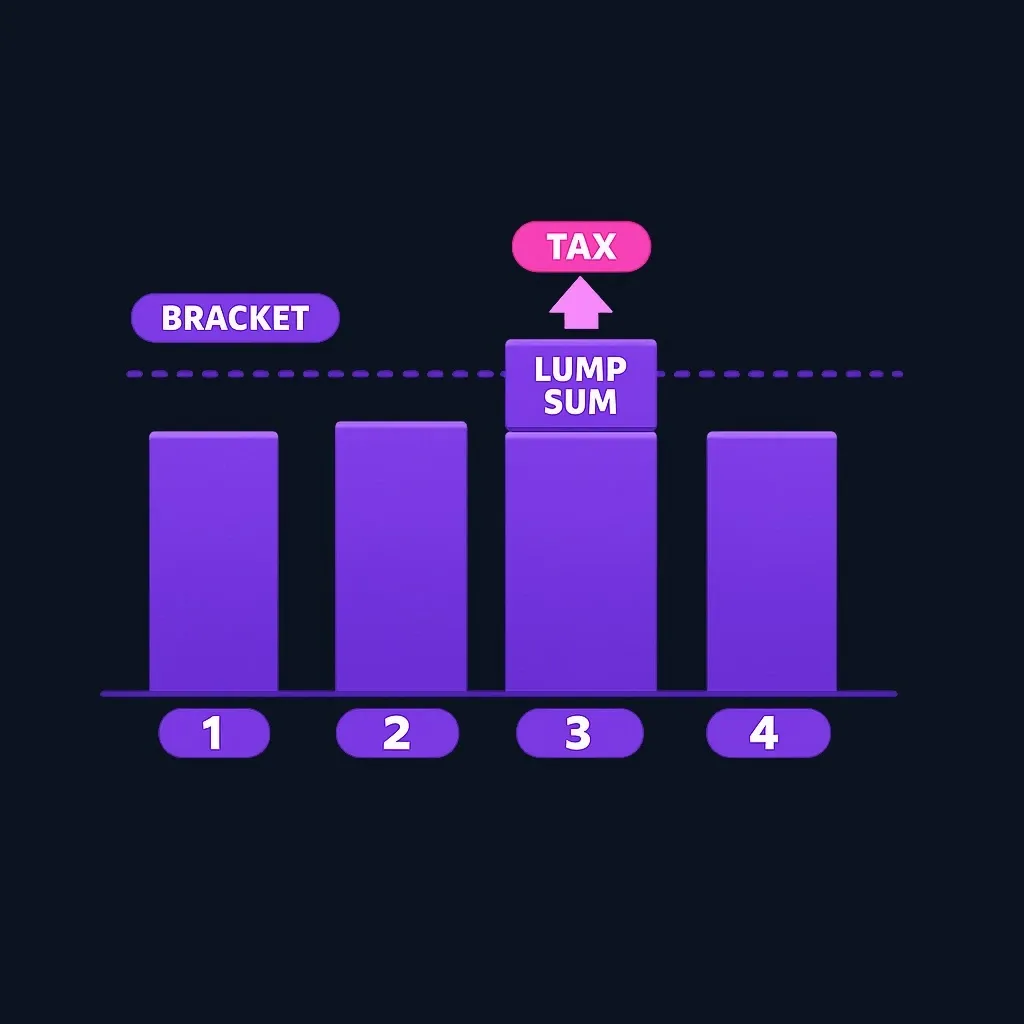
A large one-time payment can push you into a higher tax bracket for that year or increase the portion of Social Security benefits subject to tax. That concentrates tax liability in one year rather than spreading it across several years.
Effects on survivors and spousal benefits
Reduced monthly benefits may lower survivor benefits tied to the worker’s record; ordinary spousal benefits use different rules. If a spouse depends on your future benefit level, consider their needs when choosing between a lump sum and continued monthly checks. Practical takeaway: weigh the value of current cash against the security and longevity protection of higher monthly benefits and the tax consequences of concentrating income.
Hypothetical retroactive-payment decisions
These are hypothetical examples to illustrate how choices can differ by situation.
Example A — Short-term cash need (hypothetical)
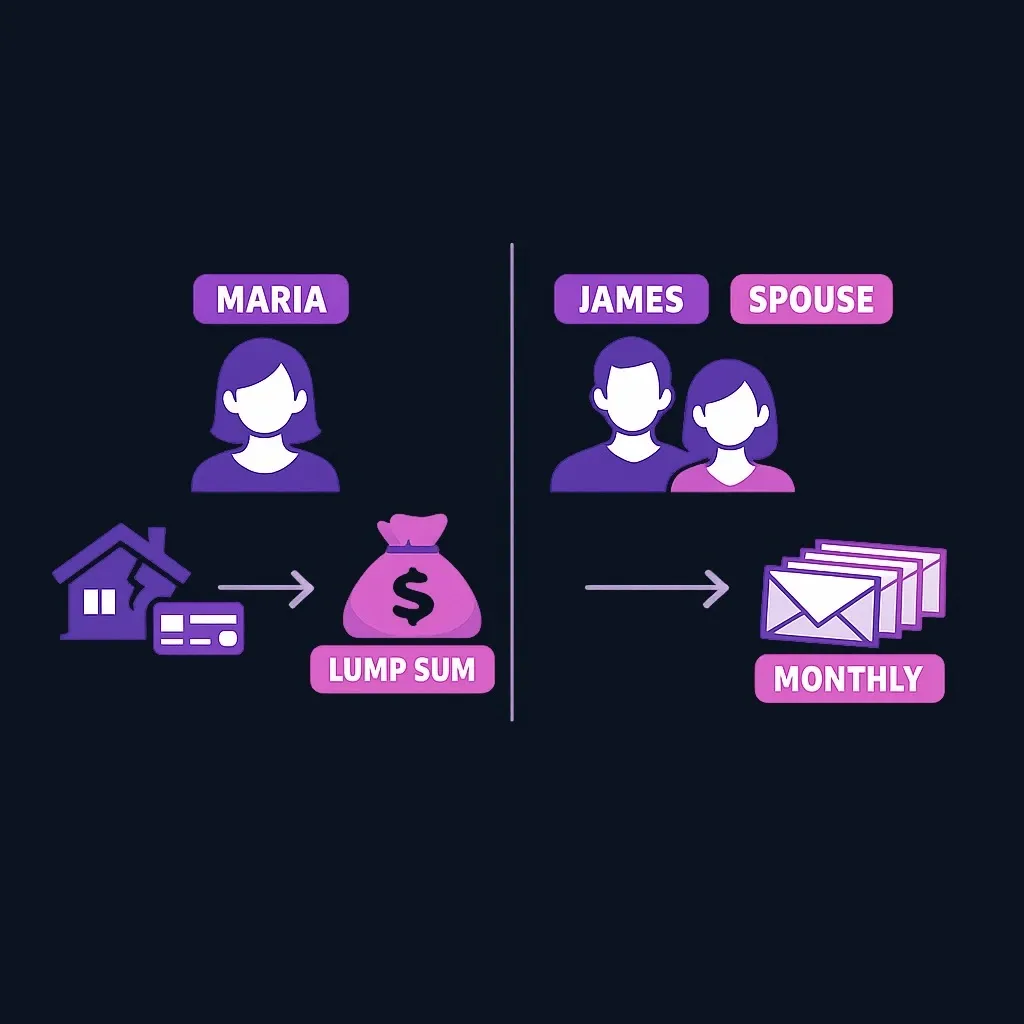
Maria, age 68, was eligible for benefits for four prior months but needs funds immediately for an urgent home repair. She values immediate liquidity, expects a moderate lifespan, and plans to pay down credit-card debt with the lump sum. Given her priorities, the lump sum helps reduce expensive debt and addresses the urgent expense, even though it lowers her future monthly benefit. What to model: after-tax proceeds from the lump sum vs. the present value of the lost monthly payments across likely years of life. Consider tax impact and whether paying down debt creates a more predictable interest saving than the value of the lost benefits.
Example B — Longevity and income certainty preferred (hypothetical)
James, age 69, in good health with a spouse relying on survivor benefits, prefers steady monthly retirement income. He opts against a lump sum to protect long-term cash flow and his spouse’s potential survivor benefit. What to model: the break-even age when the higher monthly payments outweigh the lump sum, and how survivor benefits change if he takes a lump sum. Practical takeaway: run simple scenarios (after-tax upfront cash versus discounted value of reduced monthly checks) using conservative longevity assumptions and tax projections to see which option may suit your goals.
What are retroactive Social Security benefits?
Retroactive benefits are payments for past months during which you were eligible but did not receive Social Security. The specific months and eligibility rules depend on your filing circumstances and SSA policy.
Who is eligible for retroactive benefits?
Eligibility depends on whether you met Social Security’s criteria during the months in question and on SSA filing rules. Contact the SSA to confirm eligibility for your exact situation.
How do retroactive payments affect taxes?
A lump-sum retroactive payment can increase taxable income in the year received, which can raise your marginal tax rate and change how much of Social Security benefits are taxable. Consult a tax preparer for a projection.
Can I change my mind after taking the lump sum?
Procedures for reversing or correcting benefit choices are case-specific and handled by the SSA. If you think you need to alter a previously accepted payment, contact the SSA promptly to learn available remedies.
For the broader claiming decision, consider Should you use savings to delay Social Security.
This guide covers U.S. rules. Finelo provides financial education, not personalized financial, investment, tax, or legal advice.
Financial LiteracyU.S. GuideFinancial Education
Practice trading with Finelo
Practice in a simulator, learn with bite-sized lessons, and build confidence before risking real money.
About the author
Finelo Team
The Finelo Team creates practical investing and trading education designed to help beginners learn faster with structured challenges, simulator practice, and bite-sized lessons.
Keep reading — Related articles

Financial Literacy
USDA vs. FHA loan
Compare location and income eligibility, down payments, credit conditions, and upfront and annual program charges for a home purchase.
Finelo Team

Financial Literacy
Term life vs. accidental death insurance
Compare broad term-life protection with accident-only coverage, including exclusions, underwriting, and the family income gap.
Finelo Team

Financial Literacy
Term life insurance laddering vs. one policy
Compare several term policies ending at different times with one policy, using coverage needs, costs, and future insurability.
Finelo Team