Last editorial review: September 28, 2026
Should you have taxes withheld from Social Security?

Compare voluntary withholding choices with your projected federal tax bill, other income, and estimated-payment needs.
8 min read
Practice trading with Finelo
Practice in a simulator, learn with bite-sized lessons, and build confidence before risking real money.
Want to learn more?
Practice in a simulator, learn with bite-sized lessons, and build confidence before risking real money.
Explore FineloExplore Finelo's 28-day challenges
Turn learning into a daily habit with guided challenge paths.
Federal withholding can help cover tax on Social Security benefits and other income throughout the year. It is useful when your overall tax payments would otherwise fall short. If your benefits are not taxable and your other payments are sufficient, withholding may simply reduce the cash you receive now.
Estimate the full year's tax first, then choose how to pay it.
Taxable does not mean taxed at 85%
Depending on income and filing status, up to 85% of Social Security benefits can be included in taxable income. That is the taxable share of the benefit, not the tax rate. SSI is different and is not taxable.
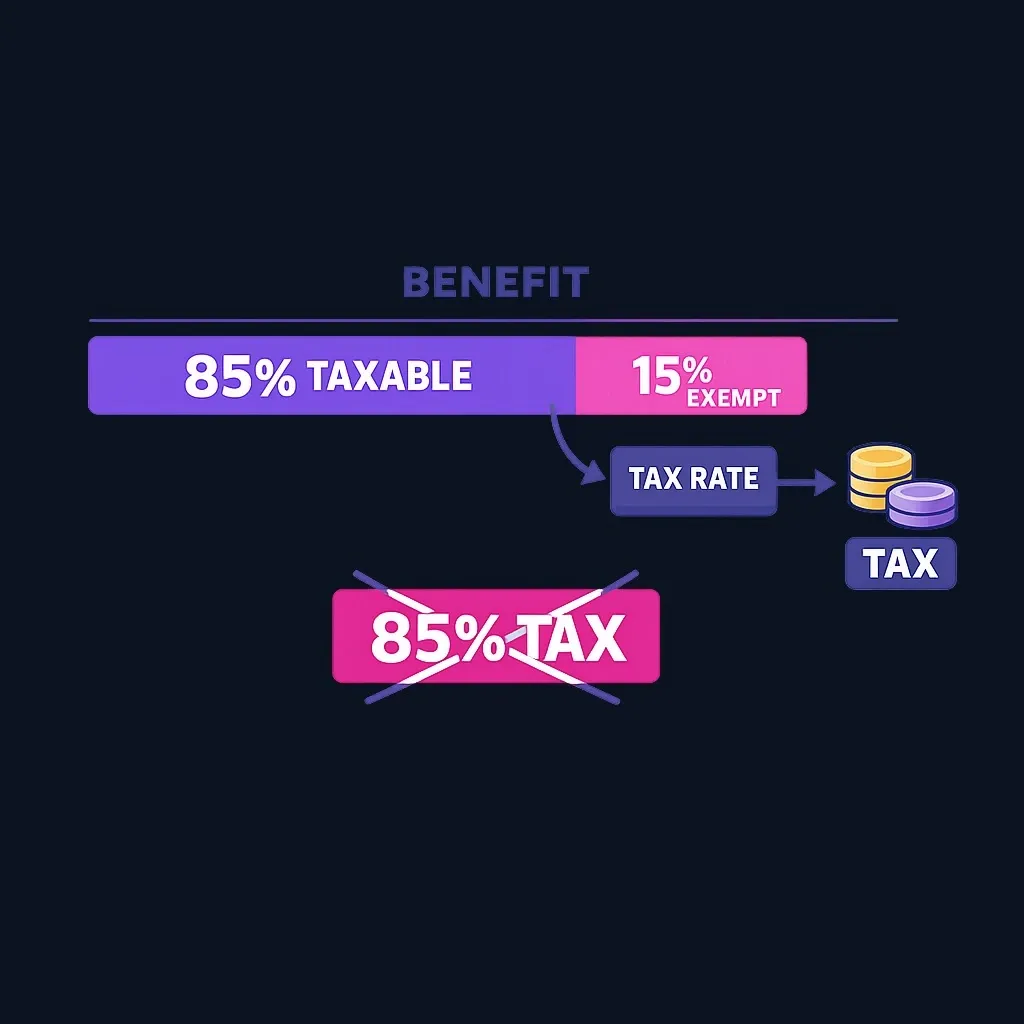
The IRS Social Security FAQ and Publication 915 explain the calculation. It generally considers other income, tax-exempt interest, and half of Social Security benefits, with adjustments and filing-status rules.
How withholding works
Form W-4V lets you request federal withholding at 7%, 10%, 12%, or 22% of the monthly benefit. You cannot select any arbitrary dollar amount on that form. See the IRS Form W-4V page.
For a hypothetical $2,000 monthly benefit, 10% withholding sends $200 toward federal tax and leaves $1,800 before any other deductions. That does not establish that $200 is the right amount for your return.
Compare payment methods
You may instead cover the tax through withholding from wages or a pension, estimated payments, or a combination. Count all payments together so you do not overlook a shortfall or unnecessarily overpay.
Revisit the estimate when work income, retirement withdrawals, marital status, or other income changes. State taxation is a separate question; federal withholding does not automatically cover a state bill.
Use your latest return as a starting point, update it for this year's income, and submit any withholding change through the official instructions. The aim is a manageable cash flow and enough tax paid on time.
Estimate the household tax before choosing the withholding
Taxable benefits do not automatically mean withholding must come from the Social Security payment itself. A household may already have enough federal tax withheld from wages, a pension, or another distribution. The first question is whether total payments for the year are likely to cover the required amount under the applicable rules.
Start with expected annual income and filing status. Include a spouse's income when preparing a joint-return estimate, as well as relevant interest and retirement distributions. A large one-time withdrawal or sale can change the result even if the monthly Social Security benefit is unchanged.
Then list tax already paid through withholding and estimates. Compare the remaining expected obligation with the months or payments left in the year. This makes the choice a cash-flow plan rather than a guess based only on the benefit amount.
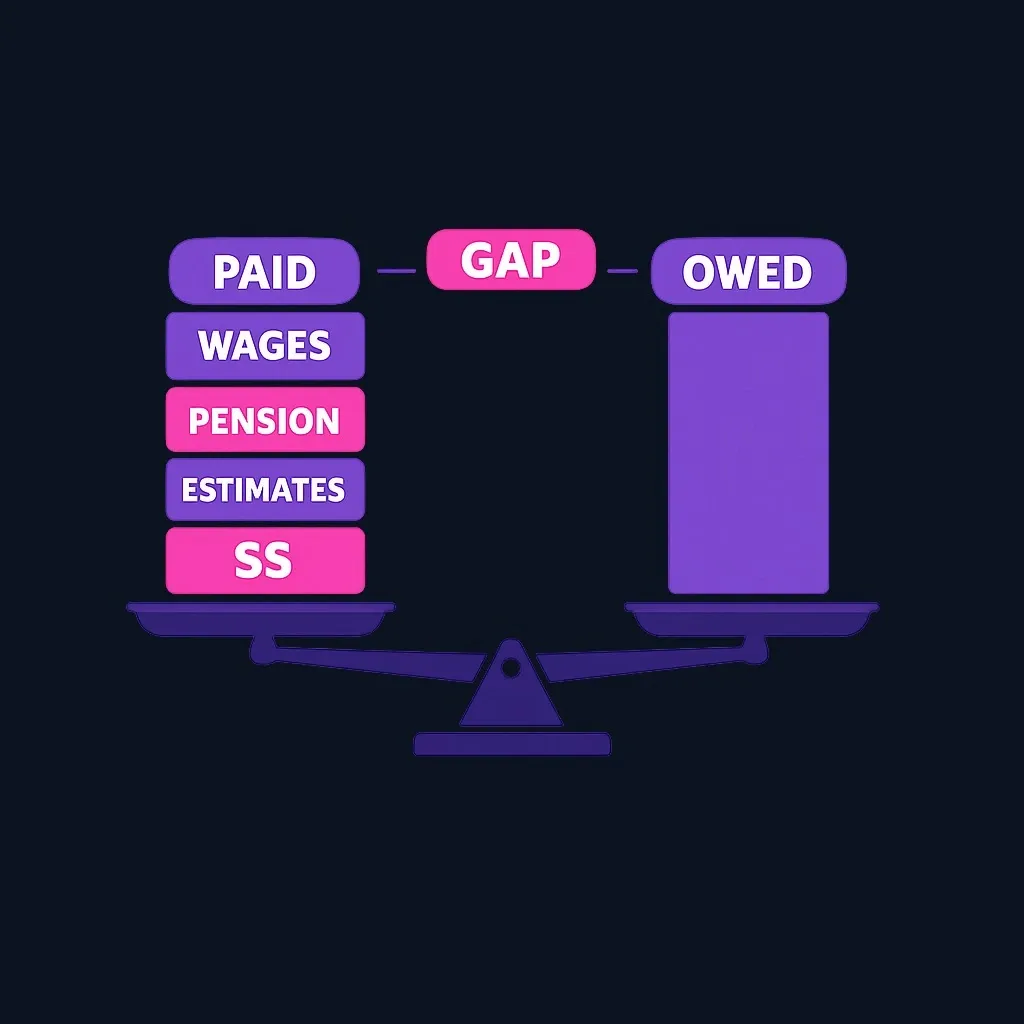
Translate a percentage into the deposit you will receive
Suppose the gross monthly benefit used for this simplified illustration is $2,000. A 10% federal withholding election would set aside $200 a month, or $2,400 across twelve such payments. That leaves $1,800 before considering any other deductions that apply. Those figures illustrate withholding mechanics; they do not establish the correct election for that beneficiary.
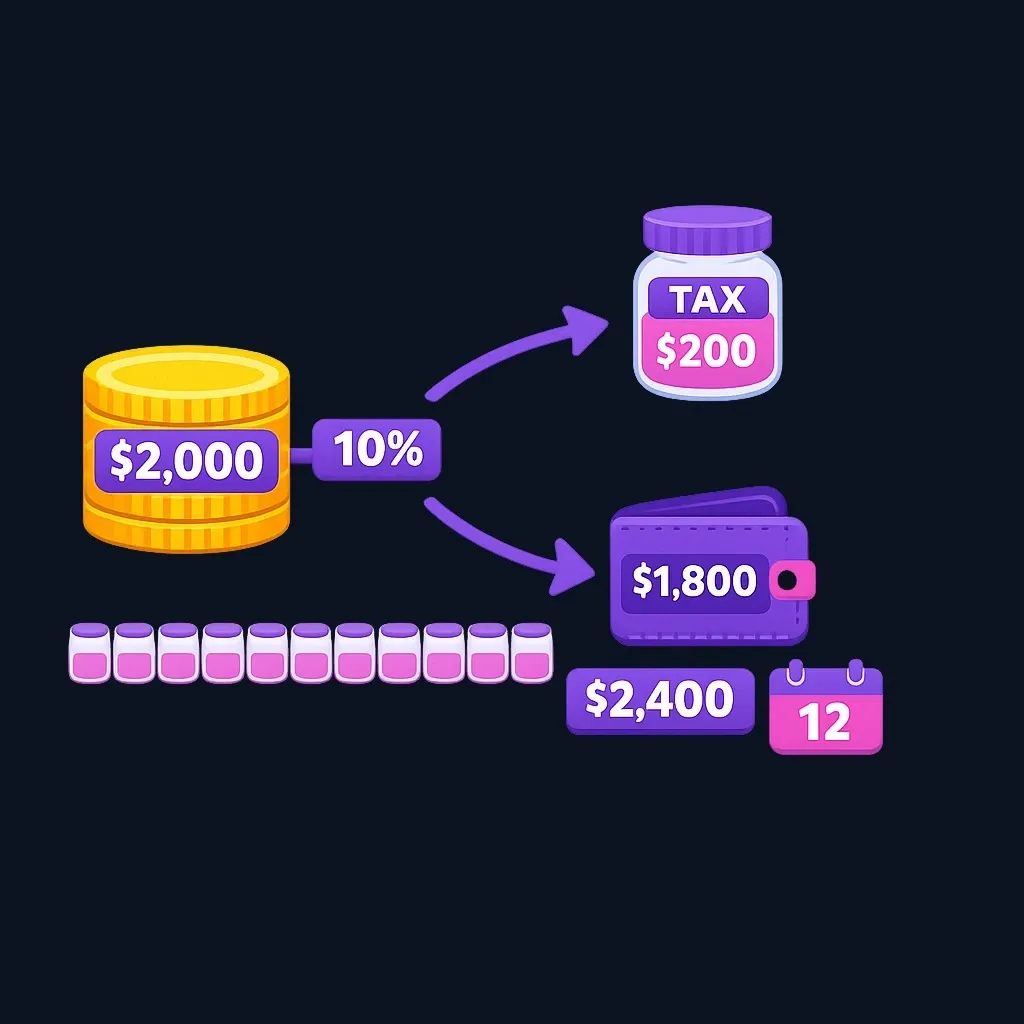
Put the resulting deposit into the household budget. Someone who relies on the full current deposit for essential expenses needs to know how the change will be funded. On the other hand, regularly setting tax aside can make filing time easier than facing one large bill with no reserve.
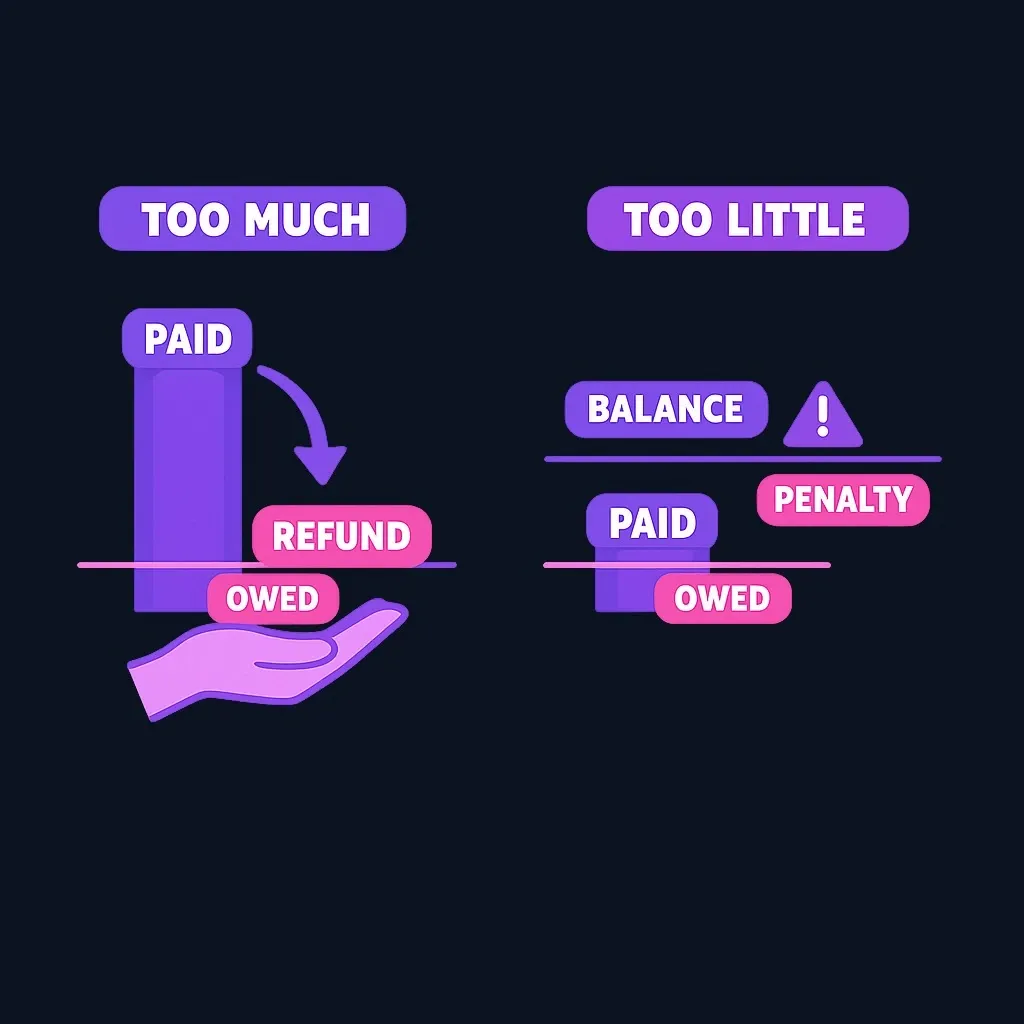
Remember that withholding is a payment toward the final liability, not a separate tax on the benefit. Too much may lead to a refund; too little can leave a balance and, in some situations, an underpayment penalty. A large refund is not necessarily evidence that the election was optimal for cash flow.
Practice trading with Finelo
Practice in a simulator, learn with bite-sized lessons, and build confidence before risking real money.
Review after an income or filing-status change
Revisit the estimate when work stops, a pension starts, a spouse dies, or a large retirement-account transaction occurs. The taxable portion of benefits can change even when SSA's gross payment does not. A prior year's election is a starting point, not a permanent answer.
Keep a copy of the withholding request and verify the change on the benefit statement or deposit information. Coordinate it with other withholding so the same projected shortfall is not addressed twice. Federal voluntary withholding also does not settle state-tax questions; check those separately if applicable.
Understanding Social Security Benefits and Taxes
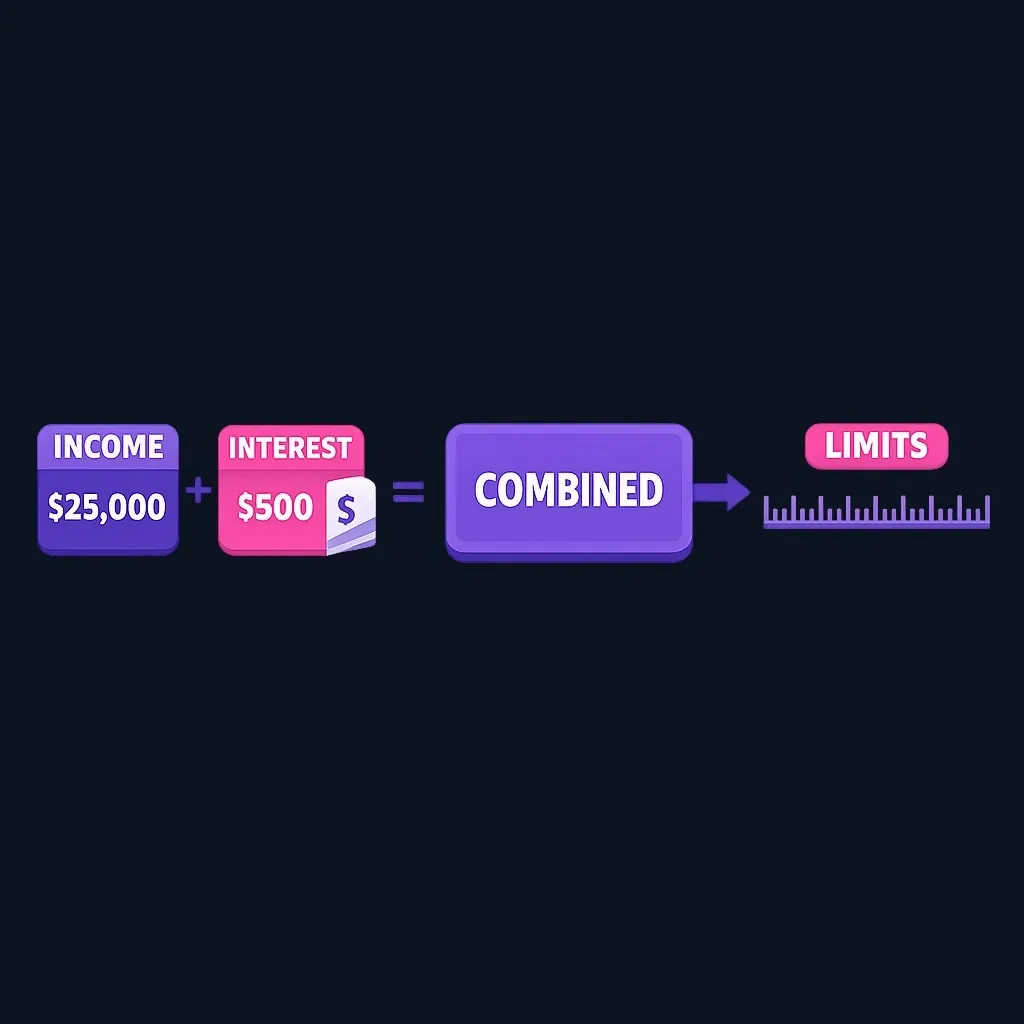
Social Security taxation depends on your “combined income,” which the IRS uses to decide whether and how much of your benefit is taxable. The rough formula starts with adjusted gross income before taxable Social Security, nontaxable interest, and half of your Social Security benefits — that total determines the taxable portion of benefits. Depending on combined income and filing status, up to 85% can be included in taxable income. This is not an 85% tax rate. Concrete example (worked through): imagine income before Social Security = $25,000, nontaxable interest = $500, and annual Social Security = $15,000. Combined income = 25,000 + 500 + (15,000 / 2) = $33,000. You would then compare that number to IRS thresholds to see whether and how much of your benefit is taxable. Use the IRS guidance to determine exact thresholds and percentages. Decision point: if your combined income puts you in a range where benefits are taxable, withholding or estimated payments can smooth your cash flow and reduce the chance of owing a large sum at filing time.
The Process of Withholding Taxes from Social Security
How to request withholding and change it:
- The Social Security Administration accepts a voluntary withholding request using IRS Form W-4V, Voluntary Withholding Request. Complete W-4V and submit it to SSA, not the IRS. SSA also offers an official withholding request process for starting or changing withholding.
- When you submit W-4V you choose a withholding percentage; you can later submit a new W-4V to change or end withholding.
Practical mechanics checklist:
- Obtain IRS Form W-4V (download from the IRS site).
- Decide a target annual tax withholding (see next section for tradeoffs).
- Submit the completed W-4V to your local Social Security office per SSA instructions.
- Monitor your SSA benefit statement to confirm withholding has started or changed. (Note: exact forms, mailing addresses, or SSA online processes can change — use SSA or IRS pages when you submit.)
Benefits of Withholding Taxes from Social Security
Withholding can help in three practical ways:
- Avoid year-end surprises: steady withholding spreads your tax liability across monthly checks so you’re less likely to owe a lump sum at filing time.
- Simple to set up and change: the IRS Form W-4V is the standard tool to start or adjust voluntary withholding.
- Forced savings discipline: for those who struggle to set aside money for quarterly taxes, withholding creates a straightforward automatic payment method.
Potential Drawbacks of Withholding Taxes
Common downsides and caveats:
- Reduced monthly income: withholding lowers the cash you receive each month, which may strain a tight retirement budget. Evaluate whether the tradeoff of steadier tax payments is worth the reduced cash flow.
- Overwithholding = less interest on your money: excess withholding generally becomes an overpayment reconciled on your tax return, which may be refunded or applied to other obligations. Until then, the money is unavailable for your current expenses. You can submit a new W-4V to reduce or stop withholding if you overdid it.
- Not all tax obligations are solved by withholding: if you have significant other income (pensions, investment income, wage work), withholding from Social Security alone might not cover quarterly estimated tax needs — review total tax exposure before relying solely on Social Security withholding.
Concrete caution: withholding addresses federal income tax only. State tax rules vary; check your state tax agency for whether Social Security benefits are taxed in your state.
What is voluntary withholding?
Voluntary withholding lets you ask SSA to deduct federal income tax from your monthly Social Security payment by completing IRS Form W-4V and submitting it to SSA.
Can I change my withholding rate?
Yes. You can submit a new Form W-4V to change the percentage withheld or to stop withholding; monitor your SSA statement after submitting a change.
How do I calculate my combined income?
Combined income is commonly computed as adjusted gross income before Social Security + nontaxable interest + half of your Social Security benefits. Use this total to compare against IRS thresholds that determine whether benefits are taxable.
What happens if I don't withhold enough?
If you don’t withhold and your total tax liability exceeds what you paid during the year, you may owe tax when you file. Voluntary withholding is one way to reduce that risk and avoid large surprises at tax time.
To coordinate benefits with wages or other income, compare Tax withholding vs. estimated payments.
This guide covers U.S. rules. Finelo provides financial education, not personalized financial, investment, tax, or legal advice.
Financial LiteracyU.S. GuideFinancial Education
Practice trading with Finelo
Practice in a simulator, learn with bite-sized lessons, and build confidence before risking real money.
About the author
Finelo Team
The Finelo Team creates practical investing and trading education designed to help beginners learn faster with structured challenges, simulator practice, and bite-sized lessons.
Keep reading — Related articles

Financial Literacy
USDA vs. FHA loan
Compare location and income eligibility, down payments, credit conditions, and upfront and annual program charges for a home purchase.
Finelo Team

Financial Literacy
Term life vs. accidental death insurance
Compare broad term-life protection with accident-only coverage, including exclusions, underwriting, and the family income gap.
Finelo Team

Financial Literacy
Term life insurance laddering vs. one policy
Compare several term policies ending at different times with one policy, using coverage needs, costs, and future insurability.
Finelo Team