Last editorial review: September 28, 2026
Mortgage points vs. a larger down payment
Compare the cost of a lower mortgage rate with the benefits of a smaller loan, using a break-even example and realistic cash reserves.
9 min read
Practice trading with Finelo
Practice in a simulator, learn with bite-sized lessons, and build confidence before risking real money.
Want to learn more?
Practice in a simulator, learn with bite-sized lessons, and build confidence before risking real money.
Explore FineloExplore Finelo's 28-day challenges
Turn learning into a daily habit with guided challenge paths.
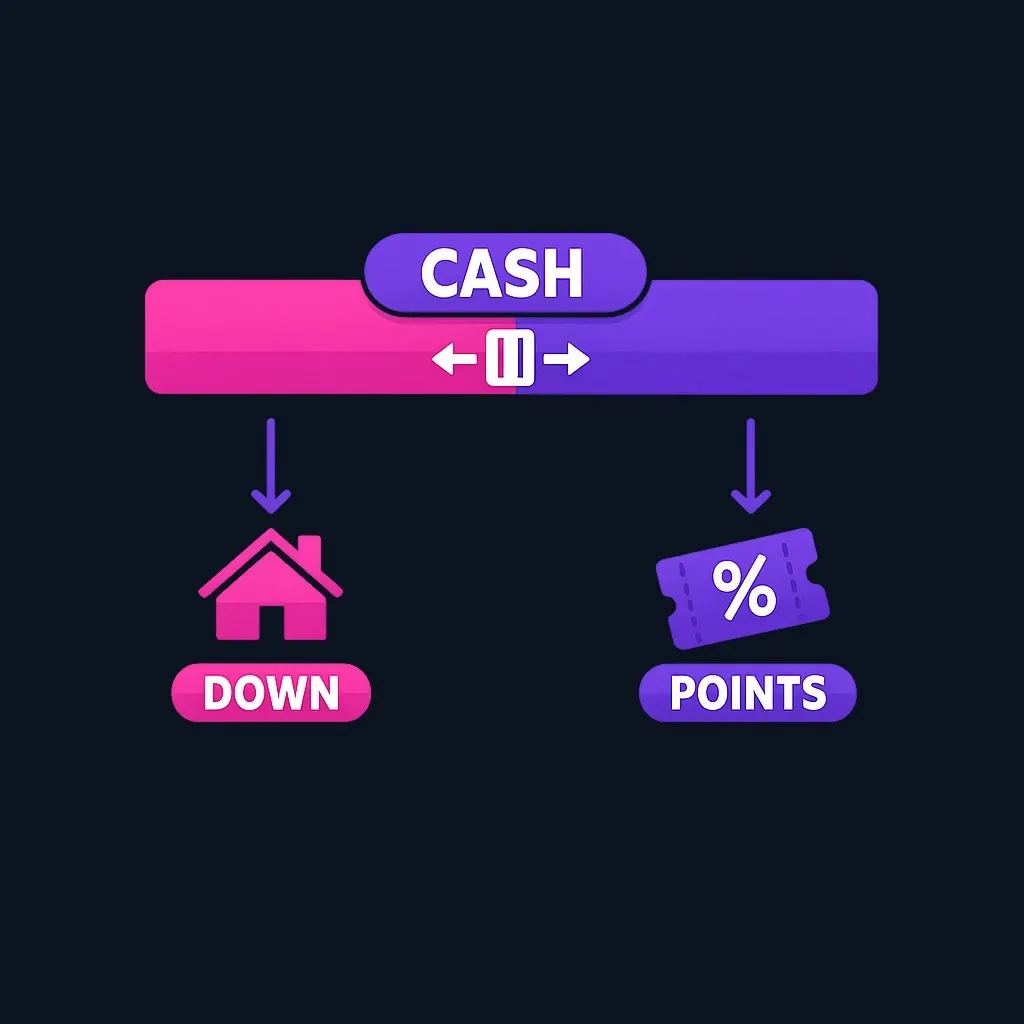
Mortgage discount points buy a lower interest rate. A larger down payment reduces the amount you borrow. Both use cash at closing, but they affect the loan differently.
Start by deciding how much cash you can use while keeping money available for moving, repairs, and emergencies. Then ask the lender to price both options with the same loan type and term.
Compare what your cash buys
| Use of cash | Potential benefit | Main limitation |
|---|---|---|
| Discount points | Lower rate and scheduled payment | You need time to recover the upfront cost |
| Larger down payment | Smaller balance; potentially different pricing or mortgage insurance | Cash becomes tied up in the home |
| Keep a reserve | More flexibility after closing | Does not reduce the loan directly |
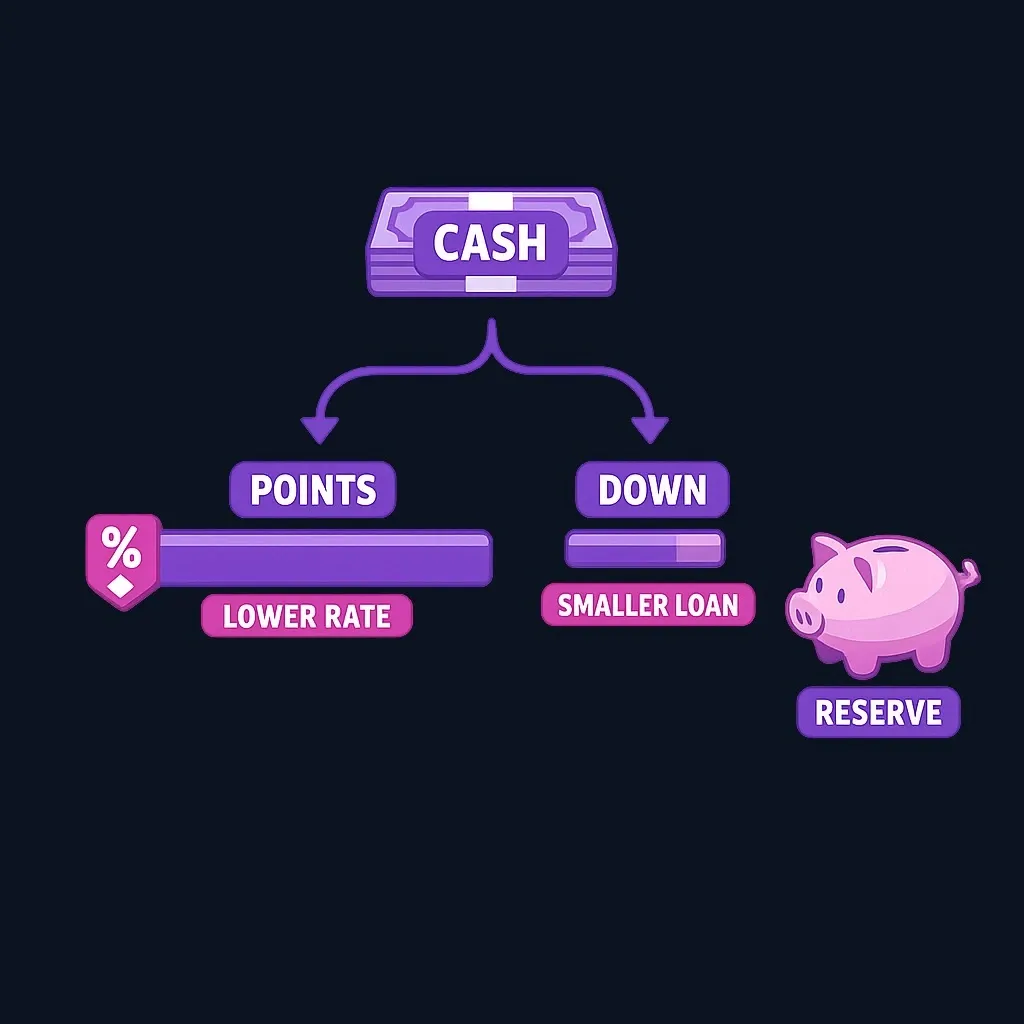
One point equals 1% of the loan amount, but it does not buy a fixed rate reduction across all lenders. See the CFPB's explanation of points and lender credits.
Use break-even as a starting point
If points cost $3,000 and reduce the monthly payment by $30, a simple break-even is 100 months, or about 8.3 years. This hypothetical calculation ignores the value of keeping the cash, tax effects, and differences in loan balances.
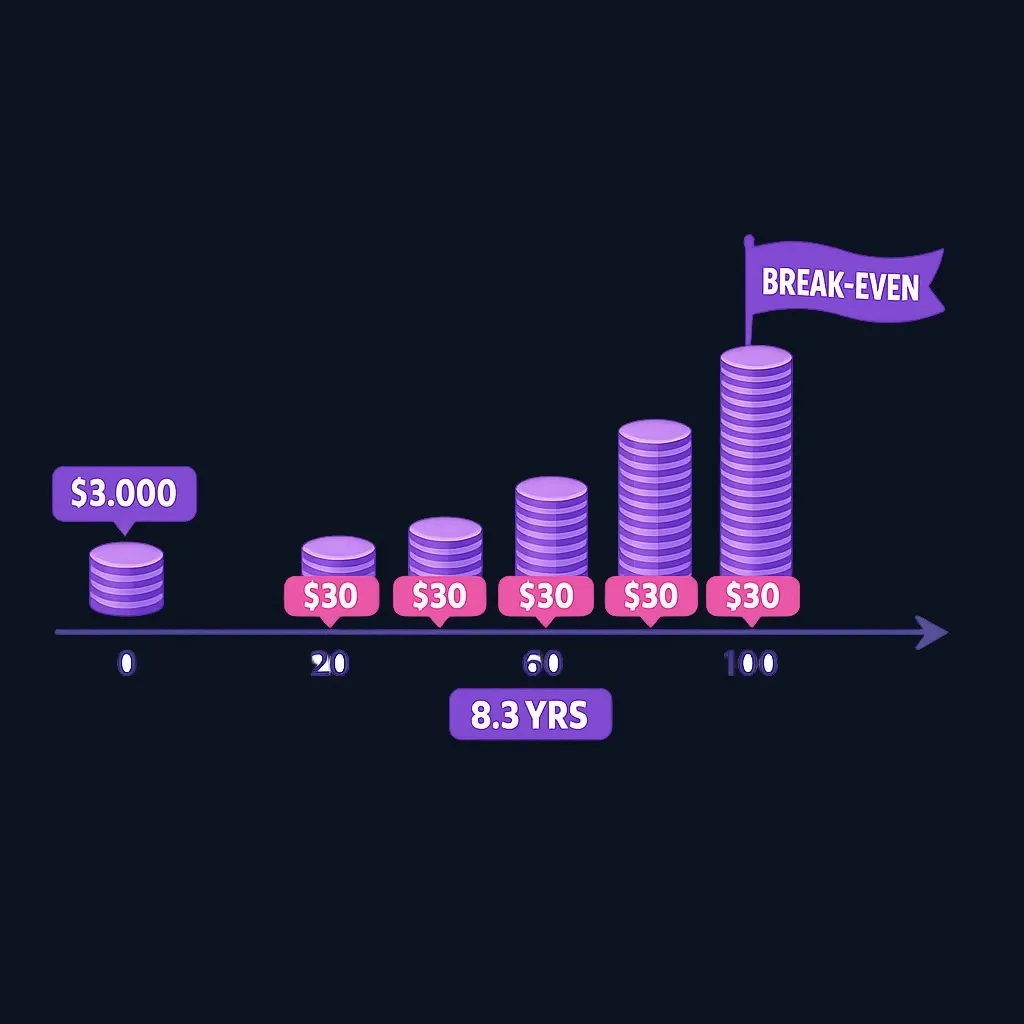
Selling or refinancing sooner can prevent you from recovering the cost. A larger down payment may also change mortgage-insurance costs, so do not compare principal-and-interest payments alone.
Request three written quotes
Ask for no points, points, and the same cash applied to the down payment. Compare cash to close, monthly payment, mortgage insurance, and the remaining balance at the time you expect to sell or refinance.
Tax deductions are a separate calculation. Points are not automatically fully deductible in the year paid; the IRS mortgage-points guidance explains the conditions. Choose using the complete loan comparison, not an assumed tax refund.
Ask for two offers using the same cash budget
Suppose you have a fixed amount available beyond the minimum cash needed to close. Ask the lender to show one estimate that uses it for discount points and another that adds it to the down payment. Keep the property, loan type, term, rate-lock period, and other assumptions the same. Otherwise, differences in the offer can be mistaken for the effect of points.
Read the full payment breakdown. Principal and interest may fall while taxes and insurance remain unchanged. Mortgage insurance can change at particular loan-to-value thresholds, but the rules depend on the program. Ask the lender to show the actual insurance result instead of assuming any additional down payment eliminates the charge.
Simple points break-even divides the points cost by the monthly payment reduction. It is useful for screening an offer, but it does not capture everything. The two loans can have different remaining balances at sale, and cash spent at closing is no longer available for repairs or other needs. A fuller comparison looks at upfront cash, payments over your expected holding period, and the balance still owed at that point.
Keep a reserve for the first year of ownership. A theoretically lower borrowing cost can be a poor practical fit if using every available dollar leaves the household dependent on expensive credit after a repair. The question is how much cash can be committed comfortably, then which use of that amount improves the mortgage terms most for your expected time in the home.
Practice trading with Finelo
Practice in a simulator, learn with bite-sized lessons, and build confidence before risking real money.
What Are Mortgage Points & How Down Payments Work
Discount points are upfront charges associated with a lower mortgage interest rate. One point is 1% of the loan amount; the rate reduction varies by lender and offer. Points are not limited to principal-residence purchases: refinancing and second-home borrowing can also involve points. Do not confuse discount points with unrelated origination or processing charges calculated as a percentage of the loan. A down payment is the cash you pay toward the home price at purchase. Larger down payments reduce the amount you borrow and therefore lower monthly principal-and-interest payments, and they can affect mortgage insurance requirements and loan pricing set by lenders.
Breakeven Analysis for Buying Points
A breakeven calculation compares the upfront cost of points to the monthly savings they produce. Use this simple procedure with your loan numbers. Steps
- Estimate the dollar cost of points you would pay at closing (example: hypothetical costs below).
- Calculate the monthly payment difference between the base rate and the reduced rate after buying points.
- Divide the upfront cost by the monthly savings to get breakeven months. Convert to years.
Worked hypothetical examples (illustrative only)
- Example A — Short calculation: Suppose you pay $3,000 in points and your monthly payment falls by $30. Breakeven = $3,000 ÷ $30 = 100 months ≈ 8.3 years.
- Example B. Larger loan: If points cost $6,000 and reduce payment by $75/month, breakeven = $6,000 ÷ $75 = 80 months ≈ 6.7 years.
How to interpret
- If you expect to keep the mortgage longer than the breakeven period, buying points may save money over the loan life.
- If you expect to sell, refinance, or pay off the mortgage before breakeven, a larger down payment or other uses of cash could be superior.
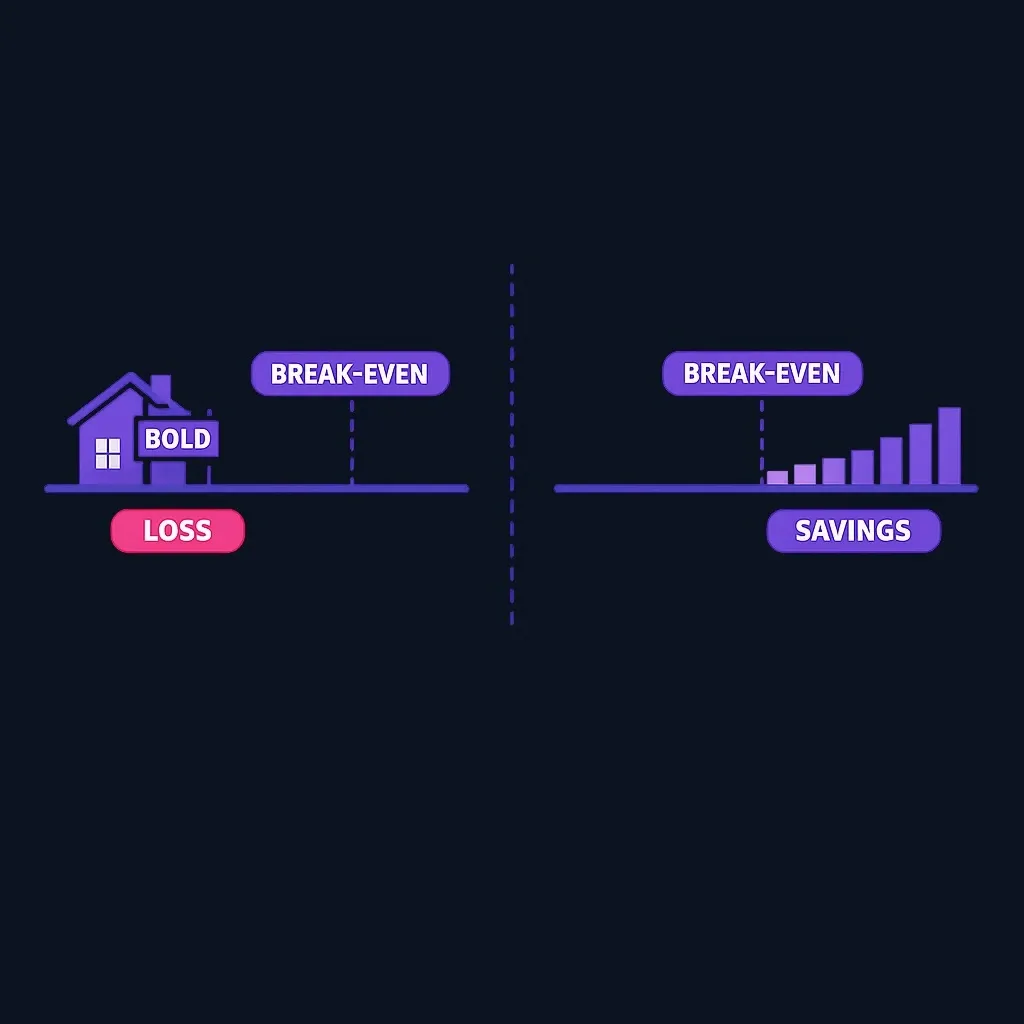
Practical tip: run the breakeven calculation with conservative estimates for how long you'll stay in the home, and include likely refinance scenarios.
How to compare your options
Use these criteria to decide between buying points and increasing your down payment.
- Time horizon: How long will you keep or not refinance the loan? Short horizons favor larger down payments; long horizons can favor points if breakeven is reachable.
- Cash availability and liquidity: Do you need emergency reserves? Tying cash into your down payment reduces liquidity; buying points also uses cash but leaves principal unchanged.
- Monthly payment priority: Ask the lender to calculate both options using the same amount of available cash. A lower loan balance and a lower interest rate affect payments differently; neither automatically gives the greater reduction.
- Mortgage insurance and LTV thresholds: Increasing down payment can change loan-to-value and eliminate or reduce mortgage insurance requirements with some loans — a direct, immediate saving for monthly cashflow.
- Tax situation: Points may be deductible under IRS rules for some primary-residence purchases and may be amortized over the loan term; check the linked IRS guidance on eligibility and deduction timing. Consult a tax professional for your case.
- Plans to refinance or sell: If refinancing or selling is likely within the breakeven period, buying points is less attractive.
- Opportunity cost: Could the cash be better used elsewhere (investments, paying down higher-interest debt, home repairs)? Compare the expected after-tax return to the implied rate of return from buying points.
- Loan product and lender rules: Not all lenders offer the same pricing for points or down-payment tiers; request specific quotes and scenario comparisons from lenders.
When to choose each option
Practical scenarios to guide the choice.
- Consider buying points if:
- You expect to keep the mortgage considerably longer than the breakeven period calculated above.
- You have extra cash beyond closing reserves and emergency savings.
- You prefer lower total interest over the long run and can’t or don’t want to increase the down payment.
- Consider a larger down payment if:
- A larger down payment reaches a useful loan-to-value threshold or provides a better quoted payment for the same cash commitment.
- Avoiding mortgage insurance or qualifying for better loan products is critical.
- You plan to sell or refinance within a few years (before points would pay back).
Combination option
- You can do both: use some cash to increase down payment and some to buy a partial number of points. Run breakeven math for points and compare immediate benefits from a larger down payment to pick the split that matches your goals.
Tradeoffs and caveats
- Upfront cost vs. speed to recover: Points require upfront cash and may take years to pay back through smaller payments. The breakeven calculation is essential before committing.
- Tax timing: Points tied to a qualifying purchase and used for your principal residence may be deductible, but deduction timing can require amortizing the points over the loan term under IRS rules. Consult a tax professional.
- Selling or refinancing risk: If you sell or refinance before breakeven, the paid points won’t have delivered their expected return.
- Lender pricing variability: Lender practices, available rate buydowns, and down-payment thresholds vary. Ask lenders for side-by-side quotes (no-cost quote, cost with X points, cost with larger down payment) to compare true tradeoffs.
- Liquidity and emergency funds: Don’t deplete reserves to buy points or to make an overly-large down payment; maintain emergency cash.
What are mortgage points?
Discount points are prepaid charges exchanged for a lower mortgage interest rate. A point equals 1% of the loan amount, but the rate reduction is not fixed. Confirm that any fee described as points actually buys a rate reduction in the quoted loan.
How do I calculate the breakeven point for buying points?
Calculate breakeven by dividing the upfront cost of points by the monthly payment reduction they create. Example: $3,000 upfront ÷ $30 monthly savings = 100 months (≈ 8.3 years). Use your exact lender quote for an accurate result.
Can I combine buying points with a larger down payment?
Yes — many borrowers split extra cash between a larger down payment and buying a smaller number of points. Compare lender quotes and run breakeven math to find the mix that matches your time horizon and liquidity needs.
How are points treated for taxes?
Deductible points are generally spread over the loan term. An exception can permit a deduction in the year paid for points on a qualifying principal-residence loan when the IRS conditions are met. Itemizing, the use of the loan, payment arrangements, and mortgage-interest limitations matter. Refinancing and second-home loans generally have different timing from a qualifying main-home purchase. Use the linked IRS guidance for the actual transaction.
Once the loan is in place, another way to compare repayment choices is Biweekly vs. monthly mortgage payments: where the savings come from.
This guide covers U.S. rules. Finelo provides financial education, not personalized financial, investment, tax, or legal advice.
Financial LiteracyU.S. GuideFinancial Education
Practice trading with Finelo
Practice in a simulator, learn with bite-sized lessons, and build confidence before risking real money.
About the author
Finelo Team
The Finelo Team creates practical investing and trading education designed to help beginners learn faster with structured challenges, simulator practice, and bite-sized lessons.
Keep reading — Related articles

Financial Literacy
USDA vs. FHA loan
Compare location and income eligibility, down payments, credit conditions, and upfront and annual program charges for a home purchase.
Finelo Team

Financial Literacy
Term life vs. accidental death insurance
Compare broad term-life protection with accident-only coverage, including exclusions, underwriting, and the family income gap.
Finelo Team
Financial Literacy
Term life insurance laddering vs. one policy
Compare several term policies ending at different times with one policy, using coverage needs, costs, and future insurability.
Finelo Team


