Last editorial review: September 28, 2026
Can you collect Social Security if you move abroad?

Check how citizenship, destination, benefit type, taxes, and Medicare coverage affect a plan to receive U.S. benefits abroad.
10 min read
Practice trading with Finelo
Practice in a simulator, learn with bite-sized lessons, and build confidence before risking real money.
Want to learn more?
Practice in a simulator, learn with bite-sized lessons, and build confidence before risking real money.
Explore FineloExplore Finelo's 28-day challenges
Turn learning into a daily habit with guided challenge paths.
Often, yes. But payment rules depend on your citizenship, benefit type, destination, and other circumstances. Keeping a U.S. bank account does not by itself make you eligible to receive benefits while living overseas.
Start with the SSA Payments Abroad Screening Tool. It addresses retirement, disability, and survivor benefits and helps identify country restrictions or situations where payments may stop after an absence.
Identify the benefit first
Social Security retirement benefits and Supplemental Security Income, or SSI, follow different rules. Under SSA absence rules, SSI generally cannot continue during an extended absence from the United States, with limited exceptions. Do not use retirement-benefit guidance to plan an overseas move if your payment is SSI.
Non-U.S. citizens can face additional restrictions on payments abroad. Dependents and survivors may have conditions that differ from those of the worker whose record provides the benefit. SSA's payments-outside-the-U.S. guidance explains these distinctions.
Separate eligibility, payment, and tax questions
| Question | Where to check |
|---|---|
| Can benefits continue in this country? | SSA screening tool and the office serving your destination |
| How will you receive the money? | SSA international payment instructions and your bank |
| What changes must you report? | SSA reporting requirements |
| Which country taxes the benefits? | Applicable tax rules and income-tax treaty |
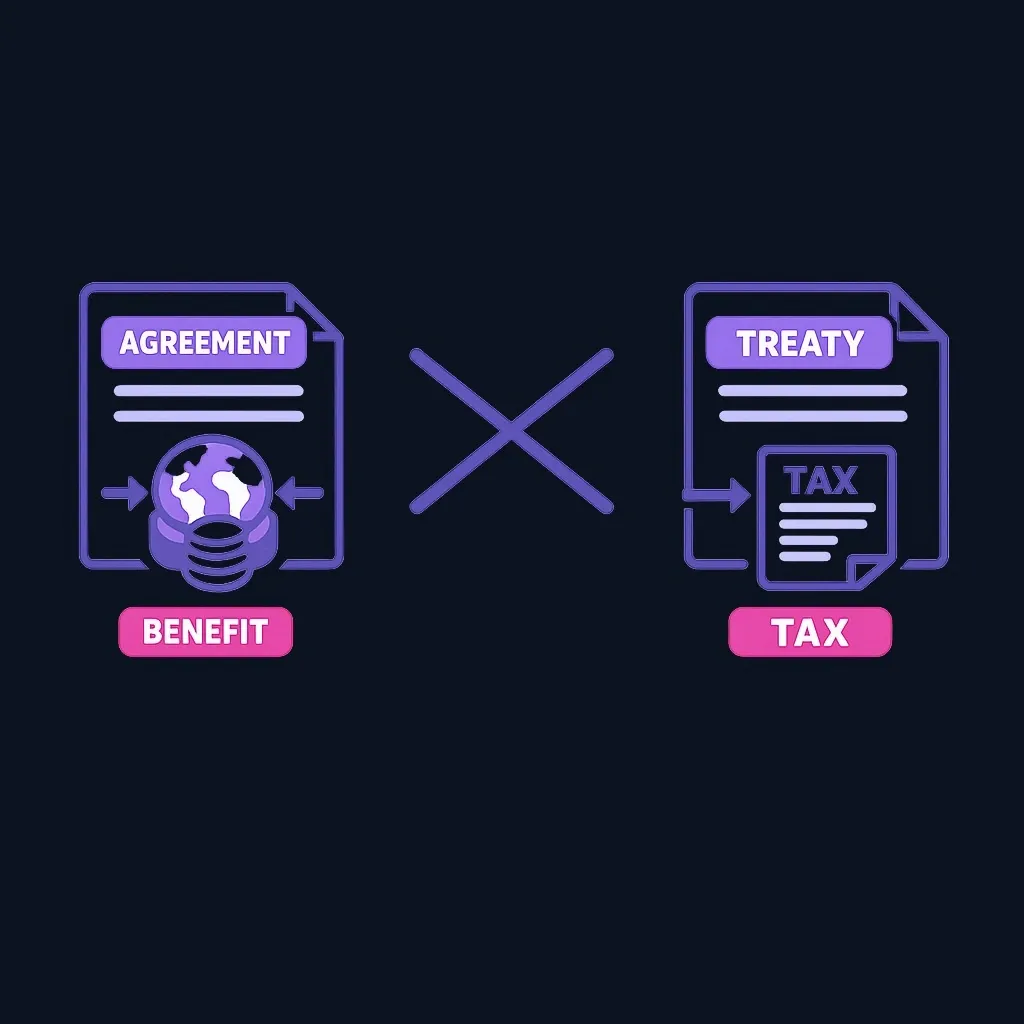
SSA totalization agreements help coordinate coverage and, in qualifying cases, combine work credits across countries. Income-tax treaties address a different question: which tax treatment applies. An agreement that helps establish benefit eligibility does not automatically exempt the payments from income tax.
Why two people can get different answers
Imagine two U.S. citizens planning a six-month stay in the same country. One receives Social Security retirement benefits; the other receives only SSI. The retiree may continue receiving payments if the destination and other conditions permit. The SSI recipient generally cannot assume payments will continue throughout that absence. The same destination and the same bank account do not erase the difference between the programs.
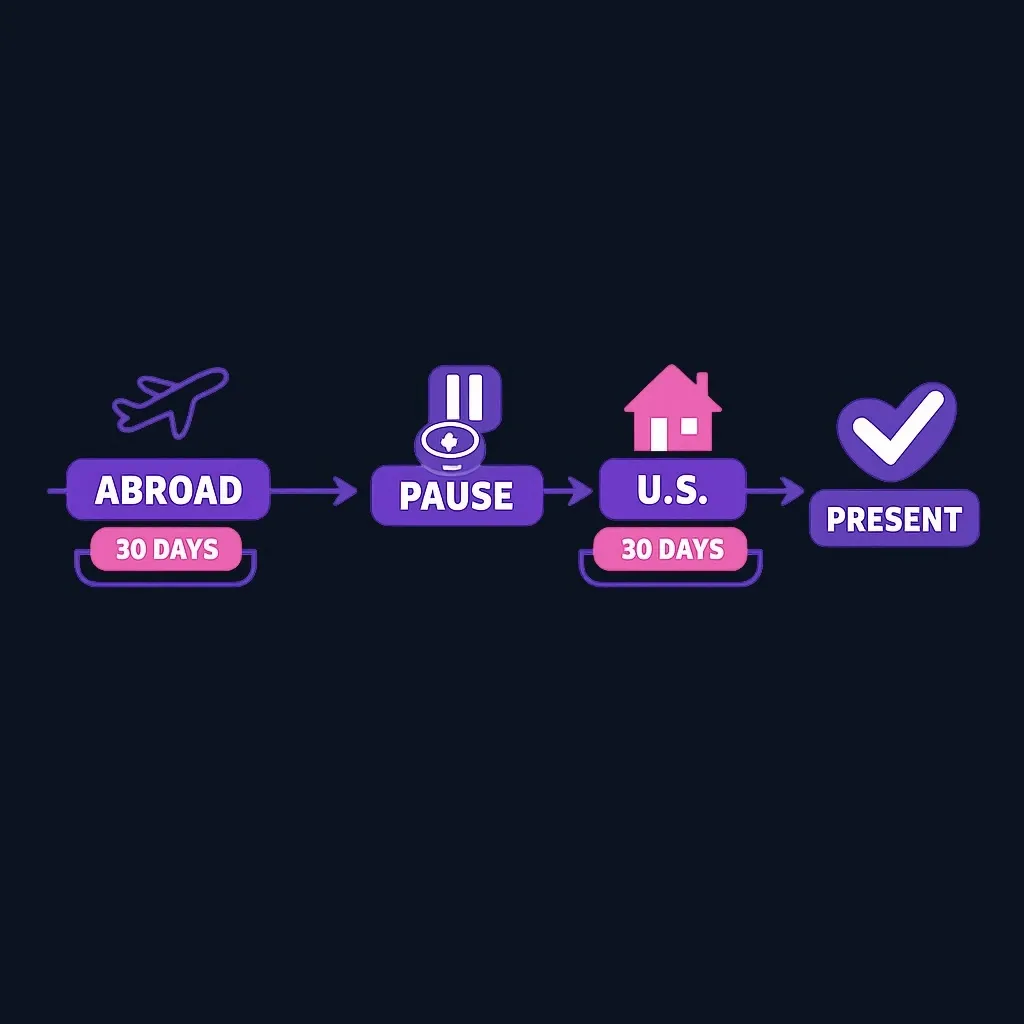
For SSI, the general rule covers an absence for a full calendar month or 30 consecutive days, with limited exceptions. After an absence of at least 30 consecutive days, a person generally must be back in the United States for 30 consecutive days before being treated as present again. Use the SSA regulation when planning departure and return dates.
Before you move
Confirm payment eligibility with SSA, update your address, arrange a payment method, and understand any forms you must return to keep payments running. Include bank charges and exchange-rate changes in your budget.
Also review healthcare separately. Medicare generally does not cover care outside the United States, apart from specified exceptions. A retirement budget that works before insurance and cross-border taxes may look different afterward.
Plan around your specific benefit and destination
Write down the exact benefit you receive before researching the move. Retirement, survivor, and disability benefits are not the same program as Supplemental Security Income. A relative's experience abroad may therefore be irrelevant even when both payments arrive from Social Security. Your citizenship, benefit category, destination, and length of absence all belong in the inquiry.
Use the SSA payment-screening information for the actual country where you plan to live. Then confirm the details with SSA or the responsible Federal Benefits Unit. An account in the United States does not by itself establish that a person living abroad remains eligible for payment. The account is a delivery method, while eligibility follows the program's rules.
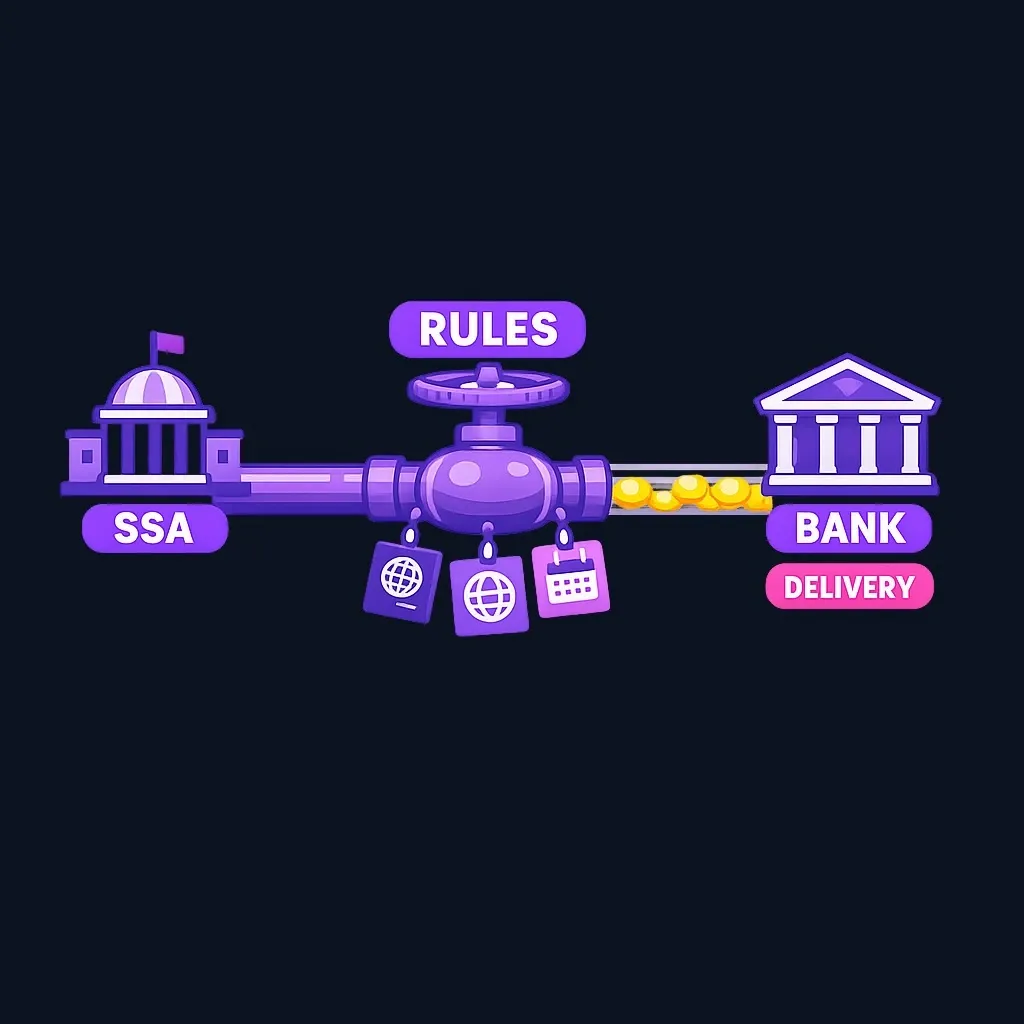
A move also changes the household budget. Compare the benefit after bank-transfer costs and currency conversion with expenses in the destination currency. Exchange rates can move in either direction. A budget that works only at one favorable rate may leave little room for healthcare, travel, or a return to the United States.
Keep reliable access to official mail and requests for information. Save copies of address changes and reports, and know which office handles questions after the move. If SSA asks for a questionnaire or evidence of continuing eligibility, respond using the official instructions. The administrative plan matters alongside the financial plan: a missed request can interrupt payments even when the underlying move was permitted.
Practice trading with Finelo
Practice in a simulator, learn with bite-sized lessons, and build confidence before risking real money.
Eligibility for Collecting Social Security While Living Abroad
What determines eligibility
- Retirement and disability benefits generally use your insured work record; survivor and family benefits can use another person’s record. Living abroad can affect whether payments remain payable, even when the underlying work requirement has been met.
- Non-U.S. citizens may sometimes receive benefits while living overseas; particular immigration or residency conditions may apply.
Common caveats and real-world implications
- Moving abroad after you qualify (for example, after you reach your eligible retirement age) typically does not cancel an already-established benefit right. However, country rules can affect whether the Social Security Administration can pay you there.
- If you continue to work while abroad, different rules may apply for Social Security and Medicare payroll taxes; see the tax section below for a cited explanation.
A decision framework to evaluate your eligibility
- Confirm the benefit type and the worker’s record on which entitlement is based, including any applicable international agreement.
- Check whether the SSA pays benefits to residents of your destination country (see the next section).
- Anticipate tax and banking logistics: will you maintain a U.S. bank account, need international direct deposit, or become subject to local income tax?
- Notify SSA of the move and confirm payment, reporting, and any tax-withholding requirements. Practical example (non-numeric): A U.S. citizen who has earned retirement eligibility may be able to receive benefits abroad. Confirm the actual destination, benefit type, and payment restrictions rather than treating a U.S. bank account as sufficient.
Countries with Restrictions on Social Security Payments
How country restrictions work
- The SSA has country-by-country rules that determine whether and how it can send benefits to residents abroad. Restrictions are often administrative (for example, difficulty delivering payments) or legal (U.S. law may prohibit payments to certain countries under specific conditions).
Why restrictions matter
- If the SSA cannot pay to a country, your benefit may be suspended while you live there. Payment suspension can create surprise interruptions and extra paperwork on return to the U.S.
What to do next
- Before you move, verify payment rules for your destination directly with SSA resources or an American consulate. If payments to your destination are allowed, confirm available payment methods and any required documentation.
Note: This section describes how restrictions operate at a high level; confirm country-specific rules with official SSA guidance before making decisions.
How to Notify the Social Security Administration of Your Move
Why you must notify
- Keeping the SSA informed of your current mailing address and payment instructions helps prevent delays, allows the agency to send required forms or verifications, and ensures taxes and reporting are handled correctly.
Practical checklist for notifying
- Contact the SSA before you leave or soon after arrival overseas.
- Confirm how SSA will deliver payments in your destination (U.S. bank deposit, international direct deposit, or paper check where allowed).
- Report where you actually live and any separate mailing address SSA permits, plus reliable contact details. A U.S. mailing address must not conceal an overseas residence.
- Keep copies of any correspondence and note dates of calls or forms submitted.
Step-by-step suggestions (practical)
- Locate the SSA contact method that serves Americans abroad.
- Ask whether your destination accepts SSA payments and which payment options apply.
- If you continue working, ask how payroll taxes or reporting may change.
- Update your address and payment details and request confirmation in writing.
Common pitfalls
- Waiting too long to notify SSA can cause missed payments or requests for repayment if SSA later determines payments were not payable for the period in question.
- Relying on informal assurances without written confirmation may complicate later disputes. (If you need the exact SSA phone numbers, office pages, or forms, consult the SSA website or an embassy resource directly.)
Tax Implications of Receiving Social Security Benefits Abroad
Overview
- Moving abroad can affect tax treatment of your income. In particular, working outside the U.S. can still trigger Social Security and Medicare payroll tax obligations in certain situations, and the taxability of Social Security benefits depends on factors including your overall income and residency.
Specific point from the IRS
- The IRS explains payroll-tax consequences of working abroad. Those taxes on work are separate from income tax on retirement benefits, covered in Publication 915.
How to evaluate tax exposure
- If you are employed by a U.S. company while living abroad, payroll tax rules may still apply.
- Your U.S. Social Security benefits may be treated as taxable income for U.S. tax purposes depending on your filing status and other income.
- Your country of residence may also tax Social Security benefits. Bilateral income-tax treaties and separate Social Security totalization agreements can affect double taxation and social security coverage.
Worked example (scenario)
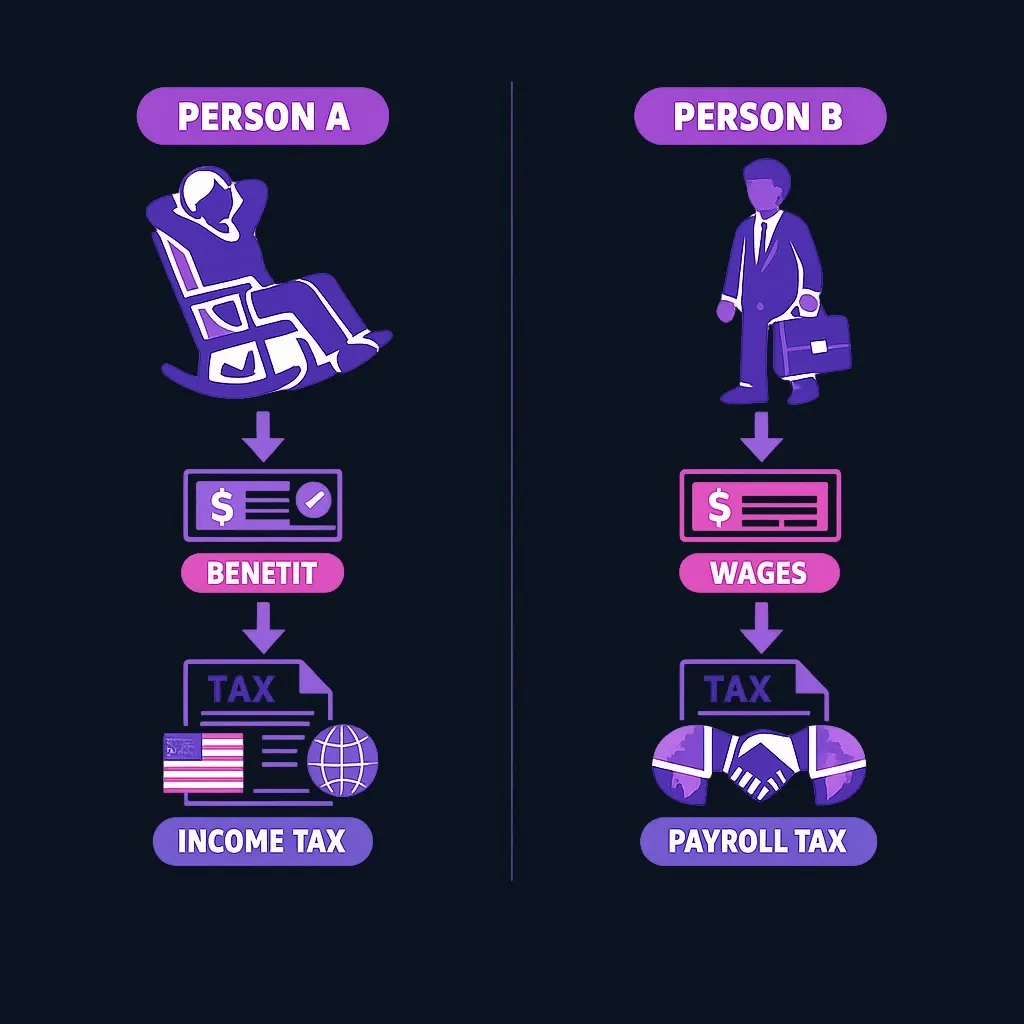
- Person A retires and lives abroad without continuing employment: their U.S. Social Security benefit may still be subject to U.S. income tax rules for benefits, and possibly to local tax rules. Person B works abroad for a foreign employer: payroll tax treatment may depend on local laws, employer status, and any agreement between the U.S. and that country.
Next steps for taxes
- Gather documentation of expected U.S. benefit payments and your anticipated foreign income.
- Consult the IRS guidance noted above and consider speaking with a tax adviser who handles expatriate and cross-border tax matters.
Consulting Professionals: When to Seek Help
When professional help makes sense
- Your tax situation is complex (significant non-U.S. income, employer abroad, or residence in a country with complicated rules).
- You plan to renounce U.S. citizenship or change long-term residency status.
- Your payments are interrupted or SSA requests recovery of past payments.
- You need help interpreting a tax treaty or a totalization agreement.
What each advisor can help with
- Cross-border tax advisor: residency rules, local taxation of benefits, treaty application.
- Social Security specialist or attorney: eligibility questions. Complex payment disputes, or legal restrictions in specific countries.
- Certified public accountant familiar with expatriate filings: U.S. tax filing obligations and benefit taxation.
How to choose a professional
- Look for experience with expatriate tax issues and U.S. Social Security matters. Ask for references, clarify fees upfront, and confirm familiarity with the country where you will live.
Can I collect Social Security if I move abroad?
In many cases, yes. Whether you continue to receive payments depends on your benefit entitlement and country-specific payment rules. Confirm with SSA and plan for possible tax consequences and payment logistics.
What countries do not allow Social Security payments?
The SSA maintains country-specific payment rules and exceptions. Before moving, confirm whether SSA can deliver benefits to your destination and under what conditions.
How do I notify the SSA of my new address?
Contact the SSA prior to or soon after your move to report your new address and verify payment arrangements. Keep written confirmation of any changes and ask about required documents.
Will my Social Security payments be taxed if I live abroad?
Possibly. U.S. income-tax treatment depends on citizenship or tax-residency status, other income, and any applicable treaty; the destination may also tax benefits. Nonresident aliens have a distinct withholding regime, so the usual U.S.-resident benefit-tax calculation may not apply. Payroll taxes on work abroad are a separate issue.
Before moving, prepare a checklist covering your benefit type, destination, payment arrangements, reporting duties, and tax questions. Confirm unresolved details with SSA and a qualified tax adviser.
For the separate question of receiving and accessing benefits, compare Direct Express vs. a bank account for Social Security.
This guide covers U.S. rules. Finelo provides financial education, not personalized financial, investment, tax, or legal advice.
Financial LiteracyU.S. GuideFinancial Education
Practice trading with Finelo
Practice in a simulator, learn with bite-sized lessons, and build confidence before risking real money.
About the author
Finelo Team
The Finelo Team creates practical investing and trading education designed to help beginners learn faster with structured challenges, simulator practice, and bite-sized lessons.
Keep reading — Related articles

Financial Literacy
USDA vs. FHA loan
Compare location and income eligibility, down payments, credit conditions, and upfront and annual program charges for a home purchase.
Finelo Team

Financial Literacy
Term life vs. accidental death insurance
Compare broad term-life protection with accident-only coverage, including exclusions, underwriting, and the family income gap.
Finelo Team
Financial Literacy
Term life insurance laddering vs. one policy
Compare several term policies ending at different times with one policy, using coverage needs, costs, and future insurability.
Finelo Team