Last editorial review: September 28, 2026
Cash-out refinance vs. home equity loan
Compare replacing your mortgage with adding a second loan, including fees, existing-rate tradeoffs, and the risk to your home.
9 min read
Practice trading with Finelo
Practice in a simulator, learn with bite-sized lessons, and build confidence before risking real money.
Want to learn more?
Practice in a simulator, learn with bite-sized lessons, and build confidence before risking real money.
Explore FineloExplore Finelo's 28-day challenges
Turn learning into a daily habit with guided challenge paths.
A cash-out refinance replaces your mortgage with a larger one. A home equity loan adds a separate loan while leaving the original mortgage in place. The key difference is whether you must change the rate on your existing mortgage balance to borrow additional money.
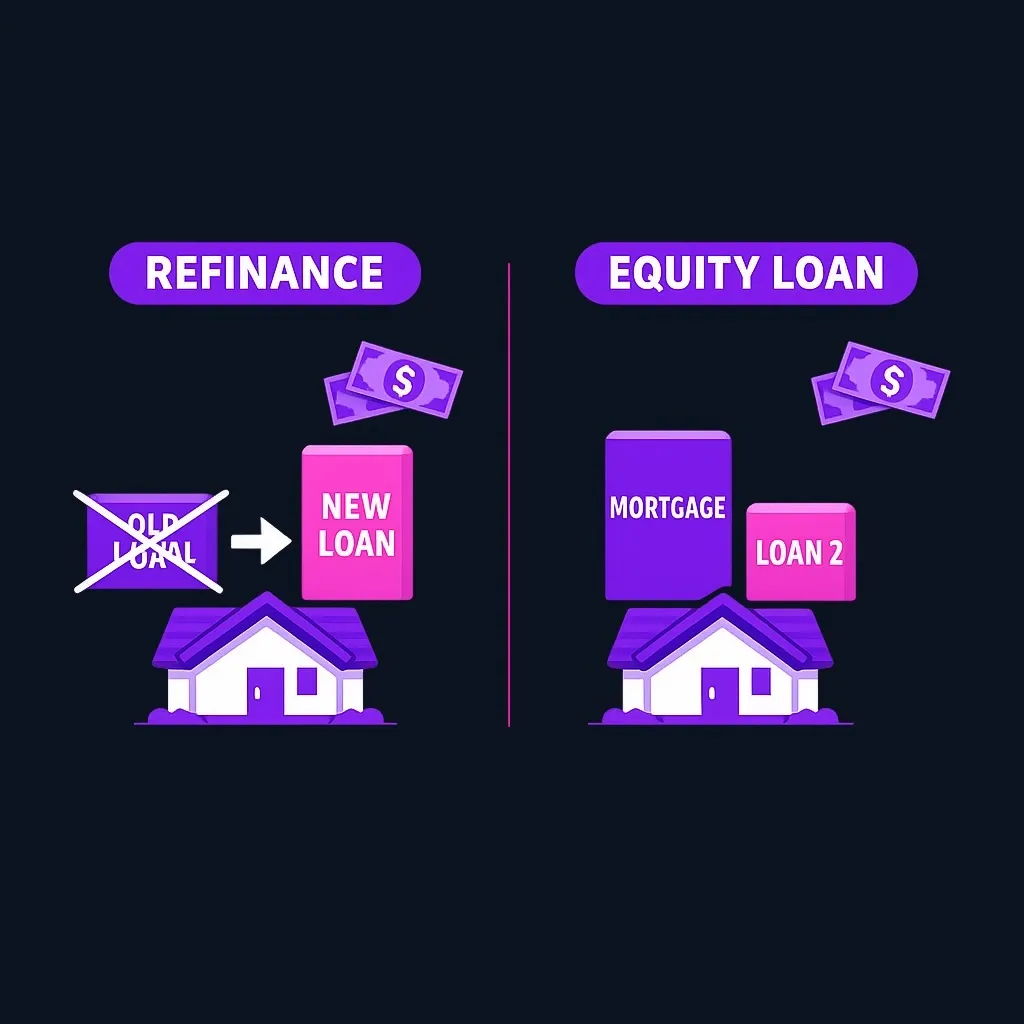
Compare the structure
| Feature | Cash-out refinance | Home equity loan |
|---|---|---|
| Existing mortgage | Replaced | Usually stays in place |
| Cash received | Proceeds after old debt and closing costs | A lump sum, less applicable costs |
| Payments | Payment on the replacement mortgage | Existing mortgage plus the new loan |
| Security | Your home | Your home |
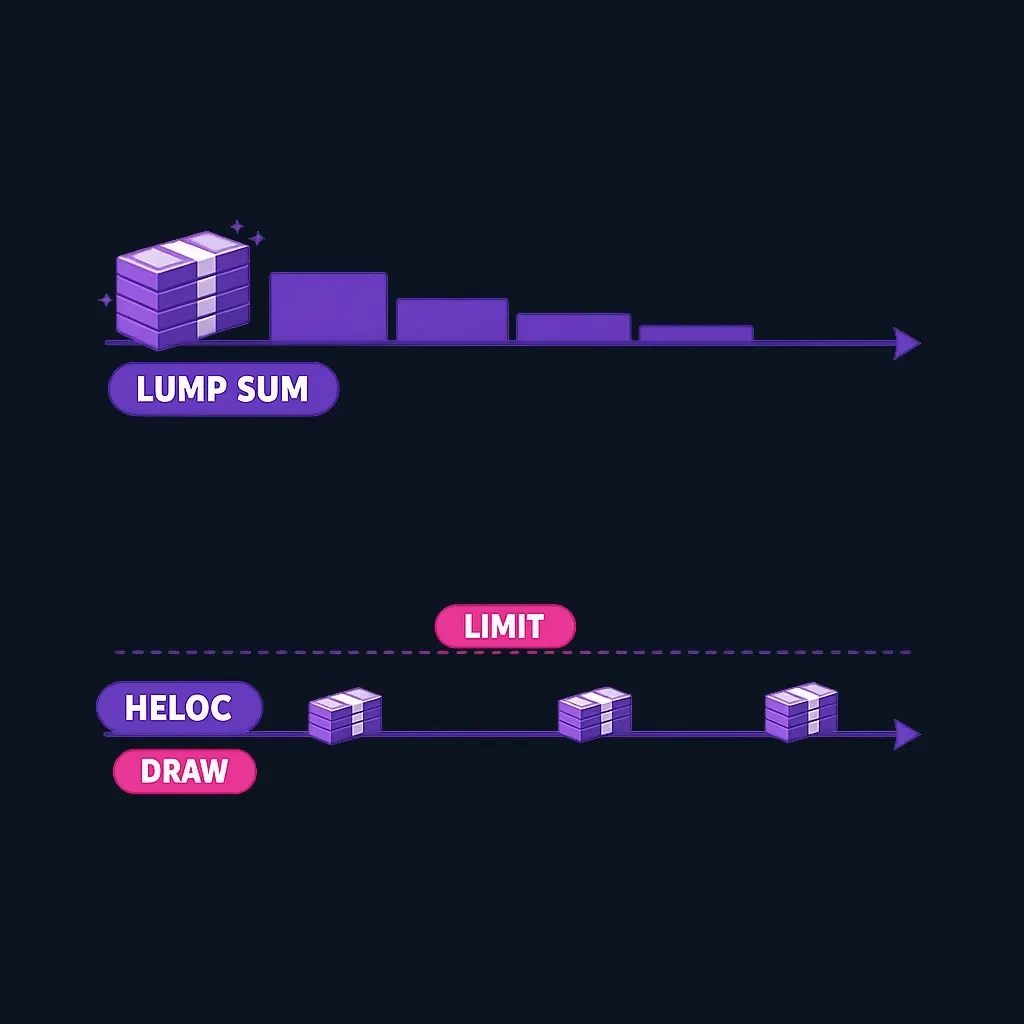
A HELOC is another product: a reusable credit line, often with a variable rate. It is not interchangeable with a lump-sum home equity loan. The CFPB explains the distinction.
Why the existing rate matters
Imagine you owe $200,000 and need another $30,000. A cash-out refinance reprices the entire replacement balance. A home equity loan generally applies its new rate only to the additional borrowing, while the old mortgage keeps its terms.
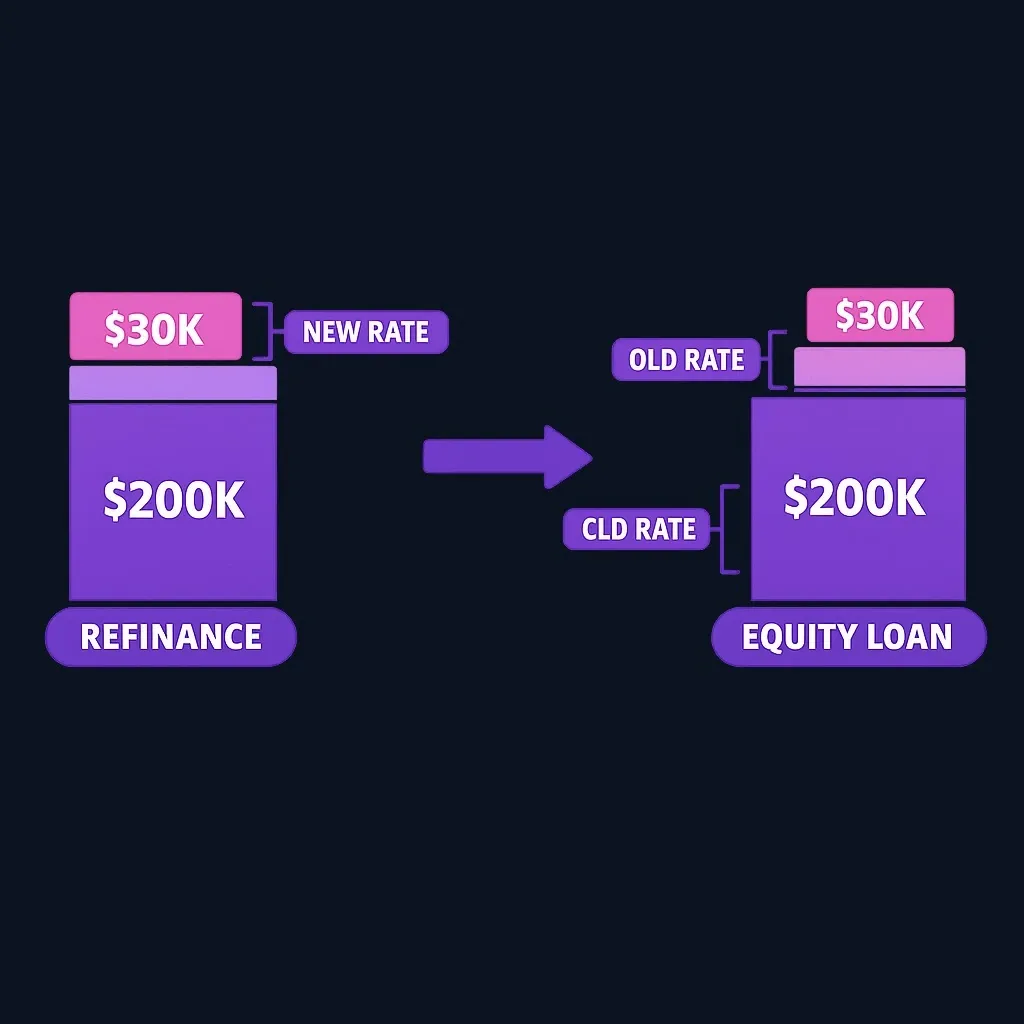
That does not automatically make the second loan cheaper. Compare both payments, closing costs, repayment periods, and the balance remaining at a common future date. Restarting a long mortgage term can lower the payment while increasing total interest.
Keep the repayment risk visible
Both options put the home behind the debt. Using the proceeds to repay unsecured debt changes what is at risk if you cannot pay. The FTC's home-equity guide explains costs and consumer protections.
Ask lenders for written figures using the same amount of usable cash. Include insurance, taxes, and a repair reserve in the household budget. Discuss any planned additional borrowing with the lender during underwriting rather than trying to time applications around credit inquiries.
Compare the cost of all debt secured by the home
A cash-out refinance reprices the balance you already owe as well as the additional cash you want. A home equity loan adds a separate debt while generally leaving the existing first mortgage in place. That difference matters when the first mortgage has terms you would otherwise want to keep.
Consider a hypothetical homeowner who owes $200,000 on the first mortgage and needs another $30,000. The refinance comparison involves a new loan large enough to repay the $200,000, deliver the $30,000, and cover any financed costs. The home equity loan comparison involves the existing mortgage plus the new borrowing. Comparing only the rate on the $30,000 misses what happens to the much larger balance.
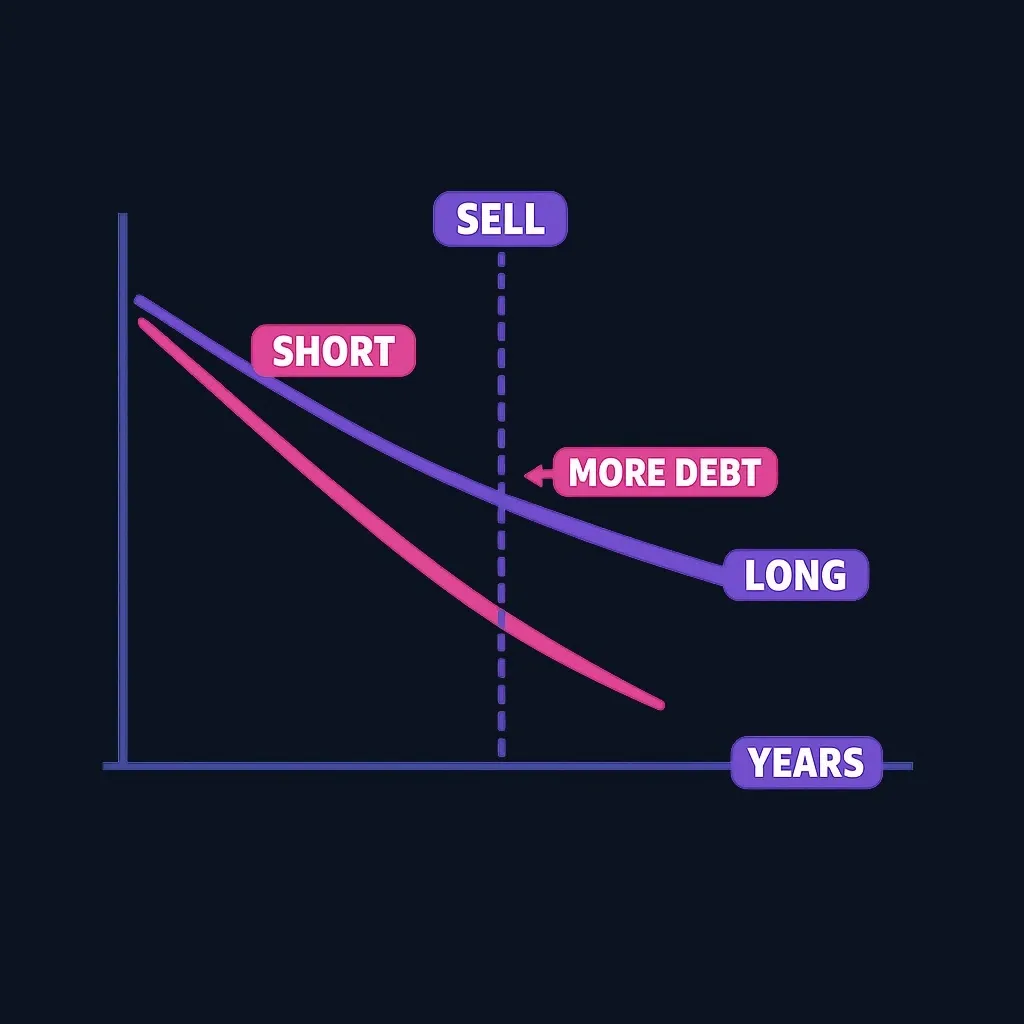
Request projected balances at the time you expect to sell or finish repaying the additional borrowing. A new long term can lower the combined monthly payment while leaving more debt outstanding years later. Put cash received, closing costs, total monthly payments, and remaining balances in the same comparison.
Also decide whether the expense has a defined endpoint. A home equity loan is generally a lump-sum product; a HELOC is a separate line-of-credit product with different draw and repayment mechanics. If the amount needed is uncertain, learn those differences before substituting a HELOC quote into this comparison. All of these home-secured choices deserve an affordability test that includes a loss of income and other ongoing housing expenses.
Practice trading with Finelo
Practice in a simulator, learn with bite-sized lessons, and build confidence before risking real money.
What is a Home Equity Loan?
In this comparison, a home equity loan is an additional loan secured by a home that already has a mortgage. It typically delivers a lump sum and creates a second lien. A home equity loan need not be second-lien borrowing when there is no existing mortgage. A HELOC (home equity line of credit) is a revolving credit line tied to your home that you can draw from as needed. Both are common ways to borrow against home equity for things like home improvements or large expenses; the FTC explains these are established consumer options for using home equity. The CFPB distinguishes between a fixed-amount home equity loan and a HELOC’s credit-line structure. Practical caveat: because these are secured by the home, missed payments on either can put your home at risk—discuss safeguards with your lender or counselor.
How to compare your options
Use this checklist to decide which option to investigate first.
- Amount needed: If you need a large sum that justifies replacing your mortgage, consider a cash-out refinance; for a separate one-time borrowing need, compare a home equity loan. Flexible repeated draws are a feature of a HELOC, which is a different product.
- Want to change your mortgage rate or term: refinancing is how you change the underlying mortgage; a second-lien loan does not change your existing mortgage.
- Upfront costs: Compare each lender’s itemized charges. Neither a refinance nor a second loan has a universal fee advantage; a lower upfront charge can be offset by the rate or other terms.
- Rate preference and payment predictability: if you need fixed monthly payments, look for fixed-rate options; HELOCs commonly have variable rates and a draw period. See CFPB guidance on the structural differences between home equity loans and HELOCs.
- Collateral and risk tolerance: both use your home as collateral—assess foreclosure risk and fit with your financial plan. The FTC outlines the secured nature of these products.
- Tax and long-term cost tradeoffs: tax rules and lifetime interest costs differ by personal situation; consult a tax professional and compare lender estimates.
How to use the checklist: rank the criteria by importance, including amount, mortgage change, costs, rate type, repayment risk, and tax treatment. The highest-ranked criterion points you to the product family to price and quote.
When to choose a cash-out refinance
Consider getting quotes for a cash-out refinance if:
- Your priority is to change your mortgage rate or term while also taking cash, and you’re prepared to replace the existing loan. (Confirm product details with lenders and read the loan estimate.)
Concrete example (decision framing): if you plan to extend or shorten your mortgage term and you need cash at the same time, a refinance combines both actions into one closing. Verify the total closing costs and the new monthly payment before proceeding.
When to choose a home equity loan
Consider a home equity loan if:
- You prefer to keep your existing mortgage unchanged and add a second source of funds.
- You want a separate lump sum with a repayment schedule. Many home equity loans offer fixed rates; confirm the actual terms.
Decision point: for staged projects or uncertain future cash needs, a HELOC’s flexibility can be useful; for one fixed amount, a home equity loan may be simpler.
Tradeoffs and caveats
- Secured debt risk: both options use your home as collateral. Carefully consider foreclosure risk and whether your cash use justifies that risk. The FTC highlights that these products are secured by the home.
- Effect on total interest paid: longer terms can lower monthly payments but increase lifetime interest. A refinance that restarts a 30-year term may reduce payments now while raising total interest paid. Get lender estimates to compare scenarios.
- Upfront costs and repayment: Compare actual fees, payment schedules, and remaining balances. A lower payment alone does not establish a lower total cost, especially when one option runs longer.
- Variable-rate exposure: HELOCs commonly have variable rates; if rates rise, payments can increase. If payment predictability matters, prefer fixed-rate options where available. See CFPB for loan structure differences.
- Impact on refinancing or resale: adding a second lien can affect future refinancing or home sale logistics. Discuss potential downstream effects with your lender or realtor.
Common mistakes and how to avoid them:
- Mistake: Comparing only monthly payments. Fix: Compare total interest and costs over your planned holding period.
- Mistake: Treating a home equity loan and a HELOC as interchangeable. Fix: Distinguish the lump-sum loan from a revolving credit line and compare their repayment obligations.
- Mistake: Using home-secured borrowing for short-term consumption without a repayment plan. Fix: Reserve home-equity borrowing for objectives with clear repayment or value (e.g. home projects that can increase property value).
Impact on credit scores
How borrowing affects credit:
- Ask whether the application involves a hard credit inquiry and how the new debt will be reported. Avoid assuming a particular score change or recovery period.
- A new installment loan adds a debt balance and payment obligation. It does not create reusable borrowing capacity like a revolving credit line. Credit effects depend on the full file and the scoring model.
- Paying off cards with home-secured borrowing changes the debt’s structure and puts the home at risk. It does not erase the obligation or prevent new card balances from accumulating.
If you expect other major borrowing, discuss the sequence with your lender before applying. New debt and inquiries can affect underwriting; there is no universal order that makes every application easier.
Which option fits a one-time borrowing need?
There is no single best option; the right choice depends on whether you want to replace your mortgage or keep it. If you want to change your mortgage’s rate or term and take cash at once, a cash-out refinance may be appropriate; if you want a second, separate lump-sum loan while leaving your mortgage intact, compare a home equity loan.
What will I be able to evaluate after reading this?
You should be able to: identify whether you need a mortgage replacement or a second lien; use a decision checklist to rank priorities (amount, cost, term, risk, rate type); and ask lenders informed questions about loan estimates, draw periods, and foreclosure risk. Always request written loan estimates before committing.
Which assumptions, limitations, risks, or source checks matter?
Assumptions and limits: product features, rates, and closing costs vary by lender and market conditions. This page summarizes structural differences and tradeoffs using consumer guidance sources; verify current pricing and eligibility with lenders and confirm tax implications with a tax professional. For basic product definitions see the CFPB and FTC consumer guides. Next step: compare loan estimates from two or three lenders
If you are still comparing ways to borrow, also consider Personal loan vs. HELOC.
This guide covers U.S. rules. Finelo provides financial education, not personalized financial, investment, tax, or legal advice.
Financial LiteracyU.S. GuideFinancial Education
Practice trading with Finelo
Practice in a simulator, learn with bite-sized lessons, and build confidence before risking real money.
About the author
Finelo Team
The Finelo Team creates practical investing and trading education designed to help beginners learn faster with structured challenges, simulator practice, and bite-sized lessons.
Keep reading — Related articles
Financial Literacy
USDA vs. FHA loan
Compare location and income eligibility, down payments, credit conditions, and upfront and annual program charges for a home purchase.
Finelo Team
Financial Literacy
Term life vs. accidental death insurance
Compare broad term-life protection with accident-only coverage, including exclusions, underwriting, and the family income gap.
Finelo Team
Financial Literacy
Term life insurance laddering vs. one policy
Compare several term policies ending at different times with one policy, using coverage needs, costs, and future insurability.
Finelo Team