Last editorial review: September 28, 2026
COBRA vs. Medicare: check the enrollment clock first
Understand why COBRA does not replace Medicare enrollment rules and how coverage timing can create gaps or penalties.
8 min read
Practice trading with Finelo
Practice in a simulator, learn with bite-sized lessons, and build confidence before risking real money.
Want to learn more?
Practice in a simulator, learn with bite-sized lessons, and build confidence before risking real money.
Explore FineloExplore Finelo's 28-day challenges
Turn learning into a daily habit with guided challenge paths.
COBRA can let you temporarily keep an employer health plan after a qualifying event. Medicare is a separate health-insurance program. If you qualify for Medicare, choosing COBRA does not generally let you postpone Medicare Part B without consequences.
That timing issue matters more than a simple premium comparison.
What is different?
| Question | COBRA | Medicare |
|---|---|---|
| What continues? | The employer group plan, for a limited period | Coverage under Medicare's enrollment and eligibility rules |
| What might you pay? | Usually the full group premium plus a permitted administrative charge | Applicable premiums, deductibles, and cost sharing |
| Does it cover family members? | Eligible dependents may continue coverage | Each person qualifies and enrolls individually |
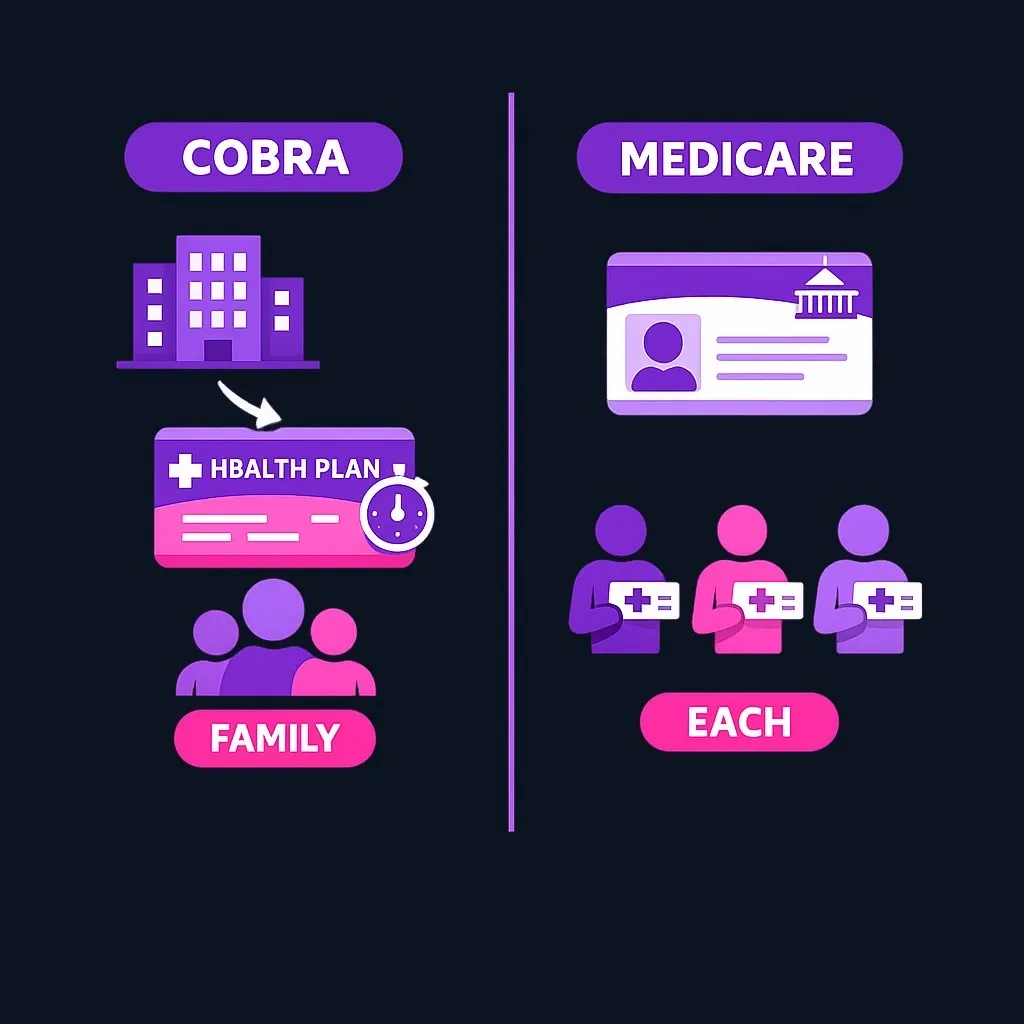
The Medicare COBRA guide explains coordination and enrollment. COBRA is not coverage based on current employment for the usual Part B Special Enrollment Period.
Do not wait for COBRA to end
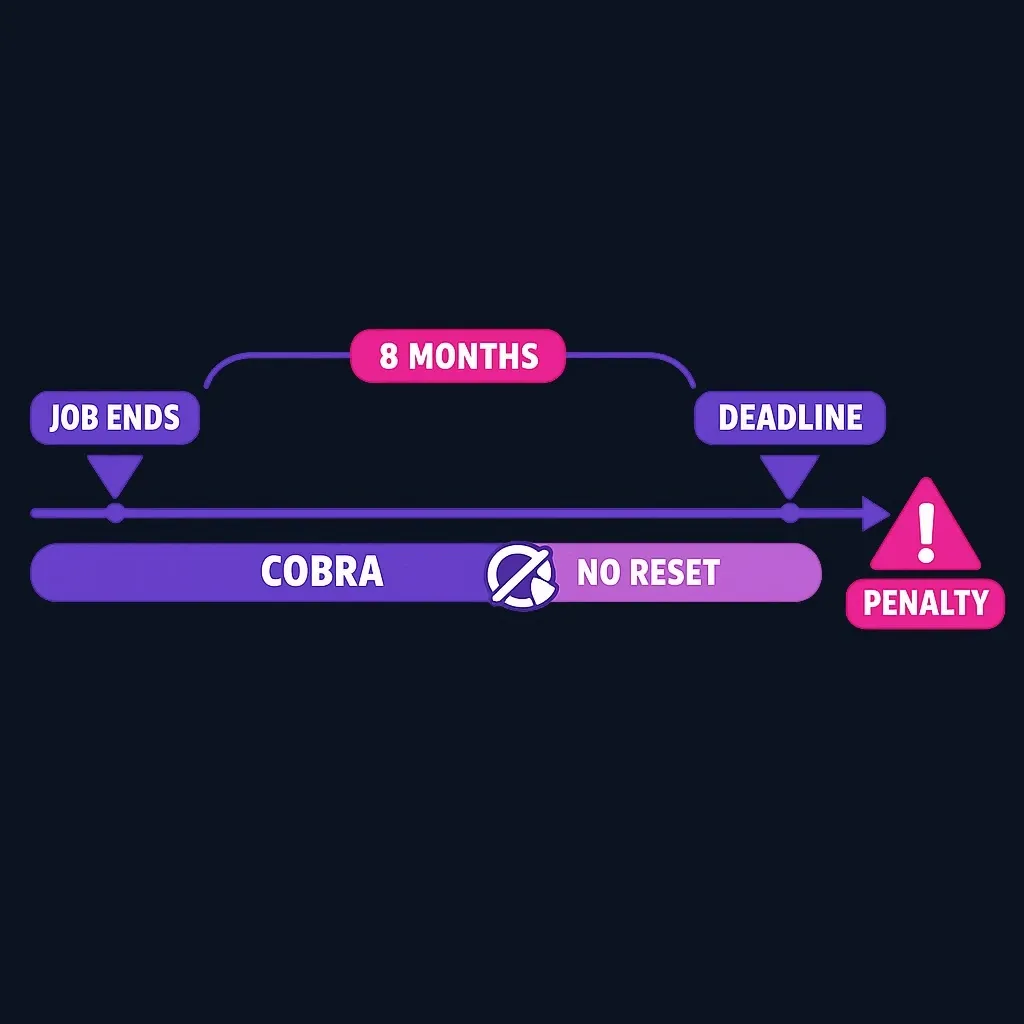
For the usual employment-based Part B enrollment opportunity, the eight-month window starts when employment or qualifying group coverage ends, whichever happens first. Electing COBRA does not restart that clock. Waiting can lead to gaps or a late-enrollment penalty. See Medicare's working-past-65 guidance.
Coordination can differ for disability or end-stage renal disease. Ask which plan pays first and what happens if you are eligible for Medicare but have not enrolled.
Compare the whole household
A spouse or dependent may still need COBRA even when you enroll in Medicare. Prescription coverage also needs its own review: ask whether the drug coverage is creditable for Part D purposes.
Before choosing, list each person's coverage end date, enrollment deadline, doctors, prescriptions, premiums, and expected out-of-pocket costs. Confirm the effective date of replacement coverage before ending an existing plan. Provider access is useful only if the coverage arrangement will actually pay the claim.
Build a timeline before comparing premiums
List the date employment ends, the date coverage based on that employment ends, the COBRA election deadline in the notice, and the start dates of Medicare coverage. Those dates can differ. An insurance card remaining usable for a period does not answer whether you have preserved a Medicare enrollment right.
Ask the employer benefits office to explain the coverage category in writing. Coverage based on current employment, COBRA continuation, and retiree coverage are different arrangements. Medicare's rules for delaying Part B do not treat them as interchangeable. If a spouse is covered too, build a separate timeline for that person rather than assuming both household members have the same eligibility date.
Then compare costs for a realistic year of care. Include premiums, deductibles, copayments, coinsurance, prescriptions, and any expected services that are not covered. A low premium can leave substantial out-of-pocket exposure. A familiar network can also matter, but the plan must first be expected to pay for the care under its coordination rules.
Practice trading with Finelo
Practice in a simulator, learn with bite-sized lessons, and build confidence before risking real money.
Questions for the benefits office and healthcare providers
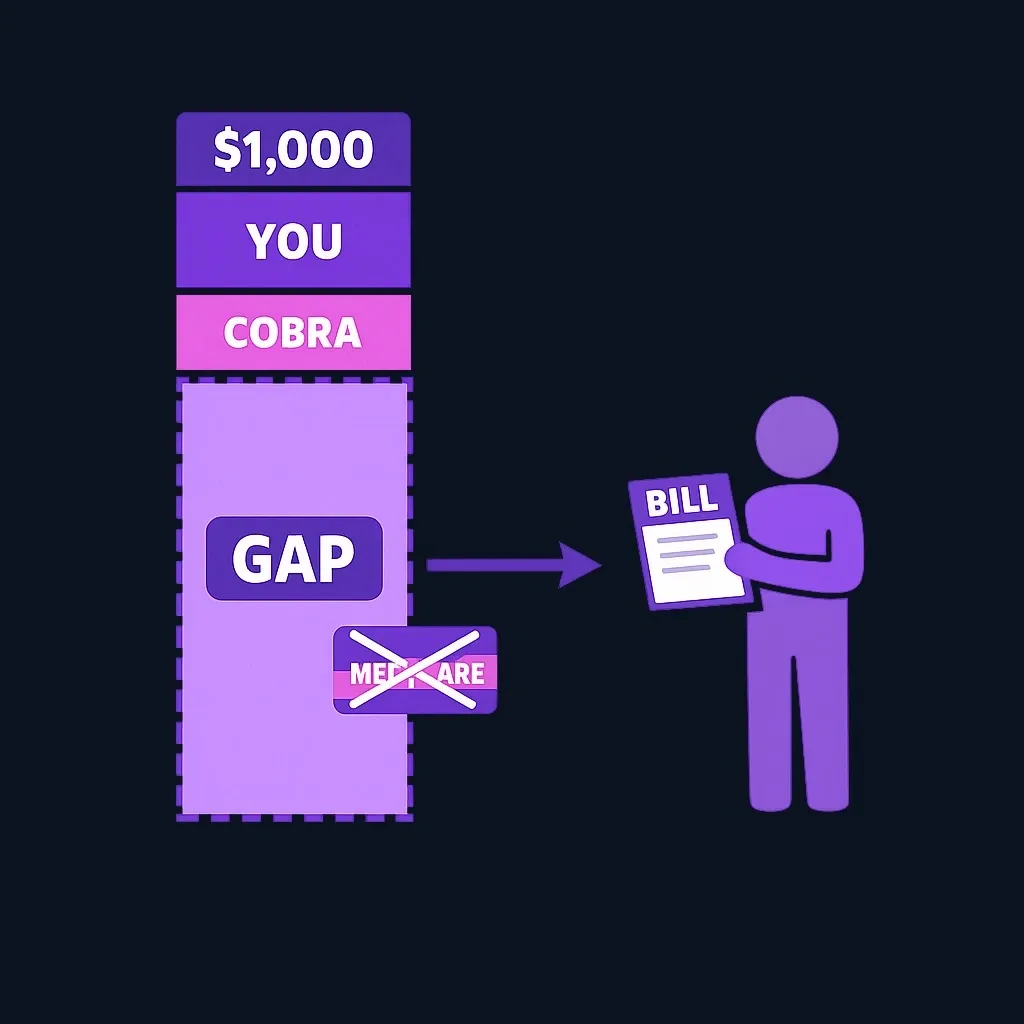
Start with who pays first once Medicare eligibility or enrollment applies. Ask whether the continuation plan calculates its payment as though Medicare had paid even when you have not enrolled. That question can reveal a coverage gap that a premium comparison would miss.
For each important provider, confirm participation in the actual coverage arrangement you are considering. Original Medicare and Medicare Advantage have different provider-access mechanics. A statement that a doctor “takes Medicare” is not a substitute for checking a particular Medicare Advantage plan. Check prescription coverage separately as well; drug-creditability rules are not the same as Part B enrollment rules.
If family members remain on COBRA, ask how your Medicare enrollment affects their continuation rights and premiums. Do not cancel the household's existing arrangement based only on your own eligibility. Record the effective dates of replacement coverage and retain the notices confirming each change.
These steps turn the comparison from a choice between two labels into a coverage plan: each person has a start date, a known primary payer, a way to access necessary care, and an estimate of the costs they may face.
How to compare your options
Use the following checklist to evaluate which path makes sense for you.
- Eligibility and timing: Confirm whether you already qualify for Medicare or will soon. Knowing how you qualify affects your enrollment choices.
- Coverage needs: List the doctors, hospitals, and prescription drugs you can’t give up. COBRA continues your employer provider network; Medicare networks vary by Part and plan.
- Cost sensitivity and budget: Compare the full COBRA premium (usually the employee plus employer share) to Medicare premiums, plan premiums, and any supplemental coverage you might need. Costs vary widely by plan and state.
- Future enrollment risk: If you delay enrolling in Medicare, you may face later enrollment consequences or gaps in coverage — verify consequences and timelines with Medicare before making choices.
- Secondary coverage needs: If you plan to keep both (Medicare plus COBRA), consider which plan will pay first and whether COBRA will fill gaps you care about — review both benefit summaries carefully.
Apply the checklist in order: establish enrollment deadlines and payment coordination first, then compare provider access and costs. Enrollment rights cannot be traded away merely because a plan scores better on convenience.
When to choose each option
- Consider COBRA when continuity with your employer plan is crucial (same providers, same benefits) and you can temporarily afford the higher out-of-pocket premium. Confirm plan benefits and whether COBRA will meaningfully reduce your immediate medical bills.
- Consider enrolling in Medicare first if you already qualify, then evaluate whether adding COBRA is necessary for benefits that Medicare does not cover. If you’re eligible for Medicare but not enrolled, COBRA may cover only a small portion of services you get, which can leave you exposed to higher costs.
Illustrative scenario: A person leaving work at 65 wants to retain a specialist. The first step is to establish Medicare enrollment deadlines and which payer will be primary. They can then ask whether available supplemental or continuation coverage helps with the specialist’s services. Preserving a familiar plan is not a reason to assume Medicare can be delayed without consequences.
Tradeoffs and caveats
- Cost vs continuity: COBRA preserves your existing plan but typically makes you pay the full premium plus any administrative surcharge. Medicare often has different cost structures and may require supplemental coverage for comparable out-of-pocket protection.
- Enrollment timing matters: Missing Medicare enrollment windows can create complications later; check official guidance on how you qualify and when to sign up.
- Employer rules and plan differences: Employers and plan administrators control COBRA notices and premiums; read your COBRA election packet carefully and ask your plan administrator about coverage limits.
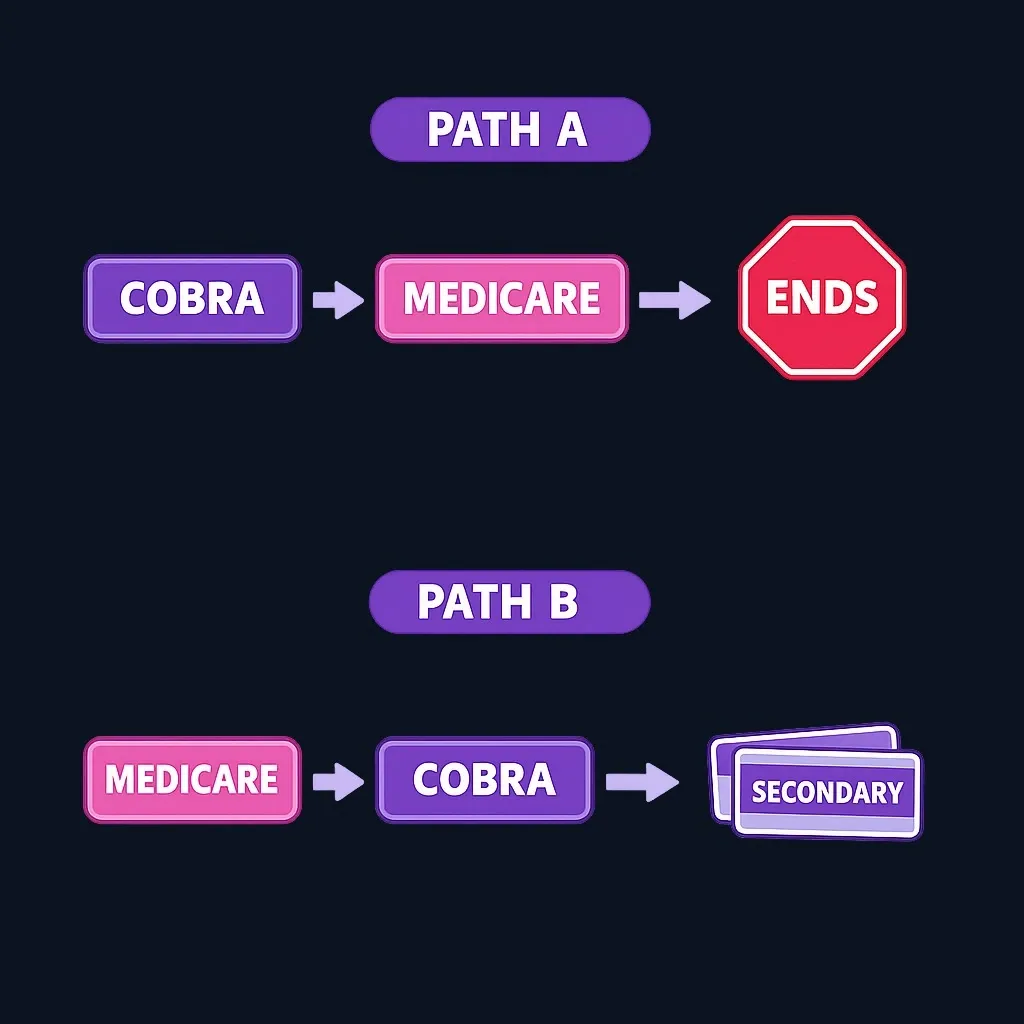
- Coverage interactions: If you sign up for Medicare after electing COBRA, your own COBRA coverage may end. If Medicare began first, you may be able to keep COBRA as secondary coverage, subject to coordination rules. Family members’ continuation rights can differ; check their coverage separately.
Common mistakes and fixes
- Mistake: Assuming COBRA is “just like” your employer plan forever. Fix: Review the actual COBRA cost and covered benefits in the election notice.
- Mistake: Delaying Medicare enrollment without checking consequences. Fix: Consult Medicare enrollment rules tied to how you qualify and your employer plan status.
Save the documents that explain the transition
Keep the COBRA election notice, premium schedule, employer-coverage end date, Medicare enrollment confirmation, and any drug-creditability notice together. Those documents answer different questions, and having them in one place makes it easier to resolve a claim or enrollment problem.
If a provider bills the wrong plan, compare the service date with the coverage and payer information rather than assuming the latest insurance card governs every bill. Ask the plans to explain how the claim should be coordinated. The transition is complete when coverage dates and payment responsibilities align, not merely when an application has been submitted.
Can I have both COBRA and Medicare?
Sometimes. Enrollment order matters: Medicare enrollment after a COBRA election may end your COBRA, while COBRA elected after Medicare can provide secondary coverage. If you are Medicare-eligible but unenrolled, COBRA may pay only a small share. Confirm your own and your dependents’ rights separately.
What are the costs associated with COBRA and Medicare?
Costs vary by your employer plan and the specific Medicare parts or supplemental plans you choose. Verify current premiums and cost details on your COBRA election packet and the official Medicare resources for accurate pricing.
How do I enroll in COBRA or Medicare?
Your employer or plan administrator sends COBRA election information after a qualifying event. For Medicare, rules differ based on how you qualify; check official Medicare enrollment guidance to determine the correct window and steps.
What happens if I miss the enrollment period?
Missing enrollment windows can cause delays or restrictions on coverage and may lead to future enrollment consequences. Because rules vary by how you qualify and your employer coverage, verify your specific situation with Medicare and your plan administrator.
For coverage through current employment, read Should you delay Medicare Part B if you are still working.
This guide covers U.S. rules. Finelo provides financial education, not personalized financial, investment, tax, or legal advice.
Financial LiteracyU.S. GuideFinancial Education
Practice trading with Finelo
Practice in a simulator, learn with bite-sized lessons, and build confidence before risking real money.
About the author
Finelo Team
The Finelo Team creates practical investing and trading education designed to help beginners learn faster with structured challenges, simulator practice, and bite-sized lessons.
Keep reading — Related articles

Financial Literacy
USDA vs. FHA loan
Compare location and income eligibility, down payments, credit conditions, and upfront and annual program charges for a home purchase.
Finelo Team

Financial Literacy
Term life vs. accidental death insurance
Compare broad term-life protection with accident-only coverage, including exclusions, underwriting, and the family income gap.
Finelo Team

Financial Literacy
Term life insurance laddering vs. one policy
Compare several term policies ending at different times with one policy, using coverage needs, costs, and future insurability.
Finelo Team


