Last editorial review: September 28, 2026
Cosigner vs. co-borrower: responsibility comes first
Compare repayment responsibility, ownership, credit exposure, and release options before sharing a loan obligation.
11 min read
Practice trading with Finelo
Practice in a simulator, learn with bite-sized lessons, and build confidence before risking real money.
Want to learn more?
Practice in a simulator, learn with bite-sized lessons, and build confidence before risking real money.
Explore FineloExplore Finelo's 28-day challenges
Turn learning into a daily habit with guided challenge paths.
A cosigner helps another person qualify for a loan but takes on a real repayment obligation. A co-borrower applies jointly and is also responsible for the debt. The labels do not, by themselves, establish who owns the car or home.
Check both the loan agreement and the ownership documents before signing.
Compare the roles
| Feature | Cosigner | Co-borrower |
|---|---|---|
| Main role | Supports another borrower's application | Borrows jointly |
| Repayment responsibility | Can be liable for the debt | Can be liable for the debt |
| Use of proceeds | Often does not receive or control them | Commonly shares their use |
| Ownership | Not automatically granted | Depends on title and the transaction |
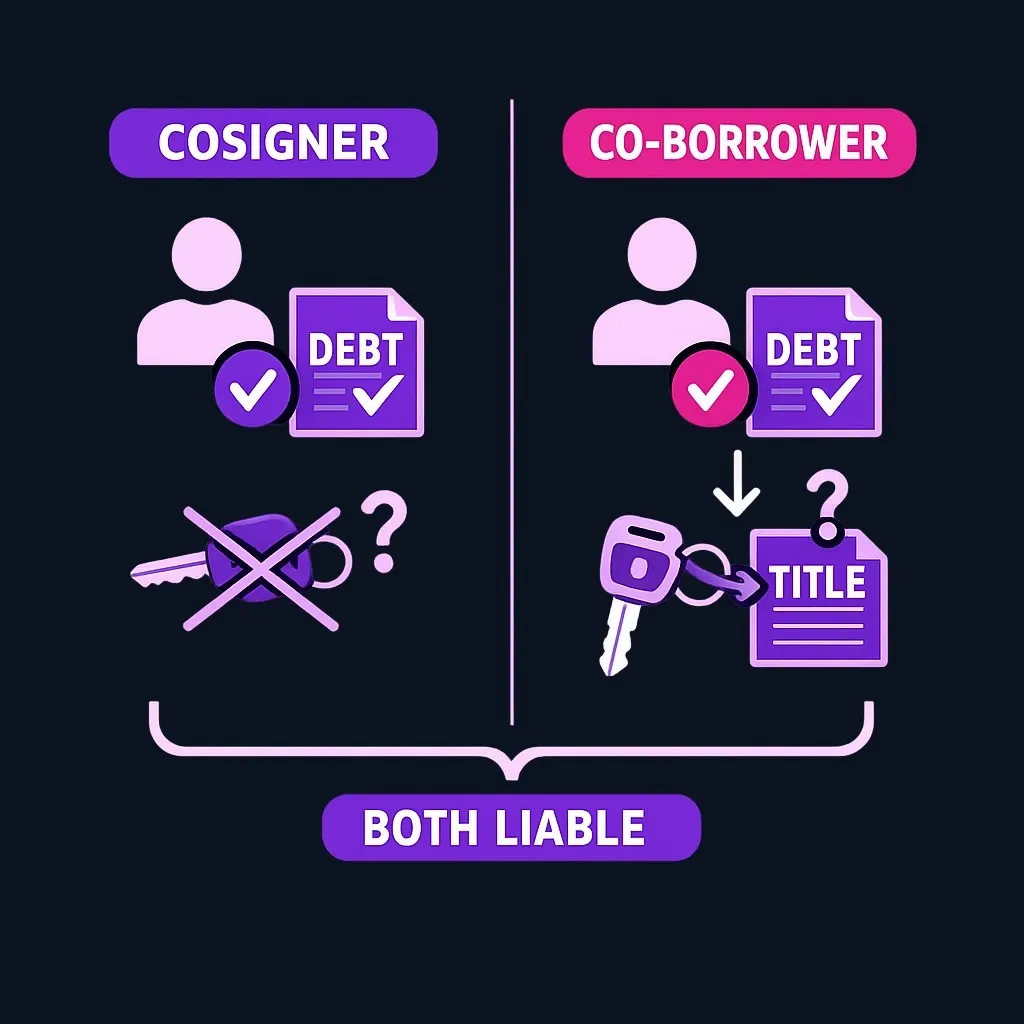
The FTC's cosigning guide emphasizes the financial responsibility involved. A cosigner is not simply a character reference.
The risk extends beyond a missed payment
Late payments or default can affect both people's credit. The obligation can also affect your ability to qualify for your own borrowing. Depending on the contract and applicable law, a creditor may seek payment from a cosigner without first exhausting collection efforts against the other borrower.
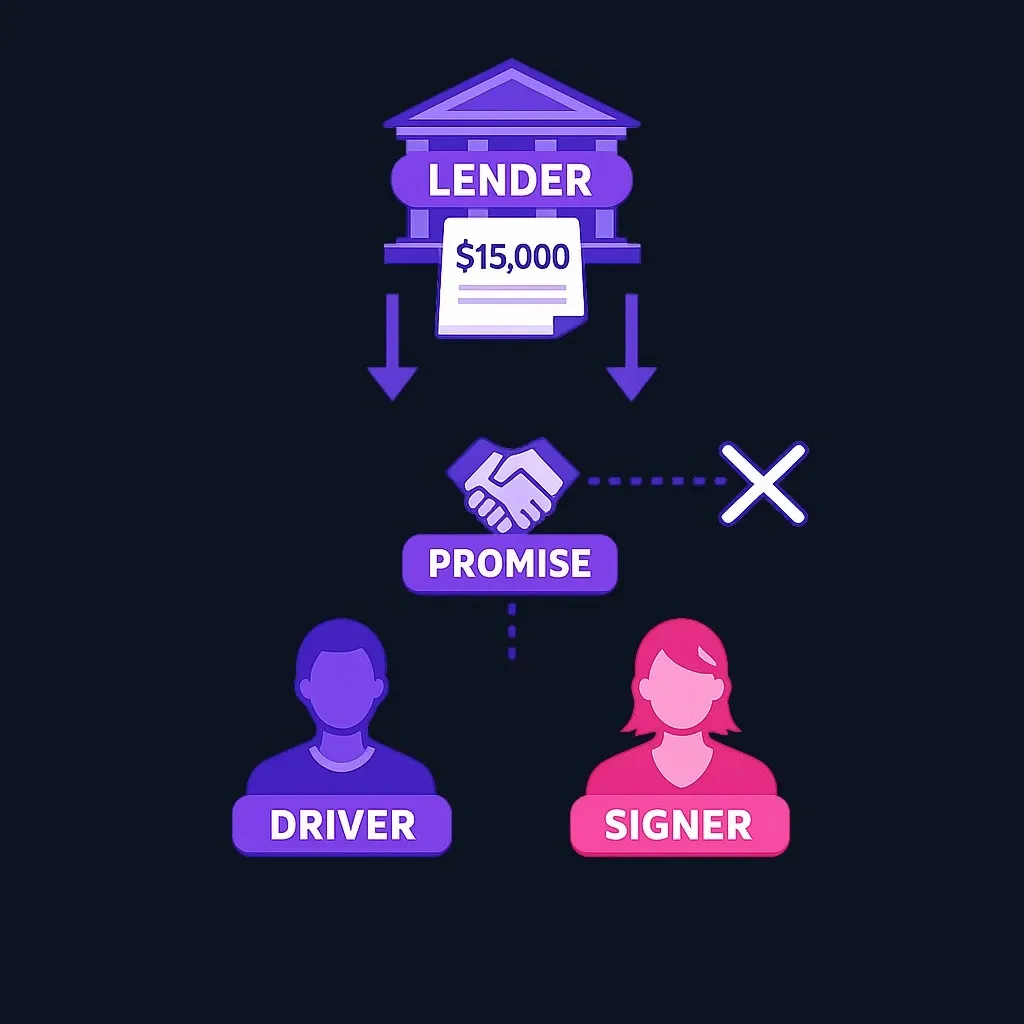
For a hypothetical $15,000 car loan, agreeing privately that the main driver will make every payment does not remove the other signer's legal responsibility to the lender. A divorce or breakup does not automatically release either person.
Ask these questions before signing
Can you afford the full payment if the other person cannot? Will you receive statements and alerts? Who owns the asset? What happens if it is sold? Does the lender offer a release, and what conditions apply?
Leaving the loan usually requires the lender's agreement, repayment, or refinancing. A promise between borrowers is not a lender-approved release.
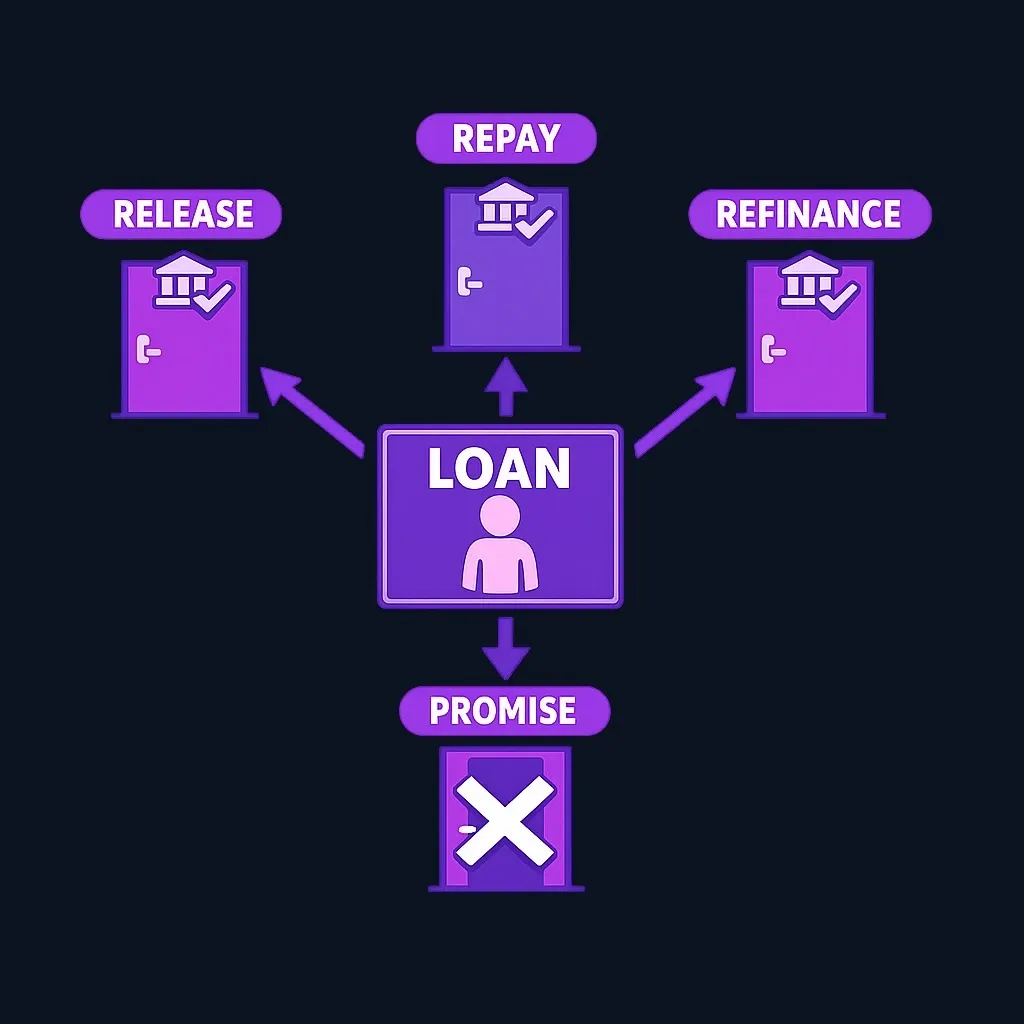
Put expectations in writing, but treat the signed loan agreement as the starting point for understanding your exposure. If ownership or liability is unclear, resolve it before funds are disbursed.
Test the agreement as if you had to make every payment
The most useful affordability question for the second signer is not whether the primary borrower intends to pay. It is whether you could cover the obligation if that person could not. Review the entire scheduled payment, the outstanding balance, and the effect on your own housing, emergency savings, and borrowing plans.
A private agreement can clarify who should pay and how you will communicate, but it does not rewrite the lender's contract. If the contract makes you responsible, an informal promise that you are “only helping with approval” offers no substitute for a lender-approved release. Understand the commitment before using your credit to support it.
Ask to receive account information and notices where the lender allows it. Learning about missed payments early gives both parties more time to respond. Decide who will keep statements, how account access will work, and how you will handle a dispute. Those arrangements are especially important when the second signer does not use the financed asset.
Finally, write down the intended exit and its conditions. Refinancing later depends on approval and available terms; it is not a guaranteed escape route. A plan based on release after a few payments should be backed by an actual contractual release provision, including its eligibility tests. Otherwise, evaluate the loan as a commitment lasting until it is repaid.
Practice trading with Finelo
Practice in a simulator, learn with bite-sized lessons, and build confidence before risking real money.
What is a Cosigner?
A cosigner is a person who signs a loan contract to back another borrower’s creditworthiness and payment obligation. The essential point is legal responsibility: a cosigner agrees to be responsible for repayment if the primary borrower does not pay, a commitment that can expose the cosigner to the full debt.
Typical responsibilities and role
- Primary legal duty: cover missed payments if the borrower fails to pay.
- Credit support role: lenders accept a cosigner because the cosigner’s credit/history reduces perceived lending risk.
- Cosigning alone grants no ownership rights. Any separate ownership of a car or home must come from the applicable title or ownership arrangement, not from agreeing to repay the loan.
Common pitfalls for cosigners
- Debt exposure: you can be required to make full payments and suffer credit damage for late or missed payments.
- Limited control: a cosigner may have few practical rights to the asset, despite being liable.
- Removal challenges: some loans allow formal releases or refinancing to remove a cosigner, but this depends on lender policies and the loan’s terms.
What is a Co-Borrower?
A co-borrower signs the loan as a joint borrower. Like a cosigner, a co-borrower shares the legal obligation to repay the debt. Beyond that shared liability, co-borrowers are commonly treated as equal borrowers for underwriting and servicing, though exact rights depend on the contract.
Typical responsibilities and role
- Shared repayment obligation: both parties are legally responsible for the debt.
- Often paired with shared access or ownership of the financed asset, depending on the loan and title language.
- Joint decision implications: co-borrowers may have equal say over the use or disposition of the asset if the contract or title reflects joint ownership.
Common pitfalls for co-borrowers
- Joint credit impact: the loan commonly affects both parties’ borrowing capacity.
- Interpersonal and financial entanglement: shared debt means one party’s financial problems can affect the other’s credit and options.
- Exit complexity: removing a co-borrower usually requires refinancing or lender-approved release.
Liability and legal commitment
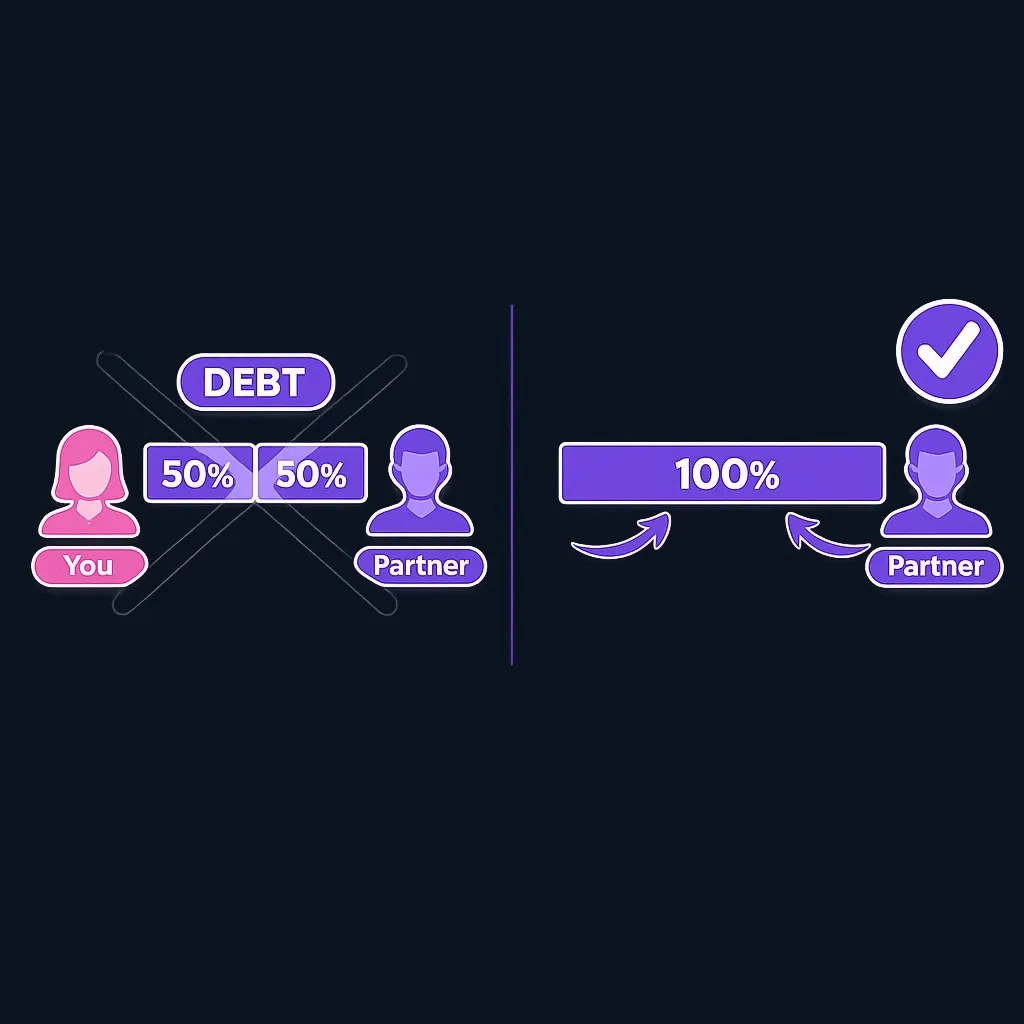
Both roles create a legal obligation to repay the loan. Either signer may face collection if payments stop, subject to the contract and applicable law; the obligation is not necessarily divided into a half-share for each person.
Typical ownership and access
A co-borrower is often treated as a joint borrower and, in many transactions, also as a joint owner of the financed asset; a cosigner is often expected simply to guarantee repayment without intending to use or own the asset. However, whether ownership or access is given to a co-borrower—or withheld from a cosigner—is governed by the loan documentation and title/registration rules for the asset. Always confirm the specific loan and title language.
Underwriting and loan approval
Adding a qualified signer may help an application, but it does not guarantee approval or a lower rate. Lenders assess income, debts, assets, and credit under their own program rules; a second applicant’s weaker profile can also affect the offer. The difference is practical: a co-borrower typically contributes both income and legal borrower status; a cosigner typically supplies credit backing without active borrowing intent. Lender policies vary; verify how a given lender treats each role before applying.
Credit reports and future borrowing
Because both roles involve legal repayment responsibility, both can affect the parties’ future borrowing capacity. The precise reporting and scoring effects depend on how the lender reports the account and how credit scoring models treat joint versus guaranteed debt.
Control, decision rights, and disputes
Co-borrowers commonly share control over loan-related decisions because both are parties to the contract. Cosigners may have less contractual control but still face financial consequences. Disputes therefore can become legal or financial problems for either role.
Removal or release
Removing a cosigner or co-borrower usually requires lender agreement, refinancing, or a formal release clause if present in the original loan. Lender practices differ widely; plan for the possibility that removal may require improved credit or a new application.
How to compare your options
Use these practical questions as a decision framework. Answer them before you ask someone to cosign or co-borrow.
- Purpose: Will the second person need legal access or ownership of the asset?
- If yes, co-borrowing is typically more aligned with shared ownership.
- If no, a cosigner may be sufficient when only credit support is needed.
- Financial exposure tolerance: Can the second person accept full legal liability and potential credit damage?
- Both roles carry legal repayment responsibility; the co-borrower also commonly shares ownership and decision rights.
- Control and decision preferences: Do you want joint control over the asset or finances?
- Check ownership and control in the title and agreements; neither label alone settles those rights.
- Exit path: Can the loan be refinanced or otherwise released if circumstances change?
- If removing the second person later is important, verify lender policies and release options before signing.
- Relationship and trust: Is the person reliable and do you trust them with long-term financial ties? Shared loans can strain relationships.
Practical tip: write a short, signed agreement between parties that outlines payment expectations, what happens if one party can’t pay, and who controls the asset. This is a private contract and does not replace the lender’s documents, but it clarifies expectations.
When to choose each option
Below are common scenarios that illustrate which role often fits better. These are illustrative, not prescriptive.
Consider a cosigner when:
- One person will be the primary user/owner of the asset but cannot qualify alone. A qualified cosigner may help obtain approval or different terms while not seeking ownership or control; neither outcome is guaranteed.
- You need to strengthen the credit profile without adding another owner to titles or registrations.
Example: A recent graduate needs an auto loan but lacks credit history. A parent cosigns to help obtain financing while the graduate is the vehicle’s primary user.
Consider a co-borrower when:
- Two people plan to share the asset, payments, and ownership. Combining incomes and credit profiles can increase the chance of loan approval or qualify for a larger loan.
- You want both parties to have contractual rights to the asset.
Example: Two partners buying a car together both sign as co-borrowers because both will use and share responsibility for the vehicle and its payments.
When neither role is a good fit
- If you need short-term credit improvement but do not want shared liability or ownership, consider alternative routes such as improving credit history, saving a larger down payment, or exploring lenders with different underwriting approaches.
Pros
- Cosigner: can help an otherwise ineligible borrower obtain credit; often keeps ownership and day-to-day control with the primary borrower.
- Co-borrower: may combine financial resources for a shared borrowing purpose. Approval, price, and amount depend on underwriting, while ownership must be established separately.
Cons
- Both roles expose the second party to full legal liability for repayment. If the borrower misses payments, the co-borrower or cosigner can be held responsible and their credit can suffer. (See the FTC guide linked above.)
- Joint arrangements complicate future borrowing, asset sale, or individual financial planning.
- Removing a party later can be difficult and may require refinancing.
Important caveats
- Lender practices differ. How a loan is reported to credit bureaus, what account access a cosigner receives, and whether the lender offers a formal release are all lender-specific. Confirm details in writing with the lender before signing.
- State laws and title rules (especially for real estate and vehicles) can affect ownership and rights. Consult a lawyer for large or complex transactions.
Common mistake and fix:
- Mistake: assuming a cosigner takes no risk because they won’t use the asset. Fix: remember the lender can pursue a cosigner for missed payments. Discuss contingency plans and have a clear repayment schedule.
What is the difference between a co-borrower and a co-signer?
Both legally commit to repayment, but a co-borrower typically signs as a joint borrower (often sharing access or ownership), while a cosigner usually provides credit support without intending to use the asset.
How does a cosigner affect my credit score?
A cosigner can be responsible for the loan and may be affected by missed or late payments. What is reported depends on the lender’s reporting practices, while scoring models determine the effect of reported information; verify reporting with your lender and review credit reports regularly.
Can a cosigner or co-borrower be removed later?
Some loans include lender release options or can be removed via refinancing, but removal typically requires lender approval or a new loan application. Policies vary by lender and loan type, so check the original loan documents and ask the lender about removal procedures before signing.
What happens if a co-borrower or cosigner defaults?
If the borrower misses payments, the lender can seek payment from any party who legally committed to repay. That can lead to collections, damage to credit, and potential legal action. Parties should understand these risks and consider contingency plans such as reserve funds or refinancing options.
If the shared debt is a car loan, compare the offers using Credit union vs. bank auto loan: compare the offer.
This guide covers U.S. rules. Finelo provides financial education, not personalized financial, investment, tax, or legal advice.
Financial LiteracyU.S. GuideFinancial Education
Practice trading with Finelo
Practice in a simulator, learn with bite-sized lessons, and build confidence before risking real money.
About the author
Finelo Team
The Finelo Team creates practical investing and trading education designed to help beginners learn faster with structured challenges, simulator practice, and bite-sized lessons.
Keep reading — Related articles

Financial Literacy
USDA vs. FHA loan
Compare location and income eligibility, down payments, credit conditions, and upfront and annual program charges for a home purchase.
Finelo Team

Financial Literacy
Term life vs. accidental death insurance
Compare broad term-life protection with accident-only coverage, including exclusions, underwriting, and the family income gap.
Finelo Team

Financial Literacy
Term life insurance laddering vs. one policy
Compare several term policies ending at different times with one policy, using coverage needs, costs, and future insurability.
Finelo Team


