Last editorial review: September 28, 2026
Credit union vs. bank auto loan: compare the offer
Compare actual auto-loan offers by APR, fees, term, membership requirements, and preapproval rather than the lender’s label.
8 min read
Practice trading with Finelo
Practice in a simulator, learn with bite-sized lessons, and build confidence before risking real money.
Want to learn more?
Practice in a simulator, learn with bite-sized lessons, and build confidence before risking real money.
Explore FineloExplore Finelo's 28-day challenges
Turn learning into a daily habit with guided challenge paths.
Both banks and credit unions can finance a car. Credit unions usually require membership; banks may offer relationship discounts or convenient account integration. Neither label guarantees the lowest cost for your credit profile and vehicle.
Use the same requested loan amount and term when collecting quotes.
What to compare
| Item | Why it matters |
|---|---|
| APR | Helps compare interest and included borrowing charges |
| Amount financed | Shows how much debt you are taking on |
| Finance charge and total payments | Show the dollar cost if you follow the schedule |
| Term | A longer term can lower payments but raise total interest |
| Membership or account requirements | May add conditions or costs |
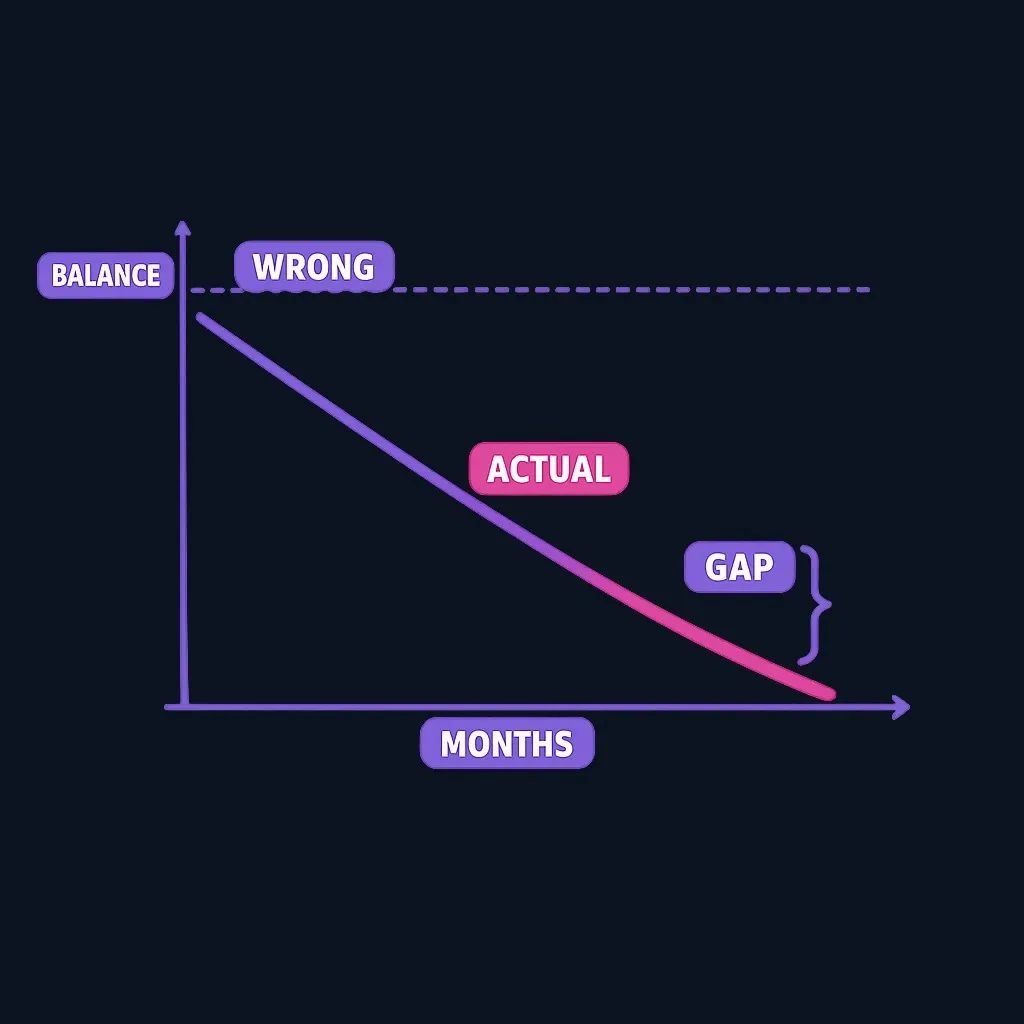
The CFPB's Truth-in-Lending guide explains these disclosures. Do not estimate an amortizing loan's total interest by multiplying its original principal by APR and the full term: the balance declines as you make payments.
Treat average rates as background
The NCUA publishes credit-union and bank rate comparisons. The linked table is historical, not a current quote or a promise about what you will qualify for.
Your offer depends on factors such as credit history, loan term, down payment, vehicle age, and lender requirements. A promotional rate may require a shorter term or other conditions.
Practice trading with Finelo
Practice in a simulator, learn with bite-sized lessons, and build confidence before risking real money.
Make an equal comparison
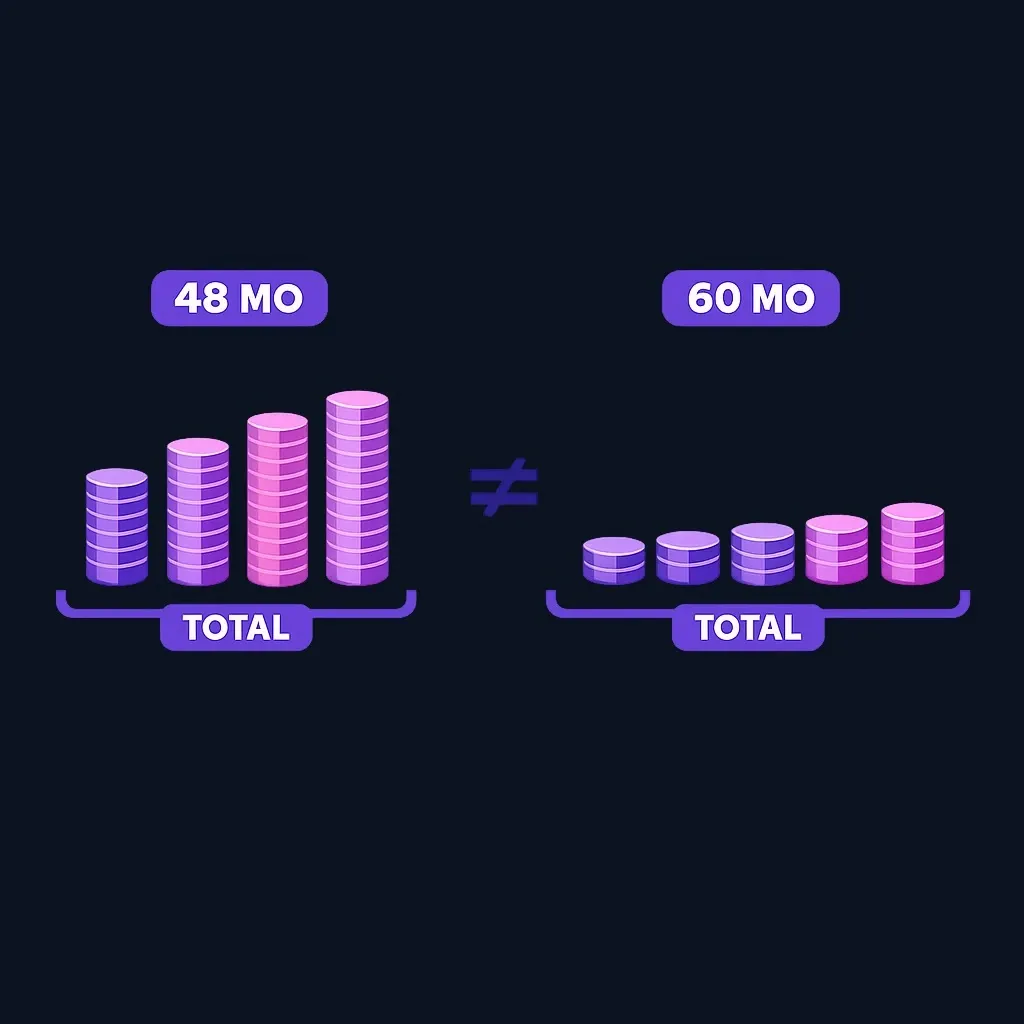
Suppose a credit union quotes 48 months and a bank quotes 60 months. The smaller payment on the longer loan does not establish that it is the better deal. Ask both to quote the same term, then compare the disclosures and your budget.
Check early-payoff terms, late fees, optional products, and whether automatic-payment discounts can change. A preapproval can help you shop, but confirm its conditions and expiration date before relying on it.
Compare approval conditions as well as the advertised rate
An advertisement describes an available product; your written offer describes the loan you may actually receive. Ask whether the quoted rate depends on a particular credit profile, automatic payments, account relationship, vehicle age, or term. A credit union's membership requirements are another eligibility question, not proof that its offer will be cheaper.
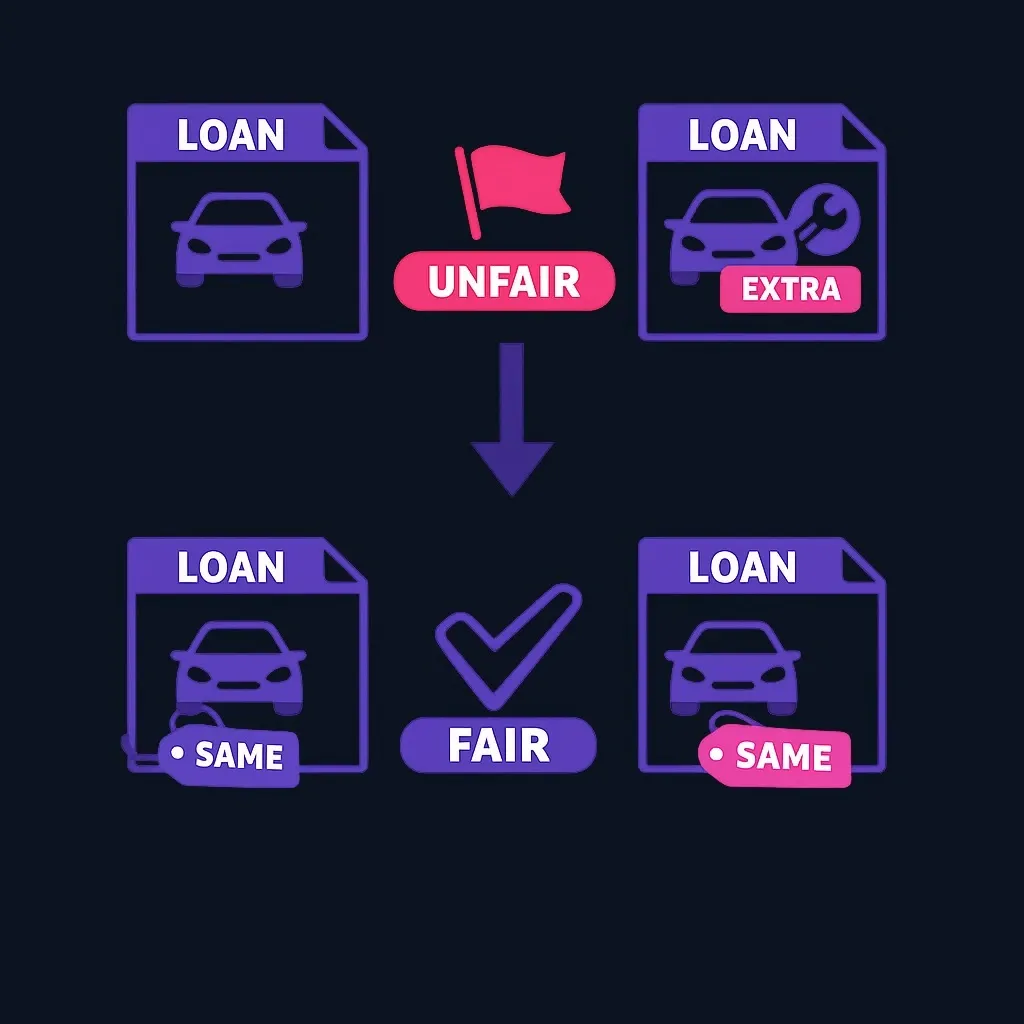
Keep the amount financed and repayment term identical for the first comparison. If one quote includes a service contract or other optional product, remove it from the comparison or include the same item in both. Otherwise, a lender can appear more expensive because the loans are financing different purchases.
Once the comparable offers are clear, test a different term separately. A longer term may make the payment easier to fit into the budget, but the benefit is additional time to repay. It should not be described as a lower total cost without checking the full payment schedule. Ask for the Truth-in-Lending disclosures and examine the finance charge and total of payments.
Make the purchase process part of the comparison
Before visiting a dealer, confirm how an outside lender funds the purchase. Ask whether the lender restricts the seller, vehicle mileage, age, title status, or purchase price. A competitive offer is useful only if the car and transaction qualify. Find out how long the approval lasts and what can change before funding.
Service also matters after the sale. Compare payment methods, customer support, title handling, and procedures if you have a payment problem. A nearby branch may be useful to one borrower while dependable online support matters more to another. Neither bank nor credit-union status guarantees a particular service experience.
If you already bank with one lender, use that relationship as a starting point rather than the final decision. A discount should be assessed after any account fees or qualifying requirements. The same applies to joining a credit union: identify the actual membership step and costs, then compare the resulting offer on its merits.
Organizational model and customer relationship (practical impact)
Banks and credit unions may operate under different business models that influence pricing, underwriting, and member/customer experience. For the practical comparison, focus on:
- How membership or customer status affects eligibility, discounts, or promotional pricing.
- Whether the lender emphasizes relationship-based decisions versus automated, score-driven underwriting.
Regulatory and data sources
Regulators collect and publish comparative loan-rate data for banks and credit unions that you can consult for current market context. The CFPB’s financing guide describes direct lending through banks and credit unions.
Pros (what borrowers often look for)
- Potentially member-focused decisions and service continuity.
- Possibility of competitive pricing for qualifying members.
- Local relationship can help with questions or exceptions.
Cons (what to watch for)
- Membership requirements may add an extra step.
- Branch and digital access vary by institution; network coverage differs.
- Not every credit union will offer the same terms; you must compare offers.
Practical tip: ask a prospective credit union for a written pre-approval or rate quote and check whether membership can be established quickly before vehicle purchase.
Pros
- Broad access — many banks accept noncustomers in various sales channels.
- Larger banks often offer multiple channels (in-branch, web, dealer partnerships).
- Promotional offers may be available to existing customers.
Cons
- Ask how the particular bank reviews a complex application; its label does not establish how much individual review is available.
- Fees and origination practices vary. Compare the disclosed charges rather than assuming one type of institution charges more.
Practical tip: if you’re already an established bank customer, ask about relationship discounts or rate promotions and get an identical written quote to compare with credit-union offers.
Checklist to compare two loan offers
- APR and total finance charge — compare equal amounts and terms, then verify the full dollar cost.
- Loan term tradeoff — at the same positive rate and balance, a longer term lowers scheduled payments but increases total interest.
- Fees (origination, application, prepayment penalties) — check how these are reflected in the disclosed total cost, without double counting.
- Pre-approval clarity — a written pre-approval helps negotiating at the dealer.
- Membership or eligibility requirements — how fast can you join a credit union?
- Underwriting flexibility — does the lender consider exceptions for work history, vehicle age, or past credit events?
- Convenience and servicing — online account access, autopay, and branch access.
- Refinancing options and timelines — does the lender refinance without penalties?
Consider a credit union if:
- You want relationship-based service and can meet membership requirements quickly.
- You value the possibility of flexible underwriting for borderline credit situations.
- You prefer to prioritize potentially lower fees or member-oriented terms.
Consider a bank if:
- Your existing bank has confirmed a funding timeline and promotional terms that fit your purchase.
- You value a large branch or digital network and broader dealer financing channels.
- The particular bank offers an online application and approval process that meets your needs.
Illustrative scenario A — tighter monthly budget If your priority is the lowest monthly payment without dramatically increasing interest costs, compare a shorter-term lower-APR credit-union offer versus a longer-term bank loan. Use the checklist to compute total cost and monthly payment to pick the fit. Illustrative scenario B — imperfect credit history If past credit issues exist, a lender with relationship-based underwriting may be more likely to structure a workable loan. Ask the lender for underwriting criteria and whether exceptions are considered.
Common mistakes and fixes
- Mistake: Comparing APR without understanding included charges. Fix: Review the disclosed finance charge and add only applicable costs not already counted.
- Mistake: Choosing the longest term for lower monthly payment without checking total interest. Fix: Compare total interest paid across terms.
- Mistake: Assuming dealer financing is comparable without a written outside pre-approval. Fix: Get pre-approvals from both a bank and a credit union and bring them to the dealer.
Things regulators and data can help confirm
Regulatory reports can show current averages and trends for bank vs. credit-union rates; consult those sources for up-to-date market context before finalizing a loan. The CFPB describes direct lending through both banks and credit unions; the actual offer still determines your cost. Caveat on numbers: rates and fees change frequently—verify current pricing on the lender’s official site or regulator data before signing.
What is the main difference between a credit union and a bank auto loan?
The practical difference often comes down to underwriting style, membership or customer status, and how fees or discounts are applied. For current market rate context, consult regulator-published rate snapshots for banks and credit unions.
How do I apply for an auto loan?
Typical steps: gather ID and income documents, get a pre-approval from one or more lenders, negotiate vehicle price, then finalize the loan with your chosen lender. Regulators list direct auto lending through banks and credit unions as common application routes.
What factors most affect my auto loan interest rate?
Lenders consider your credit history, loan term, down payment, vehicle age and condition, and current market rates. Use current regulator rate reports to understand how market averages compare to any offer you receive.
Can I refinance my auto loan later?
Potentially. Some banks and credit unions offer refinancing, but approval depends on your credit, vehicle, balance, and their current requirements. Compare new APR, fees, and remaining term; check whether prepayment penalties apply before refinancing.
If the dealer presents another offer, compare Dealer financing vs. bank financing.
This guide covers U.S. rules. Finelo provides financial education, not personalized financial, investment, tax, or legal advice.
Financial LiteracyU.S. GuideFinancial Education
Practice trading with Finelo
Practice in a simulator, learn with bite-sized lessons, and build confidence before risking real money.
About the author
Finelo Team
The Finelo Team creates practical investing and trading education designed to help beginners learn faster with structured challenges, simulator practice, and bite-sized lessons.
Keep reading — Related articles
Financial Literacy
USDA vs. FHA loan
Compare location and income eligibility, down payments, credit conditions, and upfront and annual program charges for a home purchase.
Finelo Team

Financial Literacy
Term life vs. accidental death insurance
Compare broad term-life protection with accident-only coverage, including exclusions, underwriting, and the family income gap.
Finelo Team

Financial Literacy
Term life insurance laddering vs. one policy
Compare several term policies ending at different times with one policy, using coverage needs, costs, and future insurability.
Finelo Team


