Last editorial review: September 28, 2026
Dealer financing vs. bank financing
Use an outside preapproval to compare dealer financing, incentives, add-ons, and total repayment on the same vehicle.
11 min read
Practice trading with Finelo
Practice in a simulator, learn with bite-sized lessons, and build confidence before risking real money.
Want to learn more?
Practice in a simulator, learn with bite-sized lessons, and build confidence before risking real money.
Explore FineloExplore Finelo's 28-day challenges
Turn learning into a daily habit with guided challenge paths.
Dealer-arranged financing lets a dealership submit your application to lenders. Direct financing means you apply to a bank, credit union, or other lender yourself. Either route can be competitive, so a direct preapproval is useful as a comparison point rather than a commitment to one route.
The practical differences
| Feature | Dealer-arranged financing | Direct lender |
|---|---|---|
| Shopping process | Dealer presents financing options | You request your own quotes |
| Convenience | Often arranged during the purchase | Can be arranged before visiting the dealer |
| Pricing | May include a markup or manufacturer promotion | Based on the lender's offer and eligibility rules |
| What to verify | Final approval, add-ons, and promotion conditions | Vehicle restrictions and preapproval conditions |
The CFPB explains dealer-arranged and direct financing. A dealer can sometimes offer a better deal than your initial quote, but that should be demonstrated in the numbers.
Negotiate the car and the loan separately
A payment target can hide a higher vehicle price, a longer term, or optional products added to the balance. First establish the vehicle's out-the-door price. Then compare APR, amount financed, term, finance charge, and total payments.
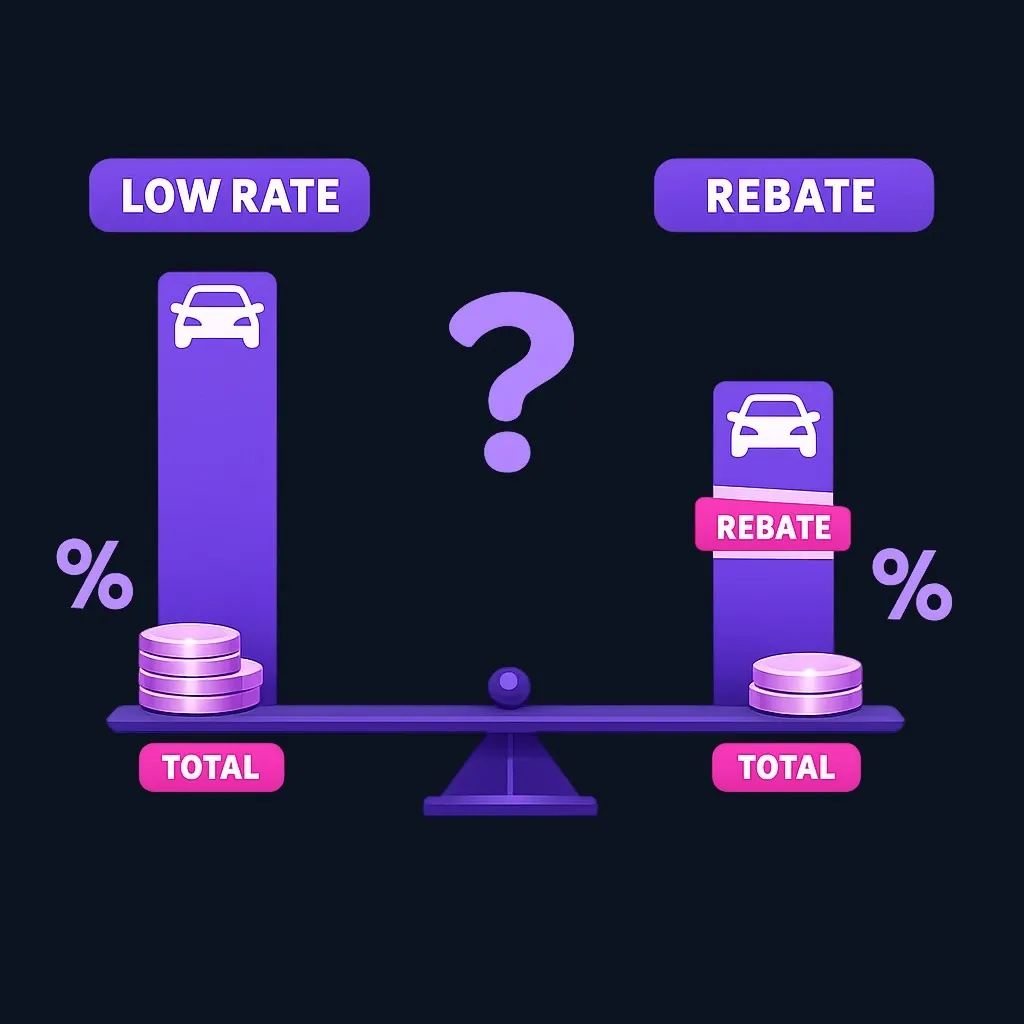
A manufacturer promotion may require giving up a cash rebate. For a hypothetical comparison, calculate the cost of the low-rate loan at the unreduced price against the cost of regular financing with the rebate. The lowest advertised rate does not always produce the lowest total cost.
Before you drive away
Read the final contract and confirm whether financing is fully approved. Check any conditional-delivery terms, optional add-ons, and early-payoff conditions. The FTC's financing guide explains common shopping and contract issues.
Use written offers with the same down payment and term. Choose the combination of vehicle price and financing you can afford over the full repayment period.
Keep the car price independent of the payment discussion
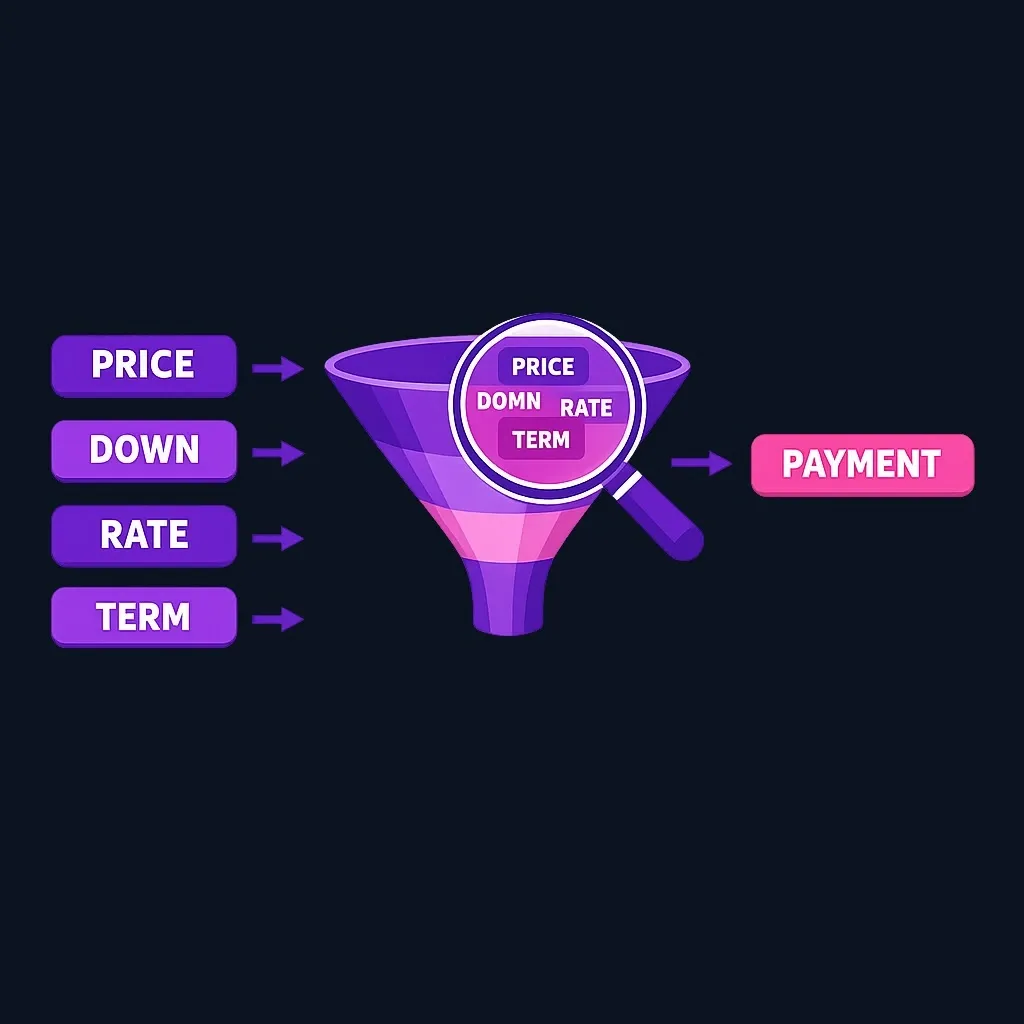
Agree on the vehicle's out-the-door price before comparing financing. That price should identify taxes, required charges, and any optional products. A payment quote bundles the price, down payment, rate, and term into one number; it can conceal which part of the deal changed.
A dealer-arranged offer can be competitive, including when a manufacturer subsidizes a promotion. An outside bank or credit union can provide a useful comparison and a financing option independent of the dealer. Neither route guarantees the best terms. Request the amount financed, APR, term, finance charge, and total of payments for the offers available to you.
If a promotion requires giving up a cash rebate, compare both complete transactions. A lower advertised rate may accompany a higher purchase balance. Also ask whether the rate requires a particular term or borrower qualification. Compare what you can actually obtain rather than the most attractive number in an advertisement.
What is Dealer Financing?
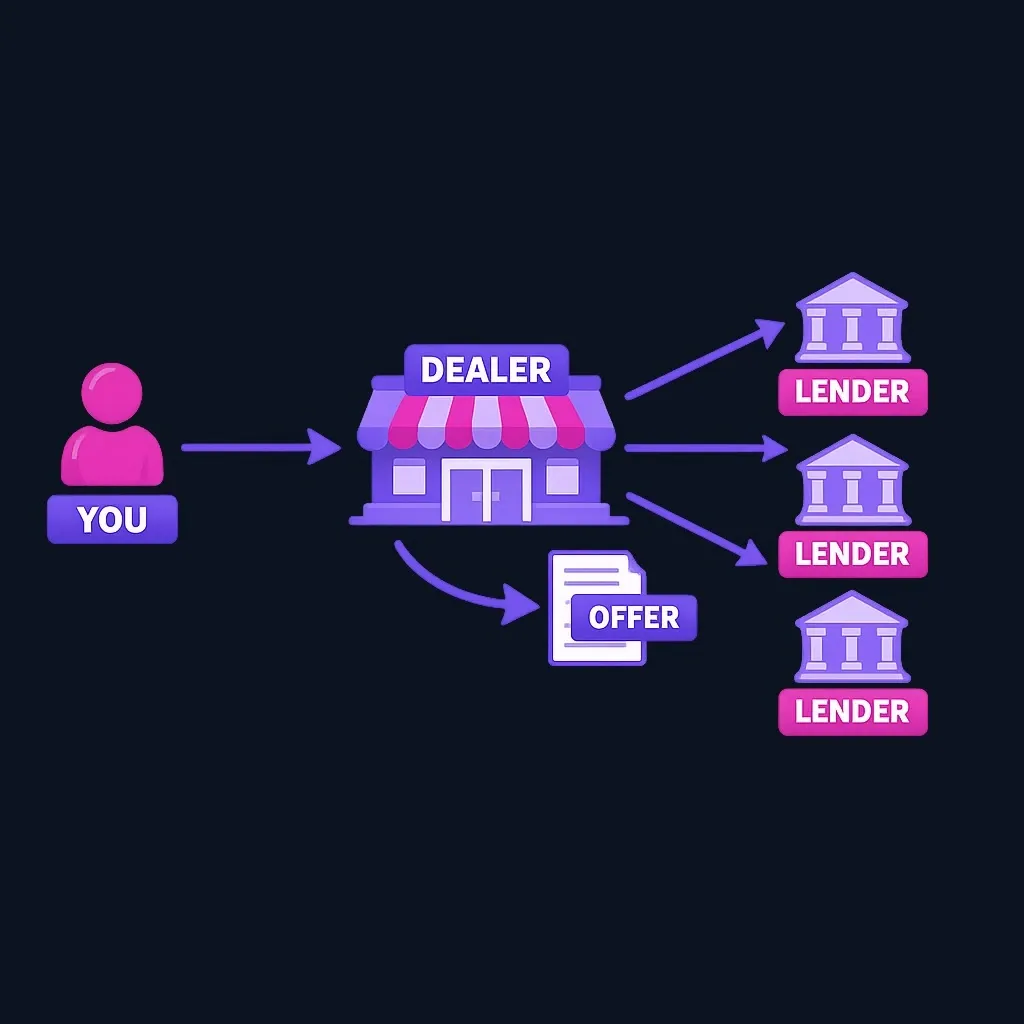
Dealer financing — often called dealer-arranged or indirect lending — is a process where the dealership helps you get a loan during the car-buying transaction. The dealer collects your credit application, submits it to one or more lenders on your behalf, and presents financing offers while you finalize the vehicle purchase. The Consumer Financial Protection Bureau describes dealer-arranged financing as a common pathway that begins at the dealership and emphasizes that shoppers should understand and compare available sources for auto loans.
What to expect in practice
- The dealer handles paperwork and lender outreach so you can complete vehicle selection and financing in one visit.
- The dealer may present an interest rate and monthly payment as part of the sales package. Those figures can include a dealer markup above the lender’s base offer. See the CFPB guidance on comparing loan sources.
Practical takeaway: Dealer financing reduces administrative friction at purchase but brings the need to verify rate transparency and compare offers before signing.
Practice trading with Finelo
Practice in a simulator, learn with bite-sized lessons, and build confidence before risking real money.
What is Bank Financing?
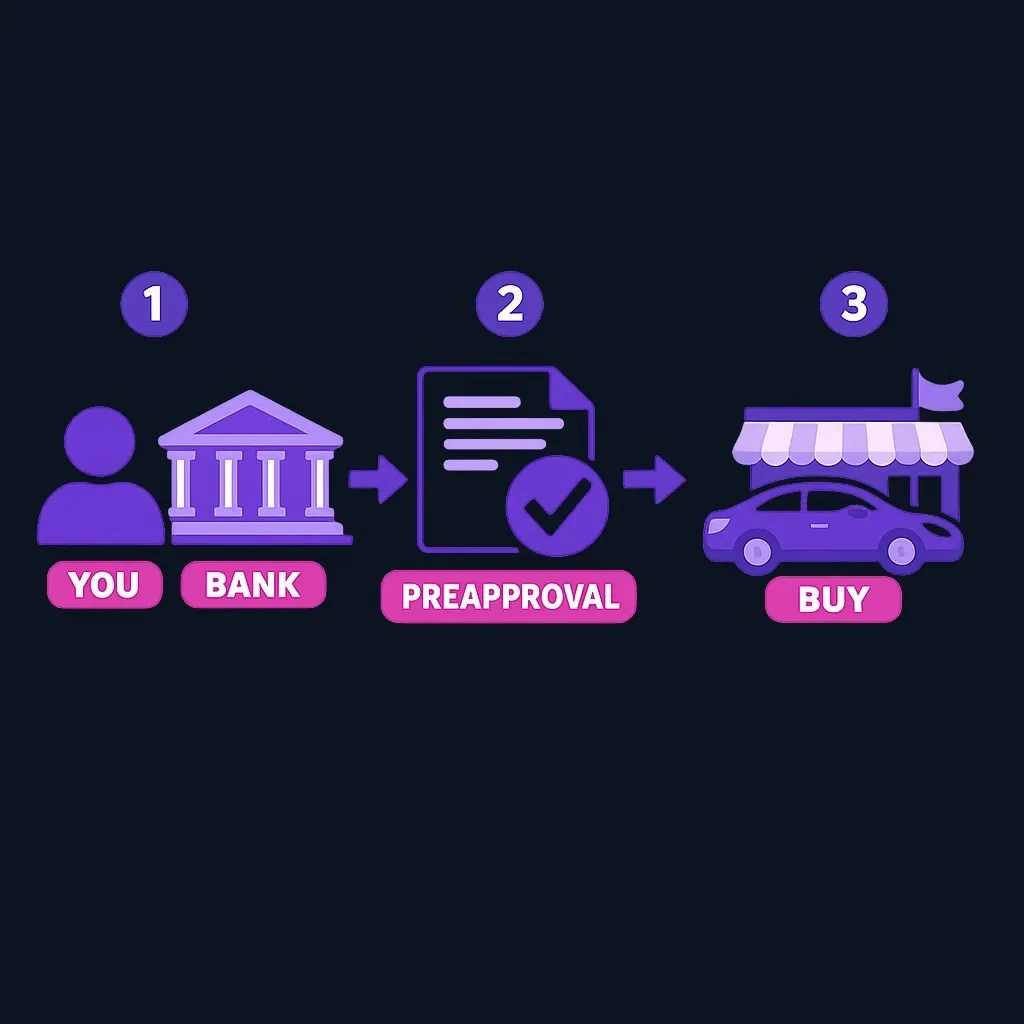
Bank financing refers to getting an auto loan directly from a bank, credit union, or other direct lender. With bank financing you apply to the lender, receive a loan decision or preapproval, and then use that loan to buy a car from the dealer or private seller.
Why shoppers use bank financing
- A direct lender gives you a clear loan quote and terms you can verify before visiting a dealership.
- Preapprovals from a bank or credit union can strengthen bargaining position at the lot because you know the rate and loan amount you can use.
Practical takeaway: Bank financing takes extra preparation (application and approval ahead of time) but gives you rate clarity you can use while negotiating price and finance terms. (Note: the CFPB groups banks, credit unions, and dealer-arranged financing as different sources you should compare when buying a car; see CFPB guidance.)
Pros and Cons of Dealer Financing
Below are common advantages and disadvantages to weigh for dealer-arranged loans. Pros
- Convenience: Complete selection, negotiation, and financing in one visit. (See CFPB description of dealer-arranged financing starting at the dealership.)
- Possible competitive offers: Dealers may route your application to multiple lenders quickly and present options without extra applications from you.
Cons and caveats
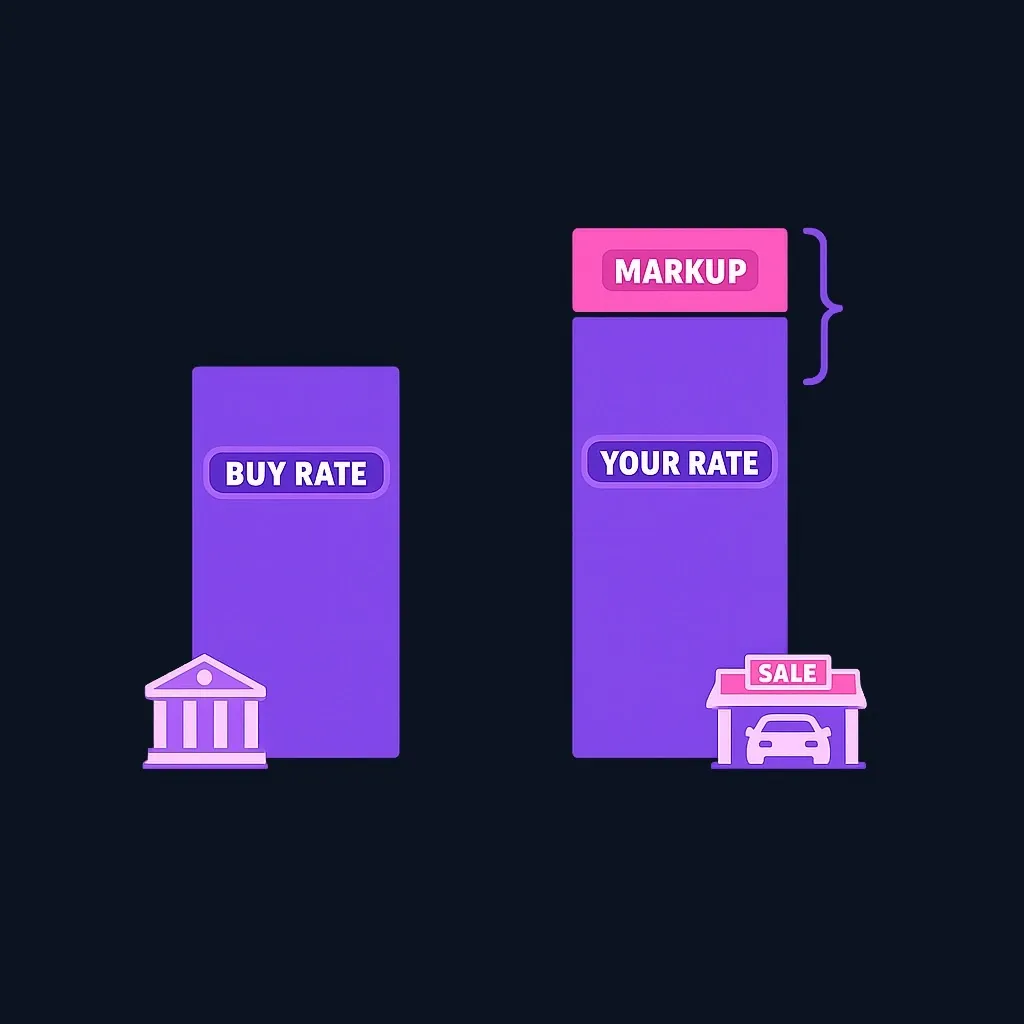
- Rate transparency: Dealer offers can include markups over the lender’s base rate. Ask whether other offers had better terms and whether a markup is included. A dealer may not provide its buy rate or every underlying offer; you can still compare the final written terms with an outside quote.
- Risk of conflating price and financing: The FTC advises securing an “out-the-door” vehicle price in writing before you discuss financing so you don’t trade a lower monthly payment for a higher total price.
Practical tips to avoid common dealer financing pitfalls
- Ask for copies of all loan offers the dealer obtained for you.
- Get the vehicle’s out-the-door price in writing before finalizing any loan paperwork.
- Compare the dealer’s presented rate to any preapproval you can get from your bank or credit union.
Pros and Cons of Bank Financing
Here are the typical benefits and drawbacks of taking a loan directly from a bank or credit union. Pros
- Rate clarity: A direct lender provides a clear quote you can verify in advance. The CFPB emphasizes comparing rates across different loan sources before you commit.
- Strong negotiation posture: Preapproval from a bank or credit union gives you a known budget and rate to use when negotiating price at the dealership.
Cons and caveats
- Extra steps: Applying and awaiting approval before shopping may take more time than accepting dealer-arranged financing at purchase.
- Potential missed promotions: Banks may not offer the same manufacturer or dealer promotional APRs that the dealership can access; confirm any promotional eligibility separately.
Practical tips for bank financing
- Apply for preapproval to know your maximum loan amount and target rate.
- Bring your preapproval letter (or loan quote) to the dealer and ask the dealer to show offers that beat your preapproval.
How to compare your options
Use this checklist as a short decision framework when comparing dealer vs. bank financing.
- Clarity and control: Do you want a known interest rate before visiting the dealer? If yes, seek a bank or credit union preapproval. (The CFPB recommends understanding and comparing loan sources.)
- Convenience vs. legwork: Are you prioritizing finishing the purchase in a single visit, or willing to do upfront applications to secure a lower rate? Dealers give convenience; banks give preapproval clarity.
- Promotional offers: Check whether dealer or manufacturer promotions apply to your situation. Ask the dealer about eligibility and read the promotion terms carefully.
- Transparency: Always ask to see the actual loan offers the dealer submitted and compare APR, finance charges, and total payments. The FTC recommends getting the out-the-door price in writing before discussing financing to avoid being blindsided.
- Credit profile effect: Compare how each option will affect your credit checks and whether a soft prequalification or hard inquiry will be used; verify with the lender.
How to use the checklist
- If one route meets your timing needs and has better complete terms at the same vehicle price, amount financed, and term, it may fit. Convenience and a lower APR alone do not settle the comparison when rebates or fees differ.
- If the bank’s preapproved APR is lower than the dealer’s presented rate, you generally retain negotiating power by using the bank offer as leverage.
When to choose each option
Below are scenarios where one option often fits better.
When dealer financing makes sense
- You need to complete the purchase in a single visit and prefer the dealer to handle paperwork and lender outreach. The CFPB notes that dealer-arranged financing commonly begins at the dealership and can streamline the process.
- The dealer presents a documented finance offer that matches or beats your preapproval; in those cases, accepting dealer financing can combine convenience with good terms.
When bank financing makes sense
- You want a clear, comparable APR and preapproved loan amount before shopping. Preapprovals give you a concrete loan quote to use while negotiating price. The CFPB recommends checking and comparing rates among loan sources.
- You prefer to separate the price negotiation from financing so you can focus on the vehicle’s out-the-door price first.
Decision example (process, not numbers)
- Check your credit or get a soft prequalification from a bank or credit union.
- Get an out-the-door written price for the car before discussing financing at the dealer.
- Compare the bank preapproval terms to any dealer offers; ask the dealer to show the offers they obtained. Consider the option that gives the lowest total cost and acceptable monthly payment for your budget.
Tradeoffs and caveats
Common mistakes and how to avoid them
- Mistake: Focusing only on monthly payment. Fix: Compare total finance costs and APR, and get the out-the-door price in writing before financing.
- Mistake: Signing loan paperwork without comparing underlying offers. Fix: Ask the dealer for copies of all offers they received and compare APR and total finance charges.
- Mistake: Assuming dealer-presented rate equals lender base rate. Fix: Request documentation of the lender buy rate and any dealer markup; compare to bank preapproval if available.
How markups and timing affect cost (conceptual)
- Even a small difference in APR can change total interest paid over the life of the loan. Use the lenders’ disclosed payment schedules and finance charges for the same amount and term. A payment calculator generally uses the contract interest rate, not an APR that also includes upfront fees. No matter the option, verify the APR, fees, and total cost before signing.
Negotiation checklist to reduce cost
- Get preapproved from a bank or credit union when possible.
- Secure the out-the-door vehicle price in writing before discussing financing.
- If the dealer’s financing offer appears higher, ask them to match your preapproval or show how their offer is better overall (rebates, warranty, promotions).
- Read every line of the finance contract and confirm there are no hidden fees.
What is the difference between dealer financing and bank financing?
Dealer financing is arranged by the dealership at purchase; the dealer submits your application to lenders and presents offers. Bank financing is obtained directly from a bank or credit union, often as a preapproval you can use at the dealership. The CFPB recommends understanding and comparing different sources for auto loans.
How can I get the best interest rate?
Getting a bank or credit union preapproval gives you a clear rate to compare. Also ask the dealer to show the offers they obtained for you and get the vehicle’s out-the-door price in writing before discussing financing. Compare APR, fees, and total finance charges across offers before deciding.
What should I bring to the dealership to speed financing?
Ask the lender for its document checklist. Commonly requested items include identification, proof of insurance, income documents, and any preapproval letter. If you have a bank preapproval, bring that documentation to use in negotiations. (The CFPB recommends comparing loan sources and being prepared when shopping for a vehicle.)
Can I negotiate financing terms at the dealership?
Yes. Ask the dealer to show you the offers they received, compare those to any bank preapproval, and negotiate either the loan terms or the vehicle price. The FTC advises getting the full price in writing before discussing financing to prevent confusing tradeoffs between price and monthly payments.
If you already have a financed car, distinguish Auto loan refinance vs. trade-in: keep the car or replace it.
This guide covers U.S. rules. Finelo provides financial education, not personalized financial, investment, tax, or legal advice.
Financial LiteracyU.S. GuideFinancial Education
Practice trading with Finelo
Practice in a simulator, learn with bite-sized lessons, and build confidence before risking real money.
About the author
Finelo Team
The Finelo Team creates practical investing and trading education designed to help beginners learn faster with structured challenges, simulator practice, and bite-sized lessons.
Keep reading — Related articles
Financial Literacy
USDA vs. FHA loan
Compare location and income eligibility, down payments, credit conditions, and upfront and annual program charges for a home purchase.
Finelo Team

Financial Literacy
Term life vs. accidental death insurance
Compare broad term-life protection with accident-only coverage, including exclusions, underwriting, and the family income gap.
Finelo Team
Financial Literacy
Term life insurance laddering vs. one policy
Compare several term policies ending at different times with one policy, using coverage needs, costs, and future insurability.
Finelo Team