Last editorial review: September 28, 2026
Direct Express vs. a bank account for Social Security
Compare benefit access and everyday banking needs, with issuer-specific Direct Express fees during the September 2026 transition.
11 min read
Practice trading with Finelo
Practice in a simulator, learn with bite-sized lessons, and build confidence before risking real money.
Want to learn more?
Practice in a simulator, learn with bite-sized lessons, and build confidence before risking real money.
Explore FineloExplore Finelo's 28-day challenges
Turn learning into a daily habit with guided challenge paths.
Direct Express lets you receive federal benefits without a traditional bank account. A checking account can be more convenient if you also receive wages, deposit checks, or want to manage bills and savings in one place. The better fit depends on how you use the money and the fees for that routine.
Both are electronic payment methods listed by Social Security. Your choice changes access to your money, not your underlying benefit entitlement.
First, identify your Direct Express issuer
As of September 28, 2026, Direct Express is transitioning from Comerica Bank to Fifth Third Bank. The official transition FAQ says existing users should continue using their current card until they receive instructions. The issuers have different apps and ATM networks. Comerica appears on the front of its cards; Fifth Third identification appears on the back of its cards.
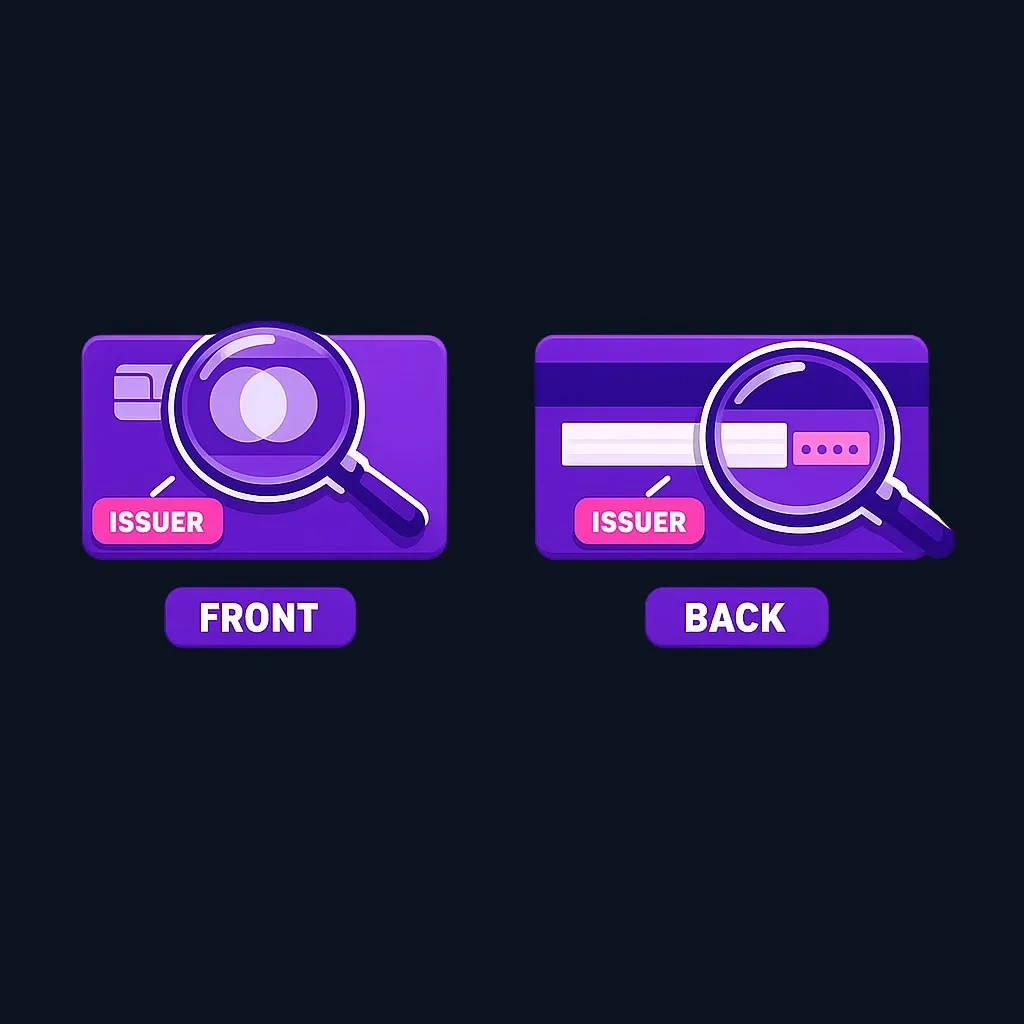
That distinction matters because the official terms and fees page separates issuer schedules. Do not apply a fee list for one card automatically to the other.
Compare everyday use
| Need | Direct Express | Bank or credit-union checking account |
|---|---|---|
| Receive benefits | Federal benefits are deposited to the card account | Benefits can be deposited to the account |
| Handle other income | A benefit card should not be treated as a general-purpose account for all deposits | Look for support for payroll, checks, and the other deposits you need |
| Pay for purchases | Use the card at participating merchants | Debit-card and payment features depend on the account |
| Get cash | Issuer, ATM network, and withdrawal allowance matter | Bank network and out-of-network charges matter |
| Move money or get statements | Optional services may carry fees | Transfer, paper-statement, and maintenance fees vary |
What the published card fees mean in practice
The Comerica schedule available on the official terms page lists U.S. merchant purchases, cash back with purchases, and teller cash withdrawals as free services. It allows one free domestic ATM withdrawal per federal deposit; that allowance expires at the end of the following month. After the free transactions, the card fee is $0.85 per domestic ATM withdrawal, and an ATM-owner surcharge may also apply. A transfer to a personal U.S. bank account costs $1.50 under that schedule. These are Comerica terms checked September 28, 2026, not a quote for Fifth Third cards.
For example, if you receive one monthly benefit deposit and make four ATM withdrawals after any earlier free allowances have expired, three withdrawals would attract $2.55 in card fees under those terms. ATM-owner charges could add more. Buying groceries with the card and requesting cash back may produce a different cost than making repeated ATM visits.
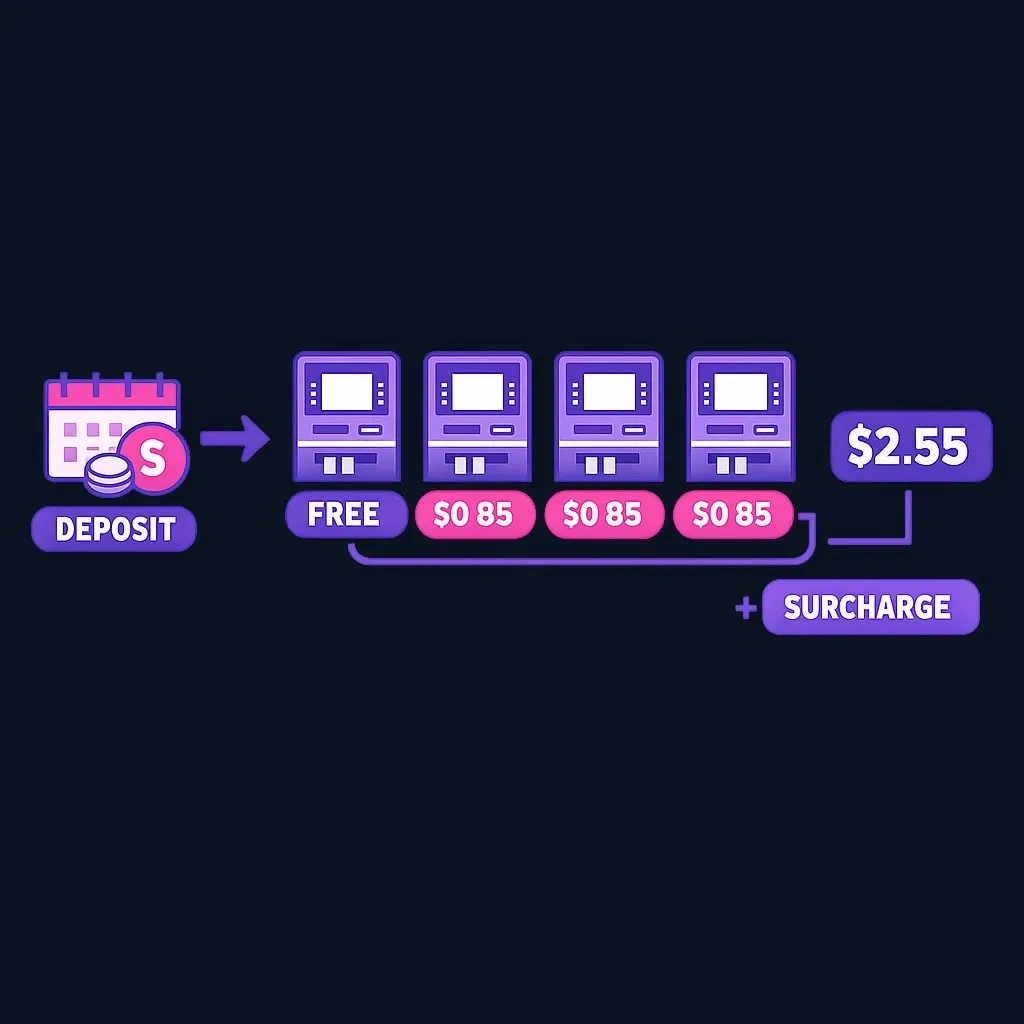
The comparison is therefore about your pattern of use. “No monthly fee” and “no fees for my routine” are different questions.
Compare with an actual bank-account offer
Suppose a checking account waives its monthly fee when it receives your benefit deposit and offers nearby free ATMs. It may be a useful alternative if you also need mobile check deposits or transfers to savings. This is a hypothetical account, not a promise about any bank. Verify the waiver’s deposit threshold, ATM locations, overdraft choices, and any minimum balance.
A benefit card may be sufficient when benefits are your only deposits and most spending is by card. A checking account may simplify a household with several income sources. Compare one ordinary month and one awkward month: a lost card, an urgent cash withdrawal, or a paper statement request.
Change payment details without disrupting bills
Follow SSA’s official enrollment or update instructions. Confirm the effective date before closing the old account, and keep access to any remaining balance. During the Direct Express issuer transition, follow the instructions that apply to your card rather than opening a second arrangement based on an unsolicited message.
Save the customer-service number printed on the legitimate card and review transactions regularly. The useful choice is the one that lets you receive, spend, and manage benefits reliably at a cost you understand.
Practice trading with Finelo
Practice in a simulator, learn with bite-sized lessons, and build confidence before risking real money.
Compare a normal month and a difficult month
Write down how you use each benefit payment. Count purchases, cash withdrawals, transfers, paper statements, and bills that require a particular payment method. Then check the applicable fee schedule against that routine. A service described as free may have a limited allowance or depend on using a particular network.
Next consider a less convenient month. You might lose the card, need cash while traveling, or have a disputed transaction. Check how to reach support, how replacement access works, and whether optional expedited services cost extra. The closest ATM and the nearest bank branch are practical details, especially if transport is difficult.
A checking account may add tools for wages, check deposits, or savings transfers. Those features have value when you use them; they are not a reason to assume every beneficiary needs a broader account. Conversely, a benefit card can be workable for a simple routine without replacing all the features of checking.
Make a change in a controlled sequence
Use official SSA instructions to update payment details, and confirm when the change will take effect. Keep access to the existing account until the deposit transition is complete and any remaining balance has been handled. Review automatic bill payments separately: moving the benefit deposit does not automatically redirect money leaving the old account.
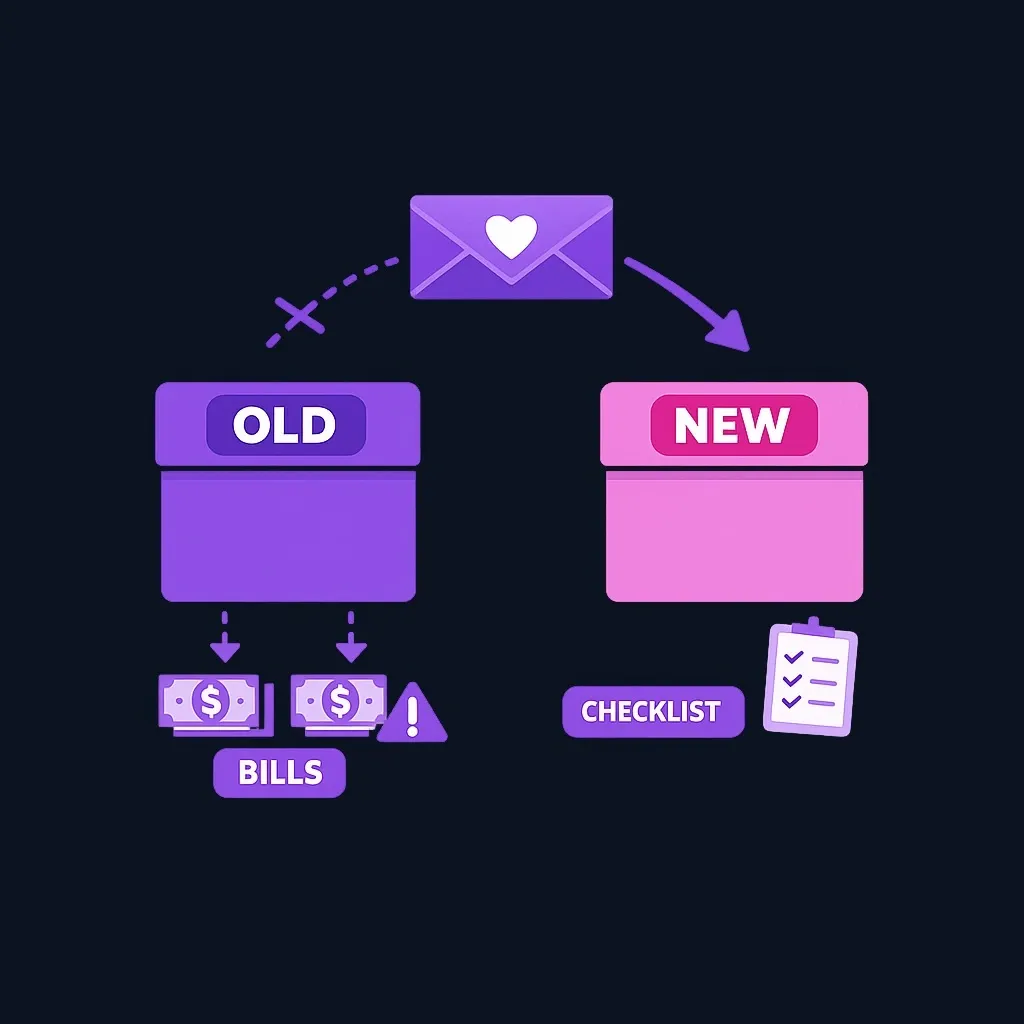
For Direct Express, check the issuer printed on your card before choosing an app, ATM locator, fee schedule, or support number. During an issuer transition, messages intended for another cardholder group may not describe your next step. Use official instructions rather than assuming that a newly advertised card or fee applies to you.
Save a simple record of the change date, official confirmation, and the first deposit received successfully. This is particularly useful if another household member helps manage bills. Reliable access and a routine you can follow are as important as the headline account fee.
What is Direct Express and how do bank accounts receive Social Security?
Direct Express (and programs like it) is a prepaid benefit-card option created to deliver federal benefit payments to people who do not use a traditional bank account. A bank account, by contrast, receives benefit payments by direct deposit into checking or savings accounts at banks or credit unions. Practical difference in everyday terms:
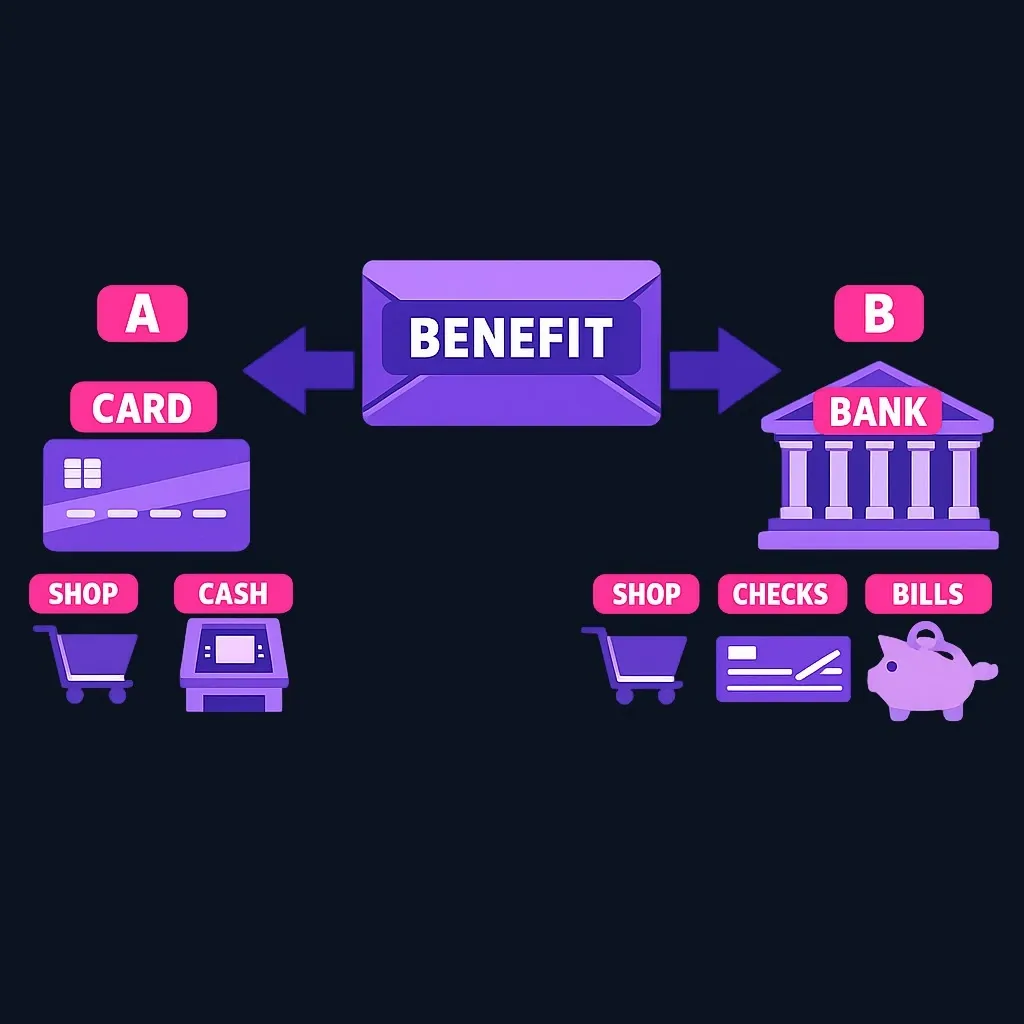
- A benefit card stores your Social Security payment on a prepaid card that you can use for purchases, ATM cash withdrawals, and electronic payments.
- A bank account places the deposit in your account balance where you can use checks, debit cards, online transfers, bill pay, and sometimes earn interest.
How to compare your options
Use these five criteria to decide which option fits your situation. For each, ask the practical question listed and weight that factor for your needs.
1. Access to mainstream banking
- Question: Do you already have an account you trust and use regularly?
- Takeaway: If yes, a bank account centralizes payments and tools. If no, a benefit card avoids the need to open a bank account.
2. Fees and where you withdraw cash
- Question: Where will you withdraw cash most often (bank teller, ATM, store)?
- Takeaway: Compare expected ATM and transaction fees for both options in the places you use; small, frequent fees add up.
3. Need for additional services
- Question: Do you need bill pay, set-aside savings, checks, or mobile check deposit?
- Takeaway: Banks generally offer these features; prepaid card programs typically focus on spending and ATM access.
4. Security and dispute protection
- Question: How important are banking protections like dispute resolution, online fraud monitoring, and deposit/legal protections?
- Takeaway: Confirm the protections for each option before choosing; if dispute resolution is critical, prioritize the provider with stronger documented processes.
5. Convenience and support
- Question: How comfortable are you managing accounts online, calling support, or visiting branches?
- Takeaway: Consider the option whose customer-service model matches your comfort and mobility.
Worked example: If you live near branches, pay bills online, and want automatic transfers to savings, weight “additional services” higher and favor a bank account. If you don’t live near a branch, rarely use online banking, and want a simple card to access your monthly benefit, weight “access” and “fees where you withdraw” higher and consider a benefit card.
When to choose Direct Express
Consider a benefit card if any of these apply to you:
- You don’t have a bank account and prefer not to open one.
- You need a way to receive benefits that does not require checks or bank setup.
- You expect to use cash or card purchases primarily and want a simpler, card-focused workflow.
Practical tips:
- Check where you typically get cash and whether the card’s ATM network is convenient.
- Ask the program about replacement-card procedures and customer support hours so you’re prepared if the card is lost or stolen.
- Confirm how deposits and balance information are delivered (online, phone, ATM receipt).
When to opt for a bank account
Consider a bank account if any of these apply to you:
- You already use a bank for other finances and want benefits to flow into the same account.
- You want integrated services: bill pay, transfers to other accounts, mobile check deposit, or other account features that the bank actually offers. Compare documented protections instead of assuming a checking debit card is inherently safer.
- You plan to manage finances long-term, including savings and repeat electronic payments.
Practical tips:
- If monthly fees are a concern, compare no-fee checking or accounts that waive maintenance fees with minimum balances or direct deposit.
- Confirm whether your bank charges for out-of-network ATM use and whether there are ways to avoid those fees.
- If you’re changing from a bank to a card (or vice versa), allow processing time so you don’t miss a scheduled payment.
Tradeoffs and caveats
Common mistakes, pitfalls, and how to avoid them:
- Mistake: Assuming all ATMs are free. Fix: Identify the program’s ATM network and your bank’s network before relying on cash withdrawals.
- Mistake: Not confirming protections for lost/stolen cards or unauthorized transactions. Fix: Ask support how to report loss and what steps protect your funds.
- Mistake: Overlooking incidental fees, such as optional paper statements or additional replacement cards. Do not assume every listed fee category applies to both products. Fix: Request or read the fee schedule for each option and estimate monthly cost based on your expected usage.
- Mistake: Changing payment methods near a payment date and creating a gap. Fix: Schedule any switch well before an expected deposit and keep records of confirmation numbers.
Verification and next steps
- Before you switch, confirm fee schedules, ATM access, and protections directly with the card program or your bank.
- Keep a short checklist: confirm enrollment method, expected processing time, fees to expect, how to check balances, and who to call for lost/stolen cards.
What are the benefits of using Direct Express?
Benefit cards can provide a ready-made way to receive federal payments without a traditional bank account, letting you make purchases and withdraw cash with a card. Compare the program’s convenience against any fees or limitations before choosing.
How do I switch my Social Security payments to Direct Express?
Switching generally requires enrolling in the desired payment option and updating your information with the Social Security Administration or the benefits program. Allow time for processing and confirm the effective date so you don’t miss a payment; contact SSA or the program’s support to learn the exact steps.
What fees are associated with Direct Express and bank accounts?
Fees vary by program and by bank. Typical fee types to compare include monthly maintenance, ATM withdrawal fees, out-of-network fees, balance inquiry charges, and replacement-card fees. Review each provider’s fee schedule and estimate costs based on how you will use the account or card.
Can I use Direct Express internationally?
International use depends on the card program’s network and the issuer’s international policies. If international ATM access or purchases matter to you, verify the card’s international acceptance and any foreign-transaction fees before relying on it.
If you plan to use benefits overseas, first establish Can you collect Social Security if you move abroad.
This guide covers U.S. rules. Finelo provides financial education, not personalized financial, investment, tax, or legal advice.
Financial LiteracyU.S. GuideFinancial Education
Practice trading with Finelo
Practice in a simulator, learn with bite-sized lessons, and build confidence before risking real money.
About the author
Finelo Team
The Finelo Team creates practical investing and trading education designed to help beginners learn faster with structured challenges, simulator practice, and bite-sized lessons.
Keep reading — Related articles
Financial Literacy
USDA vs. FHA loan
Compare location and income eligibility, down payments, credit conditions, and upfront and annual program charges for a home purchase.
Finelo Team
Financial Literacy
Term life vs. accidental death insurance
Compare broad term-life protection with accident-only coverage, including exclusions, underwriting, and the family income gap.
Finelo Team
Financial Literacy
Term life insurance laddering vs. one policy
Compare several term policies ending at different times with one policy, using coverage needs, costs, and future insurability.
Finelo Team