Last editorial review: September 28, 2026
Personal loan vs. HELOC
Compare unsecured borrowing with a line secured by your home, including rate changes, repayment stages, fees, and collateral risk.
9 min read
Practice trading with Finelo
Practice in a simulator, learn with bite-sized lessons, and build confidence before risking real money.
Want to learn more?
Practice in a simulator, learn with bite-sized lessons, and build confidence before risking real money.
Explore FineloExplore Finelo's 28-day challenges
Turn learning into a daily habit with guided challenge paths.
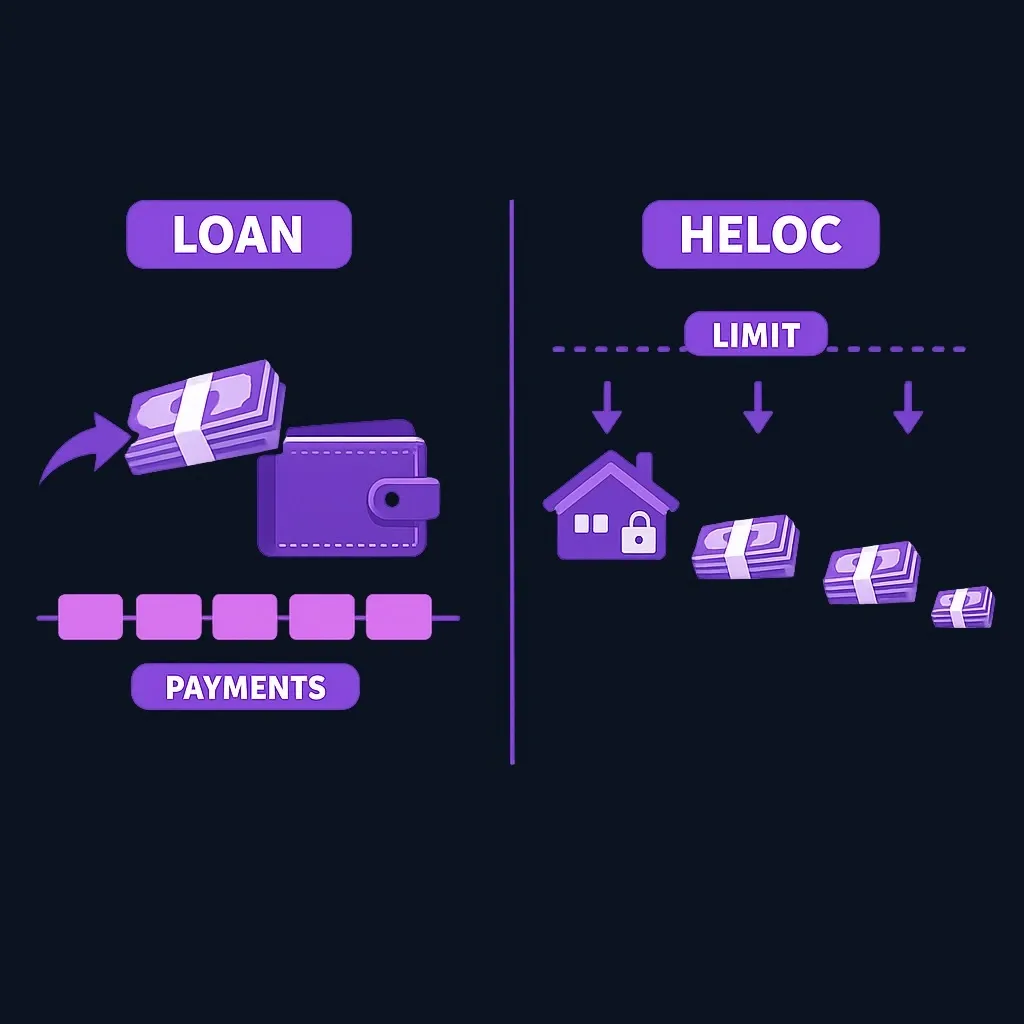
A personal loan usually gives you a lump sum to repay over a set schedule. A home equity line of credit, or HELOC, lets you borrow against your home within a credit limit. The major difference is the property at risk, not simply the advertised rate.
This comparison focuses on an unsecured personal loan. Some personal loans require collateral and need a separate review.
Compare the structure
| Feature | Unsecured personal loan | HELOC |
|---|---|---|
| Collateral | No specific asset pledged | Your home |
| Funding | Lump sum | Draws during the permitted period |
| Rate | Often fixed | Often variable |
| Repayment | Scheduled installments | Draw-period terms followed by repayment terms |
See the CFPB guides to personal installment loans and HELOCs.
A lower payment can hide a later increase
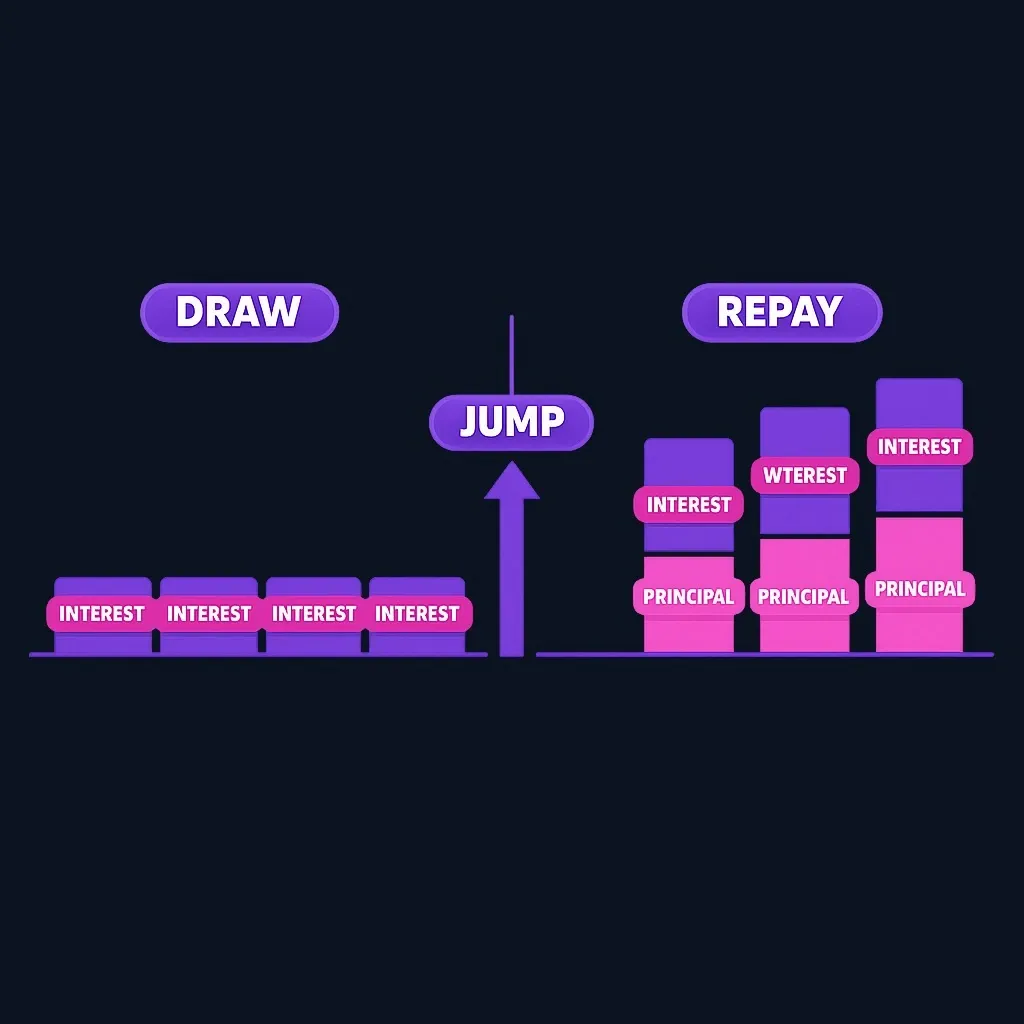
Some HELOCs allow interest-only payments during the draw period. Payments can rise when principal repayment begins, even if the interest rate does not change. Ask for both stages of the schedule and test higher-rate scenarios.
For a hypothetical renovation paid in stages, a line may reduce the amount borrowed before bills arrive. For one known expense, a fixed installment schedule may be simpler. Neither structure makes an unaffordable project affordable over the full term.
Include the home in the risk comparison
Missed HELOC payments can put your home at risk. Using home equity to repay credit cards replaces unsecured debt with home-secured debt. Avoid treating that as a rate reduction alone.
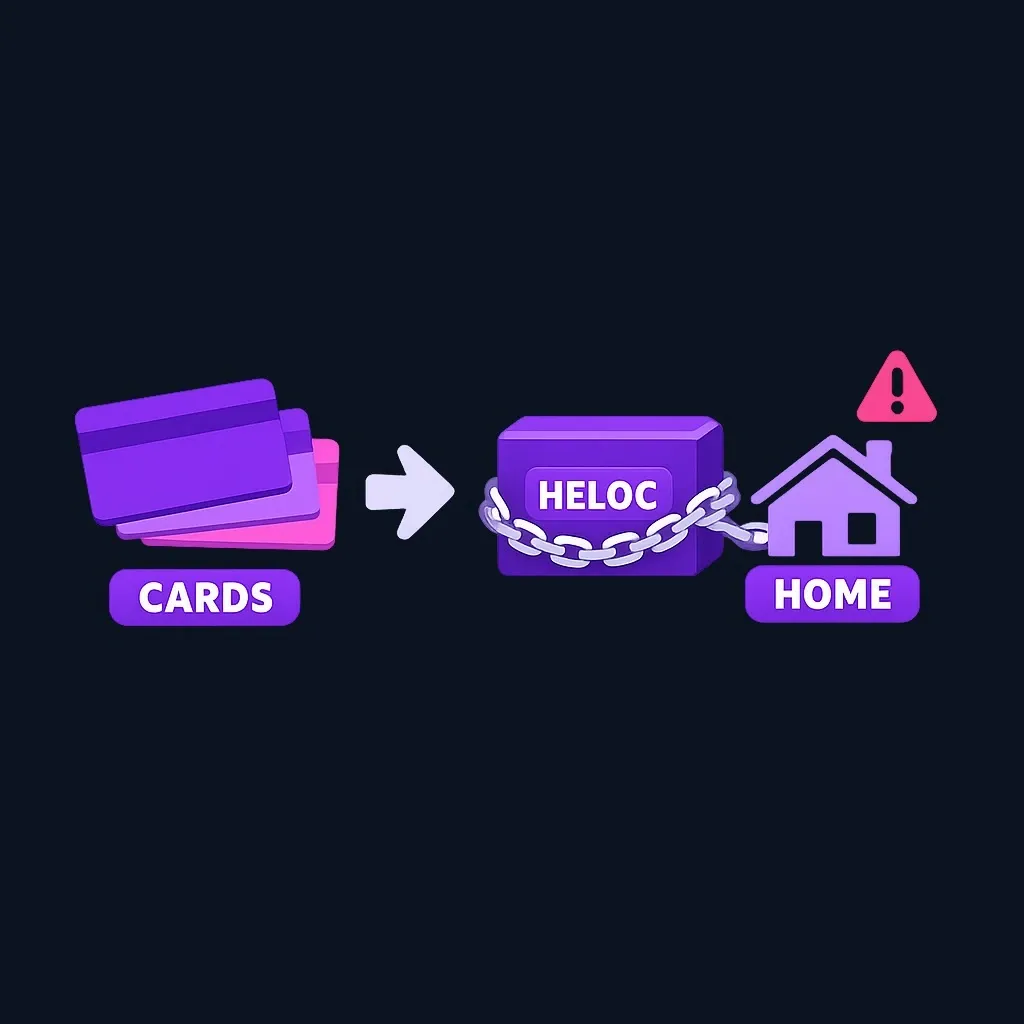
Compare closing, annual, draw, and early-closure fees where applicable. Check whether the credit line can be reduced or frozen under its terms. Tax deductibility is not automatic. For the home-mortgage interest deduction, HELOC proceeds generally must be used to buy, build, or substantially improve the home securing the debt, and itemizing and other limits still apply. See IRS Publication 936.
Price the same borrowing amount and repayment horizon, then choose using total cost, payment resilience, and what you would lose if repayment became difficult.
Compare access to money with exposure of the home
A HELOC uses the home as collateral. That can influence pricing, but it also changes what is at risk if payments cannot be made. A lower rate is not a complete answer when the borrowing would turn another expense into debt secured by the place you live.
A personal loan may be unsecured or secured by a different asset. Confirm the actual contract instead of treating the product name as a guarantee that no collateral is involved. For either offer, identify the net cash available, all fees, the required payment, and the expected payoff date.
Model the HELOC after the draw period
Ask how payments are calculated while drawing and what changes when repayment begins. A payment based largely on interest can rise when principal must be repaid over the remaining term. If the rate is variable, a rate increase can add a second source of payment pressure. Have the lender show those scenarios using the amount you expect to borrow.
For staged work on the home, estimate when each expense arrives. Drawing only when needed can avoid paying interest on unused borrowed money, but it does not remove fees or future-rate uncertainty. Include an allowance for the project costing more than planned without assuming the credit limit will always remain available.
Keep debt consolidation from becoming additional debt
If the purpose is to repay credit cards or other loans, compare the total repayment period as well as the monthly payment. Extending a short-lived purchase across many years can lower the payment while increasing total cost. Securing that balance on the home adds a consequence that was not present in the original unsecured debt.
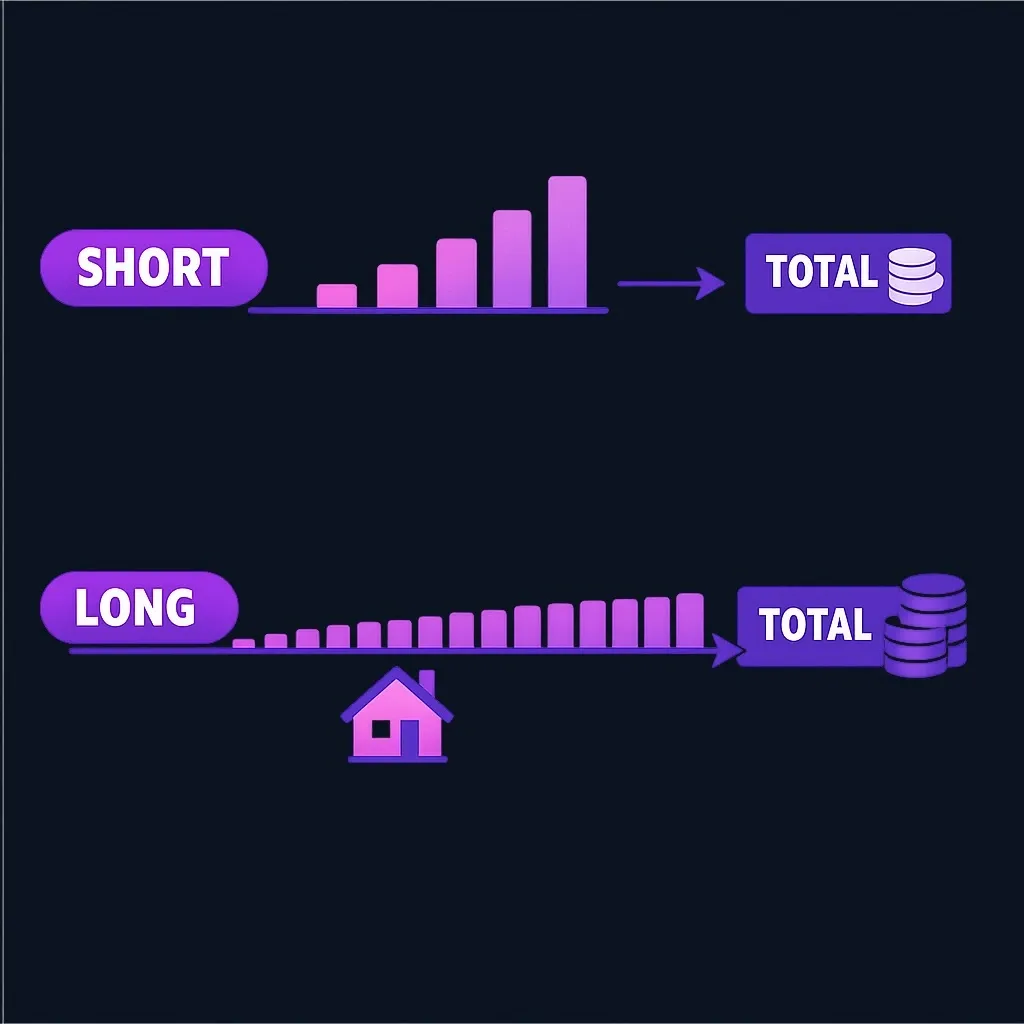
Also decide how new balances will be avoided after the old accounts are paid. Consolidation changes the structure of the debt; it does not correct a recurring budget deficit. The strongest plan combines an affordable repayment schedule with a spending and cash-reserve plan that can hold up after the transaction.
Practice trading with Finelo
Practice in a simulator, learn with bite-sized lessons, and build confidence before risking real money.
What is a Personal Loan?
A personal installment loan is a closed-end loan: the lender gives you a single lump sum up front and you repay it in fixed amounts called installments over the loan term. A fixed-rate loan with a level payment schedule provides predictable scheduled payments and a payoff date. An adjustable-rate personal loan can work differently, so confirm the rate type as well as the installment structure.
Practical takeaways
- Predictability: Fixed installments make budgeting easier because payments and payoff dates are set up front.
- Use cases: Common for consolidating existing debts into one payment, financing a defined project, or funding a purchase when you know the total cost.
- Application experience: Lenders evaluate your credit, income, and other factors; the loan is issued as a single disbursement if approved.
What this section does not promise: lenders set specific rates, fees, and approval rules; compare offers and read the loan agreement before you borrow.
What is a HELOC?
A home equity line of credit is an open-end line of credit that lets you borrow repeatedly against your home equity during a draw period. Think of it like a credit line secured by your home that you can draw from, repay, and draw from again while the account is open.
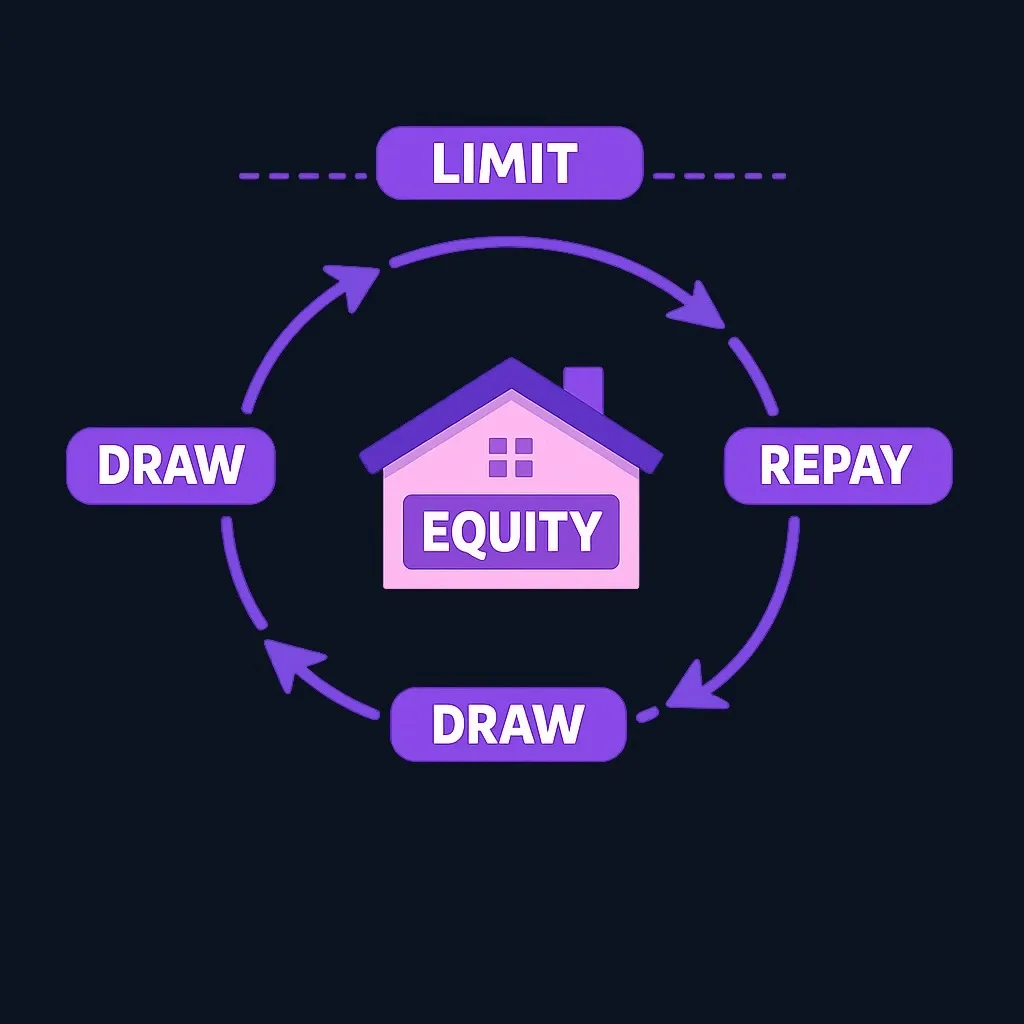
Practical takeaways
- Flexibility: You can withdraw money as needs arise during the draw period instead of taking one lump sum.
- Ongoing access: The line typically remains available so long as you haven’t reached the limit and you meet terms set by the lender.
- Documentation: A HELOC uses your home equity as the source of credit. Review the lender’s documentation to understand timing, limits, and repayment phases.
Key Differences Between Personal Loans and HELOCs
- Structure and disbursement: Personal loans deliver a one-time lump sum and set installment schedule; HELOCs provide a revolving line of credit you can draw from multiple times during the draw period. See CFPB definitions for both personal installment lending and home-equity credit.
- Repayment predictability: A fixed-rate personal loan with level installments gives a predictable scheduled payment and payoff date. A HELOC’s payments and outstanding balance can change based on how much you borrow and the lender’s repayment schedule. That difference stems from closed-end vs open-end mechanics.
- Connection to home equity: A HELOC uses your home equity as the source of the line; the unsecured personal loan considered here does not pledge your home. Other secured personal loans need a separate collateral review.
- Typical borrower experience: Because HELOCs revolve and are tied to a home, they are oriented toward homeowners managing longer-term or intermittent needs; personal loans suit people seeking a fixed payout and a clear repayment schedule.
How to compare your options
Use these criteria to decide which product better fits your situation. For each, ask the guiding question and use the practical test.
- Amount and timing of funds — Question: Do you need a one-time lump sum or ongoing access?
- Test: If you know the total cost (e.g. a single project), a lump-sum personal installment structure often simplifies repayment. If you expect repeated draws or uncertain timing, a HELOC’s open-end access may fit better.
- Predictability vs flexibility — Question: Is a fixed monthly payment important?
- Test: If predictable payments and a set payoff date are priorities, prefer the closed-end, installment structure. If flexibility to borrow and repay multiple times matters more, consider a HELOC after assessing variable payments and the risk to your home.
- Collateral tolerance — Question: Are you comfortable that the credit line is tied to your home equity?
- Test: A HELOC gives the lender a security interest in your home. Failure to repay can lead to foreclosure; weigh that consequence against flexible access and any cost savings.
- Cost and fees — Question: Are you minimizing interest and closing costs, or minimizing monthly payment volatility?
- Test: Costs vary by lender and product. Compare sample offers, fees, and payment schedules from lenders before choosing.
- Future plans — Question: Will your cash needs or income likely change soon?
- Test: A HELOC can support intermittent future needs; a fixed-rate personal loan can provide a set scheduled payment, while an adjustable-rate offer needs its own payment-change review.
Decision framework (quick): If you prioritize a fixed payout and predictable payoff, favor a personal installment loan; if you prioritize flexible, repeatable access tied to home equity, assess a HELOC and its repayment risks.
When to choose a Personal Loan
Consider a personal installment loan when your primary needs match predictable repayment and a known one-time expense.
Scenarios where a personal loan often fits
- Consolidating several small balances into a single installment payment to simplify billing and budgeting.
- Financing a discrete project (for example, a defined home repair or an event) where you know the total cost and prefer a set payoff.
- When payment predictability matters because your budget relies on consistent monthly cash flow.
Practical checklist before applying
- Confirm the exact repayment schedule and total finance cost offered by the lender.
- Compare multiple lenders for APR, origination fees, and prepayment terms.
- Understand whether the loan is secured or unsecured per the lender’s product terms.
Common mistakes and how to avoid them
- Mistake: Borrowing a larger lump sum than needed because it feels simpler. Fix: Estimate costs conservatively and borrow close to the amount you expect to use.
- Mistake: Ignoring fees that change the effective cost. Fix: Ask lenders for total finance charge examples and a repayment schedule.
When to choose a HELOC
Consider a HELOC when you want flexible access to funds over time and you have home equity to use as the source of credit.
Scenarios where a HELOC often fits
- You plan multiple, staggered expenses (for example, multi-phase home improvements) and want a credit line to draw from as each phase starts.
- You want standby access to cash for longer horizons without applying for a new loan each time.
- You prefer borrowing against the value of your home rather than applying for multiple small loans.
Practical checklist before applying
- Verify how the lender defines the draw period, repayment period, credit limit, and any requirements tied to your property (the CFPB defines HELOCs as open-end credit drawn against home equity. Review lender disclosures for exact terms).
- Understand triggers that could change your payment obligation (for instance, draws vs repayments).
- Compare lenders for their documentation on limits, rate resets, and repayment phases.
Common mistakes and how to avoid them
- Mistake: Treating a HELOC as “free” money without planning for when the draw period ends. Fix: Build a repayment plan for both the draw period and the repayment phase.
- Mistake: Overleveraging home equity for uncertain investments. Fix: Reserve only the portion of equity you can comfortably repay under stress scenarios.
For two other ways to access home equity, compare Cash-out refinance vs. home equity loan.
This guide covers U.S. rules. Finelo provides financial education, not personalized financial, investment, tax, or legal advice.
Financial LiteracyU.S. GuideFinancial Education
Practice trading with Finelo
Practice in a simulator, learn with bite-sized lessons, and build confidence before risking real money.
About the author
Finelo Team
The Finelo Team creates practical investing and trading education designed to help beginners learn faster with structured challenges, simulator practice, and bite-sized lessons.
Keep reading — Related articles

Financial Literacy
USDA vs. FHA loan
Compare location and income eligibility, down payments, credit conditions, and upfront and annual program charges for a home purchase.
Finelo Team
Financial Literacy
Term life vs. accidental death insurance
Compare broad term-life protection with accident-only coverage, including exclusions, underwriting, and the family income gap.
Finelo Team
Financial Literacy
Term life insurance laddering vs. one policy
Compare several term policies ending at different times with one policy, using coverage needs, costs, and future insurability.
Finelo Team