For U.S. readers: This article discusses U.S. rules and financial products. State rules and individual eligibility may differ.
Does Out-of-Pocket Maximum Include Deductible? A Comprehensive Guide

What a deductible is: a deductible is the amount you pay first for covered services before the plan shares costs.
5 min read
Practice trading with Finelo
Practice in a simulator, learn with bite-sized lessons, and build confidence before risking real money.
Want to learn more?
Practice in a simulator, learn with bite-sized lessons, and build confidence before risking real money.
Explore FineloExplore Finelo's 28-day challenges
Turn learning into a daily habit with guided challenge paths.
Quick answer
Yes — an out-of-pocket maximum is the annual cap on what you pay for covered services before your insurer pays most remaining covered costs; your deductible payments are typically part of the money you pay toward that cap. HealthCare.gov defines the out-of-pocket maximum as how much you’ll pay for certain covered services each year before your plan starts to pay HealthCare.gov. Finelo provides financial education, not financial or investment advice.
What to know before deciding
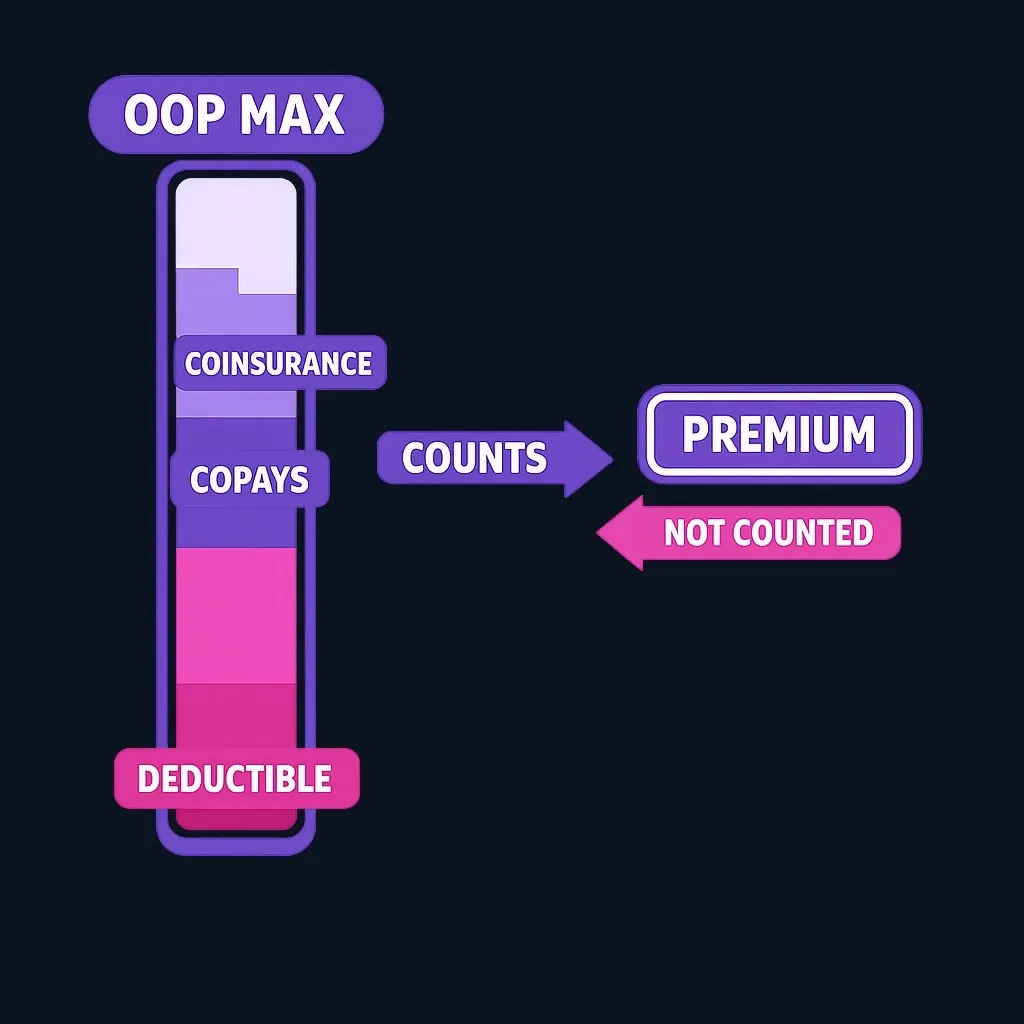
What an out-of-pocket maximum (OOP max) is: HealthCare.gov calls it the yearly limit on how much you’ll pay for covered services and items before the plan begins to pay. That cap usually protects you from very large medical bills in a policy year.
What a deductible is: a deductible is the amount you pay first for covered services before the plan shares costs. In many plans, those deductible payments count toward the out-of-pocket maximum; check your plan documents to confirm exact rules for your policy. Note: premiums are not part of the out-of-pocket maximum per standard definitions.
Key limitation to watch for
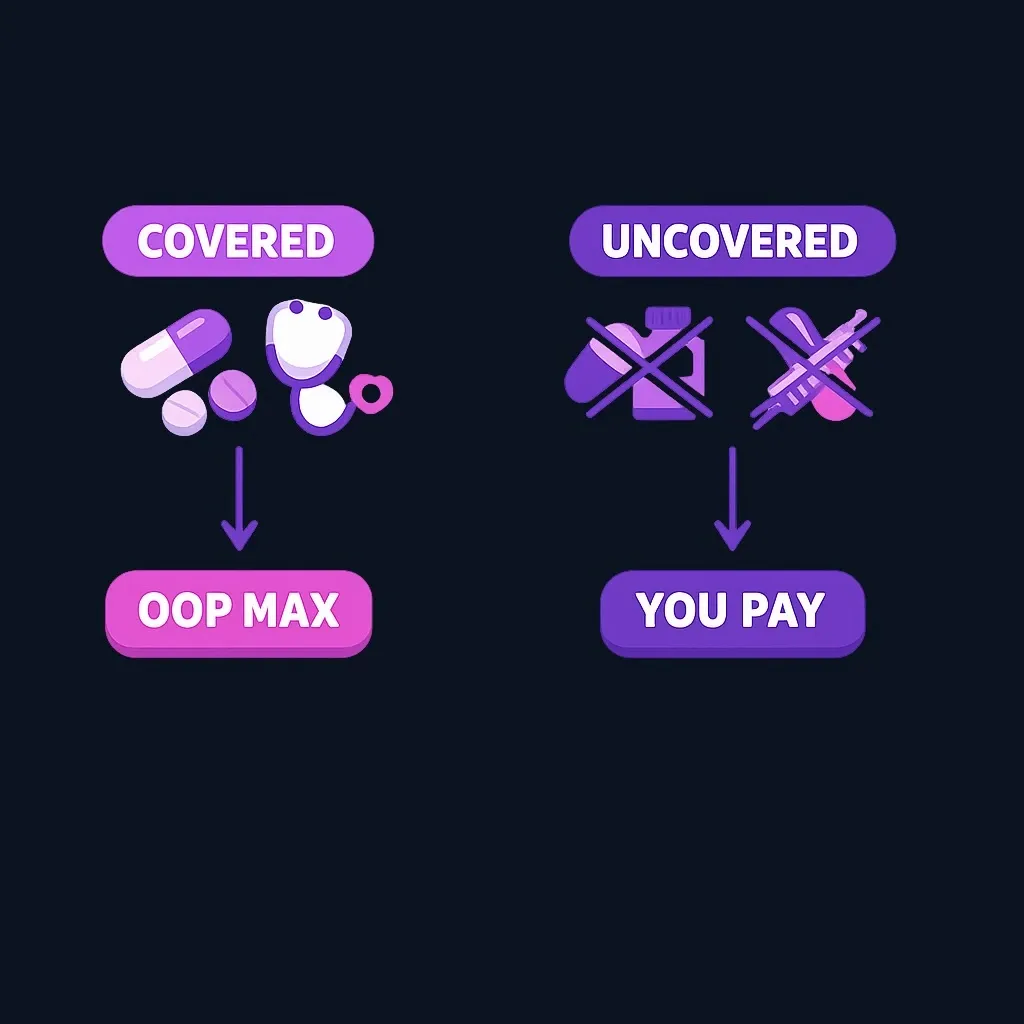
- The OOP max applies only to covered services; costs for services your plan doesn’t cover won’t count toward the cap.
- Preventive services are often covered without cost sharing and don’t affect the OOP calculation in the same way.
Decision framework
Use this short framework to evaluate whether a plan’s deductible and out-of-pocket maximum suit you:
- Estimate likely annual use (low / moderate / high).
- Compare premium savings vs. potential out-of-pocket spending if you need care.
- Check which payments count toward the OOP max (deductible, copays, coinsurance) and which do not (premiums, uncovered services).
- Ask whether the OOP max differs for in-network vs. out-of-network care and whether separate prescription drug OOP maximums apply.
Comparison table (typical practice)
Decision framework — quick comparison table
| Item | Commonly included toward OOP max | Commonly excluded |
|---|---|---|
| Deductible payments | Typically yes (count toward the OOP max) | — |
| Copayments & coinsurance | Typically yes | — |
| Monthly premiums | No | Premiums are usually excluded |
| Uncovered services | No — they do not count toward the OOP max | — |
Use the table to spot likely gaps. Always confirm exact inclusions in your plan’s Summary of Benefits and Coverage (SBC).
Practical examples and what happens after you hit the OOP max
Practice trading with Finelo
Practice in a simulator, learn with bite-sized lessons, and build confidence before risking real money.
Decision framework — examples
- Example scenario (hypothetical): if you pay $1,200 toward your deductible and $800 in copays/coinsurance during the year, those combined payments typically build toward your plan’s OOP max. Once you reach the OOP max for covered services, the insurer generally pays the remaining covered costs for that year. This is a simplified illustration — check your plan for exact rules.

Tracking your costs: How to monitor your out-of-pocket maximum
Tracking your costs: How to monitor your out-of-pocket maximum
Checklist to track expenses toward your OOP max
- Collect Explanation of Benefits (EOBs) and receipts for every visit, test, and prescription.
- Record deductible, copay, and coinsurance amounts separately.
- Confirm which payments on each EOB counted toward your OOP max (your insurer will usually note this).
- Note whether services were in-network or out-of-network; different rules and higher OOP limits can apply.
- Keep a running tally and compare it to the OOP max listed in your plan’s documents.
Practical tips
- Use your insurer’s online account or customer service to verify year-to-date amounts the insurer has credited toward your OOP max.
- For planned expensive care, ask your provider for a cost estimate and whether it will be treated as a covered service.
FAQ
What costs count toward the out-of-pocket maximum?
Commonly, deductible payments, copayments, and coinsurance for covered services count toward the out-of-pocket maximum; premiums and uncovered services typically do not. Confirm specifics in your plan documents or with your insurer.
How do I calculate my deductible?
Your deductible is the dollar amount you must pay for covered services before your plan shares costs. To compute what remains, subtract year-to-date payments that count toward the deductible from the full deductible amount shown on your plan’s Summary of Benefits and Coverage.
What happens after I reach my out-of-pocket maximum?
After you hit the OOP max for covered services in that policy year, your plan generally pays for covered services for the rest of the year. Always verify the insurer’s definition of “covered” and any in-network limits.
Are there different out-of-pocket maximums for in-network vs. out-of-network services?
Yes — many plans set separate rules or higher limits for out-of-network care. Check your plan’s Summary of Benefits and Coverage to confirm whether in-network and out-of-network OOP maximums differ.
Conclusion: Next steps for managing your healthcare costs
Conclusion: Next Steps for Managing Your Healthcare Costs
Summarize and act: deductibles are generally part of the money you pay toward an out-of-pocket maximum, but plan rules vary. First, review your plan’s Summary of Benefits and Coverage to confirm what counts. Second, track EOBs and use your insurer’s statements to monitor progress toward the OOP max. Finelo provides financial education, not financial or investment advice.
If you want a broader primer on insurance terms, visit the Finelo Blog for more guides: Finelo Blog (one next step).
Financial LiteracyFinancial Education
Practice trading with Finelo
Practice in a simulator, learn with bite-sized lessons, and build confidence before risking real money.
About the author
Finelo Team
The Finelo Team creates practical investing and trading education designed to help beginners learn faster with structured challenges, simulator practice, and bite-sized lessons.
Keep reading — Related articles

Financial Literacy
Mercury Books Review 2026: Is It Worth It for Startups?
Mercury Books brings double-entry accounting into Mercury. Review its $35 pricing, reports, AI features, integrations, and migration limits.
Finelo Team

Financial Literacy
Why is My FICO Score Lower Than My Credit Score?
Example takeaway: seeing a higher score in a bank app doesn’t guarantee lenders will see the same FICO number at application time; lenders often pull a specific FICO version from a specific bureau.
Finelo Team

Financial Literacy
Why Is My FICO Score Higher Than My Credit Score?
Brief educational note: this article is educational, not financial or investment advice; investing and credit decisions involve risk and possible loss.
Finelo Team


