Most Federal Reserve meetings are theater with a known ending. Today's is not.
Fed Rate Decision Today: What to Expect From the FOMC Meeting and How to Read It
The Fed announces its July rate decision at 2:00 PM ET with unusual hike odds and likely dissent. Here's how to read a hold, a hike, and the 10-year yield in 60 seconds.
4 min read
Practice trading with Finelo
Practice in a simulator, learn with bite-sized lessons, and build confidence before risking real money.
Want to learn more?
Practice in a simulator, learn with bite-sized lessons, and build confidence before risking real money.
Explore FineloExplore Finelo's 28-day challenges
Turn learning into a daily habit with guided challenge paths.
At 2:00 PM ET, the Fed announces its July interest-rate decision, followed by the chair's press conference at 2:30. The base case, according to most economists, is a hold — but market pricing has put roughly one-in-three odds on a hike, and even a hold is expected to come with unusually strong internal dissent. When was the last time you saw genuine suspense about the direction of the next move being up?
Here's why this meeting matters more than most, and how to read tonight's result like an investor rather than a spectator.
This article is for information and education only and is not financial advice. Live story — will be updated after the 2:00 PM ET announcement.
Why the suspense
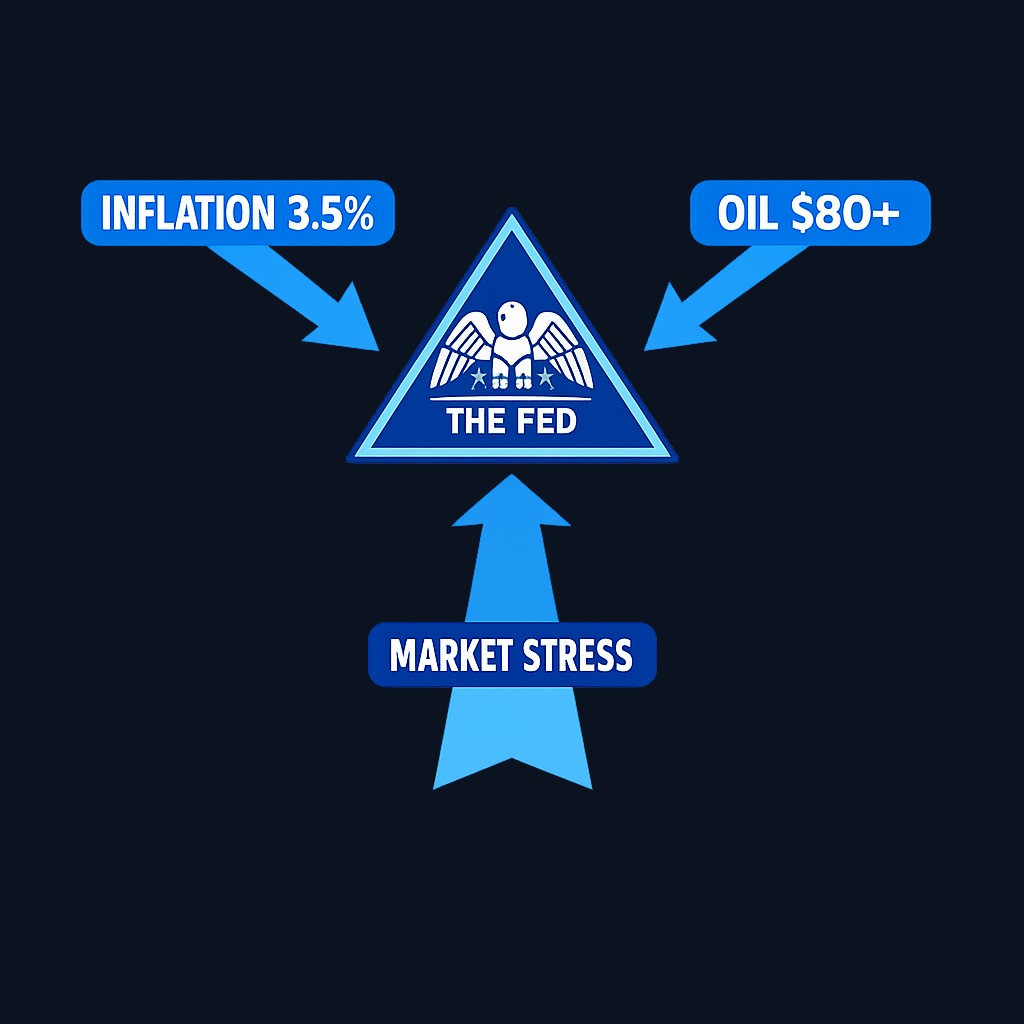
The Fed is caught between three forces pulling in different directions:
Inflation is cooling but not cool. The latest reading put annual inflation at 3.5% — better than it was, still well above the 2% target it has missed since 2021.
Oil refuses to cooperate. The conflict with Iran and blocked traffic through the Strait of Hormuz have kept crude above $80, threatening to reignite the very inflation the Fed thought it was taming.
Markets are already stressed. This decision lands mid-earthquake: Korea's stock market has lost roughly a third of its value in a month, chip stocks are selling off globally on AI-financing fears, and long-term Treasury yields have spent 14+ sessions above 5% — the longest stretch since 2007. A hawkish surprise into this would pour fuel on the fire; a dovish one might look like panic.
There's also politics in the room: the White House has been loudly demanding lower rates, while the bond market is quietly pricing higher ones. The Fed can't please both — and may please neither.
Practice trading with Finelo
Practice in a simulator, learn with bite-sized lessons, and build confidence before risking real money.
How to read tonight's decision in 60 seconds
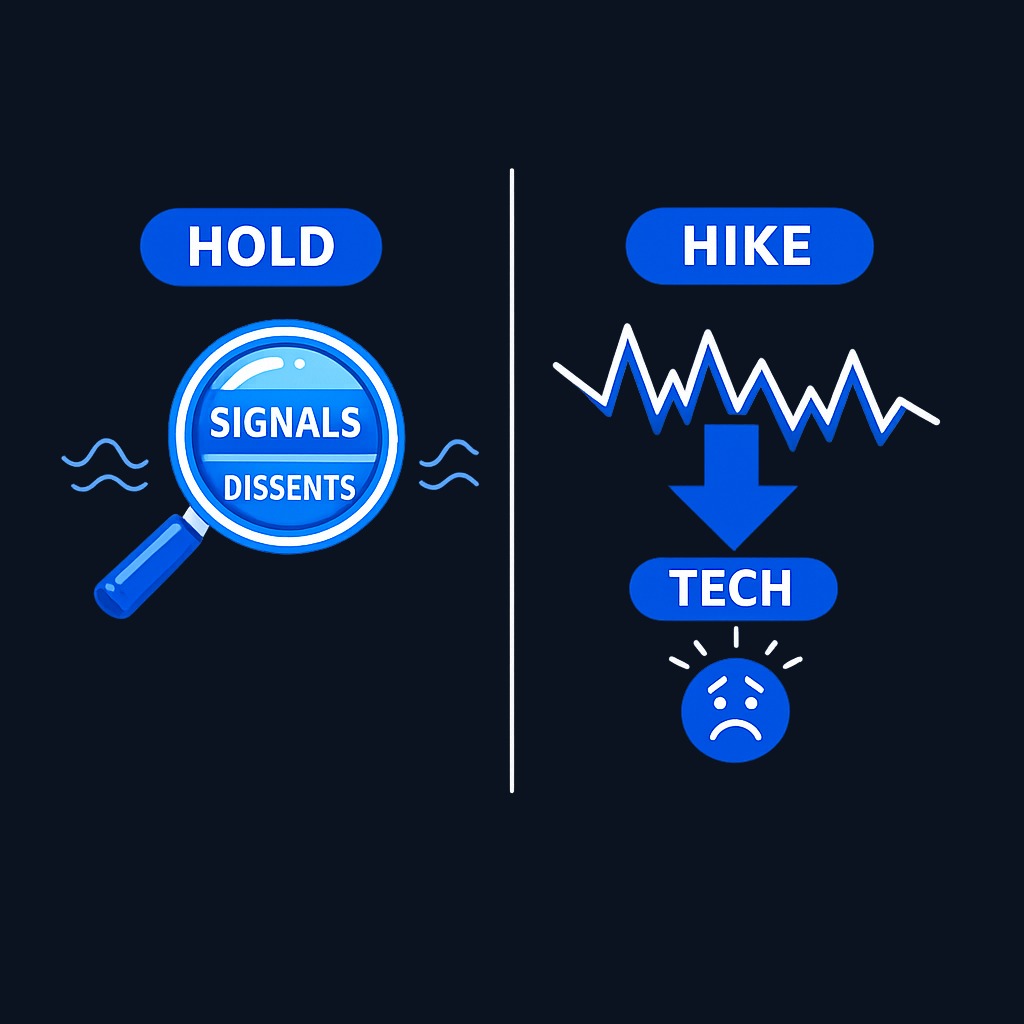
If they hold (expected): the real news is in the signals. Count the dissents — multiple policymakers voting for a hike would tell you September is live. Watch the statement's language on inflation ("elevated"? "progressing"?) and the press conference's tone on oil.
If they hike (the surprise): expect immediate market turbulence — especially in the rate-sensitive tech and AI names already under pressure. A hike would say the Fed fears oil-driven inflation more than it fears the selloff.
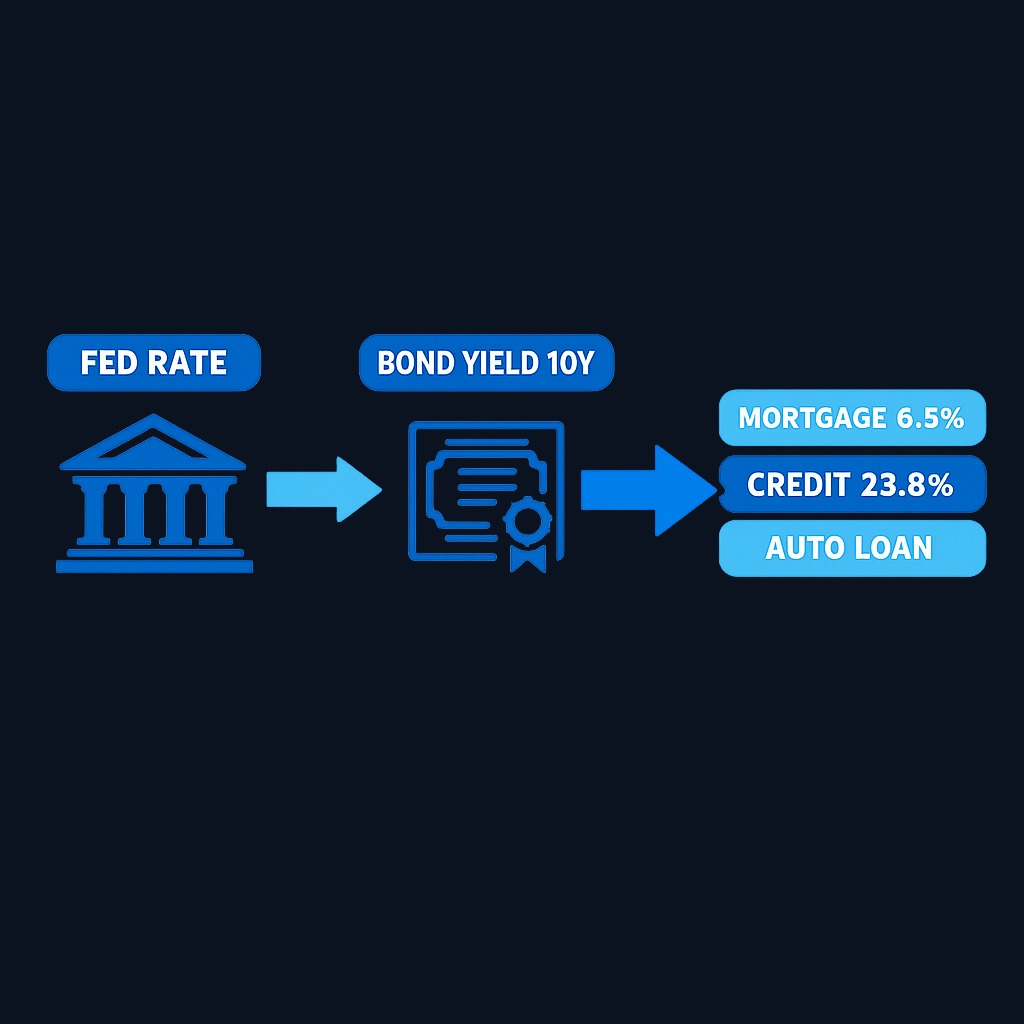
Either way, watch the 10-year Treasury yield, not just the announcement. Consumer rates — mortgages near 6.5%, credit-card APRs around 23.8%, car loans at record lengths — key off bond yields as much as the Fed's own rate. If yields shrug off a hold and keep climbing, borrowing stays expensive regardless of what the Fed says today.
Why this matters to YOU
Every variable-rate debt you carry, every savings-account yield you earn, and every stock fund you own reprices off what happens at 2 PM ET. And in an unusual twist, tonight is a double feature: hours after the Fed speaks, Meta reports earnings — the first AI mega-spender to open its books since the selloff began. The price of money and the biggest borrower's report card, on the same day.
For the market stress backdrop the Fed is walking into, see Kospi Index Drops 6%: Why South Korea's Stock Market Paused Trading Again.
This article will be updated with the decision, the vote, and market reaction shortly after the announcement.
Finelo does not provide investment advice. This article is for informational and educational purposes only.
Sources: CNBC — Fed meeting live coverage, CBS News — what experts predict, CNBC — consumer impact preview
Frequently asked questions
What is the Fed expected to do today?
Most economists expect a hold, but market pricing has put roughly one-in-three odds on a hike. Even a hold may come with unusually strong internal dissent that signals September is live.
What should investors watch besides the rate decision?
Count the dissents, read the statement language on inflation, watch the press conference tone on oil, and track the 10-year Treasury yield — consumer borrowing costs key off bond yields as much as the Fed's own rate.
How does the Fed decision affect everyday finances?
Variable-rate debt, savings yields, mortgages, credit-card APRs, and stock funds all reprice around the cost of money. Tonight also pairs with Meta earnings — an AI mega-spender reporting into the same selloff.
Federal ReserveFOMCinterest ratesinflationTreasury yieldsinvesting
Practice trading with Finelo
Practice in a simulator, learn with bite-sized lessons, and build confidence before risking real money.
About the author
Finelo Team
The Finelo Team creates practical investing and trading education designed to help beginners learn faster with structured challenges, simulator practice, and bite-sized lessons.
Keep reading — Related articles
News
U.S. Gas Prices Reach $4.46: What the Increase Means for Inflation and Household Costs
The EIA's U.S. all-grades gasoline average reached $4.455 per gallon. See what changed, why regions differ and how fuel prices affect inflation.
Finelo Team
News
China Sets a Stronger Yuan Fix at 6.7521: What It Means for USD/CNY
China set its September 18 yuan reference rate at 6.7521 per dollar. Learn how the official fixing differs from market rates and why the move matters.
Finelo Team
News
BOJ Raises Its Policy Rate to 1.25%: What the Decision Means for the Yen
The BOJ raised its overnight policy-rate target to around 1.25%. Learn why the yen can still weaken after a rate increase and what the decision says.
Finelo Team


