For the first time in its history, South Korea's stock market tripped its emergency circuit breakers on two consecutive days. By Wednesday's close, roughly ₩864 trillion (hundreds of billions of dollars) in market value had evaporated in just two sessions — and the country's top economic officials were doing something governments almost never do mid-crisis: apologizing.
Kospi Index Drops 6%: Why South Korea's Stock Market Paused Trading Again
South Korea tripped circuit breakers on consecutive days for the first time, apologized over leveraged ETFs, and watched SK Hynix fall on record earnings. Here's what the emergency means for investors.
5 min read
Practice trading with Finelo
Practice in a simulator, learn with bite-sized lessons, and build confidence before risking real money.
Want to learn more?
Practice in a simulator, learn with bite-sized lessons, and build confidence before risking real money.
Explore FineloExplore Finelo's 28-day challenges
Turn learning into a daily habit with guided challenge paths.
The Kospi fell another 5.98% on Wednesday to close at 5,663.24, after Tuesday's historic 10.84% collapse. The index has now lost roughly 38% from its June record of 9,114. In response, the finance minister convened the country's so-called F4 — the heads of the finance ministry, the central bank, and both financial regulators — for an emergency evening meeting, pledging market-stabilization measures and "decisive action" on the currency if needed.
This article is for information and education only and is not financial advice.
The apology, and what it's really about
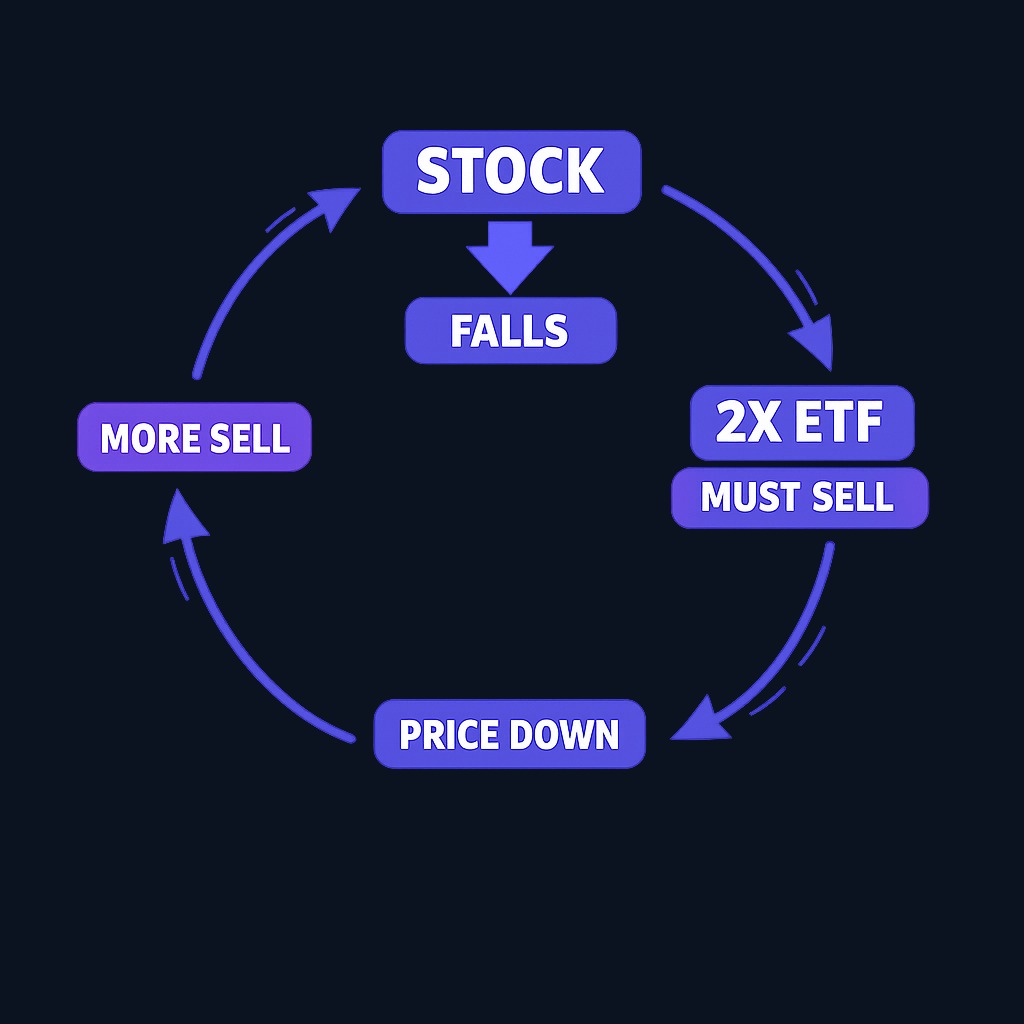
At a parliamentary hearing, the finance minister apologized to investors — specifically over single-stock leveraged ETFs, products launched only in May that let retail investors make 2x-amplified bets on individual stocks like Samsung and SK Hynix. Lawmakers traced much of the crash's violence to these products: when the chip giants fell, leveraged funds were forced to sell more, which pushed prices lower, which forced more selling.
Read that mechanism twice, because it's the single most important lesson in this story: leverage doesn't just amplify your losses — at scale, it amplifies the market's. A product designed to double your upside became a machine that helped turn a bad week into a national emergency. The government acknowledging this within two months of the products launching is extraordinary — and a warning label written in real time.
Practice trading with Finelo
Practice in a simulator, learn with bite-sized lessons, and build confidence before risking real money.
The trigger nobody expected: record earnings
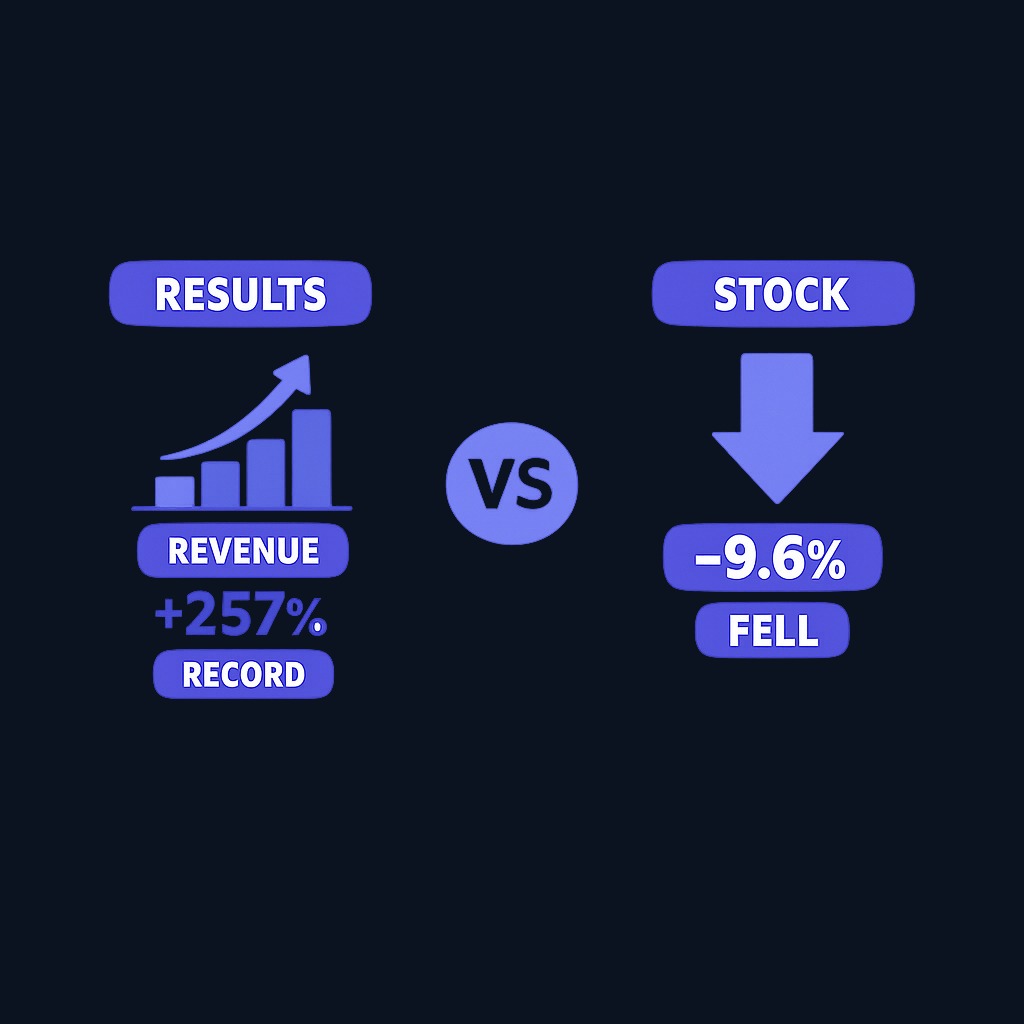
Here's the twist that makes Wednesday's leg down so instructive. SK Hynix — the AI memory champion at the center of the storm — reported earnings overnight that were, on paper, spectacular: revenue up 257% to a record ₩79.3 trillion, profit up roughly sixfold. The stock fell 9.61% anyway, because results still came in below what analysts expected, and management's massive spending plans amplified financing worries. SK Hynix has now lost about 47% in a month; Samsung about 35%.
A company posts the best quarter in its history and loses nearly half its value in a month. If you ever needed proof that stock prices are about expectations, not achievements, this is it.
Why this matters to YOU
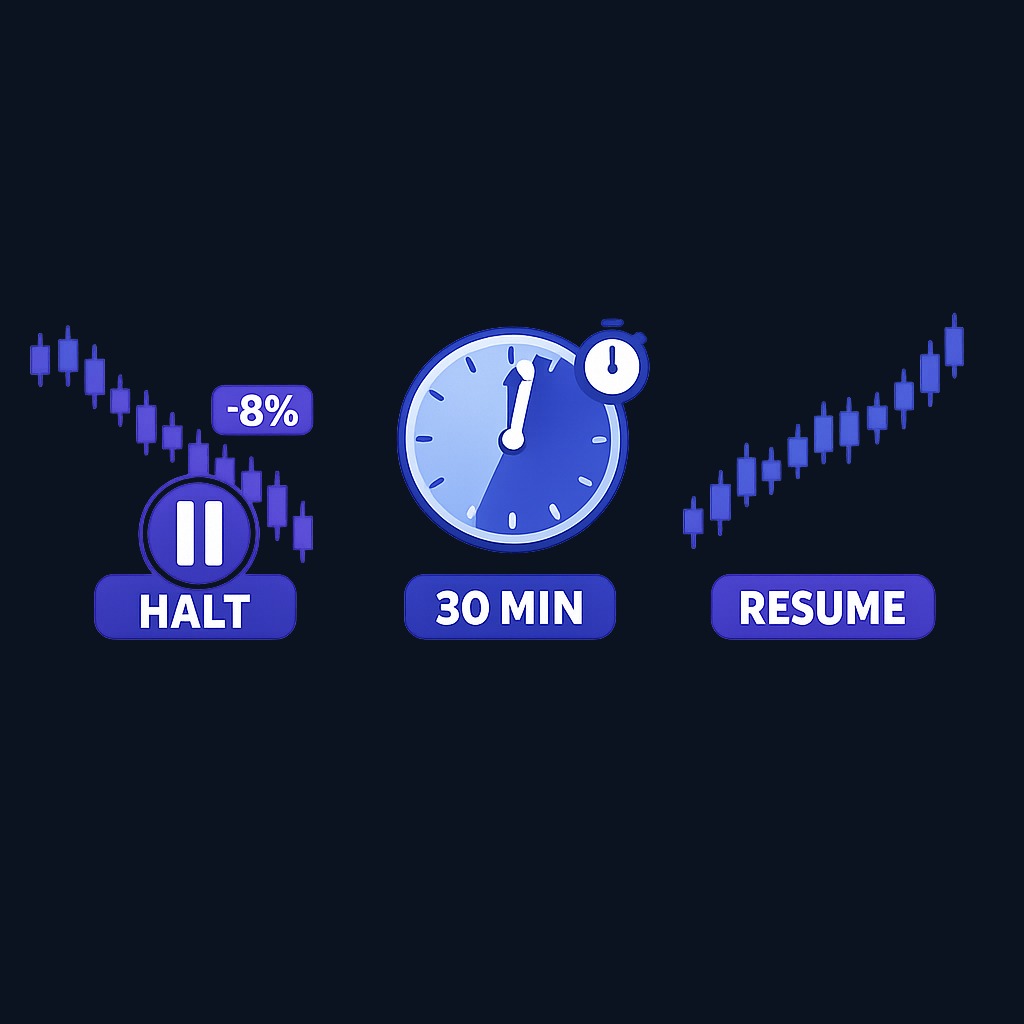
Circuit breakers exist for you. Trading halts aren't malfunctions — they're deliberate pauses designed to interrupt panic-selling spirals. Two consecutive halts means the mechanism is being tested as never before, and so far it's doing its job: pausing, not preventing, repricing.
Leveraged products deserve your suspicion. Korea's regulators raised deposit requirements, are weighing caps, and are now apologizing in parliament. When a product is so risky that a government says sorry for allowing it, retail investors everywhere should take note — including anyone eyeing 2x and 3x ETFs on US platforms.
Watch what "stabilization" means. Governments can slow a crash with buying programs, short-selling bans, and currency intervention — but they can't repeal expectations. The measures announced in the coming days will show how much of this decline officials think is panic, and how much is the AI trade genuinely repricing.
Chinese memory competition helped light the fuse — see China Begins Mass Production of DUV Lithography Machines. And the "record results, falling stock" paradox connects directly to our explainer on why markets price expectations, not headlines: Johnson & Johnson Agreed to Pay $5.5 Billion. Its Stock Went UP. Here's Why That's Not Crazy..
Finelo does not provide investment advice. This article is for informational and educational purposes only.
Sources: Yahoo Finance — emergency meeting and market figures, CNBC — leveraged ETF apology, Bloomberg — emergency market meeting, PR Newswire — SK Hynix results
Frequently asked questions
Why did South Korea halt stock trading again?
The Kospi fell another 5.98% on Wednesday after Tuesday's historic 10.84% collapse, triggering consecutive emergency circuit breakers for the first time. Officials convened an emergency meeting and pledged stabilization measures.
What do leveraged ETFs have to do with the crash?
Single-stock leveraged ETFs launched in May let retail investors make 2x bets on names like Samsung and SK Hynix. When those stocks fell, leveraged funds were forced to sell more, amplifying the decline — and the finance minister apologized in parliament.
How can a company report record earnings and still fall?
SK Hynix posted spectacular revenue and profit growth but still missed elevated expectations, while heavy spending plans fed financing worries. Stock prices track expectations, not just achievements.
KospiSouth Koreacircuit breakersleveraged ETFsSK HynixAI memory
Practice trading with Finelo
Practice in a simulator, learn with bite-sized lessons, and build confidence before risking real money.
About the author
Finelo Team
The Finelo Team creates practical investing and trading education designed to help beginners learn faster with structured challenges, simulator practice, and bite-sized lessons.
Keep reading — Related articles
News
U.S. Gas Prices Reach $4.46: What the Increase Means for Inflation and Household Costs
The EIA's U.S. all-grades gasoline average reached $4.455 per gallon. See what changed, why regions differ and how fuel prices affect inflation.
Finelo Team
News
China Sets a Stronger Yuan Fix at 6.7521: What It Means for USD/CNY
China set its September 18 yuan reference rate at 6.7521 per dollar. Learn how the official fixing differs from market rates and why the move matters.
Finelo Team
News
BOJ Raises Its Policy Rate to 1.25%: What the Decision Means for the Yen
The BOJ raised its overnight policy-rate target to around 1.25%. Learn why the yen can still weaken after a rate increase and what the decision says.
Finelo Team